/pre-wedding-photoshoot
Avoid crowds at Moc Chau tea hills: pre-wedding photo timing guide
Moc Chau tea hills photograph best in winter (Dec–Feb), before 8 a.m. or after 4 p.m., when the light is soft and crowds are minimal. Book a photographer who will spend time scouting light before your session, not just following a standard tour route. The real advantage isn't the place—it's the team: one director, one makeup artist, one outfit, one message. Cáo Studio's approach shoots the hills as a backdrop to you walking, looking at each other, doing something real—not standing still for the camera. Most couples fail because they arrive at peak-sunshine hours (10 a.m.–3 p.m.), wear clothes that reflect glare, and follow a photographer who's never seen the site. Plan 48 hours before, confirm weather with your photographer, and ask them to show you test shots from the exact hour and season you're shooting. 📸 Book on WhatsApp — ao dai photoshoot ---
Why morning light at Moc Chau beats the midday "golden hour" myth
Moc Chau sits at roughly 1,000 meters elevation, north of Hanoi. The morning mist clings to the tea rows until 7–8 a.m., diffusing direct sun into soft, even light—ideal for skin and fabric texture. Midday sun (10 a.m.–3 p.m.) bounces hard off the rows and creates blown-out skies and shadows under cheekbones. Most wedding magazines show Moc Chau at "golden hour" (late afternoon), but that's 4 p.m.–6 p.m. here, when tour buses are still unloading groups and the light is thin and cool. If you shoot 6 a.m.–7:30 a.m. instead, you'll find the hills nearly empty, the mist breaking into soft side-light, and your outfit's detail (lace, embroidery, silk weave) actually visible instead of silhouetted. The catch: it's cold (5–8°C in winter). Your makeup artist must know how to keep foundation from slipping on chilled skin, and you'll need a robe or wrap for the 20 minutes between sessions when you're not moving.
Conclusion: Morning mist light is rarer and better than golden hour; plan to wake early.
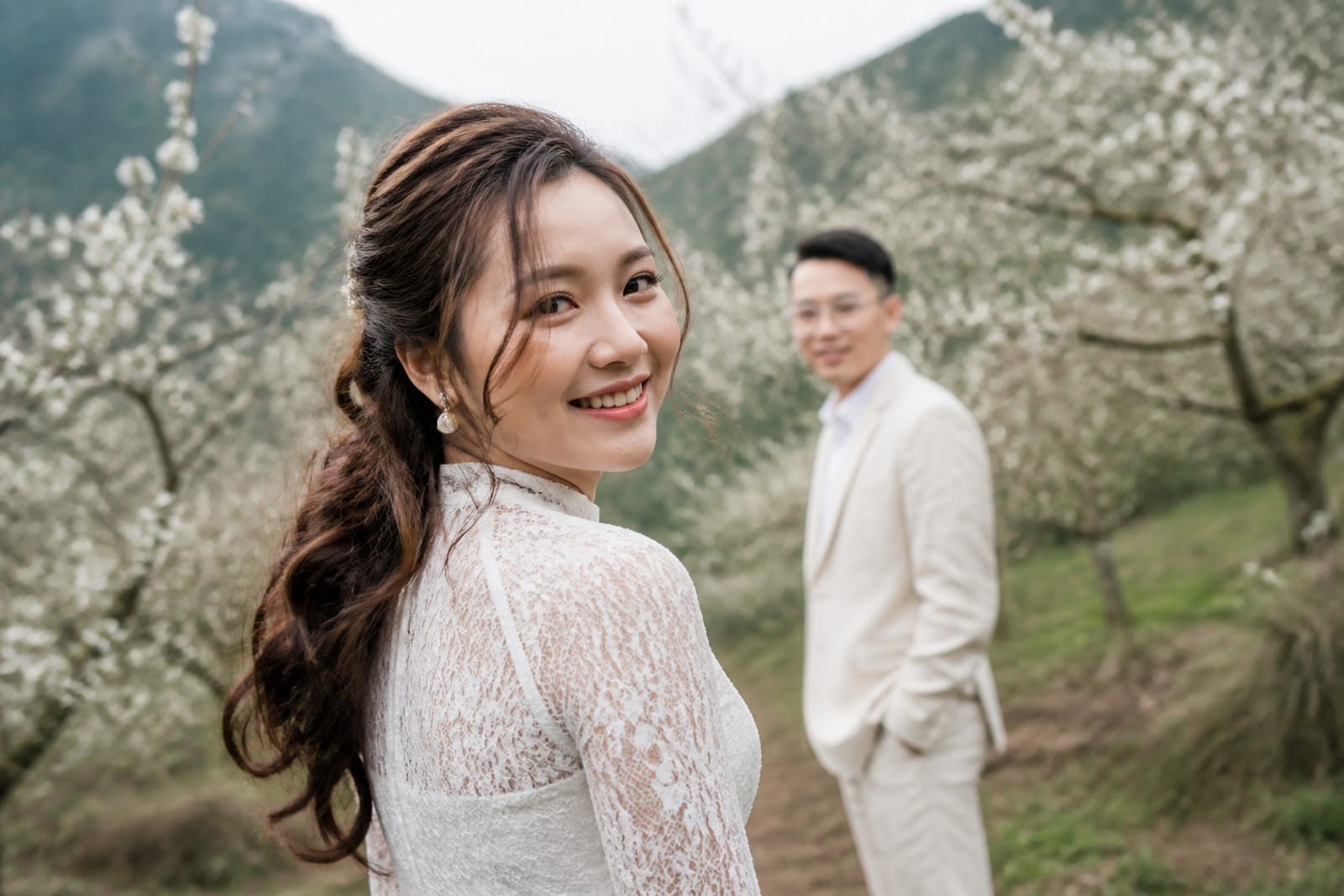
Which season gives you the clearest frames without tourists?
| Season | Light quality | Crowds | Temperature | Mist | Best for |
|---|---|---|---|---|---|
| Dec–Feb (winter) | Soft, diffused, cool tone | Fewest (cold keeps day-trippers away) | 5–12°C | Heavy until 8 a.m., perfect for texture | Couples who can handle cold; ao dai layers work |
| Mar–Apr (spring) | Bright, slightly harsh before 7 a.m. | Low–medium | 15–20°C | Thin or none; dries by 7 a.m. | Smaller budgets; shorter prep time needed |
| May–Sep (summer/rainy) | Overcast or afternoon rain | Medium (locals and regional groups) | 20–28°C, humid | None; grey sky all day | Couples OK with flat, moody light; no glare |
| Oct–Nov (autumn) | Clear, can be harsh midday | Medium–high (good weather brings groups) | 15–20°C | Rare; usually burnt off by 6:30 a.m. | Budget travelers; avoid midday entirely |
Winter works best for pre-wedding shoots because mist equals free diffusion and cold keeps bus-tour volume low. The trade-off: you need a makeup artist who's shot in cold before (sweat and foundation separation are real risks), and layering under an ao dai requires planning. If you shoot in spring or autumn to avoid cold, you must start before 7 a.m.—no exceptions—or accept harsh light and crowds. Summer mist is gone by 7 a.m., so the light is either overcast (grey, safe, but flat) or bright (risk of glare). Choose your season based on whether you want to manage cold or manage bright light.
Conclusion: Winter = best light and fewest people; trade cold for clarity.
How do you brief a photographer so they don't just pose you at the viewpoint?
A photographer who's never shot Moc Chau before will default to the two famous spots: the terraced rows near the main road (where every tour group stops) and the hilltop viewpoint (crowded by 8:30 a.m.). Instead, ask your photographer to arrive 1–2 hours before your session and walk the tea rows themselves. Tell them to note where the light hits first, which rows have the softest background, where you can walk without stepping on plants. Ask them to show you phone photos of the light at your exact time, in your exact month—not generic Instagram frames. Then brief them on what you want to happen, not where to stand: "We'll walk down the row together, not stop at the camera. You'll shoot wide first, then follow us. We're not smiling at you; you're watching us."
A director-led photoshoot works because one person—your photographer—runs hair, makeup timing, outfit fit, and camera angle all at once. They know when your makeup will crease if you smile too early, when your dress needs to be adjusted for the light, and when to move you to follow the sun. Most couples hire three vendors separately (photographer, makeup, stylist) and waste 30 minutes at each location while they coordinate. By the time the light is perfect, it's 8:30 a.m. and a bus just arrived.
Conclusion: Brief your photographer to scout and direct, not just shoot; one team beats three vendors.
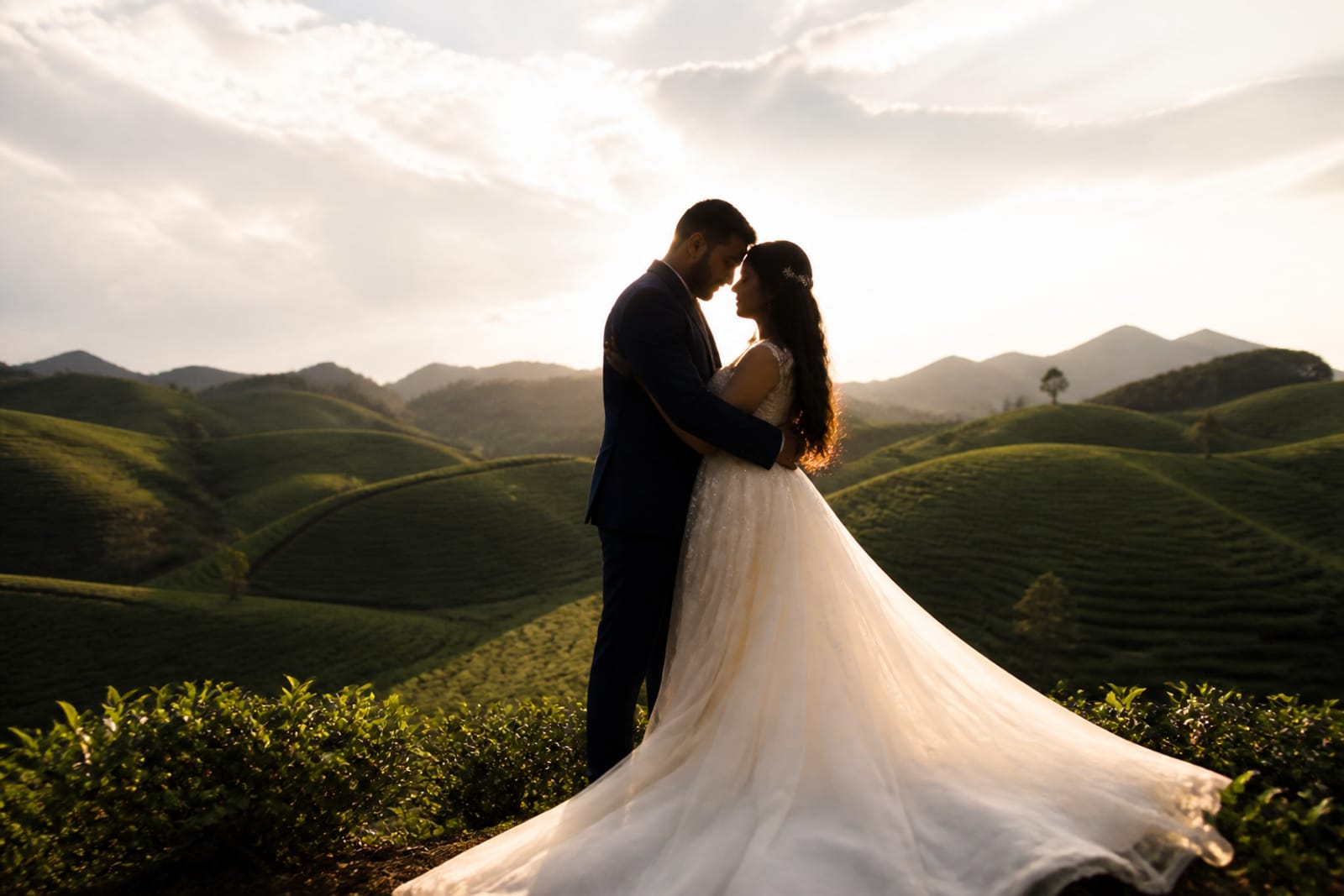
What outfit choices work best in Moc Chau's light and landscape?
An ao dai is the obvious choice—soft silk shows the light's direction, and the flowing fabric moves naturally when you walk. The trap: lightweight summer ao dai (silk crepe, chiffon) can look washed out in cool morning light and glare harshly in sun. Choose a heavier silk ao dai (silk charmeuse or dupion) in jewel tones (emerald, sapphire, burgundy, deep rose) instead of pastels. Pastels read as white or blown-out in mist light. Pair the ao dai with a cream or ivory tunic (inside, not visible) to add warmth to your skin tone in cool morning light.
If you're wearing Western wedding wear, avoid white or very pale fabrics—they'll reflect the mist as a dull grey. Cream, ivory, or champagne work better in cool light. For grooms, a dark suit or áo groom (Vietnamese traditional coat) with a light shirt reads well. Avoid pure white shirts; ivory or pale blue won't cause reflection. Accessories (jewelry, flowers, scarves) should be muted or metallic; bright colors compete with the landscape.
The real rule: test your outfit in similar light before the day. Shoot a phone video of yourself in your chosen clothes at 6:30 a.m. or in overcast light indoors—that's what Moc Chau mist light will look like. If you look good there, you'll look good on the day.
Conclusion: Jewel-tone ao dai, tested in cool light beforehand; avoid pastels and pure white.
How do you handle the weather, weather changes, and backup plans?
Winter at Moc Chau is cool and often grey—mist lasts until 8 a.m., sometimes until 9 a.m. Rain is rare (it's the dry season), but mornings can be damp. Bring a light wrap or shawl, not for style but for the 20 minutes between outfit changes when you're standing still. Your makeup artist will bring setting spray and powder to handle the moisture; if they don't mention it, ask them on WhatsApp before you book.
Spring and autumn can flip: you plan a 6:30 a.m. start to avoid midday glare, but you wake to cloud cover and grey light. A good photographer will text you by 6 a.m. and either confirm the shoot or suggest starting earlier to chase clearer light. Build in a one-hour flex window with your team. If rain falls the day of, decide beforehand with your photographer: do you reschedule, or shoot in the grey (moody, different, still works)? Moc Chau doesn't flood like lower elevations, but muddy rows are slippery. Wear shoes with grip (not heels) until you're on camera, then change.
Ask your photographer: "What's your weather cutoff—wind, rain, or low cloud—and how do we adjust time or location if it hits?" If they don't have an answer, they haven't shot here before.
Conclusion: Plan for cold and damp; confirm backup timing 2 hours before; ask your photographer's weather protocol.
---
What to check before you book a Moc Chau pre-wedding shoot
- Has the photographer shot Moc Chau before? Ask for unedited phone photos from a previous session, same month and time you're booking. Generic Instagram frames don't count.
- Is makeup and hair included in one session, or separate? If separate, you'll lose light time coordinating. One team (photographer + makeup + hair + stylist) should arrive together.
- What's the travel time from Hanoi or your hotel? Moc Chau is 140 km south of Hanoi, roughly 3–4 hours by car (depending on traffic). Confirm your photographer will drive there or arrange transport for you.
- Will they scout light before you arrive? A good photographer walks the tea rows 1–2 hours before your session. Ask them to text you a phone photo of the light at your exact start time.
- What happens if weather shifts? Confirm their cutoff for postponement or rerouting (to an indoor tea factory or different slope if mist lasts too long).
- Is the quote based on travel time and number of outfits, or fixed? Moc Chau isn't in Hanoi; ask WhatsApp how distance and outfit changes affect the cost factors. Never book without confirming this.
- How many edited photos will you receive, and when? Cáo Studio delivers edited frames within 48 hours; confirm your photographer's timeline before you commit.
---
For a pre-wedding photoshoot in Moc Chau that actually avoids crowds and harsh light, book a team with real experience at this location—not a generic Hanoi photographer who's heard it's pretty. Cáo Studio's Hanoi-based directors have shot Moc Chau in winter mist, spring cloud-break, and autumn clarity; they know the light windows and the quiet rows. If you want a simpler option closer to Hanoi, consider a couple photoshoot in the Old Quarter or along the Red River at dawn—no travel time, same soft light, no crowds.
---
FAQ
Does Moc Chau require a permit or guide to shoot pre-wedding photos?
No official permit is required for still photography on the tea hills; they're working farmland, not a protected heritage site. Always ask locals before moving between rows, and never step on active tea plants. Hire a local guide if you're unfamiliar with the terrain.
Can we shoot an ao dai photoshoot at Moc Chau in summer?
Yes, but expect grey light all day (no mist by 7 a.m.), humidity, and afternoon rain. The ao dai will cling to your skin and makeup may slip. Winter or spring is safer; if you must shoot summer, plan for moody, flat light and bring extra powder.
What's the difference between a Moc Chau shoot and an ao dai photoshoot in Hanoi?
Moc Chau offers a rural, repeating-landscape backdrop; Hanoi offers architecture, street energy, and multiple locations in one session. Moc Chau requires 3–4 hours of travel; Hanoi sessions pack more frames in less time. Choose Moc Chau if the rolling tea rows matter to your story; Hanoi if you want variety.
Should we hire a separate makeup artist or book one with the photographer?
Book one team. If makeup and photography are separate, you'll spend 30+ minutes coordinating and lose the soft early light. A makeup artist and photographer working together can adjust your face if light shifts, time outfit changes, and shoot while you're at your best—not after you've been standing around.
How do we avoid looking like tourists in couple frames at the tea hills?
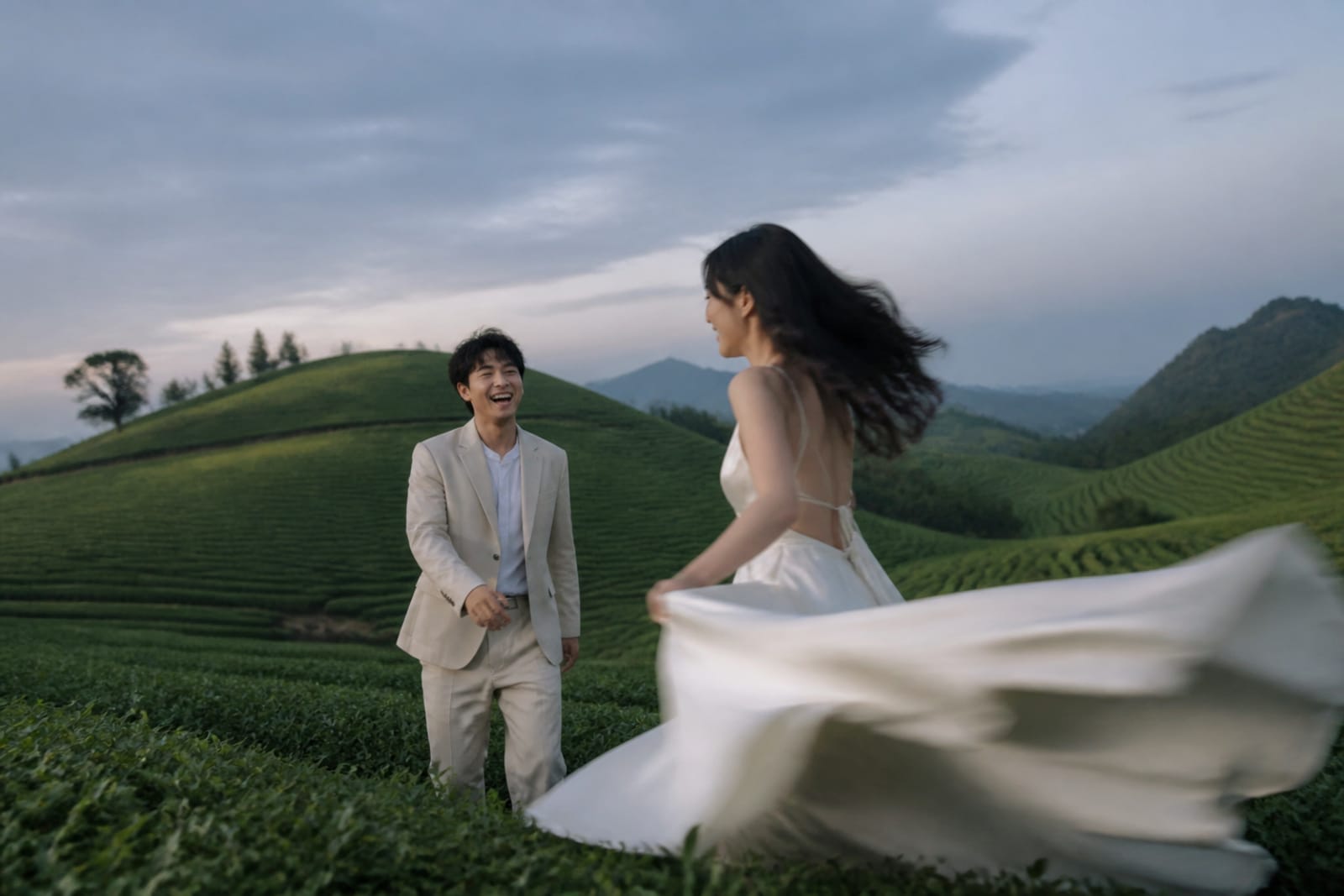
Walk, don't pose. Look at each other, not the camera. Do something—adjust your partner's collar, hold hands while walking downhill, laugh. A director who shoots wide first (capturing movement), then medium and detail (seeing your face and hands) will catch real moments, not stiff smiles. Ask your photographer to show you their lookbook—if every frame has couples frozen in front of landmarks, book someone else.
FAQ
Does Moc Chau require a permit or guide to shoot pre-wedding photos?
No official permit is required for still photography on the tea hills; they're working farmland, not a protected heritage site. Always ask locals before moving between rows, and never step on active tea plants. Hire a local guide if you're unfamiliar with the terrain.
Can we shoot an ao dai photoshoot at Moc Chau in summer?
Yes, but expect grey light all day (no mist by 7 a.m.), humidity, and afternoon rain. The ao dai will cling to your skin and makeup may slip. Winter or spring is safer; if you must shoot summer, plan for moody, flat light and bring extra powder.
What's the difference between a Moc Chau shoot and an [ao dai photoshoot](/ao-dai-photoshoot) in Hanoi?
Moc Chau offers a rural, repeating-landscape backdrop; Hanoi offers architecture, street energy, and multiple locations in one session. Moc Chau requires 3–4 hours of travel; Hanoi sessions pack more frames in less time. Choose Moc Chau if the rolling tea rows matter to your story; Hanoi if you want variety.
Should we hire a separate makeup artist or book one with the photographer?
Book one team. If makeup and photography are separate, you'll spend 30+ minutes coordinating and lose the soft early light. A [makeup artist and photographer working together](/makeup-and-hair) can adjust your face if light shifts, time outfit changes, and shoot while you're at your best—not after you've been standing around.
How do we avoid looking like tourists in couple frames at the tea hills?
Walk, don't pose. Look at each other, not the camera. Do something—adjust your partner's collar, hold hands while walking downhill, laugh. A director who shoots wide first (capturing movement), then medium and detail (seeing your face and hands) will catch real moments, not stiff smiles. Ask your photographer to show you their lookbook—if every frame has couples frozen in front of landmarks, book someone else.
Ao dai, makeup, hair and a local photographer in Hanoi or Saigon — one WhatsApp message.