/pre-wedding-photoshoot
Avoid Crowds at Muong Hoa Valley Rice Terraces Wedding Photos
Muong Hoa Valley (near Sapa town, northern Vietnam, roughly 350 km from Hanoi) draws crowds year-round, but the pre-wedding sweet spot is Sep–Nov: harvest season, clear light, and cooler temps suit formal wear. Shoot before 7 am or after 5 pm on weekdays—terraces are quietest then. Hire a Sapa-based photographer familiar with the valley's steep paths, slippery terrain, and permit rules; they scout light hours and manage entry logistics so you focus on walking, looking at each other, and the frames you actually wanted. Avoid Tet (late Jan–mid Feb) and peak summer (Jun–Aug: rainy, misty, crowded). Plan outfit changes carefully—the walk is steep; many couples wear hiking boots to the shoot spot, then change for photos. Cáo Studio does not operate in Sapa, but this guide covers how to plan and vet a local team so your pre-wedding day works.
Muong Hoa Valley rice terraces frame some of Southeast Asia's most-photographed pre-wedding couples. But Instagram perfection requires more than arriving at the valley entrance with a camera and hope. The difference between a day of slippery slopes, tourist crowds, and wasted outfit changes versus frames you keep for life comes down to one decision: when to shoot, who to hire, and how to prepare the logistics.
Why Muong Hoa Valley Becomes Crowded at Specific Hours
Tourists cluster in two windows: morning arrivals (7–9 am, after hotel breakfasts) and sunset visitors (4–6 pm, racing light). Terraces peak between 10 am and 4 pm as well, when tour groups rest and sun sits overhead (flat, harsh light anyway). A pre-wedding couple shooting at 6 am or 5:30 pm walks into near-solitude with directional, warm light. The trade-off is readiness: you'll wake early, coordinate transport, and finish before most travelers stir. This works only if your photographer knows the exact spot to be, the path to take, and how long the walk takes in dim light. Local teams manage this routinely; outside photographers often do not.
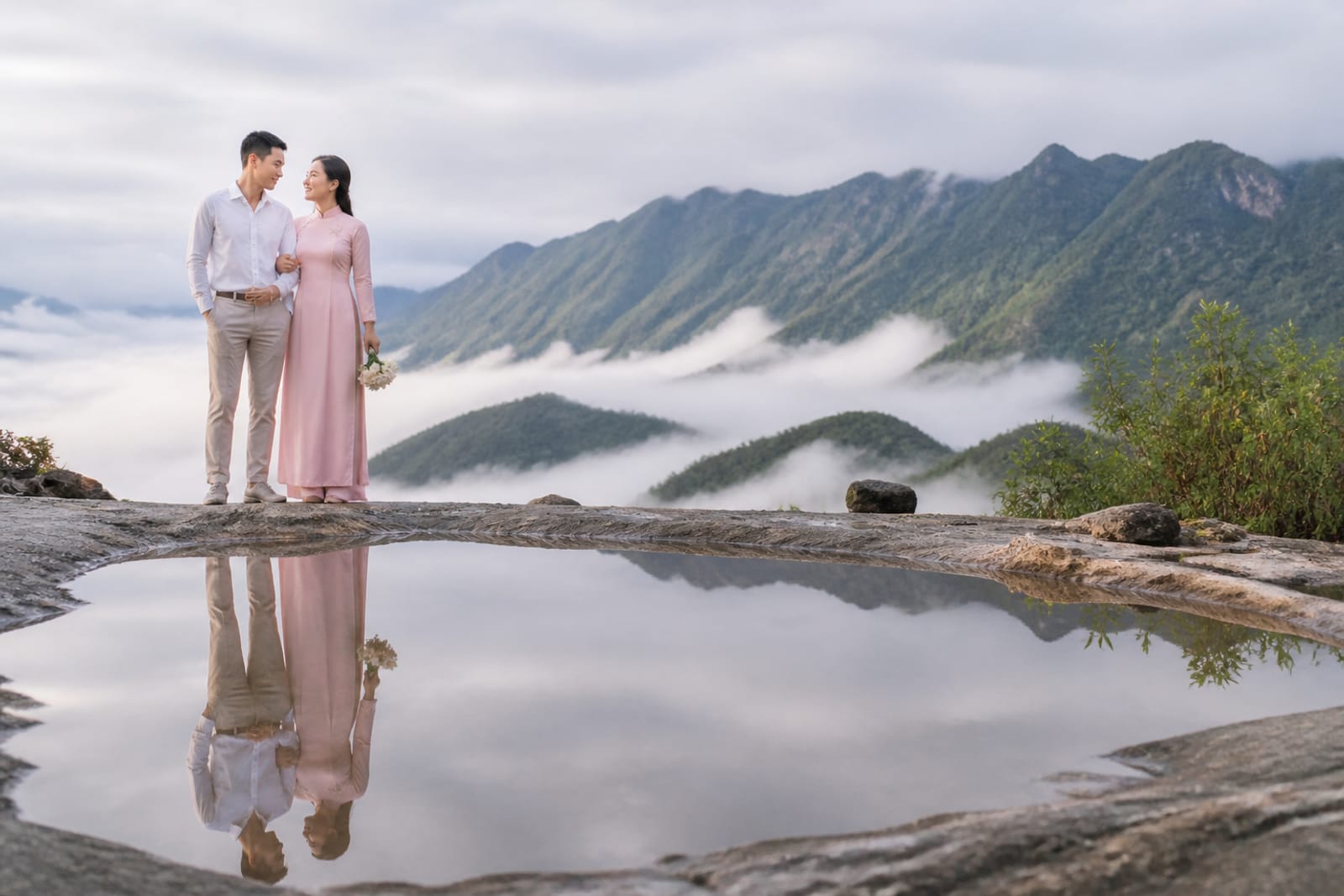
Which Seasons Deliver Clear Light Without the Masses
| Season | Light Quality | Crowd Level | Outfit Fit | Why It Works |
|---|---|---|---|---|
| Sep–Nov (Sep early-Oct golden hour; late Oct–Nov harvest) | Golden hour morning/eve; clear, low humidity | Lowest weekdays, quiet terraces | Formal dress + light jacket fits temps (15–22°C) | Harvest stage, cool enough for ao dai, best light angles |
| Dec–Feb (winter, foggy, near-0°C some days) | Soft, moody light; dense fog disrupts frames | Medium; fewer tourists, more locals | Formal coat/shawl required; muddy paths risky in heels | Cold, slippery terrain; few couples attempt it; light often obscured |
| Mar–May (spring, warming) | Clear but increasingly hazy; uneven light by late May | Rising; families, honeymooners arrive | Light jacket OK by May; paths dry | Transition month; unpredictable humidity and tourist flow |
| Jun–Aug (monsoon, hot, rainy) | Misty, overcast; heavy afternoon rain clouds | Highest; families, students, group tours | Ao dai clings; wet terraces treacherous in formal heels | Rainy season; terraces muddy; light flat or blocked; many shoots cancel |
The sweet spot is late September through early October (harvest, clear light, 60–70% fewer crowds on weekday mornings). Late Oct–Nov works, but some paths are drier and more crowded; Dec is beautiful but cold and fog-prone. Book a local photographer who scouts the exact day's weather before your shoot and has a backup location or time slot in mind.
What to Check Before Hiring a Sapa-Based Photographer
A pre-wedding couple in Sapa cannot simply rely on a Hanoi studio or a one-time tourist guide with a camera. The photographer must have:
- Permit and access knowledge: Some terraces require farmer permission or local guide presence. A Sapa resident knows who to ask and how to move without disrupting locals' livelihoods.
- Light and timing specifics: "We'll be at the top terrace at 6:15 am, shooting into the southeast light for 45 minutes, then move to the lower path for side-light portraits." If they say "we'll figure it out," they are not ready.
- Footwear and safety counsel: Do they tell you to wear hiking boots to the spot, carry the heels, and plan outfit changes? Or do they expect you to walk down slippery terraced paths in a formal ao dai and heels?
- Backup plan for weather: Sapa's weather shifts fast. Ask: "If fog rolls in by 7 am, what's the backup location?" A vague answer signals inexperience.
- Portfolio in that valley, at that hour: Not generic Muong Hoa sunset shots. Ask for 2–3 couples shot before 7 am or after 5 pm on weekdays in Sep–Nov. Real specificity.
📸 Book on WhatsApp — pre-wedding & elopement photoshoot
How to Prepare Outfits and Logistics for Steep, Wet Terrain
Muong Hoa Valley is not a manicured photoshoot location. Terraces are farmed land—muddy after rain, slippery year-round, steep enough that a wrong step risks injury or a soiled gown. Pre-wedding couples who finish with clean, unwrinkled frames plan like this:
- Transport to the valley entrance (via Sapa town): Arrange a driver who knows where to drop you. Many couples book a private car for the full day to avoid taxi haggling and timing stress.
- Walk to shoot spot in hiking boots: The descent is 15–30 minutes depending on which terrace your photographer chose. Wear functional shoes; pack the formal heels in a bag or have your photographer carry them.
- Change outfit on a dry spot: Bring a small towel or waterproof mat. Your photographer should identify a flat, sheltered place (often a farmer's shed or a wide terrace section) before the shoot day.
- One outfit change maximum: Wet terrain and limited flat spots mean two ao dai looks (or one ao dai + one Western dress) is realistic. More changes waste time and increase the risk of mud transfer.
- Bring a small mirror and touch-up kit: Hair and makeup artist? Not typical in Sapa; assume you'll do minor touch-ups between outfit changes yourself or hire a makeup artist from Hanoi to join the shoot day (logistical cost factor, not a typical package).
Cáo Studio operates in Hanoi and Ho Chi Minh City with in-house hair and makeup; Sapa pre-wedding shoots fall outside our service area. If you're planning a pre-wedding day in Hanoi or Saigon instead, our team handles makeup, hair, and photography in one booking, reducing coordination stress.
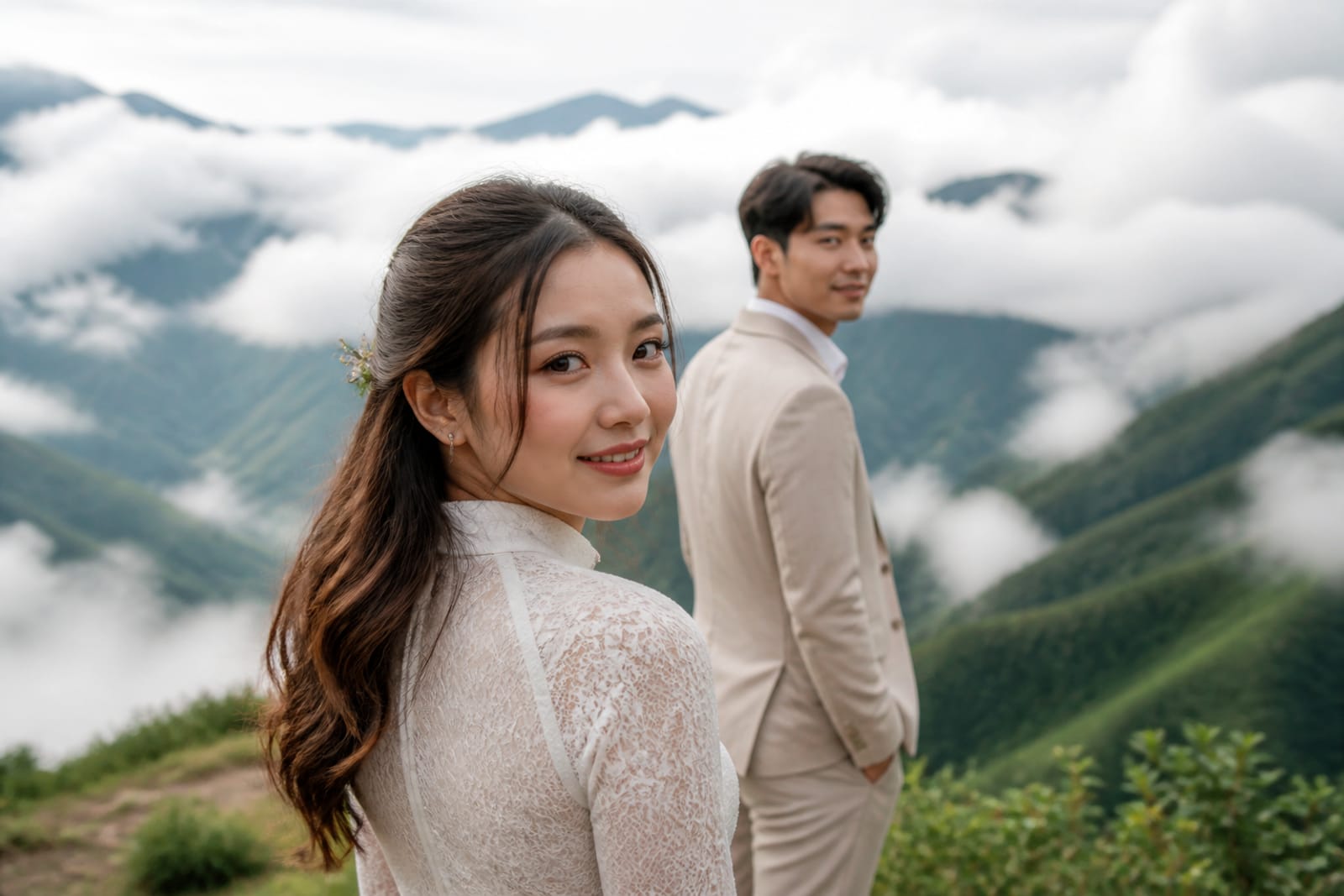
Building a Timeline That Avoids Tourist Peaks
Here's how a pre-wedding couple in Muong Hoa Valley sidesteps crowds:
- 5:30 am: Meet your photographer and guide at an agreed point (often Sapa town or the valley entrance). Transport sorted the night before.
- 6:00–6:30 am: Arrive at the first shoot spot; light is soft, coming from the side or behind the terraces. No other tourists yet.
- 6:30–7:30 am: Main shoot window. Photographer directs you to walk between terraces, look at each other, walk out of frame. Wide shots first (show the valley), then medium (you two among the terraces), then detail (hands, faces, the valley behind you).
- 7:30–8:00 am: Light hardens; outfit change (if planned). Second location, final shots.
- 8:00–8:30 am: Tour buses start arriving at the main entrance. Your couple has finished frames and is heading back to town for breakfast.
If you prefer evening light (5–6 pm), reverse this: late afternoon softness, long shadows, fewer crowds departing than arriving. Both windows work; the difference is your energy level after the 3–4 am wake-up or the evening rush to finish before dark.
When to Hire a Local Guide vs. a Traveling Photographer
| Option | Best For | Logistics | Cost Factor | Trade-off |
|---|---|---|---|---|
| Local Sapa photographer + guide | Pre-wedding couples wanting frames, not just a memory day | Knows every path, light hour, permit; arranges transport | Travel time + housing; base price lower than flying-in photographer | Limited to Sapa; no studio post-production; limited portfolio polish |
| Hanoi/Saigon studio coordinating local Sapa team | Couples wanting studio-level editing + one brand team | Studio briefs local team, remote oversight; some pre-shoot calls | Studio travel + local team; higher base price | Coordination lag; less day-of flexibility; studio may not know Sapa terraces as well |
| Photographer traveling from Hanoi/Saigon to Sapa | Couples wanting a known team for consistency | You hire and pay one team; they travel to Sapa | High travel cost factored in (logistics, transport, accommodation); longer coordination | Expensive; team may not know Sapa timing/access as well as locals |
The trade-off: a local Sapa photographer knows the light, terrain, and farmer relationships but may have less polished post-production. A Hanoi studio team knows editing and styling but needs local knowledge. Best outcome: a Hanoi studio (like Cáo) briefs a trusted Sapa-based partner, or you hire a Sapa photographer and send your style references + mood photos beforehand. Avoid: hiring an unfamiliar team last-minute and expecting flawless execution.
What to Check Before You Book
Before contacting a Sapa photographer or planning your trip, confirm:
- Exact shoot date and backup date: Weather in Sapa shifts fast. Is a rain date or rescheduled time guaranteed, or is it non-refundable?
- Outfit expectations: Do you bring your ao dai, or is rental available in Sapa? (Most couples bring or rent from Hanoi—Sapa rental options are limited.) Budget outfit decisions as a cost factor.
- Edited photo timeline: When will you see retouched images? (Typical: 1–3 weeks for a local team; some offer rush delivery.)
- Transportation and permits included? Ask if the quoted rate covers access permits, guide fees, or transport to the valley. Hidden add-ons derail budgets.
- Portfolio proof: Ask for 3–5 recent couple shoots from Sep–Nov in Muong Hoa Valley, shot on weekday mornings or evenings. Specificity proves readiness.
If you're drawn to a pre-wedding shoot but Sapa logistics feel overwhelming, consider a pre-wedding photoshoot in Hanoi—similar mood and tea-field terraces, fewer permit headaches, easier coordination, and Cáo Studio's team handles hair, makeup, and photography in one booking.
FAQ
Can I shoot Muong Hoa Valley rice terraces with a Hanoi photographer not based in Sapa?
Yes, but they must scout in advance or partner with a local guide. Hiring a Hanoi team to travel to Sapa adds cost (transport, accommodation). Ask for proof they've shot there before and know sunrise light timing and permit rules.
What's the best month to avoid crowds and still see golden harvest terraces?
Late September to early October is ideal: harvest stage, clear light, cooler temps (15–22°C suit formal wear), and lowest weekday foot traffic. Late Oct–Nov works too but gets progressively busier and hazier.
Do I need a professional guide, or can my photographer handle the path and logistics?
A photographer handles framing; a local guide handles permit access, farmer relationships, and safe footing on wet terrain. Many Sapa photographers work with guides built-in. Confirm this before booking—"photographer only" shoots sometimes skip the relationship-building that keeps you off private terraces.
What do I wear to the shoot spot, and how do I change into my ao dai without getting muddy?
Wear hiking boots for the descent; pack formal heels. Change on a dry, flat spot (farmer's shed or wide terrace) your photographer identifies beforehand. Bring a small towel. Plan one outfit maximum to avoid time waste and mud transfer.
How early do I need to wake up to avoid tourist crowds?
Arrive at your first shoot spot by 6:00–6:30 am to capture light before tour buses (7:30–8:00 am onward). This means 5:00–5:30 am wake-up and transport ready the night before. Evening shoots (5:00–6:00 pm) have fewer arrivals but require a retreat before full dark.
Is Cáo Studio available for Sapa pre-wedding shoots?
No. Cáo Studio operates in Hanoi, Ho Chi Minh City, and Hoi An with a full in-house team (hair, makeup, photography). For Sapa, hire a local photographer and use this guide to vet them. If you'd prefer a pre-wedding photoshoot with one coordinated team, consider Hanoi or Saigon instead.
FAQ
Can I shoot Muong Hoa Valley rice terraces with a Hanoi photographer not based in Sapa?
Yes, but they must scout in advance or partner with a local guide. Hiring a Hanoi team to travel to Sapa adds cost (transport, accommodation). Ask for proof they've shot there before and know sunrise light timing and permit rules.
What's the best month to avoid crowds and still see golden harvest terraces?
Late September to early October is ideal: harvest stage, clear light, cooler temps (15–22°C suit formal wear), and lowest weekday foot traffic. Late Oct–Nov works too but gets progressively busier and hazier.
Do I need a professional guide, or can my photographer handle the path and logistics?
A photographer handles framing; a local guide handles permit access, farmer relationships, and safe footing on wet terrain. Many Sapa photographers work with guides built-in. Confirm this before booking—"photographer only" shoots sometimes skip the relationship-building that keeps you off private terraces.
What do I wear to the shoot spot, and how do I change into my ao dai without getting muddy?
Wear hiking boots for the descent; pack formal heels. Change on a dry, flat spot (farmer's shed or wide terrace) your photographer identifies beforehand. Bring a small towel. Plan one outfit maximum to avoid time waste and mud transfer.
How early do I need to wake up to avoid tourist crowds?
Arrive at your first shoot spot by 6:00–6:30 am to capture light before tour buses (7:30–8:00 am onward). This means 5:00–5:30 am wake-up and transport ready the night before. Evening shoots (5:00–6:00 pm) have fewer arrivals but require a retreat before full dark.
Is Cáo Studio available for Sapa pre-wedding shoots?
No. Cáo Studio operates in [Hanoi](/hanoi), [Ho Chi Minh City](/saigon), and [Hoi An](/hoi-an) with a full in-house team (hair, makeup, photography). For Sapa, hire a local photographer and use this guide to vet them. If you'd prefer a [pre-wedding photoshoot](/pre-wedding-photoshoot) with one coordinated team, consider Hanoi or Saigon instead.
Ao dai, makeup, hair and a local photographer in Hanoi or Saigon — one WhatsApp message.