/pre-wedding-photoshoot
Avoid Crowds at Pu Luong Rice Terraces: Pre-Wedding Photo Guide
Pu Luong rice terraces fill with day-trippers between 8 am and 4 pm, especially weekends and dry-season peaks (Feb–Aug). The crowd strategy has three layers: shoot early (before 7 am) or late (after 5 pm), pick the cooler shoulder seasons (late Sep–Oct for golden rice, or Jan–Feb for misty mornings), and hire a local photographer who knows hidden terrace angles and can navigate access roads that tour groups skip. Cáo Studio does not operate in Pu Luong — we shoot pre-weddings in Hanoi, Saigon and Hoi An — but the guide below shows how to find and vet a local team for Pu Luong, and when to choose it over nearer options.
Why Pu Luong Crowds Peak at Certain Hours—and What That Means for Your Timeline
Pu Luong, a limestone valley near Thanh Hoa province, sits three hours south of Hanoi. Tour buses from the capital drop crowds between 9 am and 3 pm; most leave by sunset. If you shoot before 7 am, you'll walk empty terraces with soft, side-angled light—the photographer's gold hour. After 5:30 pm, the valley empties and golden light wraps the rice. The tradeoff: early starts mean a 4 am pickup from your hotel, late shoots risk losing light entirely if clouds roll in. Knowing this matters because you'll hire a team that understands Pu Luong's daily rhythm, not a Hanoi studio that books a day-trip without local knowledge.
📸 Book on WhatsApp — pre-wedding photoshoot | 💄 Makeup & hair at your hotel
Which Season Gives You Golden Rice AND Fewer Tourists—Late Sep–Oct or Feb–Aug?
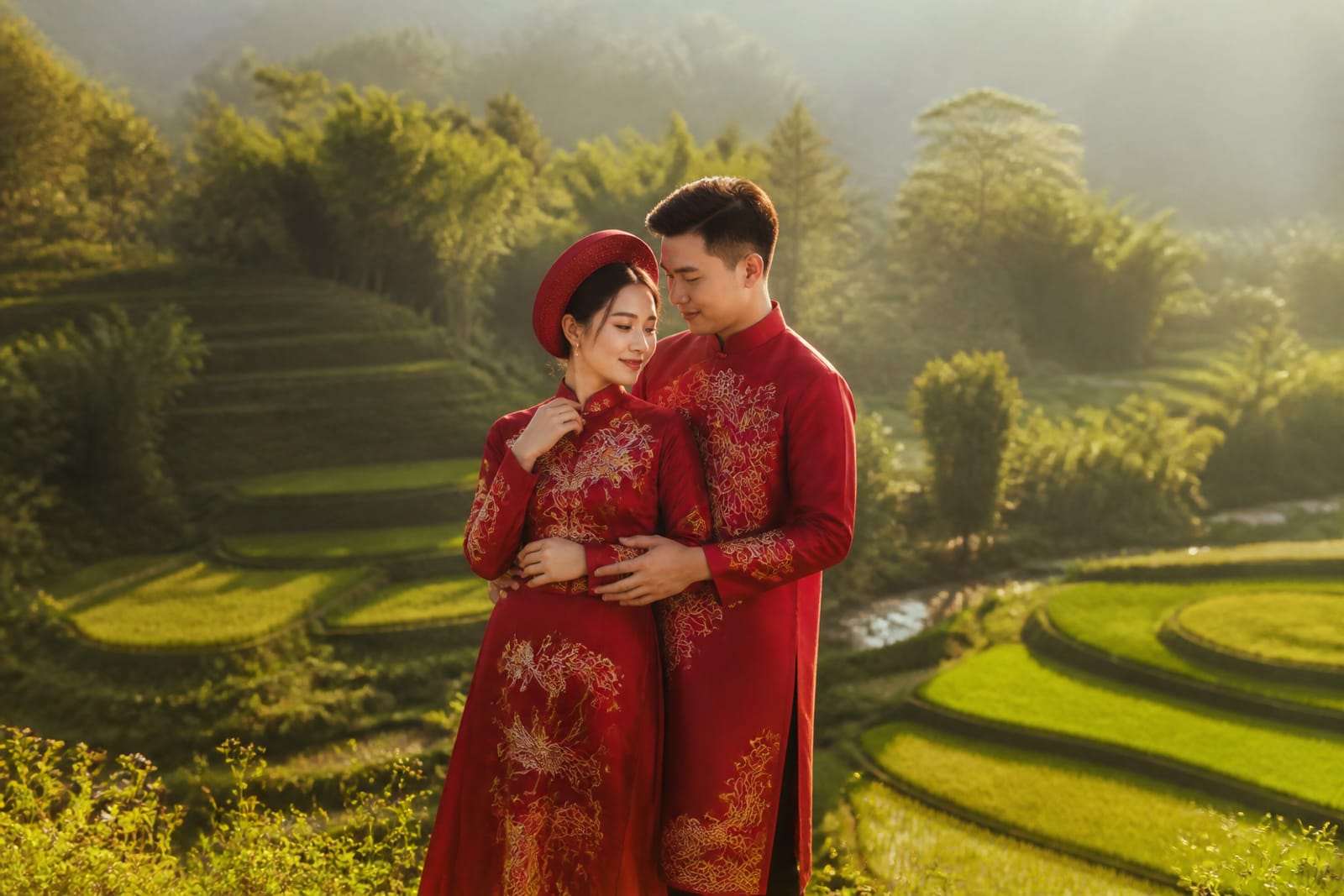
Rice ripens twice yearly: late May–June (green to gold, post-monsoon) and Sep–Oct (golden peak). February to August is dry but rice sits young and green—striking for contrast outfits (white, indigo, rust), but not the "golden Vietnam" most couples imagine. Late September through October combines peak gold with shoulder-season crowds (lower than Aug, not zero). January–February brings misty mornings and fewer visitors, but rice is harvested or regrown—patchy color. The decision: shoot Oct for iconic gold terraces and manageable crowds, or Jan–Feb for mist and solitude with less iconic rice color.
| Season | Rice Color | Crowds | Light Quality | Outfit Strategy | Why Choose It |
|---|---|---|---|---|---|
| Late May–Jun | Bright green, emerging gold | Peak (dry season, weekends) | Harsh, direct midday | Bold colors (indigo, white, rust) pop | Lush, dramatic contrast; sacrifice rice gold |
| Sep–Oct | Deep gold, mature | Medium (shoulder, weekdays best) | Warm, angled morning/evening light | Cream, blush, burgundy; muted tones | Golden rice AND lower tourism; best balance |
| Jan–Feb | Harvested or seedling; grey-green | Lowest (cool, rainy forecast) | Soft, diffused, misty | Subtle layers (grey, taupe, cream) | Solitude and mist; rice less photogenic |
| Mar–Apr | Young green, uneven patches | Medium (heat picks up) | Strong, flattering afternoon angle | White, pastels, jewel tones | Warm light, fewer crowds mid-April |
What to Wear Under an Áo Dài or Áo Tứ Thân to Stay Comfortable on a 6 am Mountain Shoot
Pu Luong mornings are 10–15°C (50–59°F) in winter, 16–18°C (61–64°F) in shoulder seasons—cold enough that an áo dài alone leaves you shivering in still air. Wear a fitted long-sleeve cotton or silk undershirt (white or cream) to hold warmth without bulk under the áo dài. Leggings or fitted black trousers under the áo dài skirt prevent wind exposure and chafe on the walk between terrace levels. Avoid thick sweaters that show as lumps under the áo dài's fitted bodice. Bring a lightweight cotton shawl or scarf to drape over your shoulders between shots—it reads as intentional styling, not cold-weather layering. Footwear must grip wet stone steps: waterproof hiking shoes (not sandals, not heels) until you reach the main terrace, then change into flat sandals or canvas shoes for your frames. The best local photographers know which terraces drain fast after rain and which stay slick—ask this when vetting.
How to Find and Vet a Local Pu Luong Photographer (Not a Hanoi Studio Shooting Day-Trips)
Pu Luong photography splits two ways: Hanoi studios that book a day-trip (they arrive at 8 am, shoot 2–3 hours, leave by 2 pm), or local photographers based in Pu Luong's guesthouses or nearby Thanh Hoa who shoot early and know terrace access, owner permissions, and light angles on specific hills. Day-trip studios often show crowded frames because they work around tour schedules, not against them. Local photographers earn repeat bookings from resorts—they can negotiate earlier terrace access and know which hills photograph best in Feb vs. Oct. Vet a local team by asking: (1) Have you shot pre-weddings in Oct? Show frames. (2) Do you have permission to shoot on these specific terraces, or do you need to ask the owner on the day? (3) Do you arrive before 6 am and stay until sunset, or is this a fixed 2-hour slot? (4) What happens if rain closes the terraces—do you have backup spots within 30 min? (5) Who handles hair and makeup—do you hire a local artist, or should the couple book separately? Ask for WhatsApp contact details and video call to see their portfolio on-location, not just edited albums. Check their recent work with couples; single-tourist frames don't reveal how they handle timing and movement on uneven terrain.
Outfit and Timing Checklist: What to Confirm Before You Book a Pu Luong Session
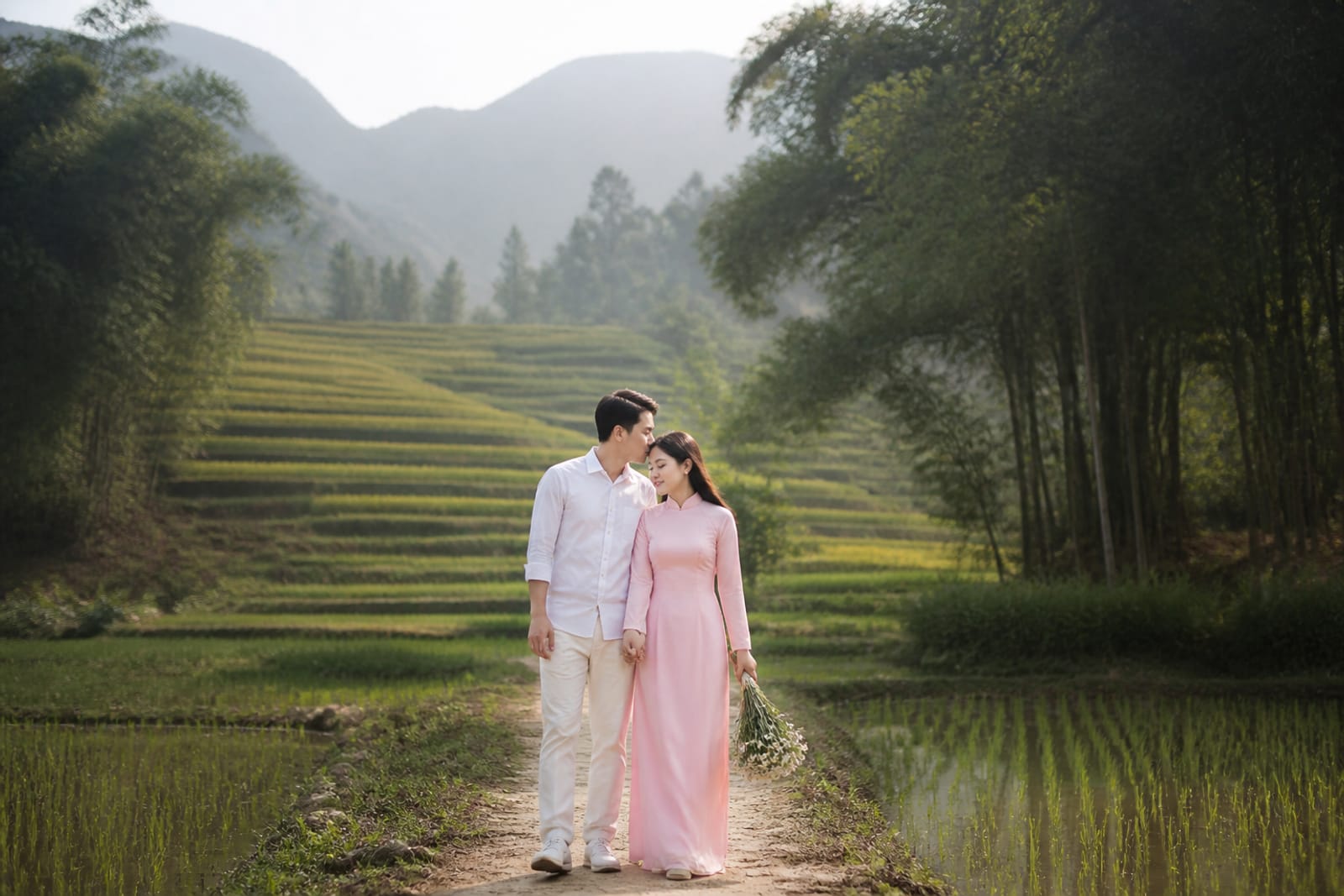
A pre-wedding shoot at Pu Luong is not the same as an áo dài photoshoot in Hanoi's Old Quarter—it requires weather backup, terrace owner coordination, and a team that arrives before dawn. Before you book, confirm in writing (WhatsApp or email) these five points with your photographer:
- Start time and pickup location: Confirm the exact hour (5:30 am or 6 am pickup from your hotel) and who drives (photographer's vehicle, or shared shuttle with other bookings?).
- Outfit plan: How many outfit changes? Are layers and undergarments included in advice, or do you buy them? Does the photographer's makeup artist travel, or do you hire a Hanoi artist and pay separately?
- Terrace access and permissions: Which specific terraces will you shoot, and do they require owner permission or payment on the day? (Some family-owned terraces charge a small fee for commercial shoots; ask who pays.)
- Weather backup: If it rains, does the shoot reschedule to a specific date within two weeks, or do you lose the deposit?
- Delivery and editing timeline: When do you receive unedited previews, edited selects, and any album or video? (48-hour turnaround is standard; confirm.)
When Pu Luong Is Worth the Distance vs. a Closer Alternative
Pu Luong suits couples who want rice-terrace landscapes and have flexibility on timing—it's a 6+ hour commitment (drive, shoot, return) and works best if you stay overnight or are visiting the region anyway. If you're based in Hanoi and have only one afternoon free, consider nearer alternatives: Cáo Studio's pre-wedding shoots in Hanoi use Old Quarter reflections, French colonial light, and lake walks—no 3-hour drive, no 5 am alarm. If you're in Ho Chi Minh City, our Saigon pre-wedding sessions include river light and urban backdrops that don't require season-specific timing. Pu Luong wins if you prioritize rural, authentic Vietnam visuals and can commit to early starts; Hanoi and Saigon win if you want cinematic urban frames and need flexibility around your travel schedule.
---
What to Check Before You Book a Local Pu Luong Team
- Portfolio dates: Ask when the most recent couple's frames were shot (month and year). A portfolio from Oct 2024 proves they understand autumn light; spring-only work suggests they don't shoot the best rice season.
- Terrace owner relationships: Do they have standing permission to shoot on specific terraces, or do they scout and ask on the day? Standing permission = no surprises; day-of requests = risk of denial or delays.
- Backup plan details: Rain happens in Sep–Oct. A real backup is a nearby covered location or a rescheduled date within 14 days—not "we'll try indoors" the day-of.
- Makeup artist credentials: If included, is the artist experienced with outdoor heat and moisture retention (waterproof products, setting spray)? Ask for a trial session in Hanoi or a video call walkthrough.
- Delivery samples: Ask for five unedited RAW previews from a couple's recent session to see their raw editing baseline and whether colors feel true or oversaturated.
---
📸 Book on WhatsApp — pre-wedding photoshoot
---
If you're planning a pre-wedding shoot in a destination Cáo Studio doesn't reach, this vetting framework applies to any rural photoshoot—mountain, coastal, or valley. We shoot pre-weddings in Hanoi, Saigon, and Hoi An, and we handle everything in-house: direction, hair, makeup, and photography. For Pu Luong, follow the steps above to find a local team, or contact us on WhatsApp to discuss whether a Hanoi session with a day-trip to Pu Luong (guided by our network) suits your timeline.
FAQ
Is it really worth shooting at Pu Luong if I live in Hanoi and only have one free day?
Not if your priority is minimizing travel time. A 5 am pickup, 3-hour drive, 4-hour shoot, and 3-hour return = 15+ hours away. If you're already in the region or staying overnight, yes. If you have 8 hours total, Hanoi's Old Quarter and Red River deliver pre-wedding frames without the commute.
Do I need a permit to shoot wedding photos at Pu Luong terraces?
No national permit required, but individual terraces are family-owned farmland. A local photographer with standing relationships can shoot without delays; an outsider should confirm access via the photographer. Some families ask a small on-site fee for commercial shoots—clarify beforehand.
What's the real crowd difference between shooting at 6 am versus 8 am in October?
At 6 am, terraces are empty and light is horizontal and warm—ideal for silhouettes and texture. By 8 am, the first tourist groups arrive; by 9 am, 30–50 people spread across the main terraces. Early light also prevents harsh shadows on faces, a key reason photographers push 6 am starts.
If I hire a Hanoi studio for a Pu Luong day-trip, what should I expect to pay extra for?
Travel time and fuel are factors (ask your studio). Terrace owner fees, local guide, or makeup-artist travel may add costs—never stated as fixed amounts, always discussed as factors during booking. Confirm what's included in the quote before signing.
Can I wear a traditional áo dài and still move freely on steep terrace steps?
Yes, if you wear fitted layers underneath and avoid heavy embroidery that restricts shoulder movement. Pair it with grip footwear for the walk, then change to flat sandals on the main terrace for your frames. A lightweight shawl or scarf doubles as styling and warmth.
FAQ
Is it really worth shooting at Pu Luong if I live in Hanoi and only have one free day?
Not if your priority is minimizing travel time. A 5 am pickup, 3-hour drive, 4-hour shoot, and 3-hour return = 15+ hours away. If you're already in the region or staying overnight, yes. If you have 8 hours total, Hanoi's Old Quarter and Red River deliver pre-wedding frames without the commute.
Do I need a permit to shoot wedding photos at Pu Luong terraces?
No national permit required, but individual terraces are family-owned farmland. A local photographer with standing relationships can shoot without delays; an outsider should confirm access via the photographer. Some families ask a small on-site fee for commercial shoots—clarify beforehand.
What's the real crowd difference between shooting at 6 am versus 8 am in October?
At 6 am, terraces are empty and light is horizontal and warm—ideal for silhouettes and texture. By 8 am, the first tourist groups arrive; by 9 am, 30–50 people spread across the main terraces. Early light also prevents harsh shadows on faces, a key reason photographers push 6 am starts.
If I hire a Hanoi studio for a Pu Luong day-trip, what should I expect to pay extra for?
Travel time and fuel are factors (ask your studio). Terrace owner fees, local guide, or makeup-artist travel may add costs—never stated as fixed amounts, always discussed as factors during booking. Confirm what's included in the quote before signing.
Can I wear a traditional áo dài and still move freely on steep terrace steps?
Yes, if you wear fitted layers underneath and avoid heavy embroidery that restricts shoulder movement. Pair it with grip footwear for the walk, then change to flat sandals on the main terrace for your frames. A lightweight shawl or scarf doubles as styling and warmth.
Ao dai, makeup, hair and a local photographer in Hanoi or Saigon — one WhatsApp message.