/pre-wedding-photoshoot
Avoid Crowds at Thanh Ha Pottery Village for Your Pre-Wedding Shoot
Thanh Ha pottery village near Hoi An is a working ceramics hub where potters hand-throw daily. Tourist groups flood the main lanes from 9 a.m. onward, but sunrise (around 5:30–6:30 a.m., depending on season) offers quiet streets, warm side-light on clay and kilns, and access to family workshops before the day's kiln fires. A professional pre-wedding photoshoot here typically runs 2–3 hours and requires a team that knows the potters, carries backup lighting for shadow zones inside workshops, and can navigate narrow alleys without disturbing active work. Cáo Studio – Makeup & Photoshoot runs Hoi An pre-wedding sessions by appointment; the team travels to Thanh Ha, scouts kilns in advance, and times arrivals for minimal foot traffic. The trade-off: sunrise starts mean 4:30–5 a.m. pickups, and ceramic dust can soil white fabrics—plan outfit changes and protective layering. Avoid October–November due to seasonal rains and typhoon risk in the region. ---
Why sunrise is the only hour that matters at Thanh Ha
Thanh Ha's narrow alleys and family kiln courtyards fill quickly. By 8 a.m., tour buses drop groups; by noon, you cannot move without strangers in every frame. Sunrise light hits the east-facing kilns at a low angle, casting long shadows across terracotta pots and wooden work tables—the most photogenic moment. The village is coolest before 7 a.m., so your makeup holds and you move faster. After 10 a.m., heat reflects off clay and kiln walls, flattening skin tone and making white ao dai appear blown-out in photos. Potters also work earliest, when kilns are still warm and the firing rhythms are most active visually. A professional team arrives by 5:15 a.m. to scout angles, brief potters on the shoot, and position gear. Early timing alone cuts foot traffic by 80–90%.
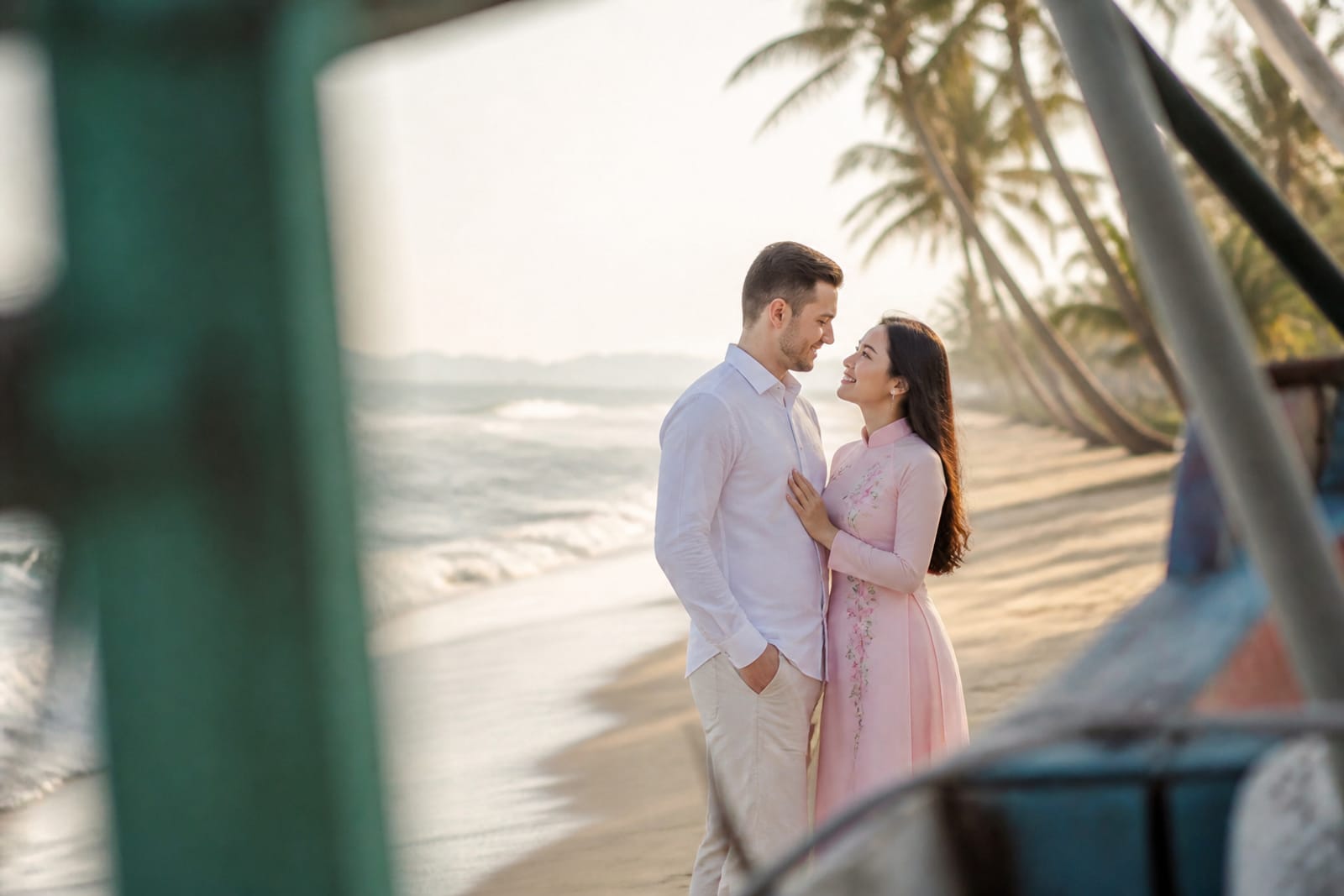
Should you book a studio or hire a local freelance photographer?
| Option | Best for | Logistics | Why it works |
|---|---|---|---|
| Studio with Hoi An team (e.g. Cáo) | Couples wanting makeup, styling, backup plans | Pre-timed Thanh Ha visit, kit included, transport arranged | Team knows potters, permits handled, equipment + lighting on-site |
| Local freelancer found online | Budget-conscious, simple couple-only frame | You arrange transport, timing, potters' permission | Lower upfront cost, authentic local eye |
| Solo DIY with smartphone/hired couple-hour assistant | Engagement announcement, casual vibe | Self-guided sunrise walk, basic tripod | Full creative control, slowest editing, no professional retouching |
Cáo Studio's pre-wedding photoshoot includes makeup and hair (either in-studio or at your hotel via makeup & hair service), outfit coordination, and a team that has pre-scouted Thanh Ha's best kilns and talked to potters. A freelancer may charge less but requires you to handle permits, negotiate kiln access, arrange your own ride, and solve problems on-site. DIY is cheapest but yields flat light and phone-quality files. Studios factor in travel time, contingency (weather, closed kilns, permit delays), and editing; cost reflects these variables, not a fixed rate. Ask on WhatsApp (+84 338 762 340) what's included—exact inclusions vary by package.
📸 Book a pre-wedding photoshoot – ask on WhatsApp
What to wear and pack to keep clothes clean in a pottery workshop
Ceramic dust clings to fabric. Wear a protective robe or shawl over your ao dai until the final 20 minutes of shooting; a long scarf tied low can frame your shoulders in-frame without visible bulk. Bring two ao dai if shooting both inside kilns and outside—one for dusty workshop angles, one for clean outdoor frames. Potters appreciate if you step carefully and stay off active work areas; rehearse your poses in clear zones beforehand. Wear slip-on shoes (no laces in clay zones) and a headscarf for the car ride. Pack wet wipes to clean hands and feet before the second outfit. White or cream ao dai show dust fastest; jewel tones or pastels hide it better. Long sleeves protect arms in tight spaces. The studio's makeup artist will have powder and touch-up kits to refresh your face after kiln warmth, but your crew should carry extra if you're shooting solo. Plan 15 minutes between outfit changes for cleanup.
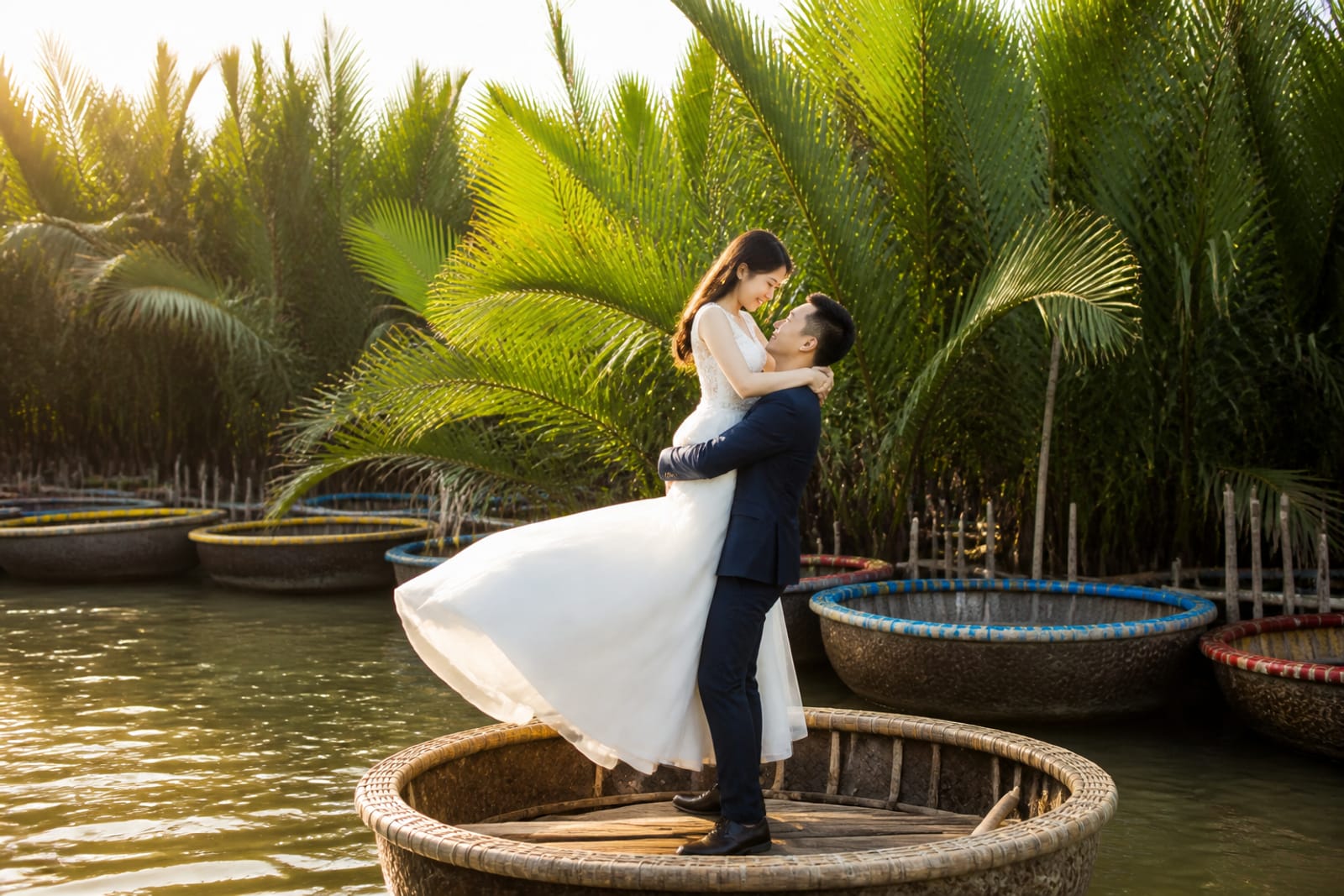
Timing your visit: season, light angle, and crowd patterns
Hoi An's driest window is February–April, when skies clear by 6 a.m. and humidity is low. May–August is scorching (35°C+) but still dry; sunrise is critical here because by 8 a.m. heat becomes intense. September–December is rainy and typhoon-prone; October–November brings flooding to Hoi An Ancient Town and surrounding villages—avoid this window entirely for outdoor shoots. December–January is cool and overcast; sunrise light is soft but muted, and afternoon drizzle may disrupt schedules. Sunrise times shift: expect 5:15–5:45 a.m. in summer, 6:00–6:30 a.m. in winter. A professional studio confirms sunrise within ±15 minutes and books a backup half-day slot (afternoon of same day or next morning) if rain forces a delay. Crowds peak March–April and July–September (school holidays, dry season tourism). Late January, early February (post-Tet, pre-tourist season), and May (end of school year, before peak heat) offer smaller groups and fewer re-shoots needed.
Pre-wedding at Thanh Ha vs. alternative Hoi An photo locations
Thanh Ha's strength is authentic craft, textured surfaces, and a living workshop setting—no fake heritage park. Trade-offs: dust, early wake, limited shade, and kiln access depends on potters' daily schedule. Hoi An Ancient Town (photoshoots in Hoi An) offers lantern-lit alleys, wooden shutters, and river views; it requires an entrance ticket, crowds are unavoidable even at sunrise, and the setting feels staged for tourists. Rice fields near Hoi An provide open-air drama and golden light but require walking in mud, coordinate with farmers, and lack shelter if weather turns. Cua Dai Beach gives modern, open space and water reflection; it's exposed to midday sun and loses intimacy. Hoi An's Japanese Covered Bridge and gardens offer iconic backdrops but charge entry and are most crowded. Thanh Ha suits couples valuing craft heritage, texture, and authenticity over Instagram-famous spots. Choose based on your story: pre-wedding narrative (getting hands dirty, learning a trade) fits Thanh Ha; formal elegance suits the Ancient Town; adventure suits rice fields. A studio like Cáo can advise on which location matches your vision and logistics.
What to check before you book a pre-wedding session at Thanh Ha
- Ask the studio if they have pre-established kiln access. Not all potters welcome photographers; the studio should have prior relationships. Confirm whether the team briefs potters day-of or weeks ahead.
- Confirm sunrise and backup date. Ask exact pickup time, how weather delays are handled, and whether a rain date is included or costs extra.
- Verify what's in the package. Ask on WhatsApp what makeup, outfit changes, kiln access permits (if any), and edited-file counts are included. Do not assume; costs vary.
- Check pottery-dust disclaimers. Ask if the studio covers cleanup between outfit changes or if you bring your own supplies. Clarify care instructions for white fabrics post-shoot.
- See previous Thanh Ha work. Look at the studio's lookbook (lookbook) for actual Thanh Ha frames—check lighting quality, pose authenticity, and dust-handling.
- Ask about photo edit turnaround. Edited files often take 2–4 weeks; confirm timeline and whether prints or albums are included (photo-album) or separate.
- Understand cost factors, not fixed price. Duration (2–3 hours), number of outfit changes, studio location (Hanoi vs. Saigon vs. Hoi An), and travel time affect totals. Ask for a WhatsApp quote once you've specified session scope.
💄 Makeup & hair at your hotel | 🌸 See the lookbook
---
Thanh Ha pottery village is stunning because it is working, unpolished, and uncontrolled—exactly what makes crowds feel jarring and timing critical. Shooting at sunrise with a professional team that respects the space and knows the potters transforms the visit from tourist photo-op to genuine pre-wedding memory. Studios like Cáo handle logistics so you focus on your partner and the craft. Choose your session partner, commit to an early morning, and confirm kiln access in writing beforehand.
📸 Book your pre-wedding photoshoot now – WhatsApp +84 338 762 340
---
FAQ
Can we shoot at Thanh Ha in the afternoon to sleep longer?
Afternoon light is harsh and foot traffic peaks 2–6 p.m. Afternoon shoots need strong reflectors, fade colors in shadows, and rarely avoid tourist groups. Sunrise avoids all three. Early wake pays off in image quality.
Do we need to pay potters to pose or use their kilns?
Practices vary. A studio with prior relationships often negotiates access or small gestures (tea, product samples). Discuss payment expectations with your photographer beforehand; do not assume it's free or included.
What if rain hits on our 5 a.m. arrival?
Kilns offer shelter; outdoor frames move indoors. A good studio has backup indoor angles pre-scouted and may reschedule if heavy rain ruins visibility. Confirm weather contingency before booking.
Is a drone shot possible at Thanh Ha?
Drone permits in Hoi An are restricted. Check local regulations and ask your studio if they're licensed. Most pre-wedding shoots do not include aerial frames due to permit complexity.
How long does a Thanh Ha pre-wedding shoot usually take?
Typically 2–3 hours on-site (5:30 a.m.–8:30 a.m.), including outfit changes, makeup touch-ups, and posing across multiple kiln and courtyard setups. Total appointment time (pickup, transport, return) is longer; ask your studio for the full schedule.
FAQ
Can we shoot at Thanh Ha in the afternoon to sleep longer?
Afternoon light is harsh and foot traffic peaks 2–6 p.m. Afternoon shoots need strong reflectors, fade colors in shadows, and rarely avoid tourist groups. Sunrise avoids all three. Early wake pays off in image quality.
Do we need to pay potters to pose or use their kilns?
Practices vary. A studio with prior relationships often negotiates access or small gestures (tea, product samples). Discuss payment expectations with your photographer beforehand; do not assume it's free or included.
What if rain hits on our 5 a.m. arrival?
Kilns offer shelter; outdoor frames move indoors. A good studio has backup indoor angles pre-scouted and may reschedule if heavy rain ruins visibility. Confirm weather contingency before booking.
Is a drone shot possible at Thanh Ha?
Drone permits in Hoi An are restricted. Check local regulations and ask your studio if they're licensed. Most pre-wedding shoots do not include aerial frames due to permit complexity.
How long does a Thanh Ha pre-wedding shoot usually take?
Typically 2–3 hours on-site (5:30 a.m.–8:30 a.m.), including outfit changes, makeup touch-ups, and posing across multiple kiln and courtyard setups. Total appointment time (pickup, transport, return) is longer; ask your studio for the full schedule.
Ao dai, makeup, hair and a local photographer in Hanoi or Saigon — one WhatsApp message.