/pre-wedding-photoshoot
Avoid Crowds at Tra Que Village: Wedding Photo Guide 2026
Tra Que, a working organic farm village 4 km northeast of Hoi An Ancient Town, draws hundreds of daily visitors and photographers. Peak crowds arrive 9 a.m.–4 p.m., especially Feb–Apr and during full-moon festival nights. To avoid crowds: shoot at sunrise (before 6:30 a.m.) or late afternoon (after 4:30 p.m.), book on weekdays (Mon–Wed), and avoid Feb–Apr and the full-moon lantern nights. Wear ao dai or light natural fabrics that read clean against the green fields—saturated reds and blacks merge with soil and shadows. Cáo Studio – Makeup & Photoshoot can arrange Tra Que shoots with professional timing and local coordination; for smaller, quieter alternatives, consider the rice paddies near Hue or private gardens in Hanoi. Always confirm weather 5–7 days before; the rainy season (Sep–Dec) brings mud and sudden downpours, especially Oct–Nov. --- Tra Que is a genuine working vegetable farm, not a staged tourist zone. Families grow herbs, leafy greens, and flowers for Hoi An markets. If you ignore timing and etiquette, you'll share frames with 30+ other visitors, locals will ask you to move, and muddy paths will stain your ao dai hem. The difference between a clean, intimate shoot and a chaotic day is timing strategy—not luck.
When does Tra Que actually get crowded—and which hours work best?
Tra Que fills predictably. Tour buses arrive between 9 a.m. and 3 p.m.; sunset seekers cluster 5–6 p.m. (but leave quickly after dusk because the village has no lights). Sunrise (5:30–6:30 a.m.) is genuinely quiet—only farmers watering and a handful of solo photographers. Late afternoon (4:30–5:30 p.m.) works if you avoid full-moon festival nights, when the Ancient Town's lantern night draws crowds to adjacent villages for Instagram shots. Weekdays (Mon–Thu) see 60% fewer visitors than Fri–Sun. Book your shoot on a Tuesday or Wednesday morning in off-season months (Aug, Sep, Dec, Jan) and you'll walk alone through the fields.
📸 Book on WhatsApp — ao dai photoshoot
What colors and fabrics actually photograph clean in a vegetable field?
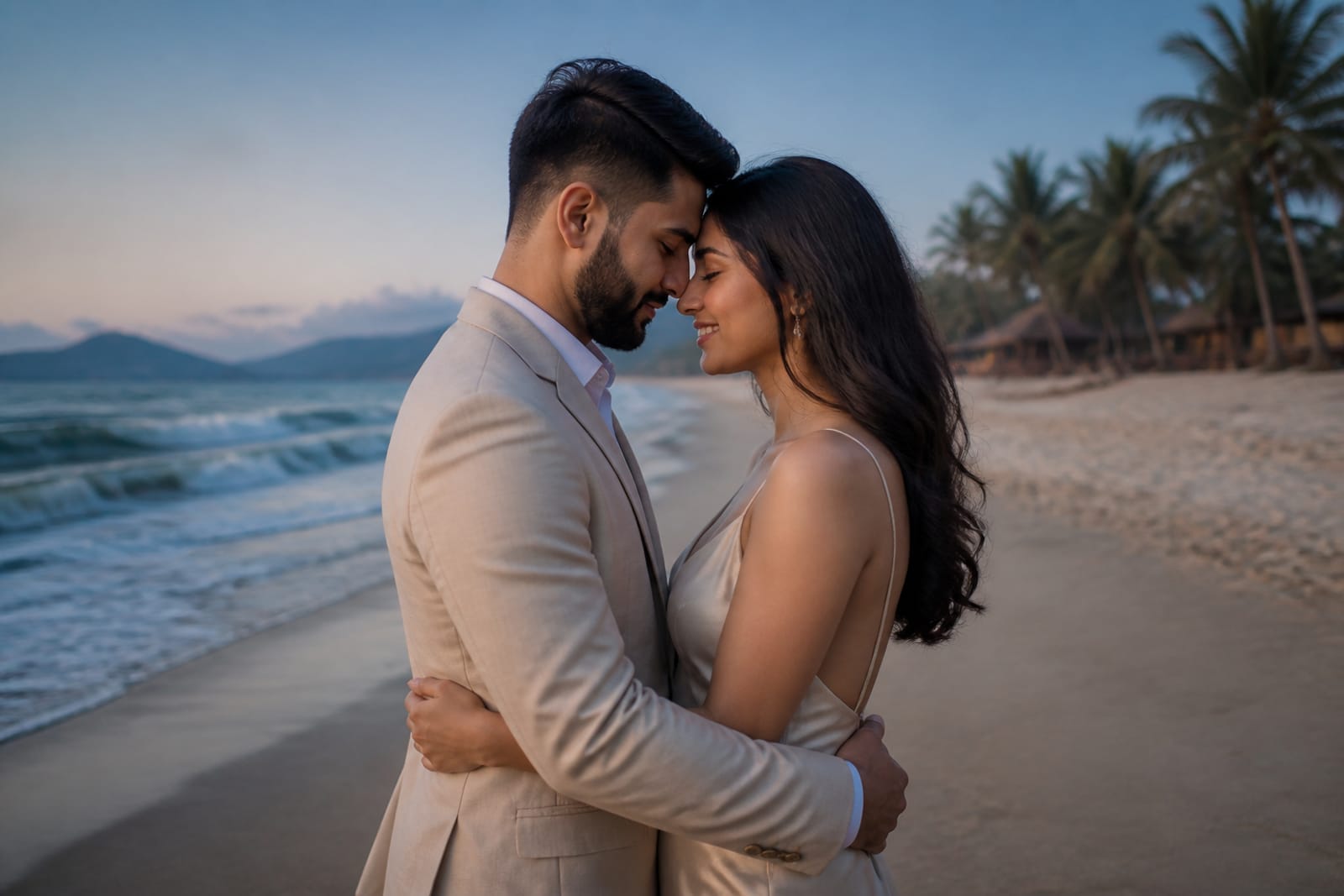
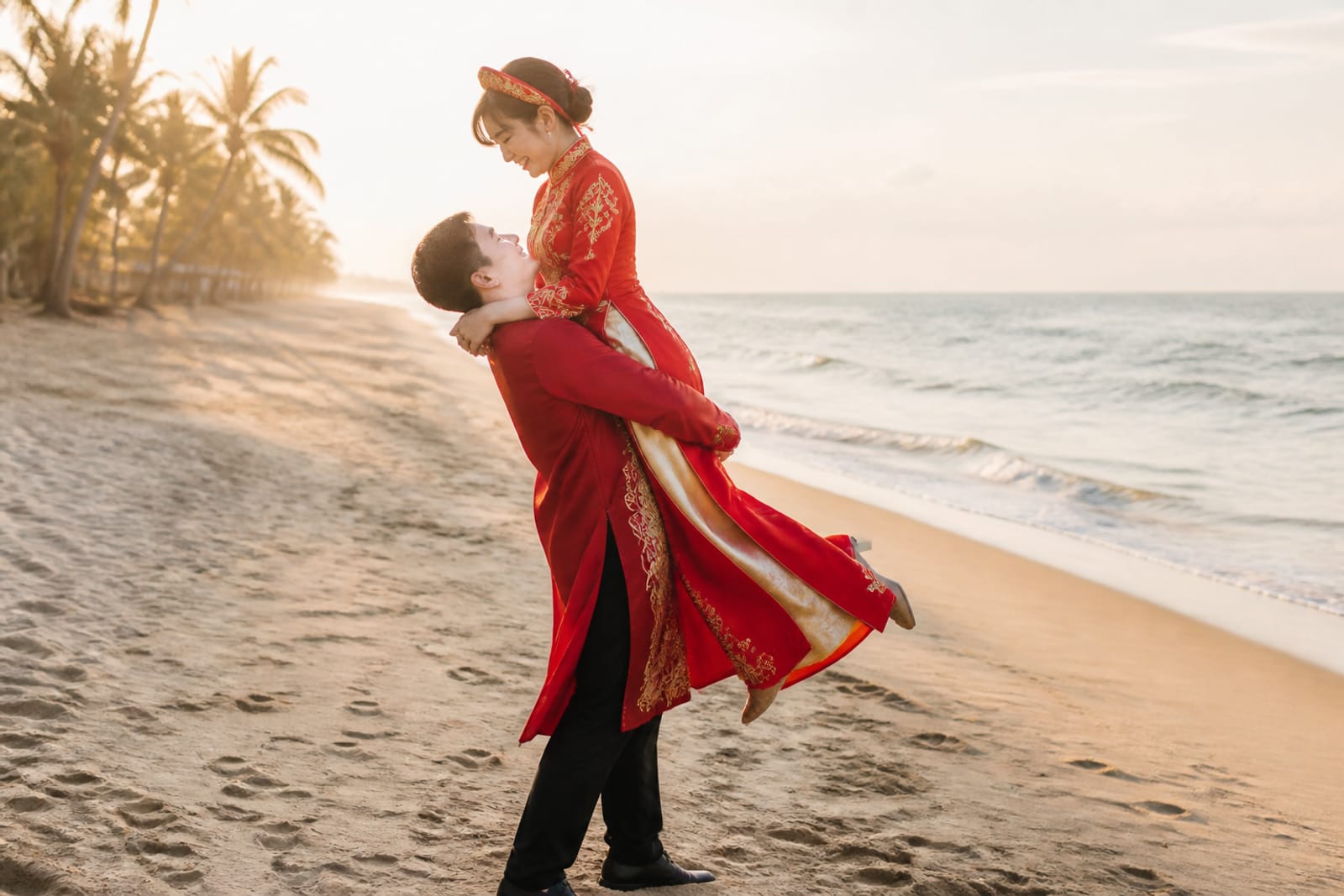
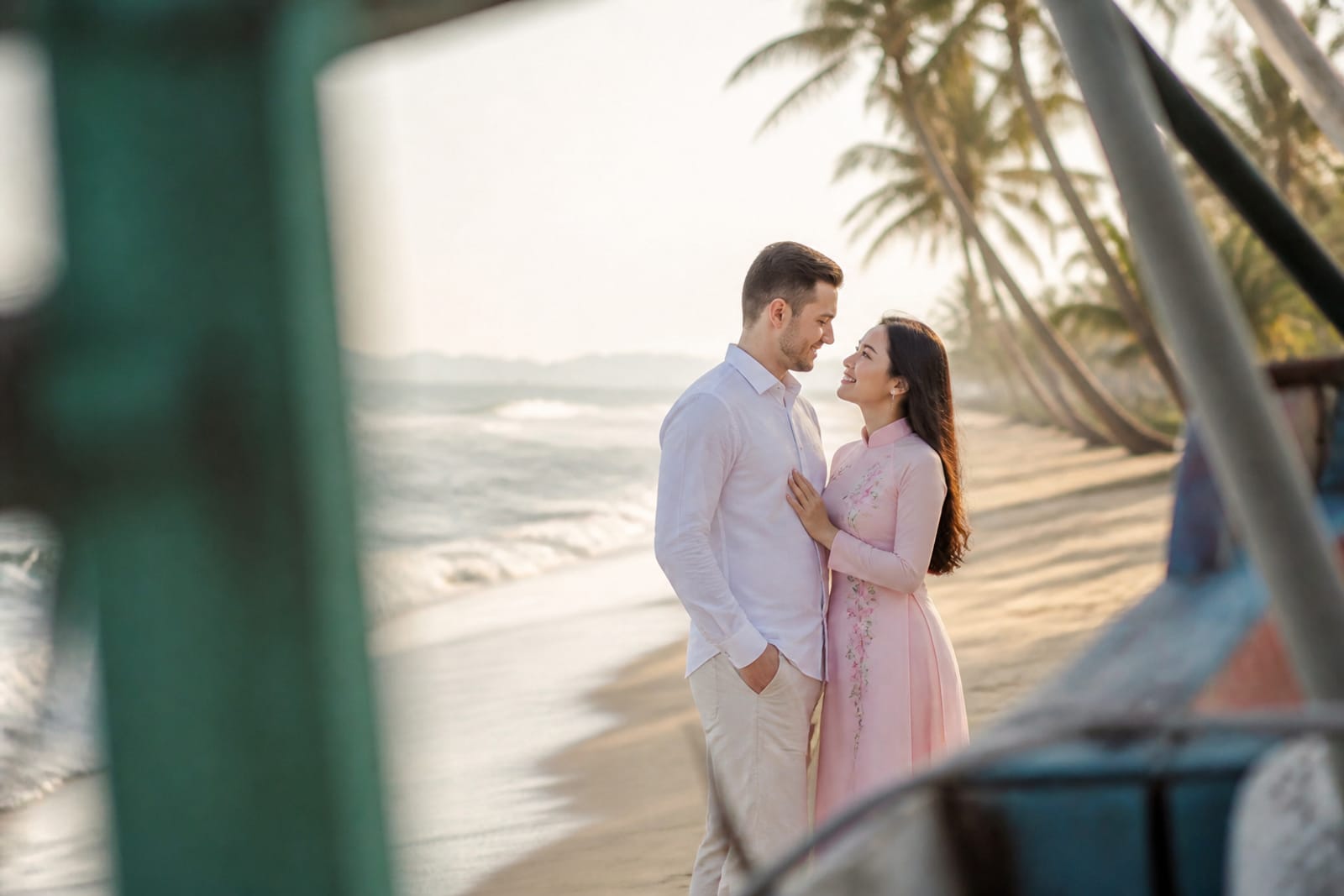
This is where most couples go wrong. Bright reds, hot pinks, and pure blacks merge with soil, shadows, and leafy greens in full daylight. Pale, muted tones—cream, blush, sage, dusty rose, pale yellow—separate you from the background and hold detail in both shadows and highlights. Ao dai in white or soft pastels photograph beautifully in morning light because the fabric catches the low angle of the sun. Cotton and silk move naturally in field breezes; synthetic fabrics look stiff and flat. Avoid shiny polyester ao dai rentals; invest in natural fabrics or ask Cáo Studio about ao dai rental options that photograph well in open light. Test your outfit against the actual fields 1–2 weeks before your shoot date—colors behave differently in person than on your phone screen. Muddy paths splash easily; wear shoes that wipe clean and keep them off-camera by shooting knee-up in seated or standing poses.
How does weather actually affect your Tra Que shoot day?
The central coast's dry season (Feb–Aug) is "best" only if you account for heat and glare. Feb–Apr: dry, mild, but increasingly hot by April (28–32°C); soft morning light is ideal, harsh by 10 a.m. May–Aug: dry but extremely hot (32–35°C+), full sun creates blown-out skin tones and harsh shadows—sunrise-only shoots are your only option. Sep–Dec is the rainy season; Oct–Nov brings typhoons and flooding in low-lying fields (Tra Que sits low). Dec–Jan is cool, often drizzly, and the fields are wet and muddy—paths become slippery and ao dai hems drag in mud. Check the Vietnam Meteorology & Hydrology Department's 7-day forecast 2 weeks before your date; if rain is forecast, reschedule or move your shoot to an indoor or semi-sheltered location. Morning dew (Feb–Apr) wets the grass, but it dries by 6:30 a.m.—time your sunrise shoot for 6 a.m., not 5:30 a.m., to avoid soaked hems.
| Season | Light Quality | Crowds | Outfit Fit | Walking Ease | Best Timing |
|---|---|---|---|---|---|
| Feb–Apr (dry, mild) | Soft morning; harsh by 10 a.m. | Peak (tour buses daily) | Ao dai drapes well; avoid dark colors | Dry paths, fast walking | 5:30–6:30 a.m. weekdays |
| May–Aug (hot, dry) | Glaring, blown-out midday | Moderate (heat deters tours) | Very hot; pale fabrics only; thin layers | Dry, dusty, slippery dust | 5–6 a.m. only |
| Sep–Dec (rainy, typhoons) | Overcast, soft diffused light | Low (rain stops tours) | Muddy hems; rain-resistant fabrics | Wet, slippery; hem drags | After 2 p.m. if dry; avoid Oct–Nov |
| Dec–Jan (cool, drizzly) | Overcast, even, moody | Very low | Thicker fabrics needed; layers | Mud, wet grass, slippery | Afternoon after paths dry |
Should you book Tra Que as your main shoot, or choose a quieter alternative?
This depends on whether you want an authentic working-farm aesthetic or guaranteed solitude. Tra Que's appeal is real: narrow raised beds, morning mist, farmers in motion, and authentic village life. But if you're a couple who dislikes sharing frames or has limited shoot time (a 2-hour session), a private location (hotel gardens, rented rice fields near Da Nang, or Hoi An's countryside estates) guarantees clean shots with zero logistics stress. Compare your priorities:
- Tra Que itself: Authentic, iconic, free-to-walk-through, but crowds likely even at off-peak times if you book Feb–Apr. Requires 5–6 a.m. start and local knowledge of farmers' schedules (they water 5–7 a.m., so poses near water channels work; avoid 11 a.m.–2 p.m. when they irrigate and people cluster). Cost factors: early timing may require hotel pickup, extra makeup touch-ups in the dark.
- Hue's rice paddies (near Thuan An or Nam Giao temple): Vast, empty, dramatic sky, sunrise light without the village footfall. No entrance fee; less aesthetic context (no buildings, less local story). Farther from Hoi An Ancient Town logistics.
- Private gardens or estates near Hoi An: Zero crowds, controlled light, no farmers to avoid. Often requires a booking fee and travel time from the town center. Cáo Studio can coordinate with partner venues; ask on WhatsApp for current availability.
- Hanoi's pre-wedding photoshoot locations (private estates, lotus lakes, temple grounds): Quieter off-season, same timing strategy applies, but different aesthetic. If you're already based in Hanoi, these eliminate Hoi An travel logistics.
Your choice depends on non-negotiables: Is the authentic Tra Que story worth waking at 4:30 a.m. and reshuffling makeup for a 6 a.m. start? If yes, book it on a Tuesday in January. If no, choose a private location. Cáo Studio shoots both; the exact logistics—pickup time, makeup coordination, outfit changes—are confirmed on WhatsApp.
What should you check before booking a Tra Que shoot with any photographer?
Before you confirm, ask:
- Timing clarity: Does the photographer guarantee a specific arrival time (e.g., 5:45 a.m., before farmers start heavy work)? What if you oversleep—do they reschedule or charge a fee? Cáo Studio confirms exact pickup and arrival on WhatsApp.
- Farmer permission & etiquette: Has the photographer worked with the village before? Do they know which paths are off-limits during irrigation (usually 11 a.m.–2 p.m. and 4–5 p.m.)? Who communicates with farmers—you or the photographer? Disrespecting private land ruins the experience and can get you asked to leave.
- Weather backup: If it rains the morning of your shoot, can you reschedule at no extra cost, or do you pay a date-change fee? What's the latest you can cancel (24 hours, 48 hours)? Check the photographer's cancellation terms in writing.
- Outfit and makeup for early morning: Does the photographer handle makeup at your hotel before departure, or do you arrive pre-made-up? Makeup applied 2+ hours before a 6 a.m. start will fade by sunrise—confirm the photographer's approach on WhatsApp. Cáo Studio offers makeup & hair at your hotel so you're camera-ready when you arrive.
- Photo delivery and editing: How many edited photos do you receive, and in what timeframe? Are all sunrise shots delivered, or only a curated selection? Cáo Studio's exact inclusions are confirmed on WhatsApp; never assume a package includes unlimited images or fast turnaround.
- Outfit changes and locations: If you want multiple looks or multiple locations (Tra Que + Ancient Town + beach), does the cost change by location or outfit count? How much extra time does outfit changing add? Confirm on WhatsApp before booking.
---
What to check before you book
- Sunrise timing: Confirm your photographer can shoot 5:45–6:30 a.m., not 8 a.m. Hotel pickups from Hoi An center take 15–20 minutes; ask about departure time the night before.
- Farmer communication: Has the photographer worked in Tra Que before? Ask for the name of a past couple—genuine referrals beat portfolio shots alone.
- Weather policy: Rain forecast for your shoot date? Confirm reschedule terms and latest cancellation time (ideally 24 hours before).
- Outfit fit for fields: Walk through your chosen ao dai, shoes, and accessories at your hotel the day before. Will the hem drag in wet grass? Are the shoes stable on muddy paths?
- Makeup longevity: If makeup is applied at your hotel 2+ hours before sunrise, ask the photographer how they touch up on-site in dim light. Bring a compact mirror and setting spray.
- Editing and delivery: Request a delivery date in writing. Ask whether all sunrise photos are edited or only a curated set.
---
Tra Que works best for couples willing to commit to early mornings and off-season dates. If you value sleep and predictable scheduling, or if your wedding date falls in peak season (Feb–Apr), a private location or an indoor proposal & anniversary package might suit you better. Cáo Studio – Makeup & Photoshoot shoots Tra Que with full coordination; ask on WhatsApp for current availability, village schedules, and exact morning logistics. Compare it to couple photoshoots at quieter Hoi An venues or pre-wedding shoots in Hanoi and Saigon before you decide.
FAQ
Can I book Tra Que for an afternoon shoot to avoid early mornings?
Yes, but crowds peak 1–4 p.m., especially in dry season. Late afternoon (4:30–5:30 p.m.) works better, but full-moon festival nights in Hoi An draw visitors to adjacent villages. Your photographer must know the exact day and venue to advise realistically. Ask Cáo Studio on WhatsApp.
What if it rains the morning of my Tra Que shoot?
Light morning mist (Feb–Apr) is manageable; heavy rain (Sep–Dec) floods paths and dirties ao dai hems badly. Confirm your photographer's weather cancellation policy before booking—ideally a free reschedule with 24 hours' notice. Check the 7-day forecast 1 week before your date.
Do I need to pay farmers for photos, or ask permission first?
Tra Que is a working farm, not a commercial shoot location. Farmers may ask tourists to move if you're blocking irrigation channels or trampling plants. Your photographer should know the village routines and communicate respectfully. Cáo Studio coordinates this; confirm on WhatsApp before your session.
Is sunrise makeup applied at my hotel or Tra Que?
Makeup at your hotel (4:30–5:30 a.m.) ensures you're camera-ready when you arrive; on-site makeup in dim light is difficult. Cáo Studio offers makeup & hair at your hotel with early arrival coordination. Confirm timing on WhatsApp when you book.
What if I want Tra Que + Hoi An Ancient Town in one shoot day?
Possible if you start Tra Que at 5:45 a.m., finish by 7:30 a.m., then move to the Ancient Town (20-minute drive) before crowds arrive at 9 a.m. Two locations require longer shoot time and cost factors tied to travel and outfit changes. Confirm feasibility with your photographer on WhatsApp; Cáo Studio can arrange this.
Should I rent ao dai locally in Hoi An or bring my own?
Local rental is convenient (no packing) but limited in fit and fabric choice. Own ao dai in natural fabrics (silk, cotton) photographs better in field light. If renting, choose ao dai rental well before your shoot date and test the fit at your hotel. Cáo Studio can advise on photography-friendly rentals; ask on WhatsApp.
FAQ
Can I book Tra Que for an afternoon shoot to avoid early mornings?
Yes, but crowds peak 1–4 p.m., especially in dry season. Late afternoon (4:30–5:30 p.m.) works better, but full-moon festival nights in Hoi An draw visitors to adjacent villages. Your photographer must know the exact day and venue to advise realistically. Ask Cáo Studio on WhatsApp.
What if it rains the morning of my Tra Que shoot?
Light morning mist (Feb–Apr) is manageable; heavy rain (Sep–Dec) floods paths and dirties ao dai hems badly. Confirm your photographer's weather cancellation policy before booking—ideally a free reschedule with 24 hours' notice. Check the 7-day forecast 1 week before your date.
Do I need to pay farmers for photos, or ask permission first?
Tra Que is a working farm, not a commercial shoot location. Farmers may ask tourists to move if you're blocking irrigation channels or trampling plants. Your photographer should know the village routines and communicate respectfully. Cáo Studio coordinates this; confirm on WhatsApp before your session.
Is sunrise makeup applied at my hotel or Tra Que?
Makeup at your hotel (4:30–5:30 a.m.) ensures you're camera-ready when you arrive; on-site makeup in dim light is difficult. Cáo Studio offers [makeup & hair at your hotel](/makeup-and-hair) with early arrival coordination. Confirm timing on WhatsApp when you book.
What if I want Tra Que + Hoi An Ancient Town in one shoot day?
Possible if you start Tra Que at 5:45 a.m., finish by 7:30 a.m., then move to the Ancient Town (20-minute drive) before crowds arrive at 9 a.m. Two locations require longer shoot time and cost factors tied to travel and outfit changes. Confirm feasibility with your photographer on WhatsApp; Cáo Studio can arrange this.
Should I rent ao dai locally in Hoi An or bring my own?
Local rental is convenient (no packing) but limited in fit and fabric choice. Own ao dai in natural fabrics (silk, cotton) photographs better in field light. If renting, choose [ao dai rental](/ao-dai-rental) well before your shoot date and test the fit at your hotel. Cáo Studio can advise on photography-friendly rentals; ask on WhatsApp.
Ao dai, makeup, hair and a local photographer in Hanoi or Saigon — one WhatsApp message.