/pre-wedding-photoshoot
Ben Tre Coconut Groves for Pre-Wedding Photos: Pros, Cons & Alternativ
Ben Tre coconut groves sit in the Mekong Delta, a 2–3 hour drive south from Ho Chi Minh City, and deliver the dense, water-framed palms travelers picture. A typical pre-wedding session there runs 4–6 hours: boat ride into the groves, outfit changes at a riverside homestay, and shooting during golden hour. The payoff is cinematic — narrow waterways, dappled light through canopy, and an authentic delta landscape. The catch: heat exhaustion is real (May–Nov especially), boat hire adds logistics, and the light window is tight (6–7:10 am or 5:30–6:40 pm). Cáo Studio's pre-wedding team works in Ho Chi Minh City and can coordinate Ben Tre, but only if you're prepared for the travel demand and willing to commit to dawn or dusk timing. For couples seeking tropical frames without the delta logistics, Hoi An's ancient town and riverside offer comparable romanticism closer to the action.
Why do Ben Tre groves appeal for pre-wedding shoots?
The Mekong Delta's coconut landscape is genuine and rare in Vietnam's urban wedding-photo culture. Narrow waterways flanked by palms, wooden rowing boats, and soft-focus greenery create cinematic depth that studio backdrops or city streets cannot match. The groves feel remote — you're walking into working farmland, not a tourist set. For couples seeking "untouched Vietnam," it delivers. The light is also forgiving: dappled shade through the canopy softens harsh midday sun, and golden hour (dawn or dusk) turns the water golden without the blown-out sky you risk in open rice fields.
📸 Book on WhatsApp — pre-wedding photoshoot
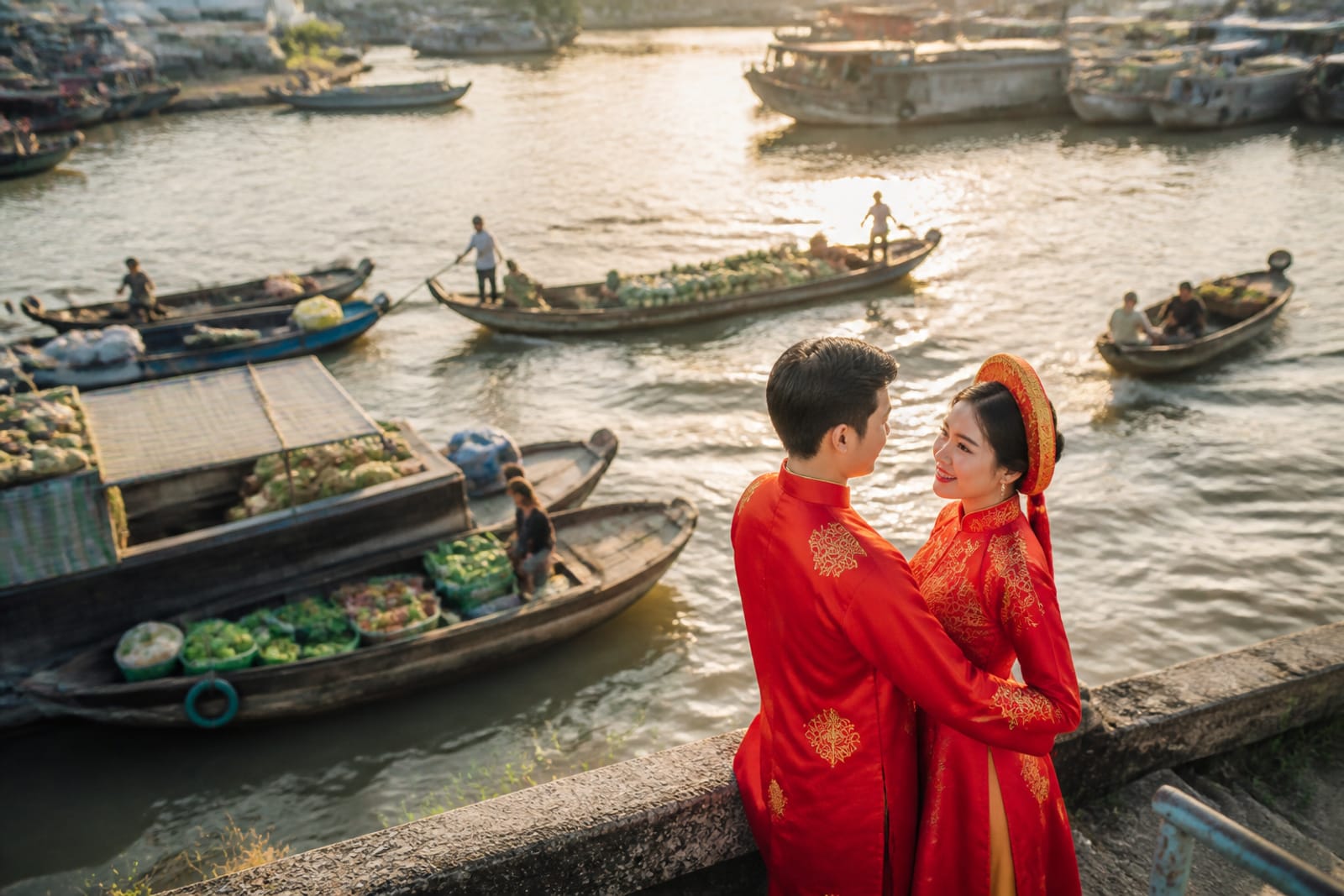
What are the real logistical challenges?
Distance is the first barrier: Ben Tre is 60–80 km from central Saigon, meaning 2–3 hours in traffic each way. Your team (photographer, makeup artist, stylist) must travel; if any single person misses the boat departure (literally), the shoot delays or cancels. Heat in dry season (Dec–Apr) peaks mid-morning; in wet season (May–Nov), afternoon downpours flood routes and capsize small boats. Homestay homestays (the typical changing location) have basic facilities — no air conditioning, limited mirrors, and inconsistent water pressure. Makeup and hair touch-ups between outfits demand patience and a backup plan. Wet clothes stick to skin in the humidity; fabric (silk, lace, ao dai) wrinkles fast in a boat. A professional makeup and hair team hired locally may lack the coordination Cáo Studio brings — mismatched styling across vendor borders is common. Honestly, Ben Tre works only if you budget 8–10 hours total, accept one outfit per destination (groves, village, water), and have a flexible weather backup date.
| Option | Best For | Light & Season | Logistics |
|---|---|---|---|
| Ben Tre groves & water | Couples seeking authentic delta, lush canopy, cinematic waterways | Golden hour (dawn 6–7:10 am, dusk 5:30–6:40 pm); dry Dec–Apr safest | 2–3 hr drive each way, boat hire, basic homestay facilities, heat/rain risk |
| Hoi An ancient town & riverside | Couples wanting iconic lanterns, narrow streets, mixed light; less heat stress | Dry Feb–Aug; Oct–Nov flooding possible; town light variable (lantern reflection, shadows, crowds) | 30 min drive from Da Nang airport, walkable streets, hotels nearby, evening crowds |
| Hanoi temples & lake | Couples drawn to colonial architecture, early-morning calm, close city access | Oct–Apr (cool, low humidity, clearer sky); Dec–Feb grey overcast | 15–30 min drive from central Hanoi, vendors & crowds by 8 am, quick outfit changes |
| Saigon parks & rooftop | Couples wanting urban sophistication, controlled light, no weather exposure | Year-round (parks open early); rooftop needs sunset clarity (Nov–Mar best) | Central location, reliable facilities, paid park entry, predictable timing |
The comparison shows Ben Tre demands the most coordination for fewer outfit changes; Hoi An balances romance with walkability; Hanoi favors early-morning calm; Saigon suits couples who want beauty without travel fatigue.
How does weather actually affect a Ben Tre session?
Ben Tre sits in the Mekong's wet-season flood zone. The official rainy period runs May–November, with October–November seeing typhoon-driven downpours that can strand boats for hours. A "brief afternoon shower" in June can turn the narrow waterways into currents that make rowing unsafe. Dry season (December–April) is safer, but December–January mornings are cool and grey — light is flat until 7 am. February–April (pre-monsoon heat) brings 35°C+ temperatures, and midday heat exhaustion becomes the real risk (crew and couple both). Makeup sweats, foundation separates, and the couple tires fast in humidity. Golden hour (6–7 am in winter, 5:45–6:40 pm in summer) is the only reliable window, and it lasts 30–45 minutes — any delay pushing you into harsh midday or post-sunset dimness ruins the frame. If you book Ben Tre, lock your departure time 30 minutes before golden hour, not "around 6 am."
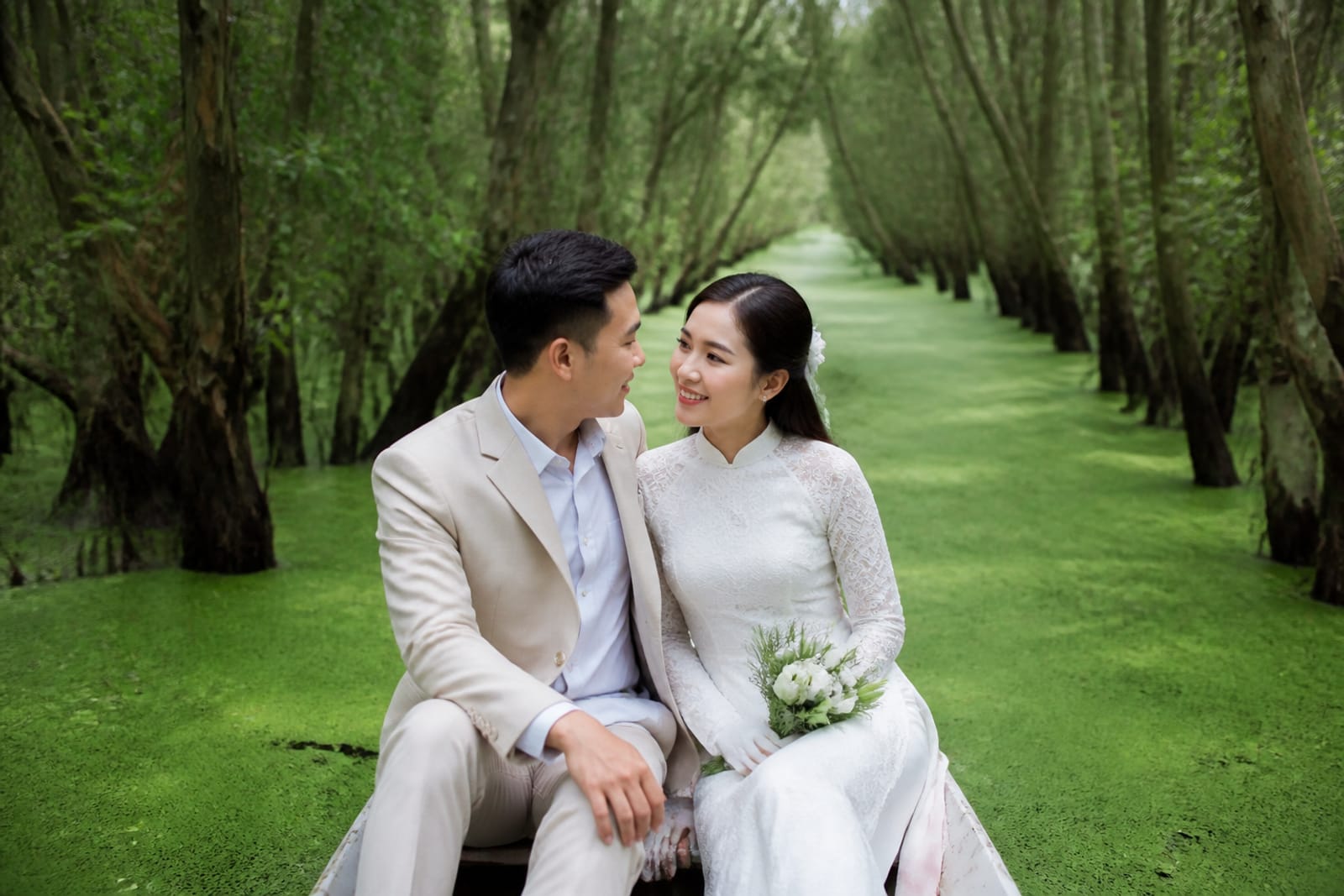
What's the real cost and time investment?
Cost factors include: boat hire (price varies by season, operator, duration), homestay facilities or changing room rental, fuel for the 2–3 hour drive each way, and a professional makeup artist and stylist either hired locally or traveling with your photographer. Cáo Studio's pre-wedding team coordinates all of these on WhatsApp — ask for a quote that accounts for Ben Tre logistics. Local freelancers often quote lower but rarely account for coordination gaps; if the boat vendor doesn't speak English and the makeup artist arrives late, you lose your golden hour and no one takes responsibility. Budget 8–10 hours door-to-door. Most couples plan one outfit per location (groves, water, homestay) rather than three changes, because the heat and boat logistics make frequent outfit swaps impractical. Compare this to Hoi An, where two outfit changes in a 6-hour session are normal because the town is walkable and hotels are nearby — no boat, no heat exposure, no weather-delay risk.
Is Ben Tre better than staying closer to the city?
It depends on your priorities. If your shot list includes "authentic delta, narrow waterways, palms, wooden boats, no other tourists," Ben Tre delivers and Saigon parks cannot. If your list reads "romantic lighting, ao dai, couple connection, edited frames in 48 hours," a Saigon rooftop or park session takes 4 hours, no travel fatigue, and the same professional coordination. Hoi An splits the difference: it's 30 minutes from Da Nang airport, offers colonial streets, lantern light, and riverside framing — cinematic, walkable, and far less logistical risk than Ben Tre. For couples choosing a pre-wedding location, ask yourself: Am I booking for the backdrop (Ben Tre's uniqueness) or the experience (calm, reliable, connected to the city)? If the answer is experience, Hoi An or Hanoi are smarter. If it's truly the delta landscape, commit to Ben Tre and work with a team (like Cáo Studio's Saigon base) that handles every vendor so no link breaks in the chain.
What should you check before booking a Ben Tre pre-wedding shoot?
Photographer coordination: Does your photographer live in or near Ho Chi Minh City? If flying in, add a buffer day for jet lag — dawn shoots demand clarity. Are they experienced with boat-based shooting (unstable platform, water reflections, backlighting)? Ask for a Mekong gallery or references.
Makeup and hair stability: Hire them together (not separately). Ask: What's the changing location — homestay, boat, or hotel? Can they guarantee touch-ups mid-session in heat and humidity? Do they carry backup makeup (sweat-proof foundation, waterproof mascara)?
Boat logistics: Who books the boat? How early does it depart? What's the weather backup plan — reschedule date or refund? Verify the boat operator's phone number and language (English-speaking reduces delays).
Outfit choice: Silk ao dai wrinkles in a humid boat; cotton is smarter. Long trailing áo dài hems get wet at river edges. Groom in linen or cotton; avoid polyester (traps heat, shows sweat). Shoes: plan to go barefoot or wear sandals for water shots (have a crew member carry them).
Timing lock: Confirm departure time, golden hour start (varies by calendar month), and session end time. Any delay (traffic, homestay access, outfit malfunction) compresses your light window to nothing.
Backup location: If weather cancels Ben Tre on the day, where does the team pivot? Saigon rooftop? A riverside homestay outside the flood zone? Agree in writing before booking.
Cáo Studio's pre-wedding team handles these checks on WhatsApp — they'll ask you directly and confirm logistics before the deposit, so no surprises the morning of.
FAQ
Is Ben Tre worth it if we're already in Ho Chi Minh City for work?
Yes, if you have 8–10 hours free and prioritize the delta backdrop. If your trip is short or you're jet-lagged, Saigon parks or Hoi An deliver comparable beauty with half the travel. Ask on WhatsApp which suits your schedule.
Can we shoot Ben Tre in the afternoon instead of golden hour?
Technically yes, but the light flattens and the heat peaks 12–3 pm. Canopy shade helps, but framing loses depth and the water loses its golden reflection. Golden hour (6–7 am or 5:30–6:40 pm) is non-negotiable for the cinematic look Ben Tre promises.
What if it rains the morning of our shoot?
Wet canopy actually looks lush on camera, but heavy rain makes boats unsafe. Check the weather forecast 3 days before; if a typhoon warning is issued, reschedule immediately (don't show up hoping). Agree your reschedule date and refund policy in writing when you book.
Can we wear Western wedding dress in a boat?
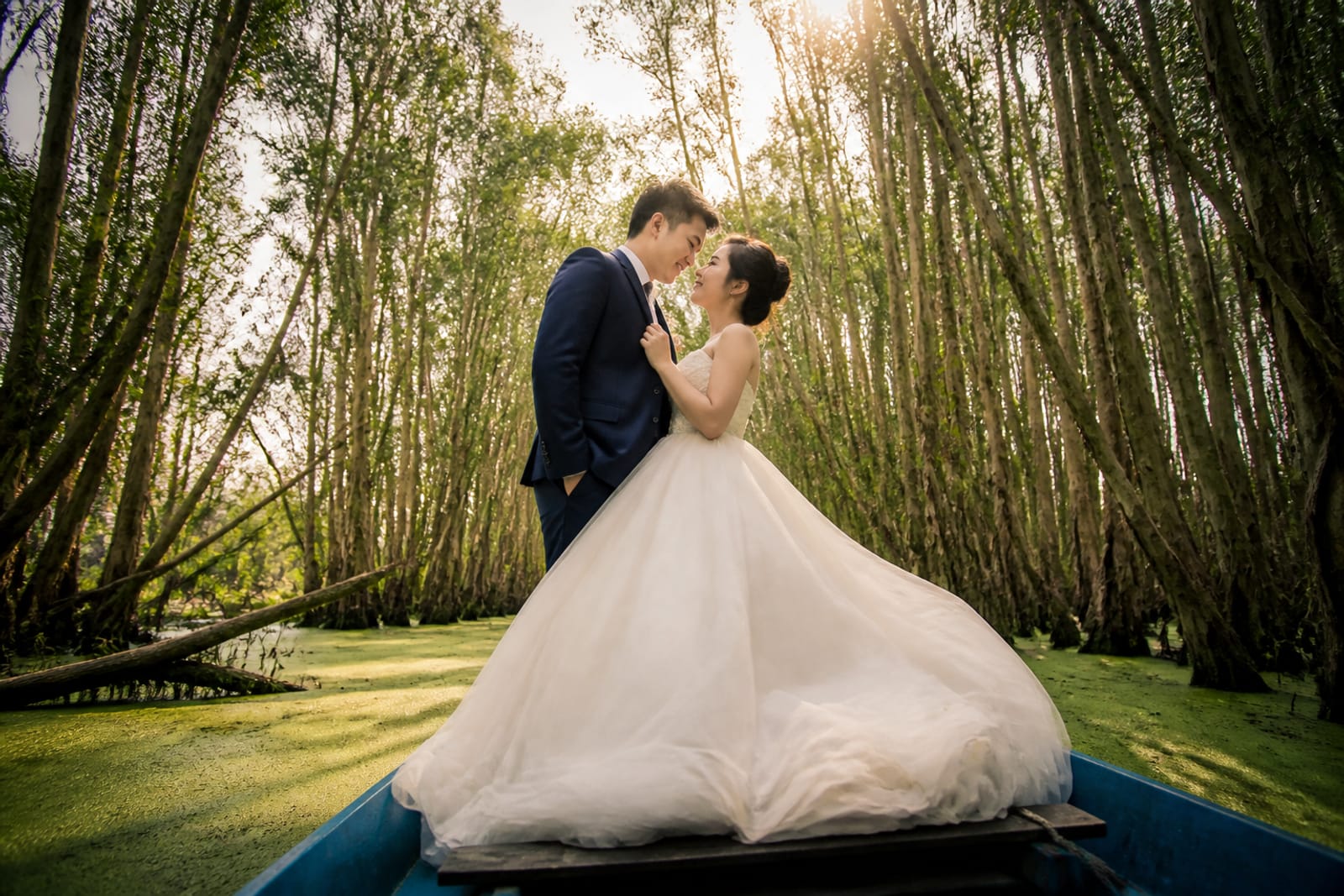
A-line or fit-and-flare skirts work; trailing trains catch the boat edge and drag in water. Consider a separates look (silk blouse, skirt) or rent a shorter ao dai instead. Ask your photographer or stylist to see Ben Tre photos of similar body shapes and dress styles.
How far in advance should we book a Ben Tre pre-wedding shoot?
4–6 weeks minimum (to lock boat dates and coordinate makeup/hair availability). Dry season (Dec–Apr) books faster. Contact Cáo Studio on WhatsApp with your preferred date to check availability and get a quote.
FAQ
Is Ben Tre worth it if we're already in Ho Chi Minh City for work?
Yes, if you have 8–10 hours free and prioritize the delta backdrop. If your trip is short or you're jet-lagged, Saigon parks or Hoi An deliver comparable beauty with half the travel. Ask on WhatsApp which suits your schedule.
Can we shoot Ben Tre in the afternoon instead of golden hour?
Technically yes, but the light flattens and the heat peaks 12–3 pm. Canopy shade helps, but framing loses depth and the water loses its golden reflection. Golden hour (6–7 am or 5:30–6:40 pm) is non-negotiable for the cinematic look Ben Tre promises.
What if it rains the morning of our shoot?
Wet canopy actually looks lush on camera, but heavy rain makes boats unsafe. Check the weather forecast 3 days before; if a typhoon warning is issued, reschedule immediately (don't show up hoping). Agree your reschedule date and refund policy in writing when you book.
Can we wear Western wedding dress in a boat?
A-line or fit-and-flare skirts work; trailing trains catch the boat edge and drag in water. Consider a separates look (silk blouse, skirt) or rent a shorter ao dai instead. Ask your photographer or stylist to see Ben Tre photos of similar body shapes and dress styles.
How far in advance should we book a Ben Tre pre-wedding shoot?
4–6 weeks minimum (to lock boat dates and coordinate makeup/hair availability). Dry season (Dec–Apr) books faster. Contact Cáo Studio on WhatsApp with your preferred date to check availability and get a quote.
Ao dai, makeup, hair and a local photographer in Hanoi or Saigon — one WhatsApp message.