/pre-wedding-photoshoot
Best cities in Vietnam for pre-wedding photos
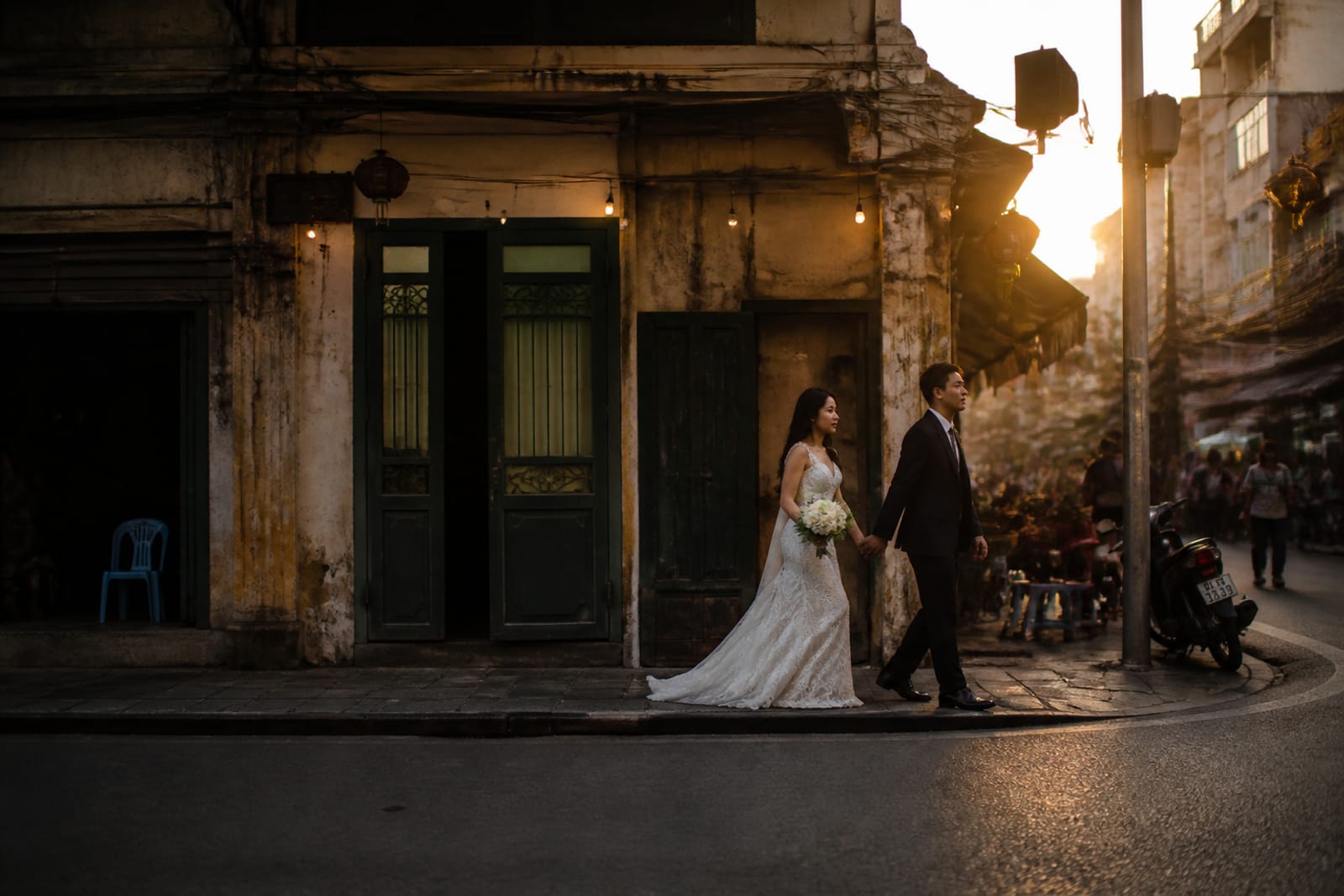
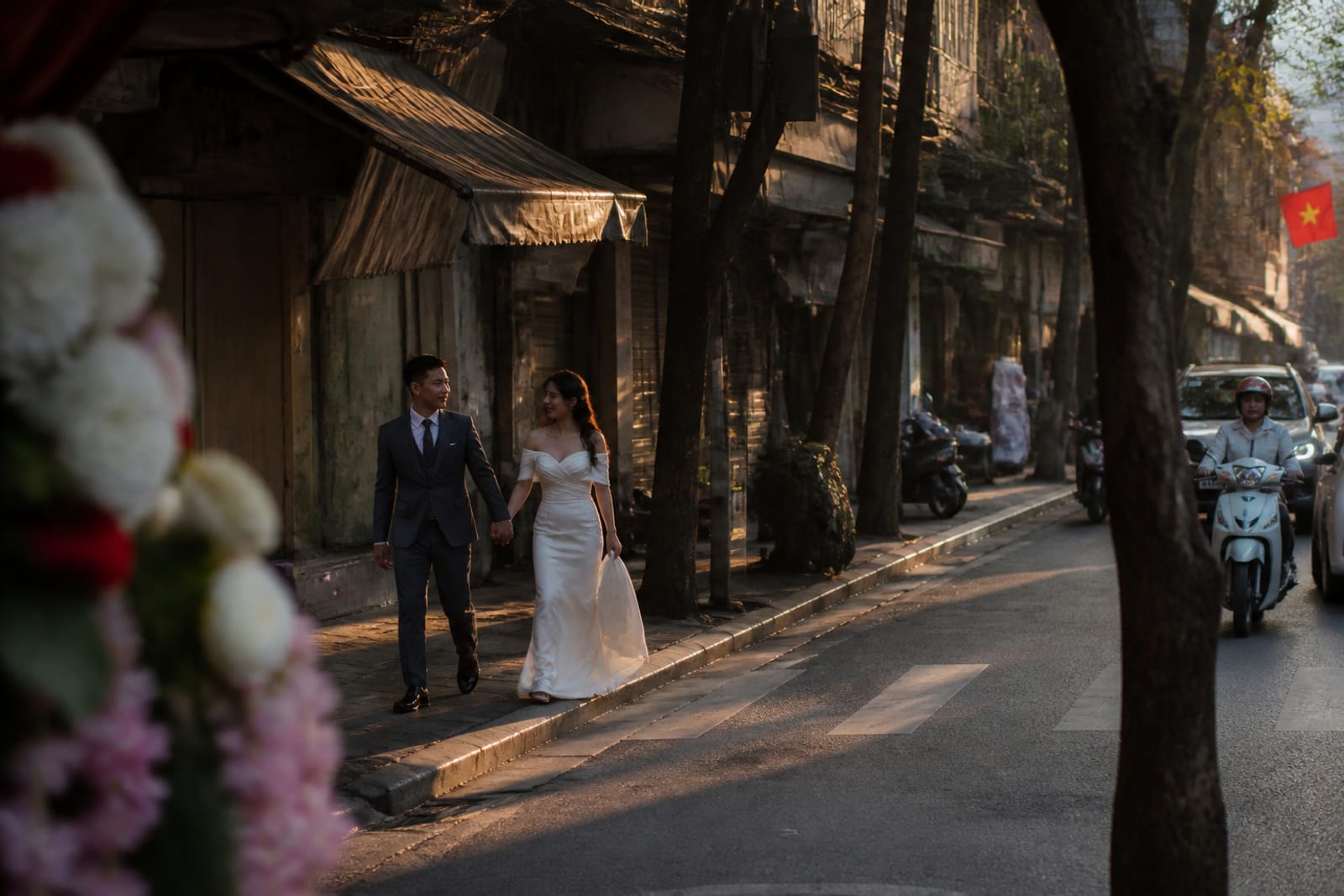
Vietnam's best pre-wedding photo cities depend on light, ao dai fit, and travel dates. Hanoi works Oct–Nov and Feb–Mar (cool, clear light; iconic temples and Lake Hoan Kiem); Ho Chi Minh City suits Dec–Apr (dry, golden afternoon sun; rooftops and colonial villas); Hoi An peaks Feb–Aug (soft diffused light; ancient architecture and lanterns). The north has cool, grey winters (Dec–Feb) and hot summers (May–Sep); the central coast dries Feb–Aug, floods Sep–Dec; the south is dry Dec–Apr. Cáo Studio – Makeup & Photoshoot operates pre-wedding shoots in Hanoi and Ho Chi Minh City, with Hoi An sessions by WhatsApp appointment. Beyond these three, plan independently with a local photographer using this guide: location scouts, weather windows, ao dai styling, and temple etiquette. ---
Which city gives the clearest light for pre-wedding photos?
Hanoi and Hoi An deliver the clearest light Oct–Mar. Hanoi in Oct–Nov: cool mornings, sharp shadows by 7–9 a.m., golden hour extends 30 minutes longer because of northerly latitude. Hoi An Feb–Aug: soft diffused light off the Thu Bon River and Old Town limestone; overcast skies reduce harsh shadows, ideal for ao dai skin tone contrast. Ho Chi Minh City's dry season (Dec–Mar) offers bright afternoon light, but glare off modern glass buildings can blow highlights. Winter in the north (Dec–Feb) is grey and often overcast—good for soft light, bad for colour saturation. Avoid May–Sep everywhere: humidity hazes the air, afternoon thunderstorms arrive unpredictably, and ao dai moisture cling creates wrinkles.
Conclusion: Book Hanoi Oct–Nov for crisp sunlight; Hoi An Feb–Apr for diffused riverside glow; Ho Chi Minh City Dec–Feb for golden afternoon sun.
---
What season should you shoot in each city?
| City | Best Season | Light Type | Why It Works | What to Avoid |
|---|---|---|---|---|
| Hanoi | Oct–Nov, Feb–Mar | Sharp, cool | Cool air keeps ao dai crisp; clear visibility | Dec–Feb grey; May–Sep humid, rains |
| Ho Chi Minh City | Dec–Apr | Golden afternoon | Dry, warm; rooftop light is dramatic | May–Nov wet season; Oct–Nov typhoon risk |
| Hoi An | Feb–Aug | Soft, diffused | River humidity balances harsh sun; lantern glow at dusk | Sep–Dec monsoon floods Old Town streets |
| Ha Long Bay | Oct–Apr | Variable clarity | Limestone reflections in calm water; fewer tour boats Oct–Nov | May–Sep rough seas, poor visibility |
| Ninh Binh | Oct–Nov, Feb–Apr | Golden, clean | Karst formations cast deep shadows; crisp air | Dec–Jan cold; May–Sep humidity hazes karst |
Conclusion: match your city to its clearest window—book 3–6 months ahead if you have a fixed date.
---
How does an ao dai change between cities?
An ao dai's silhouette, fabric choice, and undergarment fit vary dramatically by location and season. In Hanoi's cool Oct–Nov, a silk ao dai (heavy, structured) holds its shape for 3+ hours without wilting; bare shoulders or a fitted white silk áo dài inner works because air stays dry. In Ho Chi Minh City's December heat, lightweight cotton or linen blends are essential—a heavy silk ao dai absorbs sweat, creases appear in photos within 90 minutes. In Hoi An's riverside humidity (Feb–Aug), the ao dai's outer layer may stick to your legs unless you wear a smooth slip underneath (avoid cotton—it absorbs moisture and clings).
Undergarment rules by season:
- Cool months (Oct–Nov, Feb–Mar): silk slip or none; fitted áo dài inner for modesty.
- Hot/humid (Dec–Apr in the south; May–Sep everywhere): moisture-wicking slip; lightweight inner áo dài.
Fabric choice affects drying time between outfit changes: silk takes 20–30 minutes to air-dry if damp; cotton takes 45+ minutes. Plan outfit swaps around this. In mountainous regions (Ha Giang, Sapa), wind can dry an ao dai in 10 minutes but may billow it unpredictably—bring a clip for the hem.
Conclusion: choose your fabric and undergarment by season and city humidity before booking.
---
What permits and etiquette do you need at temples?
Vietnam's temples impose strict rules—breaking them stops your shoot and risks disrespect. Universal temple rules:
- Remove shoes (keep them in sight; leave socks on stone floors in cool months).
- Knees and shoulders covered at all times (ao dai satisfies this).
- No touching Buddha statues, altars, or offerings.
- Ask the monk or caretaker for permission to photograph inside the main hall; many temples allow it 6–10 a.m. only.
- No loud voices, running, or posing on prayer cushions.
- Menstruating women are traditionally barred from certain inner altars—check locally before your session.
Temple-specific notes:
- Hanoi's Temple of Literature (Van Mieu): open 8 a.m.–5 p.m.; photographers must book formal permits (ask Cáo Studio on WhatsApp); best light is 8–9 a.m. before crowds (peak 10 a.m.–4 p.m.).
- Hoi An's Japanese Covered Bridge: always open; shoot before 7 a.m. or after 5 p.m. to avoid 50+ tourists per minute; water reflection works best mid-morning (9–11 a.m.) when sun is high.
- Ho Chi Minh City's Jade Emperor Pagoda: open 8 a.m.–6 p.m.; incense smoke creates atmospheric haze—plan for diffused light, not clean detail shots.
Permits: most temples don't charge foreign visitors, but a donation (any amount) to the incense box shows respect. Professional photography permits (tripods, lighting) require advance requests to the temple office; Cáo Studio's Hanoi and Hoi An teams know these contacts.
Conclusion: scout temples with your photographer; confirm access dates 2 weeks ahead.
---
How do you book a photographer if Cáo Studio doesn't shoot your destination?
If you're planning a pre-wedding shoot outside Hanoi, Ho Chi Minh City, or Hoi An, you'll need a local photographer. Step-by-step checklist:
- Identify your city and season. Use the table above to pick your ideal dates (light, weather, crowds).
- Research local photographers via Instagram hashtags. Search #[CityName]WeddingPhotographer, #[CityName]PrewedPhoto. Check 10+ portfolios; note their strongest work (light, ao dai handling, couple poses).
- Vet portfolios for ao dai experience. Open 5 recent posts; count how many show ao dai, how many show non-Vietnamese couples in ao dai, and how the fabric and colour are rendered (blown-out whites? muddy skin tones?). Ao dai is harder to expose than Western dress.
- Message 3 photographers with location scouts. Ask:
- "Do you know 5+ locations I haven't seen on Instagram?"
- "What's your lighting setup in [season]?" (Look for answers about time of day, reflectors, or diffusers—not gear names.)
- "How do you style ao dai for [season]?" (Good replies mention undergarments, fabric weight, humidity.)
- Confirm logistics before payment. Agree on travel time to your location, outfit-change time (20–30 min per change), backup weather dates, and final file count/editing style.
- Shoot with your own makeup artist or book locally. Cáo Studio offers makeup & hair at your hotel in Hanoi and Ho Chi Minh City only; elsewhere, hire a local makeup artist separately (search Instagram or ask your photographer for a referral).
Conclusion: vet ao dai experience first; negotiate location scouting and weather backup clearly.
---
📸 Book Cáo Studio for pre-wedding shoots in Hanoi or Ho Chi Minh City
💄 Add makeup & hair at your hotel
---
What to check before you book
- Season dates align with your city's clearest light window? Compare your date to the table above; if you're off-season, ask your photographer how they'll compensate (time of day, backup indoor location).
- Ao dai is tailored to your city's climate and humidity? Have it tried on in the humidity/temperature of your shoot month (not in a cool fitting room).
- Your photographer knows temple access and permits. Ask them to confirm access 2 weeks before; bring contact details for Cáo Studio's teams if you're in Hanoi, Ho Chi Minh City, or Hoi An and want liaison support on WhatsApp.
- Outfit swaps are timed for drying and hair/makeup touch-ups. Allow 20–30 min per change; plan 3–4 locations for a 4-hour shoot, not 8.
- Weather backup is written in your contract. Specify: alternate date, indoor fallback location, or refund/reschedule terms.
---
🌸 See Cáo Studio's pre-wedding lookbook
---
FAQ
Can I wear an ao dai in Ho Chi Minh City during the hot season (May–Sep)?
Yes, but only with a lightweight cotton or linen ao dai and a moisture-wicking slip underneath. Heavy silk wilts in 60–90 minutes; plan outfit swaps every hour and book a makeup artist with touch-up products for humidity. Avoid May–Jun (peak heat) and Oct–Nov (typhoon season); Dec–Apr is safer.
Do I need a formal permit to photograph at Hanoi's Temple of Literature?
Yes. Professional photography requires a permit booked weeks in advance through the temple office. Cáo Studio's Hanoi team can advise on current permit rules—contact us on WhatsApp. Personal (non-commercial) couple photos may be allowed without a permit; always ask the caretaker on arrival.
What's the best time of day to shoot in Hoi An?
Shoot 6:30–9 a.m. (soft light, few crowds) or 4–6 p.m. (golden hour, lanterns light up). Avoid 10 a.m.–4 p.m. when 50+ tour groups fill the Old Town and light is harsh. Cáo Studio's Hoi An team (book on WhatsApp) scouts the quietest slots; they travel by appointment.
If I'm not using Cáo Studio, how do I find a photographer who understands ao dai?
Search Instagram for #[YourCity]WeddingPhotographer and filter portfolios by ao dai count and exposure quality (check if whites blow out, skin tones are muddy, or fabric detail is crisp). Message 3 candidates with the same questions: location scouts, light strategy in your season, and ao dai styling experience. Vet their replies before payment.
Can I shoot pre-wedding photos during Tet (Lunar New Year)?
Not recommended. Most temples close 3–7 days around Tet (late Jan–mid Feb); crowds peak in the week before; many photographers and makeup artists take leave. Book Jan 1–20 or mid-Feb onward. Hanoi and Hoi An are grey/cool (good light) but chaotic; Ho Chi Minh City stays partly open.
How much should I budget for a pre-wedding shoot outside Cáo Studio's service areas?
Costs depend on photographer day-rate, travel distance, and local prices (check the official photographer's price list). Cáo Studio provides quotes on WhatsApp for Hanoi, Ho Chi Minh City, and Hoi An only. For other cities, contact 3 local photographers directly.
FAQ
Can I wear an ao dai in Ho Chi Minh City during the hot season (May–Sep)?
Yes, but only with a lightweight cotton or linen ao dai and a moisture-wicking slip underneath. Heavy silk wilts in 60–90 minutes; plan outfit swaps every hour and book a makeup artist with touch-up products for humidity. Avoid May–Jun (peak heat) and Oct–Nov (typhoon season); Dec–Apr is safer.
Do I need a formal permit to photograph at Hanoi's Temple of Literature?
Yes. Professional photography requires a permit booked weeks in advance through the temple office. Cáo Studio's Hanoi team can advise on current permit rules—contact us on WhatsApp. Personal (non-commercial) couple photos may be allowed without a permit; always ask the caretaker on arrival.
What's the best time of day to shoot in Hoi An?
Shoot 6:30–9 a.m. (soft light, few crowds) or 4–6 p.m. (golden hour, lanterns light up). Avoid 10 a.m.–4 p.m. when 50+ tour groups fill the Old Town and light is harsh. Cáo Studio's Hoi An team (book on WhatsApp) scouts the quietest slots; they travel by appointment.
If I'm not using Cáo Studio, how do I find a photographer who understands ao dai?
Search Instagram for #[YourCity]WeddingPhotographer and filter portfolios by ao dai count and exposure quality (check if whites blow out, skin tones are muddy, or fabric detail is crisp). Message 3 candidates with the same questions: location scouts, light strategy in your season, and ao dai styling experience. Vet their replies before payment.
Can I shoot pre-wedding photos during Tet (Lunar New Year)?
Not recommended. Most temples close 3–7 days around Tet (late Jan–mid Feb); crowds peak in the week before; many photographers and makeup artists take leave. Book Jan 1–20 or mid-Feb onward. Hanoi and Hoi An are grey/cool (good light) but chaotic; Ho Chi Minh City stays partly open.
How much should I budget for a pre-wedding shoot outside Cáo Studio's service areas?
Costs depend on photographer day-rate, travel distance, and local prices (check the official photographer's price list). Cáo Studio provides quotes on WhatsApp for Hanoi, Ho Chi Minh City, and Hoi An only. For other cities, contact 3 local photographers directly.
Ao dai, makeup, hair and a local photographer in Hanoi or Saigon — one WhatsApp message.