/pre-wedding-photoshoot
Best pre-wedding photo spots in Ha Giang: light, season & logistics
Pre-wedding shoots in Ha Giang mean multi-day trips to photograph couples against rice terraces (golden September), buckwheat flowers (October–November) and karst valleys—spots 2–4 hours from town via mountain roads. This is not a city shoot: you'll hire a local Hanoi-based photographer familiar with Ha Giang logistics, arrange transport, scout light at dawn and late afternoon, and plan around the dry season (December–February is cold and grey; May–September brings rain, landslides and heat). Cáo Studio – Makeup & Photoshoot is based in Hanoi and Saigon and does not operate in Ha Giang, but we can advise on Hanoi pre-wedding shoots, makeup for travel, and how to vet a local mountain photographer before you book. ---
Where are Ha Giang's best pre-wedding photo spots?
Ha Giang has five distinct shooting zones, each requiring a separate journey. Hoang Su Phi rice terraces (Yen Minh district, south of Ha Giang town) photograph best in September when crops are mature and golden; the stepping landscape suits portrait couples and wide landscape frames. Khau Pha Pass sits 1,500 metres up with limestone cliffs, cloud cover and zigzag roads—dramatic but cold and misty October–February. Nho Que River valley (near Meo Vac town) offers layered green mountains and river reflection light in early morning; the drive is long and hairpin-heavy. Lung Cu Flag Tower tops a karst peak 1,534 metres with 360-degree valleys—wind and exposure demand caution; rare clear air means February–April. Tham Mong cave region (Dong Van) sits in a limestone sinkhole with overhanging cliffs; the narrow gorge gets shadow by mid-morning, so dawn shoots are critical. None are walking distance from each other. Plan one zone per day, minimum.
📸 Explore our pre-wedding shoots
When is the light and season right for Ha Giang shoots?
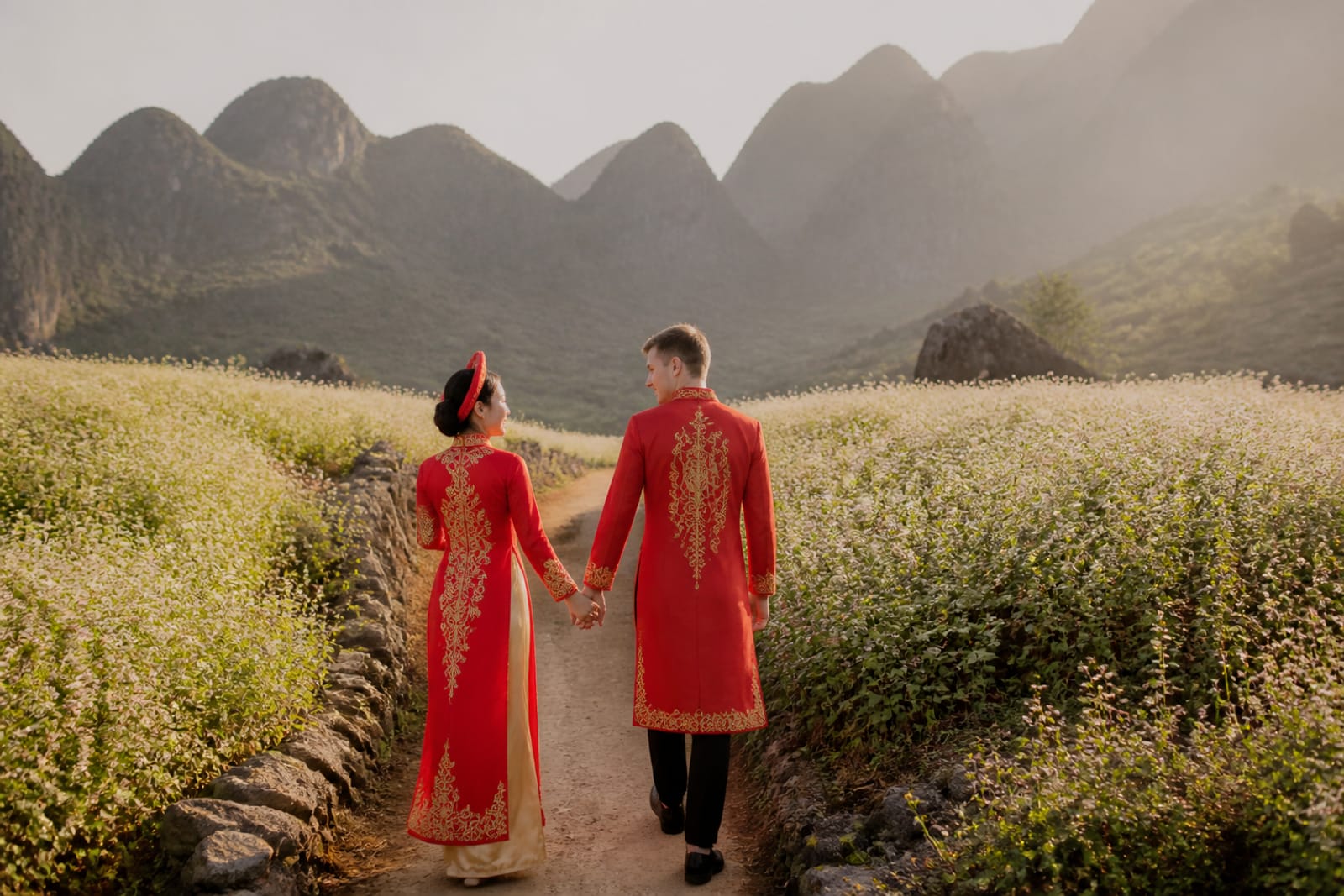
Light and weather are inseparable here. December–February brings cool, stable temperatures (8–15°C at altitude) and often-grey cloud cover; rice is harvested, so terraces are dull brown; Tet crowds and closures complicate logistics. March–April clears to blue skies and mild warmth (12–20°C); fields lie fallow; light is sharp but subject colour is weak. May–September is hot, rainy and hazardous—afternoon downpours trigger landslides on mountain roads; the air is hazy and visibility suffers. September is the sweet spot for terraces: crops are golden-ripe, rain is lessening, and morning light hits wet soil with saturation; the trade-off is overcast risk. October–November brings buckwheat flowers (white blooms across high fields, best mid-to-late October) and crisp clear mornings—but nights freeze, fog lingers into 9 a.m., and roads narrow as winter approaches. Light quality peaks 5:30–7:00 a.m. and 4:30–6:30 p.m.; midday (10 a.m.–3 p.m.) flattens contrast and causes overexposure on pale outfits against white flowers. Cold seasons mean fast light fade after sunset.
💄 Book makeup & hair for your trip
What do couples wear in Ha Giang's weather and terrain?
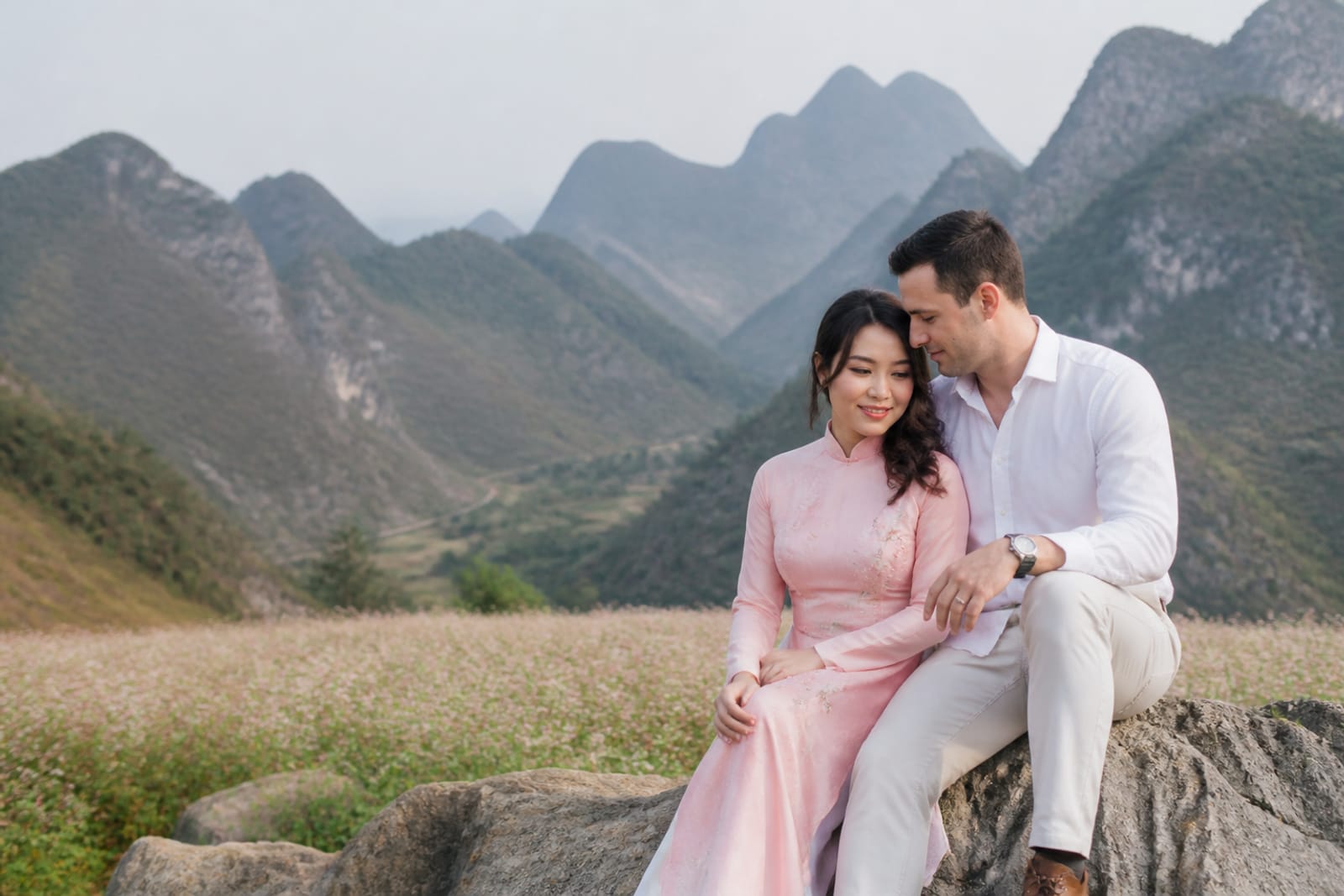
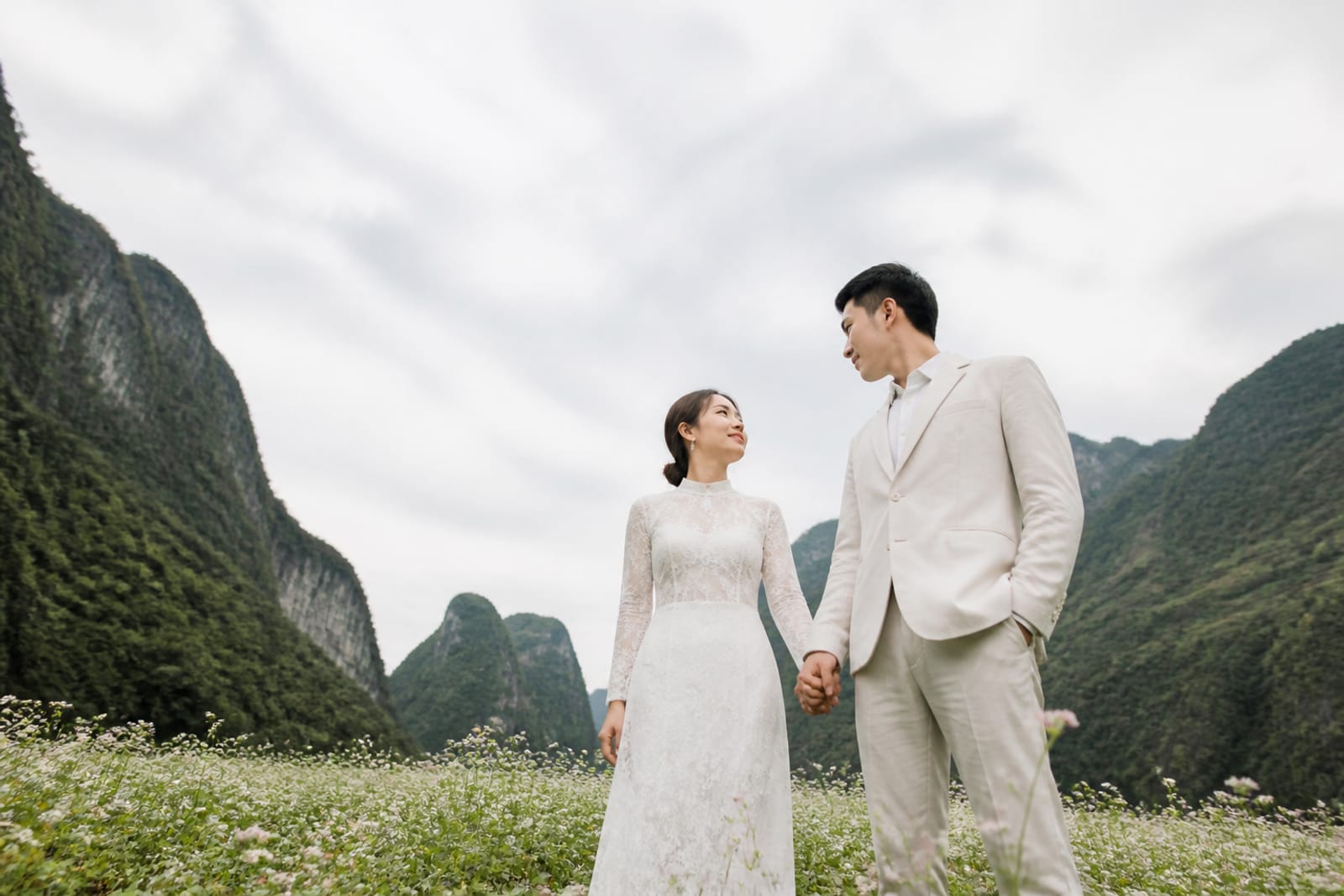
Standard pre-wedding clothing fails in Ha Giang's extremes. Ao dai (the traditional long tunic) is breathable and photogenic but thin—couples need thermal layers underneath in December–February, and the floor-length skirt tangles on rocky paths and mud. Wear leggings or thermal tights under the ao dai; carry spare socks. Western wedding dresses (heavy, long, non-breathable) are impractical except in clear-sky March–April, and the hems drag through mud and dust—consider a shorter rehearsal-style dress or a tailored áo dài in cotton. Grooms in heavy suits risk heat stroke May–September and hypothermia December–February; lightweight wool or linen suits for cool seasons; casual tailored trousers and a shirt for summer. Shoes: leather dress shoes slip on wet rock; hiking boots with a satin overlay, or waterproof leather with grip soles, are safer. Bring a change of outfit—wind, dust and mud are unavoidable. If you book a Hanoi-based photographer, discuss outfit rental and makeup touchup logistics before you travel; mountain shoots often run 6–8 hours with one base location for hair and makeup prep.
How do I find and vet a local Ha Giang photographer?
Cáo Studio – Makeup & Photoshoot operates in Hanoi, Ho Chi Minh City and Hoi An—not Ha Giang—but we know how couples in Hanoi should choose a mountain photographer. Start by asking: Does the photographer have a verified portfolio of Ha Giang shoots (check their website or Instagram for a location map and timestamped images—not stock photos)? Have they shot the specific zones you want (terraces, karst, caves) in the month you're travelling? Ask for references from 2–3 couples who shot there in a similar season, and message them directly on Instagram or WhatsApp to ask about timing, weather readiness and cost factors (mileage, fuel, lodging, assistant hire). Request a detailed itinerary before booking: which zones on which days, sunrise/sunset times, backup plans if weather closes roads, what happens if a site floods. Confirm transport: does the photographer hire a vehicle, or do you? Ha Giang roads require high-clearance vans or SUVs; hire through Hanoi rental firms with mountain experience. Ask about meal and lodging costs—mountain shoots often span 2–3 nights, and the photographer may charge for accommodation and per diem separately. Avoid photographers who claim they can shoot everywhere in one day; honest pros will say a proper Ha Giang shoot takes 3–4 days minimum.
| Shooting Zone | Best Season | Light Quality | Why Choose It | Challenges |
|---|---|---|---|---|
| Hoang Su Phi terraces | September (golden) | Soft, directional dawn/dusk | Layered landscape, scale | Overcast risk, crowds near Sep 15 |
| Khau Pha Pass | Oct–Nov, Feb–Apr | Sharp, high-altitude clarity | Drama, isolation, cloud texture | Cold, wind, 3+ hour drive, road ice Feb–Mar |
| Nho Que River valley | Mar–Apr, Oct–Nov | Mirror reflection, canyon shadow | Intimate framing, water colour | Long drive, hairpin roads, limited road widths |
| Lung Cu Flag Tower | Feb–Apr | Panoramic, thin air clarity | 360° valleys, flag symbol, height | Exposed, wind, cold, only 2–3 hours best light |
| Tham Mong cave | Oct–Apr | Overhang shadow before 9 a.m., limestone bounce | Unique geology, intimate scale, texture | Dawn-only window, damp, slippery, tight space |
What logistical pitfalls do mountain shoots face, and how do you avoid them?
Road closures are the biggest risk: landslides after rain (May–September), ice in winter (Dec–Feb), and mechanical breakdowns on unmaintained passes can trap teams for hours. Counter this: book a driver with 5+ years of Ha Giang experience, not a tourist taxi; check local road reports 48 hours before via Facebook groups (e.g., "Ha Giang Travel" communities) or call the nearest town police post; have a backup indoor or lower-altitude shoot ready. Fog and cloud roll in by 8:30 a.m. in cool seasons (Oct–Feb) and can erase mountain views for an entire day. Book two shooting days in the same zone so you can retry if morning 1 is fogged. Altitude and cold cause sickness—couples often underestimate temperature drop (every 100 metres up = 0.6°C cooler). Bring layers, water, high-energy snacks and pain relief; start hikes early so you're photographing by 6:30 a.m., not climbing at 10 a.m. Permit uncertainty: Lung Cu Flag Tower and certain military-sensitive zones may require ID or local permits—check with your photographer or the Ha Giang Tourism Office before the shoot date. Makeup and hair durability is poor in humidity, wind and cold—use long-wear formulas and hire a makeup artist who has worked in mountains; skip powders that cake in damp air. Photo delivery delays: mountain teams often photograph 1,000+ images in harsh light; editing takes 4–6 weeks. Clarify turnaround time and edit style (vibrant, muted, film grain) in the booking contract.
🌸 See our lookbook for inspiration
---
What to check before you book a Ha Giang pre-wedding shoot
Before committing, confirm these details in writing via WhatsApp or email:
- Photographer's Ha Giang portfolio: ask for a folder of 5–10 recent full shoots (not just 'best-of' singles).
- Your exact dates and season: discuss weather probabilities and have a rain-date clause.
- Number of days, hours per day and included zones: Ha Giang shoots are quoted by multi-day packages, not hours; clarify if pre- and post-shoot Hanoi makeup is included or separate.
- Transport and lodging responsibility: who books the van? Do photographer fees cover their lodging, or is that your cost?
- Outfit changes and makeup touchups: ask if a makeup artist or assistant is included, or if you need to hire separately.
- Image count and edit style: how many selects, how many fully edited? What does 'fully edited' mean—colour grading, retouching, printing?
- Backup and contingency: if weather closes roads, what's the rescheduling or refund policy?
- References: ask for 2–3 couple contacts and verify directly.
---
How does a Hanoi-based shoot compare to a Ha Giang trip?
If you're torn between a Hanoi pre-wedding shoot and a Ha Giang multi-day expedition, here's the frame: Hanoi shoots (Hoan Kiem Lake, French Quarter, craft villages) run 4–6 hours, occur indoors or in urban light (predictable, soft diffused morning/evening), and pose minimal weather or logistics risk. You book one day, hire makeup and hair at your hotel, and revisit prints and albums with us. Ha Giang shoots are 3–4 day expeditions to remote zones with dramatic natural light, seasonal subjects, and real travel friction—they suit couples prioritizing isolation, drama and scale over convenience. Neither is "better"—they're different stories. Many couples do both: a Hanoi couple shoot (easy, quick, local) and a Ha Giang adventure (investment, effort, payoff). If you want Hanoi flexibility, book with Cáo Studio. If Ha Giang calls, hire a Hanoi-based mountain photographer with verified Ha Giang work.
📸 Book on WhatsApp — pre-wedding shoots
---
Can I combine a Ha Giang shoot with other Vietnam regions?
Yes, and couples do this often. A Hanoi + Ha Giang itinerary (5–7 days) starts with a couple shoot in Hanoi (Day 1–2), then drives north for a Ha Giang 2–3 day expedition (Days 3–5), then returns to Hanoi for a makeup and hair session or family photo in your hotel (Day 6). The trade-off: drive fatigue and split focus. Alternatively, Hanoi + Hoi An (avoid Ha Giang's logistics): shoot in Hanoi for 1–2 days, then fly to Hoi An for a 2-day pre-wedding shoot in the Ancient Town or nearby rice fields—no mountain roads, softer light, easier clothing. Hoi An light is golden and consistent (best dry season February–August); a Hanoi photographer cannot coordinate Hoi An shoots, so you'd hire locally or use Cáo Studio's Hoi An service if your dates align. Ha Giang is not a stopover—it's a dedicated multi-day commitment.
---
Should I hire a Ha Giang local or a Hanoi-based photographer?
Hanoi-based photographers (like those we consult with at Cáo Studio) know season timing, route safety, backup plans and how to style couples for mountain conditions. They typically charge a multi-day package rate that covers their travel, lodging and time; you pay for logistics centrally. They speak English fluently, deliver images in standard post-processing, and are used to international couples. Local Ha Giang photographers (based in Dong Van or Meo Vac town) charge lower day rates and know sites intimately, but may have limited English, no website portfolio, and unpredictable editing timelines. Hiring local works if you speak Vietnamese, have a trusted referral, and are flexible on deliverables. Hybrid approach: hire a Hanoi photographer who subcontracts with a local guide—you get Hanoi reliability and local logistics. Ask prospective photographers upfront if they do Ha Giang shoots regularly; if they hesitate or quote without portfolio proof, move on.
💄 Start planning: makeup & hair
FAQ
Do I need a permit to shoot in Ha Giang?
Lung Cu Flag Tower and some military-adjacent zones may require local ID checks or informal permissions. Check with your photographer 48 hours before arrival, or contact Ha Giang Tourism Office. Most terraces and valleys need no permit.
What's the cost of a Ha Giang pre-wedding shoot?
Pricing depends on photographer experience, vehicle rental, lodging and number of days. Ask prospective photographers for a quote via WhatsApp; compare what's included (their time, assistant, meals, edit count).
Can I wear a Western wedding dress in Ha Giang?
Not comfortably in long styles—mud, dust and terrain will damage hems and train. A shorter rehearsal dress or tailored áo dài works better. Leggings or thermal tights are essential in cold seasons.
When is Ha Giang clearest for photos?
Late February–April and mid-October–November offer the clearest skies and stable weather. September has golden terraces but overcast risk. May–September is rainy and hazardous on mountain roads.
How long does it take to get photos after a Ha Giang shoot?
Mountain photographers typically deliver edited images in 4–6 weeks due to high image counts and remote editing conditions. Confirm the timeline in your booking agreement.
Can I do a Ha Giang shoot if I'm not very fit?
Yes, but plan for shorter hike distances and more vehicle time. Inform your photographer of your mobility needs upfront; they can select zones with easier access (e.g., Hoang Su Phi over Lung Cu).
What's the weather like in Ha Giang during my planned dates?
Check historical weather data for your month (e.g., timeanddate.com for Ha Giang). Cold seasons: 5–15°C; warm seasons: 20–30°C. Bring layers year-round; expect unpredictability in transition months (May, September, October).
FAQ
Do I need a permit to shoot in Ha Giang?
Lung Cu Flag Tower and some military-adjacent zones may require local ID checks or informal permissions. Check with your photographer 48 hours before arrival, or contact Ha Giang Tourism Office. Most terraces and valleys need no permit.
What's the cost of a Ha Giang pre-wedding shoot?
Pricing depends on photographer experience, vehicle rental, lodging and number of days. Ask prospective photographers for a quote via WhatsApp; compare what's included (their time, assistant, meals, edit count).
Can I wear a Western wedding dress in Ha Giang?
Not comfortably in long styles—mud, dust and terrain will damage hems and train. A shorter rehearsal dress or tailored áo dài works better. Leggings or thermal tights are essential in cold seasons.
When is Ha Giang clearest for photos?
Late February–April and mid-October–November offer the clearest skies and stable weather. September has golden terraces but overcast risk. May–September is rainy and hazardous on mountain roads.
How long does it take to get photos after a Ha Giang shoot?
Mountain photographers typically deliver edited images in 4–6 weeks due to high image counts and remote editing conditions. Confirm the timeline in your booking agreement.
Can I do a Ha Giang shoot if I'm not very fit?
Yes, but plan for shorter hike distances and more vehicle time. Inform your photographer of your mobility needs upfront; they can select zones with easier access (e.g., Hoang Su Phi over Lung Cu).
What's the weather like in Ha Giang during my planned dates?
Check historical weather data for your month (e.g., timeanddate.com for Ha Giang). Cold seasons: 5–15°C; warm seasons: 20–30°C. Bring layers year-round; expect unpredictability in transition months (May, September, October).
Ao dai, makeup, hair and a local photographer in Hanoi or Saigon — one WhatsApp message.