/hanoi
Best Pre-Wedding Photo Spots in Hanoi: A Photographer's Guide
Hanoi's best pre-wedding photo spots split into three types: heritage landmarks (Temple of Literature, Hoan Kiem Lake's Red Bridge) that demand morning or late-afternoon light; quieter gardens and colonial streets (Phan Dinh Phung, Ly Thai To Park) that reward autumn's soft, diffused glow; and modern urban frames (train street, concrete alleys, French Quarter windows) that suit overcast days or sunset. Autumn (Oct–Nov) is Hanoi's ideal season—dry, mild, and naturally lit. Spring (Mar–Apr) risks haze and humidity; summer (May–Sep) brings heat, crowds, and unpredictable downpours; winter (Dec–Feb) is grey and cool but moody for certain styles. A pre-wedding photoshoot with Cáo Studio includes scouting the light at your chosen times, outfit changes suited to each location's backdrop, and hair/makeup that lasts through humidity and movement. Avoid midday (harsh shadows), Tet week (closures and crowds), and rainy forecasts—check 3–5 days before to reschedule. Most couples shoot 4–6 locations in a single day; budget 2–3 hours travel between districts plus setup time per spot. 📸 Book on WhatsApp — pre-wedding photoshoot ---
Where should you shoot: landmarks, gardens, or streets?
Landmarks (Temple of Literature, Hoan Kiem Lake, Thang Long Water Puppet Theatre) photograph best in early morning (6:30–8 am) or late afternoon (5–7 pm) when light is warm and shadows are long. Tourist crowds peak 9 am–4 pm, so arrive early to secure clean shots and space for outfit changes. Golden-hour light is flattering but lasts 20–30 minutes; you'll shoot fast and move on.
Gardens and quieter parks (Ly Thai To Park, Botanical Garden, lakeside benches near Tay Ho) offer shade and softer, diffused light on any day, ideal for intimate moments. These spots work well in spring and autumn; summer crowds are lighter, but heat and humidity drain energy. Trees and water reflect light naturally, reducing the need for flash or reflectors.
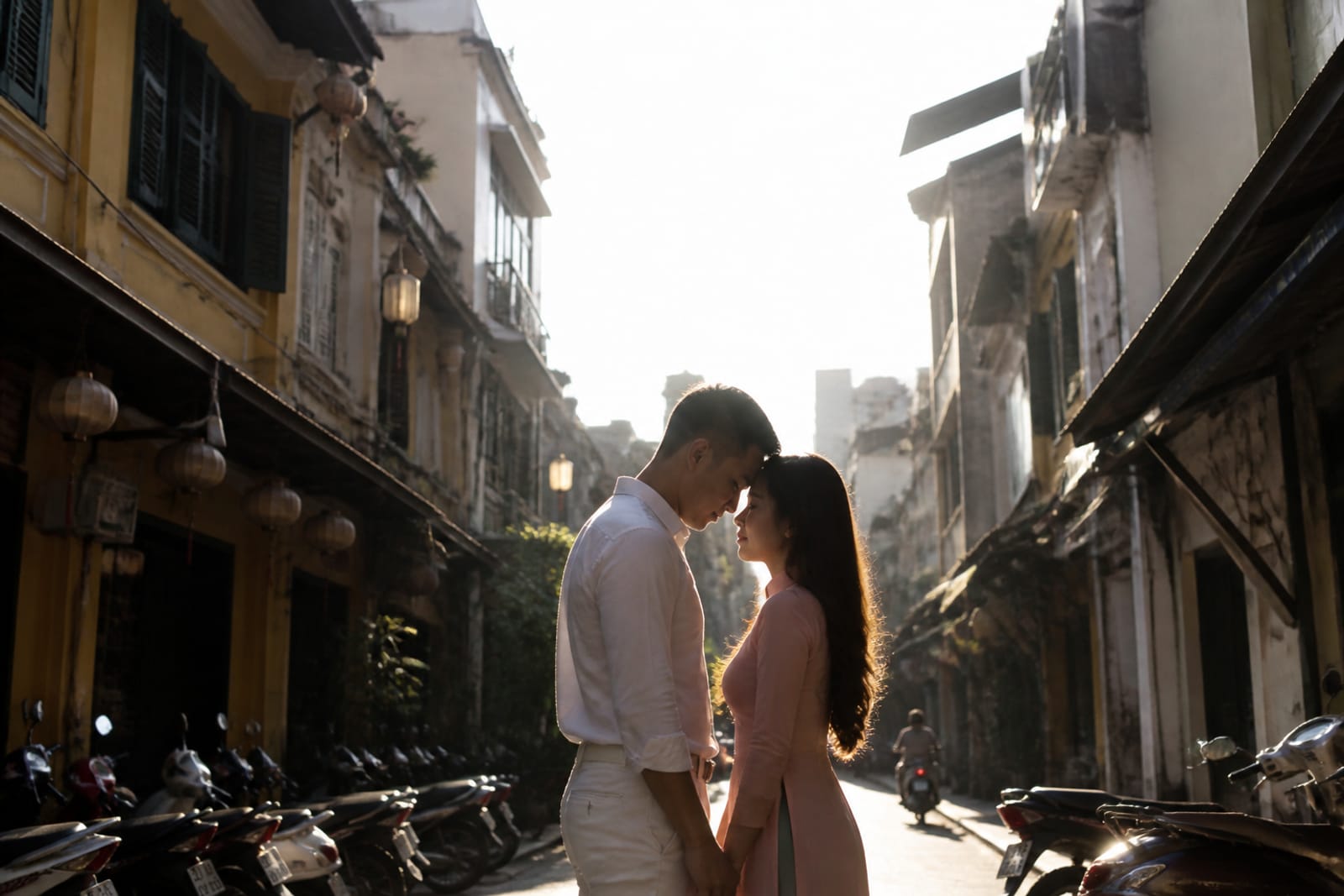
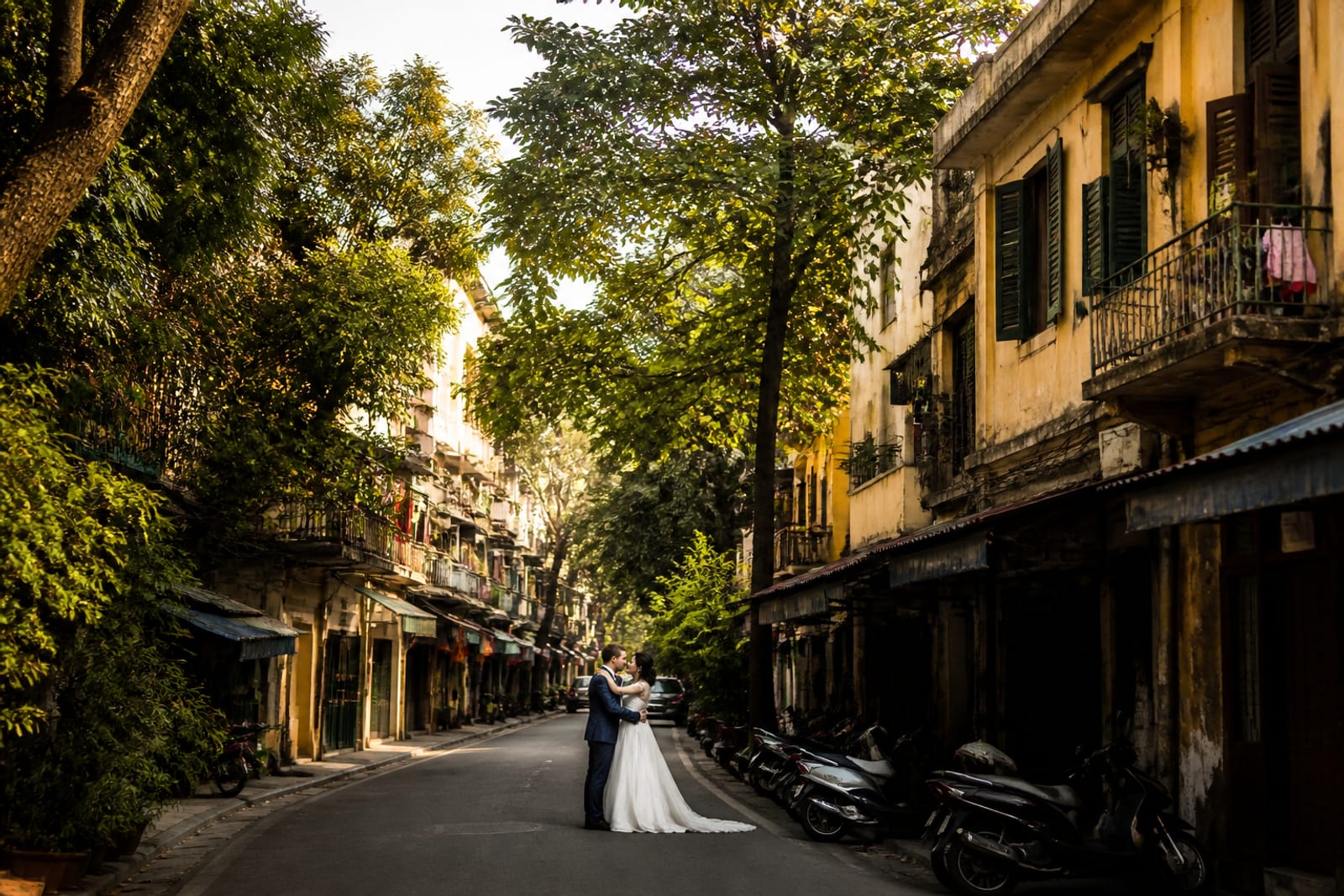
Urban and street backdrops (Phan Dinh Phung's tree-lined avenue, Old Quarter alleys, French Quarter colonial shutters) suit overcast skies and suit afternoon light that skims walls and textures. Winter and rainy-season grey skies create moody, cinematic tones; these spots are less busy midweek.
The choice depends on your couple's aesthetic (romantic vs. modern), outfit style (ao dai, dress, or everyday wear), and energy level (landmark-hopping is tiring). A site scout with a photographer clarifies light direction and movement flow before the shoot date.
---
Should you shoot in autumn, spring, or another season?
Hanoi's four seasons demand different strategies:
| Season | Light & Weather | Crowds | Outfit Wear | Why/Why Not |
|---|---|---|---|---|
| Autumn (Oct–Nov) | Soft, dry, warm, long golden hours | Highest | Minimal sweat, makeup holds | Best choice: predictable light, mild temps, few rain delays. Book early. |
| Spring (Mar–Apr) | Mild but humid, frequent haze, drizzle | Moderate | Humidity frizz risk | Pleasant but unpredictable; reschedule often. Ao dai works well. |
| Winter (Dec–Feb) | Cool (10–20°C), grey, short daylight | Moderate | Wear layers, makeup steady | Moody, cinematic; fewer tourists; high reschedule risk from drizzle. Tet closures mid-late Jan. |
| Summer (May–Sep) | Hot (35°C+), humid, heavy downpours | Low | Sweat, makeup touch-ups every 30 min | Avoid: heat exhaustion, ruined makeup, typhoon remnants. Light is harsh midday. |
Autumn is booked 2–3 months ahead; spring and winter offer flexibility but weather uncertainty. Summer is cheapest (fewer bookings) but requires patience and shade. Tet (late Jan–mid Feb) closes landmarks for 3–7 days and crowds them the days before—plan around it.
---
What outfit changes work best at each location?
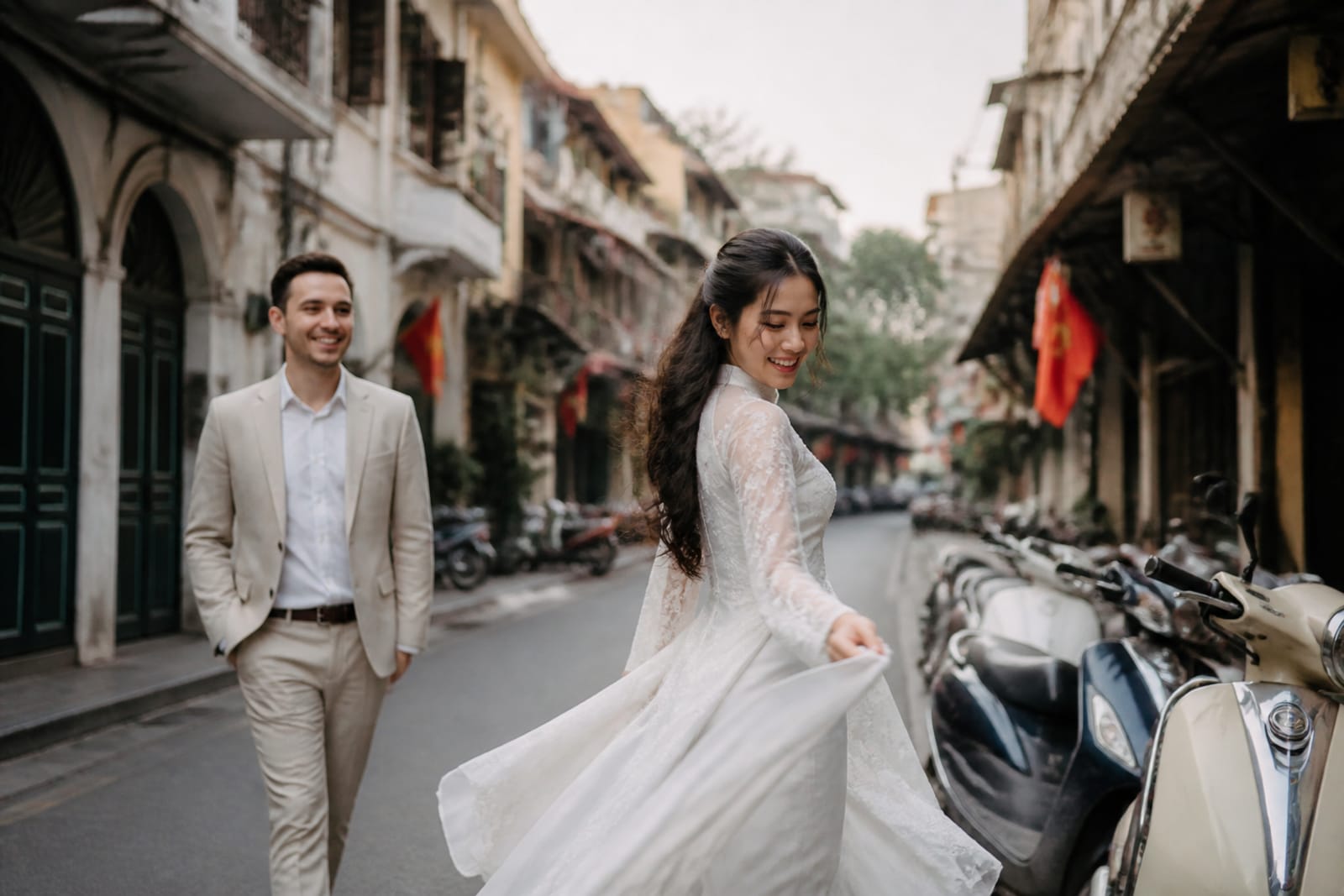
Ao dai (traditional tunic) is iconic at temples and gardens; it photographs beautifully in soft light and photographs poorly in hard midday sun (harsh shadows on pleats). Draping and movement are easier in autumn and spring. Summer heat and humidity wilt ao dai's structure; winter chill prevents natural movement. Modern dress (gown, suit, everyday wear) suits urban and street backdrops year-round. Layering (jacket, shawl) works in winter and spring; summer requires breathable, light fabrics.
Plan 2–3 outfit changes across 4–6 locations in one shoot day. Outfit changes take 10–15 minutes in a private spot (car, cafe restroom, or building entrance—scout these beforehand). Hair and makeup touch-ups after each change take 5 minutes. If you're wearing ao dai, confirm with your makeup artist that products resist humidity and movement; waterproof mascara, setting spray, and a light hand with powder prevent cake-up during outfit transitions. Cáo Studio's makeup & hair service includes a touch-up kit and on-site styling for multi-outfit shoots.
---
How do light direction and time of day shape your shot list?
Golden hour (first 30–45 min after sunrise, last 45 min before sunset) creates warm, directional light flattering to skin and fabrics. Shadows are long and defined—great for silhouettes and architectural frames. This light lasts 20–30 minutes at each location; you must shoot fast and leave by scheduled time.
Mid-morning (8–11 am) and late afternoon (3–5 pm) offer softer, less harsh light than midday. Shadows are angled but not as dramatic as golden hour. You have 2–3 hours of consistent light at each spot, allowing slower pacing, more outfit changes, and retakes.
Midday (11 am–3 pm) produces harsh, overhead shadows and blown-out skies. Temples and landmarks are busiest. Avoid this window unless shooting in shade or on overcast days. Overcast light is soft and shadowless—ideal for intimate shots—but flat and cool-toned (requires warmer outfit choices).
Dusk and night (after sunset) create moody, low-light frames; you'll need reflectors, off-camera flash, or high ISO. Few locations permit this; scout access with your photographer beforehand.
Most Hanoi pre-wedding shoots run 7:30 am–2 pm (golden hour + mid-morning) or 3 pm–sunset (late afternoon + golden hour). This split allows two light conditions per day and avoids the worst crowds.
---
Which locations have the best light at different times?
Temple of Literature: best at 7–8 am (warm light on stone, minimal crowds) or 5–6 pm (backlighting through gates). Avoid 9 am–4 pm (tourists, harsh shadows on walkways).
Hoan Kiem Lake & Red Bridge: shoot the bridge at sunrise (6:30–7:30 am, soft backlight); the east shore works late afternoon (5–7 pm, warm sidelight). Midday is crowded and harsh.
Phan Dinh Phung avenue: trees create dappled shade; best mid-morning (9–11 am) and late afternoon (4–6 pm) when light skims branches. Autumn foliage peaks late Oct–early Nov. Morning backlight silhouettes couples against trees; afternoon sidelight textures tree trunks and pavement.
Old Quarter alleys: narrow streets favor morning (7–9 am, cool color, soft shadows) or late afternoon (5–7 pm, warm sidelight on weathered walls). Midday light doesn't penetrate alleys evenly.
Tay Ho lakeside (north Hanoi): morning faces west (avoid backlighting); late afternoon faces east (warm, directional light). Sunset is stunning but crowded on weekends.
Train Street: narrow, overcast, and shaded—shoot anytime 9 am–5 pm. Check access with local authorities before planning; restrictions are unpredictable. Early morning (before 7 am) is safest.
A photographer's site visit 1–2 weeks before your shoot confirms these light angles and identifies backup spots if weather shifts. Ask your Cáo Studio team to scout during your consultation.
---
How do you prepare for humidity, crowds, and weather delays?
Humidity (peak Apr–Sep) causes makeup oxidation, hair frizz, and sweat marks on fabrics. Wear breathable, moisture-wicking undergarments under ao dai. Use a setting spray and blotting papers during outfit changes. Waterproof mascara and lip stain outperform cream products. Avoid heavy foundation—tinted moisturizer + concealer + loose powder holds better. Schedule shoots early morning when humidity is lowest.
Crowds (9 am–4 pm, weekends, Tet week) require early booking at landmarks. Reserve a private time (ask your photographer—some locations permit this for a small fee or through local connections) or shoot on weekdays before 8 am. Urban and garden backdrops are quieter anytime.
Weather delays happen year-round. Reschedule clauses are essential; confirm your studio's policy before booking. Autumn and winter reschedule more often due to unpredictable drizzle, but rescheduled dates usually clear within 1–3 days. Summer downpours are brief (30 min–1 hr) but violent; avoid booking during peak rainy season (May–Sep). Check the forecast 5–7 days before and again 3 days before; confirm with your team if rain is possible.
Backup indoor spots (French Quarter cafes, colonial architecture, art galleries, hotel interiors) work well on rainy days—no outfit changes needed, and soft window light is flattering. Plan one or two indoor frames beforehand so a rain day doesn't cancel the shoot.
Bring an umbrella, a portable reflector, and a phone charger. Wear comfortable shoes (you'll walk 2–3 km across districts). Hydrate constantly.
📸 Book on WhatsApp — couple photoshoot
---
How do you choose a pre-wedding photographer: studio, freelancer, or both?
A studio team (like Cáo Studio – Makeup & Photoshoot) brings consistency: the same photographer, makeup artist, and assistants across multiple outfits. They scout locations beforehand, handle logistics (changing rooms, lighting kits), and deliver edited files on a timeline. Cost is higher than a freelancer; value lies in professional hair/makeup, outfit consulting, and a proven edit style. Best for couples who value polish, speed, and a curated aesthetic. Ask for a lookbook or past couple portfolios to confirm the style matches your vision.
A freelancer (found via local photography groups or Instagram) offers flexibility, lower per-hour rates, and often a personal creative perspective. You scout locations yourself, arrange your own hair/makeup, and manage outfit logistics. Rescheduling and communication rely on one person; responsiveness varies. Best for couples comfortable with DIY planning, tight budgets, and a specific creative vision they've discussed in depth. Ask for references and a detailed contract.
Hybrid approach: hire a studio for makeup/hair and 1–2 locations, then a freelancer for additional, simpler shots (e.g., casual cafe frames or self-timed backups). This splits cost and adds flexibility.
The decision hinges on: budget (factor in hair/makeup, outfit changes, locations, and editing time—never as a fixed price, but as trade-offs), how much you want to manage, your couple's tolerance for direction vs. spontaneity, and how quickly you need edited files. Cáo Studio quotes on WhatsApp after a brief consultation; confirm what's included (hours, outfit changes, edited file count, and delivery time) before committing.
---
What to check before you book a pre-wedding photographer
Portfolio: confirm the photographer has shot pre-wedding couples in Hanoi before, not just weddings or portraits. Look at their light handling in autumn, spring, and overcast conditions—not just sunny days. Do you like their color grade, pose direction, and storytelling?
Studio or freelancer?: who is responsible for scouting locations, confirming access, managing reschedules, and delivering final files? A studio team shares the load; a freelancer requires your coordination.
Hair and makeup: is this included or hired separately? Studio teams usually include a makeup artist; freelancers often don't. If you hire separately, confirm the makeup artist has shot outdoors before and uses waterproof, long-wear products.
Outfit planning: does the photographer advise on outfit choices, or is this entirely your call? Studios often consult on aesthetics (what works with each location's colors and light). Freelancers may not.
Rescheduling and refunds: what if weather cancels your shoot? Confirm the studio's policy in writing. Autumn books fast (2–3 months ahead); confirm your preferred dates are available.
Location access: confirm the photographer can shoot at your chosen spots without permits or local permissions blocking you. Train Street, some temples, and certain parks have restrictions; a local team knows which spots are currently accessible.
Turnaround time: how long until edited files arrive? Studios typically deliver in 2–4 weeks; freelancers vary widely. Ask for a written timeline.
Budget and payment: ask for a quote via WhatsApp (Cáo Studio's contact channel). Never pay the full fee upfront; a typical structure is 30–50% deposit to secure the date, balance on delivery or before the shoot.
---
Why Hanoi, and when to plan your shoot
Hanoi's appeal for pre-wedding shoots is its blend of heritage, nature, and urban texture—rare in a single city. Temple of Literature speaks tradition; Hoan Kiem Lake evokes romance; Phan Dinh Phung's trees frame intimacy; Old Quarter chaos creates energy. You can shoot three entirely different aesthetics in one day.
Timing matters deeply: plan 2–3 months ahead for autumn (Oct–Nov), the most booked season. Spring and winter allow 1–2 months lead time and offer more flexibility if weather shifts. Summer is last-minute and weather-dependent, but off-season rates may be lower.
Engage your photographer 4–6 months before your wedding to scout locations, confirm logistics, and lock in your preferred date. Contact Cáo Studio on WhatsApp for a consultation and quote. Mention your vision (intimate, playful, artistic), preferred locations, outfit style, and ideal month; they'll propose a shot list, light strategy, and timeline.
---
FAQ
What's the best time of day to shoot in Hanoi without crowds?
Shoot before 8 am (landmarks are quietest 6:30–8 am) or after 5 pm (late afternoon avoids day-trippers). Weekdays are emptier than weekends. Avoid 9 am–4 pm and Tet week (late Jan–mid Feb) entirely if you're crowd-averse.
Can I shoot in the rain, or should I always reschedule?
Light rain and overcast skies work well—soft, shadowless light suits intimate shots and moody aesthetics. Heavy downpours (>1 hour forecast) damage makeup and soak fabrics; reschedule. Plan indoor backup spots (cafes, galleries, hotel corridors) for light rain scenarios.
How many outfits should I plan for a pre-wedding shoot?
2–3 outfits across 4–6 locations is typical. Each outfit change takes 10–15 minutes plus 5 minutes for makeup touch-up. More changes (4+) stretch a full-day shoot; fewer (1) limits visual storytelling. Discuss your vision with your photographer during consultation.
Should I wear an ao dai, and will it photograph well in summer?
Ao dai photographs beautifully in soft autumn and spring light; summer heat wilts the fabric's structure and causes visible sweat. If you love ao dai, book in Oct–Nov or wear it for 1–2 locations only (a cooler time of day, shaded spot). Modern dress suits summer better.
Do I need a location permit, or can we shoot anywhere in Hanoi?
Most public streets, lakes, and gardens allow photography without a permit. Train Street is occasionally restricted; temples require respectful dress and may ask visitors not to pose. Your photographer should confirm access beforehand. Private venues (cafes, hotels, art galleries) may require a small fee or advance notice.
How do I choose between a studio team and a freelancer?
Studios include makeup, outfit consulting, and logistics; they cost more and require longer lead time. Freelancers are flexible and cheaper but offer less guidance. If you want a polished, multi-outfit day with professional hair/makeup, choose a studio. If you prefer DIY planning and lower cost, hire a freelancer and source hair/makeup separately. ===
FAQ
What's the best time of day to shoot in Hanoi without crowds?
Shoot before 8 am (landmarks are quietest 6:30–8 am) or after 5 pm (late afternoon avoids day-trippers). Weekdays are emptier than weekends. Avoid 9 am–4 pm and Tet week (late Jan–mid Feb) entirely if you're crowd-averse.
Can I shoot in the rain, or should I always reschedule?
Light rain and overcast skies work well—soft, shadowless light suits intimate shots and moody aesthetics. Heavy downpours (>1 hour forecast) damage makeup and soak fabrics; reschedule. Plan indoor backup spots (cafes, galleries, hotel corridors) for light rain scenarios.
How many outfits should I plan for a pre-wedding shoot?
2–3 outfits across 4–6 locations is typical. Each outfit change takes 10–15 minutes plus 5 minutes for makeup touch-up. More changes (4+) stretch a full-day shoot; fewer (1) limits visual storytelling. Discuss your vision with your photographer during consultation.
Should I wear an ao dai, and will it photograph well in summer?
Ao dai photographs beautifully in soft autumn and spring light; summer heat wilts the fabric's structure and causes visible sweat. If you love ao dai, book in Oct–Nov or wear it for 1–2 locations only (a cooler time of day, shaded spot). Modern dress suits summer better.
Do I need a location permit, or can we shoot anywhere in Hanoi?
Most public streets, lakes, and gardens allow photography without a permit. Train Street is occasionally restricted; temples require respectful dress and may ask visitors not to pose. Your photographer should confirm access beforehand. Private venues (cafes, hotels, art galleries) may require a small fee or advance notice.
How do I choose between a studio team and a freelancer?
Studios include makeup, outfit consulting, and logistics; they cost more and require longer lead time. Freelancers are flexible and cheaper but offer less guidance. If you want a polished, multi-outfit day with professional hair/makeup, choose a studio. If you prefer DIY planning and lower cost, hire a freelancer and source hair/makeup separately. ===
Ao dai, makeup, hair and a local photographer in Hanoi or Saigon — one WhatsApp message.