/pre-wedding-photoshoot
Best Pre-Wedding Photo Spots in Mai Chau and Pu Luong
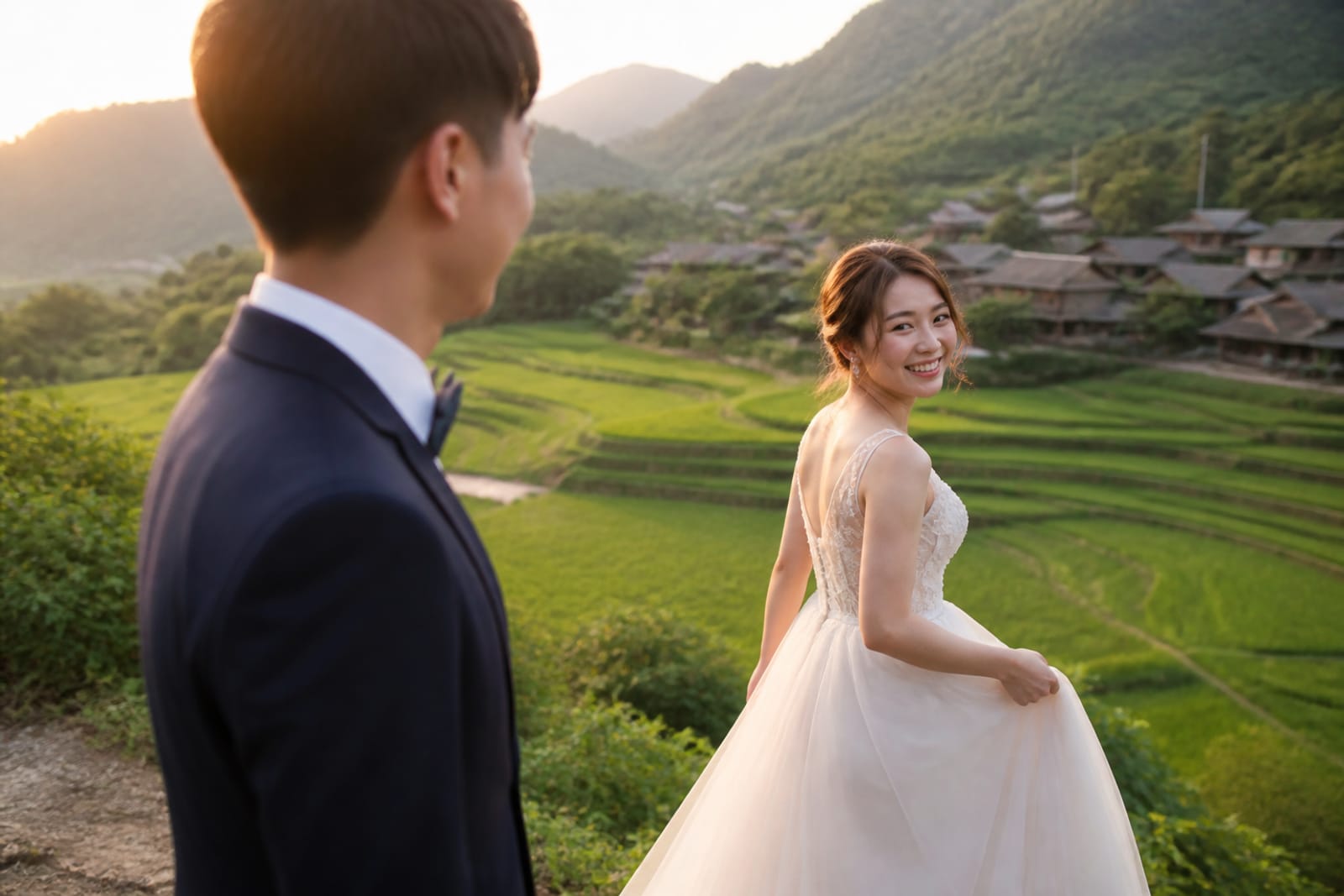
Mai Chau and Pu Luong are two distinct rice-farming valleys in Hoa Binh Province, North Vietnam, roughly 140–160 km southwest of Hanoi. Golden rice typically peaks late May–June and again September–October; mist and cloud cover dominate December–February. Pre-wedding shoots here require a photographer who knows the narrow footpaths, homestay access, and how light behaves in the valleys (soft and diffused most mornings, harsh after 10 am). A single location shoot takes 2–4 hours; logistics—travel time from Hanoi, guide permits, outfit changes on uneven terrain—matter more than Instagram aesthetics. Cáo Studio does not operate in Mai Chau or Pu Luong; we recommend booking a vetted local photographer (through homestay owners or travel agencies) or planning a pre-wedding photoshoot in Hanoi, Da Nang, or Hoi An where our team handles everything in one session. Choose Mai Chau or Pu Luong only if golden rice and mountain mist outweigh logistical complexity and cost factors (fuel, guide, accommodation, transportation). ---
What makes Mai Chau and Pu Luong different for pre-wedding shoots?
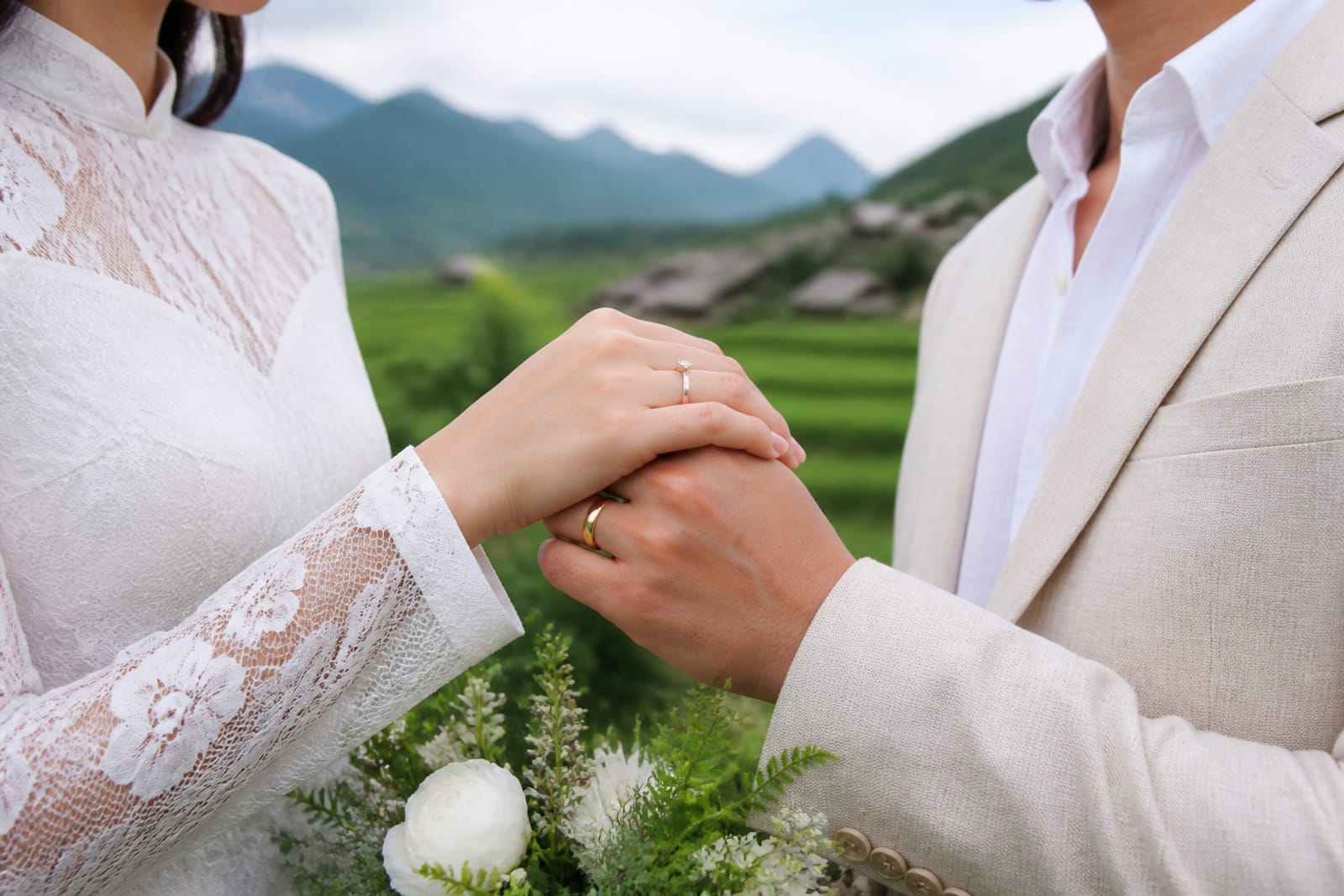
Mai Chau sits lower (roughly 600–800 m elevation) with gentler, more accessible terraces; homestays sit inside the valleys, so sunrise and evening light are minutes away. Pu Luong is higher, steeper, and more isolated; footpaths are narrower and muddier, but the vistas are more dramatic and fewer tourists crowd the edges. Mai Chau suits couples who want immersive rural stays and easier walking in ao dai or lightweight dresses; Pu Luong rewards those willing to hike in hiking boots, change outfits at a lodge, and shoot at specific vantage points where the light and scale work best. Neither valley has a "photoshoot studio" or makeup facility—you must arrive prepared, coordinate with homestay owners for space, and hire a local guide who doubles as a fixer.
📸 Book on WhatsApp — ao dai photoshoot
Which season gives the clearest, most dramatic light?
| Season | Light & Weather | Rice Golden? | Best Outfit Fit | Why It Matters |
|---|---|---|---|---|
| Dec–Feb | Misty mornings; clear by 9 am; temps 10–18°C | No (green/brown stubble) | Sweaters, layers, long-sleeve áo dài | Mist diffuses harsh shadows; cold requires planning |
| Mar–Apr | Bright, low-angle; temps 18–25°C; occasional rain | No | Light áo dài, thin layers | Angles change fast; humidity rises mid-morning |
| May–Jun | Hot (28–32°C), humid; brief afternoon showers | YES (peak golden) | Lightweight cotton, linen; thin áo dài only | Rice glows but you sweat fast; light stays soft 5–8 am |
| Jul–Aug | Very hot, heavy rain (late afternoons) | No (green, wet) | Rain-resistant fabrics, quick-dry | Flooding risk; light is diffused but unreliable |
| Sep–Oct | Crisp mornings (18–22°C); golden rice returns | YES (secondary peak) | Áo dài, light layers | Best balance: cool, clear dawn light, full rice color |
| Nov | Cooling (15–20°C), occasional rain | No (harvest done) | Layers, long-sleeve dressing | Stubble and mud; light still soft; fewer tourists |
Peak golden rice—late May–June and September–October—attracts crowds and requires sunrise (5:30–7:00 am) booking or off-path logistics. If you prioritize clear light and solitude over gold tones, December–February mornings (post-mist, pre-tourist surge) work well but demand thermal layers and ao dai that photograph in cool tones.
How do you scout and book a local pre-wedding photographer in these valleys?
Cáo Studio operates in Hanoi, Saigon, and Hoi An, not in Mai Chau or Pu Luong. To find a capable photographer in the valleys, start with homestay owners—they often know local guides who photograph or can recommend someone. Ask for a portfolio (check if they've shot ao dai, couples, and full-day projects, not just tourist snaps), confirm whether they provide edited files within 1–2 weeks, and clarify logistics: do they provide transport to valley access points, do they know which paths require permission, and do they shoot video or stills-only. Request a contract or message confirming deliverables, timeline, and payment method (cash is often the only option). Vet through travel agencies (many have photographer partnerships) or ask your ao dai rental shop or makeup artist for referrals—they know who works reliably. Always ask for at least 3 full-day couple shoots (not just tourist headshots) as samples, and confirm the photographer understands ao dai movement (these fabrics require specific posing and walking angles to look right in frame).
What outfit, makeup, and logistical decisions change in a valley shoot?
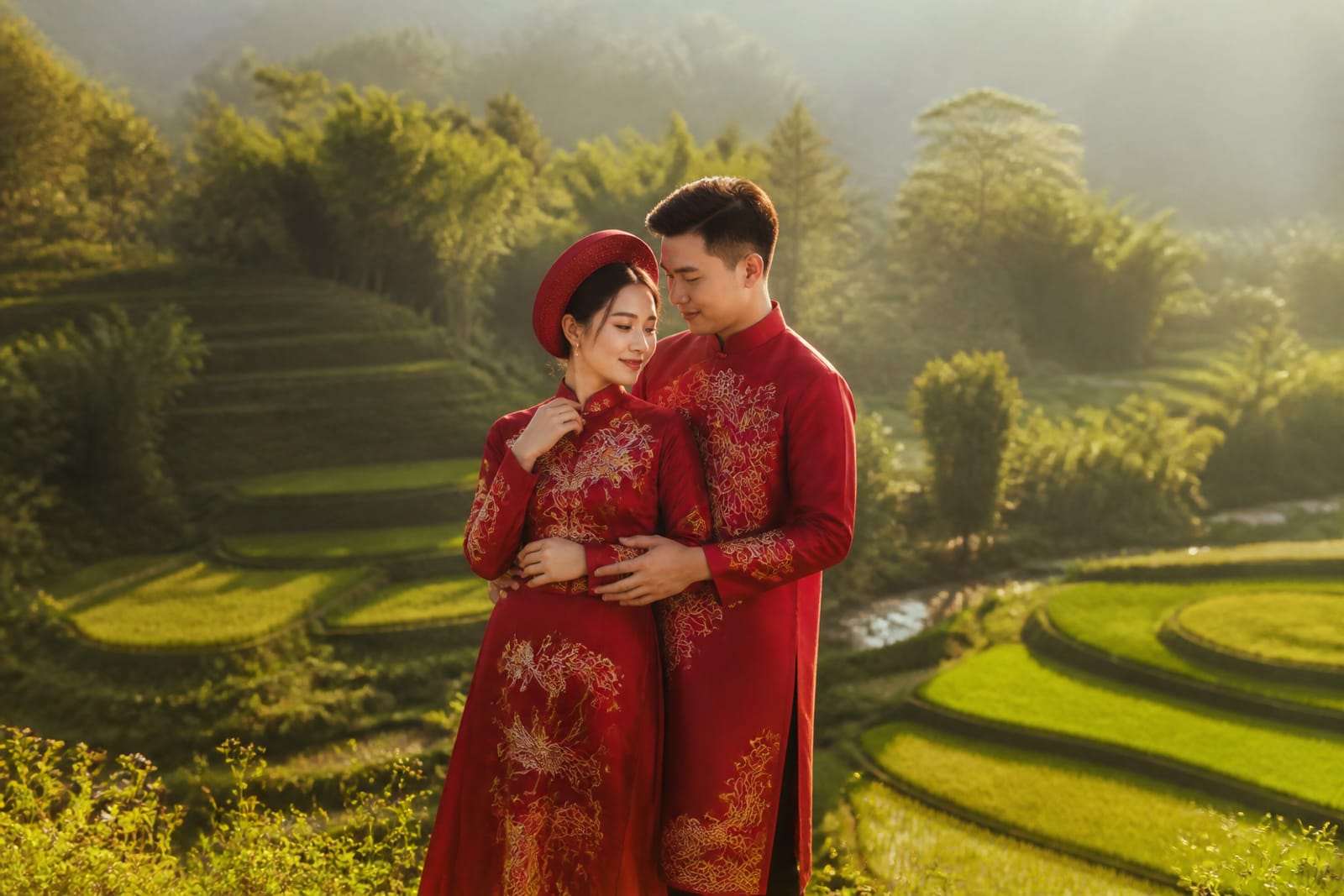
Ao dai works beautifully in Mai Chau and Pu Luong but demands compromise: terraced footpaths are narrow, muddy after rain, and full ao dai trains drag easily; opt for a shorter train (knee-length or shorter) or plan outfit changes at your lodge rather than carrying multiple full sets up slopes. Makeup requires long-wear products—humidity and sweat remove regular matte foundation by 7 am; pack blotting papers and reapplication powder, or hire a makeup artist who stays for touch-ups (few do in these remote valleys; base your makeup in Hanoi before you arrive, or book makeup & hair at your hotel in a nearby town the morning before). Bring a dedicated logistics person: someone to carry gear, manage outfit changes, and scout light while the photographer frames. If you're hiring a local photographer, build in 30–60 minutes for them to assess the terrain, check access permissions with homestay owners, and scout sunrise vantage points—rushed scouting leads to missed light. Plan transportation early (rent a jeep or hire a car with driver from Hanoi; public buses stop before the valleys). Confirm whether your homestay allows outfits to be changed and dried indoors; if not, pack a waterproof bag.
What goes wrong in Mai Chau and Pu Luong shoots and how do you avoid it?
Muddy paths ruin ao dai and timing. After rain (common Sep–Nov, sporadic May–Aug), terrace footpaths become slippery clay; ao dai hems soak up mud and take hours to dry. Check the forecast 3 days before, plan a backup indoor location (homestay dining hall, covered bridge, local market), and bring a lightweight microfiber cloth for quick wipe-downs.
Light disappears fast. Cloud cover (especially mornings in the cool season) makes light flat and grey; sunrise is critical but often obscured by mist until 7–8 am. Work with your photographer to identify 2–3 backup vantage points with different exposures in case the main spot is overcast.
Homestay owners may not understand photo permits. Some homestays don't allow commercial shoots or require written permission (unwritten rules vary). Confirm in advance via email or WhatsApp that your photographer's presence is approved and that you've agreed to a small tip or donation.
Sweat, humidity, and outfit breakdowns. Ao dai and formal dresses wilt fast at altitude in warm months. Pack a steamer or press iron (most homestays have outlets), bring extra safety pins and hem tape, and schedule outfit changes during the flattest light (10 am–2 pm), not in the golden hour when you should be shooting.
Edited photos take weeks. Rural photographers often have slower turnaround; clarify the delivery date (1–2 weeks is typical) before you book. If you need fast edits for a wedding soon after, request 48-hour turnaround and confirm cost factors (rush editing fees vary widely).
---
How do Mai Chau and Pu Luong compare to pre-wedding shoots in Cáo Studio's service areas?
For context: Cáo Studio's pre-wedding photoshoots operate in Hanoi, Saigon, and Hoi An, where we handle outfit, makeup, hair, and photography in a single coordinated session—no separate vendors, faster edits (48 hours), and guaranteed logistics. Mai Chau and Pu Luong offer unmatched landscape drama and authenticity but require you to hire and coordinate multiple vendors separately, manage transportation and terrain risks, and accept slower timelines. If your priority is a stress-free, fully-controlled shoot with guaranteed quality and fast delivery, Hanoi's rural spots (Red River Dawn sessions, suburban ao dai settings) or Hoi An's Ancient Town and rice paddies (with our Hoi An team) deliver similar rural or colonial aesthetics with one booking. If you're set on Mai Chau or Pu Luong's specific rice terraces and mist, accept the added complexity and plan to stay 2–3 days for scouting and reshoot flexibility.
💄 Makeup & hair at your hotel | 🌸 See the lookbook
---
What to check before you book a Mai Chau or Pu Luong pre-wedding shoot
- Photographer's portfolio: At least 3 full couple shoots (ao dai or formal, outdoor, golden hour or sunrise) with clear, edited samples.
- Timeline: Confirm edited photos arrive within 1–2 weeks; request a contract or email confirming delivery date.
- Outfit planning: Will you change outfits on-site or arrive in one? Ask the photographer or homestay if indoor space and mirror are available.
- Permits: Confirm the photographer has checked with the homestay and local authorities (some valleys restrict commercial photography).
- Weather contingency: Ask for backup locations if rain or cloud cover ruins the main shoot day. Does the photographer offer a reshoot if light is genuinely poor?
- Accessibility: Are the vantage points safe for your guests in formal footwear? Will the photographer stay for touch-ups or only the main couple?
- Payment and files: Cash or bank transfer? How many edited images and raw files do you receive? Video, stills, or both?
- Transportation: Does the photographer provide transport, or do you arrange it? How early can they start (some homestays set sunrise access limits)?
---
Consider these alternatives if Mai Chau or Pu Luong feels too complex
Hanoi's rural suburbs (Duong Lam, Van Phuc) offer similar ao dai and rural aesthetics with 30-minute access to Cáo Studio's Hanoi team—one booking, coordinated logistics, 48-hour edits. Da Nang's rice paddies and mountains (An Phu, Yen Bai) deliver mist and terraces with a shorter travel day from central Vietnam. Hoi An's rice paddies and villages (Cáo Studio's Hoi An service—ask on WhatsApp for Hoi An dates) combine colonial town authenticity with farmland backdrops and faster turnaround. Sapa (far north, cooler, higher mist) is more remote than Mai Chau and requires more logistical patience but rewards with alpine drama; not recommended for first-time pre-wedding shoots.
If you're planning a full pre-wedding photoshoot before your wedding day, pairing a Hanoi or Hoi An session with Cáo Studio and a separate custom day in Mai Chau or Pu Luong with a local photographer gives you both guaranteed quality and unique landscape variety—without betting everything on remote logistics.
---
📸 Book on WhatsApp — pre-wedding photoshoot
FAQ
Can Cáo Studio shoot in Mai Chau or Pu Luong?
No. Cáo Studio operates in Hanoi, Saigon, and Hoi An only. We recommend booking a local photographer through homestay owners or travel agencies in the valleys, or booking a pre-wedding session with us in Hanoi or Hoi An instead.
What's the best time of year for golden rice in these valleys?
Late May–June and September–October. Rice is harvested by November. Mist dominates December–February mornings (clears by 9 am). If you prioritize clear light over gold rice, December–February and March–April are less crowded.
Do I need a professional makeup artist in Mai Chau or Pu Luong?
Homestays don't offer makeup services. Apply makeup in Hanoi before you travel, or book a makeup artist to stay overnight at your homestay (expensive and rare). Pack waterproof, long-wear products and blotting supplies for touch-ups.
How early do I need to wake for sunrise shots?
Shoot 5:30–7:00 am. Mist clears by 8–9 am, and harsh light sets in after 10 am. This demands staying at or near a homestay and coordinating with your photographer the night before.
How much do Mai Chau and Pu Luong shoots cost compared to Hanoi?
Costs depend on photographer rates, guide fees, transportation, and accommodation—not Cáo Studio's pricing. Local photographers typically charge less than Hanoi studios but add fuel, guide, and transport costs. Ask homestay owners for referrals and get a written quote before booking.
If I hire a local photographer, what should the contract include?
Delivery date (aim for 1–2 weeks), number of edited images, file format (JPG, RAW), payment method (confirm if cash-only), and a reshoot clause if weather genuinely ruins the shoot. Get it in writing via email or WhatsApp.
Can I wear a full-length ao dai on muddy valley footpaths?
Full trains drag and mud-soak easily. Opt for a shorter train (knee-length) or plan outfit changes at your lodge. Confirm indoor space with the homestay in advance, and bring a waterproof bag for wet hems.
FAQ
Can Cáo Studio shoot in Mai Chau or Pu Luong?
No. Cáo Studio operates in Hanoi, Saigon, and Hoi An only. We recommend booking a local photographer through homestay owners or travel agencies in the valleys, or booking a pre-wedding session with us in Hanoi or Hoi An instead.
What's the best time of year for golden rice in these valleys?
Late May–June and September–October. Rice is harvested by November. Mist dominates December–February mornings (clears by 9 am). If you prioritize clear light over gold rice, December–February and March–April are less crowded.
Do I need a professional makeup artist in Mai Chau or Pu Luong?
Homestays don't offer makeup services. Apply makeup in Hanoi before you travel, or book a makeup artist to stay overnight at your homestay (expensive and rare). Pack waterproof, long-wear products and blotting supplies for touch-ups.
How early do I need to wake for sunrise shots?
Shoot 5:30–7:00 am. Mist clears by 8–9 am, and harsh light sets in after 10 am. This demands staying at or near a homestay and coordinating with your photographer the night before.
How much do Mai Chau and Pu Luong shoots cost compared to Hanoi?
Costs depend on photographer rates, guide fees, transportation, and accommodation—not Cáo Studio's pricing. Local photographers typically charge less than Hanoi studios but add fuel, guide, and transport costs. Ask homestay owners for referrals and get a written quote before booking.
If I hire a local photographer, what should the contract include?
Delivery date (aim for 1–2 weeks), number of edited images, file format (JPG, RAW), payment method (confirm if cash-only), and a reshoot clause if weather genuinely ruins the shoot. Get it in writing via email or WhatsApp.
Can I wear a full-length ao dai on muddy valley footpaths?
Full trains drag and mud-soak easily. Opt for a shorter train (knee-length) or plan outfit changes at your lodge. Confirm indoor space with the homestay in advance, and bring a waterproof bag for wet hems.
Ao dai, makeup, hair and a local photographer in Hanoi or Saigon — one WhatsApp message.