/pre-wedding-photoshoot
Best time for pre-wedding photoshoots in Mui Ne: season, light, outfit
Mui Ne's driest and most photogenic window runs November to April, with light peaking in December–February when skies are clear and mornings are cool. Avoid May–November (wet season, afternoon downpours, weak overhead light). For dune shoots, arrive at sunrise (before 6 a.m.) before sand heats and wind gusts strengthen; dunes photograph best in soft side light during golden hour. Winds are strongest November–March, which adds texture to fabric but complicates hair and makeup—plan for quicker touch-ups on location. Mui Ne is in the south; entry, accommodation and local crew are your main cost factors. Cáo Studio does not operate in Mui Ne, but we shoot pre-weddings in Hanoi, Ho Chi Minh City, and Hoi An—ask on WhatsApp if you're combining a Saigon city shoot with a Mui Ne day trip.
Why November to April is peak season for pre-wedding light in Mui Ne
Mui Ne sits in Vietnam's south, where the dry season (December–April) delivers consistent clear skies and low-angle morning sun ideal for skin tone and fabric texture. Wind patterns peak November–March, creating dramatic backlit dune photographs but complicating makeup durability. Rainfall averages near zero December–February, meaning no flash storms mid-shoot. April marks the dry season's end but remains shootable if you work early mornings. This window suits couples who can book advance notice and tolerate 20–30°C morning temperatures.
📸 Book on WhatsApp — ao dai photoshoot
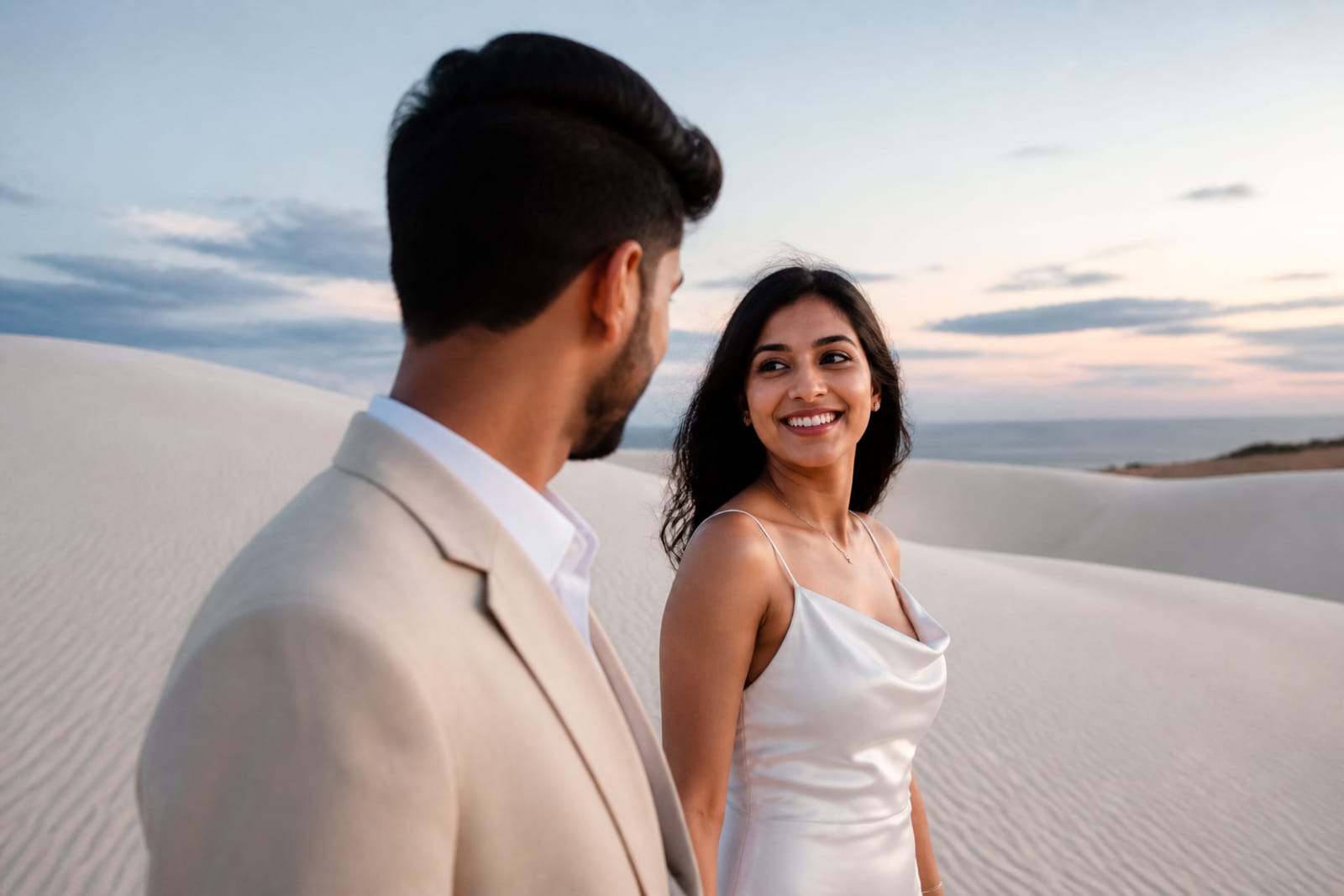
What happens to Mui Ne light in the wet season (May–November)?
May through November brings short, intense afternoon downpours (most common Sep–Oct) and typhoon risk. Overhead sun during midday shoots flattens skin and creates harsh shadows—golden hour is compressed and lower in angle. Humidity soars; makeup sets with difficulty and hair frizz accelerates. The dunes still photograph, but cloudy, diffused light lacks the drama that drew you to Mui Ne. Couples often shift to indoor venue shoots or postpone. This season is cheapest for accommodation and less crowded, but trade-offs in light quality and crew reliability outweigh savings.
Should you do dunes, coastline, or both in one pre-wedding session?
The dunes demand an early start (4:30–5:30 a.m. arrival for sunrise framing) and work best November–April when sand is cool and wind manageable. Coastline (beaches, rock formations, salt ponds) adapts to afternoon light better and offers outfit variety—silk ao dai versus lightweight wedding dress. A full pre-wedding typically covers both: dunes for 90 minutes at dawn, then relocate to coast for midday outfit change and wider landscape shots. This requires a local crew with transportation and permits; logistical cost factors include two locations, permit and parking fees, and a longer shooting day.
| Shoot Type | Best Months | Light Quality | Outfit Challenge | Logistics |
|---|---|---|---|---|
| Dunes only (sunrise) | Nov–Apr | Golden, directional | Wind tangles hair; sand clings to fabric | Early wake, one location, cool temps |
| Coastline (afternoon) | Nov–Apr | Warm, lower angle | Sea breeze, salt spray on makeup | Two outfit changes, parking, permit check |
| Both (full day) | Dec–Feb | Peak | Multiple touch-ups, longer crew day | Highest complexity; best light combination |
| Salt ponds (middle hours) | Nov–Apr | Soft, overhead; reflection | Minimal; water-reflective, flattering | One location, midday sun, permit optional |
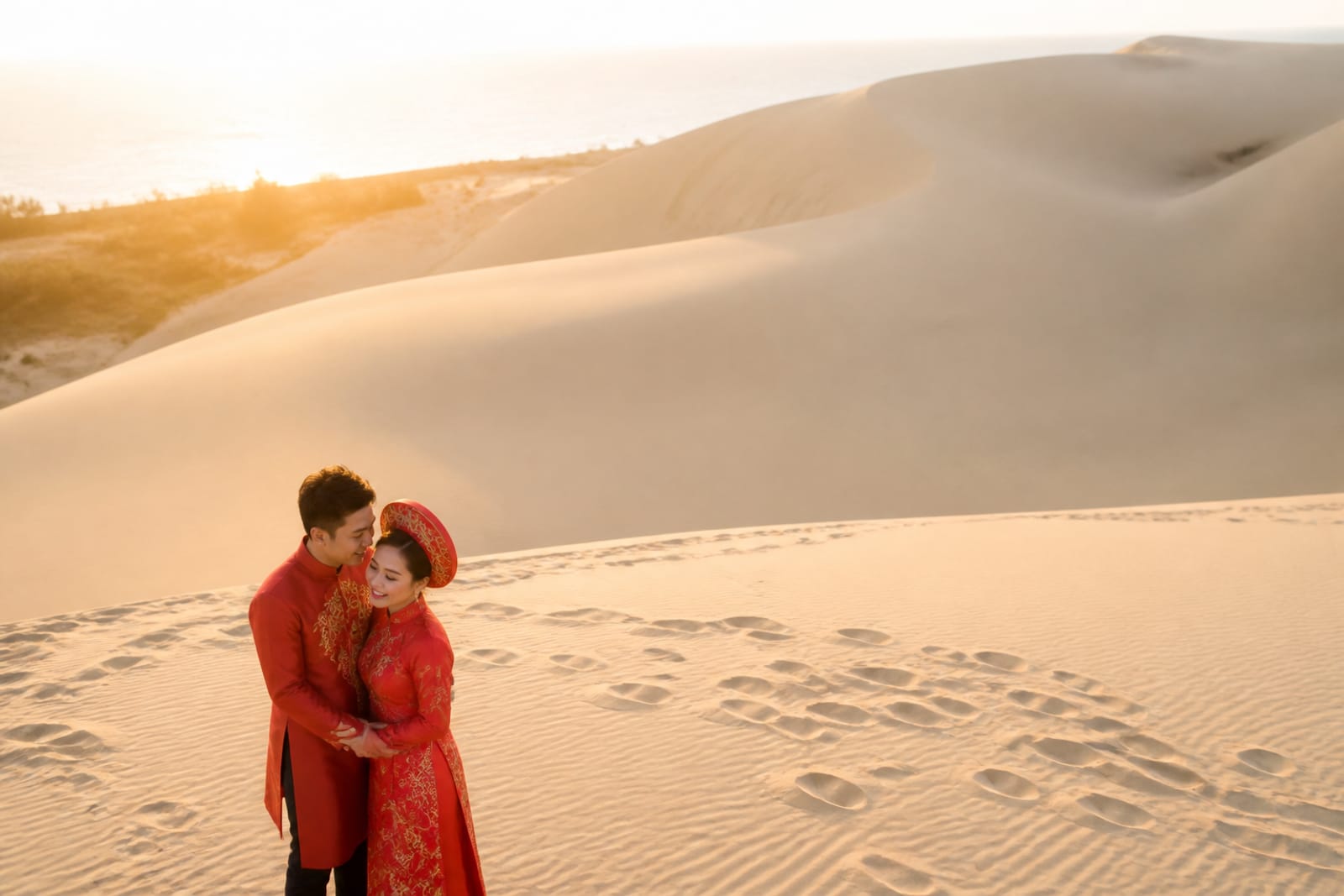
What outfit and hair choices work in Mui Ne's wind?
Mui Ne's persistent November–March winds demand fabrics that move without tangling. Heavy silk ao dai (traditional Vietnamese gown) photographs beautifully but requires hairspray, pins and frequent combing; a lightweight modern ao dai or linen co-ao works equally well on camera and resists wind knots. Wedding dresses in crepe or structured silk hold their line better than chiffon. Avoid long, loose hair in dunes; braids, half-ups, or sleek ponytails last through a full shoot without constant restyling. A local makeup artist knows humidity and wind behaviour; ask them to recommend setting sprays and long-hold products when you book. Hair ornaments (clips, combs, lightweight florals) should be tethered or pinned, not dangling.
How to find and vet a local Mui Ne photographer before you book
Mui Ne has no major studio branches; couples typically hire a freelance photographer or small local team based on Instagram portfolios and recent venue experience. Check their dune and coastline work specifically—look for color accuracy in golden hour, crisp detail in backlit shots, and whether couples appear directed (walking, laughing, embracing) rather than posed. Ask when they last shot there, how they handle sand on camera gear, and whether they include a second camera body for backup (salt air is corrosive). Request references from couples who shot the same season and locations. Confirm they carry permits if required and know tidal times for beach shoots.
Cáo Studio does not operate in Mui Ne, but we specialize in pre-wedding photoshoots in Hanoi, Ho Chi Minh City, and Hoi An. If you're in Ho Chi Minh City for a few days and considering a coastal day trip, we can advise on combining a city shoot with local photographer coordination in Mui Ne. Ask on WhatsApp +84 338 762 340 how we've worked with couples bridging multiple locations.
What to check before you book a pre-wedding session in Mui Ne
Timing & Light
- Confirm shoot month; dunes only work Nov–Apr.
- Request sunrise (5–6:30 a.m.) or golden hour (4–5:30 p.m.) availability, not midday.
- Ask how many outfit changes the photographer covers in your booking.
Crew & Logistics
- Verify whether makeup and hair are included or outsourced; wind-resistant skill matters.
- Confirm transportation between dunes and coastline, and whether the crew brings backup gear.
- Check if entry fees, permits or parking are your cost or the photographer's.
Outfit Preparation
- Share your outfit fabrics and silhouettes; ask the photographer's recommendation for wind resistance.
- Plan for quick touch-ups; bring a small makeup kit and hairbrush on set.
- Avoid new shoes; test them for sand and stability beforehand.
Safety & Backup
- Ask if the photographer has a weather cancellation or reschedule policy.
- Confirm a second camera body or assistant on set (valuable in sandy, salty conditions).
- Get a shot list or storyboard before the day; miscommunication leads to regret, not better photos.
---
FAQ
What's the difference between Mui Ne light in December and March?
December offers cooler mornings (18–22°C), stable clear skies, and lower humidity—ideal for full-day shoots without makeup breakdown. March is warmer (22–26°C), still dry, but noon sun climbs higher and creates harsher shadows; work earlier and later to maximize golden hour. Both months are excellent; March suits couples who prefer warmth and can shift to later sunrise times.
Do I need a permit to shoot in Mui Ne's dunes or salt ponds?
Most dune areas are open to visitors without formal permits, but private salt pond operators may require advance notice or a small fee—ask your photographer. Always confirm locally before booking; regulations change. Your photographer should handle this if they're familiar with Mui Ne.
Can I do a pre-wedding shoot in Mui Ne without hiring a local photographer?
Yes, if you have a trusted photographer traveling with you or a friend experienced in directing couples. However, you'll miss local knowledge of tides, permits, wind patterns and best light times. A local photographer adds value—especially in Mui Ne, where landscape and light timing are precise.
Should I book a full-day session (dunes + coastline) or split across two days?
One full day (dunes sunrise, coastline afternoon) captures the most variety and light changes; outfit fatigue is real, but results are comprehensive. Two shorter sessions (dunes one morning, beach another day) reduce fatigue and allow outfit/hair refresh, but cost more and require two trips. Choose based on your comfort and how many outfit changes you want.
What happens if it rains during my pre-wedding shoot in Mui Ne?
May–November rainfall is common (especially Sep–Oct); Nov–Apr rain is rare but possible. Confirm your photographer's reschedule policy before booking. If you book Dec–Feb, rain risk is low; have a backup indoor location (resort, salt storage, restaurant interior) in case. Avoid booking during typhoon season (Sep–Nov) unless you have full flexibility to reschedule.
How much does hiring a local Mui Ne photographer cost compared to Cáo Studio in Ho Chi Minh City?
Costs depend on experience, location, crew size and travel time—never quoted as fixed fees here. Ask local photographers directly; Cáo Studio pre-wedding packages are quoted on WhatsApp after you detail your session (locations, days, outfit count). Booking Cáo Studio in Saigon instead of Mui Ne may suit you if you want one team handling everything—ask us on WhatsApp +84 338 762 340 to discuss options.
FAQ
What's the difference between Mui Ne light in December and March?
December offers cooler mornings (18–22°C), stable clear skies, and lower humidity—ideal for full-day shoots without makeup breakdown. March is warmer (22–26°C), still dry, but noon sun climbs higher and creates harsher shadows; work earlier and later to maximize golden hour. Both months are excellent; March suits couples who prefer warmth and can shift to later sunrise times.
Do I need a permit to shoot in Mui Ne's dunes or salt ponds?
Most dune areas are open to visitors without formal permits, but private salt pond operators may require advance notice or a small fee—ask your photographer. Always confirm locally before booking; regulations change. Your photographer should handle this if they're familiar with Mui Ne.
Can I do a pre-wedding shoot in Mui Ne without hiring a local photographer?
Yes, if you have a trusted photographer traveling with you or a friend experienced in directing couples. However, you'll miss local knowledge of tides, permits, wind patterns and best light times. A local photographer adds value—especially in Mui Ne, where landscape and light timing are precise.
Should I book a full-day session (dunes + coastline) or split across two days?
One full day (dunes sunrise, coastline afternoon) captures the most variety and light changes; outfit fatigue is real, but results are comprehensive. Two shorter sessions (dunes one morning, beach another day) reduce fatigue and allow outfit/hair refresh, but cost more and require two trips. Choose based on your comfort and how many outfit changes you want.
What happens if it rains during my pre-wedding shoot in Mui Ne?
May–November rainfall is common (especially Sep–Oct); Nov–Apr rain is rare but possible. Confirm your photographer's reschedule policy before booking. If you book Dec–Feb, rain risk is low; have a backup indoor location (resort, salt storage, restaurant interior) in case. Avoid booking during typhoon season (Sep–Nov) unless you have full flexibility to reschedule.
How much does hiring a local Mui Ne photographer cost compared to Cáo Studio in Ho Chi Minh City?
Costs depend on experience, location, crew size and travel time—never quoted as fixed fees here. Ask local photographers directly; Cáo Studio [pre-wedding packages](/pre-wedding-photoshoot) are quoted on WhatsApp after you detail your session (locations, days, outfit count). Booking Cáo Studio in Saigon instead of Mui Ne may suit you if you want one team handling everything—ask us on WhatsApp +84 338 762 340 to discuss options.
Ao dai, makeup, hair and a local photographer in Hanoi or Saigon — one WhatsApp message.