/pre-wedding-photoshoot
Best time of year for a pre-wedding photoshoot in Moc Chau
Moc Chau pre-wedding shoots work best from late January to early March (plum and cherry blossoms, cool mornings, clear side light) and August to September (lush green tea, less foot traffic). Winter (Dec–Feb) brings mist and cold: 6–10°C mornings, romantic but unpredictable. Spring and early autumn offer the clearest light for wide landscape frames. Rainy season (May–July) floods tea terraces and blocks visibility. Book a photographer who knows the exact timing of blossom peaks, can position you in the soft edge of direct light (not squinting into noon sun), and has a backup plan for sudden fog. Cáo Studio operates in Hanoi, Ho Chi Minh City and Hoi An—for Moc Chau, this guide helps you plan with a local team.
Why does Moc Chau feel different in winter versus summer?
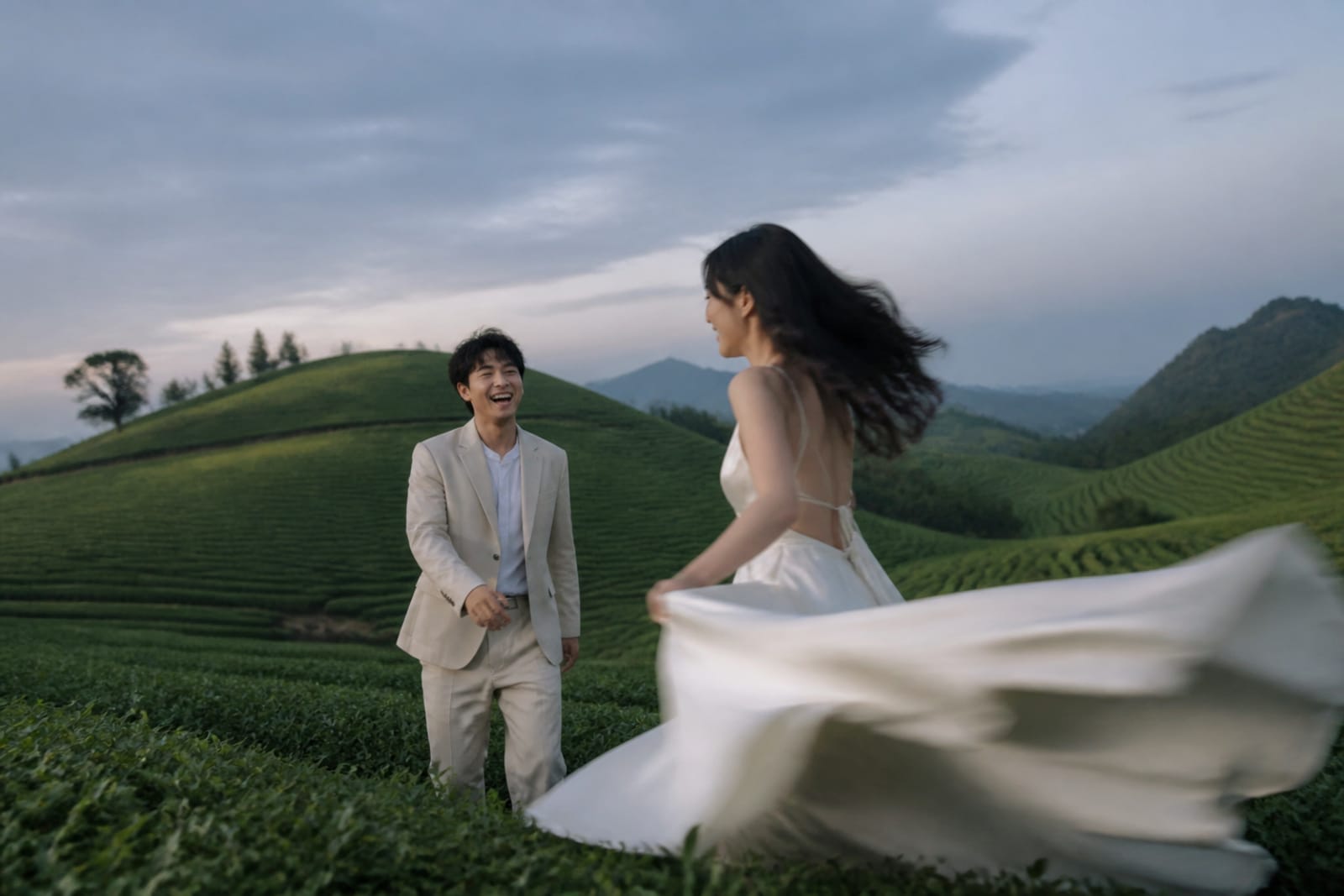
Winter (December–February) wraps Moc Chau in mist and thin cloud cover. Mornings sit at 6–10°C; visibility is 200–300 metres on misty days. The trade-off: soft, shadowless light ideal for intimate portraits and close-ups—there's no harsh noon glare. Plum and cherry blossoms peak around Lunar New Year (late January to mid-February), adding texture and framing. Summer (June–September) brings clear skies, warmer afternoons (20–26°C), and vibrant green tea terraces. The downside is strong midday sun and afternoon crowds on popular roads. Autumn (August–September) splits the difference: cooler, greener, and still bright enough for wide landscape shots.
For close-up portraits and blossom frames, winter light is gentler. For full-scale tea-field landscapes, late summer and early autumn win.
When do plum and cherry blossoms actually peak in Moc Chau?
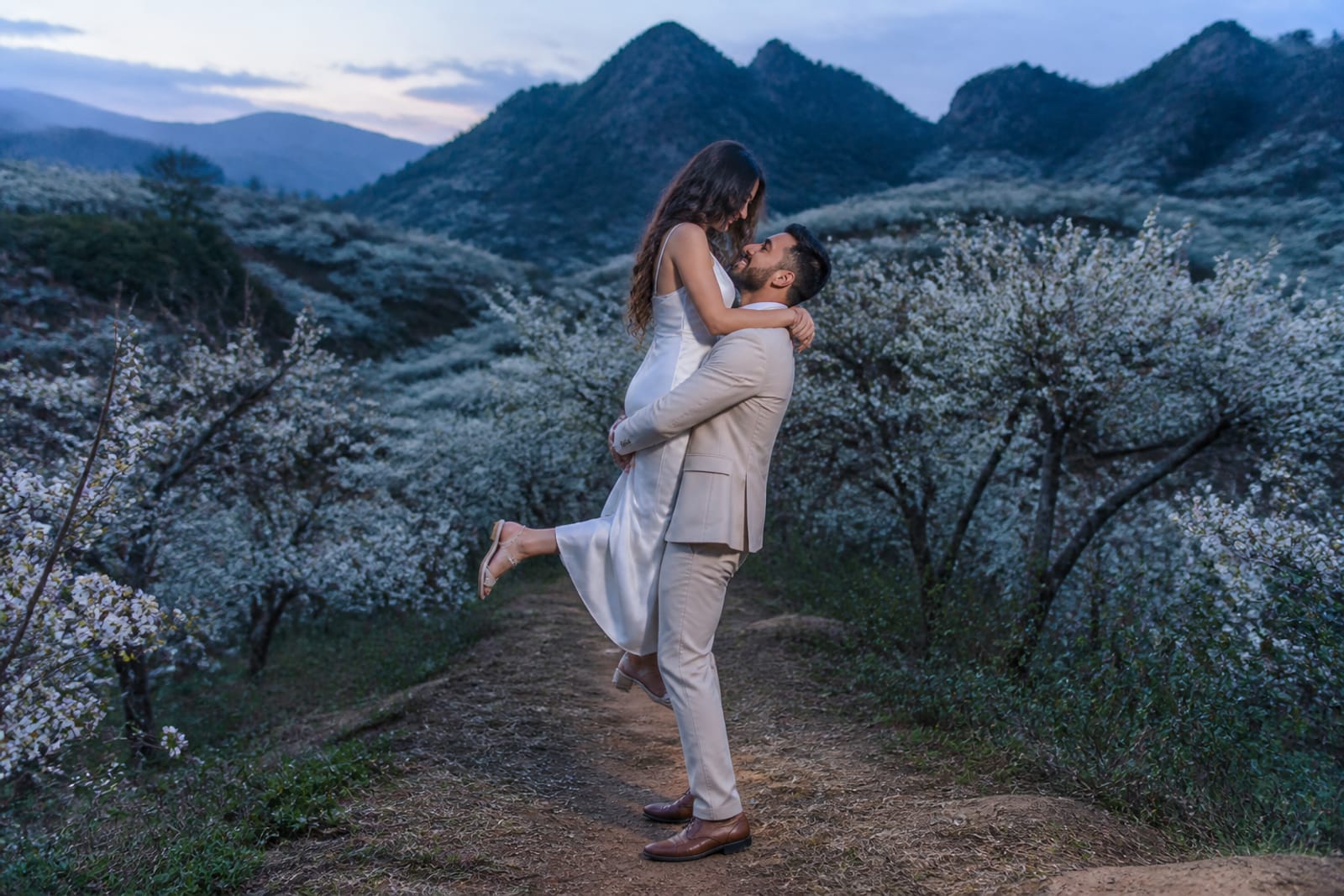
Blossoms open around mid-January and peak between late January and early February, aligned with Tet (Lunar New Year). Trees begin dropping flowers by mid-to-late February. Peak bloom lasts 2–3 weeks, not months. Check local weather forecasts in early January—cold snaps and unexpected warm days shift the exact window. A photographer familiar with Moc Chau's microclimates can scout trees 3–4 days before your shoot and adjust timing. Many couples aim for the week immediately after Tet, when locals return to work and trails are quieter, but blossom coverage thins slightly. Budget flexibility—booking 1–2 weeks ahead rather than months ahead—lets you chase the peak without gambling on early predictions.
Blossom peak is narrow (2–3 weeks); scout conditions 3–4 days before shooting, not 6 months ahead.
📸 Book on WhatsApp — pre-wedding photoshoot
How does tea-field colour change across the year?
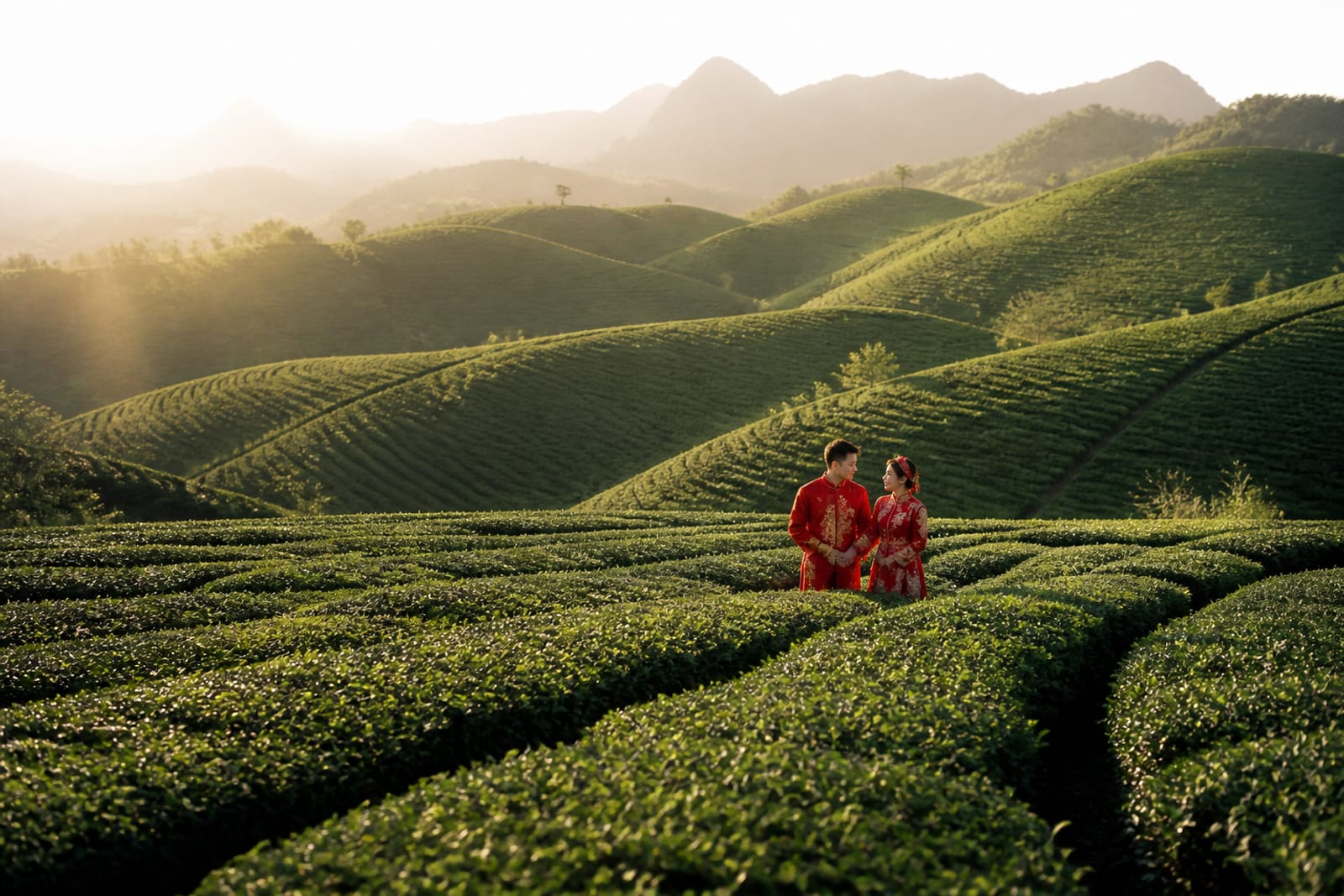
Tea grows year-round in Moc Chau but looks and photographs differently by season. Spring (February–April) shows tender new leaves, bright lime-green, short plants. Summer (May–August) brings full, dark-green canopy and taller bushes; mid-season rains can make terraces muddy and flat-lit. Early autumn (August–September) offers the richest green before the dry season begins to fade it. Winter (December–January) tea is darker, more muted—less "vibrant Instagram green" but more painterly and moody. If you want the saturated, magazine-cover tea-field look, target August–September after summer rains settle. If you prefer moody, intimate tones, winter works just as well, paired with blossom or fog frames.
| Season | Tea colour | Light quality | Rain risk | Best for |
|---|---|---|---|---|
| Dec–Jan | Deep green, muted | Soft, misty | Low | Portraits, blossoms, mood |
| Feb–Apr | Bright lime-green | Clear morning | Low–moderate | Landscape, texture, saturation |
| May–Jul | Rich dark green | Flat, overcast | High (muddy) | Avoid heavy rain windows |
| Aug–Sep | Saturated green | Clear afternoon | Moderate | Wide tea-field shots, least crowd |
Pair tea-field colour with your outfit choice: pastels and ao dai pop against muted winter green; bold jewel tones suit autumn brightness.
What outfit and styling choices depend on the season you pick?
Seasonal light and backdrop colour should frame—not fight—your dress and groom's tone. Winter's muted tea and blossoms suit jewel tones (emerald, deep sapphire) and traditional ao dai in rich colours; pastels risk washing out in flat, cool light. Spring's bright green and blossom whites benefit from lighter ao dai (cream, soft pink, powder blue) and metallic or gold accents. Autumn's saturated green demands saturation in the outfit too—ruby red, burgundy, forest tones. Consider layering: early mornings and winter shoots need warm layers under the ao dai or a linen jacket for the groom; summer heat makes minimal layers essential. Hair and makeup also shift: winter's soft light flatters warmer, peachy tones; summer's bright light needs stronger definition to avoid looking washed out.
Test outfit colour against tea-field photos from your chosen month before booking seamstress or rental.
What logistics trip up Moc Chau shoots, and how do you avoid them?
Moc Chau sits 160 km southwest of Hanoi; driving takes 3.5–4.5 hours each way depending on traffic and road works. Budget a full day for a shoot: 2.5–3 hours on-site, plus 4–5 hours travel. Mist can roll in and out fast—the ideal light window (soft side light, clear visibility) may last only 90 minutes. A photographer unfamiliar with Moc Chau's microclimates often chases high-altitude ridges expecting clear skies, then gets trapped in cloud. Locals and weekend tourists crowd the most photogenic tea-field roads on Saturdays and public holidays; weekday shoots, especially early mornings (6–7 am), sidestep crowds but demand earlier departure from Hanoi. Tea-field soil is loose and steep; wearing proper shoes (not wedding heels on the shoot day) and planning wide shots before close-ups reduces the risk of slips. Rain isn't frequent but afternoon downpours do happen in May–July and September–November—a backup indoor location (a homestay porch, a local cafe) keeps the session moving if weather shifts.
Hire a photographer with Moc Chau shoot experience, visit during off-peak weekdays, and build 30 minutes buffer into your light window.
Should you shoot in Moc Chau or in Hanoi, or both?
Moc Chau justifies the long drive if tea fields and seasonal blossoms are your signature request—they're not replaceable by urban Hanoi backdrops. A single, focused Moc Chau day shoot (dawn to noon, one location) yields 100–150 strong frames and plays to the destination's strength: landscape scale and natural light. Hanoi offers variety in one morning—lake paths, narrow streets, colonial architecture, temple courtyards—and zero travel time, making it ideal for couples on a tight schedule or those who want outfit changes and diverse backdrops. Some couples book a pre-wedding photoshoot in Hanoi on one day and a destination day trip to Moc Chau on another. This spreads the cost factor across two seasons (e.g., autumn in Hanoi, spring in Moc Chau) and doubles content. If you live in or are visiting Hanoi for an extended stay, Moc Chau is worth a dedicated shoot day. If you're in Vietnam only 3–5 days total, choose one focused shoot: either Hanoi's variety or Moc Chau's tea-field character.
Choose Moc Chau if tea and blossoms are central to your vision; choose Hanoi if variety and no-travel time matter more.
How do you find and vet a local photographer for Moc Chau?
Cáo Studio operates in Hanoi, Ho Chi Minh City, and Hoi An—Moc Chau is outside the current service area. For a Moc Chau pre-wedding shoot, connect with a local Vietnamese or expat photographer based in Hanoi or nearby. Ask these questions:
- Have they shot 10+ times in Moc Chau in the past 12 months? (Recent, repeated work signals familiarity with current road conditions, light patterns, crowd timing.)
- Can they show a portfolio of full sessions (not cherry-picked singles) across at least two seasons?
- Do they have a backup plan if fog or rain closes visibility—an indoor location, a nearby backup hiking trail, a specific pivot time?
- How many hours do they budget on-site? (At least 2.5–3 hours for tea fields; less than 90 minutes risks missing light windows and looking rushed.)
- What's their editing turnaround? (Ask if 48 hours or 2 weeks; Cáo Studio delivers edited photos within 48 hours, but a local team may take longer—clarify expectations upfront.)
Ask to see unedited comparison shots (winter mist versus summer sun) so you understand what's truly possible in your chosen month. Request a trial engagement session or a shorter shoot before committing to a full pre-wedding photoshoot day.
What to check before you book
- Photographer's Moc Chau experience: Portfolio from the exact month you're targeting, not just generic landscape shots.
- Outfit rental and styling: Does the photographer coordinate with an ao dai rental service, or do you need to source the outfit separately? (Cáo Studio handles outfit, makeup, and photography in one team for Hanoi and Saigon sessions; Moc Chau will require a local team, so confirm who oversees styling.)
- Travel and timing: Confirm the photographer covers Moc Chau travel costs or charges a separate fee. Agree on exact arrival and light-window start time.
- Weather backup: Ask for the photographer's written plan if conditions force a postponement. Is the date rescheduled free, or is there a fee?
- Deliverables: How many edited photos, in what format, and when? Turnaround matters especially if you're leaving Vietnam soon after the shoot.
---
FAQ
Is Moc Chau cold enough to need warm clothing for a pre-wedding shoot?
Yes. Mornings in winter (Dec–Feb) sit at 6–10°C. Wear a warm layer under the ao dai (silk slip or thermal base) or ask the photographer if a groom's linen jacket works for opening frames. Summer mornings (Aug–Sep) are 15–18°C and comfortable.
Can you shoot during Tet (Lunar New Year) in Moc Chau?
Blossoms peak during Tet, but services close for 3–5 days. Many homestays, cafes, and local crews take time off. Plan a shoot in the week after Tet (early February) when locals return and blossom coverage is still strong but roads are quieter.
What happens if it rains on your Moc Chau shoot day?
Moc Chau rain is usually brief (minutes to an hour) in dry season, but common in May–July and Sep–Nov. Ask your photographer upfront for a rain policy: will they reschedule free, offer a partial refund, or pivot to an indoor backup location? Confirm this in writing before booking.
Should you hire a Hanoi photographer or a local Moc Chau photographer?
A photographer based in Hanoi can travel to Moc Chau (3.5–4.5-hour drive each way) and may offer familiar Western communication. A local-based photographer knows Moc Chau's microclimates, roads, and homestays deeply. Ask for portfolio proof of Moc Chau work in both cases—experience matters more than location.
How far in advance should you book a Moc Chau pre-wedding shoot?
For blossom season (late Jan–early Feb), book 4–6 weeks ahead and finalize dates 10–14 days before, once you confirm the weather forecast. For tea-field season (Aug–Sep), booking 2–3 weeks ahead works fine since weather is more stable. Last-minute (3–5 days) books risk photographer unavailability but let you chase perfect conditions.
Do you need a permit or guide to shoot in Moc Chau's tea fields?
Most tea fields are private farmland. Hire a photographer who has permission agreements with local landowners and uses established hiking routes. Avoid wandering off into fields without asking locals first. Check current regulations with your photographer before the shoot. ===
FAQ
Is Moc Chau cold enough to need warm clothing for a pre-wedding shoot?
Yes. Mornings in winter (Dec–Feb) sit at 6–10°C. Wear a warm layer under the ao dai (silk slip or thermal base) or ask the photographer if a groom's linen jacket works for opening frames. Summer mornings (Aug–Sep) are 15–18°C and comfortable.
Can you shoot during Tet (Lunar New Year) in Moc Chau?
Blossoms peak during Tet, but services close for 3–5 days. Many homestays, cafes, and local crews take time off. Plan a shoot in the week after Tet (early February) when locals return and blossom coverage is still strong but roads are quieter.
What happens if it rains on your Moc Chau shoot day?
Moc Chau rain is usually brief (minutes to an hour) in dry season, but common in May–July and Sep–Nov. Ask your photographer upfront for a rain policy: will they reschedule free, offer a partial refund, or pivot to an indoor backup location? Confirm this in writing before booking.
Should you hire a Hanoi photographer or a local Moc Chau photographer?
A photographer based in Hanoi can travel to Moc Chau (3.5–4.5-hour drive each way) and may offer familiar Western communication. A local-based photographer knows Moc Chau's microclimates, roads, and homestays deeply. Ask for portfolio proof of Moc Chau work in both cases—experience matters more than location.
How far in advance should you book a Moc Chau pre-wedding shoot?
For blossom season (late Jan–early Feb), book 4–6 weeks ahead and finalize dates 10–14 days before, once you confirm the weather forecast. For tea-field season (Aug–Sep), booking 2–3 weeks ahead works fine since weather is more stable. Last-minute (3–5 days) books risk photographer unavailability but let you chase perfect conditions.
Do you need a permit or guide to shoot in Moc Chau's tea fields?
Most tea fields are private farmland. Hire a photographer who has permission agreements with local landowners and uses established hiking routes. Avoid wandering off into fields without asking locals first. Check current regulations with your photographer before the shoot. ===
Ao dai, makeup, hair and a local photographer in Hanoi or Saigon — one WhatsApp message.