/pre-wedding-photoshoot
Best time of year for a pre-wedding photoshoot in Nha Trang
Nha Trang shoots best January through August: dry skies, calm bay water and warm light that flatters skin. September to December brings monsoon rain, rough seas and unpredictable conditions that delay sessions or force indoor pivots. January–April offers cooler comfort for movement; May–August stays hot but remains sunny and swimmable. Choose January–March for consistent weather and fewer crowds; April–August for warmth and fewer tourists. Avoid October–November (typhoon season). Book a local Nha Trang photographer early—Cáo Studio operates in Hanoi, Ho Chi Minh City and Hoi An by appointment—and plan your wardrobe (lightweight áo dài, swimwear, casual layers) before the shoot date. ---
When is the light sharpest and most flattering?
January through March delivers the most consistent light for pre-wedding frames. Mornings stay cool; the sun rises low over the bay (east-facing), casting that soft side light photographers chase. By 6–7 a.m., water is glassy and tourists haven't arrived. Midday sun between 11 a.m.–2 p.m. stays harsh, so plan water or beachfront shoots for early morning or late afternoon (after 4 p.m.), when the sun dips west and golden-hour color wraps the scene.
May–August maintain long daylight and warm tones, but heat rises earlier—plan morning shoots before 8 a.m. if movement (walking, spinning, posture) matters. The bay stays calm and blue, ideal for horizon frames. October–November clouds thicken; light becomes flat and grey, and sudden afternoon rain stops the shoot cold. April is a transition month: still dry but already hotter. Light is sharp, but you'll feel the heat through a shoot.
Why it matters: Consistent morning light means fewer reshoot hours, better skin tone and real-looking water reflections—the frames look effortless, not overexposed.
How do crowds and tourism affect your shoot schedule?
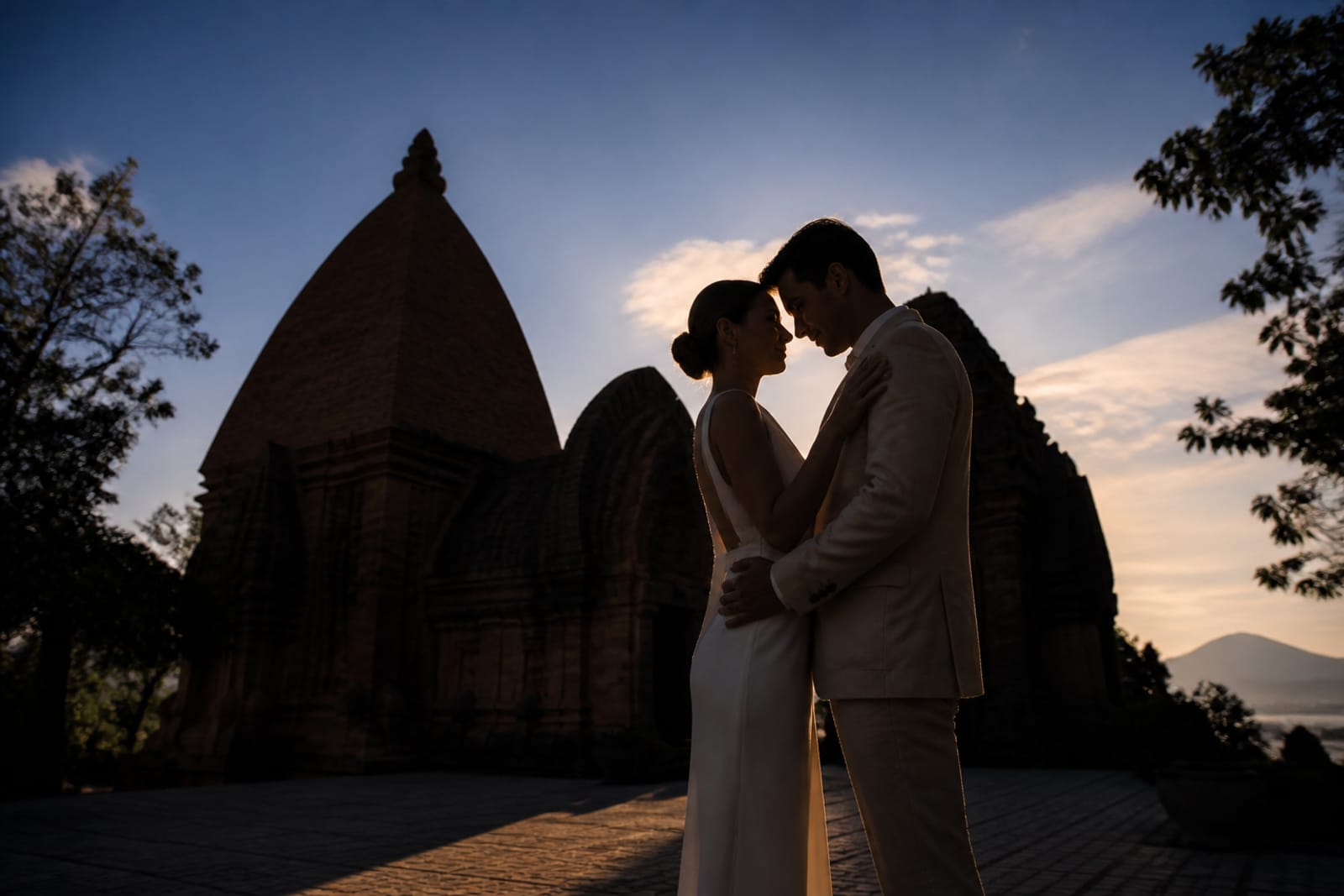
January and February peak with Vietnamese New Year travelers (Tet, late January to mid-February) and international tourists escaping winter. Popular spots like the Nha Trang beachfront and Tram Huong pagoda fill by 8 a.m. Booking a pre-dawn or off-hour slot (weekday mornings, 5:30–7 a.m.) keeps backdrops clean; later sessions face crowds, long waits and photobombers in the frame.
March–April slows as summer heat discourages day visitors; you get empty pagodas and quiet fishing-village streets. May–July see families on summer break, but mornings (before 9 a.m.) stay manageable. August and early September thin out as travelers flee before monsoon. October–November attract few tourists because of rain, but booking becomes harder—photographers may cancel if forecasts show storms.
Why it matters: A 6 a.m. slot in March feels like you own the bay; the same time in January involves negotiating other travelers in your frames.
📸 Book on WhatsApp — pre-wedding photoshoot
What outfit choices work best for each season?
| Season | Outfit fit | Water comfort | Makeup durability | Why it works |
|---|---|---|---|---|
| Jan–Mar | Lightweight áo dài, layers | Cool; long sleeves okay | Stable; cool temps help | Comfort during posture holds; colour stays true |
| Apr–May | Sleeveless áo dài, swimwear, shorts | Warm; quick-dry layers | Test early; touch-ups needed | Hot but dry; water frames clean; avoid overheating |
| Jun–Aug | Cotton áo dài, linen, swimwear | Warm; sea is calm | Waterproof makeup essential | Sun is strong; heat is relentless; sea is gentlest |
| Sep–Dec | Avoid heavy fabrics | Risk of wetting in rain | Unreliable; humidity breaks bonds | Unpredictable weather; outfit damage risk |
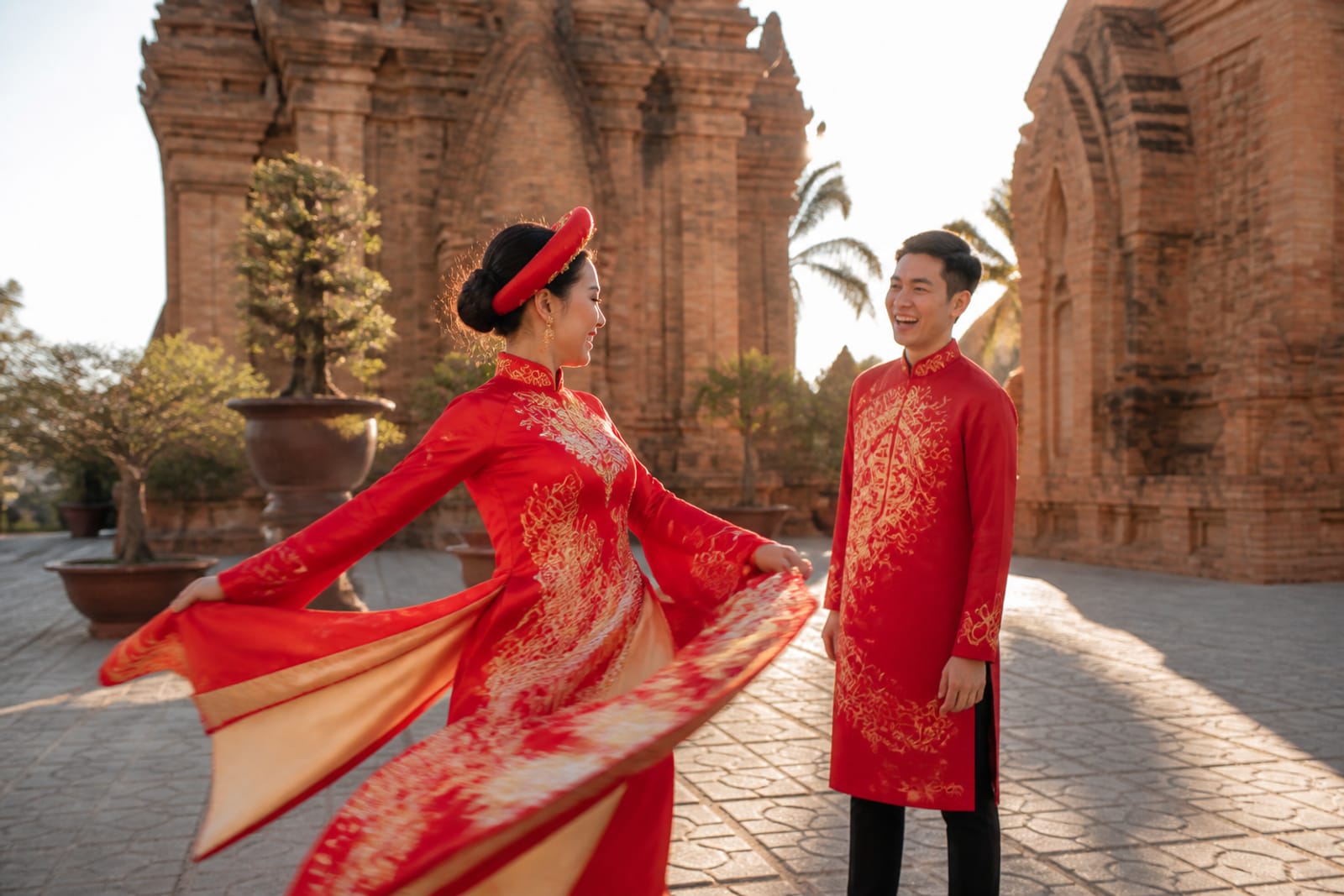
January–March áo dài (traditional Vietnamese tunic) drapes well without clinging in humidity; moisture doesn't show. April–May demands waterproof makeup and quick-dry fabrics—cotton absorbs salt water slowly. June–August works for couples who don't mind heat; the bay's glassy surface rewards early-morning shoots. September onwards, rain and salt spray ruin delicate fabrics and makeup; skip heavy silks and long trains unless the shoot is indoors (hotel, temple interior, covered pavilion).
What to check: Ask your photographer if they've shot your chosen month and what went wrong—fabric damage, makeup failure, weather cancellations. Bring a second outfit or a cover-up.
How does season affect booking logistics and cost?
High season (January–March) fills local photographers' calendars 8–12 weeks in advance; booking early is essential or you'll get second-choice dates. Summer (June–August) books 6–8 weeks out because families travel. Low season (September–November) offers last-minute slots but weather risk rises—photographers may charge a "weather contingency fee" (a factor that affects total cost, not the base rate) or require a rain date clause.
Travel to Nha Trang costs less in September–November (hotels, flights drop) but the savings vanish if your shoot floods and needs rescheduling. Makeup and hair at your hotel (if you book them separately) stay available year-round, but wet-weather touch-ups add logistics on monsoon dates.
What to ask your photographer: Do they charge a contingency fee for monsoon months? What's their reschedule policy? Do they have indoor backup locations (hotels, covered markets, temples)? These questions clarify hidden cost factors before you commit.
What can go wrong, and how do you avoid it?
October–November typhoons: Sudden rain floods streets and makes water unsafe. Photographers cancel; reshoots delay weeks. Avoid these months unless you have a 10-day flexible window and trust the photographer's judgment to move indoors or postpone.
April heat collapse: Couples underestimate Nha Trang's midday warmth (often 35°C / 95°F+). Posture suffers, makeup melts, energy drops after 90 minutes. Shoot dawn or skip midday entirely; hydrate aggressively before the session.
May–August sun damage: UVA exposure and saltwater spray (if you swim for frames) bleach hair and age skin fast. Wear SPF under makeup; rinse salt water immediately after beach shots.
February crowds and weather overlap: Tet tourism and lingering cool fronts mean busy shoots in unpredictable light. Book a 5:30 a.m. slot and hire a photographer who knows Nha Trang's micro-weather patterns (bay vs. hillside light shifts).
Renting a dress or suit in low season: September–November, rental shops reduce staff or close for weather prep. Reserve rentals 4–6 weeks ahead.
Why it happens: Most couples book the date first, then ask "what's the weather?". Reverse the process: pick the month for light and comfort, then lock the date.
---
Where can you shoot in Nha Trang?
Iconic spots include the beachfront (golden hour, 5:30–7 a.m., crowds after 8 a.m.), Tram Huong pagoda (cool light on stone, 6–7 a.m., quieter mid-afternoon 2–4 p.m.), Ba Ho waterfall (forested, shaded, best 9–10 a.m. before heat peaks), and fishing villages north of town (natural light on weathered boats, anytime morning). Avoid midday sun on open beaches unless you're in water. Hotel shoots (with professional makeup and a hired photographer) work well in monsoon months—indoor frames stay dry and controlled.
Cáo Studio operates in Hanoi and Ho Chi Minh City. For Nha Trang, hire a local photographer who knows the bay's light direction (east-facing, so sunrise is your golden hour) and can navigate monsoon weather. Check their portfolio for winter (Jan–Mar) and summer (Jun–Aug) shots side by side—you'll see light quality differ significantly.
---
What to check before you book
- Photographer experience in monsoon months (Sep–Dec): Ask for recent shots from October or November. Flat light and grey skies are honest tell-tales.
- Reschedule policy: If rain stops the shoot, does the photographer offer a free date within 30 days, or do you forfeit the session?
- Outfit and makeup contracts: Confirm whether rentals (áo dài, suits) and hair/makeup are included or separate bookings—each factor affects timing and total cost.
- Delivery timeline: Pre-wedding edits typically take 48 hours to 2 weeks. Confirm before you book if you need frames for an engagement party or invitation design.
- Location scouting: Does the photographer visit your chosen spots beforehand, or do they arrive cold? Pre-scouting means better light planning.
---
FAQ
Is January or February better for a Nha Trang pre-wedding shoot?
January avoids Tet crowds (Tet falls late January–early February); February's light and cool temps are identical. Choose January if crowds bother you, February if you prefer the calm post-holiday feel. Both have consistent morning light and dry skies.
Can I shoot in September if I'm flexible with the date?
Yes, if your photographer has a rain contingency plan and you're willing to reschedule mid-session. Early September (before late Sep) is safer. Confirm their weather policy and backup indoor locations before committing.
What's the warmest month for a pre-wedding shoot?
July–August peak around 32–35°C (90–95°F). If you love heat and the sea, choose June–July; if you prefer comfort during posture work, stay January–April.
Do I need special outfits for water shots?
Lightweight, quick-dry fabrics (cotton, linen) work best. Avoid silk and heavy áo dài trains near saltwater unless you rinse immediately. Swimwear and coordinated casual layers shoot well in Nha Trang's bay frames.
How early should I book a photographer for Nha Trang?
High season (Jan–Mar), book 8–12 weeks ahead. Low season (Sep–Nov), 4–6 weeks is enough. Always confirm their monsoon policy and reschedule terms in writing before payment.
FAQ
Is January or February better for a Nha Trang pre-wedding shoot?
January avoids Tet crowds (Tet falls late January–early February); February's light and cool temps are identical. Choose January if crowds bother you, February if you prefer the calm post-holiday feel. Both have consistent morning light and dry skies.
Can I shoot in September if I'm flexible with the date?
Yes, if your photographer has a rain contingency plan and you're willing to reschedule mid-session. Early September (before late Sep) is safer. Confirm their weather policy and backup indoor locations before committing.
What's the warmest month for a pre-wedding shoot?
July–August peak around 32–35°C (90–95°F). If you love heat and the sea, choose June–July; if you prefer comfort during posture work, stay January–April.
Do I need special outfits for water shots?
Lightweight, quick-dry fabrics (cotton, linen) work best. Avoid silk and heavy áo dài trains near saltwater unless you rinse immediately. Swimwear and coordinated casual layers shoot well in Nha Trang's bay frames.
How early should I book a photographer for Nha Trang?
High season (Jan–Mar), book 8–12 weeks ahead. Low season (Sep–Nov), 4–6 weeks is enough. Always confirm their monsoon policy and reschedule terms in writing before payment.
Ao dai, makeup, hair and a local photographer in Hanoi or Saigon — one WhatsApp message.