/pre-wedding-photoshoot
Best time of year for a pre-wedding photoshoot in Vung Tau
Vung Tau shoots best December through April, when soft morning light hits the coast without afternoon rain. The dry season keeps skies clear for beach and clifftop frames—wide shots of you walking the shore, medium framing against fishing boats, detail shots of rings on sand. Crowds peak on weekends and during Tet (late January to mid-February), when entry points jam and light flattens. If you book mid-week in early December or late March, you'll find empty beaches, directional side light at 6–7 a.m., and fewer couples queuing the same spots. Cáo Studio coordinates Hanoi and Saigon teams; for Vung Tau, we arrange a local photographer and guide you through tide times, temple access and outfit changes. Avoid May–November: humidity climbs, afternoon downpours are daily, and the sea turns grey. ---
When is Vung Tau actually clear enough to shoot?
Vung Tau's dry season runs December through April, with February–March offering the most stable light. The coastal wind keeps humidity lower than inland Hanoi or Ho Chi Minh City, and morning skies stay blue without the afternoon cloud banks that roll in from May onward. By late afternoon in December or January, you'll have golden side light on the water; in March–April, the sun angles steeper and hotter, so early starts (5:30–7 a.m.) become essential for skin tone and eye comfort. Tet (late January to mid-February) is an exception—temples, restaurants and boat rentals close for several days, and every wedding party in the south books Vung Tau that same week. Choose mid-December or late March for clearest mornings with fewer competing shoots.
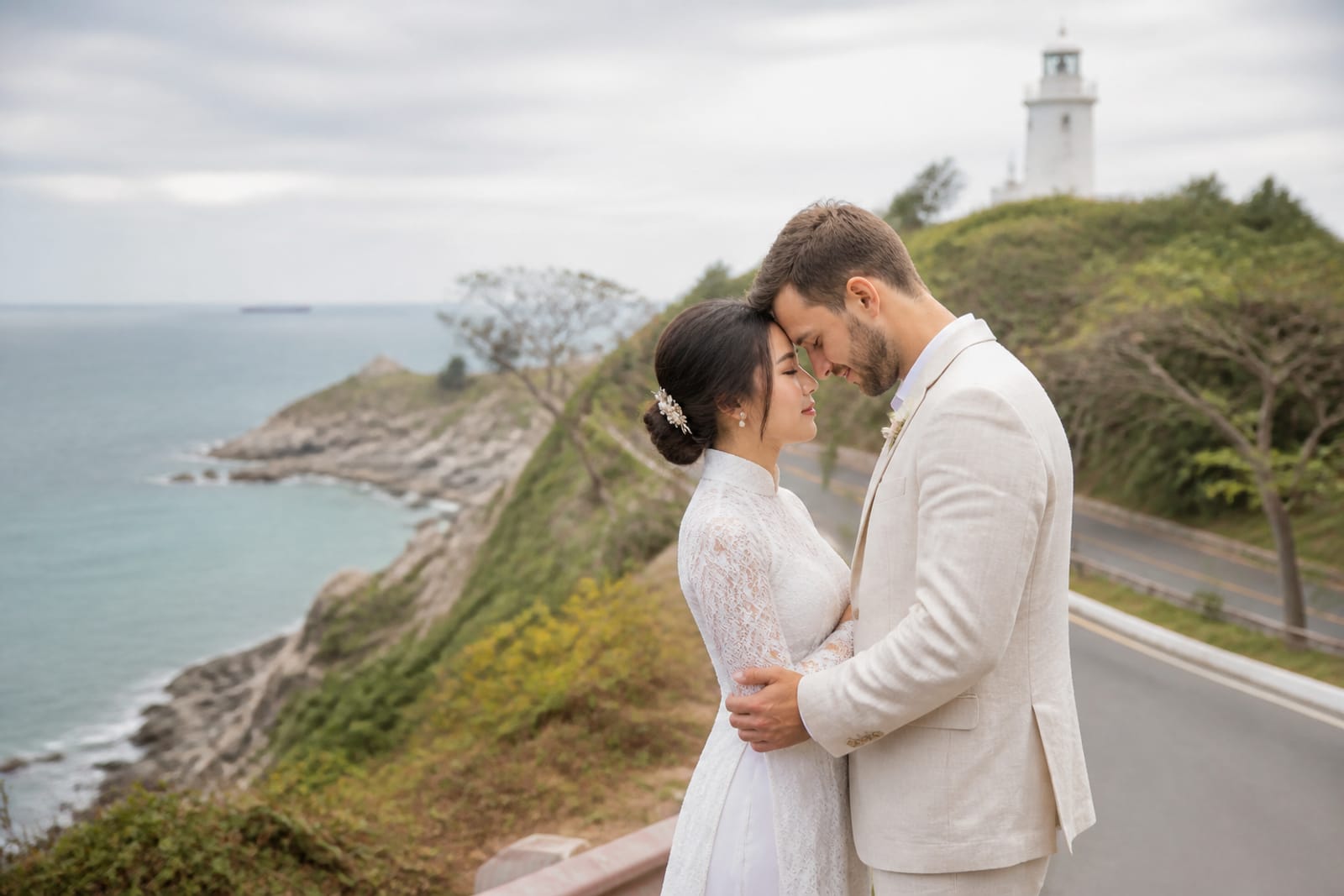
How do crowds and wedding-season timing affect your shoot?
Vung Tau draws Saigon day-trippers every weekend, especially Saturday and Sunday, filling parking lots and beaches from 9 a.m. onward. Weekday shoots (Monday–Thursday) in the same dry-season months give you empty lighthouse paths, vacant temple stairs and uncluttered shoreline. Wedding season (December–February) attracts couples booking the same beaches and boat rentals, meaning both outfit-change logistics and light timing get squeezed. If you're flexible, a Tuesday shoot in early December or a Wednesday in late March avoids the crowds entirely, and local photographers can negotiate boat schedules without competition. Tet-week closures (usually five days in late January or early February) block many services—confirm dates locally before booking. Weekday shoots in December or March minimize waits and lock in the best light windows.
| Timing | Best for | Light quality | Why it works |
|---|---|---|---|
| Early December (Mon–Thu) | Couples wanting calm water and empty paths | Soft, angled morning light; clear skies | Dry season starts; few wedding bookings; low tourism |
| Mid-January to mid-February (Tet week) | Couples who don't mind closures and crowds | Soft side light early a.m., but flattens mid-day | Tet holidays close many venues; lighthouse and temples may have limited hours |
| Late March (Mon–Thu) | Couples who prefer hotter, drier conditions and sunset shoots | Strong, directional morning light; golden evening | Season peak; still few crowds on weekdays; consistent clear skies |
| May–November | Budget-conscious couples (Vung Tau quieter; lower local rates) | Grey skies; afternoon rain; high humidity | Wet season; unpredictable light; many vendors close; few wedding shoots—rates may be lower |
📸 Book on WhatsApp — pre-wedding photoshoot | 💄 Makeup & hair at your hotel | 🌸 See the lookbook
What outfit and gear choices work best in Vung Tau's coastal light?
Vung Tau's salt air, sun reflection off white sand and calm water demand outfits with high contrast and natural texture. A tailored ao dai in deep jewel tones (navy, emerald, burgundy) photographs sharper against the beach and water than pastels, which wash out in overexposed sand. For Western dress, linen and cotton hold color better than silk in humidity, and sleeveless or cap-sleeve cuts let skin breathe during early-morning shoots when the sun climbs fast. Avoid heavy jewelry that catches harsh light and creates flare; instead, carry one statement piece—a bracelet or earring—for detail shots. Bring a light shawl or linen wrap for between-outfit changes; it doubles as a prop for walking-away frames. The sea reflects UV strongly even on cloudy days, so discuss sunscreen with your makeup artist—they'll use products that don't cake in salt spray. Choose deep, textured fabrics and minimal jewelry; protect skin from coastal sun exposure.
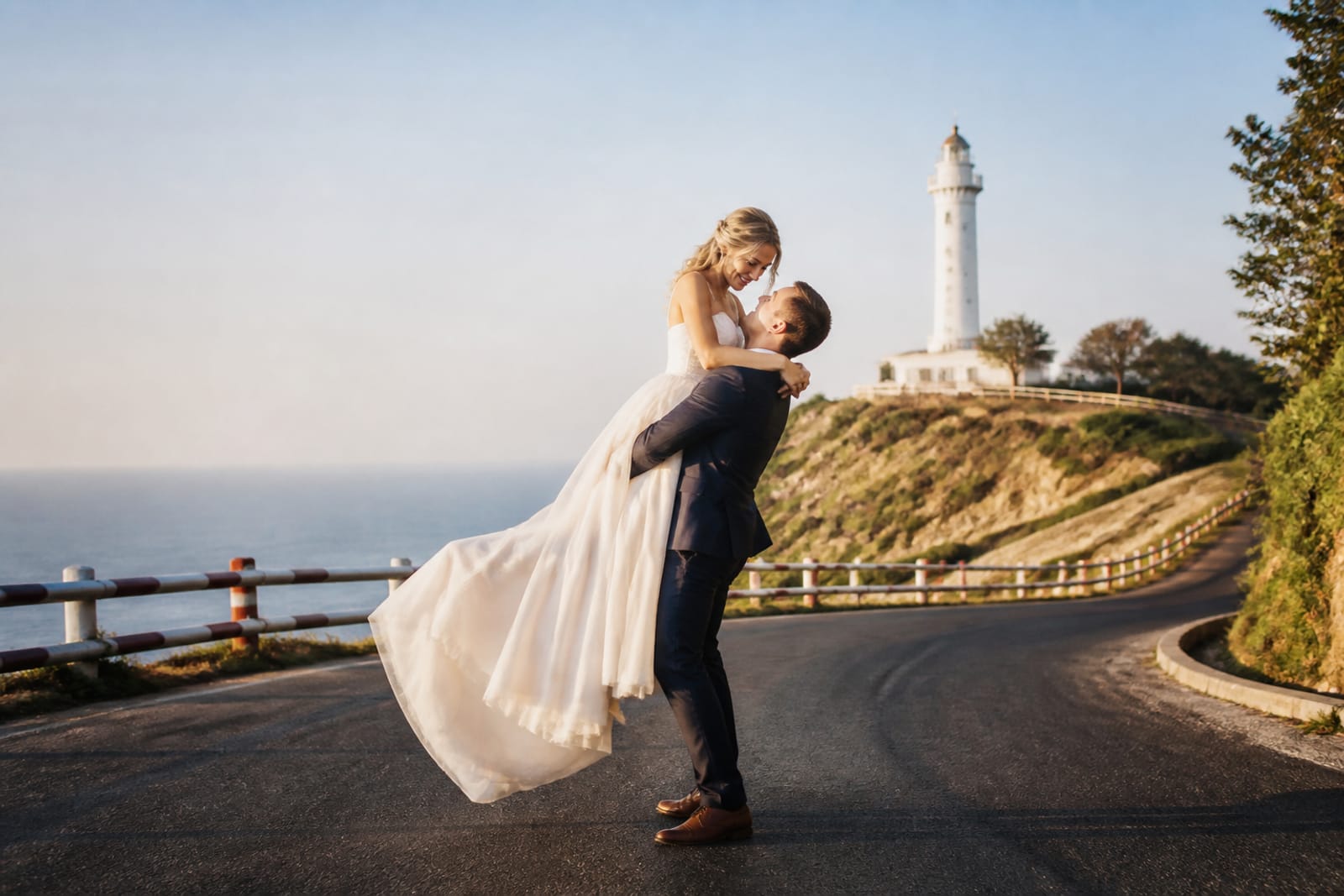
How do tides and weather windows change month to month?
Vung Tau's tides shift the usable shoreline by up to 30 meters each day, exposing rock pools and sand bars at low tide (ideal for texture shots) and creating a cleaner, wider beach at mid-tide. High tide in December–January runs mid-morning and mid-evening, so an early start (6–7 a.m.) catches low tide with exposed sand patterns and fewer swimmers. By April, afternoon winds pick up and can kick up sand; morning light stays preferred. The South China Sea has typhoon risk September–November, making the rainy season genuinely unsafe for shoots—not just inconvenient. December–March are stable, with no tropical systems. Check local tide and weather forecasts one week before your shoot date; a local guide (part of the coordination) will steer you toward the safest, most photogenic hour. Early morning in December–March avoids wind, captures low-tide texture and guarantees clear skies.
How do you compare Vung Tau with other Vietnam pre-wedding options?
Hanoi's Red River and old-quarter streets offer urban, romantic frames year-round (though winter is grey, spring is clearer). Hoi An's lantern-lit ancient town and river walks suit a softer, more intimate mood and shoot well September–March (dry season for central coast). Saigon's District 1 architecture and Saigon River give a modern, metropolitan aesthetic, best in December–February when the city feels least humid. Vung Tau is the coastal option—if you want beach light, boat frames and salt-worn textures, it stands alone. The trade-off: Vung Tau requires travel time from Saigon (roughly 1.5–2 hours), so coordination with a local photographer and driver is essential; Hanoi and Saigon studios can dispatch teams or connect you to vetted locals. The light in Vung Tau's early morning beats any urban backdrop, but logistics are tighter. Choose Vung Tau for authentic coastal frames; Hanoi or Saigon for urban ease.
📸 Book on WhatsApp — couple photoshoot | 🌸 See the lookbook
What to check before booking your Vung Tau pre-wedding shoot
Before you commit, confirm these details locally or with your photographer:
- Tide and sunrise time – Ask for exact times one week before; low tide and sunrise timing shift through the season.
- Temple and lighthouse access – Some temples restrict photo hours or request modest dress (shoulders and knees covered). Call ahead.
- Boat rental availability – If you want frames on a fishing vessel or small boat, book the rental independently; coordination delays are common.
- Vehicle and weather backup plan – Rain in the pre-dawn hours can move fast; confirm your photographer has an indoor or sheltered secondary location (hotel lobby, covered market, seafood restaurant).
- Makeup and hair logistics – Salt water and humidity can unmake a style in minutes. Discuss with your makeup artist whether to do final touch-ups on-site or bring a travel kit.
- Permit and local guide requirements – Some private beaches or clifftop areas require informal permissions; a local guide (included in most bookings) navigates these smoothly.
- Travel time from your hotel – Factor in 30–45 minutes from central Vung Tau to lighthouse or fishing village; if you're traveling from Saigon, add 2+ hours.
For Vung Tau pre-wedding shoots, Cáo Studio coordinates with local photographers in Saigon and can guide outfit selection, makeup resilience and timing strategy. Confirm all logistics on WhatsApp before your travel date.
📸 Book on WhatsApp — pre-wedding photoshoot | 💄 Makeup & hair at your hotel | 👗 See ao dai rental
---
FAQ
Is December or March better for a Vung Tau pre-wedding shoot?
December has softer, lower-angled morning light and fewer wedding bookings; March is drier but sunlight is stronger and midday heat arrives earlier. Both are equally dry and clear. Choose December for romantic, diffused frames; March for bolder contrast and sunset options.
Can I shoot in Vung Tau during the rainy season (May–November)?
Yes, but expect afternoon downpours almost daily, grey skies and high humidity that wilts makeup and fabric. Light is flat and unpredictable. Local rates may be lower, but outfit and hair resilience become the primary challenge. Only choose this window if your dates are fixed and you have indoor backup locations.
How early do I need to wake up for the best Vung Tau light?
December–February, aim for 5:30–6 a.m. starts to catch sunrise and low tide together. March–April, 6–7 a.m. works as sun angle steepens. If you're shooting sunset instead, late afternoon (4:30–5:30 p.m.) offers golden side light over the water but requires a clear western horizon, which is less reliable than morning light.
Will my ao dai hold up in Vung Tau's salt air and humidity?
Cotton and linen ao dai (not silk) resist salt spray and wrinkles better. Avoid white or very light fabrics, which salt stains easily. Bring a spray bottle with fresh water and have your makeup artist or dresser rinse sleeves and hem between outfit changes. Choose deep jewel tones (navy, emerald, burgundy) for better visual contrast against white sand.
Can I book Cáo Studio directly for a Vung Tau shoot, or do I need a local photographer?
Cáo Studio operates from Hanoi and Saigon; we coordinate Vung Tau shoots through vetted local photographers and guides. We handle outfit strategy, makeup resilience planning and timeline direction via WhatsApp, then connect you with the local team. Ask on WhatsApp for the current Vung Tau photographer and booking flow.
What's the difference between a weekday and weekend shoot in terms of cost and outcome?
Weekday shoots (Mon–Thu) have empty beaches, uncluttered frames and no competing wedding parties booking the same spots, so light timing is more flexible and photo locations feel more intimate. Weekend shoots are crowded but may have slightly lower local rates in off-season months. The trade-off is composition clarity and outfit-change time, not the photographer's skill. Weekday shoots in dry season offer the best overall value.
FAQ
Is December or March better for a Vung Tau pre-wedding shoot?
December has softer, lower-angled morning light and fewer wedding bookings; March is drier but sunlight is stronger and midday heat arrives earlier. Both are equally dry and clear. Choose December for romantic, diffused frames; March for bolder contrast and sunset options.
Can I shoot in Vung Tau during the rainy season (May–November)?
Yes, but expect afternoon downpours almost daily, grey skies and high humidity that wilts makeup and fabric. Light is flat and unpredictable. Local rates may be lower, but outfit and hair resilience become the primary challenge. Only choose this window if your dates are fixed and you have indoor backup locations.
How early do I need to wake up for the best Vung Tau light?
December–February, aim for 5:30–6 a.m. starts to catch sunrise and low tide together. March–April, 6–7 a.m. works as sun angle steepens. If you're shooting sunset instead, late afternoon (4:30–5:30 p.m.) offers golden side light over the water but requires a clear western horizon, which is less reliable than morning light.
Will my ao dai hold up in Vung Tau's salt air and humidity?
Cotton and linen ao dai (not silk) resist salt spray and wrinkles better. Avoid white or very light fabrics, which salt stains easily. Bring a spray bottle with fresh water and have your makeup artist or dresser rinse sleeves and hem between outfit changes. Choose deep jewel tones (navy, emerald, burgundy) for better visual contrast against white sand.
Can I book Cáo Studio directly for a Vung Tau shoot, or do I need a local photographer?
Cáo Studio operates from Hanoi and Saigon; we coordinate Vung Tau shoots through vetted local photographers and guides. We handle outfit strategy, makeup resilience planning and timeline direction via WhatsApp, then connect you with the local team. Ask on WhatsApp for the current Vung Tau photographer and booking flow.
What's the difference between a weekday and weekend shoot in terms of cost and outcome?
Weekday shoots (Mon–Thu) have empty beaches, uncluttered frames and no competing wedding parties booking the same spots, so light timing is more flexible and photo locations feel more intimate. Weekend shoots are crowded but may have slightly lower local rates in off-season months. The trade-off is composition clarity and outfit-change time, not the photographer's skill. Weekday shoots in dry season offer the best overall value.
Ao dai, makeup, hair and a local photographer in Hanoi or Saigon — one WhatsApp message.