/pre-wedding-photoshoot
Best time of year for pre-wedding photoshoot in Mekong Delta
The Mekong Delta has two distinct seasons: dry (December–April) with crisp light, low water and accessible floating markets; wet (May–November) with brief afternoon rain, higher water and thicker vegetation. For a pre-wedding shoot, dry season suits traditional ao dai and evening reflections on calm water; wet season works for moody greens and intimate indoor framing but requires weather backup plans. Cáo Studio does not operate in the Mekong—find a local photographer who knows tidal timing and can adjust framing around rain. If you're based in Hanoi or Ho Chi Minh City, ask Cáo Studio about pre-wedding shoots in either city, then combine that with a separate Mekong day shoot locally.
Why does season matter more than month in the Mekong Delta?
The Mekong's climate divides sharply: December through April is dry, with stable morning light and water levels stable enough for boat access to narrow canals and floating gardens. May through November sees frequent afternoon rainfall, rising water that floods fields and markets, and a denser canopy from the recent rains. Month-to-month variation within each season is smaller than the difference between seasons. Your outfit choices, lighting angles, and backup logistics all hinge on which half of the year you're in. This is not about "best"—it's about matching your vision to what the environment will give you.
| Season | Best for | Light & water | Outfit fit | Why choose it |
|---|---|---|---|---|
| Dec–Jan | ao dai, reflections, golden hour | Clear, low water, long shadows | Silk drapes clean, no cling | Crisp contrast; calm canals |
| Feb–Apr | mixed outfits, temple visits, greens | Bright, dry, warm afternoons | Cotton breathes; ao dai readable | Heat rising; best texture detail |
| May–Aug | moody greens, rain storytelling, dense foliage | Overcast, high water, humid | Indoor/covered shoots | Lush backdrop; fewer crowds |
| Sep–Nov | avoided by most; typhoon risk | Unpredictable rain, floods | Waterproof only | Lowest booking, highest risk |
When do floating markets and canal light work best for framing?
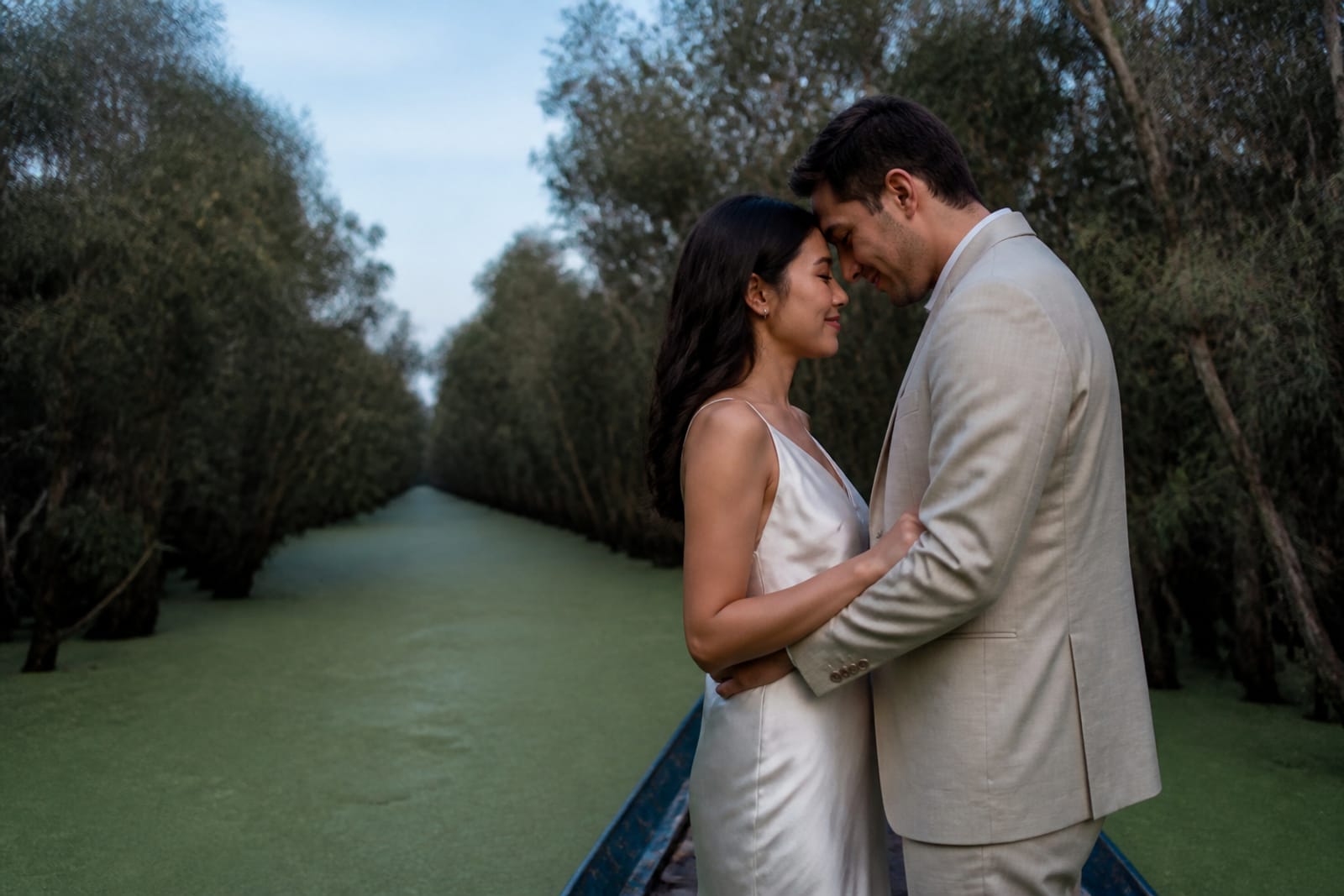
Floating markets operate year-round at dawn, but in dry season (December–April) the light is directional and the water is low enough to see reflections clearly—6:00 to 7:30 am catches side light without glare. In wet season, morning mist lingers longer (which can be atmospheric) but water level rises, sometimes covering market anchors and changing composition. Canal framing works best when water is stable; in high-water months (August–October) canals widen and trees lean over, which deepens mood but narrows safe boat passage. A local photographer who shoots weekly will know which markets and canals shoot best in which months—ask for location scouts' notes, not promises.
📸 See Cáo Studio's pre-wedding approach
What outfit and hair decisions change between seasons?
Dry season (December–April) suits heavier fabrics: silk ao dai hold shape, makeup stays set, and long sleeves don't cling. February–March afternoons are warm but not humid; fabrics move in breeze without wilting. Wet season (May–July) demands moisture-resistant planning—silk and cotton cling in humidity, makeup requires touchup after boat rides, and loose hair frizzes. August–October brings the highest risk: typhoon moisture can wreck styling mid-shoot, and afternoon downpours force rapid pivots to indoor framing or covered markets. If you book wet season, expect your photographer to pre-arrange indoor backups (pagodas, market shelters, homestay interiors) and your hair/makeup artist to carry touchup kits. Cáo Studio's makeup & hair service is based in Hanoi and Saigon; for a Mekong shoot, you'll need a local artist who's prepped for humidity and can travel on boats.
How do crowds and accessibility shift across the year?
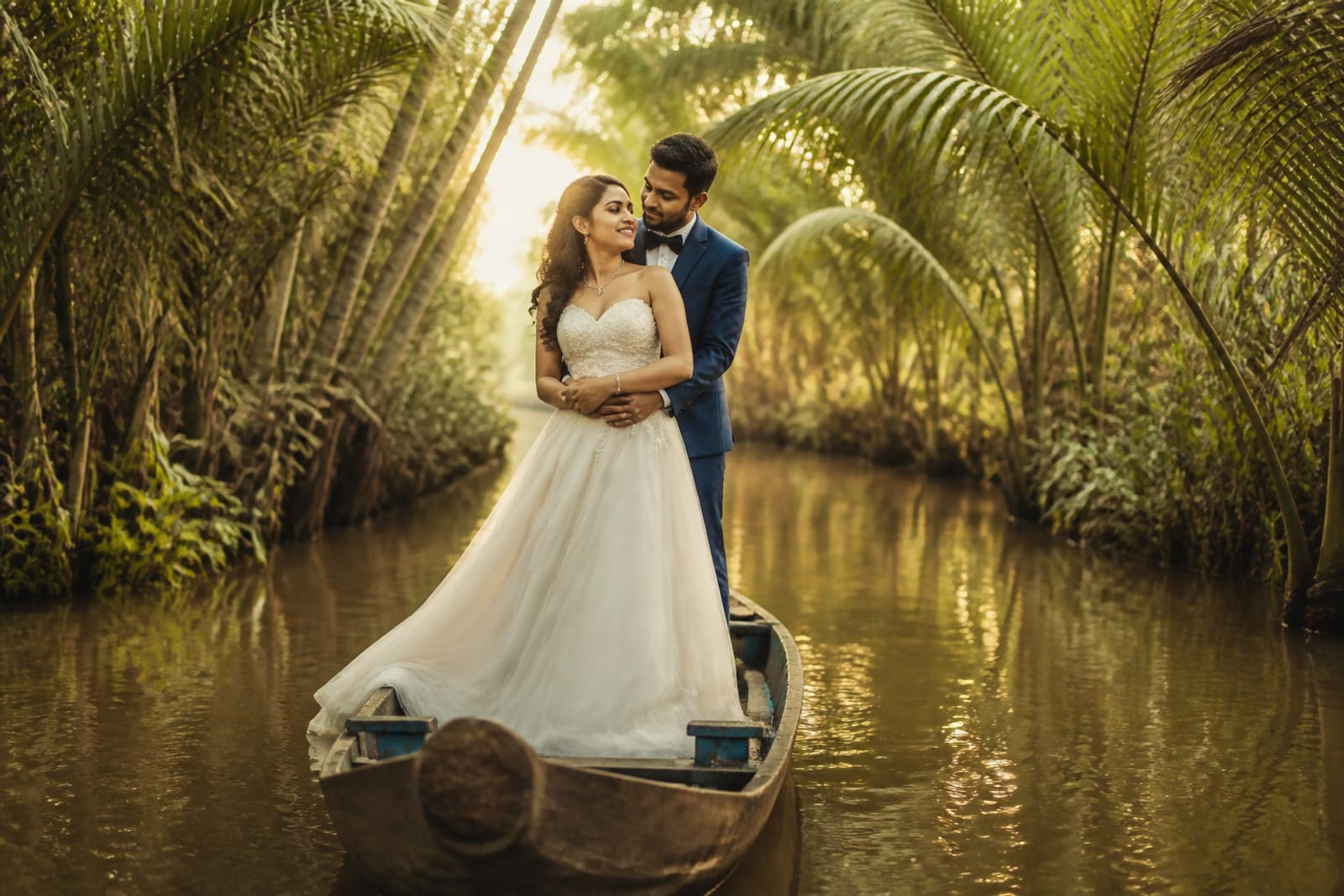
December–January sees peak tourism, so floating markets, temples and homestays book faster; February–April is cooler and slightly quieter—a middle ground. May–August are considered low season because of heat and rain; fewer tourists mean shorter waits at markets and temples, but also fewer backup services if weather turns bad. September–November approach typhoon season; many services reduce hours or close, and boat captains avoid deep canals. For a pre-wedding shoot, low season offers solitude but less support infrastructure; peak season is busier but safer for logistics. Check with your photographer about their relationships with local boat operators and homestay owners before booking—established networks matter more than month.
Should you book before or after Tet (Lunar New Year)?
Tet falls late January to mid-February each year; the holiday closes many temples, markets and homestays for 3–5 days. The weeks immediately before Tet (mid-January) see cleaning and preparations that change market character; the weeks after see reopenings and decorations. If Tet timing works for your travel, January (before) or February (after) is possible, but you'll need a photographer with Tet-specific experience—they'll know which markets stay open and which pagodas accept visitors. Tet is not ideal for a pre-wedding photoshoot unless Tet imagery is central to your narrative. Book at least 6–8 weeks ahead if you're targeting Tet weeks.
What to check before you book a Mekong Delta pre-wedding shoot
Cáo Studio does not operate in the Mekong Delta. If you are traveling to the region, here's how to vet a local photographer:
- Season match: Ask which months they prefer and why. Do they have a portfolio from your target month?
- Weather backup: Do they scout indoor venues (temples, homestays, markets with roofs)? What's their rain protocol?
- Boat & water safety: Do they work with licensed boat captains? Have they shot in high-water season?
- Outfit & styling: Do they work with a hair and makeup artist, or do you hire separately? Separate teams rarely coordinate on a boat.
- Delivery timeline: When do you receive edits? Do you get a short film or stills only?
- Turnaround: Ask for examples from your target season so you can see light quality, water state, and how they handle humidity in final images.
If you're based in Hanoi or Ho Chi Minh City, consider booking a pre-wedding shoot with Cáo Studio in your home city first—they'll handle styling, hair, makeup and photography as one team. Then hire a local Mekong photographer for a day trip or extended stay. One team + one message works better than stitching multiple vendors together across a boat and three canals.
💄 Makeup & hair at your hotel | 🌸 See the lookbook
Why pre-wedding timing in the Mekong matters differently than in cities
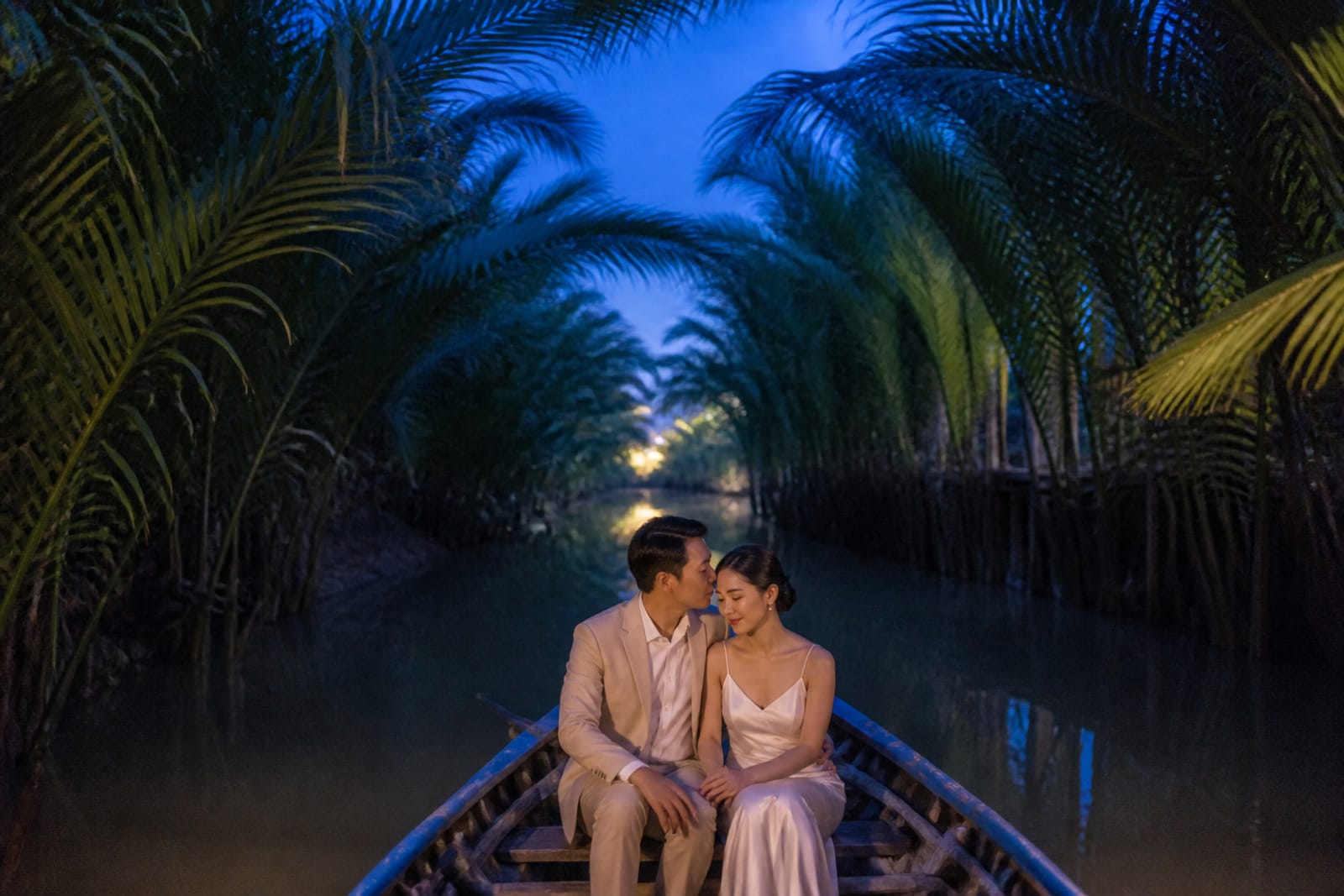
A Hanoi or Saigon pre-wedding photoshoot lets you control timing, outfits and team coordination across a full day. The Mekong requires you to adapt to season, tidal timing, market hours and weather—all of which shift unpredictably in wet season. If you're traveling to Vietnam specifically for a Mekong pre-wedding shoot, dry season (December–April) gives you the most control and the best light for both ao dai and evening shots. If you're already in Ho Chi Minh City for work or a longer trip, wet season (May–July, excluding peak typhoon months) is calmer than September–November, and you can hire a local day shooter without rushing. Discuss season trade-offs with your photographer—expertise in their region matters more than month alone.
📸 Book on WhatsApp — pre-wedding shoot
FAQ
Is December or January better for a Mekong pre-wedding shoot?
December is dry, warm and clear—ideal for ao dai and water reflections. January is cooler and slightly less crowded, but approaches Tet closures mid-month. Both are dry season. Choose December if you want warmth and golden reflections; January if you prioritize solitude and can avoid Tet weeks.
Can we shoot in September or October (wet season)?
Both months risk typhoons, flooding and unpredictable rain. Many services reduce hours or close. Only book if your photographer has a robust weather backup plan and indoor venues scouted. This is high-risk, low-support timing.
Do we need separate hair, makeup and photography teams in the Mekong?
Most local Mekong photographers work solo or with loose partners. If you want one team, hire separately but require them to communicate before the shoot. Alternatively, book a pre-wedding shoot with Cáo Studio in Hanoi or Saigon, then add a local Mekong day shoot for specific imagery.
How early should we book a Mekong photographer?
Dry season (December–April) books 8–12 weeks ahead; wet season 4–6 weeks. Ask your photographer for their lead time and whether they need season-specific deposits or location scouting fees.
What's the difference between booking Cáo Studio and a local Mekong photographer?
Cáo Studio operates in Hanoi, Ho Chi Minh City and Hoi An; they handle outfit, hair, makeup and photography as one team with 48-hour turnaround and a short film. A local Mekong photographer specializes in the region's light, water and logistics but may coordinate separately with stylists. Choose Cáo Studio for a full-day city shoot with integrated styling; choose a local specialist for Mekong-specific framing and market access.
FAQ
Is December or January better for a Mekong pre-wedding shoot?
December is dry, warm and clear—ideal for ao dai and water reflections. January is cooler and slightly less crowded, but approaches Tet closures mid-month. Both are dry season. Choose December if you want warmth and golden reflections; January if you prioritize solitude and can avoid Tet weeks.
Can we shoot in September or October (wet season)?
Both months risk typhoons, flooding and unpredictable rain. Many services reduce hours or close. Only book if your photographer has a robust weather backup plan and indoor venues scouted. This is high-risk, low-support timing.
Do we need separate hair, makeup and photography teams in the Mekong?
Most local Mekong photographers work solo or with loose partners. If you want one team, hire separately but require them to communicate before the shoot. Alternatively, book a [pre-wedding shoot](/pre-wedding-photoshoot) with Cáo Studio in Hanoi or Saigon, then add a local Mekong day shoot for specific imagery.
How early should we book a Mekong photographer?
Dry season (December–April) books 8–12 weeks ahead; wet season 4–6 weeks. Ask your photographer for their lead time and whether they need season-specific deposits or location scouting fees.
What's the difference between booking Cáo Studio and a local Mekong photographer?
Cáo Studio operates in Hanoi, Ho Chi Minh City and Hoi An; they handle outfit, hair, makeup and photography as one team with 48-hour turnaround and a short film. A local Mekong photographer specializes in the region's light, water and logistics but may coordinate separately with stylists. Choose Cáo Studio for a full-day city shoot with integrated styling; choose a local specialist for Mekong-specific framing and market access.
Ao dai, makeup, hair and a local photographer in Hanoi or Saigon — one WhatsApp message.