/pre-wedding-photoshoot
Best time to pre-wedding shoot in Ninh Binh: season guide
Ninh Binh shines for pre-wedding shoots in March–May and September–November: cool air, low humidity, soft morning light on rice fields, and fewer tourists. Late May–early June catches golden rice (first crop), while September–October brings the second harvest. Avoid December–February (grey, cold, overcast), June–August (heat, afternoon storms), and October mid-month onwards (typhoon risk, occasional flooding). Light is sharpest at sunrise (6:00–7:30 am) over Hang Mua, Trang An boats and valley paths. Book a local photographer well ahead; Cáo Studio shoots in Hanoi and can advise on Ninh Binh location planning, but does not operate a team there. Work with a vetted local who knows monsoon changes week-to-week and can scout outfits (ao dai, Western dress) that move in wind and boat rocking.
Why does season matter more than location for Ninh Binh pre-wedding shoots?
Season controls light quality, crowd density, outfit comfort and landscape mood—the four pillars of a successful shoot. A Ninh Binh shoot in July at midday fights harsh shadows, 90% humidity and afternoon downpours; the same spot in April gives soft sidelighting, breathable air and stable weather. Light defines cinema; location is only the backdrop. Season decides whether your ao dai wrinkles from sweat, whether rice is golden or muddy-green, and whether the photographer can nail focus on your face at 6 am (clear air) versus 11 am (haze). Choose season first, location second.
📸 Book on WhatsApp — ao dai photoshoot
What makes March–May the safest window for Ninh Binh?
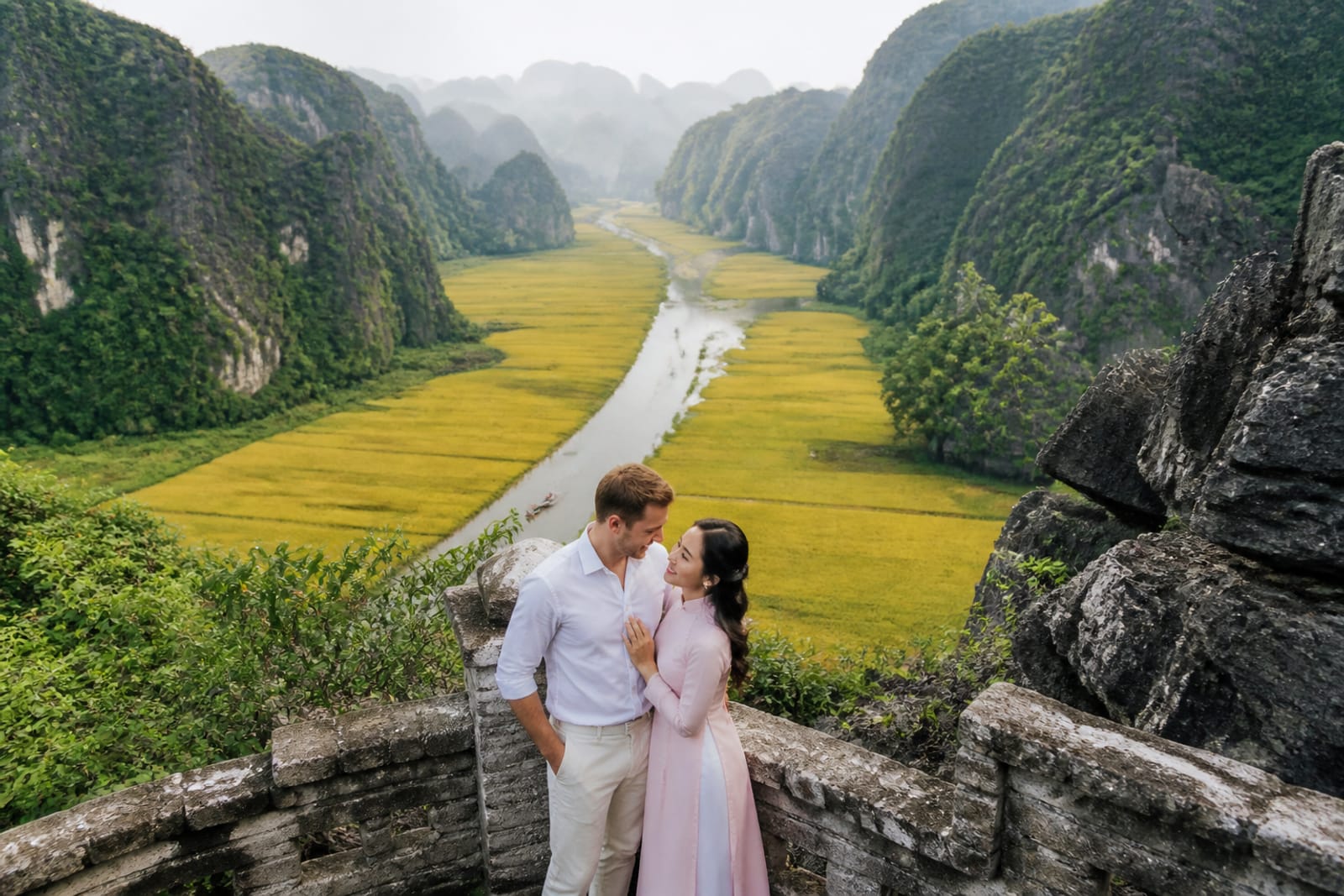
March–May combines dry air, predictable light and moderate crowds. Mornings sit around 20–24°C, ideal for layered ao dai and walking without fatigue. Rice transitions from green to gold mid-May, giving warm-toned fields without hard yellow glare. Sunrise side-light hits limestone cliffs at a gentle angle—shadows sculpt but don't overwhelm. Tourist load is steady but not overwhelming; early starts (before 6:30 am) mean empty footpaths and boat rides. Wind is calm enough that hair and fabric read true. The trade: late May approaches monsoon onset (humidity creeps up), and farmers harvest—landscape logistics shift daily. Book a local scout two weeks ahead.
| Month | Best for | Light character | Outfit fit | Why choose or skip |
|---|---|---|---|---|
| Mar–Apr | All styles, ao dai comfort | Soft side-light, low haze | Breathable, no sweat rings | Perfect thermal + crowd balance |
| May | Ao dai + golden rice | Golden-hour warmth, early haze buildup | Manageable heat, light sweat | Golden fields, humidity rising |
| Jun–Aug | Skip | Harsh midday, grey afternoon storms | Heavy sweat, clingy fabrics | Heat, afternoon closures, flooding risk |
| Sep–Oct (early) | Ao dai, second rice crop | Clear, cool, golden harvest light | Ideal comfort, wind manageable | Best light + crop combination |
| Oct (mid–late) | Caution | Clear but typhoon forecast pressure | Cool but unpredictable | Flood/storm risk rises sharply |
| Nov | Western dress, clear sky | Crisp morning, some haze afternoon | Breezy, layers needed | Good light, winds can be strong |
| Dec–Feb | Skip | Grey, flat, cold mornings | Clammy, layers feel heavy | Overcast, low motivation, closed Tet |
March–May suits couples prioritizing comfort and simplicity; outfit choice opens up wide (ao dai, Western, casual). Outfit layering works—a jacket over ao dai reads cinematic in cool air, bulky in heat.
When do rice fields turn golden in Ninh Binh?
Rice fields ripen in two cycles: the main crop yellows late May–early June, and the second crop around late September–October. Both windows last 2–3 weeks before harvest begins (farmers clear fields within days). Peak golden hue sits mid-to-late morning once dew clears—but light turns flat by 10:00 am. A local photographer will know exact harvest dates year-to-year; they shift 1–2 weeks based on spring rainfall and monsoon timing. Shooting golden rice demands an early booking with a scouted location—a flooded field or freshly cut section derails the shoot. Ask your local guide: "Is this field harvested this week?" before finalizing the outfit and route. Late May brings heat and humidity alongside the gold; early October brings cooler air but typhoon uncertainty—a trade worth weighing.
Why October before mid-month beats November for light?
Early October (1–15) delivers the crispest air and clearest light of the year. Rice is golden, tourists are moderate, and mornings sit around 18–22°C—perfect ao dai weather. The sky stays blue through sunrise. By November, cool winds arrive (good for fabric movement) but morning haze thickens and light scatters softer; it's still excellent, yet less punchy. Late October (16th onward) introduces typhoon forecasts, afternoon cloud banks and occasional flooding in valleys—a real logistics risk. A local photographer plans shoots on week-to-week forecasts; that flexibility is why booking a vetted local beats booking months ahead with a travel photoshoot studio unfamiliar with monsoon micro-forecasts.
Which seasons suit ao dai versus Western dress?
Ao dai (March–May, early October): lightweight silk reads beautifully in cool, dry air. Heat causes wrinkles from sweat; humidity makes the fabric cling. Layers (jacket, shawl) photograph cinematic in cool seasons. Wind is your friend—it catches the skirt for movement shots.
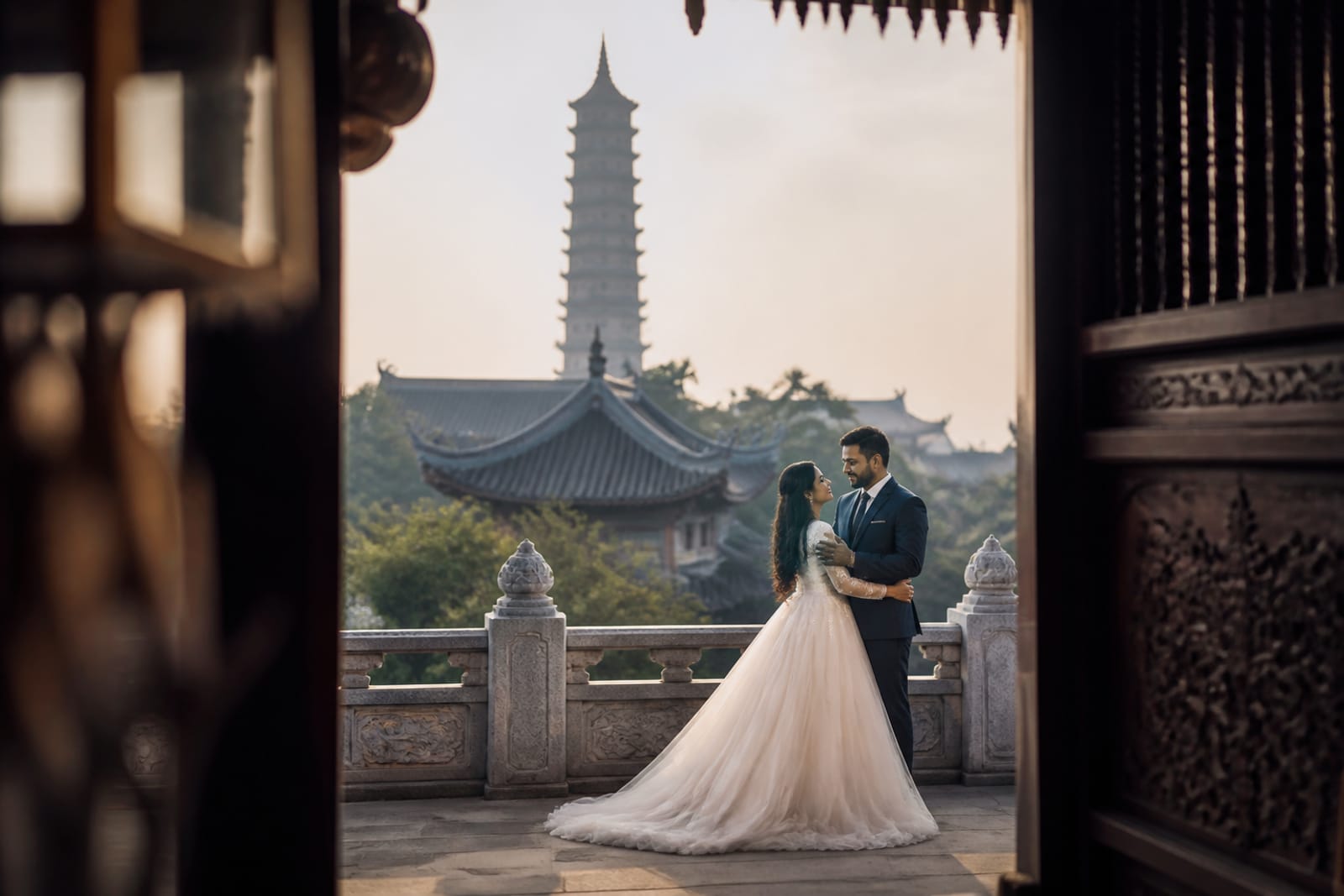
Western dress (November, early March): blazers, jumpsuits and gowns suit cool weather. March–May heat and humidity cause perspiration visible on fabric. November wind can whip light fabrics unpredictably. Bare shoulders work in March–May but read uncomfortable in November mornings.
Practical rule: if you're choosing between seasons for outfit type, let season win. A lightweight ao dai in November reads regal; a formal gown in May reads uncomfortable and shows it.
How do you book a photographer for Ninh Binh when Cáo Studio isn't based there?
Cáo Studio operates in Hanoi, Ho Chi Minh City and Hoi An—not Ninh Binh. For a Ninh Binh pre-wedding shoot, work with a local photographer who knows the landscape, seasonal shifts and permit logistics. Vet them by: asking for a portfolio of recent shoots (check if light and framing match your vision), confirming they scout locations 1–2 weeks before your date, requesting a detailed shot list (wide landscape, detail close-ups, movement on paths/boats), and checking if they've shot in October typhoon season (this reveals monsoon knowledge). Ask directly: "Which weeks avoid flooding? Will you check the forecast one week before?" A good local team knows the Hang Mua steps require sturdy footwear and outfit adjustments, and that Trang An boat rides rock unpredictably—they'll guide you on shoes, fabric weight and timing. Cáo Studio can advise on outfit and shoot structure during pre-wedding planning; you'll execute with a local partner. If you're based in Hanoi and prefer a known team, consider a day trip shoot in Hanoi instead, or ask us on WhatsApp for referrals to vetted Ninh Binh partners.
What to check before you book a Ninh Binh pre-wedding shoot
Timeline: Book 4–6 weeks ahead for popular seasons (March–May, early October). Eight weeks ahead if you're targeting specific rice-harvest weeks.
Scout location: Confirm your photographer will visit the planned spot 10–14 days before the shoot to check field conditions, crowd patterns and exact sunrise angle.
Weather clause: Agree in writing on the typhoon/flood cancellation and reschedule policy. October shoots need a backup date within 7 days.
Outfit transport: Establish how ao dai and shoes move. Will the photographer provide a support person, or do you bring family? Boat rocking requires non-slip soles and ao dai fitted above the knees.
Editing timeline: Confirm when edited images arrive. A local photographer often delivers in 1–2 weeks; international studios like Cáo Studio offer faster turnarounds on Hanoi/Saigon shoots but rely on local partners for Ninh Binh.
Cost factors: Ninh Binh local rates vary by team reputation, travel time from Hanoi and season. Off-season (June–August, December–January) costs less but delivers poor results. Peak season (March–May, early October) commands premium rates. Discuss early, but avoid locking a price until the scout report confirms accessibility.
---
FAQ
Is April or October better for Ninh Binh pre-wedding shoots?
April wins for heat tolerance and stable crowds. October (early month) wins for light clarity and rice gold. Choose April if you prioritize comfort and outfit versatility; choose early October if golden fields are non-negotiable. Mid-October onward introduces typhoon risk.
Can we shoot Ninh Binh if we're based in Saigon?
Yes. Ninh Binh is 2–2.5 hours north of Hanoi. Cáo Studio operates in Saigon and Hanoi; for a Ninh Binh shoot, work with a local photographer. We can advise on outfit, framing and pre-wedding planning before you connect with your local team.
What happens if typhoon weather hits mid-October?
Afternoon storms are common; morning light often survives until 7:30–8:00 am. A good local photographer monitors forecasts weekly and reschedules if flooding risk peaks. Confirm the rescheduling policy before booking—reputable teams guarantee a makeup date within 7–10 days.
Do we need special shoes for Ninh Binh shoots?
Yes. Hang Mua involves ~500 stone steps (smooth, worn, slippery when damp). Boat rides at Trang An rock unpredictably. Non-slip soles (hiking sandals, water-friendly shoes) prevent accidents and keep you confident on camera. Plan footwear around season—April allows lighter soles; November requires grip.
Can we shoot ao dai at Ninh Binh in November?
Yes, and it photographs beautifully. November mornings are cool (17–20°C), so silk drapes elegantly without sweat. Wind is stronger, so fabric moves cinematic. Confirm with your photographer that they've shot ao dai in November wind—layering and hem weight matter.
How much does a Ninh Binh pre-wedding shoot cost?
Local photographer rates vary by experience, travel time, season and package scope. Off-season (June–August) costs less than peak season (March–May, early October). Discuss scope (duration, outfits, editing) with your local team. Avoid booking based on price alone—the cheapest option often skips scouting and weather contingency.
FAQ
Is April or October better for Ninh Binh pre-wedding shoots?
April wins for heat tolerance and stable crowds. October (early month) wins for light clarity and rice gold. Choose April if you prioritize comfort and outfit versatility; choose early October if golden fields are non-negotiable. Mid-October onward introduces typhoon risk.
Can we shoot Ninh Binh if we're based in Saigon?
Yes. Ninh Binh is 2–2.5 hours north of Hanoi. [Cáo Studio](/saigon) operates in Saigon and Hanoi; for a Ninh Binh shoot, work with a local photographer. We can advise on outfit, framing and pre-wedding planning before you connect with your local team.
What happens if typhoon weather hits mid-October?
Afternoon storms are common; morning light often survives until 7:30–8:00 am. A good local photographer monitors forecasts weekly and reschedules if flooding risk peaks. Confirm the rescheduling policy before booking—reputable teams guarantee a makeup date within 7–10 days.
Do we need special shoes for Ninh Binh shoots?
Yes. Hang Mua involves ~500 stone steps (smooth, worn, slippery when damp). Boat rides at Trang An rock unpredictably. Non-slip soles (hiking sandals, water-friendly shoes) prevent accidents and keep you confident on camera. Plan footwear around season—April allows lighter soles; November requires grip.
Can we shoot ao dai at Ninh Binh in November?
Yes, and it photographs beautifully. November mornings are cool (17–20°C), so silk drapes elegantly without sweat. Wind is stronger, so fabric moves cinematic. Confirm with your photographer that they've shot ao dai in November wind—layering and hem weight matter.
How much does a Ninh Binh pre-wedding shoot cost?
Local photographer rates vary by experience, travel time, season and package scope. Off-season (June–August) costs less than peak season (March–May, early October). Discuss scope (duration, outfits, editing) with your local team. Avoid booking based on price alone—the cheapest option often skips scouting and weather contingency.
Ao dai, makeup, hair and a local photographer in Hanoi or Saigon — one WhatsApp message.