services/ao-dai-photoshoot
Can Foreigners Wear Ao Dai? Yes—Here's How to Do It Right
Yes, foreigners absolutely wear ao dai—and Vietnamese people genuinely welcome it. The key is understanding how to wear it respectfully, what silhouette flatters your frame, and which occasions suit which styles.
What's the actual etiquette for foreigners in ao dai?
Wearing ao dai as a foreigner is respectful when you treat it as formal or semi-formal attire, not a costume. Avoid wearing it to casual outings, beach trips, or environments where locals dress casually. Never wear it inside active temples during worship (remove shoes, ask permission first). For photoshoots, dinners, weddings as a guest, or cultural events—ao dai is entirely appropriate and appreciated.
The silk versions are dressier; cotton blends work for semi-formal settings. If you're unsure of an occasion's formality, ask your hotel concierge or local guide. Most Vietnamese recognize genuine cultural interest and respond positively when you show respect through proper fit and context-appropriate wear.
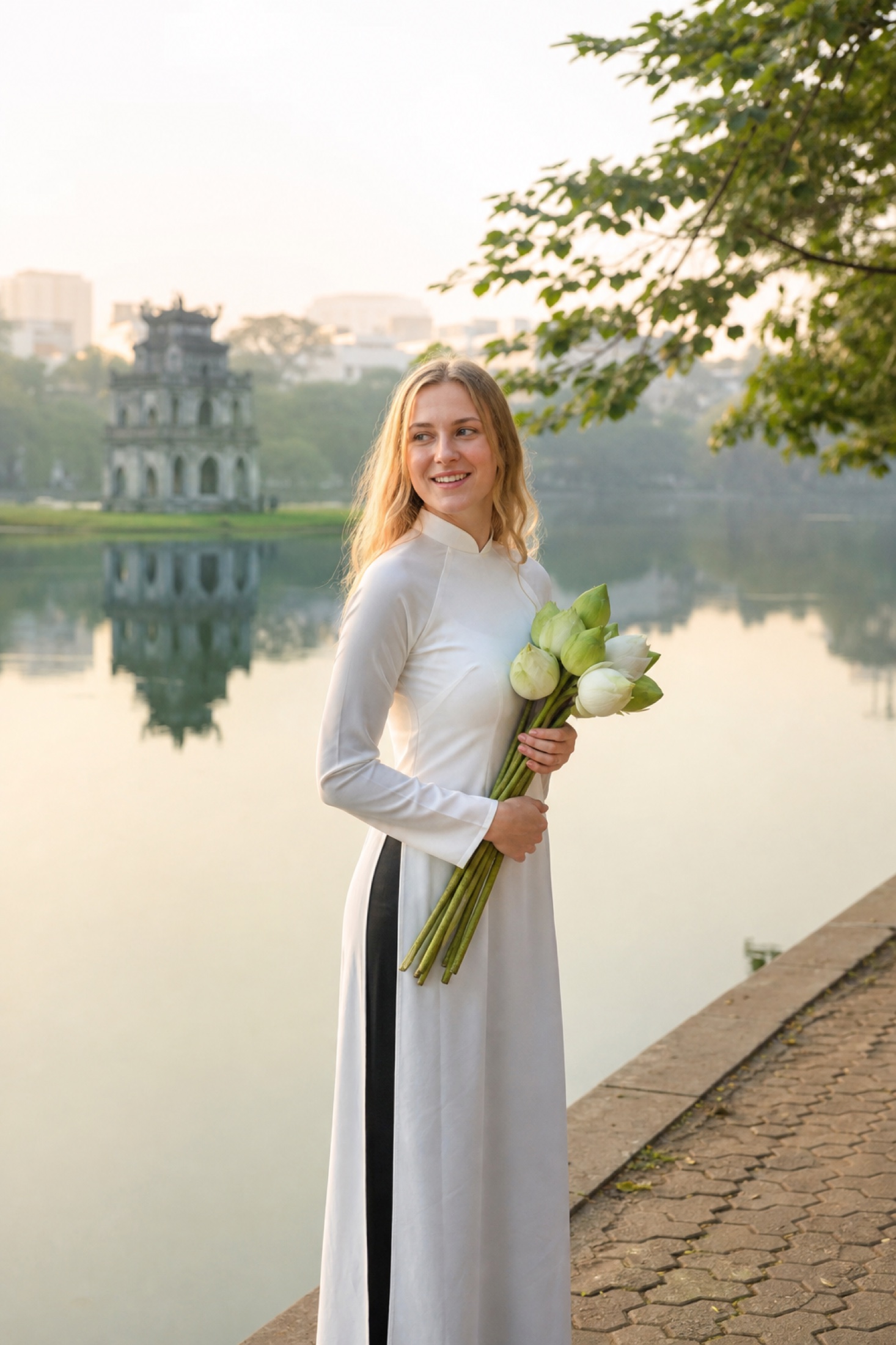
How do you actually fit an ao dai if you're not Vietnamese-framed?
Ao dai is tailored, not one-size-fits-all. Standard sizing assumes a specific waist-to-hip ratio; Western frames often have broader shoulders, larger busts, or different hip proportions. Professional tailors in Hanoi and Ho Chi Minh City (and our studio partners) adjust:
- Shoulder seams (outward for broader frames)
- Bust darts (deeper or repositioned for larger chests)
- Waist placement (higher or lower depending on your proportions)
- Sleeve length (longer arms need extended sleeves)
- Slit depth (adjusted so it doesn't gap when you sit or move)
A well-fitted ao dai should skim your body without clinging. The front panels should hang straight from shoulders to ankles. If it pulls at the bust, gaps at the sides, or feels tight across the back—it's not tailored for your frame yet. Tailoring takes 5–10 days; budget accordingly if ordering custom.
📸 Book on WhatsApp — ao dai photoshoot
Which ao dai style suits different body types and occasions?
| Style | Best for | Formality | What to check before ordering |
|---|---|---|---|
| Traditional silk (solid color) | Petite frames, formal dinners, photoshoots | High | Shoulder fit; does it bunch at collarbones? |
| Cotton-linen blend | Pear-shaped, everyday wear, hotel photoshoots | Medium | Waist seam sits at natural waist; sleeves don't ride up. |
| Áo dài with embroidery | Hourglass figures, celebrations, weddings | High | Embroidery placement doesn't distort bust or hips. |
| Modern/fitted cut | Slim or athletic builds | Medium–High | Doesn't strain at shoulders; slit allows walking. |
| Tunic-style overshirt + pants | Broader-framed, casual semi-formal | Medium | Overshirt drapes without clinging; pants fit at natural waist. |
Each style requires different undergarments. Silk versions need a fitted slip (provided or rented). Cotton blends work over simple undergarments. Wider cuts work for anyone but read sizing charts carefully—"one size" ao dai from online sellers often doesn't fit foreigners without tailoring.
What undergarments and layering work under an ao dai?
An ao dai worn over nothing looks shapeless and transparent. You need:
- A fitted slip or underdress (knee-length, same color as the ao dai, or white if the ao dai is white/pastels)—prevents transparency and creates a clean silhouette.
- Smooth, high-waisted underwear (no visible lines)—go one size down if needed for a seamless look.
- A supportive bra (strapless or adhesive if the ao dai is sleeveless; regular if it has sleeves)—the front panels should sit flat, not bunch.
- White ankle socks or no-show socks if wearing traditional shoes; bare feet if wearing sandals (rare, very casual).
Professional ao dai rental shops and tailors include a slip. If you're buying online and unsure, ask the seller what they recommend. Our studio handles styling and provides guidance; we've fit everyone from 5'2" to 6'2", size XS to 3XL.
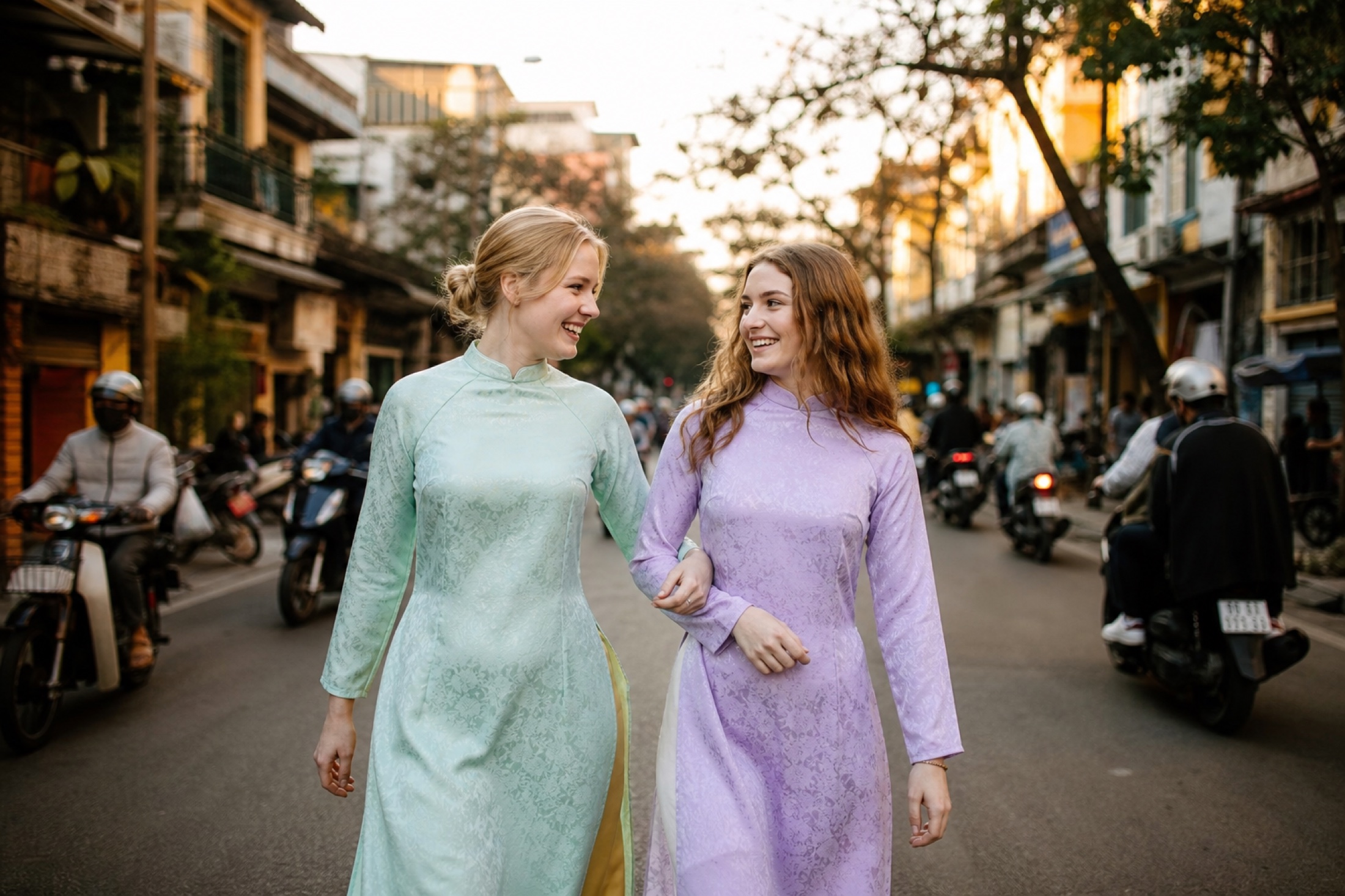
Where do you actually buy or rent an ao dai as a foreigner?
| Option | Time | Cost range | Best for |
|---|---|---|---|
| Professional rental (Hanoi/HCMC) | 1 day advance | Budget-friendly | Photoshoots; no shipping worry; professional fit assistance. |
| Bespoke tailor (5–10 day turnaround) | 2 weeks planning | Mid-range | Perfect fit; keep the garment; deeper cultural connection. |
| Online Vietnamese seller (international shipping) | 10–30 days | Varies widely | Keep the garment; read reviews on fit (often runs small). |
| High-end designer (luxury silk, embroidery) | 2–4 weeks | Premium | Special occasions; investment piece; museum-quality quality. |
| Hotel concierge rental connection | Same day (often) | Varies | Last-minute needs; hotel handles logistics. |
Renting is smartest for travelers on short trips. You avoid customs hassle, fit uncertainty, and return shipping. For photoshoots with Cáo Studio – Makeup & Photoshoot, we partner with quality rental sources or recommend trusted tailors. Bespoke tailoring works if you're staying 2+ weeks or have a return trip planned.
Online sellers: Read reviews mentioning your body type and nationality. "Runs small" is common. Many don't include slips. Sizing charts vary wildly; message the seller with your exact measurements (bust, waist, hip, shoulder width, sleeve length, desired length) and ask for honest recommendations.
What's the real difference between rental, tailored, and off-the-rack ao dai?
Rental ao dai:
- Fit to a standard form (tailors adjust on-the-spot)
- Quality ranges from hotel-quality cotton to silk
- You return it; no shipping or storage
- Best for one-time wear or photo sessions
- Professional shops in Hanoi and HCMC serve tourists
Tailored ao dai (bespoke):
- Measured to your exact frame
- 100% custom; takes 5–10 days minimum
- You own it; can wear again
- Costs more upfront but lasts years with care
- Hanoi tailors typically charge moderate rates (negotiate, ask for foreigner-friendly English communication)
Off-the-rack online:
- Cheaper but high fit-failure risk
- Sizing assumes Vietnamese proportions
- Return shipping costly; 30-day refund windows are tight
- Quality varies; read reviews carefully
- Good backup option if you have time to reorder
Real-world scenario: A foreigner visiting Hanoi for 5 days should rent. Someone staying 3 weeks should tailor. Buying online works only if you've worn an ao dai before or have very standard proportions.
What to check before you order or book an ao dai
For rentals:
- Does the shop include a slip?
- What's the fit-adjustment policy (same-day alterations)?
- Is there a damage deposit? What counts as damage?
- Do they provide styling advice or photos of how it's worn?
- Can you request a specific color/fabric before arrival?
For tailoring:
- Does the tailor speak enough English or can your hotel translator help?
- Will they provide a fitting (not just measure once)?
- What's the refund policy if the fit isn't right after completion?
- Are rush fees available (you need it in 3 days)?
- Do they include a slip, and is it the same fabric quality?
For online purchases:
- Does the size chart compare to your measurements, not generic S/M/L?
- Are there reviews from Western/non-Vietnamese buyers?
- Does "size M" in the seller's system match your normal size?
- Is a slip included or do you need to buy separately?
- What's the return window and who pays return shipping?
For photoshoots with our studio: We handle ao dai styling as part of our ao dai photoshoot service. You choose rental or bring your own; our team helps with fit, layering, and photography that shows the garment authentically. Sessions include makeup, hair, and professional styling—no guesswork.
---
Foreigners in ao dai: real scenarios
Scenario 1: Solo traveler, 4-day Hanoi visit, wants one professional photo Solution: Rent locally. Book a photoshoot session at Cáo Studio Hanoi with rental coordination. Cost is lower, fit is guaranteed, and you walk away with edited photos.
Scenario 2: Couple, pre-wedding trip to Hoi An, wants styled portraits Solution: Book a couple photoshoot with ao dai included. We handle rental or styling advice; you focus on each other. Ask on WhatsApp about Hoi An session availability.
Scenario 3: Foreigner attending a Vietnamese friend's wedding Solution: Rent 2–3 days before. Ask your friend which color is appropriate (reds, pinks, and pastels are festive; black is avoided). Rent from a Hanoi or HCMC shop with same-day fitting.
Scenario 4: Extended stay, wants to experience ao dai regularly Solution: Tailor a casual cotton-blend version. Costs less than formal silk. Wear it to dinners, markets, and cultural sites. Returns home as a genuine souvenir.
---
Wearing ao dai as a foreigner is absolutely normal—you're not a tourist in costume; you're engaging with Vietnamese culture respectfully. The fit and context matter most. Whether you rent, tailor, or buy online, measure carefully, ask questions, and choose a path that matches your timeline and budget. For a stress-free, professionally styled experience, book a photoshoot with us and let our team handle the details.
FAQ
Is it disrespectful for foreigners to wear ao dai?
No. Vietnamese people welcome foreigners wearing ao dai, especially when worn formally and respectfully. Avoid casual beach or nightclub settings; save it for photoshoots, dinners, weddings, and cultural events. Showing genuine interest in the garment is appreciated.
What size should I order if I'm buying online from a Vietnamese seller?
Measure your bust, waist, hip, shoulder width, and desired length in inches or cm. Message the seller with all measurements and mention you're a foreigner—they'll often recommend sizing up or adjusting. Read reviews from non-Vietnamese buyers if available. Standard sizing assumes smaller frames than most Westerners.
Do I need a slip under an ao dai?
Yes. Ao dai fabric is often semi-transparent; a fitted slip (knee-length, white or matching color) creates a clean silhouette and prevents see-through. Professional rentals and tailors include slips. If buying, ask if one is included or budget for a separate purchase.
How long does tailoring take, and can I do it as a tourist?
5–10 days standard; rush options may add cost. Yes, tourists tailor in Hanoi and HCMC. Book a tailor with English-speaking staff, provide your measurements, and allow time for a fitting. Some tailors work with hotels to collect and deliver garments.
What's the difference between renting and buying for a photoshoot?
Renting is faster, cheaper, and fits are guaranteed by professional shops—ideal for one-time use. Buying (tailored or online) takes longer but gives you a keepsake to wear again. For photoshoots, we recommend rental unless you plan to wear the ao dai multiple times during your trip.
Can I wear ao dai to a temple or religious site?
Wear it outside active worship areas only. Remove shoes, ask permission before entering temples, and dress modestly. Ao dai is formal and respectful, but don't wear it during active prayer or ceremonies. If unsure, ask your guide or the temple attendant.
FAQ
Is it disrespectful for foreigners to wear ao dai?
No. Vietnamese people welcome foreigners wearing ao dai, especially when worn formally and respectfully. Avoid casual beach or nightclub settings; save it for photoshoots, dinners, weddings, and cultural events. Showing genuine interest in the garment is appreciated.
What size should I order if I'm buying online from a Vietnamese seller?
Measure your bust, waist, hip, shoulder width, and desired length in inches or cm. Message the seller with all measurements and mention you're a foreigner—they'll often recommend sizing up or adjusting. Read reviews from non-Vietnamese buyers if available. Standard sizing assumes smaller frames than most Westerners.
Do I need a slip under an ao dai?
Yes. Ao dai fabric is often semi-transparent; a fitted slip (knee-length, white or matching color) creates a clean silhouette and prevents see-through. Professional rentals and tailors include slips. If buying, ask if one is included or budget for a separate purchase.
How long does tailoring take, and can I do it as a tourist?
5–10 days standard; rush options may add cost. Yes, tourists tailor in Hanoi and HCMC. Book a tailor with English-speaking staff, provide your measurements, and allow time for a fitting. Some tailors work with hotels to collect and deliver garments.
What's the difference between renting and buying for a photoshoot?
Renting is faster, cheaper, and fits are guaranteed by professional shops—ideal for one-time use. Buying (tailored or online) takes longer but gives you a keepsake to wear again. For photoshoots, we recommend rental unless you plan to wear the ao dai multiple times during your trip.
Can I wear ao dai to a temple or religious site?
Wear it outside active worship areas only. Remove shoes, ask permission before entering temples, and dress modestly. Ao dai is formal and respectful, but don't wear it *during* active prayer or ceremonies. If unsure, ask your guide or the temple attendant.
Ao dai, makeup, hair and a local photographer in Hanoi or Saigon — one WhatsApp message.