services/ao-dai-photoshoot
Cat Ba Ao Dai Photoshoot Guide: Location, Light & What to Wear
Cat Ba island—Halong Bay's largest inhabited island—draws ao dai photographers for its vertical limestone karsts, sheltered beaches, and weathered fishing villages. Unlike Hanoi's urban density or Hoi An's crowded lantern streets, Cat Ba rewards early planning: access is a 45-minute ferry from Hai Phong, infrastructure is basic, and light windows are narrow. This guide walks you through location scouting, outfit prep, seasonal timing, and the decision to book professional hair/makeup or shoot independently.
Where can you shoot ao dai on Cat Ba without permits?
Public beaches and village paths need no formal permission; private resorts and heritage sites do. Cat Co 1 Beach (central, near town) is accessible, sandy, and busy—good for midday softness but expect crowds 10 a.m.–4 p.m. Cat Co 3 Beach (quieter, small entry fee ~50k VND) has fewer people and rocky outcrops for drama. Vu Ynh cave mouth and the surrounding limestone faces photograph well from public viewpoints; ask locals before climbing into unfamiliar terrain.
Pro tip: The waterfront near Cat Ba Town harbor has morning light reflecting off moored boats—shoot between 6–7 a.m. before fishermen launch daily.
What time of day gives the best light for ao dai photos?
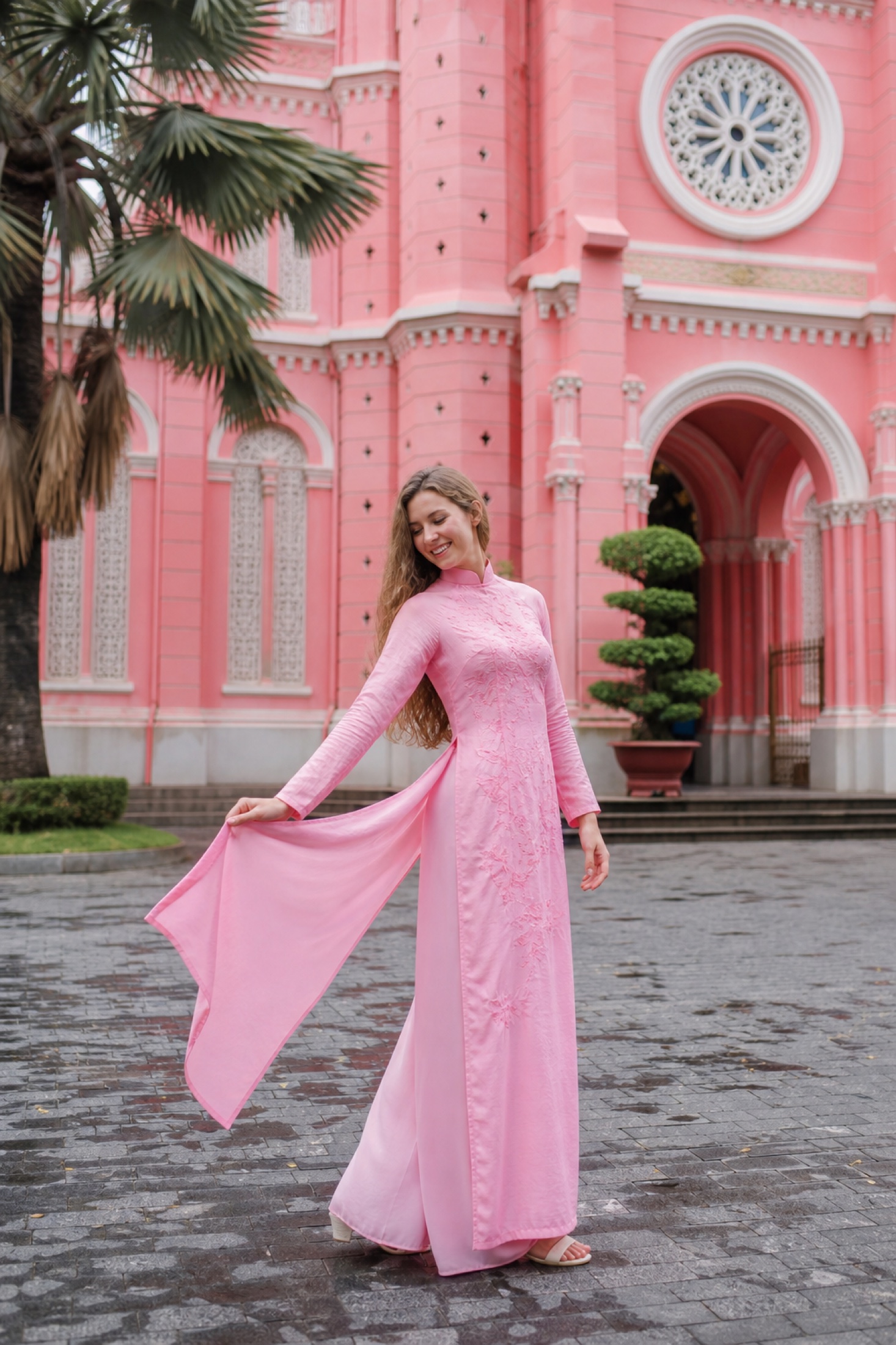
Golden hour (5:30–6:30 p.m.) is peak: warm, directional light flatters fabric texture and skin tone, and limestone cliffs glow amber. Sunrise (5:30–6:15 a.m.) works if you book a ferry arrival day early; the harbor is calmer and light is soft. Avoid 11 a.m.–3 p.m. unless you want high-contrast shadows (dramatic but hard to control). Overcast days (common June–September) flatten detail but eliminate harsh shadows—useful for consistent skin tone if you're shooting solo without a reflector.
📸 Book on WhatsApp — ao dai photoshoot
Which months have the best weather for Cat Ba shoots?
| Month | Conditions | Light Quality | Best For |
|---|---|---|---|
| Oct–Nov | 20–28°C, dry, 1–2 rainy days | Sharp, stable, few typhoons | Professional shoots, elopements |
| Dec–Feb | 15–22°C, clear, windy | Crisp, early sunset (5 p.m.) | Winter clothing layers, long dress flow |
| Mar–Apr | 20–28°C, variable clouds | Mixed—plan 2–3 days buffer | Flexible travelers, backup dates |
| May–Sep | 28–32°C, 60–80% humidity, typhoons | Hazy, unpredictable | NOT recommended; ferry closures likely |
October–November is non-negotiable for professional work: stable 45-day windows let you nail light, outfit, and tide timing. December–February requires heavier underdress layers (silk thermals) because water spray cools fast. Avoid May–September entirely; typhoon season closes ferries 2–3 times per month.
What should you wear under an ao dai on rocky, wet terrain?
An ao dai is a two-piece: a fitted tunic (áo) worn over wide silk trousers (quần). On Cat Ba's rocky beaches, wear:
- Undershirt: Skin-tone seamless tank or silk camisole under the tunic. Prevents show-through if fabric gets wet and keeps you warm at water's edge.
- Slim trousers: Lightweight silk or linen blend (NOT cotton—it holds water). Avoid cargo pockets (they show through traditional patterns). The tunic drapes low; slim-cut trousers prevent bulky layering.
- Footwear: Bring flip-flops for ferry/town walks, but plan barefoot or water-sandal shots on the beach. If rocks are sharp, wear neoprene water shoes off-frame, then remove for photos.
- Under-shorts: A light compression shorts layer (skin tone) prevents tunic ripple when you move and protects modesty on windy cliff edges.
Rent locally or bring your own ao dai from Hanoi's tailors; avoid polyester blends that trap heat and cling when damp. Budget 4–6 hours total to account for outfit changes, drying time, and light repositioning.
Should you book a professional team or shoot solo?
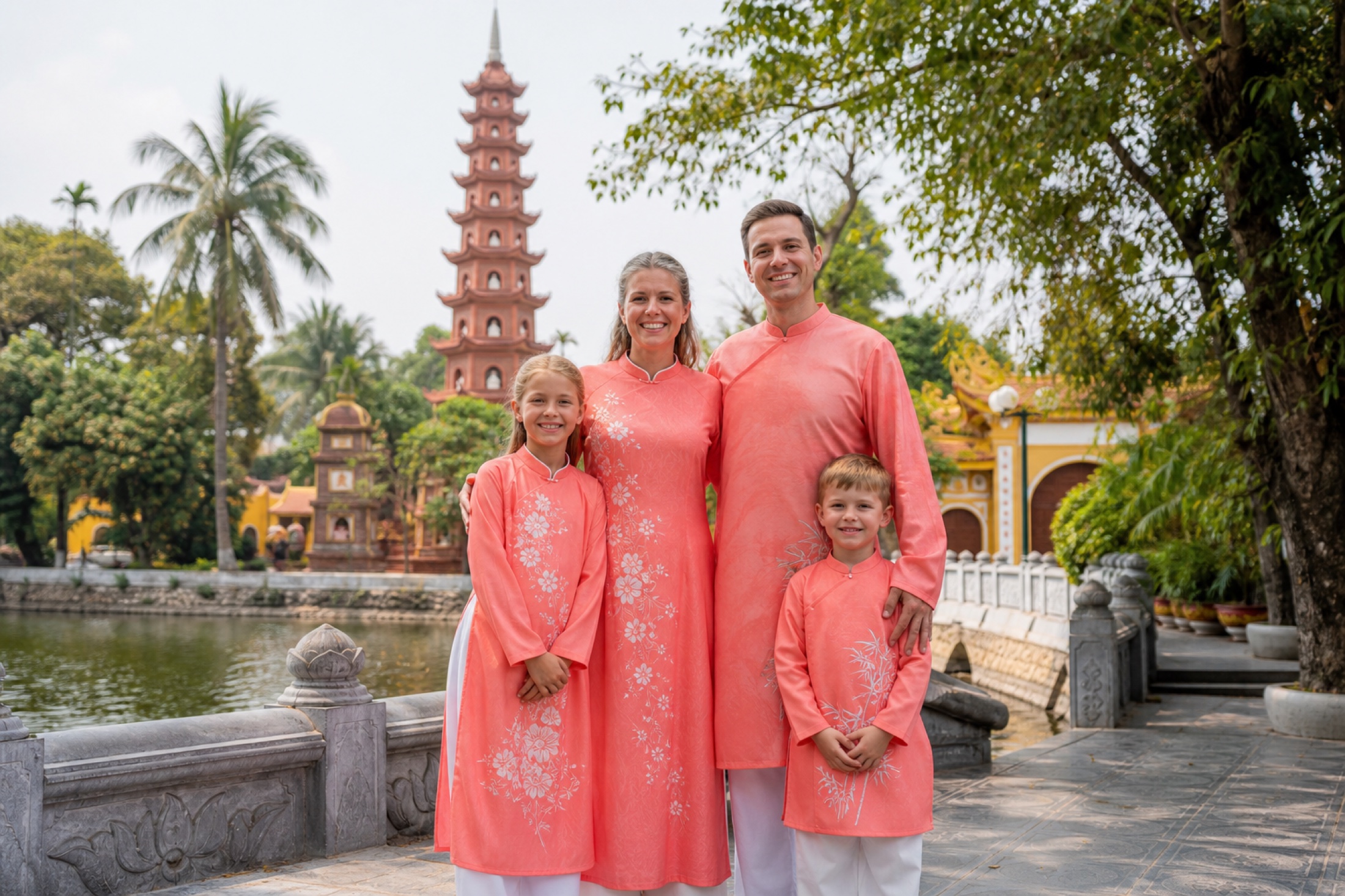
Book Cáo Studio (or hire a local photographer) if:
- You want guaranteed polished makeup/hair that lasts 4+ hours in humidity.
- You need someone to scout safe footing while you pose on uneven terrain.
- You're traveling 10+ days and want multiple outfit changes with wardrobe/lighting continuity.
- You're capturing a proposal, anniversary, or elopement moment (stakes too high for self-timer).
Cáo Studio's Hanoi team travels to Cat Ba by arrangement (ask on WhatsApp for dates); they handle makeup, lighting gear, and safety coordination. You pay for ferry, lodging, and the shoot day rate. See /services/ao-dai-photoshoot for booking.
Go solo if:
- You're comfortable with smartphone or mirrorless camera settings (manual ISO, shutter speed for water spray).
- You have a tripod + wireless remote (ferrying a heavy rig on a ferry is tiring).
- You're shooting for personal memory, not commercial or print work.
- Weather is stable and you've checked tide times (low tide exposes safer rock surfaces).
Cost comparison: Professional shoot (Cáo Studio Hanoi team + hair/makeup + 4-hour session) is higher upfront but includes post-production edits and a portfolio-ready album. Solo shooting on a smartphone is free but requires strong light sense, cropping skill, and honest assessment of image sharpness.
What's the checklist before you book or travel to Cat Ba?
2–4 weeks before:
- Check typhoon forecasts for your dates (meteoalarm.org or Vietnam Meteorological Agency).
- Book ferry tickets (Haiphong–Cat Ba, 45 min, multiple daily). Confirm no closures.
- Rent or source your ao dai. If renting locally, visit Hai Phong or Cat Ba Town 1 day early to try it on.
- If booking Cáo Studio or a local photographer, confirm they've shot Cat Ba terrain before and ask for samples of beach/cliff work.
1 week before:
- Check tide tables (Cat Ba Tide Forecast online). Low tide = better rock footing; high tide = fewer usable surfaces.
- Book hotel with waterfront or cliffside views (reduces location travel time).
- Confirm makeup/hair appointment (if booking professional) or buy waterproof products for solo work (foundation, eyeshadow primer, lip stain).
The day before:
- Scout locations if possible. Walk Cat Co beaches at intended shoot time (e.g., 5 p.m.) to test light, ground safety, and crowd levels.
- Prepare outfit: wash tunic, iron undershirt, roll trousers flat.
The morning of:
- Eat a full breakfast (shoots on empty stomachs cause fatigue and makeup breakdown).
- Arrive at location 30 min early with water, sun cream, and a microfiber cloth (wipes salt spray off lens/phone).
- Have a backup outfit or second ao dai pattern in your bag (weather can force creative pivots).
Why this guide matters: The solo-vs.-pro decision framework
Most travelers assume they'll DIY, then regret rushed light, unfocused smartphone shots, and missed moments while fiddling with settings. This isn't a knock on self-shooting; it's honest: Cat Ba's terrain (sharp rocks, water spray, high wind on cliffs) demands active safety awareness and technical control. A pro team lets you be present—they handle footing, light metering, and outfit continuity. Compare Cáo Studio's ao dai photoshoot service against hiring a local Hai Phong photographer (check Instagram tags #CatBaphotographer for portfolios). Both run $150–500 USD for a half-day depending on edits and prints.
For proposals, anniversaries, or elopements, book ahead. See our proposal & anniversary packages for examples of structured shoots; Cat Ba adapts well to intimate ceremonies.
---
FAQ
Can I wear my own ao dai or must I rent locally?
Bring your own if it fits well and was tailored to your body (rental stock is limited on Cat Ba). If renting, visit Hai Phong's tailoring district a day early—Cat Ba Town has only 1–2 rental shops with limited patterns. Budget 200–300k VND (USD 8–12) for rental, or 1–2 million VND (USD 40–80) to commission a custom tunic from a Hanoi tailor before you travel.
Is the ferry reliable, or should I plan a backup shoot date?
October–November: ferries run daily unless a storm (rare). December–February: occasional cancellations in rough seas (1–2 per month). May–September: typhoon season; expect 2–4 cancellations per month. Always book return ferries flexibly. If you're shooting with a pro team, plan 3–5 buffer days.
What if it rains on my shoot day?
Overcast rain softens light beautifully (no harsh shadows). If drizzle, protective umbrelding for crew and a waterproof camera bag are enough. If heavy downpour or thunderstorm, reschedule—wet limestone is dangerously slippery. Light rain + ao dai = moody, romantic photos; torrential rain = safety risk and no visibility.
How many outfit changes can I fit into one shoot day?
2–3 ao dai patterns: one for early light (cool tones, lighter fabric), one for golden hour (jewel tones, heavier silk). Each outfit change takes 15–20 min (remove wet sand, retie tunic, reapply makeup). Plan 4–6 hours for 2 outfits; 6–8 hours for 3. Longer shoots require a full-day rate.
What if I'm clumsy on rocks—is Cat Ba safe for a nervous person?
Absolutely, but tell your photographer in advance. Stay on marked beaches (Cat Co 1 & 3) and avoid scaling tall rock faces solo. Water-sandals grip better than bare feet. Professional teams scout paths and have safety experience; solo shooters should film each other during risky moments and move slowly.
FAQ
Can I wear my own ao dai or must I rent locally?
Bring your own if it fits well and was tailored to your body (rental stock is limited on Cat Ba). If renting, visit Hai Phong's tailoring district a day early—Cat Ba Town has only 1–2 rental shops with limited patterns. Budget 200–300k VND (USD 8–12) for rental, or 1–2 million VND (USD 40–80) to commission a custom tunic from a Hanoi tailor before you travel.
Is the ferry reliable, or should I plan a backup shoot date?
October–November: ferries run daily unless a storm (rare). December–February: occasional cancellations in rough seas (1–2 per month). May–September: typhoon season; expect 2–4 cancellations per month. Always book return ferries flexibly. If you're shooting with a pro team, plan 3–5 buffer days.
What if it rains on my shoot day?
Overcast rain softens light beautifully (no harsh shadows). If drizzle, protective umbrelding for crew and a waterproof camera bag are enough. If heavy downpour or thunderstorm, reschedule—wet limestone is dangerously slippery. Light rain + ao dai = moody, romantic photos; torrential rain = safety risk and no visibility.
How many outfit changes can I fit into one shoot day?
2–3 ao dai patterns: one for early light (cool tones, lighter fabric), one for golden hour (jewel tones, heavier silk). Each outfit change takes 15–20 min (remove wet sand, retie tunic, reapply makeup). Plan 4–6 hours for 2 outfits; 6–8 hours for 3. Longer shoots require a full-day rate.
What if I'm clumsy on rocks—is Cat Ba safe for a nervous person?
Absolutely, but tell your photographer in advance. Stay on marked beaches (Cat Co 1 & 3) and avoid scaling tall rock faces solo. Water-sandals grip better than bare feet. Professional teams scout paths and have safety experience; solo shooters should film each other during risky moments and move slowly.
Ao dai, makeup, hair and a local photographer in Hanoi or Saigon — one WhatsApp message.