/pre-wedding-photoshoot
Cat Ba Island wedding photos: best time of day and light
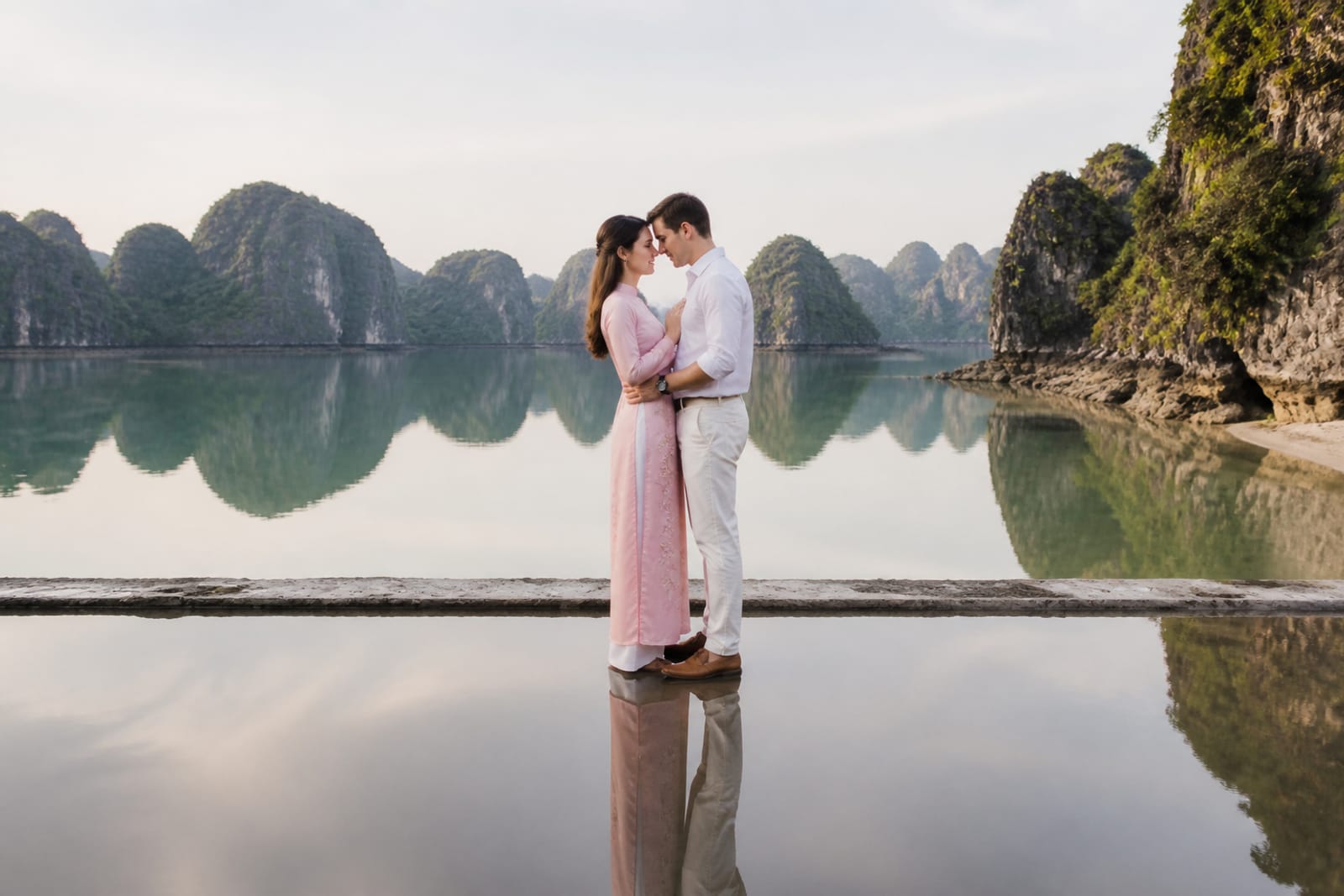
Cat Ba Island, a limestone-studded destination off northeast Vietnam near Ha Long Bay, offers dramatic backdrops for pre-wedding shoots—but only if light and weather align. Golden hour (first 90 minutes after sunrise, final 90 minutes before sunset) delivers warm, directional light that flatters skin and carves depth into rock faces; midday sun bleaches colors and casts harsh shadows unsuitable for portraiture. The island's best-light window runs March–May and September–November, avoiding the cool-grey winter (Dec–Feb) and the wet, typhoon-prone summer (Jun–Aug). Cat Ba has no permanent makeup or photoshoot studio; couples must hire a crew from Hanoi (45 km away, 1.5–2 hours by road and ferry) or arrange a local shooter experienced with tide schedules and rock safety. Cáo Studio – Makeup & Photoshoot operates from Hanoi and can coordinate shoots here, but planning requires checking ferry schedules, tide times, and weather forecasts at least one week ahead. ---
When does golden hour actually happen on Cat Ba?
Golden hour—the soft, honey-toned window shortly after sunrise or before sunset—lasts roughly 90 minutes each end of day. On Cat Ba in March, sunrise occurs around 06:30, so golden hour runs 06:30–08:00; sunset is around 18:30, so the evening window is 17:00–18:30. By May, sunrise is 05:45 and sunset 19:00, shifting the windows earlier and later. Summer (Jun–Aug) sunrise hits 05:30 but the sky is often grey or hazy; even if the sun emerges, afternoon storms can arrive within minutes. Autumn (Sep–Nov) steadies at 06:30–18:30 with less humidity haze.
Conclusion: March, April, May, September, October, and November offer predictable, punctual golden hours; book sessions to start 30 minutes before first light or wrap 2–3 hours before sunset to allow travel time back to Hanoi.
📸 Book on WhatsApp — pre-wedding photoshoot
How does the ferry schedule affect your shooting day?
Cat Ba is reachable only by ferry from Hai Phong port, a 45-minute crossing, or a small-capacity tourist ferry (30 minutes). Ferries run roughly hourly from 07:00–17:00, with fewer evening departures. If your shoot targets golden hour (17:00–18:30), the last ferry back often leaves at 17:30–18:00, cutting your time short. Early morning shoots demand catching a 06:30 or 07:00 ferry, arriving on-island by 07:30–08:00—too late to use dawn light on a winter day when sunrise is 06:45.
A growing option: hire a private speedboat (arrange via your Hanoi fixer or hotel), which costs more but offers flexible round-trip timing and weather flexibility (cancellation if seas are too rough). Check ferry schedules one week ahead; port websites post daily timetables. Alert your photographer to ferry times so they can plan outfit changes and location breaks accordingly.
Conclusion: Ferry schedules are your clock; early-spring and autumn shoots must start before 07:00, requiring a private boat or overnight stay on Cat Ba.
Which season delivers the clearest, most flattering light?
| Season | Best for | Light character | Weather risk | Why it works |
|---|---|---|---|---|
| Mar–May | Golden hour portraiture | Warm, soft, directional | Occasional rain squalls | Cool morning air keeps makeup fresh; humidity is low; sunrise/sunset light is saturated |
| Jun–Aug | Skip; grey skies, typhoons | Diffused, flat, often hidden | High; typhoon watches frequent | Summer monsoon clouds block sun; humidity frizzes hair and wilts makeup; 40°C+ heat exhausts crew |
| Sep–Nov | Golden hour + adventure | Rich, warm, low-angle | Diminishing; Oct–Nov tail-end rain | Post-typhoon season stabilizes; October–November light is clearest of the year; rock faces glow amber |
| Dec–Feb | Last resort; cool, moody | Pale, blue-grey, flat | Cold mornings; misty mornings | Winter is least flattering; rock faces look dull; you will need extra layers (hard to move in ao dai or a wedding dress) |
Early spring (Mar–May) and autumn (Sep–Nov) dominate wedding photographer calendars for good reason: the sun is lower, the air is clearer, and humidity is manageable. October–November is often called "sweet season" across Vietnam because typhoons have passed and humidity has dropped. March–April has the advantage of no lingering monsoon debris in the water (better for boat and beach shots), but March mornings are cool (14–16°C), so you'll layer up for sunrise then shed layers by 09:00.
Conclusion: September–November delivers the most reliable, most flattering light; March–May is your secondary window if you prefer warmer morning air.
What outfit and makeup decisions protect your look from Cat Ba's light and humidity?
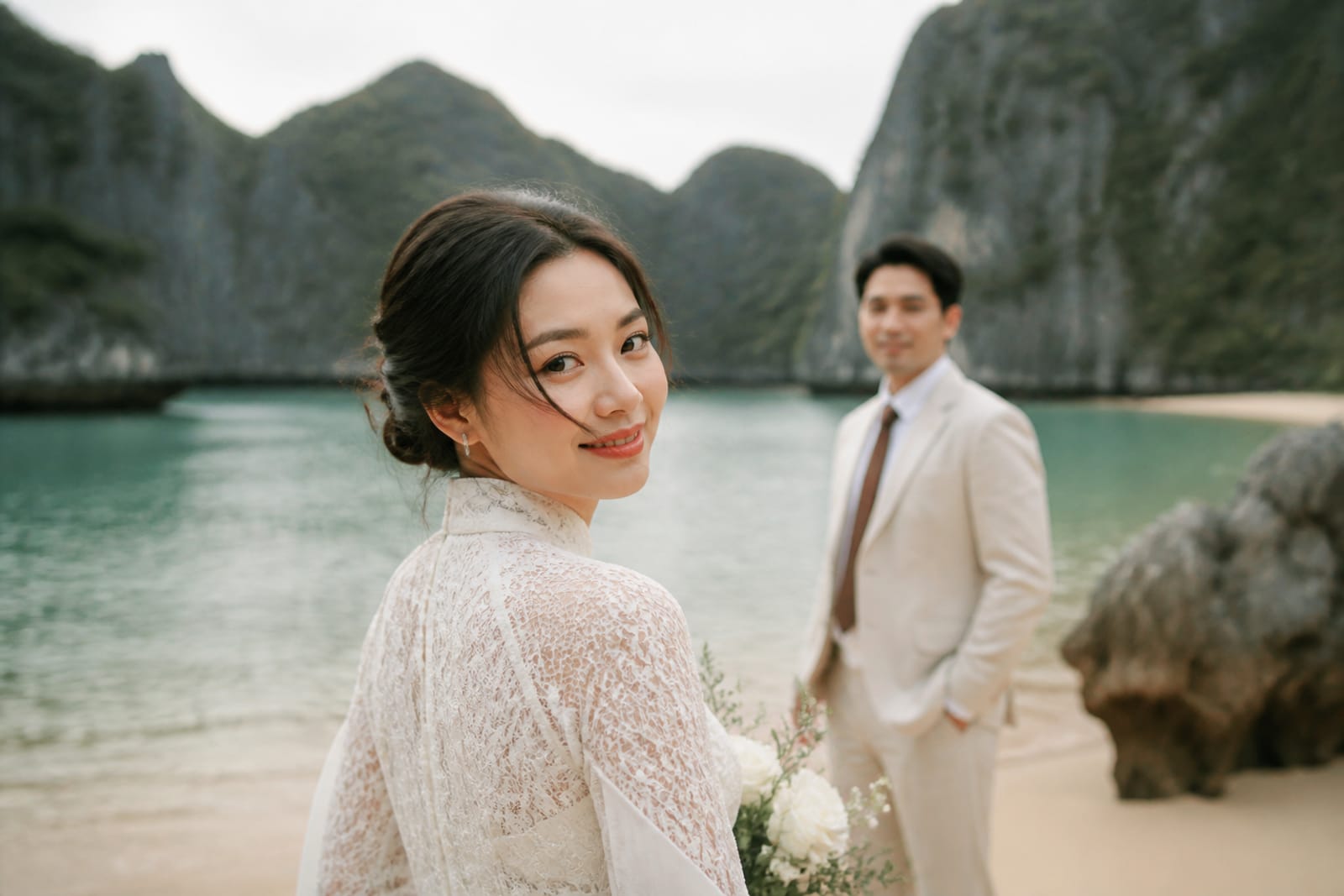
Cat Ba's salt-spray air and humidity (70–80% year-round, 85%+ in summer) will shift makeup and fabric fast. Ao dai—the traditional Vietnamese tunic—fits poorly over bulky jackets, so couples shooting in winter must either wear it without warmth or choose spring/autumn dates. Heavy foundation and powder will cake or separate in humidity; waterproof mascara, setting spray, and mineral powder withstand salt air better. If you're wearing a Western wedding dress, choose fabrics that don't cling (matte silk, crepe, structured cotton blends); satin absorbs humidity and looks limp. Heels sink into sand; plan for bare feet, strappy sandals, or Vietnamese beach flip-flops in shots. Hair in a bun or braid resists humidity better than loose waves; clip-in extensions are risky near wind and spray.
Ask your photographer to shoot in sheltered coves (away from boat wakes and spray) during the first 90-minute window after sunrise, when dew on rock faces creates a soft, glowing texture. Makeup touch-ups mid-shoot are essential; bring blotting papers, setting spray, and a small mirror. Bring a robe or cover-up to slip on between outfit changes.
Conclusion: Spring and autumn reduce humidity stress; waterproof makeup and structured fabrics hold up; sheltered coves and early-morning timing preserve your look.
How do you find and vet a local Cat Ba photographer?
Cat Ba itself has no resident wedding photographer. Your options: hire a Hanoi-based crew (like Cáo Studio – Makeup & Photoshoot from Hanoi) who travel with you and handle logistics, or source a local day-rate photographer through your hotel or a Hai Phong fixer. If you hire locally, your photographer must know tides (shooting on rocks requires knowing when tide recedes, exposing safe ground; high tide traps you), private boat access (some coves are ferry-only; permission from boat owners varies), and weather backup plans.
Red flags: a photographer who doesn't ask about ferry timing, tide times, or weather forecasts; who promises "all daylight hours" (impossible with ferries); who hasn't scouted your locations; who doesn't carry backup batteries or a backup camera on an island with no electronics shop. Ask to see a portfolio from Cat Ba or similar limestone landscapes—different light than urban shoots. Request references from a recent couple. Discuss cancellation terms: weather or rough seas may force rescheduling, and you want clarity before you book.
Using a Hanoi studio familiar with the route (travel time, ferry delays, island logistics) removes guesswork and ensures your crew has already planned contingencies.
Conclusion: Vet local photographers on tide knowledge and logistics; hiring an established Hanoi team transfers that burden to professionals.
What to check before you book a Cat Ba pre-wedding shoot
- Ferry schedule & private boat option: Check current ferry times one week before your shoot date. Ask your photographer if they recommend a private speedboat to guarantee timing and flexibility in bad weather.
- Tide and weather forecast: Request a 5-day weather outlook and tide table for your date from your photographer or a Hai Phong marine authority. Confirm which coves are accessible at your planned shooting times.
- Photographer's island experience: Ask for portfolio shots from Cat Ba or Ha Long Bay. Confirm they know rock safety and boat navigation (not just camera skills).
- Makeup durability & humidity plan: If booking makeup on-island, ask if your makeup artist has worked in 75%+ humidity and salt spray. Discuss waterproof products and touch-up frequency.
- Outfit logistics: Confirm how many outfit changes you plan and whether the photographer can coordinate a waterproof bag for non-shoot gear.
- Backup date & cancellation: Clarify your photographer's refund and rescheduling policy if weather forces a cancellation (common in Jun–Aug and Oct–Nov transition).
- Drone or video: If you want drone footage, ask if your pilot has Ho Chi Minh City or Hanoi registration and permission from Cat Ba authorities. Many photographers' drones cannot legally fly on Cat Ba without advance approval.
---
For a deeper dive into Vietnam's pre-wedding landscape—Ha Long Bay cruises, Hoi An Ancient Town, Hanoi old quarter—explore our pre-wedding photoshoot guide. If you're considering an ao dai as your shoot outfit, our ao dai photoshoot article details fabric choices for humidity and light.
Cat Ba rewards planning. Book your shoot with a crew that knows the route, respects the tides, and has a weather backup ready. Message us on WhatsApp to discuss your dates, light priorities, and outfit plans—we'll coordinate the details so you can focus on the moments.
---
FAQ
Is Cat Ba safe for a wedding photoshoot?
Yes, if your photographer knows tides, rock routes, and weather windows. Hire a crew with island experience. Avoid Jun–Aug typhoon season. Wear grip-sole shoes or go barefoot on wet rocks.
Can I wear a wedding dress on Cat Ba's beaches and rocks?
Yes, but choose structured fabrics (crepe, matte silk, cotton blends) that don't cling. Hem your dress or plan bare-foot shots. Expect sand and salt spray on fabric; budget for cleaning after.
What's the difference between a March and an October shoot on Cat Ba?
March is cooler (14–18°C mornings) with occasional rain; October is warm (22–25°C) with the clearest air of the year. October suits longer shoots; March suits shorter windows and layered outfits.
Do I need a permit to shoot on Cat Ba?
Personal photoshoots don't require permits. Commercial video or drone flights may need Ho Chi Minh City or Hanoi registration. Confirm with your photographer before booking.
How far in advance should I book a Cat Ba shoot?
4–6 weeks is standard. If Jun–Aug, book 8 weeks ahead to secure a crew during peak season—though we recommend avoiding that window entirely for light quality.
FAQ
Is Cat Ba safe for a wedding photoshoot?
Yes, if your photographer knows tides, rock routes, and weather windows. Hire a crew with island experience. Avoid Jun–Aug typhoon season. Wear grip-sole shoes or go barefoot on wet rocks.
Can I wear a wedding dress on Cat Ba's beaches and rocks?
Yes, but choose structured fabrics (crepe, matte silk, cotton blends) that don't cling. Hem your dress or plan bare-foot shots. Expect sand and salt spray on fabric; budget for cleaning after.
What's the difference between a March and an October shoot on Cat Ba?
March is cooler (14–18°C mornings) with occasional rain; October is warm (22–25°C) with the clearest air of the year. October suits longer shoots; March suits shorter windows and layered outfits.
Do I need a permit to shoot on Cat Ba?
Personal photoshoots don't require permits. Commercial video or drone flights may need Ho Chi Minh City or Hanoi registration. Confirm with your photographer before booking.
How far in advance should I book a Cat Ba shoot?
4–6 weeks is standard. If Jun–Aug, book 8 weeks ahead to secure a crew during peak season—though we recommend avoiding that window entirely for light quality.
Ao dai, makeup, hair and a local photographer in Hanoi or Saigon — one WhatsApp message.