saigon
Chợ Lớn Chinatown Photoshoot: Best Spots, Times & How to Book
Chợ Lớn Chinatown is a living film set. The district—home to ethnic Chinese for 300 years—sits across the Saigon River from downtown, a maze of wooden shophouses painted red and gold, spice vendors, silk shops, and ancestral temples. Photographers love it; tourists often miss why their phone snaps don't match their mental pictures. This guide breaks down the real light, the actual best times, and practical choices for whether to shoot it yourself or hire support.
Why is Chợ Lớn so hard to photograph well?
Light in Chợ Lớn is dramatic but unforgiving. Midday sun (10 a.m.–4 p.m.) creates harsh shadows between narrow alleys and flat, blown-out sky above. Most casual photos look flat or overexposed. Early morning (6–8 a.m.) and late afternoon (5–7 p.m.) offer warm, directional light—but mornings are humid and crowded; late light is softer but fleeting. The streets are genuinely tight: tripods, large reflectors, and posed couples draw stares. You need either fast feet and a simple setup, or local knowledge to find quiet corners.
What are the five must-shoot spots in Chợ Lớn?
Nguyễn Hué Pedestrian Street (6–7 a.m. optimal): Red lanterns, tiled shopfronts, few people. Shoot wide for scale, close for texture. Light comes from the east; position subjects so your shadow falls behind you.
Thien Hau Temple entrance (7–8 a.m., avoid 9–11 a.m. ceremonies): Gold trim, incense smoke, weathered doors. Ask permission before photographing worshippers inside. The forecourt is usually quietest at dawn.
Binh Tay Market archway: The market's French-colonial entrance is photogenic; interior is chaotic but authentic. Go early, carry minimal gear.
Tan Dinh Church (nearby, District 1): Not Chinatown technically, but the pink Gothic facade photographs beautifully at sunrise with morning mist. It's a 15-minute cycle.
Alley off Nguyen Trai (near Nghia An Congregation): Narrow, residential, fewer tourists. Local residents may pose if you're respectful; always ask and offer a small print or donation.
Time + Light comparison table:
| Time of day | Light quality | Crowds | Best for | Risks |
|---|---|---|---|---|
| 6–7:30 a.m. | Warm, directional | Low | Portraits, architecture | Humidity, mist obscures |
| 8–9 a.m. | Golden, soft | Rising | Candid couples, temples | Ceremony activity, heat climbs |
| 10 a.m.–3 p.m. | Harsh, flat | Peak | Wide/establishing shots only | Blown-out sky, harsh shadows |
| 4–5:30 p.m. | Golden, warm | Moderate | Portraits, lantern shots | Shorter window, fast fade |
| After 6 p.m. | Dark, neon | Heavy | Lantern/sign close-ups | Limited detail, noise in files |
📸 Book on WhatsApp — ao dai photoshoot
Should you hire a local photographer or shoot solo?
Solo (phone/camera + 4–6 hours):
- Cost: $0–100 (your gear only).
- Flexibility: shoot whenever, move fast, no appointments.
- Trade-off: You miss prime light windows because you're scouting. Safety in groups is cultural; solo tourists attract scams. No backup if your camera dies.
Hire a local guide-photographer ($50–150/3–4 hours):
- Knows quiet corners, temple etiquette, how to talk to residents.
- Can pose you naturally; handles technical settings so you stay present.
- Risk: Variable quality; vet portfolios hard online; language gaps on direction.
Book Cáo Studio couple & family sessions:
- Included: Professional makeup/hair styling, guide fluent in English, edited digital files, familiarity with Chinatown light cycles.
- Cost: Pricing sent on WhatsApp after brief consultation.
- Best for: Anniversary, engagement, family vacation. You get polished, styled shots, not candid street work.
- Limitation: Studio books full-session packages (not à la carte short shoots). Sessions can include Chợ Lớn as one stop in a larger Saigon itinerary.
Reality check: Most travelers do best with a hybrid: arrive 6 a.m., scout solo with your phone, then hire a local shooter for 2–3 hours mid-morning once you've found your favorite corner. Cost: $30–80. Outcome: 50–100 polished images, light you'd miss alone, zero guesswork on safety.
What should you wear for Chợ Lớn photoshoots?
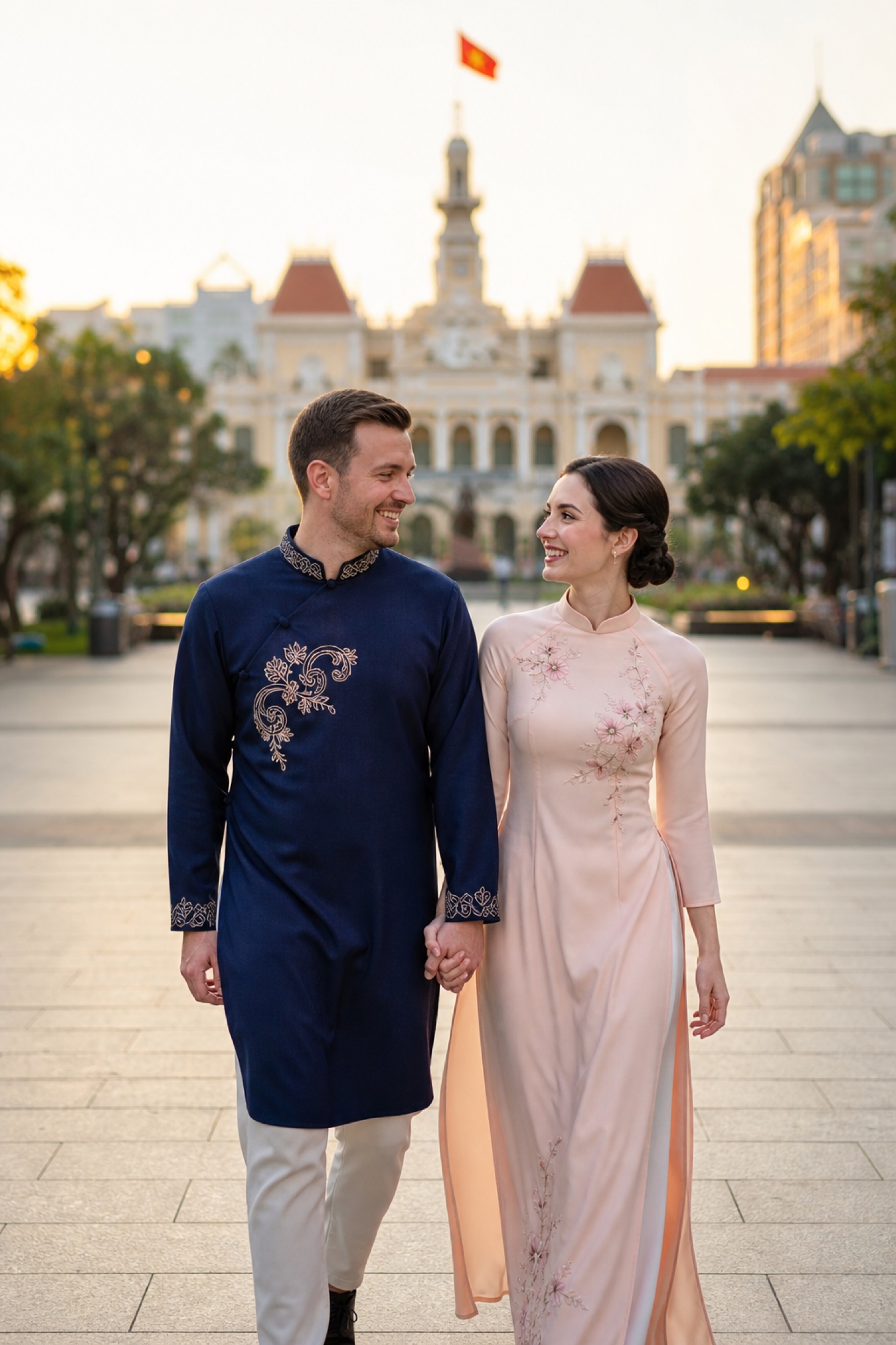
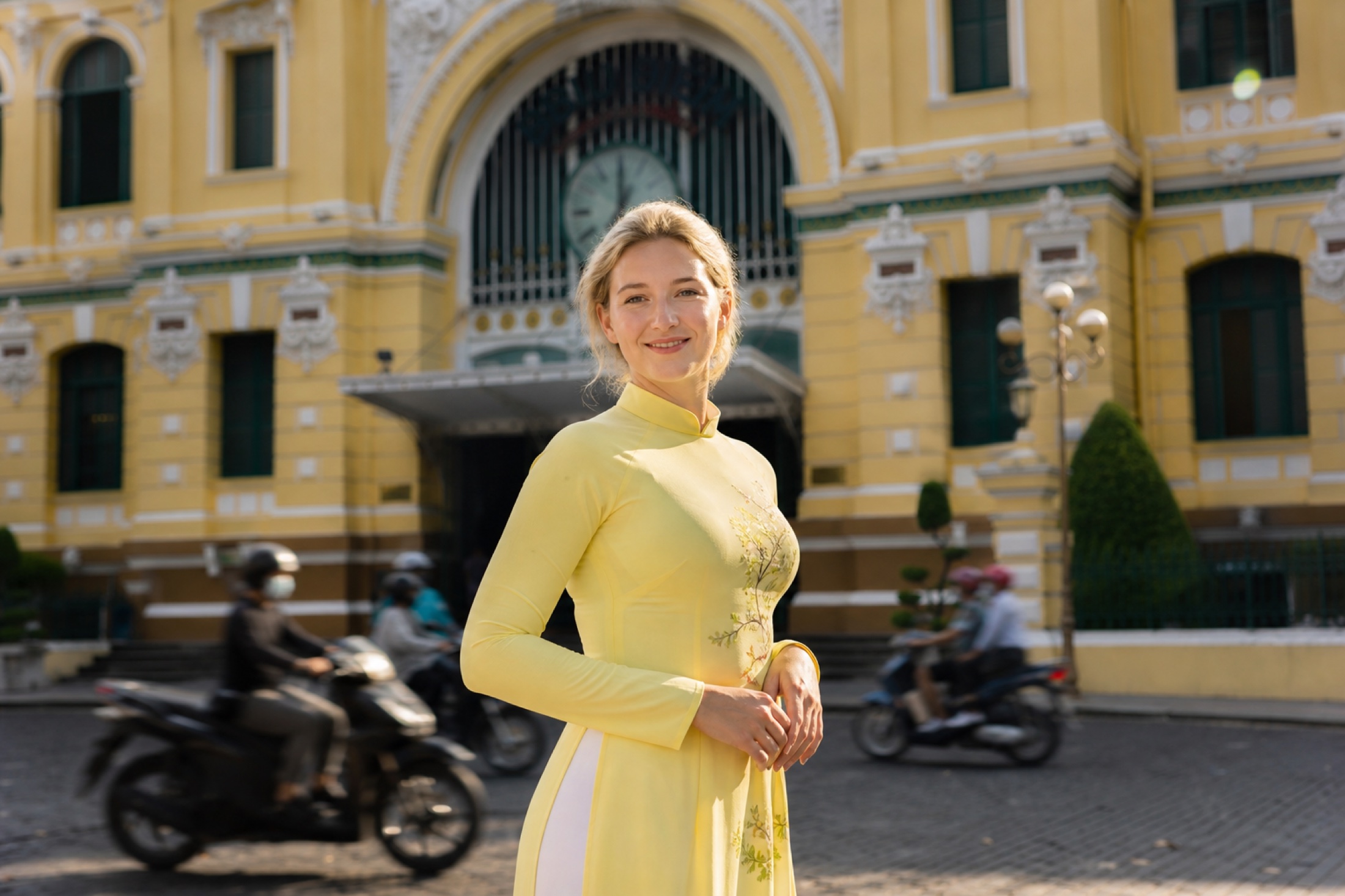
Chợ Lớn photographs best in clothes that echo its aesthetic: jewel tones, gold, red, traditional cuts. Here's a framework:
Áo dài (Vietnamese tunic dress):
- Why: Matches the setting; photographers expect this.
- Fit: Loose, ankle-grazing, high neckline. Wear fitted trousers beneath (white, black, or cream).
- Fabric: Silk shows texture; polyester saves money. Both work in photos.
- Colors: Deep red, emerald, navy, gold. Pastels get lost in alleys.
Fitted vintage or tailored separates:
- Black fitted trousers + cream/gold silk blouse.
- 1940s-inspired dresses (nod to the era).
- Avoid: Loud logos, athletic wear, pale colors (wash out).
Accessories:
- Leather sandals or simple flats (broken ground, heels catch).
- Small crossbody bag (hands free for balance in narrow lanes).
- No large umbrellas in alleys (too wide, blocks light).
Layers:
- Early morning is cool (18–22 °C); bring a thin cardigan or scarf.
- Humidity rises fast; wear breathable fabrics.
How do you handle temple etiquette and permission for photos?
Temples in Chợ Lớn are active worship spaces, not attractions. Rules matter.
Thien Hau Temple (largest):
- Remove shoes or wear slip-ons (no lacing delays).
- Women: Cover shoulders and knees; kneel only if invited.
- Photography: Allowed in courtyards; ask before shooting inside prayer halls or worshippers.
- Incense: Stand upwind if you have respiratory issues; smoke photographs beautifully but fills your lens.
- Quiet times: Dawn (before 8 a.m.) and after 5 p.m.
Nghia An Congregation (smaller, more local):
- Less formal; locals may nod permission without speaking.
- Still dress respectfully; still ask before close-ups of altars or ceremonies.
Respect on film:
- Don't stage photos on altars or sacred objects.
- If someone declines, respect it—don't lurk and shoot anyway.
- Leave a small donation (50,000–100,000 VND) if you've spent 30+ minutes shooting.
What if you're unsure? A local guide (hired shooter) handles this. They know temple schedules, know the caretakers, and read the room. Cáo Studio's guides are trained in this; it's included in full bookings.
What to check before booking a Chợ Lớn photoshoot session
If you're hiring independently:
- See at least 10 samples from Chợ Lớn specifically (not just Saigon). Phone pictures count; they show style and light knowledge.
- Confirm arrival time (meet you at a landmark, not just "the district").
- Ask about edits: do they color-grade, white-balance? Who owns the files?
- Get cancellation policy in writing (in case weather or safety issues arise).
- Agree on duration and shot count upfront (e.g., "100–150 edited images, 3 hours").
If you're booking Cáo Studio:
- Check /saigon for branch location and services offered.
- Message WhatsApp with your date, group size, and desired vibe (romantic, candid, styled).
- Confirm that Chợ Lớn is included (it works best as one segment in a half- or full-day shoot).
- Ask about makeup/hair timing: do they apply it at the studio or your hotel?
- Clarify file delivery: when do you get digital images? Are prints or albums available?
Practical checklist:
- [ ] Weather forecast for your date (tropical rains are quick; time your shoot).
- [ ] Backup battery or portable charger for your camera/phone.
- [ ] Small cash for temple donations and tips (50,000–200,000 VND).
- [ ] Hat or visor (protects face from strong angled light).
- [ ] List of 2–3 backup shots in case your first choice is crowded.
---
Chợ Lớn Chinatown rewards early risers with layers of detail: gold-leaf altars, weathered red brick, lantern reflections in rain puddles. Whether you shoot solo with intention or book a professional couple/family session, success hinges on timing and respect. Sunrise is non-negotiable. Permission and patience open doors (and smiles). And if you want styling, guidance, and edited files in one booking, Cáo Studio's Saigon team knows Chợ Lớn's rhythm.
📸 Book on WhatsApp — ao dai photoshoot
FAQ
What month has the best light in Chợ Lớn?
October–November (dry season, cool, low humidity) and January–February offer consistent early-morning light without haze. Avoid June–September (monsoon, overcast mornings). December is clear but crowded with tourists.
Do I need permission to photograph Chợ Lớn's streets and shopfronts?
Streets are public; you can shoot freely. Always ask before photographing people, altars, or inside temples. Shopowners are usually relaxed if you're respectful; a smile and "bao giờ?" (when?) goes far.
How long should a Chợ Lớn photoshoot take to get great images?
Solo scouting: 4–6 hours (includes walking, repeating shots, learning light). Guided session: 2–3 hours (photographer knows the spots, you get 80–120 edited images). Full studio package: half- or full-day, includes makeup and multiple Saigon locations.
Will my phone camera work in Chợ Lớn, or do I need a DSLR?
Phone cameras are excellent in early morning light; their wide lenses suit alley shots. DSLR gives more control over depth and low-light performance. Either works; skill and timing matter more than gear.
Can I wear Western clothes, or must I wear áo dài?
Western clothes work; vintage or tailored styles (black trousers, white blouse) fit the era. Áo dài is more immersive and photographs best. Avoid athletic wear, neon, or loud logos. The setting is historic; dress intentionally.
FAQ
What month has the best light in Chợ Lớn?
October–November (dry season, cool, low humidity) and January–February offer consistent early-morning light without haze. Avoid June–September (monsoon, overcast mornings). December is clear but crowded with tourists.
Do I need permission to photograph Chợ Lớn's streets and shopfronts?
Streets are public; you can shoot freely. Always ask before photographing people, altars, or inside temples. Shopowners are usually relaxed if you're respectful; a smile and "bao giờ?" (when?) goes far.
How long should a Chợ Lớn photoshoot take to get great images?
Solo scouting: 4–6 hours (includes walking, repeating shots, learning light). Guided session: 2–3 hours (photographer knows the spots, you get 80–120 edited images). Full studio package: half- or full-day, includes makeup and multiple Saigon locations.
Will my phone camera work in Chợ Lớn, or do I need a DSLR?
Phone cameras are excellent in early morning light; their wide lenses suit alley shots. DSLR gives more control over depth and low-light performance. Either works; skill and timing matter more than gear.
Can I wear Western clothes, or must I wear áo dài?
Western clothes work; vintage or tailored styles (black trousers, white blouse) fit the era. Áo dài is more immersive and photographs best. Avoid athletic wear, neon, or loud logos. The setting is historic; dress intentionally.
Ao dai, makeup, hair and a local photographer in Hanoi or Saigon — one WhatsApp message.