lookbook
Crowd-Free Photo Spots Hanoi: Where to Shoot Without the Rush
Hanoi looks best before 8 a.m. and after 5 p.m., but "best" and "empty" rarely overlap in peak months. The city's most-pinned backdrops—Hoan Kiem Lake's Turtle Tower, Thanh Ha ancient village on Instagram—draw crowds by 9 a.m. Real crowd-free photography requires choosing neighborhoods, understanding seasonal rhythm, and booking a photographer who knows permit rules at temples and heritage sites.
Cáo Studio's Hanoi team books shoots in zones most travelers never reach: narrow lanes east of the Old Quarter, residential French villas in Ba Dinh, morning light at Thay Pagoda (40 km west, empty by 7 a.m.). This guide shares what we've learned scouting locations for ao dai photoshoots and couple & family sessions across three Hanoi branches.
Which Hanoi neighborhoods stay empty long enough for a full shoot?
Old Quarter's photography-only hours are 5–7 a.m. and after 6 p.m. Street vendors set up around 8 a.m.; tour groups arrive 9–11 a.m. East of Hang Dao (the fabric street), quieter alleys run north toward Hang Ma—fewer tourists, more local life, soft morning light bouncing off narrow shopfronts. French Quarter (Ba Dinh, Tay Ho) stays photographer-friendly 8–10 a.m. weekdays; cafés and villas photograph beautifully with minimal foot traffic. Hoan Kiem's lakeside paths clear by 6:30 a.m. but refill by 8 a.m. Tay Ho's waterfront stays quiet weekday mornings but Hanoi's weekend staycation trend has filled it since 2024. West Lake alleys near Yen Phu artist villages (small galleries, yellow-walled houses) see tourists only Saturdays; weekday mornings are nearly empty.
📸 Book on WhatsApp — ao dai photoshoot
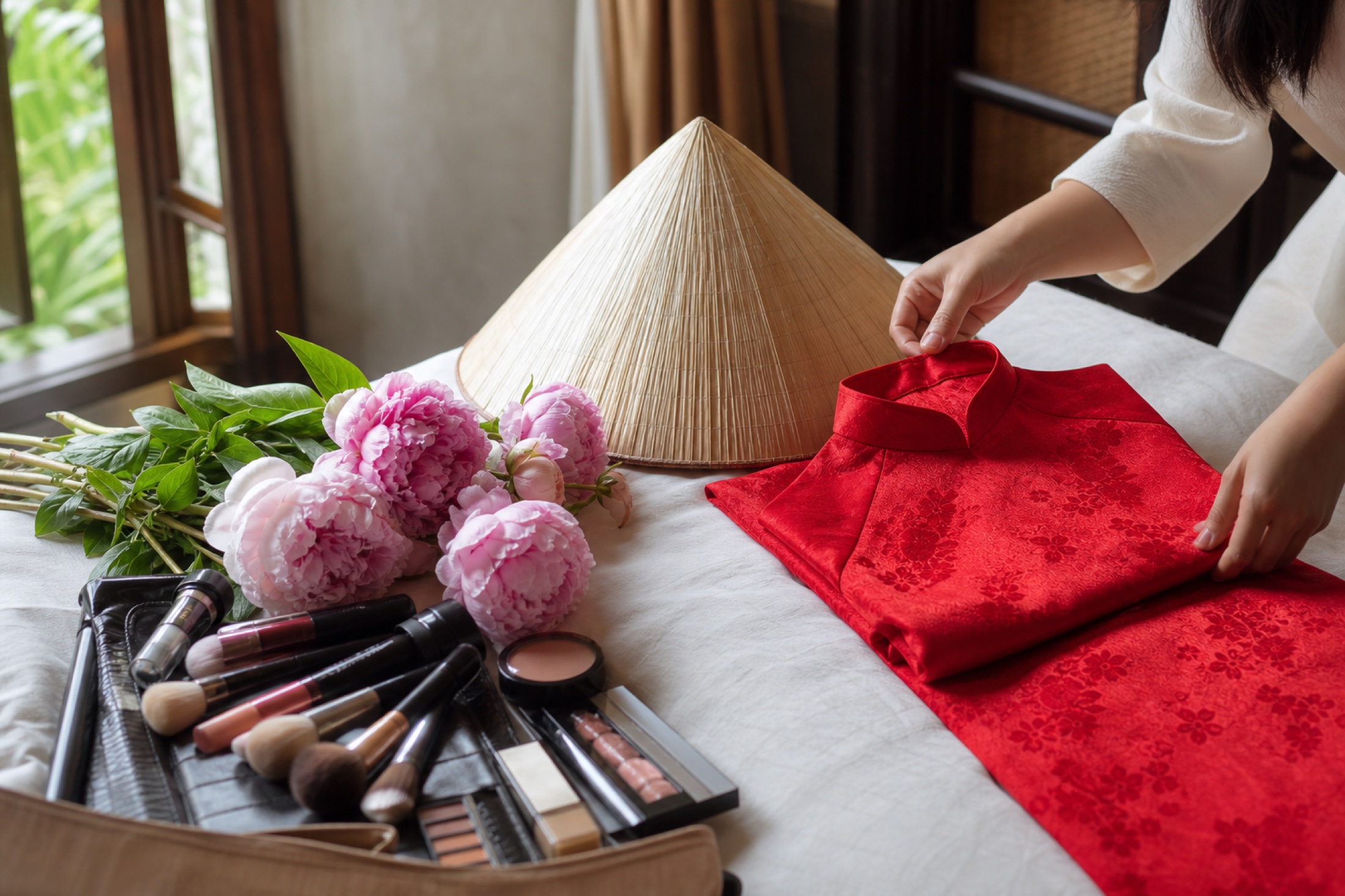
What time of day produces the best light AND fewest people?
5:30–7 a.m. offers golden-hour softness without crowds anywhere in the city. Shadows are long enough to flatter texture (temple stonework, café shutters) without harsh midday contrast. By 7:30 a.m., delivery bikes and early workers appear but tourists haven't yet arrived. 9–11 a.m. works for studio sessions requiring diffused overhead light, but Old Quarter and Lake D areas fill noticeably. 3–5 p.m. (pre-sunset) attracts Instagram hunters and evening joggers. After 6 p.m., many sites close or restrict access (temples, private villas, some heritage buildings). Weekday mornings are reliably emptier than weekends; Tuesday–Thursday mornings (8–11 a.m.) in residential zones see almost zero tourist foot traffic.
Which seasons bring fewer tourists and better light?
November through February: Dry, cool weather (15–22°C) means clearer skies, golden light angles, and 30–40% fewer overseas visitors. Haze clears by mid-November; December–January offer the year's best light for color saturation and shadow definition. Domestic tourism peaks mid-Lunar New Year (late January/early February), so avoid those weeks.
March–April: Spring light is bright but increasingly hazy; tourist numbers rise steadily. Morning shoots feel crowded by 8:30 a.m.
May–September: Hot, humid, occasional monsoon clouds. Tourist numbers drop (except July–August school holidays). Morning mist can add mood but light is flat; midday is unbearable for outdoor work.
October: Shoulder season—fewer tourists, improving light, good weather, but not yet peak "Instagram season."
Practical table for planning:
| Season | Tourist crowd | Light quality | Temperature | Best shoot window |
|---|---|---|---|---|
| Nov–Feb | Low–moderate | Golden, clear | 15–22°C | 6–9 a.m., 4–5:30 p.m. |
| Mar–Apr | Moderate–high | Bright, hazy | 20–28°C | 6–7:30 a.m. only |
| May–Sep | Low (except Jul–Aug) | Flat, misty | 26–35°C | 5:30–6:30 a.m. |
| Oct | Low–moderate | Improving | 20–28°C | 6–9 a.m., 4–5:30 p.m. |
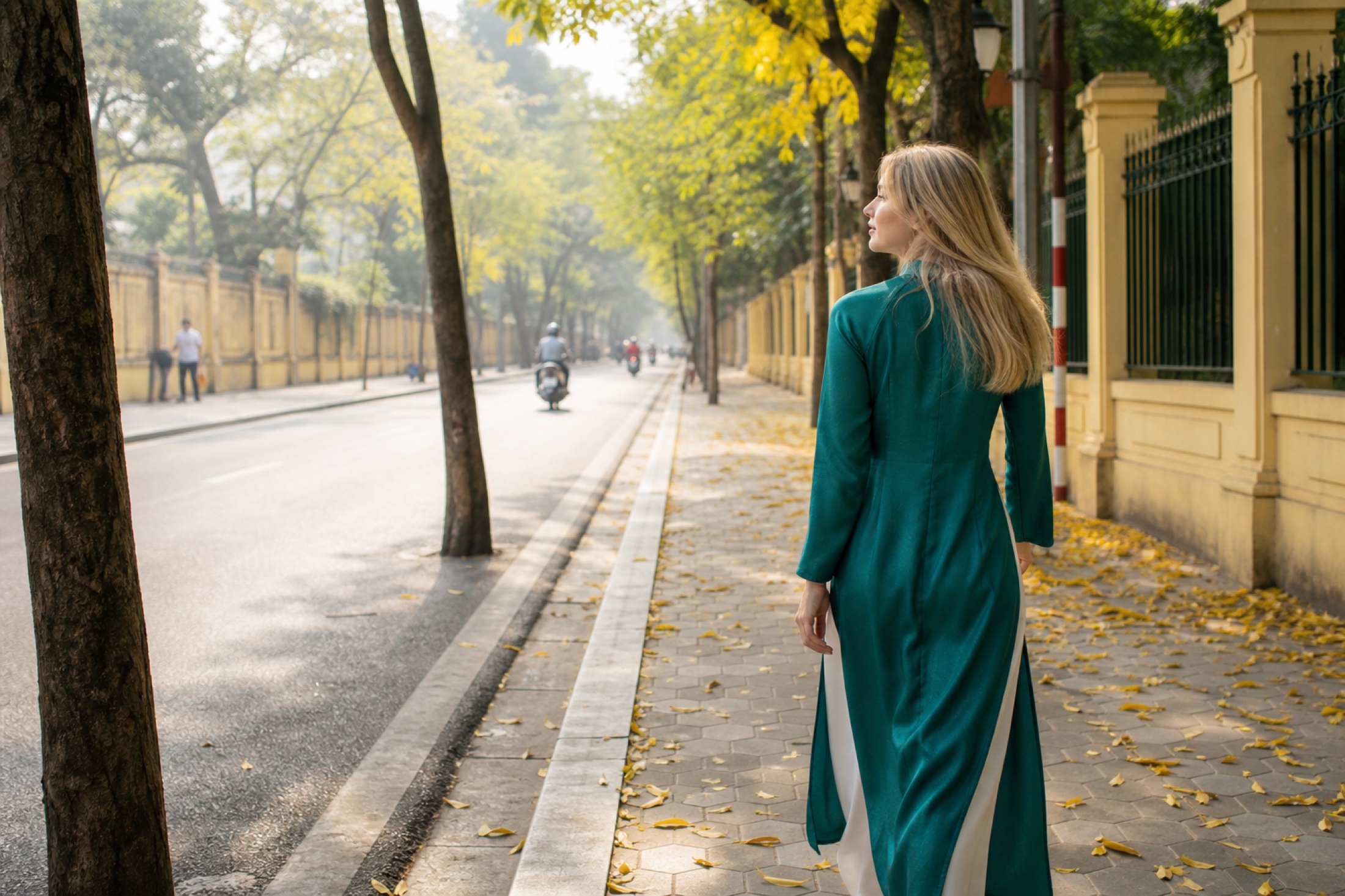
How do you photograph temples and heritage sites without breaking etiquette?
Many Hanoi temples allow photography (St. Joseph Cathedral, Thay Pagoda, Tran Quoc) but restrict shoe entry, demand respectful dress, and prohibit commercial shoots without permits. Hanoi's heritage buildings (Hoa Lo Prison, French colonial villas in Ba Dinh) require written approval for commercial photography or social-media-intended sessions. Here's the real workflow:
- Identify the site type (active temple, museum, private property, street/public lane).
- Contact 48 hours ahead via email or phone; specify number of people, outfit type (ao dai requires temple approval), intended use (personal, engagement social post, etc.).
- Request permission for couples, family, or pre-wedding shoots explicitly; many sites allow personal family shoots but deny "professional" or commercial bookings.
- Arrive early (6–7 a.m.) before staff require permits; offertory and prayer hours (usually 6–8 a.m., 5–6 p.m.) are quietest.
- Dress conservatively yourself (shoulders covered, knees covered); ao dai is respectful at all sites.
- Avoid altars during active worship; step back when monks or worshippers are present.
Cáo Studio handles permits for ao dai photoshoots at pre-booked temple locations; we know which sites allow commercial photography and which require advanced approval. Booking through a local studio saves hours of back-and-forth.
What should you wear, pack, and prepare to move fast?
Outfit checklist:
- Primary outfit (ao dai, vintage dress, casual fit; wear minimal undergarments—see "What to wear under an ao dai" in our FAQ).
- Secondary outfit (casual layers, workwear-to-casual transition, something that contrasts with the first).
- Comfortable shoes you can slip on/off quickly (temples require bare feet).
- Light cardigan or scarf (temples, early-morning wind, backup aesthetic).
Gear & practicalities:
- Lightweight backpack (water, touch-up makeup, phone charger, small mirror).
- Flat shoes for walking (cobblestones, uneven temple steps).
- Small umbrella if November–April (occasional drizzle, sun protection).
- Cash (~200k VND / $8–10) for temple donations, café stops, motorbike taxis between locations.
Timing reality: Moving between Old Quarter, French Quarter, and temples takes 15–20 minutes by motorbike taxi or car. A typical 3-hour couple session covers 2–3 neighborhoods; a full day (6 hours) reaches 4–5 locations without rushing. Sunrise sessions (5–8 a.m.) in one zone, then move to a second neighborhood by 9–10 a.m. while light is still soft.
What to check before you book a Hanoi photoshoot
- Location scouting: Ask your photographer if they've shot your target spots recently (permit status changes; some temples restrict access seasonally). Cáo Studio maintains a live list of open sites by season.
- Weather backup: Confirm rain-date policy and indoor fallback locations (café sessions, studio backdrops in our Hanoi branches).
- Group size: Larger groups (6+) attract attention; intimate couples and families stay invisible in crowds.
- Outfit transparency: Tell your photographer what you're wearing so they suggest angles and times that showcase fabric and color.
- Timing flexibility: If you want guaranteed empty streets, commit to 5:30–7 a.m. shoots. Mid-morning (9–11 a.m.) in French Quarter is quieter than Old Quarter but not completely empty.
- Permission structure: If your photographer says "we'll figure out permits on the day," that's a red flag. Permits matter at temples and heritage sites.
See our FAQ and services pages for detailed session formats, or contact via WhatsApp to discuss your specific neighborhood preferences.
---
📸 Book on WhatsApp — ao dai photoshoot | 💄 Makeup & hair at your hotel | 🌸 See the lookbook
For shoots in other Vietnamese cities, see our guides to Hoi An photoshoots and Saigon locations. Hanoi-specific sessions run through our three Hanoi branches.
FAQ
Can I hire Cáo Studio for an early-morning (5:30 a.m.) shoot?
Yes. Early shoots are popular for empty streets and golden light. Confirm your Hanoi branch location and meeting point via WhatsApp; makeup & hair services can run at your hotel or our studio before departure.
Do I need a permit for ao dai photoshoots at Hanoi temples?
Personal/family shoots are usually allowed. Commercial or social-media-intended sessions need advance written approval (48 hours). Cáo Studio handles this for booked clients; ask when you inquire about dates.
What's the difference between a crowd-free and a "typical tourist" photo time?
Crowd-free = 5:30–7 a.m. or after 6 p.m., weekdays, Nov–Feb. Typical tourist = 8 a.m.–5 p.m., weekends, Mar–Oct. Crowds peak 9–11 a.m. and 2–5 p.m. year-round at famous sites.
Can I do a couples shoot and a family shoot in the same session?
Yes, but it requires 4+ hours and 2 neighborhoods. A couple & family photoshoot session can mix couple portraits, family groups, and individual frames. Discuss outfit changes and locations when you book.
Should I book a Hanoi photoshoot or hire a local photographer I find on Instagram?
Both work. A local studio like Cáo Studio includes permits, location knowledge, and weather backup; Instagram freelancers may be cheaper but offer less structure. Choose based on your comfort level and whether you need makeup & hair services.
Is November or December better for Hanoi photoshoots?
Both are excellent. November has clearest skies; December adds cool-weather mood (sweaters, layering). January can be cold (14–17°C) and occasional drizzle. February approaches Lunar New Year crowds. Pick based on your outfit preference and crowd tolerance.
FAQ
Can I hire Cáo Studio for an early-morning (5:30 a.m.) shoot?
Yes. Early shoots are popular for empty streets and golden light. Confirm your Hanoi branch location and meeting point via WhatsApp; makeup & hair services can run at your hotel or our studio before departure.
Do I need a permit for ao dai photoshoots at Hanoi temples?
Personal/family shoots are usually allowed. Commercial or social-media-intended sessions need advance written approval (48 hours). Cáo Studio handles this for booked clients; ask when you inquire about dates.
What's the difference between a crowd-free and a "typical tourist" photo time?
Crowd-free = 5:30–7 a.m. or after 6 p.m., weekdays, Nov–Feb. Typical tourist = 8 a.m.–5 p.m., weekends, Mar–Oct. Crowds peak 9–11 a.m. and 2–5 p.m. year-round at famous sites.
Can I do a couples shoot and a family shoot in the same session?
Yes, but it requires 4+ hours and 2 neighborhoods. A [couple & family photoshoot](/services/couple-photoshoot) session can mix couple portraits, family groups, and individual frames. Discuss outfit changes and locations when you book.
Should I book a Hanoi photoshoot or hire a local photographer I find on Instagram?
Both work. A local studio like Cáo Studio includes permits, location knowledge, and weather backup; Instagram freelancers may be cheaper but offer less structure. Choose based on your comfort level and whether you need [makeup & hair services](/services/makeup-and-hair).
Is November or December better for Hanoi photoshoots?
Both are excellent. November has clearest skies; December adds cool-weather mood (sweaters, layering). January can be cold (14–17°C) and occasional drizzle. February approaches Lunar New Year crowds. Pick based on your outfit preference and crowd tolerance.
Ao dai, makeup, hair and a local photographer in Hanoi or Saigon — one WhatsApp message.