hoi-an
Cua Dai Beach Photoshoot: Plan Your Hoi An Session
Cua Dai Beach is Hoi An's most accessible shore for photoshoots: golden hour light, calm water, and sandy space perfect for ao dai sessions. Here's how to plan yours—and when Cáo Studio travels to shoot there.
Why is Cua Dai Beach ideal for ao dai photoshoots?
Cua Dai has shallow, calm waters year-round, soft pale sand that reflects light, and a 2 km shoreline with minimal crowds before 7 a.m. or after 5 p.m. The beach faces northwest, giving warm, diffused evening light without harsh shadows on skin or fabric. Unlike rocky or crowded urban beaches, Cua Dai's gentle slope lets you wade into the water safely in long ao dai without snagging hem or sleeves on debris.
📸 Book on WhatsApp — ao dai photoshoot
When should you shoot: tides, season, and light timing?
Tide & safety: Check tide charts before booking; low tide (usually mid-morning or late afternoon) exposes hard-packed sand ideal for walking shots. High tide brings wet, soft sand that sinks under weight—difficult for footwork and outfit hem-dragging. Hoi An's tides swing 1–2 meters; plan 90 minutes before or after low slack for stable footing.
Season & weather: October–March is optimal: temps 20–25°C, low humidity, and stable wind. April–May gets humid; June–September is hot and rainy (afternoon storms are common). Morning shoots (6–8 a.m.) avoid midday glare and are quieter.
Golden hour timing: Sunset is 5:15–5:45 p.m. in winter, 6:30–7 p.m. in summer. Arrive 45 minutes before sunset; the light shifts warm-gold to peachy in 20 minutes, then fades fast. Sunrise (6–7 a.m. depending on season) is softer, cooler, and less crowded but shorter-lasting.
What should you wear under or with an ao dai at the beach?
Ao dai is a floor-length tunic; it floats in water, making visibility a concern. Most clients wear:
- Fitted white or neutral slip shorts (knee-length, moisture-wicking) under the tunic to prevent transparency and chafing.
- Nude or white bra that won't show through silk or cotton front panels.
- No jewelry near saltwater (corrodes metals, loses stones).
- Water-safe shoes: sandals or bare feet on sand. If you wade, carry shoes or go barefoot (sand is warm, not sharp).
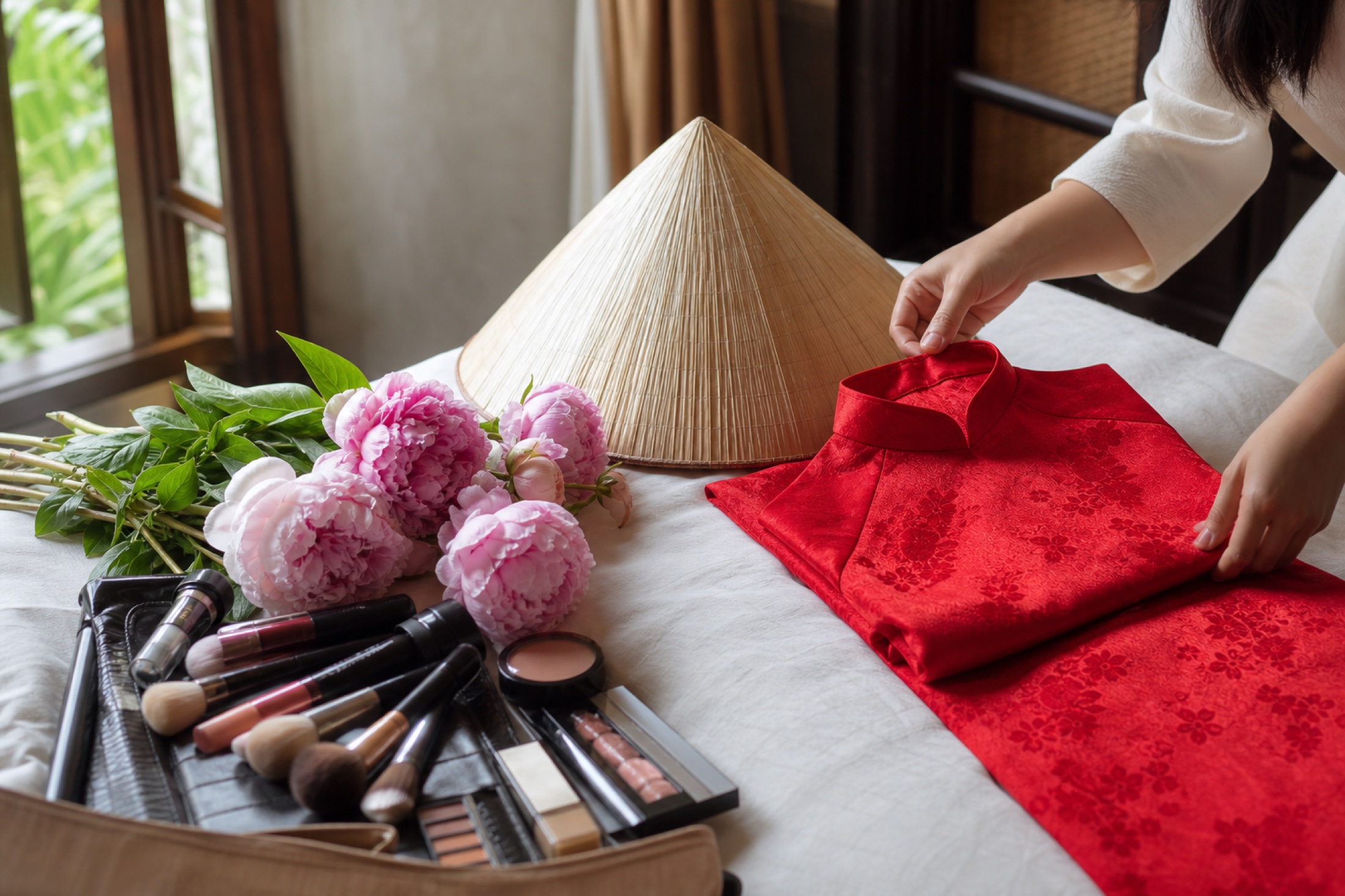
Cáo Studio's team will advise on undergarment visibility during fittings; send photos of your ao dai on WhatsApp before the session so the stylist checks fabric weight and color.
How do beach photoshoots actually run—what's the schedule?
A typical 2–3 hour Cua Dai session looks like this:
- Arrival & outfit check (15 min): Meet at a café or parking area near the beach. Stylist reviews ao dai fit, undergarments, and poses.
- Golden hour shots (60–90 min): Walk along shoreline, wade into shallow water, sit on sand. Photographer captures movement, profile, and close-ups. Bring a changing robe (dry robe) to cover up between outfit changes if booking multiple ao dai.
- Sunset finale (20–30 min): Silhouette and backlit shots as sun dips. Light fades fast; fewer usable frames but striking color.
- Wrapping & gallery preview (15 min): Quick phone preview of selects; full digital delivery 3–7 days via cloud link.
What to bring: Water bottle, phone charger, small towel, flip-flops, and a dry bag for valuables. Cáo Studio provides a makeup touch-up kit; no additional cost.
Cua Dai vs. other Hoi An photo spots: when to choose each
| Spot | Best for | Crowd level | Light quality | Ao dai suitability |
|---|---|---|---|---|
| Cua Dai Beach | Sunset, water, romantic couples, flowing fabric | Low before 7 a.m.; medium 5–6 p.m. | Warm, diffused evening light; reflective sand | Excellent; shallow water is safe |
| Hoai River (Old Town) | Urban backdrop, lanterns, reflection shots | High (constant tourists) | Dappled, uneven; shadows | Good; water is brackish, no wading |
| Japanese Bridge area | Iconic, close-up portrait | Very high | Overhead midday sun (harsh) | Fair; narrow space, humidity |
| Rice fields (5 km out) | Earthy tones, rural vibe, single ao dai | Low | Golden hour, clean background | Excellent; flat terrain |
Cua Dai is your first choice if: You want immersive water shots, flowing fabric in motion, and consistent light with minimal planning. Old Town is better for cultural landmarks; rice fields for simplicity and privacy.
How to book with Cáo Studio or DIY—and what to check before paying
Book with Cáo Studio:
- Hoi An sessions are by appointment; the team travels from Hanoi or Saigon.
- Send WhatsApp message to ask available dates.
- Includes professional makeup, stylist, photographer, and digital gallery.
- Delivery: high-res JPEGs (color-corrected) via cloud within 7 days.
- What to provide: Ao dai (yours or rented locally), desired mood (romantic, playful, editorial), backup date in case of rain.
DIY option: If hiring a local Hoi An photographer instead, use this checklist:
- ✓ Confirm tide time & sunset exact time via tide chart (Google "Hoi An tide").
- ✓ Scout the beach 1 day prior; check for seaweed, loose rocks, or events.
- ✓ Rent ao dai from a shop in Old Town (Tu Hai, Yaly, or local tailors); prices ~200k–500k VND.
- ✓ Ask photographer for a test shoot (5–10 min) to preview angles & clothing fit before committing.
- ✓ Bring printed model release & consent forms if shooting with locals or minors.
- ✓ Pay half upfront; balance on delivery of gallery preview.
What to check before you book any photoshoot
- Photographer's portfolio: Request 3–5 beach-specific samples; check if they shoot ao dai (fabric drape matters).
- Cancellation policy: Confirm rain rescheduling & refund terms in writing.
- Delivery timeline: Standard is 3–7 days; rush delivery (1–2 days) often costs extra.
- Final image count: How many edited photos are included? (Typical: 50–120 for a 2–3 hour session.)
- Rights & usage: Can you repost on Instagram, use for wedding invites, or print? Ask explicitly.
- Sunset guarantee: If sun doesn't appear, is a follow-up session free? Ask upfront.
Book on WhatsApp with Cáo Studio to confirm Hoi An dates, or contact a local Hoi An photographer with references from your hotel concierge.
---
See also: ao dai photoshoot, couple & family photoshoot, our full Hoi An guide, and makeup & hair services.
FAQ
What time should I arrive at Cua Dai Beach for a sunset photoshoot?
Arrive 60–90 minutes before sunset. Sunset is 5:15–5:45 p.m. (winter) or 6:30–7 p.m. (summer). Early arrival lets you capture golden hour as light warms, not just the final orange dip. This gives more usable frames and time for outfit changes without rushing.
Will my ao dai get damaged by saltwater and sand?
Saltwater doesn't damage silk or cotton fabric quickly, but sand can snag seams and salt can leave residue if not rinsed within 24 hours. Rinse the garment gently in cool freshwater after the shoot, air-dry flat, and have it cleaned professionally before returning a rental. Most rental shops cover minor salt stains.
Can I shoot at Cua Dai in the rainy season (June–September)?
Yes, but expect afternoon thunderstorms, high humidity, and overcast light. Morning shoots (6–8 a.m.) are safer and avoid the peak rain window. Cáo Studio offers free reschedules if storms cancel your session; confirm the rescheduling policy when you book on WhatsApp.
How many photos will I get from a typical Cua Dai shoot?
Cáo Studio delivers 50–100+ edited, color-corrected JPEGs from a 2–3 hour session. Local DIY photographers vary; confirm the final image count and editing style before paying. Ask to see a sample gallery to match expectations.
Is Cua Dai Beach safe for non-swimmers or elderly clients?
Yes. The water is shallow (waist-deep at 50 m out), warm, and has no strong currents. You don't need to swim; wading for photos is safe. Cáo Studio's photographer adjusts poses for mobility and comfort. Wear water shoes or go barefoot, and take breaks as needed.
FAQ
What time should I arrive at Cua Dai Beach for a sunset photoshoot?
Arrive 60–90 minutes before sunset. Sunset is 5:15–5:45 p.m. (winter) or 6:30–7 p.m. (summer). Early arrival lets you capture golden hour as light warms, not just the final orange dip. This gives more usable frames and time for outfit changes without rushing.
Will my ao dai get damaged by saltwater and sand?
Saltwater doesn't damage silk or cotton fabric quickly, but sand can snag seams and salt can leave residue if not rinsed within 24 hours. Rinse the garment gently in cool freshwater after the shoot, air-dry flat, and have it cleaned professionally before returning a rental. Most rental shops cover minor salt stains.
Can I shoot at Cua Dai in the rainy season (June–September)?
Yes, but expect afternoon thunderstorms, high humidity, and overcast light. Morning shoots (6–8 a.m.) are safer and avoid the peak rain window. Cáo Studio offers free reschedules if storms cancel your session; confirm the rescheduling policy when you book on WhatsApp.
How many photos will I get from a typical Cua Dai shoot?
Cáo Studio delivers 50–100+ edited, color-corrected JPEGs from a 2–3 hour session. Local DIY photographers vary; confirm the final image count and editing style before paying. Ask to see a sample gallery to match expectations.
Is Cua Dai Beach safe for non-swimmers or elderly clients?
Yes. The water is shallow (waist-deep at 50 m out), warm, and has no strong currents. You don't need to swim; wading for photos is safe. Cáo Studio's photographer adjusts poses for mobility and comfort. Wear water shoes or go barefoot, and take breaks as needed.
Ao dai, makeup, hair and a local photographer in Hanoi or Saigon — one WhatsApp message.