/pre-wedding-photoshoot
Cua Dai Beach wedding photos: best time and light
Cua Dai Beach near Hoi An is a 4 km stretch of fine sand where pre-wedding shoots work best at sunrise (approximately 5:30–6:30 a.m. in summer) or 90 minutes before sunset, when sand reflects soft light and crowds thin. Low tide exposes more sand and creates mirror-like surfaces; high tide pushes water and rocks near the treeline, limiting pose space. Morning light is cooler (better for ao dai and makeup stability); afternoon light is warmer but hotter to work in. Cáo Studio – Makeup & Photoshoot can book you a guide experienced in Hoi An's tidal patterns and light shifts—details and availability confirmed on WhatsApp.
When is sunrise shooting better than afternoon at Cua Dai Beach?
Sunrise light is softer, cooler, and more forgiving than midday or afternoon sun. At 5:30–6:30 a.m., the sun sits low on the horizon, casting long shadows that add depth and dimension to portraits. The beach is nearly empty—no tourists, no fishing nets, no distractions. Sand is cool enough to walk barefoot in ao dai or a wedding dress without discomfort. Makeup and hair, applied two hours earlier, stay crisp and unwrinkled. The sky often turns pale gold or blush-pink, a natural backdrop that needs no editing. Afternoon light (4:00–5:30 p.m.) is also beautiful but arrives after 8+ hours of strong UV exposure; sand is hot, the beach busier with local families, and makeup may need reapplication. Conclusion: sunrise suits couples who want calm, cool conditions and pristine light without crowds.
📸 Book on WhatsApp — ao dai photoshoot
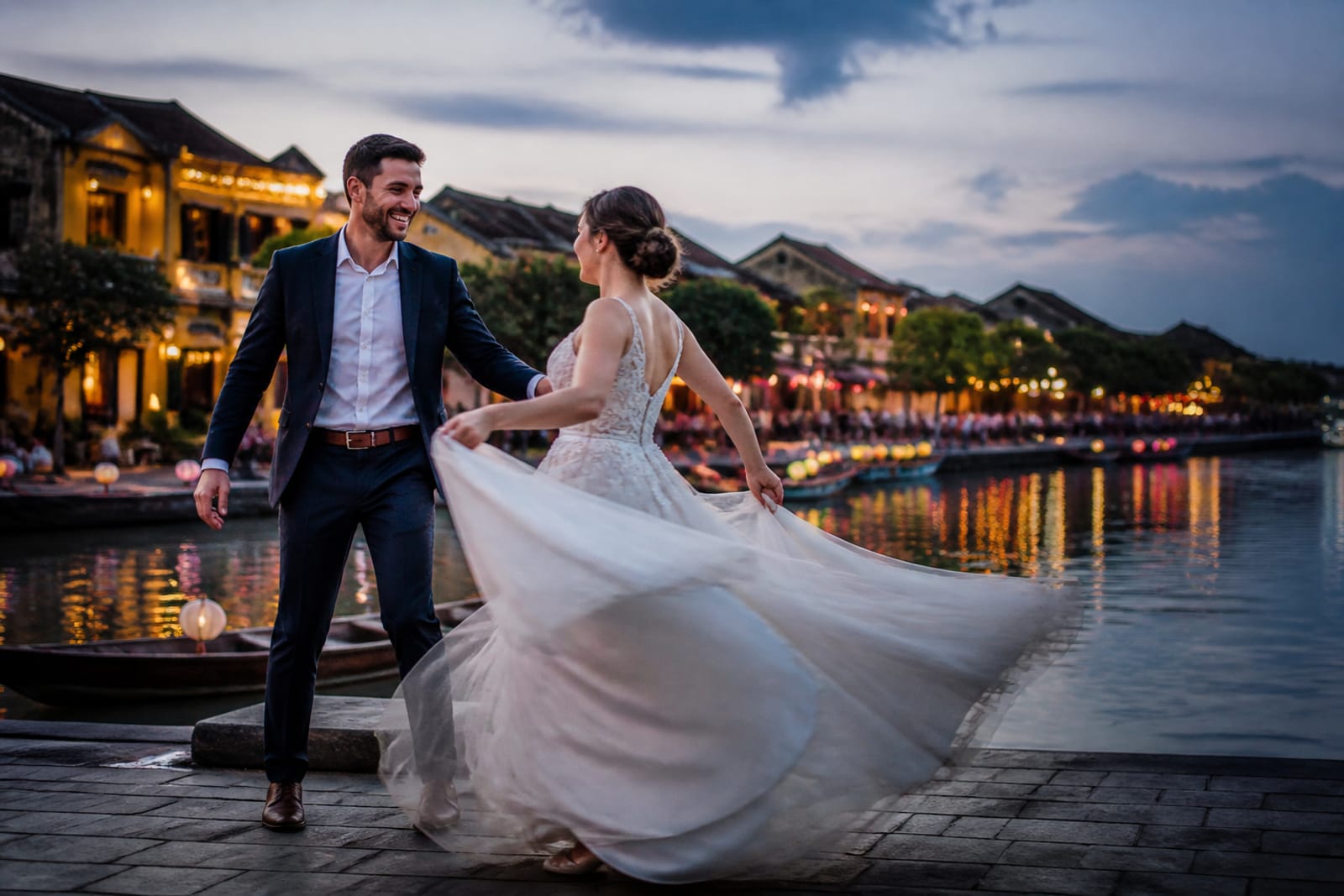
How does tide timing affect your photo space and pose options?
Low tide (check local tide charts for Hoi An) exposes 50–100 meters of smooth, wet sand that acts as a natural reflector and creates clean horizons. You can walk far from the treeline, use water edges as leading lines, and pose without rocks or fishing debris visible. High tide pulls water closer to palms and rocks, compressing your usable space to 20–30 meters and filling frame with chaotic foreground. Wet sand at low tide also allows running shots and long, flowing dresses to trail without snagging. Tide swings by approximately 1.5 meters between low and high; timing matters most if you want specific poses (walking into water, running together, lying on sand without ankle-deep water). Always check a local tide chart for your shoot day—Hoi An's tides shift by roughly 50 minutes each day. Conclusion: low tide triples your creative freedom and removes distractions.
Should you shoot in the rainy season, or wait for dry months?
Hoi An's dry season (February–August) brings consistent sunrises and few storms; rainy season (September–December) clouds light and risks afternoon downpours. October–November is worst—typhoons, flooding in the Ancient Town, and unpredictable heavy rain make beach shoots risky. December–January cools down but remains drizzly; mornings often dawn grey, reducing golden-hour impact. February–April is ideal: dry, mild (18–28°C), and rice fields nearby glow green—a bonus if you want a secondary location shoot. May–August stays dry but grows hot (30–35°C+); sunrise shoots are less brutal than afternoon. If you must shoot Sep–Dec, book an early morning session to finish before afternoon showers arrive. Conclusion: February–April and May–August (before 9 a.m.) are safest; avoid October–November entirely.
What should you wear under an ao dai to stay comfortable on sand?
An ao dai's silk or cotton drapes beautifully but traps heat without layers underneath. Wear a lightweight, breathable tank or slip dress (white or neutral) in thin cotton or linen—anything synthetic clings and shows sweat. Avoid full slips that add bulk and restrict movement; a knee-length slip gives freedom to walk and run. Barefoot is ideal; sand is warm but manageable if you start before 7 a.m. If you prefer shoes, choose flat sandals (leather, no foam) that won't sink into wet sand—remove them for actual shots. The ao dai's hem will drag in water or wet sand, so a seamstress can add a subtle interior drawstring or loop to lift the front hem slightly for wading or running shots. Undergarments matter: a smooth, invisible bra (strapless or adhesive) prevents lines and keeps the ao dai's neckline pristine. Conclusion: lightweight slip, strapless bra, and barefoot give the most elegant, cool look.
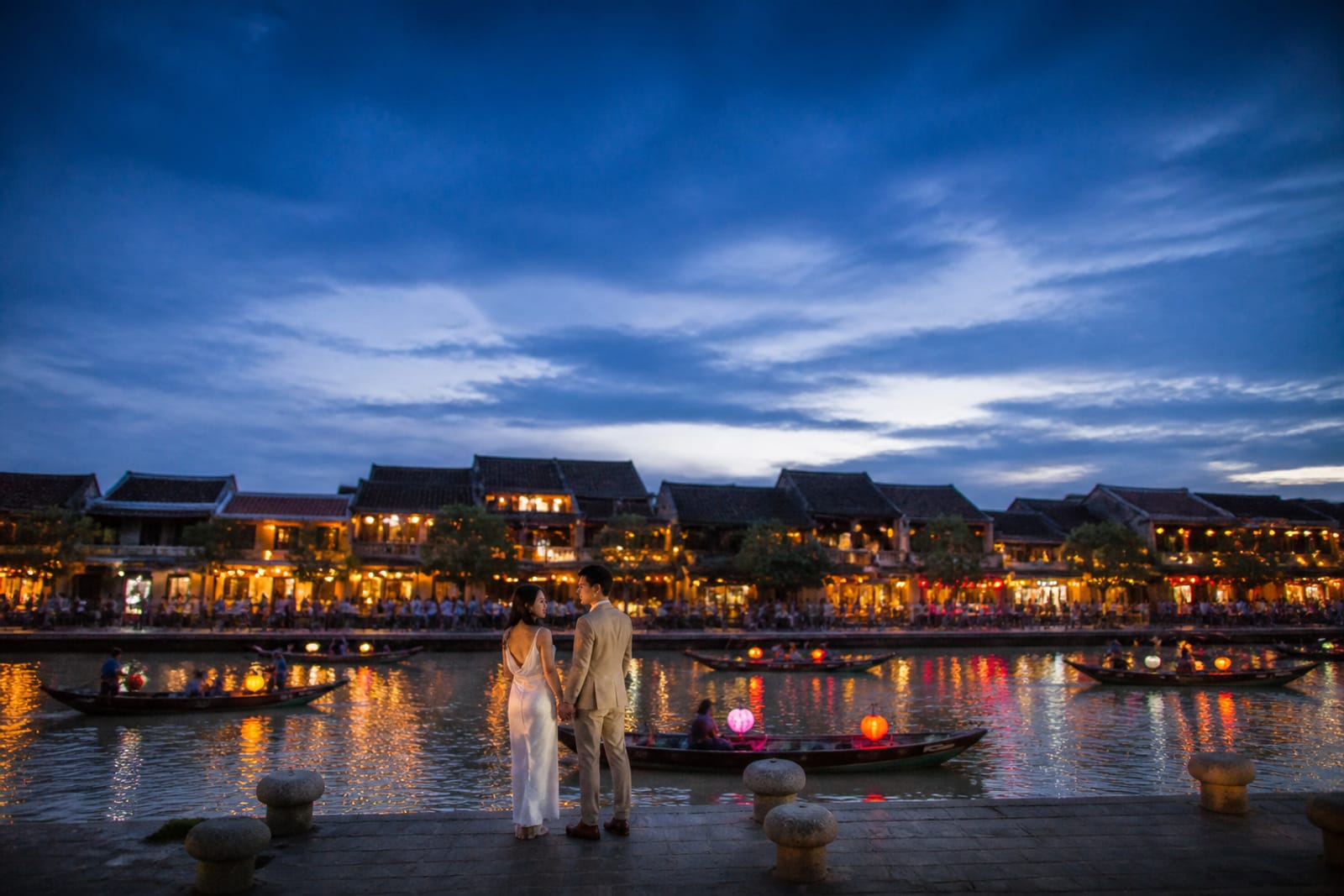
How does a professional photographer work around midday and afternoon challenges?
Midday sun (11 a.m.–3 p.m.) creates harsh shadows under eyes and chin, bleaches skin tones, and overexposes sand. Skilled photographers use a large reflector or diffuser to soften light and reduce contrast; they shoot in the shadow of palms or under clouds if available. Afternoon light angles from the side or rear, which is better than overhead but hotter to endure. Poses shift: backlit silhouettes, couples walking away, and wide landscape shots work better than close-up portraits. A professional will suggest a split shoot—30 minutes at sunrise for intimate portraits, a quick break, then 45 minutes before sunset for romantic wide shots and movement. This avoids peak heat and gives you two distinct light moods in one session. Cáo Studio photographers on Hoi An shoots know local timing and can choreograph your session to follow light, not fight it. Conclusion: double-session (sunrise + sunset) overcomes midday glare and heat.
| Option | Best For | Light & Season | Why It Works |
|---|---|---|---|
| Sunrise (5:30–6:30 a.m.) | Intimate portraits, cool comfort, empty beach | Soft gold; Feb–Aug (dry months) | Low UV, no crowds, makeup fresh, soft shadows. |
| Afternoon (4:00–5:30 p.m.) | Wide landscapes, backlighting, silhouettes | Warm side-light; any dry month | Long shadows flatter, sky dramatic. Hotter, busier. |
| Split session (sunrise + sunset) | Maximum variety, two light moods, movement shots | Golden hour twice; Feb–Apr ideal | Captures intimate + romantic looks. Requires early start. |
| Overcast morning (Jun–Aug) | Soft, even skin tone, no shadow wrinkles | Flat, cool light; after sunrise | Suits makeup longevity. Sky less dramatic. |
| Post-typhoon (early Dec) | Fresh air, fewer tourists, dramatic clouds | Clear cold mornings; lower heat | Risks grey skies. Fewer crowds. Avoid Oct–Nov entirely. |
What happens if weather or tide surprises you on shoot day?
Beach shoots depend on two unpredictable factors: weather and tides. A sudden rain shower 20 minutes before sunrise can grey out the light—a backup plan is essential. Ask your photographer if they shoot in light drizzle (mood can be moody-romantic) or reschedule. Tide charts are printed predictions; actual tides shift slightly based on wind and pressure. If tide is higher than expected, you have less sand; lower-angle shots into the water or moving to a protected rocky outcrop work. Bring extra shoes, a waterproof phone bag, and a thin cover-up in your car. If sunrise light is disappointing, shift to afternoon and return for sunset. Cáo Studio photographers have shot Hoi An beaches in 20+ different light conditions and can adapt on the fly. Conclusion: flexibility and a backup location or time slot save your shoot.
What to check before you book
- Tide chart: pull the date-specific low tide time for your shoot day; aim to arrive 30 minutes before low tide peaks.
- Weather forecast: check 5-day forecast 48 hours before; Hoi An's rainy season (Sep–Dec) is riskier—a reschedule clause matters.
- Light timing: confirm sunrise time for your shoot month (varies 5–10 minutes across Feb–Aug); plan arrival 45 minutes before.
- Beach access: Cua Dai Beach is free and public; no permits needed. Confirm parking exists near your entry point.
- Outfit prep: have your ao dai, dress, and undergarments fitted and tested one week before; bring backups for groom/partner outfit if renting.
- Makeup & hair: if booking makeup & hair at your hotel, schedule pickup 2 hours before departure to allow transit time to beach.
- Photographer experience: ask how many Hoi An beach shoots they've done; local knowledge of tidal and light patterns is essential.
- Reschedule policy: confirm terms if weather forces a postponement—Cáo Studio's exact policy is confirmed on WhatsApp.
---
Cua Dai Beach's beauty depends entirely on timing. Sunrise and low tide are non-negotiable; dry season (February–April) removes weather risk. A pre-wedding photoshoot at Cua Dai takes 2–3 hours; couples often pair it with ao dai rental or a secondary session in Hoi An Ancient Town for variety. Makeup applied at your hotel 2 hours before arrival ensures freshness through the cooler morning light.
Cáo Studio – Makeup & Photoshoot has guided dozens of couples through Hoi An's tidal and light shifts. The team can arrange makeup & hair pickup from your hotel, coordinate with a local tide guide, and plan backup timing if weather shifts. Exact session details, availability for your dates, and logistics are confirmed on WhatsApp.
📸 Book on WhatsApp — ao dai photoshoot
---
FAQ
What time should we arrive at Cua Dai Beach for a sunrise shoot?
Arrive 45 minutes before sunrise (roughly 4:45 a.m. in summer). This allows parking, makeup final checks, and positioning before light peaks. Sunrise times vary by month—confirm the exact time for your date before booking.
Can we shoot at Cua Dai Beach during the rainy season?
Yes, but October–November carries typhoon and flood risk; shoots often get cancelled. September and December are safer if you book early morning (before 7 a.m.) to avoid afternoon rain. February–August is far more reliable.
Do we need a permit or fee to photograph at Cua Dai Beach?
No permits or beach entry fees apply to Cua Dai Beach—it's public. Parking is free. A local guide (arranged by your photographer) helps with tidal timing and location scouting but is not required.
How hot is sand at Cua Dai Beach at 7 a.m. versus 5 p.m.?
At 5:30–6:30 a.m., sand is cool (around 22–26°C); you can walk barefoot comfortably. By 5 p.m., sand reaches 35–40°C and can burn feet. Sunrise is far more comfortable, especially in ao dai or a wedding dress.
Can we reschedule if sunrise light is grey or rainy?
Yes—many couples reschedule if weather disappoints. Confirm your photographer's reschedule policy and flexibility before booking. Cáo Studio's exact terms are discussed on WhatsApp during the booking call.
Should we hire a Hoi An-based photographer or travel with our own?
Hoi An-based photographers know local tides, parking, and backup locations. Traveling with your own photographer works if they've shot coastal Vietnam before. Cáo Studio offers pre-wedding photoshoot services by appointment in Hoi An—ask on WhatsApp for available dates and team travel logistics.
FAQ
What time should we arrive at Cua Dai Beach for a sunrise shoot?
Arrive 45 minutes before sunrise (roughly 4:45 a.m. in summer). This allows parking, makeup final checks, and positioning before light peaks. Sunrise times vary by month—confirm the exact time for your date before booking.
Can we shoot at Cua Dai Beach during the rainy season?
Yes, but October–November carries typhoon and flood risk; shoots often get cancelled. September and December are safer if you book early morning (before 7 a.m.) to avoid afternoon rain. February–August is far more reliable.
Do we need a permit or fee to photograph at Cua Dai Beach?
No permits or beach entry fees apply to Cua Dai Beach—it's public. Parking is free. A local guide (arranged by your photographer) helps with tidal timing and location scouting but is not required.
How hot is sand at Cua Dai Beach at 7 a.m. versus 5 p.m.?
At 5:30–6:30 a.m., sand is cool (around 22–26°C); you can walk barefoot comfortably. By 5 p.m., sand reaches 35–40°C and can burn feet. Sunrise is far more comfortable, especially in ao dai or a wedding dress.
Can we reschedule if sunrise light is grey or rainy?
Yes—many couples reschedule if weather disappoints. Confirm your photographer's reschedule policy and flexibility before booking. Cáo Studio's exact terms are discussed on WhatsApp during the booking call.
Should we hire a Hoi An-based photographer or travel with our own?
Hoi An-based photographers know local tides, parking, and backup locations. Traveling with your own photographer works if they've shot coastal Vietnam before. Cáo Studio offers [pre-wedding photoshoot](/pre-wedding-photoshoot) services by appointment in Hoi An—ask on WhatsApp for available dates and team travel logistics.
Ao dai, makeup, hair and a local photographer in Hanoi or Saigon — one WhatsApp message.