/pre-wedding-photoshoot
Da Lat wild sunflower roads: best time for wedding photos
Da Lat wild sunflower photography peaks November–February when blooms line rural roads and morning mist lingers over the highlands. The best light falls between 6–7am (cool, directional) and 4–5.30pm (golden, soft). Cáo Studio – Makeup & Photoshoot does not operate a Da Lat branch, so you'll need to hire a local photographer or plan a session in Hanoi, Ho Chi Minh City, or Hoi An before/after a Da Lat trip. Key logistics: roads are narrow, muddy after rain, and accessible by hired car or scooter; the altitude (1,500m) means cool mornings and afternoon cloud cover; flower density shifts week-to-week, so scouting matters. Avoid midday (10am–3pm) when sun is flat and tourists peak. Pre-book your vehicle and confirm road access with your photographer 2–3 weeks ahead. ---
When do Da Lat wild sunflowers actually bloom and peak?
Da Lat's wild sunflower season (locally called da quy) runs reliably November through February, with the densest roadside blooms in late November and December. January sees flowers still abundant but slightly sparser; by mid-February, blooms begin fading. The flowering window depends on altitude, recent rain, and microclimate—some hillside pockets flower earlier or later than main roads. Ask your local photographer or accommodation to scout roads 3–5 days before your shoot; this matters more than any pre-trip report. December offers the most predictable roadside density and the least rain risk during the bloom season.
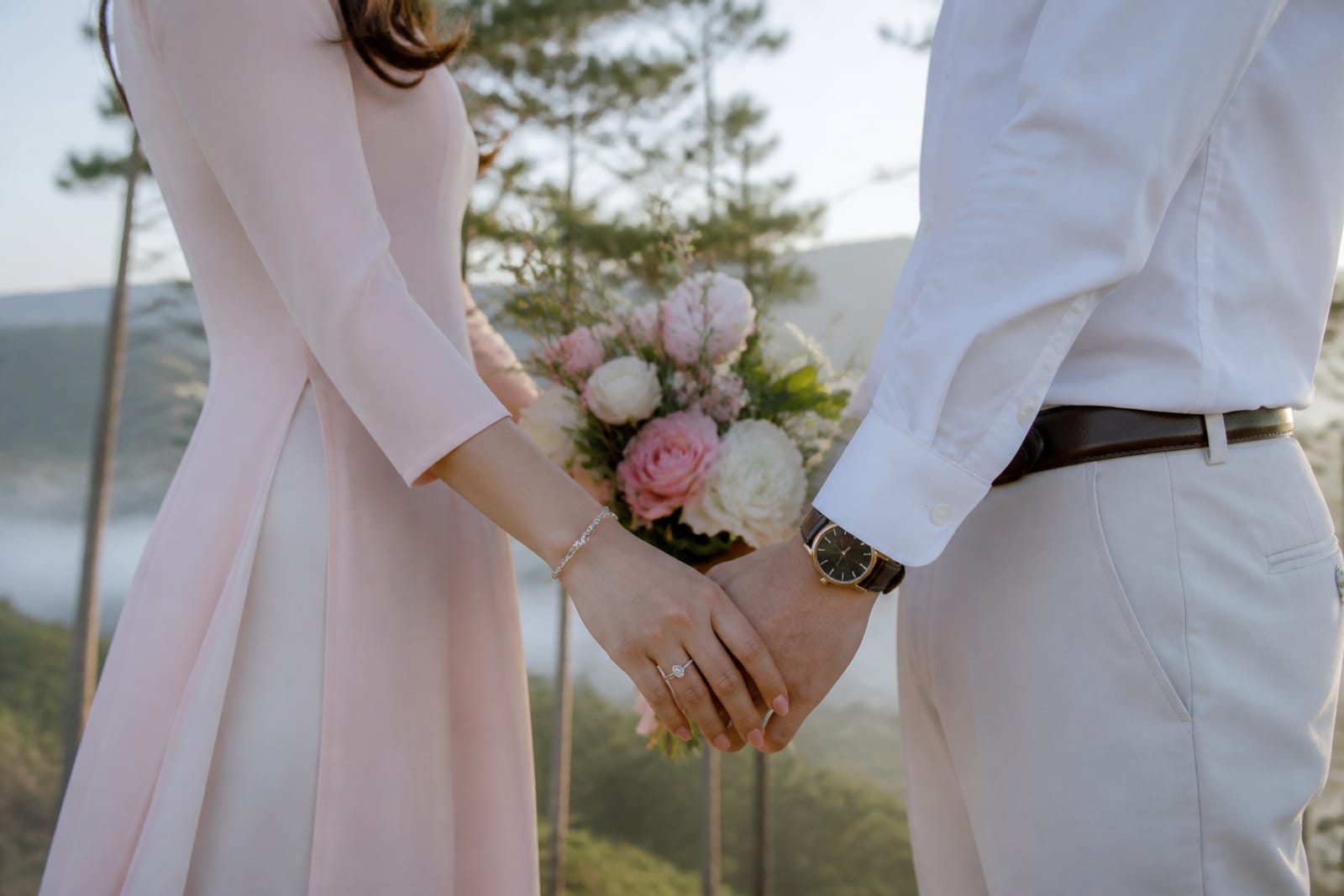
How does season and weather affect your light and logistics?
| Aspect | Nov–Dec | Jan–Feb | Avoid |
|---|---|---|---|
| Light quality | Cool, directional; 6–7am golden | Warmer tones; mist clears by 7.30am | May–Oct (no blooms, rain, haze) |
| Road access | Dry, passable daily | Occasional rain; morning muddy | Rainy season (Sep–Dec late) |
| Crowd timing | Fewer tourists early Nov; busier Dec | Moderate; less crowded than Dec | Mid-day (10am–3pm) always busy |
| Outfit fit | Cool (13–18°C); layers needed | Mild (14–20°C); light layers | Heavy fabrics (overheat under sun) |
| Mist/mood | Common at sunrise; lasts 1–2 hours | Rare; burns off by 8am | Afternoon cloud cover (flat light) |
November suits couples prioritizing flower density and cool, dimensional light; December offers the same but with higher tourist traffic and booking demand. January–February provides fewer crowds and milder mid-morning temperatures, but blooms fade and mist is less reliable.
Should you hire a local Da Lat photographer or book with a travel-based studio?
Hiring a local Da Lat photographer means same-day logistics, road scouting, and vehicle coordination in one vendor. Pros: they know exact bloom locations and muddy-road timing; they work your hotel pickup and can adjust for weather. Cons: quality varies; portfolios are often posted only on local platforms (Facebook, Instagram local pages); communication may depend on translation apps; no standardized packages. Vet by requesting recent work (dates matter—old photos don't show current bloom density), confirming they've shot wedding couples (not just tourists), and asking how they handle weather delays.
Booking a pre-wedding session in Hanoi or Ho Chi Minh City with Cáo Studio – Makeup & Photoshoot means you get makeup, hair, and studio-quality editing, then visit Da Lat separately to shoot locally. This suits couples who want polished studio sessions near major transport hubs and prefer not to rely solely on a local vendor for their main pre-wedding story. You can coordinate a proposal or anniversary package in Hanoi before traveling to Da Lat for supplementary sunflower portraits.
📸 Book on WhatsApp — pre-wedding photoshoot
What's the step-by-step checklist before you book a Da Lat sunflower shoot?
- Confirm bloom density: Ask your photographer for recent road photos (within the last 5 days) showing the roads you'll shoot. Outdated portfolios won't reflect current flower coverage.
- Lock in your dates 3–4 weeks ahead: Da Lat roads are narrow; your photographer needs time to plan vehicle access and route alternatives if roads flood or become impassable after rain.
- Check weather patterns: November–December often see morning rain (brief, 6–9am); January is drier. Ask your photographer how they adjust if sunrise is overcast (often they'll shift to 7–8am golden light instead).
- Discuss outfit logistics: Wedding dresses and formal wear will show mud splatter on narrow rural roads. Ask how your photographer suggests protecting outfits (location mats, protective layers) or choosing roadside vs. off-road spots.
- Confirm vehicle and driver: Ask whether your photographer provides transport or expects you to arrange it. Scooters are risky for formal wear; a hired car (with driver or taxi) is standard. Confirm this 2 weeks ahead.
- Agree on backup light times: If sunrise clouds out, does your photographer have a 7.30–8.30am or 4–5pm alternative? Clarify this in writing before you book.
- Get editing and delivery timelines in writing: Local photographers may deliver edited files within 2–4 weeks; confirm before committing.
Why morning and late-afternoon light work best on Da Lat roads—and when to avoid the middle hours
Early morning (6–7am) delivers cool, directional light that wraps around sunflower petals and casts long shadows across the road, adding depth and dimension. At this hour, mist often clings to valleys, creating a natural soft-focus backdrop. The air is cool and still, ideal for a bride's makeup and hair to hold.
Late afternoon (4–5.30pm) brings golden, diffused light and is less misty but equally dimensional. Shadows are long; the sun sits lower in the western sky (depending on road orientation). This window suits couples who prefer warmer tones and don't want an early 5am departure.
Midday (10am–3pm) is flat, harsh, and crowded. The sun is overhead; shadows under eyes and nose are pronounced; skin appears washed out without strong reflector work. Tourist traffic peaks 11am–2pm, so you'll rarely have a road to yourselves. Avoid this window entirely.
The best-light window in November–February is roughly 6–8am or 4–6pm. Sunrise time shifts from 6.10am (early Nov) to 6.30am (Feb); sunset from 5.20pm (Nov) to 5.45pm (Feb). Your photographer must account for this shift when proposing a start time.
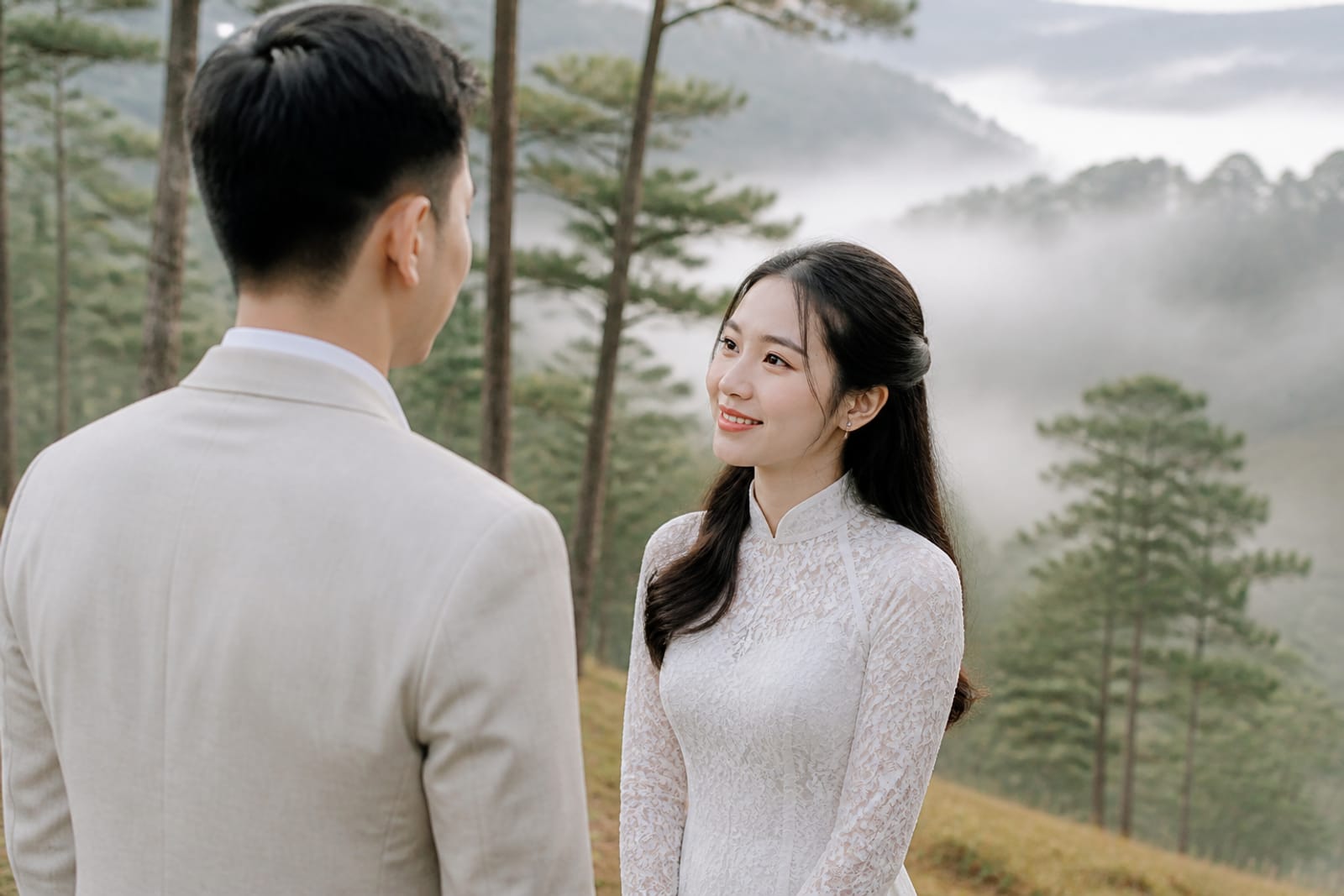
What outfit and prep decisions should you make before traveling to Da Lat?
Wear layers: Da Lat's elevation (1,500m) keeps mornings cool (13–18°C), warming to 20–22°C by midday. A bride in a heavy wedding dress may overheat in afternoon sun; plan to shed a jacket or wrap between morning and afternoon shoots. Grooms in full suits should confirm your photographer can work quickly during the warmest part of the day.
Formal footwear is risky on unpaved roads. Ask your photographer whether to wear sturdy shoes for transport, then change into heels or formal shoes on the road (bring a small towel). Mud splatter is inevitable; discuss how to protect a dress hem (ask about location mats or shooting near paved road edges where possible).
Hair and makeup need setting spray for cool morning air and longer hold in afternoon sun. If you book with a local photographer, discuss whether they have experience with formal styling—or arrange makeup and hair coordination separately through a Hanoi or Saigon studio before you travel.
Bring a backup outfit or shoes if your main look won't dry clean easily. Da Lat roads are rural and narrow; laundries may be unreliable after your shoot.
What are the honest drawbacks and how do you avoid them?
Road closures and weather: Rainy seasons (Sep–Dec late) occasionally flood Da Lat roads. Even in the November–February window, overnight rain can make roads impassable or muddy. Mitigation: book with a photographer who has backup dates and alternative routes; never schedule a sunflower shoot as your only pre-wedding option in Da Lat.
Bloom variability: Flower density fluctuates weekly. Roads that were dense with blooms two weeks ago may be sparse this week due to picking, wind, or local farming. Mitigation: scouting 3–5 days ahead is non-negotiable. Ask your photographer to send day-of photos of the roads before you depart for the shoot.
Tourist crowds: December is peak Da Lat season; popular sunflower roads draw crowds 10am–3pm and even early morning. Mitigation: book your photographer early in the month (early December, not late), and start shooting at 6am sharp.
Unreliable vendor communication: Many local Da Lat photographers lack email, WhatsApp, or English fluency. Mitigation: request written confirmation (even via Google Translate if needed), ask for a WhatsApp contact, and confirm 2 days before your shoot.
Transport and access: Narrow roads don't permit large vehicles. Confirm your photographer has a compact car or that you'll travel by scooter/taxi, and that they've scouted parking. Mitigation: ask explicitly, "What vehicle will you use?" and confirm in writing.
---
What to check before you book
- Portfolio dates: Request work from Nov–Feb of the current year (2026), not older shoots. Bloom density and road conditions shift annually.
- Photographer's primary service: Confirm they are experienced with pre-wedding/formal couples, not just tourist portraits.
- Communication channel: Verify WhatsApp, email, or phone responsiveness. Avoid photographers who rely solely on platforms you can't access quickly.
- Contract or terms: Ask for a written agreement (even simple) covering date, time, vehicle, outfit changes, delivery timeline, and weather contingency.
- Backup light time: Confirm what happens if sunrise is overcast—do they shift to 7.30am, or offer a partial refund if conditions are poor?
- Editing and file delivery: How many days for edited photos? Do they deliver digital files, prints, or both? Are albums or albums available?
---
Booking options for your Da Lat trip
If you're also planning pre-wedding portraits near major cities, book a studio session with Cáo Studio – Makeup & Photoshoot in Hanoi, Ho Chi Minh City, or Hoi An, then hire a local Da Lat photographer separately for sunflower portraits. This splits the workload: polished studio work for your main pre-wedding narrative, and scenic location work for a supplementary story.
For couples basing their pre-wedding story entirely in Da Lat, hire a local photographer through word-of-mouth (ask your hotel, tour guide, or wedding coordinator) or vetted local directories. Request a portfolio with dated work, book 4 weeks ahead, and confirm logistics in writing.
---
FAQ
Is November or December better for Da Lat sunflower wedding photos?
November offers denser blooms and fewer crowds early in the month; December is prettier (well-established flowers, lush green surroundings) but busier. January is less crowded but blooms are fading. Choose November–December for reliable density; January if you prioritize solitude. Confirm current bloom status with your photographer 2–3 weeks before your shoot.
What time should we start shooting on Da Lat sunflower roads?
Begin at 6–6.30am to capture sunrise mist and cool directional light. This window lasts 1–2 hours. Late afternoon (4–5.30pm) is your second-best option. Avoid 10am–3pm (flat light, crowds, heat). Discuss start time with your photographer; sunrise varies from 6.10am (Nov) to 6.30am (Feb).
Do we need a local Da Lat photographer, or can we book a studio in Hanoi/Saigon?
Local photographers handle same-day logistics and road access but vary in quality and formality. Studio photographers (Cáo Studio – Makeup & Photoshoot in Hanoi, Ho Chi Minh City, Hoi An) provide polished makeup and editing but don't shoot in Da Lat—book them separately if you want both options. Many couples do: studio session in a major city, then hire locally for Da Lat sunflower portraits.
How do we protect wedding dresses and formal wear on muddy Da Lat roads?
Wear protective layers or bring a backup outfit for travel. Discuss location mats or road-edge spots (less mud) with your photographer. Wear sturdy shoes for transport, change into heels on the road, and bring a towel. Accept that some mud splatter is inevitable; choose fabrics that dry-clean well or plan for professional cleaning after your trip.
Can we shoot Da Lat sunflower photos if we travel in January or February?
Yes, but blooms are less dense than November–December. January is dryer and less crowded; February sees flowers fading by mid-month. Light quality and mist are still reliable. If you travel mid-February or later, expect sparser roadside coverage. Ask your photographer to scout 5 days before and confirm current bloom density.
What's the difference between hiring a local Da Lat photographer versus booking through Cáo Studio?
Local photographers provide same-day vehicle access and route scouting; Cáo Studio – Makeup & Photoshoot offers professional makeup, hair, and studio-standard editing in Hanoi, Ho Chi Minh City, or Hoi An, but doesn't operate in Da Lat. Many couples book a studio session in a major city for polished portraits, then hire a local photographer in Da Lat for supplementary sunflower work.
FAQ
Is November or December better for Da Lat sunflower wedding photos?
November offers denser blooms and fewer crowds early in the month; December is prettier (well-established flowers, lush green surroundings) but busier. January is less crowded but blooms are fading. Choose November–December for reliable density; January if you prioritize solitude. Confirm current bloom status with your photographer 2–3 weeks before your shoot.
What time should we start shooting on Da Lat sunflower roads?
Begin at 6–6.30am to capture sunrise mist and cool directional light. This window lasts 1–2 hours. Late afternoon (4–5.30pm) is your second-best option. Avoid 10am–3pm (flat light, crowds, heat). Discuss start time with your photographer; sunrise varies from 6.10am (Nov) to 6.30am (Feb).
Do we need a local Da Lat photographer, or can we book a studio in Hanoi/Saigon?
Local photographers handle same-day logistics and road access but vary in quality and formality. Studio photographers (Cáo Studio – Makeup & Photoshoot in Hanoi, Ho Chi Minh City, Hoi An) provide polished makeup and editing but don't shoot in Da Lat—book them separately if you want both options. Many couples do: studio session in a major city, then hire locally for Da Lat sunflower portraits.
How do we protect wedding dresses and formal wear on muddy Da Lat roads?
Wear protective layers or bring a backup outfit for travel. Discuss location mats or road-edge spots (less mud) with your photographer. Wear sturdy shoes for transport, change into heels on the road, and bring a towel. Accept that some mud splatter is inevitable; choose fabrics that dry-clean well or plan for professional cleaning after your trip.
Can we shoot Da Lat sunflower photos if we travel in January or February?
Yes, but blooms are less dense than November–December. January is dryer and less crowded; February sees flowers fading by mid-month. Light quality and mist are still reliable. If you travel mid-February or later, expect sparser roadside coverage. Ask your photographer to scout 5 days before and confirm current bloom density.
What's the difference between hiring a local Da Lat photographer versus booking through Cáo Studio?
Local photographers provide same-day vehicle access and route scouting; Cáo Studio – Makeup & Photoshoot offers professional makeup, hair, and studio-standard editing in Hanoi, Ho Chi Minh City, or Hoi An, but doesn't operate in Da Lat. Many couples book a studio session in a major city for polished portraits, then hire a local photographer in Da Lat for supplementary sunflower work.
Ao dai, makeup, hair and a local photographer in Hanoi or Saigon — one WhatsApp message.