services/ao-dai-photoshoot
Da Nang Ao Dai Photoshoot Guide: Where to Shoot, What to Wear & How to
Da Nang attracts photographers for its layered landscapes—golden sand, urban cafés, weathered temples, and the Dragon Bridge silhouette. Unlike Hoi An's preserved streetscapes or Hanoi's chaotic energy, Da Nang balances modern seaside resort feel with pockets of authentic heritage. Planning an ao dai shoot here requires knowing which neighborhoods deliver strong visuals, when light works best, and how to coordinate with local vendors.
Where in Da Nang can you shoot an ao dai photoshoot?
My Son My Khe Beach (5 km south of city center) works best before 9 a.m. or after 4 p.m. when the sun is low and side-lit. Midday sun creates harsh shadows across your face. The sand near lifeguard towers is less crowded early morning. Wear water-ready shoes; sand shifts underfoot when you move. The ao dai hem gets damp but dries quickly if you're planning multiple locations same day.
Han River Promenade (Tran Phu Street) photographs well 7–8 a.m. (golden light on water) or 5–6 p.m. (sunset amber on bridges). The riverbank has manicured grass, modern café backdrops, and the Dragon Bridge framed behind. It's crowded with joggers and tourists midday; mornings and early evenings are quieter. The promenade is paved; ao dai trains stay clean. Plan 20–30 minutes here for outfit changes.
Hoa Vang rural villages (northwest, 30 km out) offer rice paddies, stone gates, and family shrines with genuine rural texture. You'll need a vehicle and 2–3 hours. Light is softest 6–8 a.m. Wear supportive sandals; fields have uneven earth. This location pairs well with hotel-based makeup to start early and return by lunch.
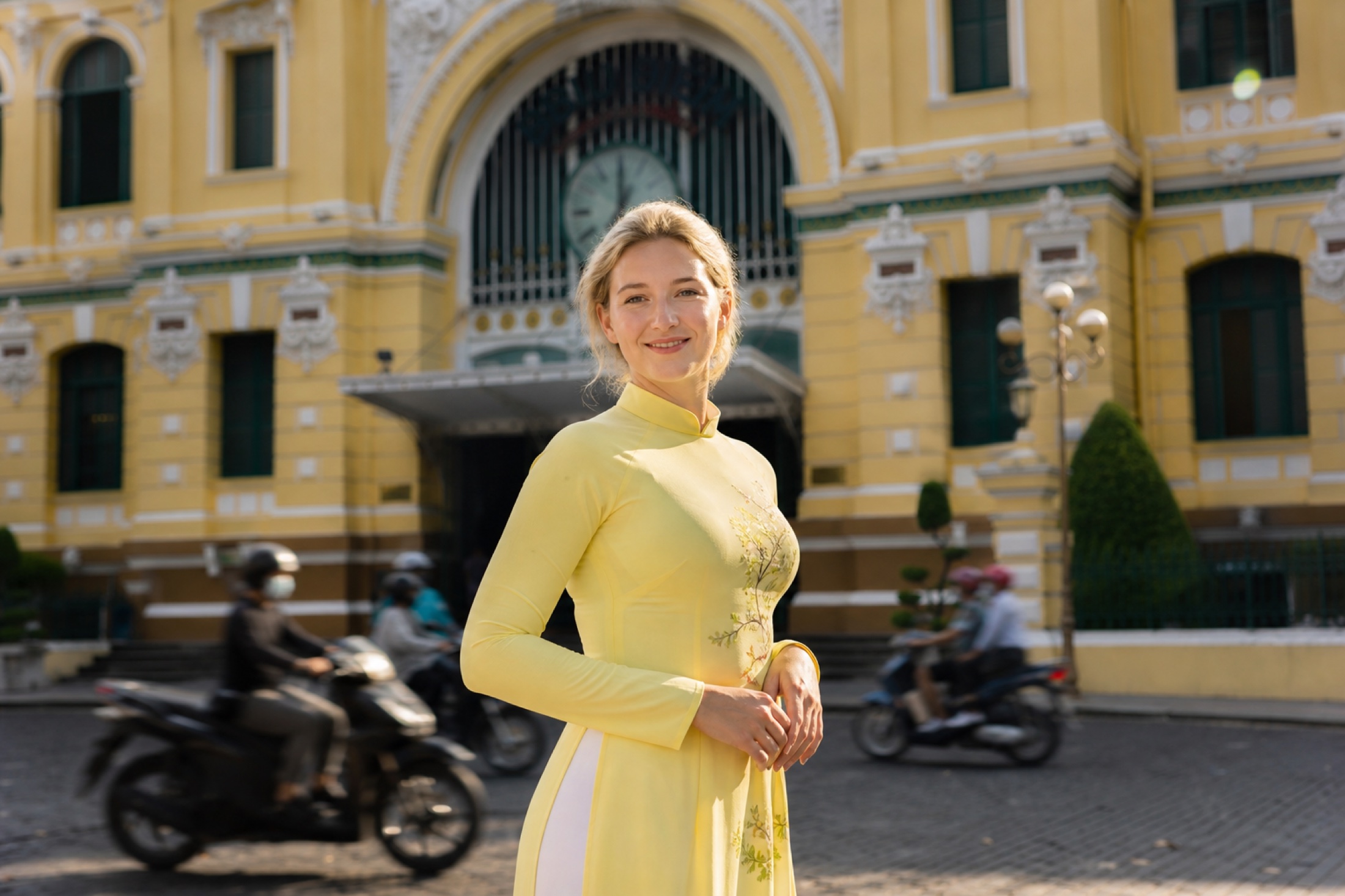
French colonial architecture around Tran Phu, Bach Dang, and Dong Da streets works any time after 9 a.m. when façades stop glaring. Yellow-shuttered villas, narrow alleys, and faded signs frame intimate portraits. Early morning (before 8 a.m.) is nearly empty. Afternoon (3–5 p.m.) brings soft side-light to building fronts. Avoid midday heat; the streets offer little shade.
Marble Mountain (Ngu Hanh Son, 12 km south) has clifftop pagodas, stone steps, and views across the peninsula. Visit before 9 a.m. or after 4 p.m. Climbing in an ao dai is challenging; plan lightweight layers or a cropped áo tơi (tunic) with coordinating pants for the climb, then change into full ao dai at the top for 15–20 portraits. Bring water. The stone is unforgiving on fabric; be mindful of pockets and hems catching edges.
📸 Book on WhatsApp — ao dai photoshoot
What should you wear under and with an ao dai for Da Nang shoots?
An ao dai sits over fitted long pants (traditionally white, black, or patterned silk). The tunic itself—velvet, silk brocade, or cotton—must breathe in heat. Choose a weight that drapes without clinging to your body; wet fabric sticks uncomfortably.
Under-layer checklist:
- Long pants in breathable cotton or linen (white, cream, or coordinating color)
- Lightweight slip or camisole if your ao dai is sheer or light-colored
- Flat ballet flats or embroidered slippers for seated shots (comfortable shoes for walking between spots)
- Minimal jewelry; heavy necklaces pull fabric forward
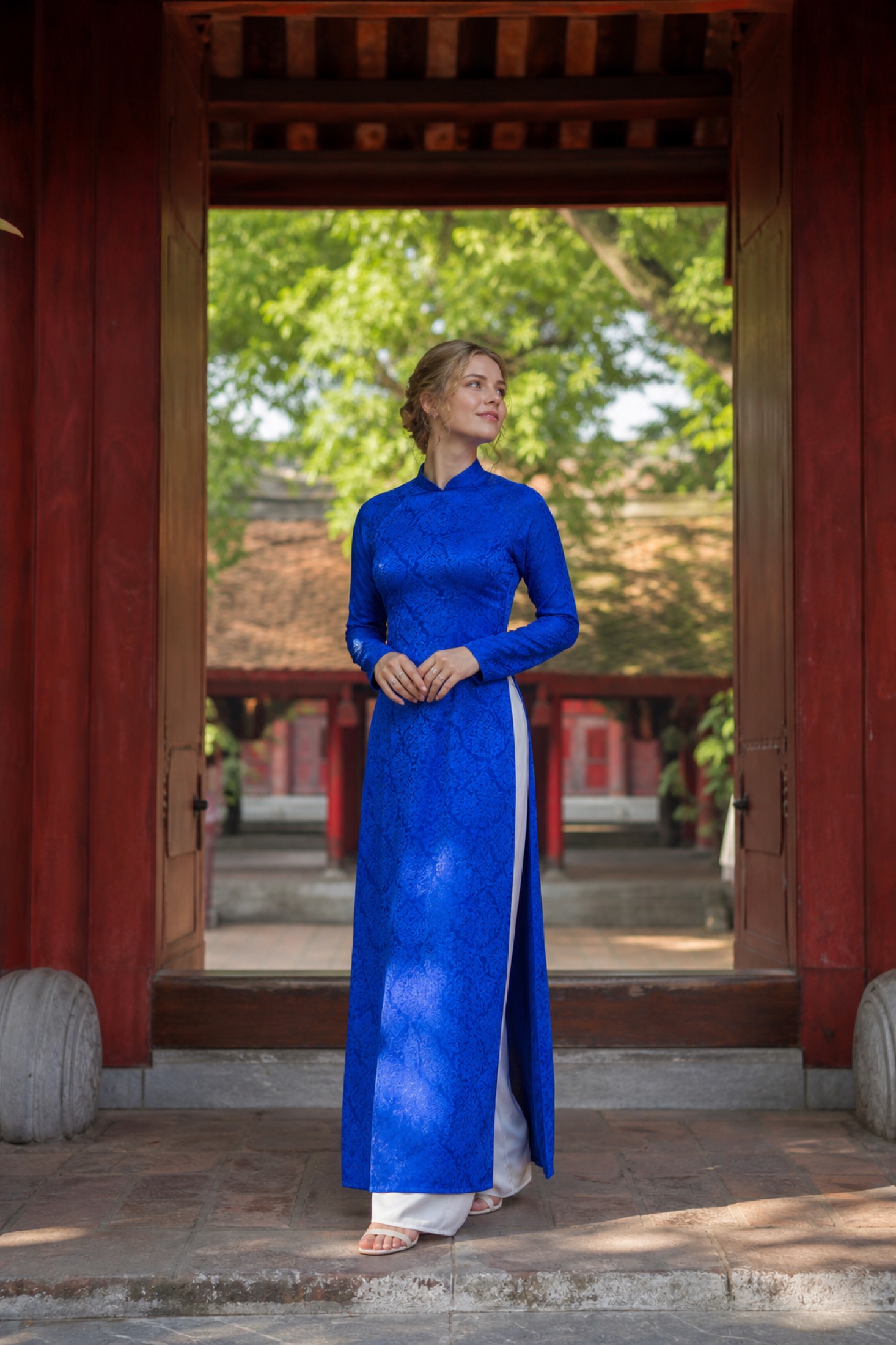
Texture pairing: Silk ao dai suits beach shots (drapes in wind, photographs luminous). Brocade (embroidered or jacquard) works heritage and formal contexts—colonial streets, temples. Cotton suits casual, village, or daytime shoots.
Heat reality: Da Nang in April–October is 28–32°C with 70–80% humidity. Even lightweight ao dai feels heavy after 1–2 hours. Plan sessions under 90 minutes in peak season. Morning shoots (before 10 a.m.) keep you cooler and deliver better light. Bring a light scarf or shawl in a matching tone for versatility and sun protection on bare shoulders.
Avoid:
- Ao dai with plastic boning or rigid interfacing (uncomfortable in humidity; shows sweat rings)
- Thick velvet or brocade in May–August (you'll overheat within 30 minutes)
- Metal zippers or buckles that rust in salt air near the beach
How does light change throughout the day in Da Nang?
| Time | Light Quality | Best Locations | Challenges | Ao Dai Color Match |
|---|---|---|---|---|
| 6–8 a.m. | Golden, directional | Beach, river, rural paths | Early crowd conflict (joggers) | Jewel tones pop; whites glow |
| 9 a.m.–3 p.m. | Overhead, harsh | Shaded alleys, interiors, cafés | Shadows under eyes, blown sky | Light pastels fade; saturated shades hold |
| 3–5 p.m. | Side-lit amber | Colonial facades, Han River, hillsides | Long shadows; sun in face risk | All colors work; silhouettes dramatic |
| 5–7 p.m. | Sunset warm | Beach, river, elevated viewpoints | Quick fade; crowds gather | Jewel, white ao dai catch last glow |
Practical rule: Arrive at your chosen location 15 minutes before your target light window. Light moves visibly in the tropics. If you're working with a photographer, agree on a "move time" (e.g., 4:45 p.m.) to chase light as it shifts.
How to find and book a Da Nang photographer for an ao dai session?
Cáo Studio operates in Hanoi and Saigon with in-house styling and hair/makeup teams. For Da Nang shoots, we recommend scouting photographers early (4–6 weeks ahead) and arranging separate hair/makeup coordination.
How to vet a local photographer:
- Portfolio: Ask to see 5+ ao dai or Vietnamese wedding shoots (not just tourist snapshots). Colors should be accurate; skin tones even; fabric texture visible.
- Editing style: Clarify if you want natural color, warm filters, or vintage tones. Over-processed images flatten fabric sheen.
- Hourly rate & package: Expect 800k–2M VND/hour (USD $33–80) for experienced freelancers. Packages (2 hours, 2–3 locations, edited gallery) run 2–4M VND. Ask what's included: RAW files, editing timeline, print-ready formats.
- Backup plan: Confirm they have a second camera body and backup lenses. Da Nang's salt air and humidity damage gear; a photographer without redundancy is risky.
- Local knowledge: Do they know the best light times and quieter hours for your chosen locations? A photographer familiar with Da Nang's tides, crowds, and seasonal weather is worth more than a tourist-focused generalist.
Finding photographers:
- Instagram hashtags: #danangphotographer, #danangaodia (check recency; outdated follows mean they're inactive)
- Google Maps reviews: Filter for "photographer" or "studio" in Da Nang; prioritize 4.8+ ratings with photo samples
- Local tourism forums (FaceBook groups: "Da Nang Expats," "Vietnam Photography") often have recommendations
- Hotel concierge: Mid–high-end hotels keep lists; expect a markup but vetting is done for you
Before booking, ask:
- Do you offer a trial shoot or sample gallery (to assess style before committing)?
- What's your cancellation policy if weather is poor?
- Can you coordinate with a separate makeup artist, or do you recommend one?
- How long is the edited gallery turnaround? (Typical: 1–3 weeks.)
What weather and seasonal factors should you plan for?
January–March: Cool (20–24°C), low humidity, clear skies. Best season for ao dai shoots. Morning light is crisp; afternoons are still soft. Risk: occasional rain, especially February. Pack a small umbrella; silk ao dai photograph beautifully even in overcast light.
April–May: Heating up (26–30°C); humidity rises. Mornings remain excellent; afternoons become oppressive. Heat shimmers distort distant backgrounds. Start shoots by 8 a.m.; finish by 11 a.m. if you're aiming for beach or village locations.
June–September: Hot (30–32°C), 75–80% humidity, typhoon season. Sudden afternoon storms are common. Plan indoor or sheltered locations (cafés, temples, narrow alleys). If you must shoot outdoors, go sunrise (6–7 a.m.) and finish by 9 a.m. Makeup needs touchups every 30 minutes due to sweat; coordinate with a makeup artist who's working that day.
October–December: Cooling (22–28°C), humidity drops. Skies clear by November. Excellent for full-day shoots. December brings tourists; popular locations are crowded. Book early-morning slots (6–7 a.m.) to avoid crowds.
Typhoon note: If a storm is forecast, confirm with your photographer 24–48 hours before. Insurance and rescheduling policies vary. Outdoor beach and rural shoots become dangerous; pivot to indoor or sheltered options.
For full styling and professional makeup support, Cáo Studio's makeup & hair service can be coordinated via WhatsApp to meet you at your Da Nang hotel, then you meet your local photographer on location. This avoids rushing a solo makeup artist who doesn't know the shoot plan.
What should you check before booking a session in Da Nang?
Photographer & logistics:
- [ ] Portfolio includes 5+ ao dai or traditional Vietnamese shoots
- [ ] They confirm availability on your specific dates (4–6 weeks ahead)
- [ ] Hourly rate, package price, and what's included (edited photos, timeline, formats) are in writing
- [ ] Cancellation and rescheduling policy if weather is poor
- [ ] They can recommend a makeup artist or confirm you're bringing your own
Location & timing:
- [ ] You've picked 2–3 primary spots and a weather backup (indoor café, temple, alley)
- [ ] Light times are matched to your locations (e.g., 6–8 a.m. for beach; 3–5 p.m. for colonial streets)
- [ ] You've scouted locations online (Google Maps photos, Instagram tags) or visited in person
- [ ] You know parking, entry fees (temples, mountain sites), and any permits needed
Ao dai & styling:
- [ ] Ao dai is tried on and fits without pulling across shoulders or chest
- [ ] Under-pants and slip (if needed) are prepared and pressed
- [ ] Jewelry and shoes are coordinated; you have flat shoes for walking
- [ ] Weather-appropriate layers (light shawl, sunscreen) are packed
- [ ] Hair and makeup are booked (either local artist, hotel service, or travel from Hanoi/Saigon via Cáo Studio)
Backup plan:
- [ ] A second location or time is identified in case of rain or crowds
- [ ] You have the photographer's WhatsApp or phone number for day-of coordination
- [ ] Photo delivery timeline and format (digital gallery, prints, USB) are confirmed
📸 Book on WhatsApp — ao dai photoshoot
---
Related reading: For guidance on couple and family photoshoots, proposal and anniversary packages, or pre-wedding shoots, explore our full service options. If you're in or near Hanoi or Saigon and prefer in-house hair, makeup, and styling, Cáo Studio is based there. For Hoi An ao dai shoots, ask on WhatsApp about our travel dates.
FAQ
Can I wear a modern ao dai (not traditional silk) for a Da Nang photoshoot?
Yes. Cotton, linen, and polyester blends are practical in heat and photograph well. They're more affordable than silk and easier to care for. Just ensure the weight drapes smoothly—cheap synthetic fabrics can cling and wrinkle, which shows in close-ups.
What's the best ao dai color for Da Nang's sunlight?
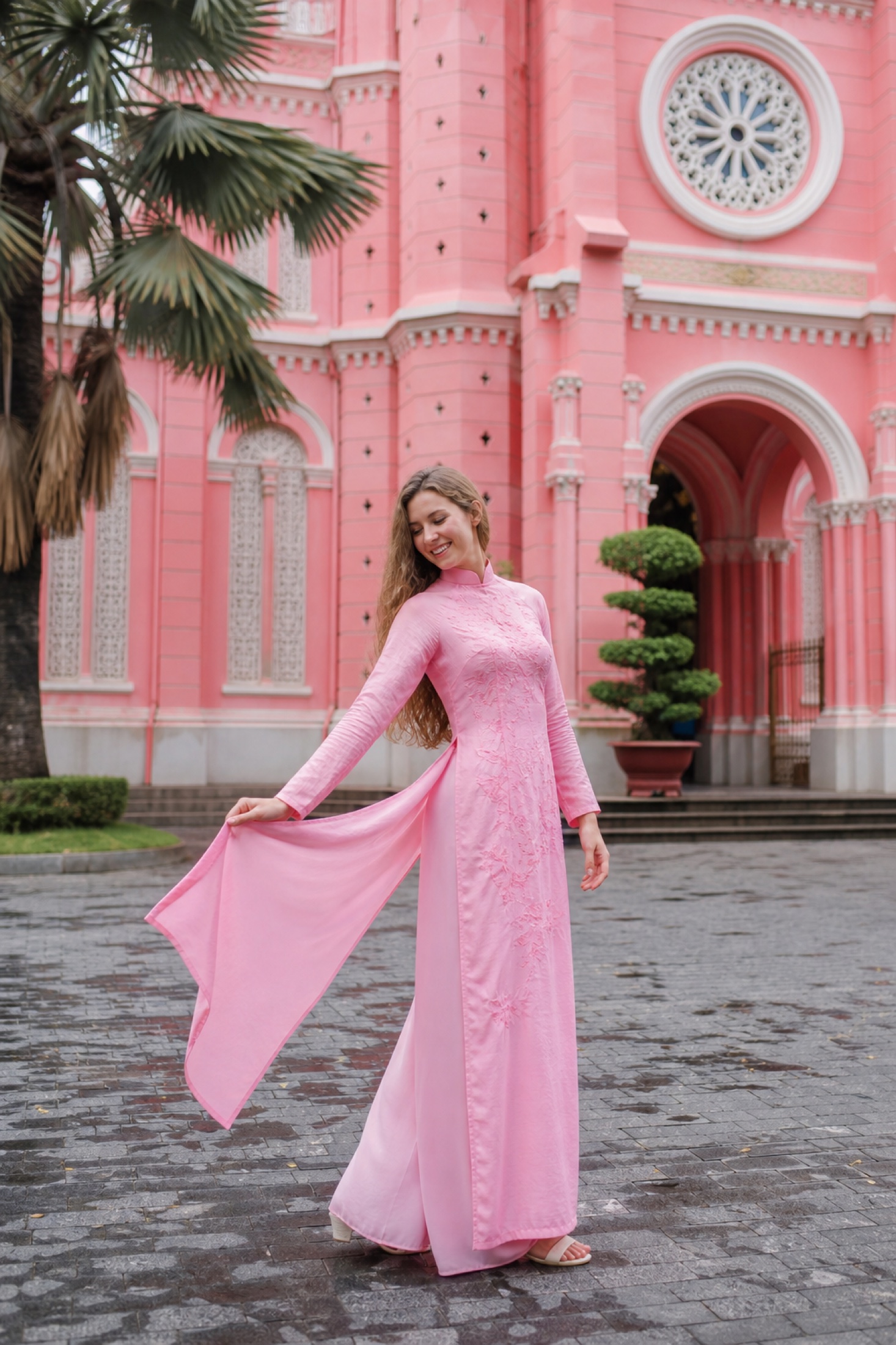
Jewel tones (deep blue, emerald, burgundy) and white pop against blue sky and blue-grey water. Pastels work in overcast light or near colonial buildings. Avoid pale yellow or pale pink in harsh midday sun—they wash out. Test your ao dai in natural light before the shoot day.
Do I need a professional makeup artist for a Da Nang ao dai shoot?
Not mandatory, but recommended if you're shooting in heat or humidity (April–September). Makeup melts and creases without waterproof application and regular touchups. If you do your own, use long-wear foundation, waterproof eyeliner, and bring blotting papers. For hotel-based makeup and hair services, we can arrange coordination via WhatsApp.
How much should I budget for a Da Nang ao dai photoshoot?
Photography runs 800k–2M VND/hour ($33–80 USD) for freelancers; packages (2–3 hours, full edit) cost 2–4M VND ($80–160 USD). Ao dai rental or purchase varies widely. Budget separately for hair/makeup (500k–1.5M VND / $20–60 USD), travel between locations, and any location fees (temples, paid beach areas). Total: $200–400 USD for a polished day.
Should I shoot in the morning or evening in Da Nang?
Morning (6–8 a.m.) offers golden light, cooler temperatures, and fewer crowds—best for beach, rural, and riverside shoots. Evening (4–6 p.m.) suits colonial architecture and elevated viewpoints. Midday (10 a.m.–3 p.m.) is harsh for faces but works indoors or shaded alleys. Choose based on your location and how much heat you can manage in an ao dai.
Can I do a multi-location shoot in one day?
Yes, if you plan well. Pick 2–3 locations sharing similar light times (e.g., beach and river for golden hour), or split morning (cool, light-dependent) and afternoon (hot, architectural). Allow 30 minutes per location for outfit changes and repositioning. Working with makeup and hair support beforehand saves time on-site.
FAQ
Can I wear a modern ao dai (not traditional silk) for a Da Nang photoshoot?
Yes. Cotton, linen, and polyester blends are practical in heat and photograph well. They're more affordable than silk and easier to care for. Just ensure the weight drapes smoothly—cheap synthetic fabrics can cling and wrinkle, which shows in close-ups.
What's the best ao dai color for Da Nang's sunlight?
Jewel tones (deep blue, emerald, burgundy) and white pop against blue sky and blue-grey water. Pastels work in overcast light or near colonial buildings. Avoid pale yellow or pale pink in harsh midday sun—they wash out. Test your ao dai in natural light before the shoot day.
Do I need a professional makeup artist for a Da Nang ao dai shoot?
Not mandatory, but recommended if you're shooting in heat or humidity (April–September). Makeup melts and creases without waterproof application and regular touchups. If you do your own, use long-wear foundation, waterproof eyeliner, and bring blotting papers. For [hotel-based makeup and hair services](/services/makeup-and-hair), we can arrange coordination via WhatsApp.
How much should I budget for a Da Nang ao dai photoshoot?
Photography runs 800k–2M VND/hour ($33–80 USD) for freelancers; packages (2–3 hours, full edit) cost 2–4M VND ($80–160 USD). Ao dai rental or purchase varies widely. Budget separately for hair/makeup (500k–1.5M VND / $20–60 USD), travel between locations, and any location fees (temples, paid beach areas). Total: $200–400 USD for a polished day.
Should I shoot in the morning or evening in Da Nang?
Morning (6–8 a.m.) offers golden light, cooler temperatures, and fewer crowds—best for beach, rural, and riverside shoots. Evening (4–6 p.m.) suits colonial architecture and elevated viewpoints. Midday (10 a.m.–3 p.m.) is harsh for faces but works indoors or shaded alleys. Choose based on your location and how much heat you can manage in an ao dai.
Can I do a multi-location shoot in one day?
Yes, if you plan well. Pick 2–3 locations sharing similar light times (e.g., beach and river for golden hour), or split morning (cool, light-dependent) and afternoon (hot, architectural). Allow 30 minutes per location for outfit changes and repositioning. Working with [makeup and hair support](/services/makeup-and-hair) beforehand saves time on-site.
Ao dai, makeup, hair and a local photographer in Hanoi or Saigon — one WhatsApp message.