/pre-wedding-photoshoot
Da Nang or Hue for pre-wedding photos: which city fits you?
Da Nang excels Feb–Aug when its coastline and colonial architecture are lit cleanly and crowds thin by mid-morning. Hue suits the same dry window but trades beaches for river palaces and royal tombs—better for ao dai drama and moody architecture. Both sit in central Vietnam's climate zone: dry Feb–Aug, typhoon and flood risk Sep–Dec (worst Oct–Nov). Da Nang shoots typically run early (sunrise at My Khe beach, cable car first-light at Ba Na Hills) to avoid afternoon heat and tourist surges. Hue sessions favor late afternoon at the Citadel and Perfume River for softer side-light. Neither city is a Cáo Studio branch, but we offer pre-wedding shoots in Hanoi, Ho Chi Minh City and Hoi An—ask on WhatsApp about travel rates for Da Nang or Hue if you're set on those cities. Both require local photographer expertise and a 2–4 day window for light and weather. ---
Which season gives you the best light in each city?
Both Da Nang and Hue sit in Vietnam's central coast climate: February through August is dry and warm with blue skies most mornings. October through November brings typhoons, floods and cancelled shoots—avoid entirely. December to January clears slowly; expect grey overcast and occasional rain. For photo quality, book Feb–May (cool light, fewer crowds) or June–Aug (hotter, but still shootable if you start at sunrise). Hue's river and palace light peaks in late afternoon when the sun hits the Perfume River at a low angle; Da Nang's beaches and cable-car views peak at first light or just before sunset. Both cities lose light fast after 5 p.m. from February onward.
📸 Book on WhatsApp — ao dai photoshoot
What makes each city's backdrops different for ao dai?
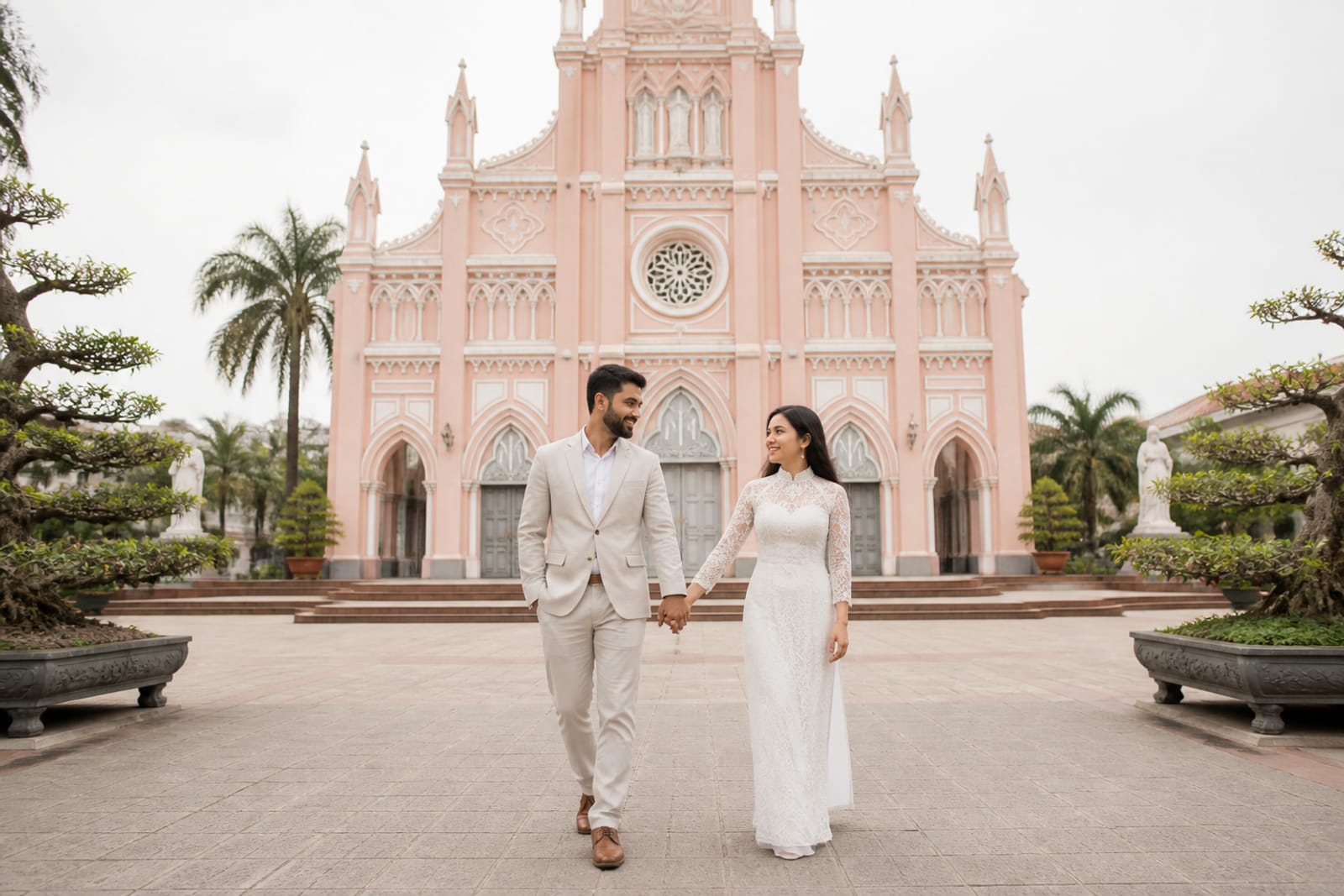
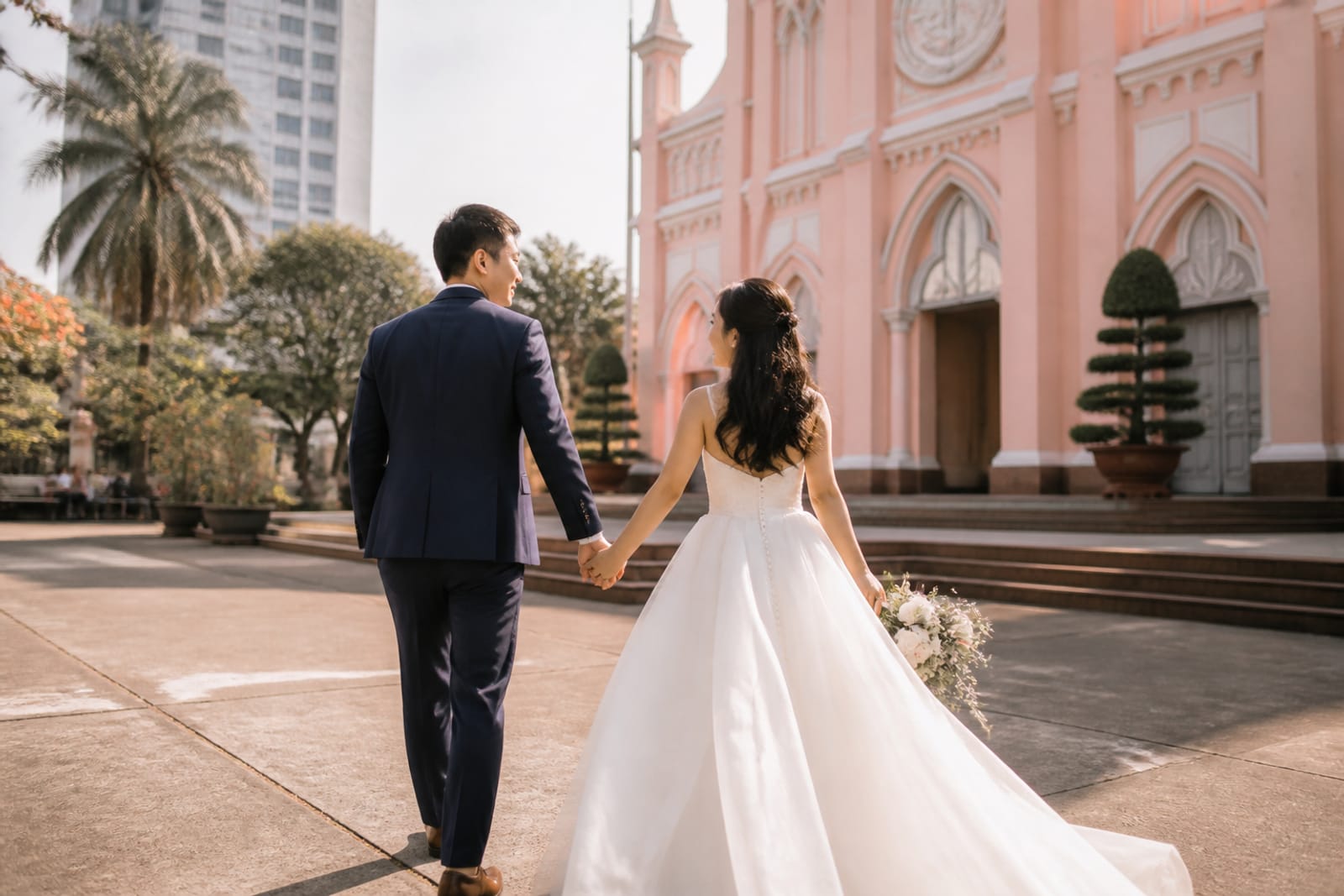
Da Nang suits ao dai against sand, sea and urban geometry—the Golden Bridge at Ba Na Hills (misty and crowded but iconic), My Khe beach (clean water, early light), and French-colonial villas around Marble Mountains. Ao dai reads crisp and modern here. Hue trades beachfront for royal architecture: the Citadel's fortified walls, tomb gardens (Khai Dinh, Tu Duc), and the Perfume River at dusk. Ao dai feels more traditional and ceremonial against these backdrops. If you want vibrant, editorial beach energy, Da Nang wins. If you want moody, historical romance, Hue's palaces and gardens absorb ao dai drama better. Travel distance between them is roughly 2 hours by car; many couples shoot one city per day or alternate outfits across both.
How do crowd levels and shooting windows differ?
Da Nang's cable car to Ba Na Hills fills from 9 a.m. onward; arrive at first opening (check locally for current times) to shoot before day-trippers flood in. My Khe beach is quietest at sunrise (5:30–7:00 a.m.). Marble Mountains draws fewer visitors mid-morning if you skip the temple stairs. Hue's Citadel opens early but builds crowds by 10 a.m.; book your shoot slot for 6:30–8:30 a.m. or 4:00–6:00 p.m. to work around bus groups. Tomb gardens (often less crowded) offer longer, quieter windows. A full-day shoot in either city means two to three location moves and a 12-hour logistics push: hair, makeup, wardrobe changes, travel between sites, golden-hour rush. Plan for one outfit per major landmark and expect 6–8 hours on set.
What's the honest comparison: Da Nang vs. Hue?
| Aspect | Da Nang | Hue | Best for |
|---|---|---|---|
| Primary backdrop | Beach, cable car, marble caves, villas | River, palaces, royal tombs, gardens | Urban coastal vs. historical ceremonial |
| Dry season light | Feb–Aug (blue skies, strong mid-day shadows) | Feb–Aug (softer, especially late afternoon) | Both equally good if timed right |
| Crowd factor | High (Ba Na Hills, My Khe packed 9 a.m.+) | Moderate (Citadel busy 10 a.m.+, tombs quieter) | Early shoot or tomb gardens = fewer people |
| Ao dai fit | Modern, editorial, sand-friendly fabrics | Traditional, ceremonial, heavier silks | Editorial → Da Nang; ceremony-feel → Hue |
| Outfit transitions | Easier (one hotel base, 3–4 beach/hill sites) | Mixed (Citadel central, tombs 5–15 km out) | Da Nang slightly faster logistics |
| Rainy season risk | Oct–Nov typhoons cancel frequently | Oct–Nov typhoons + river flooding | Neither is safe; Feb–Aug only |
| Local photographer quality | Strong beach + tourism portfolio tradition | Strong heritage + architecture expertise | Either city has skilled teams |
How do you actually plan and book a shoot in either city?
Da Nang and Hue are not Cáo Studio branches—we operate in Hanoi, Ho Chi Minh City, and Hoi An (by appointment; ask on WhatsApp for Hoi An dates). If you choose Da Nang or Hue, find a local pre-wedding photographer with a solid ao dai and beach/architecture portfolio. Vet them via Instagram, ask for unedited samples, and confirm they know the Citadel/tomb permit process (Hue requires guide access; Da Nang's public spots are more flexible). Book 4–6 weeks ahead and request a location scout call to nail timing and backup sites for weather. Ask your photographer how many outfits and location moves fit your budget and day, and whether makeup/hair is included or separate. Ask on WhatsApp if you're considering Hoi An instead—we cover that with our team and can walk you through the logistics. For Hanoi or Ho Chi Minh City, we manage the entire pre-wedding experience: local expertise, outfit rentals, and a team that knows the light.
---
What to check before you finalize a city and shoot
- Confirm your travel dates are Feb–Aug (outside this window, rain and typhoons spike risk and cancel shoots).
- Ask your photographer about weather backup plans (reschedule dates, indoor locations, shot-list pivots).
- Check ao dai fit and fabric weight for your chosen season (lighter silks for heat; heavier for drama in cooler Feb–May).
- Confirm makeup and hair logistics (do they travel to your hotel, how early do they arrive, can they touch up between locations?).
- Ask whether location permits or guides are required (Hue's royal tombs may require local guides; Da Nang's public sites are mostly open).
- Plan for 6–8 hours on set and a professional driver or taxi between locations (two-hour shoots with one outfit don't justify travel time).
- Request a shot list and location map a week before to manage expectations and pacing.
Choosing between Da Nang and Hue comes down to your aesthetic (modern coastal vs. historical ceremonial) and season (both best Feb–Aug, avoid Oct–Nov). If you want a full-service team that handles details end-to-end, consider Hanoi, Ho Chi Minh City, or Hoi An—we'll guide you through every decision and deliver unedited samples within days. Reach out on WhatsApp with your dates and vision.
FAQ
Can I shoot pre-wedding photos in Da Nang or Hue with Cáo Studio?
Cáo Studio operates in Hanoi, Ho Chi Minh City, and Hoi An (by appointment). Da Nang and Hue require local photographers. Ask us on WhatsApp if you'd like guidance vetting a local team or if you'd consider Hoi An instead—we travel there and manage the full shoot.
What's the best month to shoot in Da Nang or Hue?
February through May is ideal—dry, cool mornings with clean light and fewer tourists. June–August works but is hotter; avoid October–November entirely due to typhoons and flooding.
Do I need permits to shoot at Hue's royal tombs?
Yes, most tombs require entry tickets and local guide access. Confirm with your photographer whether guides and permits are included or separate costs—check the official Hue heritage site for current rules.
How many hours should a Da Nang or Hue pre-wedding shoot take?
Plan 6–8 hours for two to three locations and one or two outfit changes. Starting at sunrise (5:30–6:30 a.m.) and wrapping by early afternoon beats afternoon heat and crowds.
Should I book makeup and hair separately or with my photographer?
Ask your photographer whether they include or recommend makeup/hair artists. If separate, book early (6:00–7:00 a.m. start times mean makeup crews need to arrive at your hotel by 5:00 a.m.). Some photographers partner with studios; others don't.
What if it rains on my shoot day in Da Nang or Hue?
Confirm your photographer's reschedule policy and backup date options before you book. Typhoon and flood season (Oct–Nov) makes rain likely; Feb–Aug is safer but still requires a contingency shot list (indoor colonial villas, covered Citadel areas, temple courtyards).
FAQ
Can I shoot pre-wedding photos in Da Nang or Hue with Cáo Studio?
Cáo Studio operates in Hanoi, Ho Chi Minh City, and Hoi An (by appointment). Da Nang and Hue require local photographers. Ask us on WhatsApp if you'd like guidance vetting a local team or if you'd consider [Hoi An](/hoi-an) instead—we travel there and manage the full shoot.
What's the best month to shoot in Da Nang or Hue?
February through May is ideal—dry, cool mornings with clean light and fewer tourists. June–August works but is hotter; avoid October–November entirely due to typhoons and flooding.
Do I need permits to shoot at Hue's royal tombs?
Yes, most tombs require entry tickets and local guide access. Confirm with your photographer whether guides and permits are included or separate costs—check the official Hue heritage site for current rules.
How many hours should a Da Nang or Hue pre-wedding shoot take?
Plan 6–8 hours for two to three locations and one or two outfit changes. Starting at sunrise (5:30–6:30 a.m.) and wrapping by early afternoon beats afternoon heat and crowds.
Should I book makeup and hair separately or with my photographer?
Ask your photographer whether they include or recommend makeup/hair artists. If separate, book early (6:00–7:00 a.m. start times mean makeup crews need to arrive at your hotel by 5:00 a.m.). Some photographers partner with studios; others don't.
What if it rains on my shoot day in Da Nang or Hue?
Confirm your photographer's reschedule policy and backup date options before you book. Typhoon and flood season (Oct–Nov) makes rain likely; Feb–Aug is safer but still requires a contingency shot list (indoor colonial villas, covered Citadel areas, temple courtyards).
Ao dai, makeup, hair and a local photographer in Hanoi or Saigon — one WhatsApp message.