/pre-wedding-photoshoot
Da Nang or Phu Quoc for pre-wedding photos: where to shoot
Da Nang works best February–August when skies are clear and limestone backdrops are dry; Phu Quoc's dry season runs November–April with calm seas and reliable west-coast sunsets. Da Nang suits couples drawn to dramatic, vertical landscapes (cliffs, bridges, city skylines); Phu Quoc attracts those seeking tropical, water-facing romance. Both require a local photographer—Cáo Studio – Makeup & Photoshoot operates in Hanoi and Ho Chi Minh City, not these coastal destinations, so you'll book a location specialist and handle logistics independently. Shoot Da Nang early morning (06:30–08:30) to avoid crowds and hard noon light; Phu Quoc works sunset-forward (16:30–18:30). Rain, crowds and rough seas are the main pitfalls; plan 2–3 backup dates and scout locations in person before the session. 📸 Book on WhatsApp — ao dai photoshoot ---
Where do you want to shoot: mountain views or beach romance?
Da Nang gives you sheer limestone cliffs, urban waterfronts and misty morning light. Phu Quoc offers white sand, turquoise shallows and tropical island energy. Your answer shapes everything: outfit choices, session timing, logistics and backup plans.
If you favour dramatic, layered backgrounds—think clifftop vistas, bridges framing the city, temple silhouettes—Da Nang wins. If you crave intimate, water-centric intimacy with tropical flowers and golden-hour glow, Phu Quoc is your answer. Many couples split the shoot across both, but that doubles your cost, requires a multi-day trip and forces you to coordinate two separate photographers. Decide which landscape matches your love story first. That single choice cascades into season selection, outfit packing and photographer vetting.
Da Nang's visual language is vertical and dramatic; Phu Quoc's is horizontal and dreamy. Neither is objectively better—it depends on your aesthetic and tolerance for logistics.
Which months give you the best light and weather?
| Destination | Best months | Light character | Main risk | Why it matters |
|---|---|---|---|---|
| Da Nang | Feb–Aug | Hard, clear morning; soft 17:00–18:30 | Rainy Sept–Dec; crowds Tet | Dry season = dry cliffs, sharp shadows, fewer storms |
| Phu Quoc | Nov–Apr | Golden hour reliable; calm water | Rainy/rough May–Oct; Tet closure | Dry season = glassy sea, predictable sunsets, west-coast access |
Da Nang: February–August is dry season. Skies are clearer, limestone faces aren't slick, and early morning (06:00–08:00) produces the softest, most directional light. Avoid September–December—typhoons, flash flooding and low clouds make shoots unpredictable. Tet (late January–mid February) closes businesses and crowds landmarks; if you shoot early February, expect congestion.
Phu Quoc: November–April is optimal. Seas are calm, sunsets are golden and consistent, and the west coast (Sunset Town, Kiss Bridge) faces the sun reliably. May–October brings afternoon downpours and rough western waters; if you love storm light or dramatic skies, shoot then, but pack rain gear and accept schedule risk.
The trade-off: Da Nang's dry season has harder noon light (avoid 11:00–15:00); Phu Quoc's dry season has longer golden hours but a shorter optimal window (Nov–Feb is safest, Mar–Apr is warming).
What outfits work best in each location?
Da Nang suits structured, layered looks: Western wedding dresses (the cliffs demand elegance), tailored suits, and ao dai in jewel tones or cream (which pop against grey stone). Avoid loose, billowing fabrics—wind whips around the cliffs, and you'll spend half the session tugging fabric.
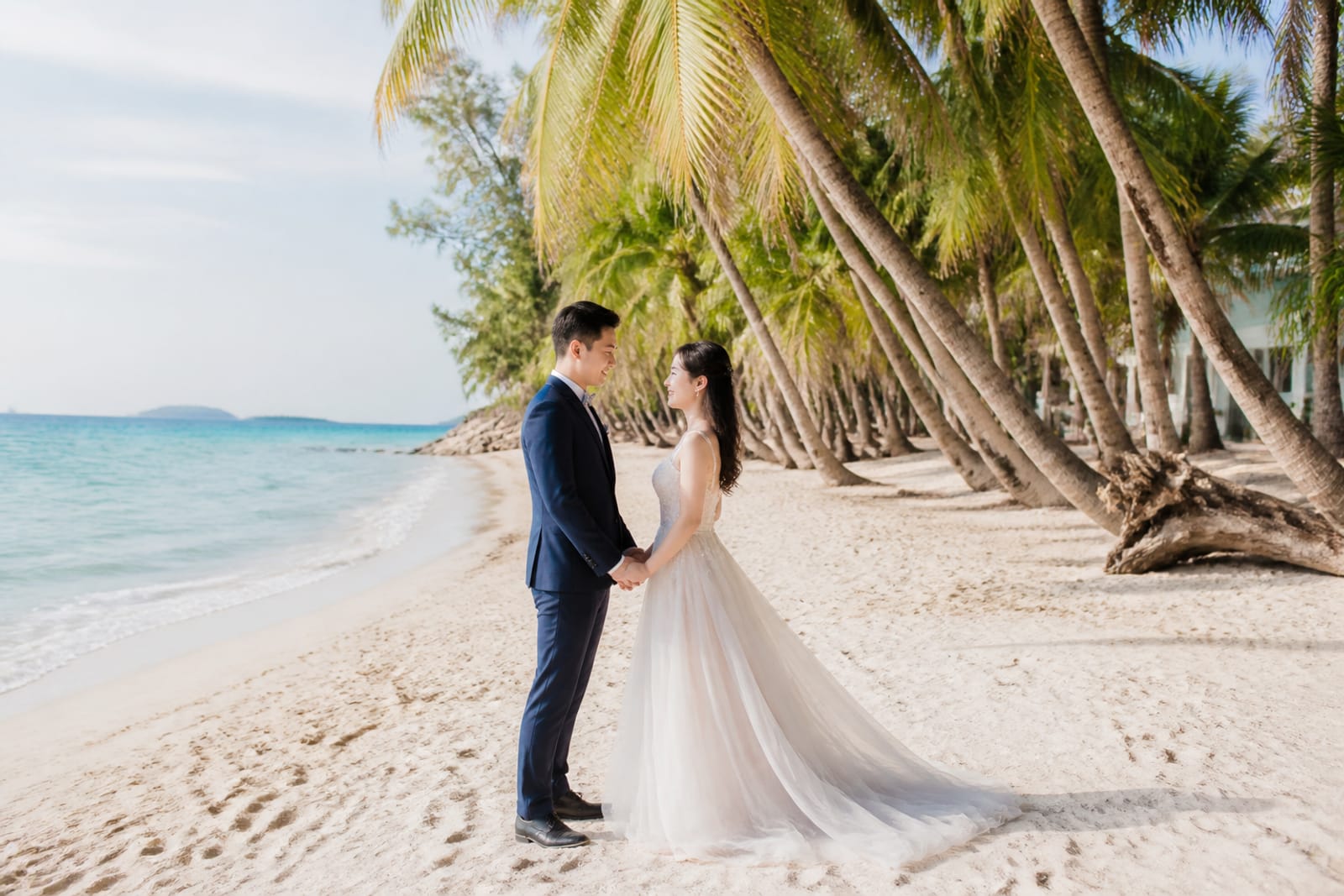
Phu Quoc rewards movement and lightness: flowing dresses, short gowns, linen suits, and ao dai in pastels or white (beach light bleaches dark colours). Bring a change—one outfit for morning beach walks, one for sunset. The sand and salt water damage delicate fabrics, so rent or wear something you're willing to get wet.
Undergarments matter. Under an ao dai, wear a simple slip or bodysuit (no visible panty line—the fabric clings). For Western gowns on the beach, go strapless or slip-on; remove shoes for water shots to avoid tripping. Both locations mean you're walking: pack flat sandals or barefoot-friendly shoes.
Colour psychology shifts by backdrop: cream and pale gold sing against Da Nang's grey cliffs; jewel greens and deep blues vanish into Phu Quoc's water. Discuss your outfit palette with your photographer before the shoot.
How do you find and vet a local photographer?
Cáo Studio – Makeup & Photoshoot operates in Hanoi, Ho Chi Minh City (Saigon) and Hoi An—not Da Nang or Phu Quoc. For either coastal destination, you'll hire a local specialist. Here's how to do it safely:
Search by portfolio, not price. Request 3–5 full pre-wedding galleries (not highlight reels). Do their couples look comfortable? Is the light consistent, or does every shot rely on dramatic overexposure? Do they show backups during rain or crowds?
Check for location knowledge. Ask which spots they shoot regularly, what time they arrive, and how they handle crowds. A Da Nang specialist should name specific clifftop access points and morning-light timing; a Phu Quoc shooter should know the Kiss Bridge's best angle and tide times for beach shoots.
Verify their backup plan. What happens if weather turns? Do they reschedule, shoot in rain, or offer partial refunds? Get this in writing before signing.
Meet in person if possible. A video call reveals professionalism; an in-person meet reveals chemistry and their ability to direct you naturally.
Ask for recent work. Portfolios age fast—request shots from the last 2–3 months in the exact season you're booking.
Check Google reviews and local forums (Reddit's r/Vietnam, VNExpress travel forums) for honest feedback. One-off complaints are normal; patterns of missed shots, late delivery or poor communication are red flags.
For couple photoshoots in Vietnam, local knowledge is non-negotiable. Rushing this step costs more than a higher day rate.
What logistics and permits do you need to arrange?
Da Nang: Most scenic spots (clifftops, bridges, temples) are open to the public but often have soft hours (temples close 11:00–13:00, reopen 14:00–17:00). Confirm with your photographer which sites require entry tickets (check current prices on-site) and whether a permit is needed for tripod/drone work. Hanoi's Cáo Studio cannot coordinate this—your local photographer must handle it.
Phu Quoc: Kiss Bridge and Sunset Town are free but crowded at golden hour (17:00–18:30). Tidal access matters—low tide opens sandbar space; high tide floods it. Your photographer should know the tide calendar for your shoot date. Entry to national park areas may require a permit; confirm locally.
Shared logistics both locations: Book accommodation within 15 minutes of your main shoot location (travel time eats golden hour). Hire a car with a driver (safer than renting; avoids parking stress). Request your photographer arrive 20 minutes early to scout light and frame shots. Plan a 2–3 day trip minimum; one-day coastal shoots rarely survive weather or logistics delays.
What common mistakes should you avoid?
Shooting at noon. Both locations have brutal midday sun. Shadows are hard, skin tones go flat, and you're squinting. Book sessions 06:00–09:00 or 16:00–sunset only.
Ignoring the weather window. Phu Quoc in July or Da Nang in October can work, but you're gambling with typhoons and flash floods. Stick to the dry-season months—the risk isn't worth saving money.
Booking a photographer who won't show full galleries. If they offer only "best 20 shots" instead of a complete gallery from a recent couple's session, they're hiding inconsistency. Walk away.
Overpacking outfits. Salt water, sand and humidity destroy delicate fabrics. One primary outfit plus one backup is enough. Bring a change bag, not a steamer trunk.
Forgetting sun protection. Reef-safe sunscreen, a beach umbrella and a wide-brimmed hat protect your skin during the session. Sunburned couples photograph grey and flat.
Expecting Cáo Studio to coordinate the shoot. Cáo Studio operates in Hanoi, Ho Chi Minh City and Hoi An only. For Da Nang or Phu Quoc, you own the photographer hunt, location scouting and logistics. Think of your local photographer as your partner, not a service you book sight-unseen.
---
What to check before you book a coastal shoot
- [ ] Photographer's portfolio includes 3+ full recent galleries (this season, last 2 months)
- [ ] You've reviewed their work in exactly the location and time slot you're booking (not just the region)
- [ ] They've named the specific spots, arrival time and backup plan in writing
- [ ] You've confirmed permit requirements and entry-ticket costs with the location directly
- [ ] Your outfit palette matches the backdrop (ask your photographer for a colour test)
- [ ] You've booked a car and accommodation within 15 minutes of the main location
- [ ] Weather forecast is checked 5 days before; if rain is ≥60% likely, reschedule
- [ ] You have a second shoot date reserved in case the first is rained out
- [ ] Undergarments, shoes and sun protection are packed and tested
- [ ] Your photographer has your phone number and a clear start time (not "morning"—say 06:30)
---
For couples based in Hanoi or Ho Chi Minh City, Cáo Studio – Makeup & Photoshoot's pre-wedding service includes makeup and hair at your hotel, ao dai rentals and post-wedding video. We don't shoot in Da Nang or Phu Quoc, but we can prepare you in Ho Chi Minh City before you travel—makeup, ao dai fitting, and a final lookbook review ensure you're camera-ready regardless of where you shoot. See our pricing and FAQ to learn how we structure sessions.
📸 Book on WhatsApp — ao dai photoshoot
---
FAQ
Can Cáo Studio shoot my pre-wedding in Da Nang or Phu Quoc?
No. Cáo Studio operates in Hanoi, Ho Chi Minh City and Hoi An. For Da Nang or Phu Quoc, you'll hire a local photographer and handle location logistics independently. We can prepare you in Ho Chi Minh City with makeup, ao dai rental and a lookbook review before you travel.
Which destination is cheaper to shoot in?
Travel cost and photographer fees vary by season and photographer experience. Phu Quoc typically requires a flight (from Hanoi or Ho Chi Minh City); Da Nang has cheaper flights and closer accommodation. Ask your local photographer for their day rate; compare total trip cost (flights, hotel, meals, photographer), not just the shoot fee.
What if weather cancels my shoot?
Confirm your photographer's reschedule policy before you book—get it in writing. Most professionals offer one free reschedule if weather is ≥60% rain on the original date. Book a second date 2–3 days later as a buffer. Avoid September–December in Da Nang and May–October in Phu Quoc if you can't absorb rescheduling.
Should I rent my wedding dress or bring it from abroad?
Bringing your dress from abroad risks damage during travel and humidity-related wrinkles. Renting local saves luggage space and gets you a local seamstress for last-minute fits. Da Nang and Phu Quoc have bridal rental shops; ask your photographer for referrals. If your dress is irreplaceable, pack it in a garment bag and steam it on arrival.
How far in advance should I book the photographer?
Book 6–8 weeks ahead if you're shooting in November–February (peak dry season); 4–6 weeks for March–August. Confirm they have another couple's gallery from your exact shoot season—not just the region. Email your deposit and contract immediately after they agree to your date.
Do I need a permit to shoot with a drone in Phu Quoc or Da Nang?
Yes, Vietnam requires drone permits from local authorities. Your photographer must handle this—confirm they have current permits before booking. If drone shots are important, ask to see their permit documentation. Some locations (national parks, military zones) prohibit drones entirely; your photographer should know this for each spot.
FAQ
Can Cáo Studio shoot my pre-wedding in Da Nang or Phu Quoc?
No. Cáo Studio operates in Hanoi, Ho Chi Minh City and Hoi An. For Da Nang or Phu Quoc, you'll hire a local photographer and handle location logistics independently. We can prepare you in Ho Chi Minh City with makeup, ao dai rental and a lookbook review before you travel.
Which destination is cheaper to shoot in?
Travel cost and photographer fees vary by season and photographer experience. Phu Quoc typically requires a flight (from Hanoi or Ho Chi Minh City); Da Nang has cheaper flights and closer accommodation. Ask your local photographer for their day rate; compare total trip cost (flights, hotel, meals, photographer), not just the shoot fee.
What if weather cancels my shoot?
Confirm your photographer's reschedule policy *before* you book—get it in writing. Most professionals offer one free reschedule if weather is ≥60% rain on the original date. Book a second date 2–3 days later as a buffer. Avoid September–December in Da Nang and May–October in Phu Quoc if you can't absorb rescheduling.
Should I rent my wedding dress or bring it from abroad?
Bringing your dress from abroad risks damage during travel and humidity-related wrinkles. Renting local saves luggage space and gets you a local seamstress for last-minute fits. Da Nang and Phu Quoc have bridal rental shops; ask your photographer for referrals. If your dress is irreplaceable, pack it in a garment bag and steam it on arrival.
How far in advance should I book the photographer?
Book 6–8 weeks ahead if you're shooting in November–February (peak dry season); 4–6 weeks for March–August. Confirm they have another couple's gallery from your exact shoot season—not just the region. Email your deposit and contract immediately after they agree to your date.
Do I need a permit to shoot with a drone in Phu Quoc or Da Nang?
Yes, Vietnam requires drone permits from local authorities. Your photographer must handle this—confirm they have current permits *before* booking. If drone shots are important, ask to see their permit documentation. Some locations (national parks, military zones) prohibit drones entirely; your photographer should know this for each spot.
Ao dai, makeup, hair and a local photographer in Hanoi or Saigon — one WhatsApp message.