/pre-wedding-photoshoot
Destination elopement in Ha Giang: a photographer's planning guide
A Ha Giang elopement is a multi-day journey into the far north: you drive 4–6 hours from Hanoi, stay 2–3 nights, and shoot across valleys, bridges and terraces during autumn (Sep–Nov) or cool season (Dec–Feb). Light shifts fast in mountains—golden hour arrives early (6–7 am) and fades by 5 pm—so a photographer must scout routes beforehand and adapt to cloud cover. Cáo Studio does not operate in Ha Giang; the roads are remote and weather can shift fast, making same-day pivots essential. Instead, we recommend hiring a pre-wedding and elopement team locally (ask on WhatsApp for a vetted contact) or combining a Hanoi session with Ha Giang as a 3-day trip: shoot in Hanoi first (controlled light, logistics, turnaround), then travel to Ha Giang with a local guide. Avoid Oct–Nov buckwheat blooms if crowds matter; Dec–Feb is cold but clear. Plan 48+ hours before departure and budget for guide, accommodation, fuel and weather delays. 📸 Book on WhatsApp — pre-wedding photoshoot ---
Why Ha Giang works for elopement—and when it doesn't
Ha Giang attracts couples seeking isolation and drama: the Dong Van Karst Plateau, Heavens Gate (Noi Dai), Thang Hen Lake and rice terraces near Hoang Su Phi offer frames no studio can replicate. But mountain weather turns fast, and roads are narrow and winding—a 30 km journey can take 2+ hours. Couples who love spontaneity and long driving days, and who can pivot if weather closes a location, thrive here. Couples on tight schedules, those uncomfortable with slow travel or who need guaranteed turnaround times, should choose Hanoi or Hoi An instead. Light is strongest Sep–Nov and Dec–Feb, but buckwheat season (Oct–Nov) brings tour buses by late morning, and Dec–Feb requires warm layers that show in frames. The true question: are you eloping to hike and explore, or to be photographed? Ha Giang suits the former; a studio session suits the latter.
How light moves in mountain terrain—and why timing shifts every hour
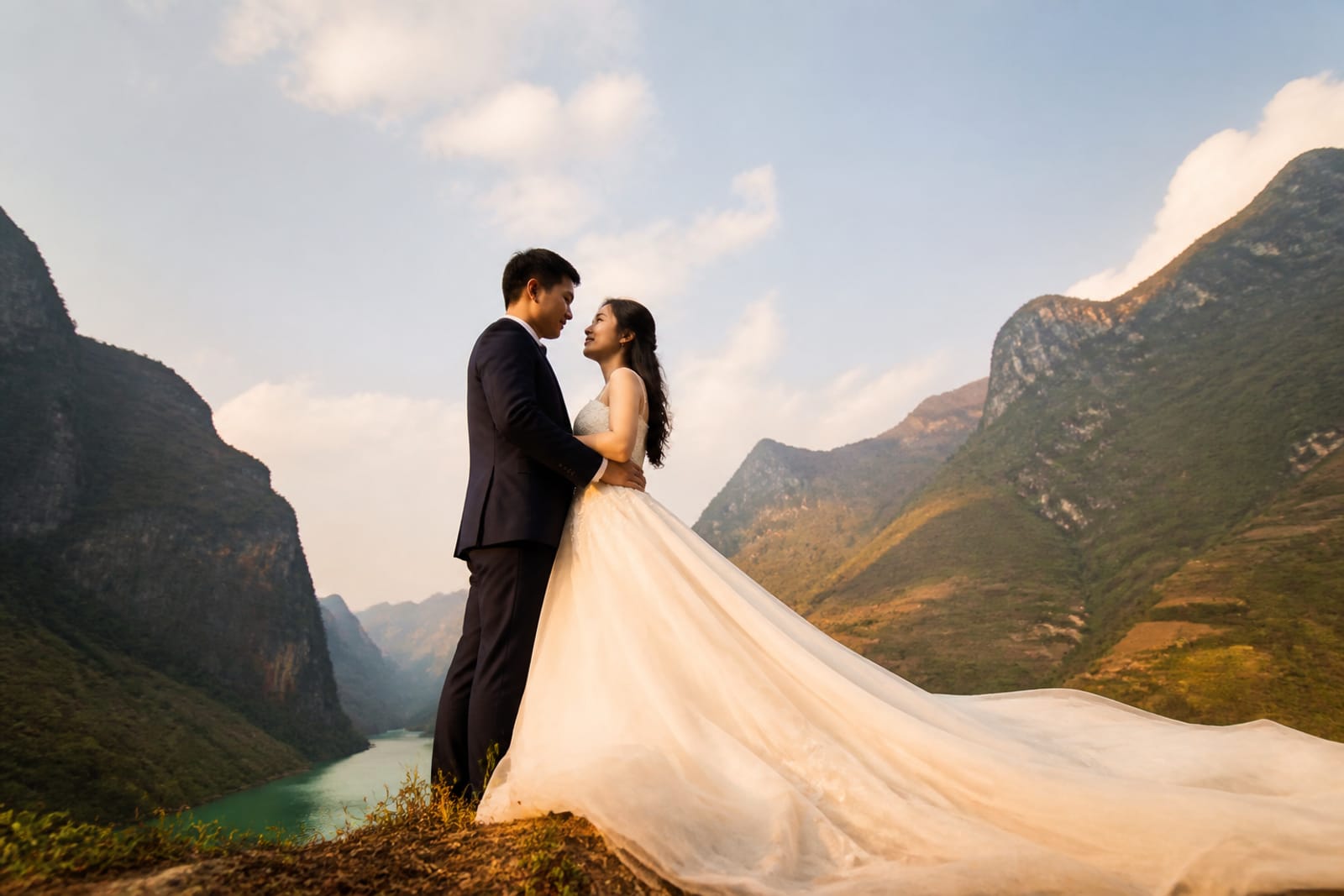
Valley light in mountains doesn't behave like lowland sites. At Dong Van, golden light hits one cliff face at 6:10 am and shifts to shadow 90 minutes later; by 2 pm, mist or cloud often rolls in, turning the landscape monochrome. A photographer who has shot there before knows which locations face east (early light), west (afternoon glow) or north (deep shadow all day). For comparison, Hanoi's Red River bridges hold consistent sidelight from 6:30–7:30 am year-round, and you can shoot indoors if weather fails. In Ha Giang, there is no backup. Plan two locations per shooting window and confirm a scout beforehand—not online research, but boots on the ground the day before. Mist clears by 8:30 am on dry days but lingers if rain fell overnight. Bring weather data from the previous 48 hours (not the forecast, which shifts) and ask your local guide which roads are passable. A session here runs 10+ hours of travel and 3–4 hours of shooting spread across two days, compared to 4 hours total in Hanoi.
Season comparison: buckwheat, rice terraces, temperature and crowds
| Season | Best for | Light & clouds | Why it works | Why it doesn't |
|---|---|---|---|---|
| Oct–Nov (buckwheat) | Colour, flowers | Golden but hazy; afternoon cloud likely | Iconic pink fields, cool temps, fewer tourists than summer | Crowds from 10 am onward; dust from bikes; flowering only 2–3 weeks |
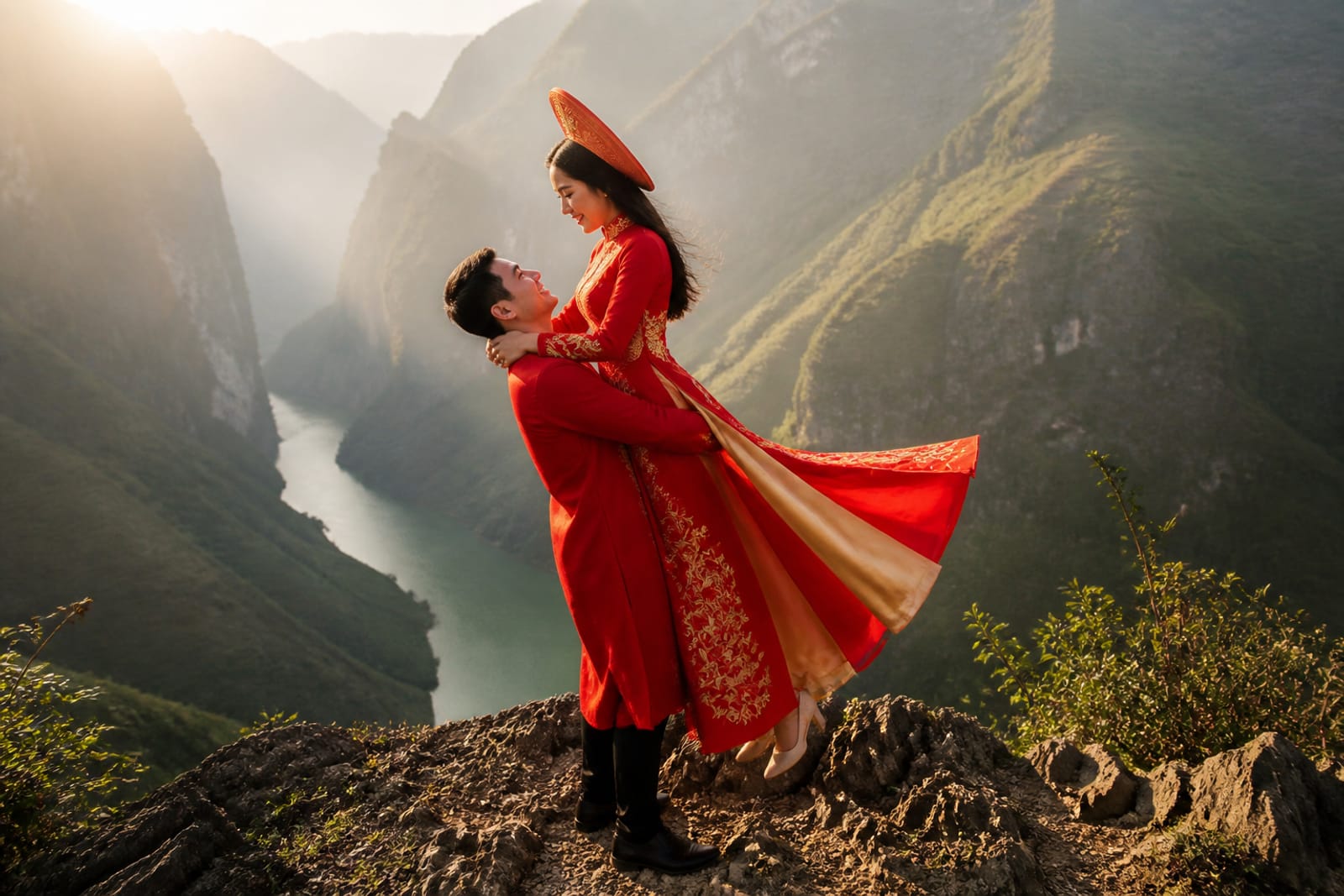
| Dec–Feb (cool, clear) | Drama, geometry | Crisp, sharp shadows; mist in valleys early morning | Clear skies, empty roads, terraces golden; cold frames warmly | Layers necessary (heavy ao dai fabric, jackets); fingers numb by 7 am |
| Mar–Apr (spring) | Greenery, temples | Warm but hazy (Sahara dust from China) | Green rice, fewer tourists, comfortable driving | Light diffused; skies often grey; still cool enough to layer |
| May–Sep (summer rains) | Not recommended | Afternoon downpours; landslide risk on mountain roads | — | Winding roads become hazardous after rain; mist all day; locals advise against it |
Buckwheat blooms for 2–3 weeks only (consult a local guide on exact timing each year); rice terraces are golden around Sep. Neither blooms are guaranteed—weather, farmer timing and plant health vary. Plan a non-flower location as backup (limestone cliffs, bridges, temples) so a shoot still delivers even if flowers are late or past.
The checklist: what to confirm with a local photographer before booking
- Ask for a scouted route — A real photographer shows a map with two locations, noting compass direction (for light angle), arrival time (accounting for road speed) and bad-weather pivot. If they offer "we'll figure it out when we arrive," that's a red flag.
- Confirm vehicle and driver included — Ha Giang requires someone who knows the roads. Budget matters here: a private car and driver cost more than in Hanoi, and some photographers don't include it. Clarify upfront.
- Get a refund or rescheduling policy — Mountain weather changes. Ask if bad weather allows a full rescheduling within N months, or a partial refund. Legitimate studios have one.
- Request a weather-go decision by 6 am — Ask when the photographer makes the "go or reschedule" call. You need 48+ hours to pivot flights or accommodation.
- Verify weather data source — Ask what they use (local contacts, not generic forecasts). A guide on the ground is more reliable than an app.
- Confirm backup indoor/covered locations — If mist or rain hits, what's the plan? (Temples, minority homestays, covered bridges exist; make sure they're scouted and culturally appropriate.)
- Get a shooting timeline — Exact times for pickup, location 1, lunch, location 2, return. This prevents surprise all-nighters and allows couples to manage energy and outfit changes.
Why Hanoi + Ha Giang often works better than Ha Giang alone
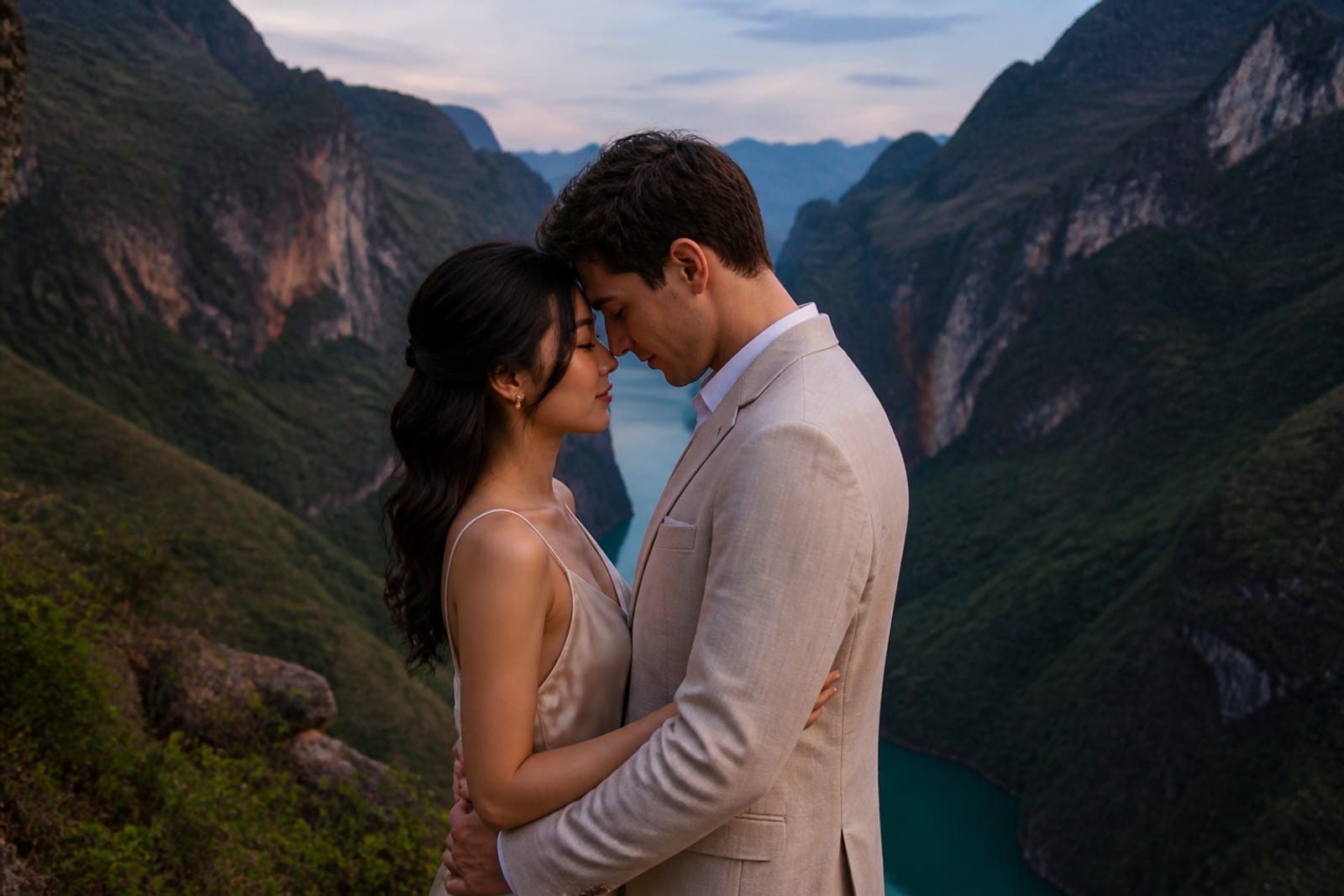
A two-part session pairs controlled Hanoi light (Red River, French Quarter, temples) with remote Ha Giang framing. Day 1–2 in Hanoi (4-hour session, turnaround in 48 hours with edited photos and film) builds momentum and tests chemistry with the photographer. Day 3–5 in Ha Giang happens with confidence and a proven creative rhythm. Logistically, Hanoi sessions are easier to move if weather fails—you can reshoot the same bridge tomorrow. Ha Giang weather is binary: you adapt or lose the day. Couples also spread costs (season, vehicle, guide hours) across two bookings rather than betting everything on one 3-day mountain gamble. Hanoi-based Cáo Studio can coordinate a local Ha Giang team or guide you on vetting photographers; ask on WhatsApp. This hybrid model suits international couples who want Hanoi's efficiency and Ha Giang's identity without the stress of a first-time mountain shoot in an unfamiliar language and terrain.
Cost factors (not amounts)—what shapes a Ha Giang elopement quote
Photographer & team: Remote locations and multi-day travel cost more than studio or city shoots. Some photographers charge daily rates, others fixed projects; ask which applies.
Vehicle: A private car + driver (sometimes the photographer drives; sometimes a separate guide) covers fuel, time and knowledge. Costs depend on road distance and fuel prices that season.
Accommodation: You need lodging near shooting locations. Budget varies by comfort level; homestays and guesthouses are cheaper than hotels, but may lack wifi or power for fast edits.
Guide or local escort: If the photographer isn't from Ha Giang, hire a cultural guide to advise on temple etiquette, road safety and community protocols. This is non-negotiable for respectful shoots.
Outfit changes & transport: Multiple locations mean carrying and changing clothes. Ask if the team helps with logistics or if you manage it.
Contingency: Weather delays mean extra vehicle days, accommodation nights or rescheduling flights. Budget generously and confirm cancellation terms.
Compare pre-wedding and elopement quotes by asking: photographer experience in mountains, what's included in a multi-day rate, who handles vehicle and guide, what happens if weather closes a road—not just hourly or per-day cost.
What to check before you book
- Photographer portfolio: Request images shot in Ha Giang that season. Lighting, crowd levels and flower blooms change; recent work matters more than flattering old shots.
- Client testimonials from multi-day shoots: Read feedback from couples who experienced weather delays or road pivots, not just satisfied clients.
- Written agreement on weather policy: An email or signed document stating the reschedule/refund terms protects both parties.
- Communication style: WhatsApp or email during your session? Slow response on a mountain shoot wastes light and creates stress.
- Backup photographer: Ask who shoots if the lead photographer falls ill. Remote locations can't be cancelled last-minute without one.
- Editing timeline: Mountain shoots with 2–3 locations take longer to edit than studio sessions. Ask for a specific delivery date (e.g. "unedited previews in 48 hours, finals in 2 weeks").
---
FAQ
Can we shoot Ha Giang if we only have one day?
No. The 4–6 hour drive from Hanoi alone eats most of a day; add shooting, location changes and return time, and you lose usable light. Plan 2–3 days minimum, ideally 3–4 for two locations and a buffer day if weather fails.
Do we need to speak Vietnamese to work with a local photographer in Ha Giang?
No, but hire a cultural guide or translator who travels with you. They'll communicate with the photographer, advise on temple etiquette, and manage logistics. This costs extra but prevents misunderstandings and shows respect to the community.
What if it rains the day we're scheduled to shoot?
Ask your photographer's policy before booking: do they reschedule (and when), offer a partial refund, or shoot anyway (mist and rain can look beautiful but aren't predictable). Get this in writing. Have backup indoor locations scouted (temples, homestays, covered bridges) and confirm access and protocols beforehand.
Is buckwheat blooming worth the trip, or should we shoot anytime?
Buckwheat blooms for 2–3 weeks each year (Oct–Nov typically, but timing varies by farm and weather). If blooms are central to your vision, ask a local guide the exact bloom window before booking. If not, Dec–Feb clear skies and empty roads often deliver stronger light and better isolation than flower season.
Should we hire Cáo Studio for Ha Giang?
No. Cáo Studio operates in Hanoi, Ho Chi Minh City and Hoi An only; the remote roads and fast-changing weather in Ha Giang require a photographer based there. Instead, book a pre-wedding session in Hanoi first, ask us on WhatsApp for a vetted local Ha Giang contact, or combine both: shoot controlled frames in Hanoi, then travel to Ha Giang with a local team you've vetted independently.
How do we vet a local Ha Giang photographer we find online?
Request a portfolio of their mountain work from the current season, ask for 3–5 recent client references, and video-call them to assess communication style and problem-solving. Ask about their vehicle, guide, and weather policy; if vague answers come back, move on. A legitimate photographer answers specifically and expects verification—it's professional.
FAQ
Can we shoot Ha Giang if we only have one day?
No. The 4–6 hour drive from Hanoi alone eats most of a day; add shooting, location changes and return time, and you lose usable light. Plan 2–3 days minimum, ideally 3–4 for two locations and a buffer day if weather fails.
Do we need to speak Vietnamese to work with a local photographer in Ha Giang?
No, but hire a cultural guide or translator who travels with you. They'll communicate with the photographer, advise on temple etiquette, and manage logistics. This costs extra but prevents misunderstandings and shows respect to the community.
What if it rains the day we're scheduled to shoot?
Ask your photographer's policy before booking: do they reschedule (and when), offer a partial refund, or shoot anyway (mist and rain can look beautiful but aren't predictable). Get this in writing. Have backup indoor locations scouted (temples, homestays, covered bridges) and confirm access and protocols beforehand.
Is buckwheat blooming worth the trip, or should we shoot anytime?
Buckwheat blooms for 2–3 weeks each year (Oct–Nov typically, but timing varies by farm and weather). If blooms are central to your vision, ask a local guide the exact bloom window before booking. If not, Dec–Feb clear skies and empty roads often deliver stronger light and better isolation than flower season.
Should we hire Cáo Studio for Ha Giang?
No. Cáo Studio operates in Hanoi, Ho Chi Minh City and Hoi An only; the remote roads and fast-changing weather in Ha Giang require a photographer based there. Instead, book [a pre-wedding session in Hanoi](/pre-wedding-photoshoot) first, ask us on WhatsApp for a vetted local Ha Giang contact, or combine both: shoot controlled frames in Hanoi, then travel to Ha Giang with a local team you've vetted independently.
How do we vet a local Ha Giang photographer we find online?
Request a portfolio of their mountain work from the current season, ask for 3–5 recent client references, and video-call them to assess communication style and problem-solving. Ask about their vehicle, guide, and weather policy; if vague answers come back, move on. A legitimate photographer answers specifically and expects verification—it's professional.
Ao dai, makeup, hair and a local photographer in Hanoi or Saigon — one WhatsApp message.