/pre-wedding-photoshoot
Destination elopement in Quy Nhon: a photographer's planning guide
An elopement photoshoot in Quy Nhon is a half- or full-day session at dawn or late afternoon on a rocky coastline where the sea is calmest and side light is strongest. The best window runs February through August, when afternoon rain is rare and morning fog clears by 6:30 am. Book a photographer (or studio team) who handles outfit, hair and makeup in parallel, not sequentially—three vendors stitch together slower and risk miscommunication on location. Quy Nhon's tides shift by 1–2 hours daily; scout your spot the day before, confirm the hour with your crew, and arrive 20 minutes early. Cáo Studio shoots in Hanoi, Ho Chi Minh City and Hoi An, but can guide you on crew logistics and light timing for Quy Nhon if you book a local photographer.
Why Quy Nhon works for an elopement shoot (but not every season)
Quy Nhon's coastline is a string of turquoise bays backed by limestone ridges and fishing villages—nothing like Phuket or Boracay. The rock formations give frames depth; the water is shallow and calmest at dawn. The catch: central Vietnam's rainy season runs September to December, with typhoons most likely October through November. Book February through August. In dry months, the light is consistent by 6:30 am and stays clean until 7 pm. From May onward, afternoon heat rises sharply after 2 pm, and humidity builds by late afternoon. Shoot early or after 5 pm to avoid blown-out skies and sweating through your outfit.
Conclusion: Quy Nhon elopements work only Feb–Aug; dawn or late-afternoon shoots avoid harsh midday heat and afternoon rain.
How light changes across Quy Nhon's best photo spots
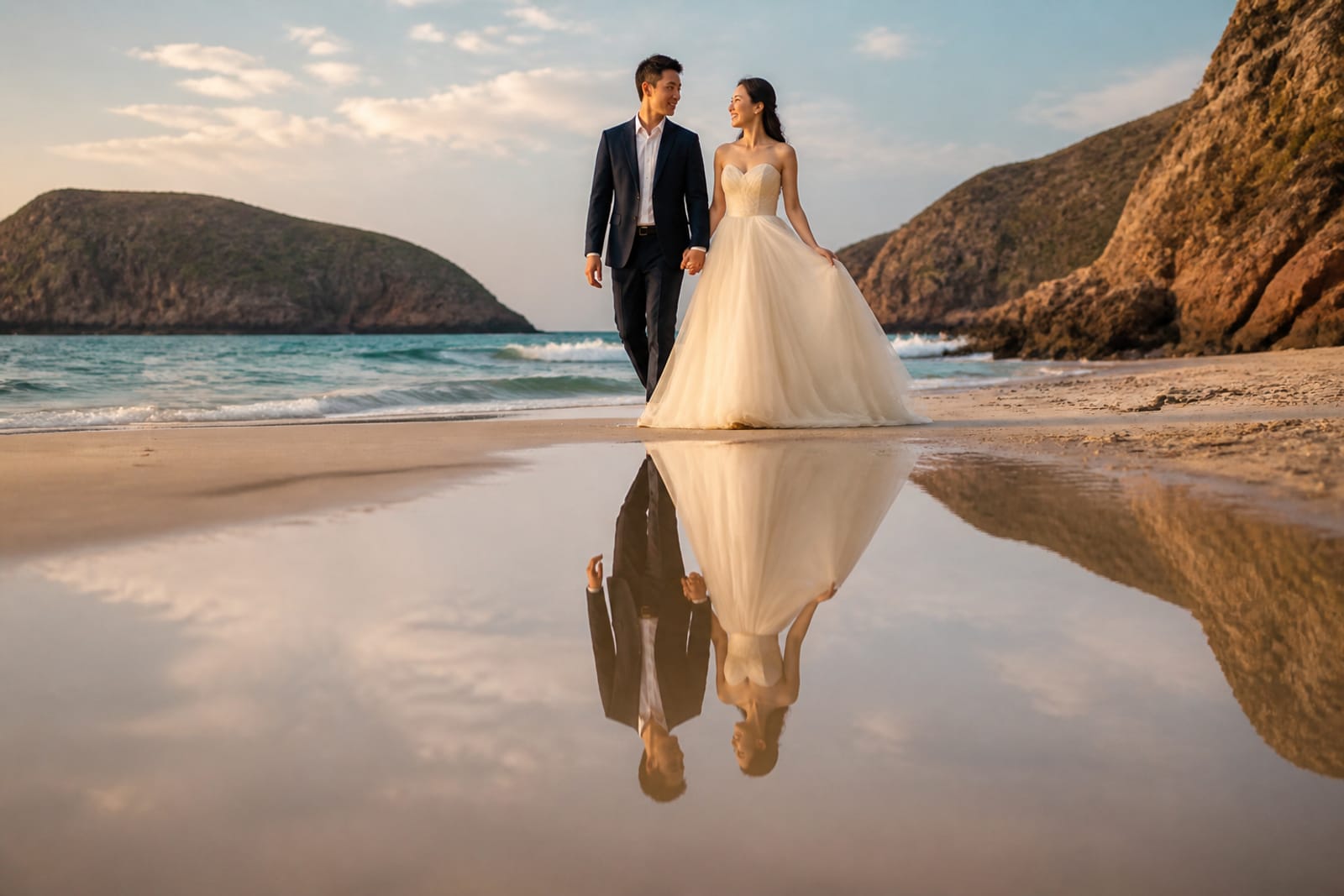
Three coves dominate elopement shoots: Bai Xep (rocky, sheltered, 6 km south—side light peaks 6:30–7:30 am), Eo Gio (limestone arch, 12 km north—golden hour 5:00–6:30 pm, tide-dependent access), and the city harbor (protected, fishing boats at dawn, crowds by 8 am). Bai Xep faces east; shoot there at sunrise or late afternoon when sunlight hits the rocks from the side. Eo Gio faces west; best in late afternoon when the arch shadows the beach. Harbor light is soft until 7 am; after that, tourist boats create reflections and shadows. Scout each spot at your intended shoot time one day prior. Bring a flashlight and phone with a GPS map; tides can shift beach access by 1–2 meters within an hour.
Comparison table:
| Spot | Best time | Why it works | Walking effort | Outfit fit |
|---|---|---|---|---|
| Bai Xep | 6:30–7:30 am | East-facing, rocks catch side light, quiet | Moderate (rocky, worn paths) | Lightweight dress, flat shoes or bare feet |
| Eo Gio | 5:00–6:30 pm | Arch silhouettes against sea, golden hour | High (limestone scramble, slippery) | Fitted ao dai or simple dress, water shoes recommended |
| Harbor | 6:00–7:00 am | Soft light, fishing boats, local color | Low (paved) | Any outfit; risk of engine noise and crowds by 7:30 am |
Conclusion: Bai Xep is the safest choice for couples; Eo Gio demands fitness and timing precision.
Solo photographer vs. a directed team—what changes on location
A solo photographer arrives with a camera and one light bag. You manage outfit changes in a hotel or car, do your own hair and makeup (or hire a local artist separately), and shoot for 2–4 hours. The photographer focuses on framing; miscommunication between you and a separate makeup artist can delay the start by 30–45 minutes. A directed team (outfit, hair, makeup, photographer) arrives with a vehicle, portable chair, and a kit for touch-ups on location. One crew lead coordinates the timing so you're camera-ready when light peaks. On rocky terrain like Bai Xep, this matters: you don't scramble in heels to a 6:30 am shoot if makeup is still happening. The trade-off is cost and advance planning. A solo shoot in Quy Nhon with a local photographer costs less but requires you to coordinate three vendors and arrive ready. Cáo Studio's directed approach bundles these; we're based in Hanoi, Ho Chi Minh City and Hoi An, but we can brief a local crew on our method if you're set on Quy Nhon.
Conclusion: Solo shoots are cheaper and faster to book; directed teams reduce stress and deliver consistent, polished frames on rocky ground.
📸 Book on WhatsApp — pre-wedding photoshoot | 💄 Makeup & hair at your hotel
How to vet a local Quy Nhon photographer and set them up for success
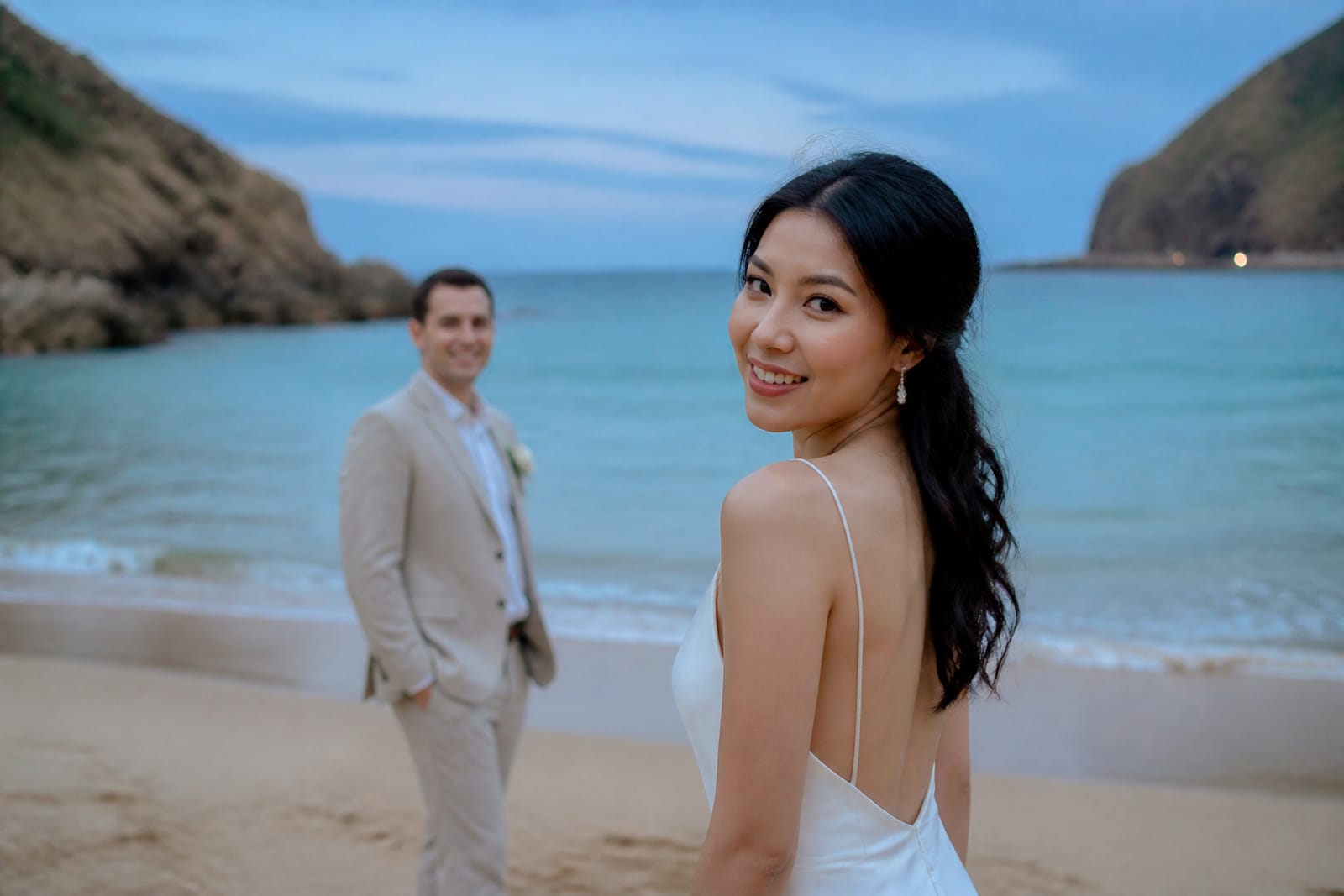
Search Instagram for "Quy Nhon elopement photographer" and "Quy Nhon pre-wedding" in Vietnamese and English. Check their lookbooks for consistency: do they shoot in all seasons, or only dry months? Do they edit consistently (color grade, contrast, shadows)? Message at least three and ask: "Show me 3 full sessions from February–August at Bai Xep or Eo Gio." A good photographer should have frames from both spots and multiple couples. Ask their shooting timeline: do they deliver edited photos within 48 hours, one week, or longer? Ask about cancellation policy if weather closes your spot on the day. Confirm they shoot wide first (landscape), then medium (you in the frame), then detail (hands, fabric, expressions)—this sequence is called "coverage" and ensures you have context and intimacy. Agree on a backup spot before the session in case tide or weather forces a move. Pay half upfront, half on delivery. Check their terms: do they deliver edited JPEGs or RAW files? Edited is standard for elopement work.
Conclusion: A vetted local photographer with Feb–Aug portfolio, 48-hour turnaround, and a backup plan is worth the due diligence.
Outfit, footwear and logistics for rocky Quy Nhon light
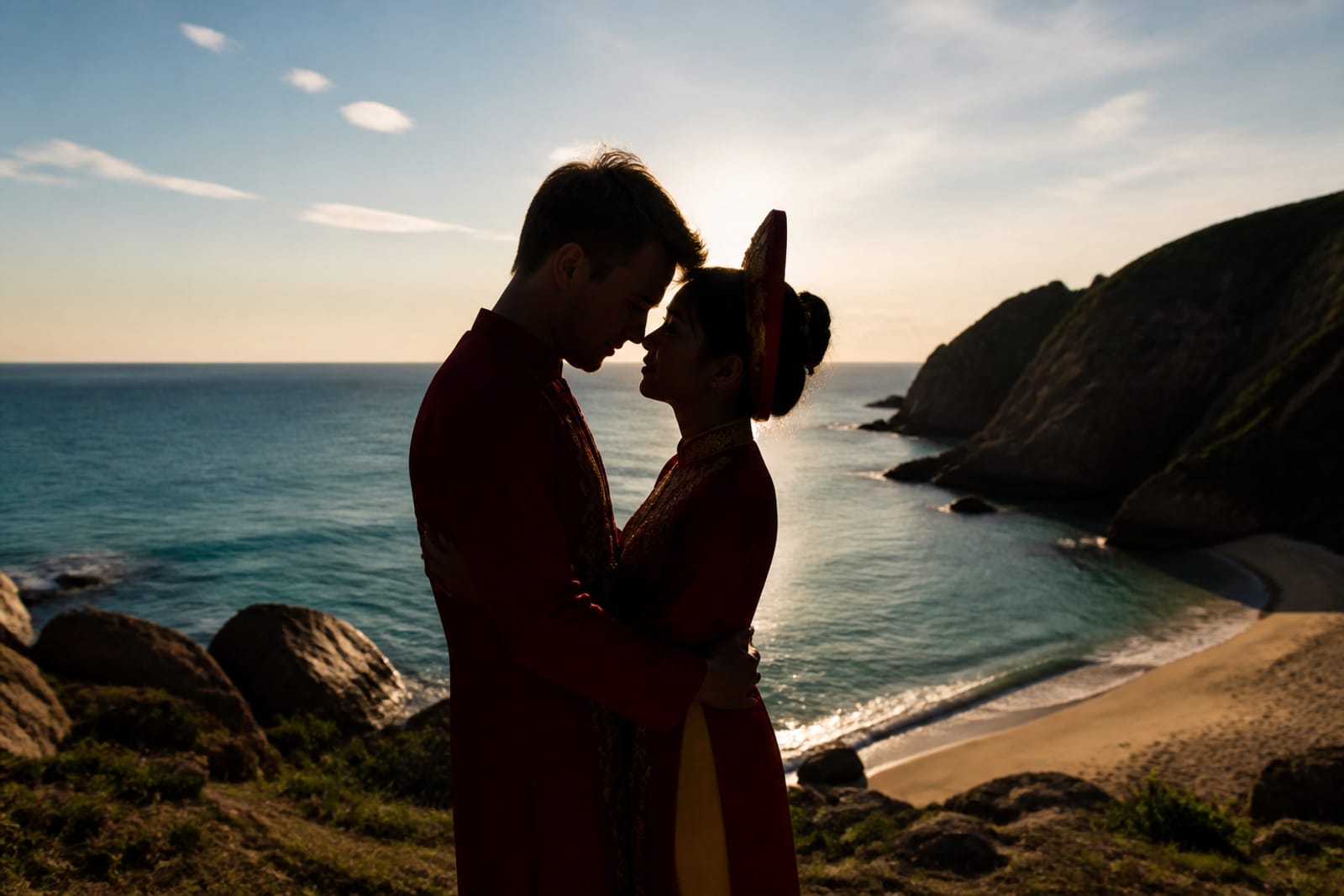
Wear an ao dai (traditional Vietnamese tunic and pants) if you want cultural color and drama; the fabric floats in ocean breeze and photographs like silk. Wear a simple linen dress or jumpsuit if you prefer mobility and don't need to manage yards of fabric on rocks. Avoid heavy satin, layered veils, or structured gowns—they photograph flat in side light and risk tears on limestone. Wear flat shoes or bare feet; heels sink into sand and turn ankles on wet rocks. Bring a backup outfit (a slip dress or shorts and a linen shirt) for a second location or a mid-session change. Pack the outfit and shoes in your hotel 48 hours before; send a photo to your photographer so they can plan for quick changes and backup safety pins. Bring sunscreen, a wide-brimmed hat for between-shot breaks, and a light cover-up. Expect to get wet at calf height if you walk into the shallows; negotiate this with your photographer in advance so they know to shoot you wading or standing dry on rocks.
Conclusion: Simple, breathable fabrics and flat shoes give you mobility; plan for wetness and send your outfit photo to your photographer 48 hours early.
🌸 See the lookbook | 📸 Book on WhatsApp — couple photoshoot
What to check before you book a Quy Nhon elopement shoot
Before committing, confirm these with your photographer or crew lead:
- Spot scouting: Will they visit Bai Xep or Eo Gio the day before at your intended time? (Non-negotiable for tides and light.)
- Backup plan: What happens if weather or tide closes your spot? Do they have two alternate locations?
- Crew readiness: How many hours do they need for hair, makeup and outfit before the shoot? (Standard is 30–60 minutes on location or at your hotel.)
- Deliverables: Will they send edited JPEGs, a short film, or both? When? (48-hour edit is professional standard.)
- Communication: Can you reach them on WhatsApp the day before to confirm the exact hour and meeting point?
- Local knowledge: Do they know which tides work best at your chosen cove? (Ask them to show you a tide table.)
Avoid photographers who promise "unlimited edited photos," guarantee "perfect weather," or can't name a backup location. Those are red flags.
Conclusion: A checklist before booking prevents day-of confusion and ensures your crew knows Quy Nhon's light and tide.
---
Need help planning an elopement elsewhere in Vietnam? Cáo Studio shoots pre-wedding and elopement sessions in Hanoi, Ho Chi Minh City and Hoi An with one directed team. For Quy Nhon, we can advise on crew logistics and light timing via WhatsApp—reach out with your dates.
💬 Message us on WhatsApp for a Quy Nhon planning call or to book a session in Hanoi, Saigon or Hoi An.
FAQ
What's the best month to elope in Quy Nhon?
February through August. Dry season runs Feb–Aug with consistent morning light and rare afternoon rain. Avoid Sept–Dec (rainy season, typhoons Oct–Nov). May onward, afternoon heat rises sharply after 2 pm; shoot dawn or after 5 pm.
Can I elope at Eo Gio limestone arch if I'm not fit?
No. Eo Gio requires scrambling over slippery limestone and wading to the arch. The walk is steep and exposed. Bai Xep is easier: a 15-minute walk on worn paths to rocky beach. Ask your photographer to assess.
Do I need a permit to shoot at Bai Xep or Eo Gio?
Bai Xep and Eo Gio are public beaches. No permit needed for personal photoshoots. Commercial or drone use may require local permission. Ask your Quy Nhon photographer to confirm current local rules.
Should I hire a local Quy Nhon photographer or bring a photographer from Hanoi?
A local photographer knows tides, light and backup spots. A Hanoi or Ho Chi Minh City team (like Cáo Studio) brings consistent editing and directed planning but travels time and cost. For Quy Nhon, a vetted local is practical; for Hanoi, Ho Chi Minh City or Hoi An, Cáo Studio ships the full team.
How long should I block for an elopement shoot in Quy Nhon?
Four hours is standard: 30–60 minutes for hair, makeup and outfit (at hotel or car), 2–3 hours on location shooting two spots or one spot with two outfit changes, 15 minutes for touch-ups. Confirm exact duration with your photographer when you book.
What if it rains on my shoot date?
Afternoon showers are rare Feb–Aug but possible. Agree on a backup spot or date before booking. A second location (harbor, inland paddy fields) is a safer bet than rescheduling. Ask your photographer: "What's your rain plan?"
FAQ
What's the best month to elope in Quy Nhon?
February through August. Dry season runs Feb–Aug with consistent morning light and rare afternoon rain. Avoid Sept–Dec (rainy season, typhoons Oct–Nov). May onward, afternoon heat rises sharply after 2 pm; shoot dawn or after 5 pm.
Can I elope at Eo Gio limestone arch if I'm not fit?
No. Eo Gio requires scrambling over slippery limestone and wading to the arch. The walk is steep and exposed. Bai Xep is easier: a 15-minute walk on worn paths to rocky beach. Ask your photographer to assess.
Do I need a permit to shoot at Bai Xep or Eo Gio?
Bai Xep and Eo Gio are public beaches. No permit needed for personal photoshoots. Commercial or drone use may require local permission. Ask your Quy Nhon photographer to confirm current local rules.
Should I hire a local Quy Nhon photographer or bring a photographer from Hanoi?
A local photographer knows tides, light and backup spots. A Hanoi or Ho Chi Minh City team (like Cáo Studio) brings consistent editing and directed planning but travels time and cost. For Quy Nhon, a vetted local is practical; for Hanoi, Ho Chi Minh City or Hoi An, Cáo Studio ships the full team.
How long should I block for an elopement shoot in Quy Nhon?
Four hours is standard: 30–60 minutes for hair, makeup and outfit (at hotel or car), 2–3 hours on location shooting two spots or one spot with two outfit changes, 15 minutes for touch-ups. Confirm exact duration with your photographer when you book.
What if it rains on my shoot date?
Afternoon showers are rare Feb–Aug but possible. Agree on a backup spot or date before booking. A second location (harbor, inland paddy fields) is a safer bet than rescheduling. Ask your photographer: "What's your rain plan?"
Ao dai, makeup, hair and a local photographer in Hanoi or Saigon — one WhatsApp message.