/pre-wedding-photoshoot
Destination elopement in Sapa: planning a mountain photoshoot
A destination elopement in Sapa requires a photographer who knows the terrain, weather windows, and light shifts across the rice terraces. Plan for March–May or September–November when weather is stable and terraces are either pre-harvest green or golden; avoid December–February fog and the rainy June–August monsoon. Budget shooting time around sunrise (6–7 am) or late afternoon (4–5 pm) when soft side light models the landscape. Partner with a local Sapa-based photographer or a team that travels regularly to the region—they understand permits, trail access, and how quickly conditions change. Cáo Studio operates in Hanoi, Ho Chi Minh City, and Hoi An; for a Sapa elopement, we can recommend vetting criteria and coordinate logistics, but you'll need a local Sapa photographer. Prepare for at least one outfit change, sturdy footwear hidden by wide skirts, and a contingency indoor backup space. ---
Why Sapa attracts elopement shoots—and what that means for your session
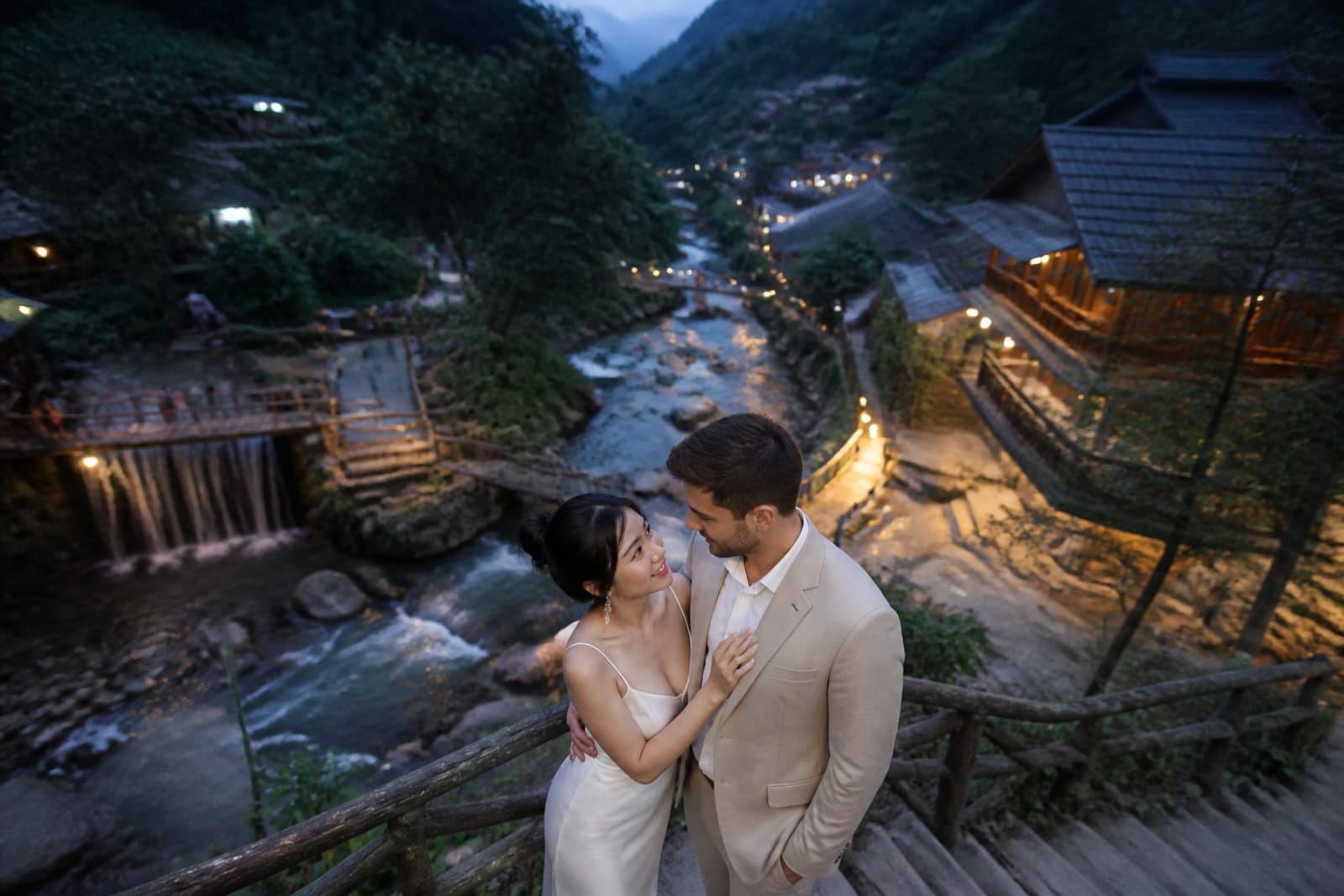
Sapa's elevation (1,600 meters) and amphitheater of rice terraces create a landscape most destination couples cannot access elsewhere in Southeast Asia. The scale is cinematic; the light is unpredictable. A photographer who has shot there before will know which trails open onto the widest views, which side of a terrace catches first light, and where to stand when clouds roll in faster than you can walk. This is not a flat wedding-venue shoot where the couple's position is the only variable—the terrain itself is a collaborator and a risk. Couples who elope in Sapa are betting on intimacy over infrastructure. A small team (you, your partner, one photographer, possibly a hair-and-makeup artist) moves faster and adapts to changing light than a large wedding party. The trade-off: you must accept that weather can shift the timeline by 30 minutes or cancel a shot altogether. Sapa rewards preparation and flexibility in equal measure.
📸 See the lookbook for inspiration
How to pick between a Sapa-based photographer and a traveling team
| Option | Best for | Light & season | Why it works |
|---|---|---|---|
| Sapa-based local photographer | Couples who want deep terrain knowledge and same-day turnaround | Knows sunrise/sunset timing by the day; adapts fast to fog and clouds | Lives with the landscape; established relationships with guides and permits |
| Vietnam photographer who travels to Sapa | Couples who want international-level direction and a film-style narrative | Brings consistent framing and color-grading regardless of location; plans for contingencies | Combines artistic direction with on-the-ground logistics; usually slower delivery (5–10 days) |
| Studio team (Hanoi/HCMC) coordinating local talent | Couples who want familiar brand continuity and makeup/hair as part of the session | Limited—dependent on partner photographer's skill and communication | Simplifies booking, one point of contact; risk if the local partner has not been vetted |
Choose a Sapa-based photographer if turnaround speed (24–48 hours) and intimate local access matter most. Choose a traveling photographer if you prioritize cinematic consistency and a team that can direct outfit and movement as a whole. Never book a studio that outsources to an unknown local photographer without calling or video-chatting with them first.
What to wear and how to adapt for mountain terrain
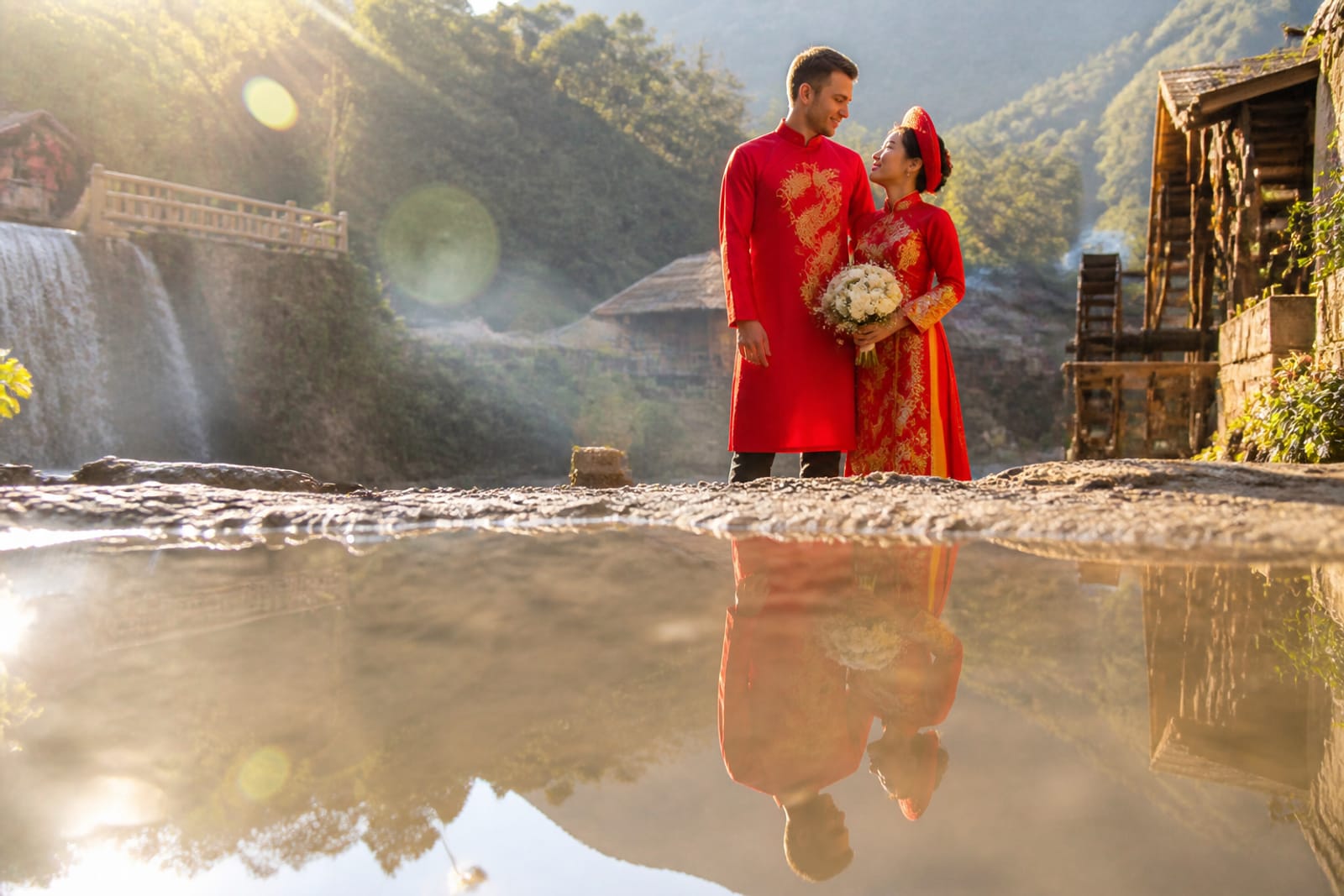
Elopement outfits in Sapa walk a line between aspiration and practicality. A silk áo dài or custom gown photographs beautifully at dawn when light is soft and the terrain is dry—but trails are uneven, mud is common after rain, and steep slopes demand footwear the camera cannot see. Layer: wear a simple slip or thin leggings under your dress so you can move freely without a wardrobe malfunction; choose sturdy, weather-appropriate shoes (waterproof hiking boots or supportive sandals) that a wide skirt will conceal in wide shots. If you are renting locally, ask the photographer to recommend a dressmaker who understands mountain logistics—they will suggest fabrics that dry fast and hems that clear ankle height. Grooms should wear a tailored suit or traditional Vietnamese áo groom in a dark, non-reflective fabric. Bring a backup cardigan or shawl for wind; cold at 1,600 meters is real, especially at sunrise. Ask your photographer to bring a waterproof gear bag and to plan outfit changes at a sheltered spot (a homestay, a cafe, a covered terrace) rather than on exposed ridge. One outfit can work if you move through three or four locations—wide frame, medium frame, detail close-up—so the eye never tires of the same dress.
Timing, weather, and the light windows that matter
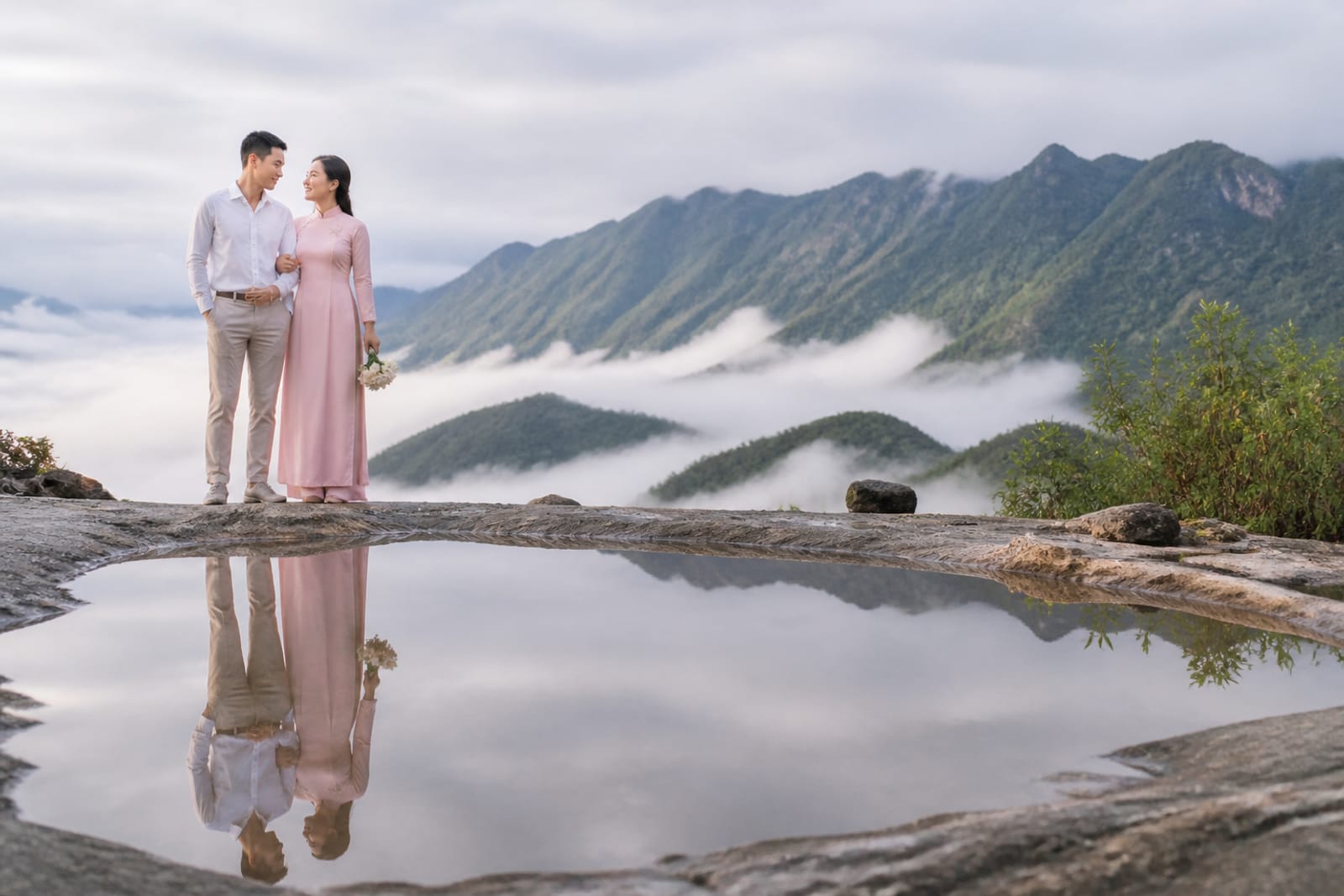
Sapa has three usable seasons for destination shoots. March to May is crisp and clear; terraces are pre-harvest green and water-filled, reflecting sky. First light hits the valley floor around 6:15 am; by 8 am, cloud often rolls in. Late afternoon (4–5 pm) is golden and stable for 90 minutes. September to November brings harvest gold (mid-September through early October) and cooler air; sunrise is around 6:00 am, and the afternoon window is 4–5:30 pm. December to February is risky: expect fog until 9–10 am (or all day), cold that numbs exposed skin, and occasional frost. June to August is wet; afternoon downpours are common and light is harsh and diffuse. Book your session 6–8 weeks in advance to secure both a photographer and a weather window. If your first date is rained out, a good photographer will offer a free reshoot; confirm this in writing before you pay a deposit. Sunrise shoots demand a 5:00–5:15 am start; sunset requires being on location by 3:30 pm. Plan travel the night before so you are not tired and rushing. Bring water, snacks, and a phone charger; your photographer will carry backup batteries and a weather emergency kit.
📸 Book on WhatsApp — or ask for local Sapa photographer referrals
Finding and vetting a Sapa photographer: questions to ask
A good Sapa photographer will answer these questions clearly and with examples. Have you shot elopements in Sapa before? Show me a gallery or video. Look for consistent light handling, creative framing of terraces (not just the couple centered in every shot), and a sense of movement and narrative. What happens if weather cancels the shoot? They should offer a rescheduled session at no extra cost, not a refund or a discount. What is your backup plan if fog takes the morning? They should name a specific indoor or sheltered location—a local cafe, a homestay, a temple—and have shot there before. Do you know the current permit requirements for shooting on specific trails? Sapa has designated photo zones; guides may be required depending on the location. A photographer who says "no permits needed" is either inexperienced or cutting corners. How long does editing take, and what do you deliver? Local photographers often deliver within 24–48 hours (usually JPEG, sometimes RAW if you pay more). International-level photographers may take 5–10 days but offer color-grading and a short vertical film. What is your rate, and what does it include? Ask whether makeup/hair, outfit rentals, a guide, and travel time within Sapa are separate costs or bundled. Get the answer in writing.
Cáo Studio operates in Hanoi, Ho Chi Minh City, and Hoi An. We do not have a Sapa team, but we can discuss vetting criteria and how our approach to directed, narrative-driven pre-wedding shoots translates to mountain terrain if you are considering a couple photoshoot elsewhere or want to book with us in another location.
🌸 Start planning with us on WhatsApp
What to check before you book: a simple checklist
- [ ] Photographer has a portfolio of Sapa elope shoots (not just engagement portraits at sea level).
- [ ] You have seen a sample of their light handling in overcast and golden-hour conditions.
- [ ] Rescheduling due to weather is guaranteed (in writing) with no extra charge.
- [ ] Backup indoor location and lighting plan are named and photographed.
- [ ] Hair and makeup artist (if included) has experience working in cold, windy mountain conditions.
- [ ] Deposit and cancellation policy are clear; final payment is due at least one week before the shoot.
- [ ] Editing timeline is confirmed (24–48 hours for local, 5–10 days for traveled photographers).
- [ ] You have clarified whether a Sapa guide, permits, or travel time within Sapa are separate costs.
- [ ] You have video-called or met the photographer; a single photo gallery or website is not enough.
A note on Cáo Studio and Sapa shoots
Cáo Studio is based in Hanoi with a Saigon operation and a traveling appointment schedule to Hoi An. We do not operate a Sapa team. If you are an international couple planning a destination elopement in Sapa and considering a shoot in Hanoi before or after (or a family session upon your return to the city), we can help. For a Sapa-specific session, interview and vet local photographers using the checklist above. If you want to discuss how our approach to directed pre-wedding shoots might work in Hanoi or another accessible location, reach out on WhatsApp—we can often work around your travel dates.
---
FAQ
Do I need a permit to shoot an elopement in Sapa?
Permit requirements depend on the specific trail and whether you hire a guide. Ask your photographer—they should know current rules and obtain any necessary approvals before your shoot day. Never book a photographer who says permits are unnecessary.
What should I pack for a Sapa elopement shoot?
Bring sturdy, waterproof footwear (hidden by your dress); a cardigan or shawl; a light rain jacket for backup; water and snacks; a phone charger; and the contact details of your photographer and a local guide if one is required.
Can we elope in Sapa during the rainy season?
Yes, but expect fog until late morning and afternoon downpours. Light will be soft but diffuse, and you'll need a solid backup indoor space. Summer (June–August) is the riskiest; September onwards or March–May are more reliable.
How much time should we book for a Sapa elopement shoot?
Plan for 4–6 hours if you want sunrise or sunset plus an outfit change and movement across multiple terraces. Discuss this with your photographer—local teams often work in smaller windows, while traveling photographers may book longer sessions to justify travel time.
Do I need to hire a local guide for the shoot?
Depending on the trail and season, a guide may be required by local regulations or recommended for safety. Your photographer should advise you; build this cost into your overall budget as a factor (not a fixed price), as it varies by location and season.
Can we do the shoot in formal wedding attire, or should it be simpler?
Formal works beautifully—silk áo dài, a custom gown, or a suit photograph well in Sapa's soft light. The key is ensuring your photographer knows the terrain and builds in time for outfit and shoe changes at a sheltered spot.
What is the best time of year for an elopement in Sapa?
March–May and September–November offer the most stable weather. Terraces are green in spring and golden in harvest; light is clean and predictable. December–February is foggy; June–August is wet. Book 6–8 weeks ahead to secure your preferred dates.
FAQ
Do I need a permit to shoot an elopement in Sapa?
Permit requirements depend on the specific trail and whether you hire a guide. Ask your photographer—they should know current rules and obtain any necessary approvals before your shoot day. Never book a photographer who says permits are unnecessary.
What should I pack for a Sapa elopement shoot?
Bring sturdy, waterproof footwear (hidden by your dress); a cardigan or shawl; a light rain jacket for backup; water and snacks; a phone charger; and the contact details of your photographer and a local guide if one is required.
Can we elope in Sapa during the rainy season?
Yes, but expect fog until late morning and afternoon downpours. Light will be soft but diffuse, and you'll need a solid backup indoor space. Summer (June–August) is the riskiest; September onwards or March–May are more reliable.
How much time should we book for a Sapa elopement shoot?
Plan for 4–6 hours if you want sunrise or sunset plus an outfit change and movement across multiple terraces. Discuss this with your photographer—local teams often work in smaller windows, while traveling photographers may book longer sessions to justify travel time.
Do I need to hire a local guide for the shoot?
Depending on the trail and season, a guide may be required by local regulations or recommended for safety. Your photographer should advise you; build this cost into your overall budget as a factor (not a fixed price), as it varies by location and season.
Can we do the shoot in formal wedding attire, or should it be simpler?
Formal works beautifully—silk áo dài, a custom gown, or a suit photograph well in Sapa's soft light. The key is ensuring your photographer knows the terrain and builds in time for outfit and shoe changes at a sheltered spot.
What is the best time of year for an elopement in Sapa?
March–May and September–November offer the most stable weather. Terraces are green in spring and golden in harvest; light is clean and predictable. December–February is foggy; June–August is wet. Book 6–8 weeks ahead to secure your preferred dates.
Ao dai, makeup, hair and a local photographer in Hanoi or Saigon — one WhatsApp message.