saigon
District 1 French Colonial Streets Photoshoot: Photo Spots & Outfit Gu
What makes District 1 colonial streets so photogenic?
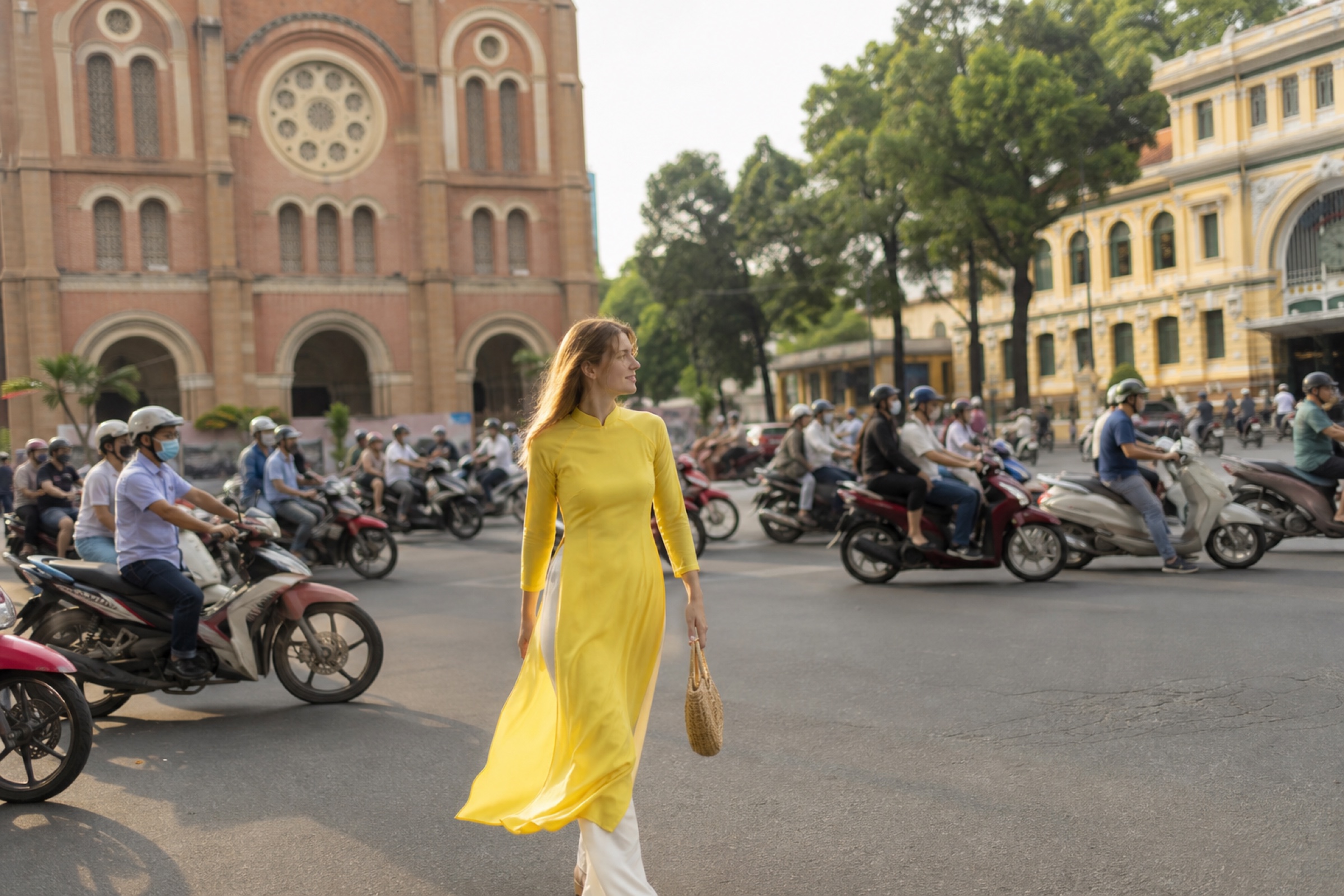
District 1 (Quận 1) holds Saigon's densest collection of pre-1975 French architecture—pale yellow villas with arched windows, wide tree-lined boulevards, and wrought-iron balconies that haven't changed in decades. Unlike Hanoi's Old Quarter chaos, these streets are quieter, cleaner, and the colonial scale feels European. The neighborhood's grid layout means you can hit multiple spots in a short walk. Morning light here is softer and yellower; afternoon light is warmer but sharper. The trees—planted during the French occupation—create dappled shade perfect for portraits without direct sun. This is where most international travelers imagine their Saigon shoot should happen.
📸 Book on WhatsApp — ao dai photoshoot
When should you shoot on these colonial streets?
Timing is non-negotiable. Golden hour (6:00–7:00 a.m. or 4:30–5:30 p.m.) works year-round, but your window narrows in monsoon season (May–September) when cloud cover diffuses light. December–February (cool, dry season) offers the clearest, most predictable light; plan for 45-minute sessions to catch peak sun. Avoid noon–3 p.m. entirely—shadows are harsh, and the heat forces you indoors. On weekends, streets fill with locals and other tourists by 7:30 a.m., so solo or couple shoots should start by 6:30. For ao dai photoshoots on colonial streets, early booking ensures your preferred light window isn't crowded.
What to wear under an ao dai matters too. The traditional garment sits loose over fitted trousers (called quần), and in humid heat, the wrong undergarment shows sweat or clings awkwardly. Wear a lightweight, breathable slip or tank underneath; darker colors hide moisture marks. Avoid bulky bras—the ao dai's high neckline and draping erase silhouette anyway. For European or American guests unfamiliar with layering, this single choice prevents regret in photos.
Which colonial streets are best for different moods?
Đường Tôn Đức Thắng (along the Saigon River) feels grand: wide, tree-shaded, with yellow colonial buildings on one side and water views on the other. Best from 5:45–6:30 a.m., when the river catches soft light and foot traffic is minimal. Suited for formal couple or pre-wedding portraits.
Đường Nguyễn Huệ (central Boulevard) has wider sidewalks and café clusters, but is busier by 7 a.m. Better for late-afternoon shoots (4:45–5:15 p.m.) when low sun rakes the facades. Good for editorial, lifestyle, or casual couple sessions.
Đường Bùi Viện (near Pham Ngu Lao) is narrower, more residential, with shuttered villas and lower foot traffic. Ideal for intimate portraits or couples wanting fewer background strangers. Less "postcard-perfect" than the boulevards, but quieter and more authentic.
Đường Lê Lợi crosses multiple architectural eras—colonial blocks grade into 1960s-70s modernism halfway through. Shoot the first half (8 blocks from the riverfront) for consistency; the second half mixes styles.
| Street | Best Time | Mood | Foot Traffic | Best For |
|---|---|---|---|---|
| Tôn Đức Thắng | 5:45–6:30 a.m. | Grand, formal | Low | Couple, pre-wedding |
| Nguyễn Huệ | 4:45–5:15 p.m. | Vibrant, editorial | Moderate | Lifestyle, casual couple |
| Bùi Viện | 6:00–7:00 a.m. | Intimate, residential | Low | Portraits, elopement |
| Lê Lợi (first half) | 6:00–6:45 a.m. | Mixed, classic | Low–Moderate | Families, groups |
What outfit choices work best on camera?
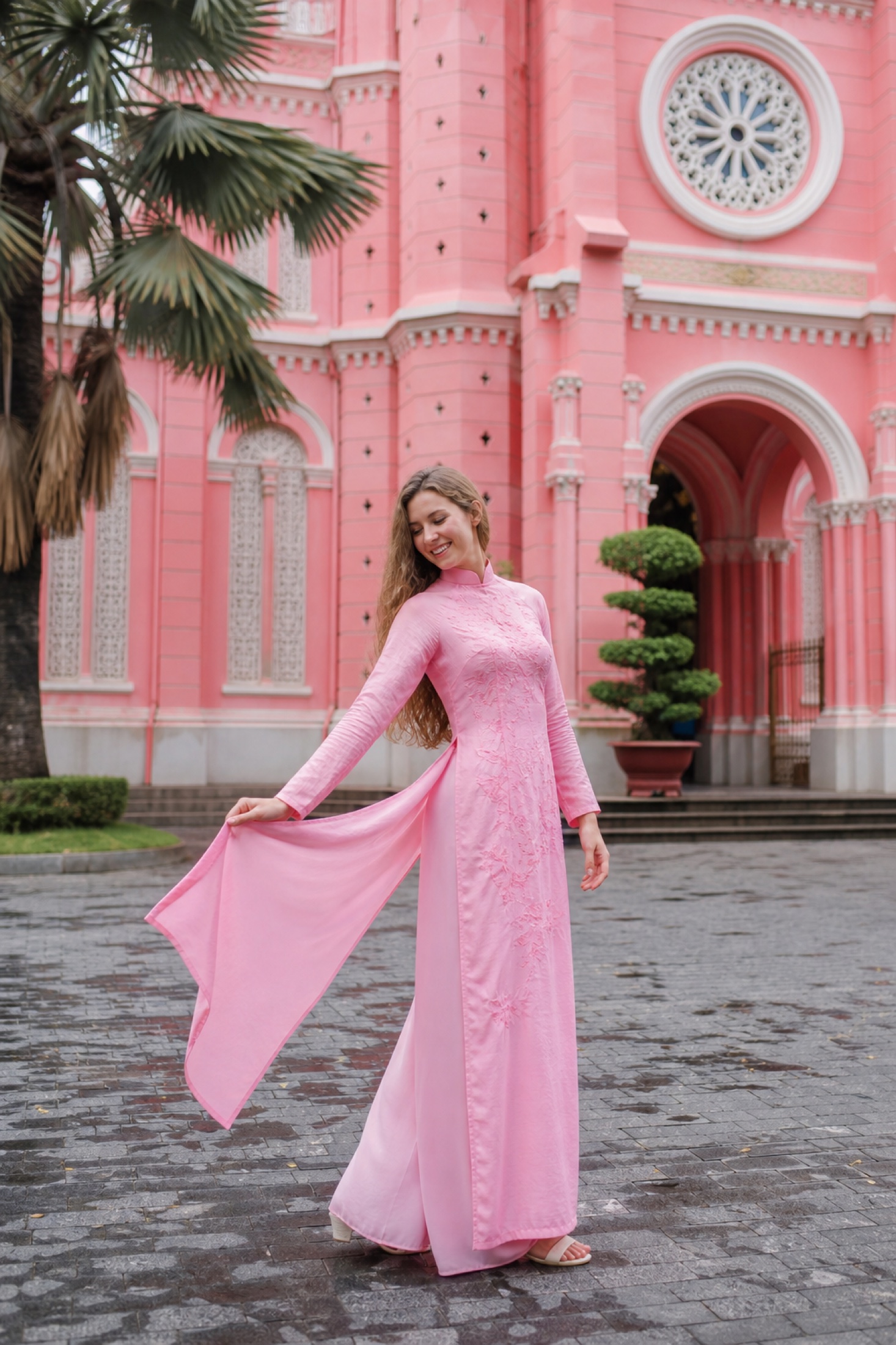
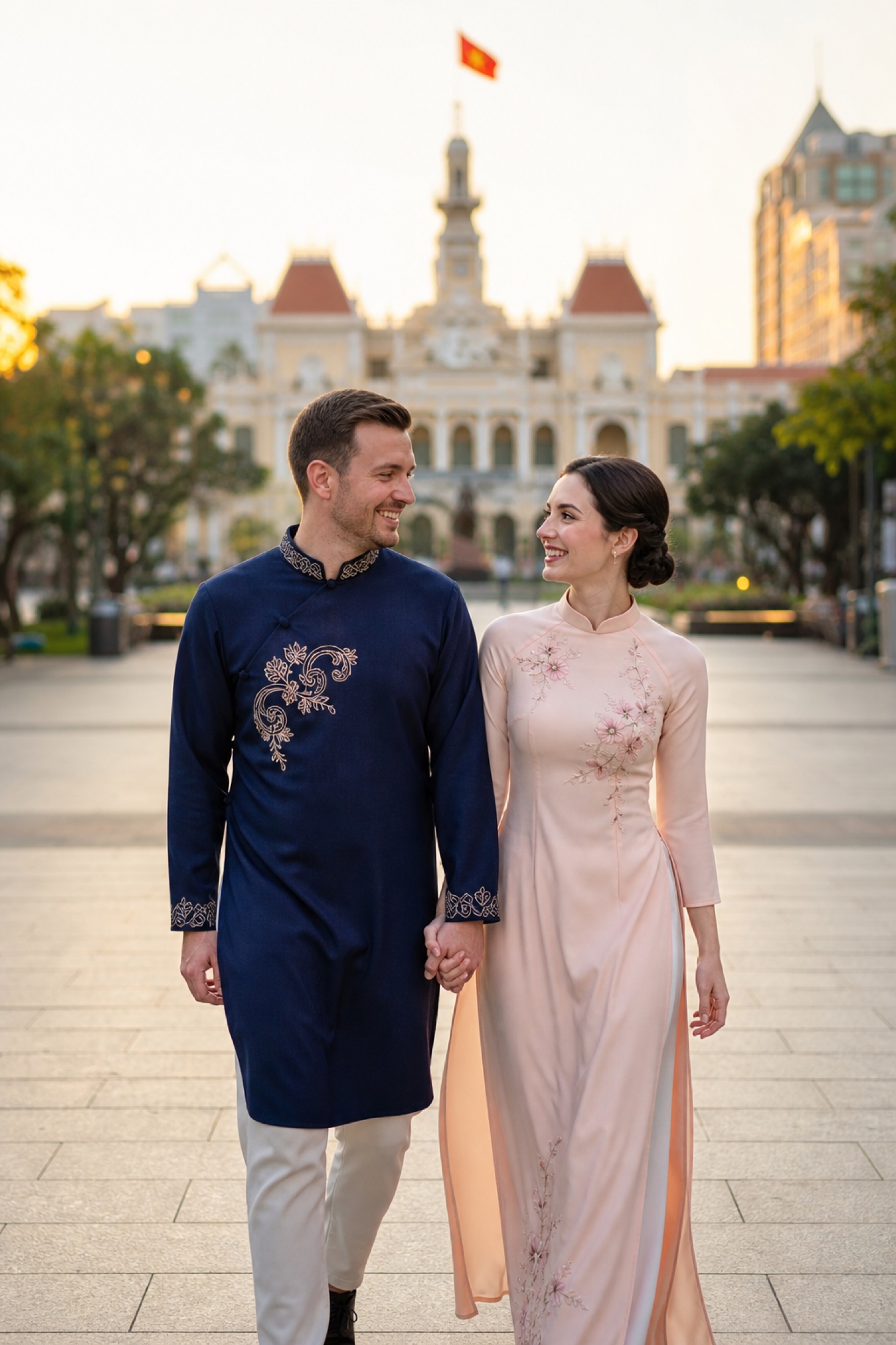
Ao dai (traditional Vietnamese áo dài) is the obvious choice—its flowing silhouette photographs beautifully against geometric colonial facades, and the contrast between modern (the person) and historical (the building) reads instantly. Pale or jewel-tone áo dài work; neon or busy prints compete with architecture. Have a second áo dai on standby if humidity causes wrinkles between locations. Cáo Studio's ao dai photoshoot service includes styling advice and can recommend local tailors if you want a custom fit before arrival.
Western casual (for couples or families) should be high-contrast and minimal. Think cream linen trousers + navy tee, or white sundress + denim jacket—solids read cleaner against intricate colonial details than patterns. Avoid neon, bright red, or anything reflective (it catches harsh light). Layering matters: a lightweight cardigan or scarf adds depth and gives you a "before" and "after" look across shots.
Color psychology matters. Warm tones (terracotta, gold, cream, rust) harmonize with the yellow-gold facades and afternoon light. Cool tones (navy, sage, pale blue) pop in morning shade and feel fresh. Avoid colors that match the buildings exactly—you'll vanish into them.
Footwear: Wear leather sandals, flats, or low heels that you can walk in for 30–45 minutes without pain. Sneakers read casual (fine for families); bare feet work only on quieter residential streets and risk cuts from uneven sidewalks.
How do weather and seasons change your shoot strategy?
December–February (cool, dry): Ideal. Temperatures 20–25°C, clear skies, predictable light. Book early; this is peak season. Humidity is low, so makeup lasts longer and sweat isn't an issue. Golden hour is crisp and clean.
March–April (pre-monsoon): Still dry but heating up (26–30°C). Humidity creeps up; expect slight afternoon haze. Light softens earlier (by 5:15 p.m.) due to atmospheric moisture, which some photographers prefer for dreamy tones.
May–October (monsoon): Hot, humid, unpredictable rain. Temperature 28–35°C. Afternoon thunderstorms can appear with 30 minutes' notice. Early-morning shoots (6:00–7:00 a.m.) are safer; the streets are damp and atmospheric (adds character). Plan a rain contingency—a covered arcade or shophouse entrance—or reschedule. Makeup needs waterproof products; hair frizz is real.
November: Sweet spot returning. Slight rain early month, but clearing fast. Humidity drops, temperatures fall to 24–28°C. Light improves week by week.
For couple & family photoshoots or pre-wedding sessions, winter (Dec–Feb) guarantees the fewest weather surprises. Monsoon shoots require flexibility and backup outfits.
How to book a local photographer and what to check before you commit
If you're not booking Cáo Studio, here's how to vet a District 1 colonial shoot independently:
- Portfolio check: Ask for 5–10 recent photos shot on actual colonial streets in District 1, with timestamps or dates visible. Beware Instagram-only portfolios with no location tags; some images may be cropped from Bangkok or Hanoi.
- Timing clarity: Confirm your photographer understands golden hour and will start (not finish) during peak light. If they say "morning is fine, we'll do 9 a.m. to 11 a.m.," walk away—that window is washed-out.
- Outfit + styling: Ask if they guide outfit choice or just shoot whatever you wear. Colonial streets need intentionality; a photographer who doesn't discuss color or fit isn't thinking about the final image.
- Street etiquette: Confirm they know which streets allow tripods, where to book permits (District 1 technically requires photography permits for commercial shoots—ask your photographer if they handle this), and whether they work around locals respectfully.
- Editing + delivery: Get samples of their editing style (warm vs. cool, vibrant vs. moody). Ask turnaround time and format (digital files, prints, albums). Some Saigon shooters deliver within 2–3 weeks; others take 2+ months.
- Backup plan: If weather or crowds interfere, do they offer a reshoot or partial refund? Saigon's monsoon season is unpredictable.
Cáo Studio's approach: We book Saigon shoots at our Saigon branch with location scouting included, makeup & hair service option via hotel service, and styling consultation before your session. We're based in Saigon, so we know the streets intimately and the best light windows by month. For details, ask on WhatsApp—no hidden surprises.
What to check before you book or shoot
- Permit & permissions: Check if your photographer (or you, if self-shooting) needs a District 1 commercial photography permit. Tourist snapshots don't; professional sessions sometimes do. Clarify with your shooter.
- Crowd factor: Book early morning in December–February to avoid congestion. Afternoons are quieter but hotter.
- Humidity management: Bring blotting papers, waterproof makeup, and a hand fan if shooting May–October.
- Shoe comfort: Test your footwear on concrete before the session. Blisters kill energy by hour 2.
- Backup outfit: Pack a second top or change of áo dai in case the first gets creased or stained during transit.
- Insurance & belongings: Leave valuables in your hotel. Saigon is safe, but shooting with bags or phones attracts attention.
---
What's the difference between booking a local photographer and a studio package?
If you want full support—makeup, hair, styling advice, location knowledge, and edited files in one transaction—a studio package (like Cáo Studio's services) removes logistics stress. You arrive, get glammed, shoot, and receive polished photos within weeks.
If you're budget-conscious or prefer independence, hire a local photographer on a per-hour basis and handle outfit + location planning yourself. You'll spend less upfront but invest more time researching light, streets, and etiquette. Both work; it depends on your comfort and budget.
For travelers combining District 1 shoots with wider Saigon coverage, consider pre-wedding or elopement packages, which bundle multiple locations (colonial streets + riverside + modern landmarks) into one seamless day.
---
FAQ
Is a photography permit required for District 1 colonial street shoots?
Tourist photos are fine. Professional or commercial sessions may require a permit from District 1 People's Committee, though enforcement is inconsistent. Clarify with your photographer before booking—they usually handle this. Cáo Studio confirms permit status on WhatsApp during booking.
What's the best month for District 1 shoots with the least rain?
December–February is driest and coolest. March–April is still good but hotter. Avoid May–October unless you're comfortable with sudden afternoon rain and high humidity affecting makeup and hair. November is ideal if Dec is booked full.
Can I shoot in an ao dai if I've never worn one before?
Absolutely. An áo dài feels loose and flows freely—most Western guests find it surprisingly comfortable. Wear lightweight, breathless slip or tank underneath, and fitted trousers (quần). A tailor or áo dài rental shop can size you perfectly. Cáo Studio can recommend tailors or rental partners in Saigon.
How long does a typical District 1 colonial street shoot take?
45 minutes to 1.5 hours depending on location changes and outfit switches. Golden hour is your main window (45 min max), so plan conservatively. Longer sessions mean moving to secondary streets or shifting to blue-hour light (just after sunset, 5:45–6:15 p.m.), which is moodier but softer.
Should I hire a makeup artist, or can I do my own makeup for an outdoor shoot?
Outdoor humidity (especially May–Oct) breaks down makeup fast. Professional makeup uses waterproof products and sets with setting spray, lasting through sweat and moisture. Makeup & hair services are worth the investment if you're paying for a photographer anyway. DIY works if it's December–February and you're confident in waterproof formulas.
Do I need to book multiple locations, or is one street enough?
One tree-lined street (e.g., Tôn Đức Thắng or Bùi Viện) is enough for 40–50 unique frames in 45 minutes. Moving between streets eats time and breaks workflow. For full-day shoots or couple photoshoots, plan 2–3 locations max. Quality over quantity—one perfect street beats rushing five.
FAQ
Is a photography permit required for District 1 colonial street shoots?
Tourist photos are fine. Professional or commercial sessions *may* require a permit from District 1 People's Committee, though enforcement is inconsistent. Clarify with your photographer before booking—they usually handle this. Cáo Studio confirms permit status on WhatsApp during booking.
What's the best month for District 1 shoots with the least rain?
December–February is driest and coolest. March–April is still good but hotter. Avoid May–October unless you're comfortable with sudden afternoon rain and high humidity affecting makeup and hair. November is ideal if Dec is booked full.
Can I shoot in an ao dai if I've never worn one before?
Absolutely. An áo dài feels loose and flows freely—most Western guests find it surprisingly comfortable. Wear lightweight, breathless slip or tank underneath, and fitted trousers (quần). A tailor or áo dài rental shop can size you perfectly. Cáo Studio can recommend tailors or rental partners in Saigon.
How long does a typical District 1 colonial street shoot take?
45 minutes to 1.5 hours depending on location changes and outfit switches. Golden hour is your main window (45 min max), so plan conservatively. Longer sessions mean moving to secondary streets or shifting to blue-hour light (just after sunset, 5:45–6:15 p.m.), which is moodier but softer.
Should I hire a makeup artist, or can I do my own makeup for an outdoor shoot?
Outdoor humidity (especially May–Oct) breaks down makeup fast. Professional makeup uses waterproof products and sets with setting spray, lasting through sweat and moisture. [Makeup & hair services](/services/makeup-and-hair) are worth the investment if you're paying for a photographer anyway. DIY works if it's December–February and you're confident in waterproof formulas.
Do I need to book multiple locations, or is one street enough?
One tree-lined street (e.g., Tôn Đức Thắng or Bùi Viện) is enough for 40–50 unique frames in 45 minutes. Moving between streets eats time and breaks workflow. For full-day shoots or [couple photoshoots](/services/couple-photoshoot), plan 2–3 locations max. Quality over quantity—one perfect street beats rushing five.
Ao dai, makeup, hair and a local photographer in Hanoi or Saigon — one WhatsApp message.