hanoi
Dong Xuan Market Photoshoot: Best Times, Light & What to Wear
Dong Xuan Market's 200-year-old iron framework, clustered awnings, and vendor rhythm offer genuine Hanoi character—but only if you shoot at the right hour, wear strategically, and respect working vendors. This guide covers light science, outfit decisions, location tactics, and how to book a photographer who won't cause friction.
📸 Book on WhatsApp — ao dai photoshoot | 💄 Makeup & hair at your hotel | 🌸 See the lookbook
Why Does Morning Light Matter More Than Afternoon at Dong Xuan?
Dong Xuan's iron railings and cramped stall layout create deep shadows year-round. Morning (6:00–8:00 a.m.) sun enters from the east at a low angle, raking across vertical surfaces and reducing contrast between lit and shadowed zones. By 11 a.m., overhead sun washes detail; by 2 p.m., backlit vendors blend into black silhouette. Morning light is also softer—diffused by residual mist and the packed density of shoppers—so faces don't blow out under hard contrast.
Sunset (5:30–6:15 p.m. in winter, 6:30–7:00 p.m. summer) offers warm amber tones but creates extreme backlighting unless your photographer knows how to meter for shadow detail or use a reflector. If you're visiting outside peak light hours, bring a reflector or hire a photographer with off-camera flash experience.
What Should You Actually Wear in Dong Xuan Market?
| Outfit Type | Why It Works | Why to Avoid | Best Seasons |
|---|---|---|---|
| Jewel tones (emerald, sapphire, burgundy) linen or cotton long-sleeve | Pops against rust iron, reduces vendor eye contact, sits well in shadow | Too formal; draws unwanted attention from tourist vendors | Year-round; peak: Nov–Feb |
| Vintage or faded indigo denim + fitted tee | Echoes market textile history, blends without blending in | Generic; doesn't read well in crowded frames | Year-round |
| Pastel silk or cotton (blush, sage, soft gold) with light scarf | Reflects soft light, photographs as neutral, feels respectful | White—overexposes in uneven shadow; glows digitally | Year-round; flatters in morning light |
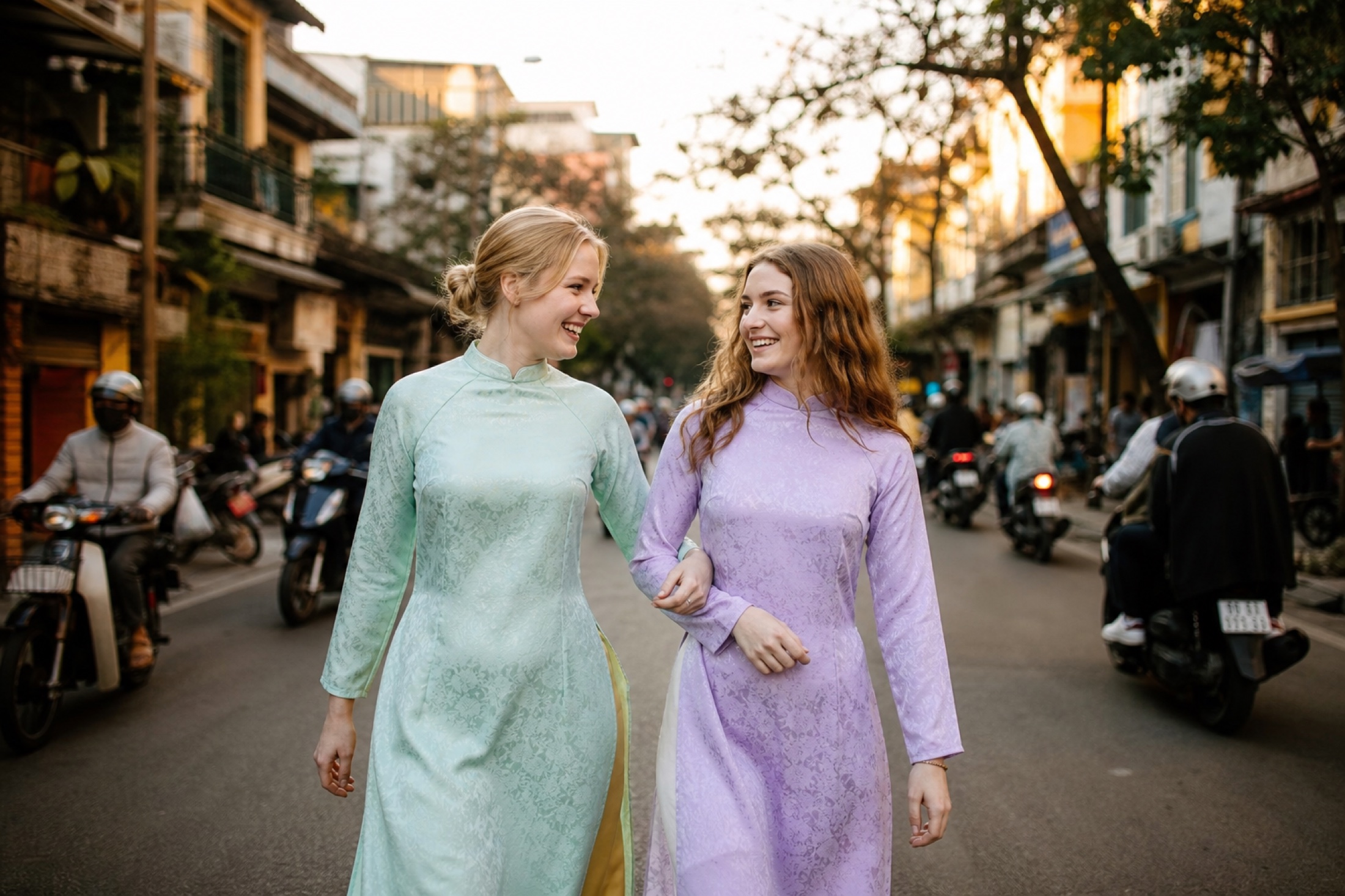
| Ao dai (white, cream, or pale pastel) | Iconic, reads as traveler respectfully engaging tradition | Heavy fabric in 30°C+ heat; restricts movement in tight aisles | Nov–Apr only (comfort); see ao dai photoshoot guide |
Avoid: Bright white shirts, neon, heavy makeup (sweat + humidity = running color). Wear layers; unroll sleeves for vendor respect and UPF protection.
How Do You Navigate Vendor Etiquette Without Disrupting the Market?
Dong Xuan runs as a working market—not a museum. Vendors are there to sell. A professional photographer knows:
- Permission first: walk the route with your photographer or guide before shooting, ask textile stall owners directly (many speak Hanoi-accented English or French).
- Shoot quick bursts: 20–30 seconds per stall, then move. Vendors tolerate brief presence.
- Buy something small: a silk scarf or hand-embroidered pouch ($2–5 USD) signals good faith and often opens doors for better angles.
- Avoid close-ups of faces without consent: vendors have been burned by social media misuse.
- Early morning is easier: fewer customers, better mood, faster vendor courtesy.
If you hire a Hanoi photographer, they'll know the gatekeepers and carry a small gift (usually a pack of local cigarettes or instant coffee). Couple & family photoshoots often include a guide for exactly this reason.
What Are the Best Physical Spots Inside Dong Xuan?
- Entry balcony (north side): spiral staircase, high light, vendors below; 6:30–7:15 a.m. only before foot traffic.
- Textile alley (ground floor, west wing): tight stalls, colored fabric backdrops, deep shadow—hire a reflector or off-camera flash.
- Iron railings (upper landings): architectural detail, less crowded, works 7:00–8:00 a.m.
- Flower section (northeast corner): natural still-life backdrop; light improves 7:00–8:30 a.m.
- Entrance archway (exterior): framing and texture; crowded but fast.
Avoid: central ground floor mid-morning (packed, harsh overhead light, hard shadows). Avoid midday entirely unless you're willing to shoot tight crops of fabric textures and products rather than full portraits.
Should You Book a Professional Photographer or Shoot Solo?
| Decision | Professional Photographer (Local or Cáo Studio) | Self-Shooting |
|---|---|---|
| Light & exposure | Knows exactly when/where shadow shifts; adjusts gear on the fly | Phone auto-exposure struggles; requires manual app (Snapseed, Lightroom Mobile) |
| Vendor access | Existing relationships, language, respect; shoots faster | Slower, often asked to leave or buy more to compensate |
| Safety & privacy | Watches your bag, knows which areas are pickpocket zones | You're vulnerable while framing shots |
| Keepsake quality | RAW files, professional retouching, print-ready exports | Phone JPEGs; often soft focus or noise in shadow |
| Cost & time | $120–300 USD (2–3 hours, depending on photographer) | Free, but 2–3 hours and uncertain results |
Cáo Studio – Makeup & Photoshoot offers couple & family photoshoots and pre-wedding packages that include a morning market session if Hanoi-based. Hanoi locals also hire independent photographers for $80–150 USD per 2-hour session; ask your hotel for referrals or check Hanoi photography forums.
📸 Book on WhatsApp — ao dai photoshoot
Month-by-Month Weather: When Light & Comfort Align
- Nov–Feb: 10–20°C, clear skies, soft morning mist, best light. Wear layers.
- Mar–Apr: 20–28°C, humid, occasional haze. Still strong morning light; start 6:00 a.m.
- May–Oct: 28–36°C + 80%+ humidity. Midday is brutal; only shoot 6:00–7:00 a.m. or 5:30–6:30 p.m. Sweat risk high.
November–February is peak season: fewer tourists, best vendor mood, perfect light. Book 2–4 weeks ahead.
What to Check Before You Book or Go
- Light forecast: Check Weather.com or AccuWeather the night before for sunrise time (shifts 30–45 min seasonally) and cloud cover.
- Market closure days: Dong Xuan closes Lunar New Year (late Jan/early Feb) and occasional vendor strike days; confirm with your hotel.
- Photographer backup plan: If morning light fails (heavy rain, unexpected mist), reschedule rather than shoot midday.
- Permit reality: Hanoi doesn't officially ban tourist photography, but commercial shoots or large crews may need informal payment to market management. Professional photographers handle this; solo travelers rarely face issues.
- Bag security: Wear a crossbody bag or backpack in front; pickpockets work crowded stalls.
- Footwear: Concrete floors, occasional water spillage; wear closed, non-slip shoes.
For portraits in ao dai or formal wear, book makeup & hair at your hotel the morning of your shoot so you arrive fresh. Hanoi heat and humidity wreck makeup fast; professional touch-ups stay better through market photography.
If you're planning a larger trip and want styled couples or family imagery, Cáo Studio Hanoi also offers proposal & anniversary packages and pre-wedding shoots that blend market authenticity with studio polish. Check the lookbook and pricing guide for package structure.
---
FAQ
Can I shoot Dong Xuan in midday or late afternoon?
Yes, but results weaken. Midday overhead light creates hard shadows; late afternoon backlight requires reflector or off-camera flash. Vendors are also more tired and less patient. Shoot early morning (6:00–8:00 a.m.) for 80% better light quality and vendor cooperation.
Do I need a permit to photograph at Dong Xuan Market?
Official permits aren't required for casual tourism photography. Commercial shoots (large crew, tripod, model release) may trigger informal fees ($20–50 USD to market management). Hire a local photographer—they navigate this seamlessly.
What's the difference between shooting solo and booking Cáo Studio?
Solo: you control the timeline and cost ($0) but lack professional light technique and vendor access. Cáo Studio or a local photographer ($120–300 USD) brings relationships, RAW editing, keepsake prints, and handles vendor etiquette. Both approaches work; it depends on your comfort with uncertainty.
Should I wear an ao dai to Dong Xuan?
Ao dai reads beautifully in photography and honors the location, but it's impractical if you plan to move through crowded stalls repeatedly. Reserve it for a dedicated ao dai photoshoot session or pair it with a guide who can navigate restrictive fabric. Wear comfortable, jewel-toned cotton for easier market movement.
How long does a typical Dong Xuan photoshoot take?
2–3 hours (6:00–9:00 a.m.) allows time for vendor introductions, multiple locations, outfit changes, and breaks. Solo shooting takes longer; professional photographers work faster because they know the rhythm.
What if it rains or there's unexpected mist?
Light rain or mist actually softens harsh shadows and creates moody texture. Reschedule only if there's heavy downpour (market staff aren't as cooperative). Overcast mornings work fine; the trade-off is slightly flatter light but less vendor fatigue.
FAQ
Can I shoot Dong Xuan in midday or late afternoon?
Yes, but results weaken. Midday overhead light creates hard shadows; late afternoon backlight requires reflector or off-camera flash. Vendors are also more tired and less patient. Shoot early morning (6:00–8:00 a.m.) for 80% better light quality and vendor cooperation.
Do I need a permit to photograph at Dong Xuan Market?
Official permits aren't required for casual tourism photography. Commercial shoots (large crew, tripod, model release) may trigger informal fees ($20–50 USD to market management). Hire a local photographer—they navigate this seamlessly.
What's the difference between shooting solo and booking Cáo Studio?
Solo: you control the timeline and cost ($0) but lack professional light technique and vendor access. Cáo Studio or a local photographer ($120–300 USD) brings relationships, RAW editing, keepsake prints, and handles vendor etiquette. Both approaches work; it depends on your comfort with uncertainty.
Should I wear an ao dai to Dong Xuan?
Ao dai reads beautifully in photography and honors the location, but it's impractical if you plan to move through crowded stalls repeatedly. Reserve it for a dedicated [ao dai photoshoot](/services/ao-dai-photoshoot) session or pair it with a guide who can navigate restrictive fabric. Wear comfortable, jewel-toned cotton for easier market movement.
How long does a typical Dong Xuan photoshoot take?
2–3 hours (6:00–9:00 a.m.) allows time for vendor introductions, multiple locations, outfit changes, and breaks. Solo shooting takes longer; professional photographers work faster because they know the rhythm.
What if it rains or there's unexpected mist?
Light rain or mist actually softens harsh shadows and creates moody texture. Reschedule only if there's heavy downpour (market staff aren't as cooperative). Overcast mornings work fine; the trade-off is slightly flatter light but less vendor fatigue.
Ao dai, makeup, hair and a local photographer in Hanoi or Saigon — one WhatsApp message.