/pre-wedding-photoshoot
Drone wedding photos in Sapa: rules and practical tips
Drone wedding photos in Sapa are legal with a permit—required before any flight. Sapa's geography (1,600 m elevation, rice terraces, Fansipan) creates dramatic wide angles impossible from ground level, but military no-fly zones cover the summit and surrounding ridges. Weather is the bigger blocker: cloud cover fills valleys Dec–Feb and May–Sep, leaving just Mar–May and Sep–Nov (before heavy rain) as reliable windows. Flights must happen early morning (before wind and thermals) and take 15–20 minutes of airtime. A crew experienced with altitude logistics and permit paperwork—like Cáo Studio's pre-wedding team—manages the technical and legal side so you focus on the frames. Ground photography and video still deliver the core story; drone adds scale, not necessity.
Drone shots in Sapa sell the scale of the landscape. But they also sell risk if you skip the legal and logistical steps. We've coordinated enough mountain sessions to know where couples go wrong.
What permits and zones do you actually need to check in Sapa?
Vietnam requires a permit from the Ministry of Defense to fly drones commercially (photography for hire counts as commercial). Sapa sits in a restricted zone near the China border—you cannot fly within 2 km of Fansipan summit, military installations, or the ridgelines marked on official restricted-area maps. A local fixer or experienced photographer knows which zones open and which don't; a border-town altitude like Sapa changes rules more often than lowland cities. Before booking a drone operator or photographer, ask them to produce a letter of permit approval, not a verbal promise. If they can't, they either haven't applied or they're flying illegal. Cáo Studio coordinates pre-wedding shoots across Hanoi and the north; for a Sapa drone sequence, we'd handle the permit verification and advise you on what's flyable that week—no guessing on the ground.
📸 Book on WhatsApp — pre-wedding photoshoot
Does Sapa weather actually kill most drone shoots?
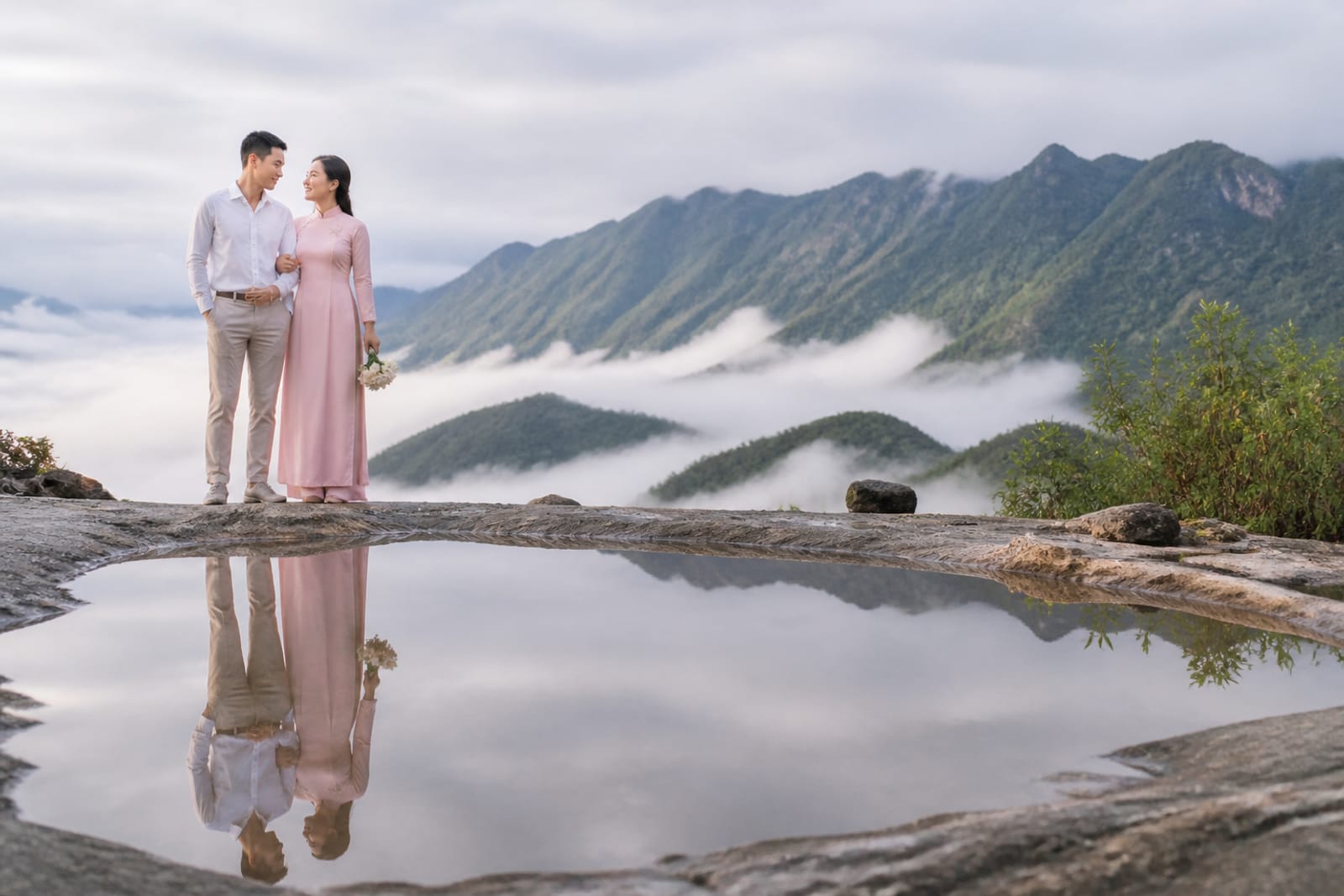
Yes. Sapa sits at 1,600 m; clouds roll in from the valley floor up through midday, especially May–Sep and Dec–Feb. A clear dawn is your only real window—5:30–7:00 am before thermal winds and cloud buildup. If you're shooting mid-morning or afternoon, expect 60–70% of your planned shots to be cancelled due to cloud cover rolling across the lens. Mar–May and Sep–early-Nov offer the most consistent clear mornings, though even then a single thunderstorm (common Sep–Oct) grounds all aerial work for the day. Ground photography and video still capture emotion; drone footage requires the rare clear shot. Plan your timeline around weather—if you're visiting for one specific morning and clouds arrive, your drone sequence doesn't happen. A second morning as a backup or a hybrid plan (ground + video as your primary, drone as bonus) protects your investment.
| Approach | Best for | Weather reality | What to expect |
|---|---|---|---|
| Drone-first itinerary | Mountain scale is your priority | 1–2 clear dawn windows per trip | May cancel entire shoot; requires backup dates |
| Drone as bonus | Ground photography is the story | Any clear morning works | 15–20 min airtime captures altitude scale |
| Video + drone hybrid | Narrative + scale together | Video frames in cloud cover | Video works in overcast; drone waits for clear sky |
| Ground-only (no drone) | Budget, simplicity, guaranteed frames | No altitude requirement | Terrace walks, rice fields, local color—all doable any morning |
How does the timing and wind logistics actually work at that elevation?
Sapa's altitude means wind picks up fast after 7:00–7:30 am. A drone that flies stable at 100 m elevation in Hanoi becomes sluggish or unsafe at 1,600 m with mountain thermals. Early start is not optional—it's the only slot where a pilot can fly safely and recover footage quality. Flights take 15–20 minutes of active time; add 30 minutes for setup, pre-flight checks, and safety buffer. A professional crew books a sunrise session, shoots, packs, and leaves by 8:00 am. If your hotel breakfast is at 8:00 am or your group isn't ready by 5:45 am, the drone session doesn't fit. Couples often underestimate the logistics—they imagine flying at 9:00 am like lowland shoots, then get disappointed. Plan your morning as a dedicated early crew (photographer, makeup artist if needed, drone operator, you and your partner) separate from your main group.
What's the real cost to factor in before booking a Sapa drone shoot?
A separate drone operator adds to your budget beyond a ground photographer. Some operators charge per flight, per day, or per permit; others bundle it into a package. Permit fees vary by season and zone restrictions; ask your operator or fixer for the current permit cost in the week you're shooting. Transport logistics cost more in Sapa than Hanoi—mountain roads mean longer travel times between locations, fuel, and crew hourly rates for longer days. If weather cancels your first attempt, a second date means re-booking crew and repeating the permit process. Never pay a drone operator upfront without a written agreement (in English and Vietnamese) that includes permit status, cancellation terms, and delivery timeline. Cáo Studio can advise on total logistics if you're pairing a drone shoot with a pre-wedding or couple session, but we'd coordinate with a vetted local operator rather than handle the drone itself—our strength is ground photography, makeup and hair in one team.
Should you do drone-only or pair it with ground photography?
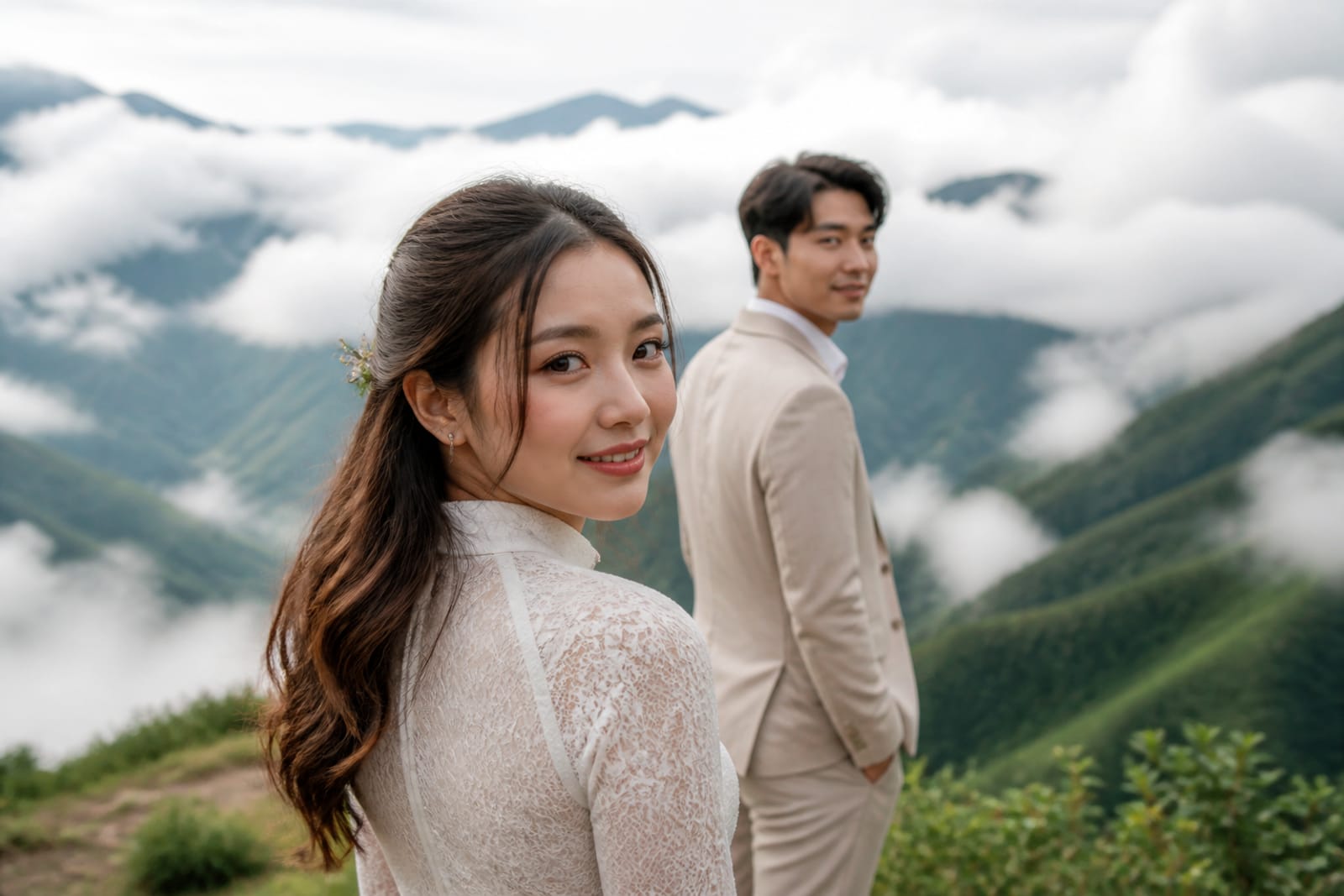
Drone footage alone tells no emotion—it's landscape and scale. Your faces, movement, and connection live in ground shots. Couples who skip ground photography to save time end up with beautiful mountains and missing themselves. The best Sapa sessions combine early-morning ground work (terrace walks, sunrise light on faces, close-up frames) with a quick drone pass (wide aerials, landscape context). This hybrid approach takes one full morning instead of two half-days. If your timeline is tight, prioritize ground photography and makeup/hair—that's where the keepsakes live. Drone is the garnish, not the meal. For a pre-wedding shoot in Sapa, you'd book a local Sapa-based ground photographer or coordinate with Cáo Studio's Hanoi team for a multi-day trip; ask on WhatsApp if a Sapa session fits your dates and we'll advise on pairing it with the logistics you need.
What does a realistic Sapa photoshoot itinerary look like across a morning?
5:30 am – Crew and couple meet at hotel; makeup/hair final touches (if needed; many couples do this the night before to keep the morning loose). 5:50 am – Drive to first location (terrace or valley overlook). 6:00–6:40 am – Ground photography: wide framing of landscape, close-ups of couple walking, interacting, light on faces. 6:40–7:00 am – Drone preflight and first pass (if weather permits). 7:00–7:15 am – Couple reset; second ground session if conditions allow. 7:15 am – Pack and return for breakfast or onward travel. This leaves room for weather delays and still finishes before midday heat and cloud cover. Expect 200–400 edited frames (ground + drone stills combined) and a short video edit within 48 hours of shoot day. If cloud cover blocks the drone pass, the morning still yields strong ground frames—no wasted session. Confirm exact timing and crew roles with your photographer before arrival; Sapa moves slower than Hanoi, and coordination over WhatsApp is essential.
What should you actually check before booking?
Permit status. Ask the operator or photographer: do you have a valid permit filed with the Ministry of Defense? Request proof (letter, approval number, or registration). If they avoid the question, walk away.
Weather backup. Does the package include a second morning if weather cancels? Or do you pay again? Clarify cancellation and reschedule terms in writing before booking.
Crew experience at altitude. Have they flown drones in Sapa or similar elevation before? Ask for references or past work from mountain shoots.
Video delivery timeline. Drone footage is raw; editing takes time. Confirm when edited stills and video land in your inbox (typically 48 hours post-shoot).
Ground photography. Don't assume the drone operator also handles ground shots. Book a ground photographer separately or confirm they're included in one crew.
Outfit and hair logistics. If you're changing outfits or need hair touch-ups between sessions, confirm the crew can manage it. Sapa has no backup makeup artist on standby; plan your look to last a full morning.
---
📸 Book on WhatsApp — pre-wedding photoshoot
For a Sapa drone and ground photography session, coordinate on WhatsApp with Cáo Studio's Hanoi team—we'll advise on permit verification, local operators, and logistics, or arrange a full pre-wedding shoot with ground photography, makeup, and video. Drone work sits in a grey zone in Vietnam; partnering with an operator who knows the permit landscape saves weeks of back-and-forth and protects your investment.
FAQ
Do you need a permit to fly a drone in Sapa?
Yes. Commercial drone photography requires Ministry of Defense approval. Sapa is in a restricted zone near the China border; certain altitudes and areas are off-limits. Always verify permit status with your operator before booking.
What's the best season for clear Sapa drone shots?
March–May and September–early November. Clouds fill mornings May–Sep and Dec–Feb. Even in good months, only dawn (5:30–7:30 am) reliably clears; plan for one usable window per trip.
How long does a Sapa drone shoot actually take?
15–20 minutes of flight time. Add 30 minutes setup and safety checks. Full morning with ground photography and crew coordination: 2.5–3 hours start to finish.
Should I hire a drone operator separately or book them with my photographer?
Both work. A single crew (photographer + drone operator) coordinates faster; separate vendors require more logistics. Confirm both are licensed and insured if you hire separately.
What happens if weather cancels my Sapa drone shoot?
Your footage doesn't happen—drones can't fly in cloud cover or wind above safe limits. Negotiate a second date or backup morning into your contract before paying.
Can I do Sapa photos without a drone?
Absolutely. Ground photography alone captures emotion, connection, and terraces beautifully. Drone adds landscape scale; it's not essential. Many couples skip it and keep the morning simple.
FAQ
Do you need a permit to fly a drone in Sapa?
Yes. Commercial drone photography requires Ministry of Defense approval. Sapa is in a restricted zone near the China border; certain altitudes and areas are off-limits. Always verify permit status with your operator before booking.
What's the best season for clear Sapa drone shots?
March–May and September–early November. Clouds fill mornings May–Sep and Dec–Feb. Even in good months, only dawn (5:30–7:30 am) reliably clears; plan for one usable window per trip.
How long does a Sapa drone shoot actually take?
15–20 minutes of flight time. Add 30 minutes setup and safety checks. Full morning with ground photography and crew coordination: 2.5–3 hours start to finish.
Should I hire a drone operator separately or book them with my photographer?
Both work. A single crew (photographer + drone operator) coordinates faster; separate vendors require more logistics. Confirm both are licensed and insured if you hire separately.
What happens if weather cancels my Sapa drone shoot?
Your footage doesn't happen—drones can't fly in cloud cover or wind above safe limits. Negotiate a second date or backup morning into your contract before paying.
Can I do Sapa photos without a drone?
Absolutely. Ground photography alone captures emotion, connection, and terraces beautifully. Drone adds landscape scale; it's not essential. Many couples skip it and keep the morning simple.
Ao dai, makeup, hair and a local photographer in Hanoi or Saigon — one WhatsApp message.