/pre-wedding-photoshoot
Elopement in Mai Chau and Pu Luong: a photographer's planning guide
Mai Chau and Pu Luong are limestone-terraced rice valleys in northwest Vietnam, roughly 3–4 hours from Hanoi by road. Neither destination operates a full-time photoshoot studio; you'll hire a local freelancer or guide-photographer hybrid. Elopement success here depends entirely on season (dry May–June and Sep–Oct show golden rice and clear light), sunrise timing (6:00–7:00 am before mist lifts and crowds arrive), and outfit fit (light layers shed as heat builds; ao dai works best on flat homestay verandas, not muddy paddies). Cáo Studio shoots pre-wedding sessions in Hanoi and Ho Chi Minh City—if you're based in northern Vietnam, we can coordinate a shoot there instead. For Mai Chau or Pu Luong, use this guide to find and vet a photographer, plan your route, and avoid the common pitfalls: missed golden hour, flooded terrain, and frames that look like tourist snapshots, not directed cinema.
Why Mai Chau and Pu Luong demand different planning than a studio city shoot
Mai Chau and Pu Luong lie in Hoa Binh and Thanh Hoa provinces—remote limestone karsts with rice terraces that flood and dry seasonally. Unlike Hanoi or Ho Chi Minh City, there's no local makeup artist, backup lighting, or same-day editing. Your photographer will likely live in the valley or travel from a town 30–60 minutes away. Light is dictated by valley orientation and mist: the morning window is sharp but brief. Rain isn't rare—it turns paddies to mud and clouds block the sun for hours. You'll walk uneven terrain; ao dai won't work on muddy tracks. Plan for logistics that city shoots ignore: vehicle access, homestay permission, weather pivot points, and a photographer who understands cinema framing, not just scenic posing.
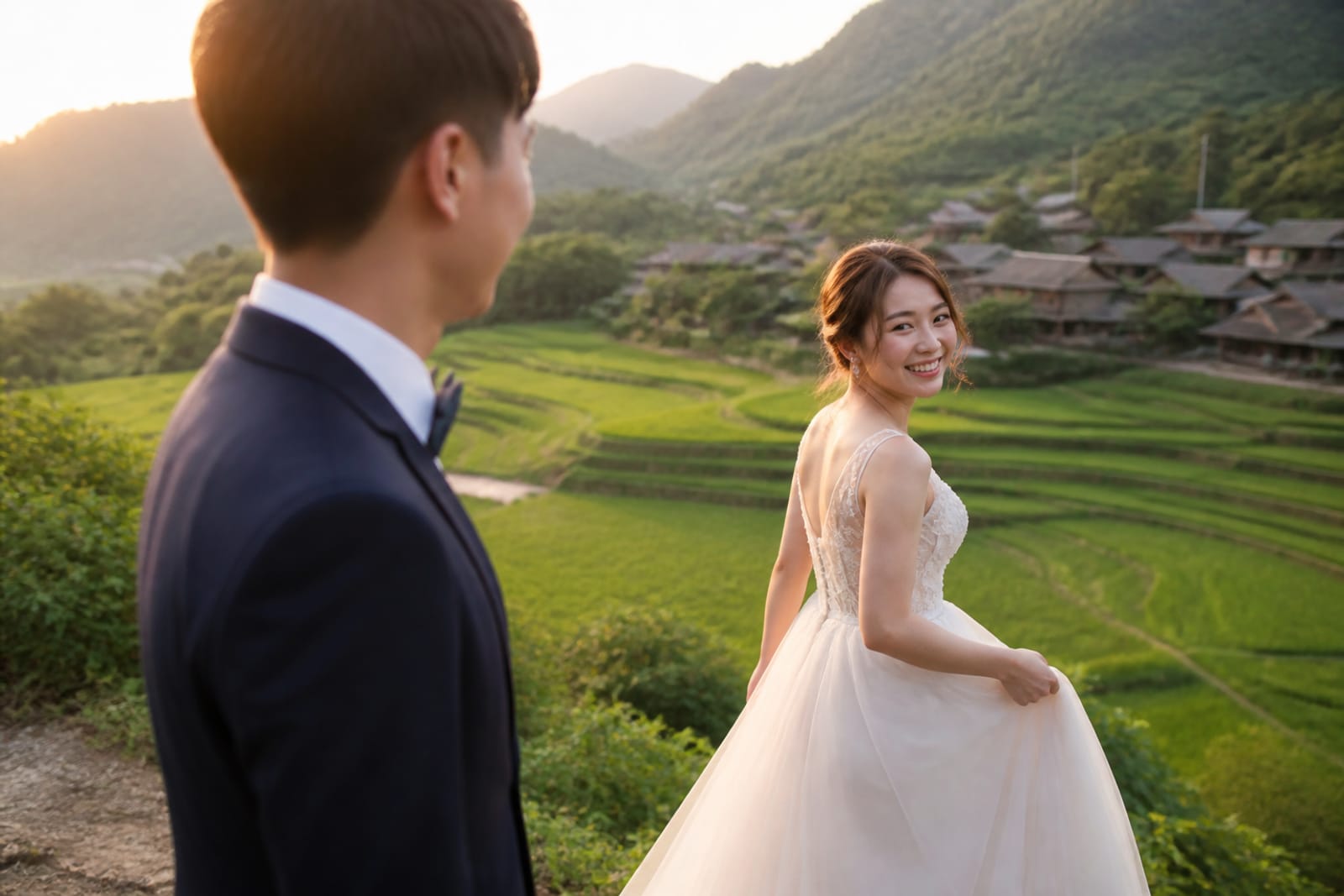
Which season and month actually gives you clear light and walkable fields?
Rice-growing cycles create four distinct windows. May–June shows golden immature rice, cool mornings, and minimal rain—but afternoon heat is intense and mist can linger past 8:00 am. Sep–October offers the same golden window with more stable weather, though early-season typhoons (Sep) can dump rain unexpectedly; check forecasts 2 weeks ahead. Nov–Feb brings clear skies but dull, flat light; paddies are harvested and brown. Mar–Apr shows green rice but erratic showers and thick mist that ruins photography until 9:00 am or later. Best bet: Sep–Oct (harvest season, fewer tourists, golden light, drier than monsoon). Second choice: late May–June (cooler, but plan around afternoon storms). Avoid Dec–Feb if directional light matters to you.
| Season | Light quality | Terrain | Crowds | Rain risk | Best time of day |
|---|---|---|---|---|---|
| May–June | Golden, soft | Dry, walkable | Few | Afternoon storms | 5:30–7:30 am |
| Sep–Oct | Golden, warm | Dry, hardened | Moderate | Early-month typhoon | 5:45–7:45 am |
| Nov–Feb | Flat, grey | Hardened, dusty | Few | Rare | 8:00 am–4:00 pm |
| Mar–Apr | Soft, green | Muddy patches | Few | Frequent showers | 8:00–9:30 am |
How do you find and vet a photographer who won't just pose you in front of a monument?
Mai Chau and Pu Luong have no Cáo Studio equivalent—no full-service elopement team. You'll search for independent photographers or tour guides with photography skills. Start by asking your homestay owner for recommendations; they'll name someone local who shoots regularly. Check their Instagram or Google profile for evidence of directed framing: do couples walk between paddies, or stand rigid facing the camera? Do frames include the valley (context) before zooming to faces (emotion)? Ask three questions before booking: (1) Have you shot at sunrise here? Show me three sessions shot 5:30–7:00 am. (2) Do you edit on-site or send files weeks later? (3) If weather pivots—mist doesn't lift, or rain comes—what's your backup time or location? A photographer who hesitates on timing or offers no backup plan isn't ready for valley work. Budget and availability should be confirmed by direct message or phone call; note that turnaround times may be 1–2 weeks (not 48 hours like a city studio).
📸 Book on WhatsApp — ao dai photoshoot
What should you wear, and how does terrain change your outfit strategy?
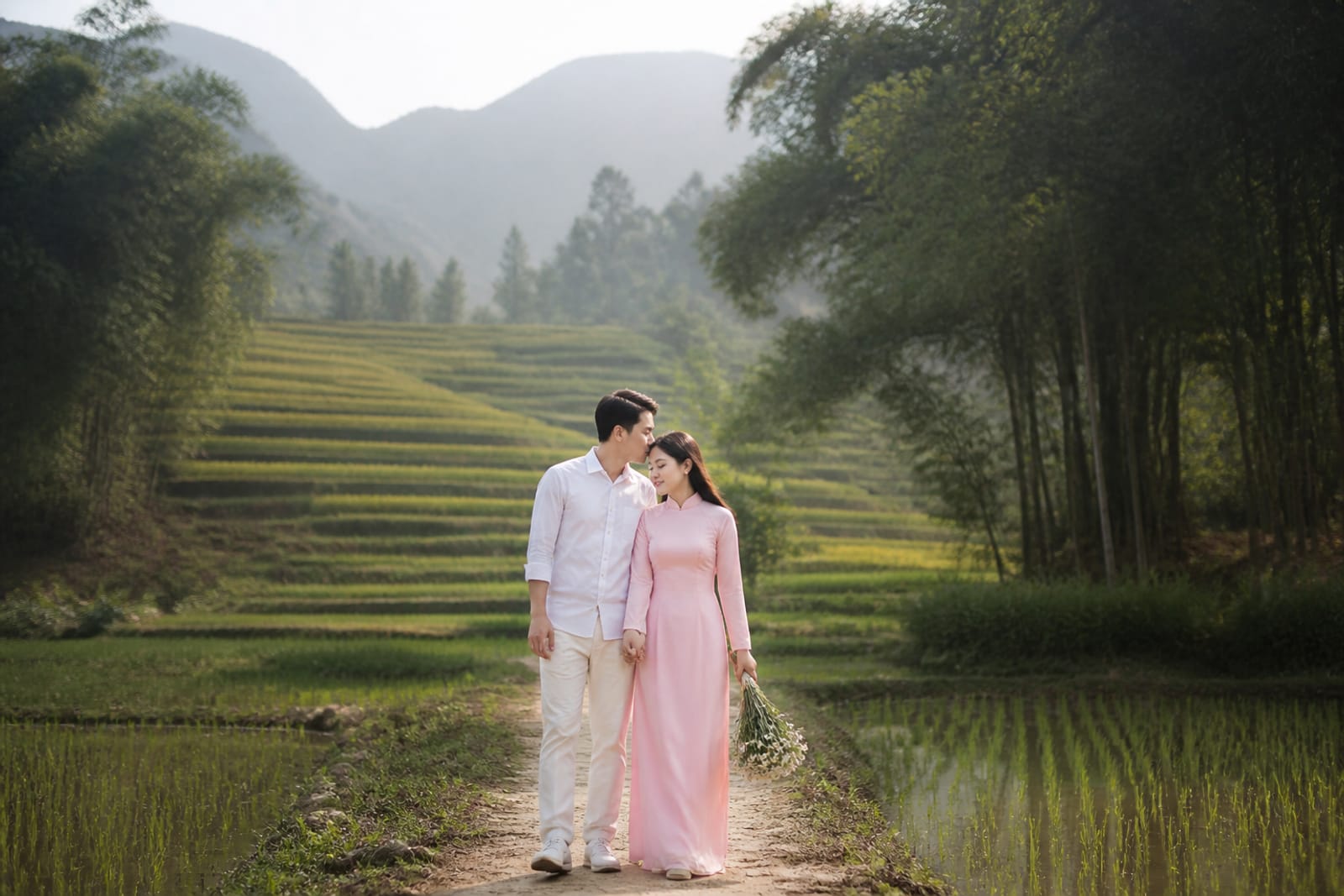
Ao dai looks striking on verandas and flat homestay grounds but fails on muddy paddies—the hem drags, silk catches, and you can't walk freely. Pair it with a simple solid-color backdrop: a homestay wall, a wooden bridge, or a dry terrace corner. For the walking shots (the core of directed elopement work), wear lightweight separates: linen pants, a cotton shirt, a linen dress, or a simple tunic. Layers are essential—mornings are cool (50–60°F in Sep–Oct), afternoons hot (75–85°F). Bring a scarf or shawl to shed as the sun rises. Shoes matter: sneakers work; flip-flops don't (mud, uneven ground). If you want ao dai in the shoot, reserve it for the first frame on solid ground, then change. Discuss outfit swaps with your photographer beforehand; they'll plan frames around each change.
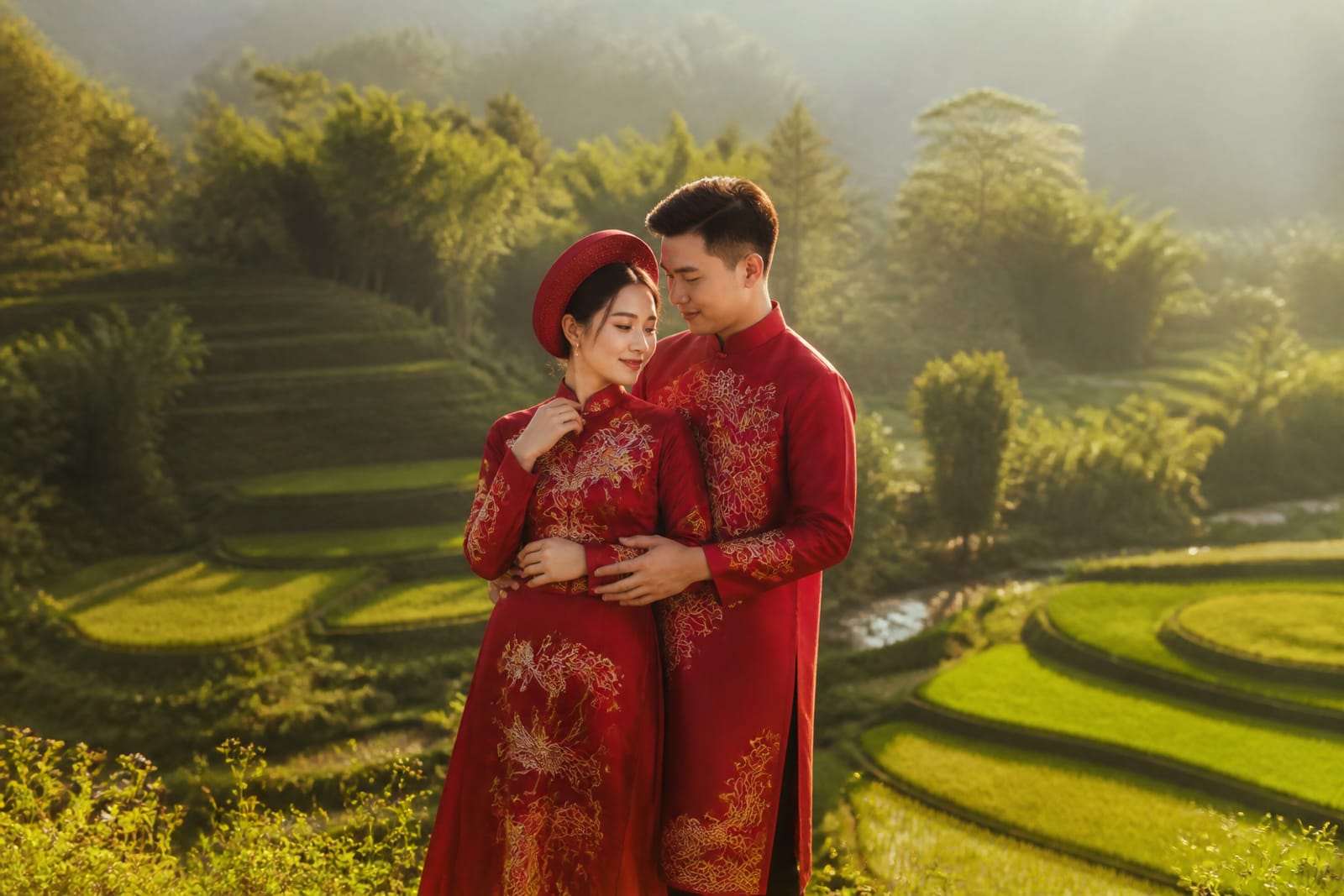
What does the actual shot day look like, and what can go wrong?
You'll start well before sunrise—4:30–5:00 am pickup from your homestay or hotel. Drive to a high point or field entrance; walk 10–20 minutes to the main shooting location. First light (5:45–6:30 am) is soft and directional; your photographer shoots wide frames of you moving through the landscape, then medium shots (walking toward each other, looking at the view), then detail (hands, shoes, faces in side light). By 7:00 am, mist may still linger—sometimes this adds mood, sometimes it ruins exposure. By 8:00 am, light flattens and tourists arrive. You're done by 8:30 am. Common failures: (1) Starting too late and shooting in flat, hot light. (2) Wearing ao dai on muddy terrain—one fall and the shoot ends. (3) No backup location if weather pivots. (4) Photographer with no cinema experience who poses you stiffly instead of directing you to walk and react. Mitigation: book for Sep–Oct, wear terrain-appropriate clothes, confirm your photographer has a pivot plan, and ask to see 10 frames from a past sunrise session before you commit.
How should you plan the wider trip so the shoot actually feels connected to the destination?
An elopement shoot is a half-day event (4:30 am–8:30 am), not a full experience. Spend at least 2 nights in the valley to walk, eat locally, and absorb the rhythm. Day 1: arrive, homestay check-in, evening walk to scout light and framing ideas with your photographer (if they're local) or a guide. Day 2: pre-dawn shoot, breakfast at the homestay, rest and explore on foot in the afternoon. Day 3: longer trek to a different valley section, or a motorbike ride to neighboring villages. This pacing lets the landscape settle into memory and gives your photographer options for frame variety. It also buffers weather: if Day 2 brings rain, you shoot Day 3 instead. For logistics, book your homestay and transportation at least 4 weeks ahead; tourist seasons (Sep–Oct) fill quickly. Confirm with your photographer 2 weeks prior, and lock in a weather-contingency date at the same time.
What to check before you book a Mai Chau or Pu Luong shoot
Photographer credentials: Ask for a portfolio from sunrise sessions (not afternoon or tourist-group snapshots). Video call them to judge clarity and responsiveness. Request a written agreement covering backup dates, file delivery timeline, and editing turnaround.
Season and weather window: Confirm Sep–Oct availability at least 8 weeks ahead. Set a pivot date 1–2 days after your first choice in case of rain.
Logistics and access: Verify vehicle access to your chosen shooting location—some homestays don't permit early-morning pickups or route them through private land. Confirm hiking distance and terrain difficulty.
Outfit and styling: Discuss ao dai placement early; plan at least one outfit swap. Ask if your photographer works with a hair or makeup artist, or if you should bring your own or use the homestay owner's contacts.
File delivery: Confirm when you'll receive edited frames. Mai Chau and Pu Luong photographers may need 1–3 weeks; city-based studios like Cáo Studio offer 48-hour turnaround for Hanoi shoots.
Comparison: elopement in Mai Chau/Pu Luong vs. pre-wedding in Hanoi
If logistics feel overwhelming, or you want guaranteed quality and 48-hour edits, consider a pre-wedding shoot in Hanoi instead. Cáo Studio coordinates makeup, hair, styling and photography in one booking—no vendor juggling. Hanoi offers more predictable light, accessible locations, and on-site editing. Mai Chau and Pu Luong reward patience and flexibility with unmatched landscape cinema—isolation is the point. Choose Mai Chau/Pu Luong if you crave solitude and don't mind a 1–2 week edit wait. Choose Hanoi if you want certainty, fast turnaround, and a team that handles every detail.
---
FAQ
Can Cáo Studio shoot my elopement in Mai Chau or Pu Luong?
No. Cáo Studio operates in Hanoi, Ho Chi Minh City, and Hoi An by appointment. Mai Chau and Pu Luong require a local photographer. Use this guide to find and vet one, or book a pre-wedding shoot in Hanoi instead for guaranteed quality and 48-hour edits.
What month has the best light and driest terrain for Mai Chau photography?
Sep–Oct shows golden rice, stable weather, and walkable fields. May–June is also good but hotter and prone to afternoon storms. Nov–Feb has clear skies but flat, dull light. Plan 8+ weeks ahead; these months fill quickly.
Do I have to wear ao dai, or can I wear regular clothes?
Ao dai works on solid ground (verandas, homestay steps) but not muddy paddies. For valley walks, wear lightweight separates (linen, cotton) and layers you can shed. Reserve ao dai for one framed shot, then change into terrain-appropriate clothes.
How long does an elopement shoot take, and when does it start?
Sunrise sessions run 4:30 am pickup to 8:30 am finish (4 hours total). First light is 5:45–6:30 am; by 8:00 am, tourists and flat light arrive. You'll walk 10–20 minutes to the location and shoot for roughly 2 hours on-site.
How long until I get my edited photos?
Local photographers typically deliver in 1–3 weeks. Cáo Studio delivers edited photos in 48 hours for Hanoi shoots. Ask your photographer to commit to a delivery date in writing before you book.
What's the biggest mistake people make when booking a valley elopement shoot?
Starting too late and shooting in flat, hot light (9:00 am or later). The valley window is 5:45–7:30 am; after 8:00 am, light flattens and the magic is gone. Commit to the pre-dawn call time and plan a weather pivot date immediately.
Should I hire a guide separate from the photographer, or can one person do both?
Many local photographers double as trekking guides. Ask if yours can manage both—route planning, cultural context, and photo framing in one person. If not, hire a guide separately to handle terrain and safety while the photographer focuses on frames.
FAQ
Can Cáo Studio shoot my elopement in Mai Chau or Pu Luong?
No. Cáo Studio operates in [Hanoi](/hanoi), [Ho Chi Minh City](/saigon), and Hoi An by appointment. Mai Chau and Pu Luong require a local photographer. Use this guide to find and vet one, or book a [pre-wedding shoot in Hanoi](/pre-wedding-photoshoot) instead for guaranteed quality and 48-hour edits.
What month has the best light and driest terrain for Mai Chau photography?
Sep–Oct shows golden rice, stable weather, and walkable fields. May–June is also good but hotter and prone to afternoon storms. Nov–Feb has clear skies but flat, dull light. Plan 8+ weeks ahead; these months fill quickly.
Do I have to wear ao dai, or can I wear regular clothes?
Ao dai works on solid ground (verandas, homestay steps) but not muddy paddies. For valley walks, wear lightweight separates (linen, cotton) and layers you can shed. Reserve ao dai for one framed shot, then change into terrain-appropriate clothes.
How long does an elopement shoot take, and when does it start?
Sunrise sessions run 4:30 am pickup to 8:30 am finish (4 hours total). First light is 5:45–6:30 am; by 8:00 am, tourists and flat light arrive. You'll walk 10–20 minutes to the location and shoot for roughly 2 hours on-site.
How long until I get my edited photos?
Local photographers typically deliver in 1–3 weeks. Cáo Studio delivers edited photos in 48 hours for Hanoi shoots. Ask your photographer to commit to a delivery date in writing before you book.
What's the biggest mistake people make when booking a valley elopement shoot?
Starting too late and shooting in flat, hot light (9:00 am or later). The valley window is 5:45–7:30 am; after 8:00 am, light flattens and the magic is gone. Commit to the pre-dawn call time and plan a weather pivot date immediately.
Should I hire a guide separate from the photographer, or can one person do both?
Many local photographers double as trekking guides. Ask if yours can manage both—route planning, cultural context, and photo framing in one person. If not, hire a guide separately to handle terrain and safety while the photographer focuses on frames.
Ao dai, makeup, hair and a local photographer in Hanoi or Saigon — one WhatsApp message.