/pre-wedding-photoshoot
Elopement photos at Bai Dinh Pagoda: a planning guide
Bai Dinh Pagoda, Ninh Binh's vast limestone-set temple, works for intimate elopement ceremonies and photoshoots because of its layered architecture, golden light windows, and spiritual weight. Shoots typically run 2–4 hours (one outfit or two); best light falls in early morning (6–8 a.m.) or late afternoon (4–6 p.m.) year-round. Cáo Studio – Makeup & Photoshoot operates in Hanoi, Ho Chi Minh City, and Hoi An only; Ninh Binh requires booking a local photographer who knows pagoda access rules, timing with monks' schedules, and respectful framing. Before any booking, confirm entry permits, whether ceremonies need prior approval, and whether your photographer has shot there—not all Ninh Binh photographers are familiar with Bai Dinh's layout or its sacred boundaries.
Bai Dinh Pagoda is Vietnam's largest pagoda and spans multiple levels across Hang Mua mountain. Its scale offers both grandeur and intimate nooks—but that scale also means navigating access, crowds, and sacred protocol takes planning. An elopement here isn't just about the couple; it's about respecting the space and choosing a photographer who understands it.
Can you legally elope at Bai Dinh Pagoda?
Yes, but with conditions. Bai Dinh welcomes ceremonies and photoshoots; monks and staff are accustomed to visitors. However, you must obtain prior permission from the temple office—don't assume you can set up spontaneously. A few visitors arrive unannounced and lose time negotiating on-site. The best local photographers know the contacts and process; when you vet a candidate, ask specifically how they've coordinated ceremonies before and whether they've got standing relationships with temple staff. Entry to the main pagoda is required for all visitors, and you may need a permit or approval letter for a formal elopement ceremony. Check current requirements with the temple directly before committing to dates.
📸 Book on WhatsApp — ao dai photoshoot | 💄 Makeup & hair at your hotel | 🌸 See the lookbook
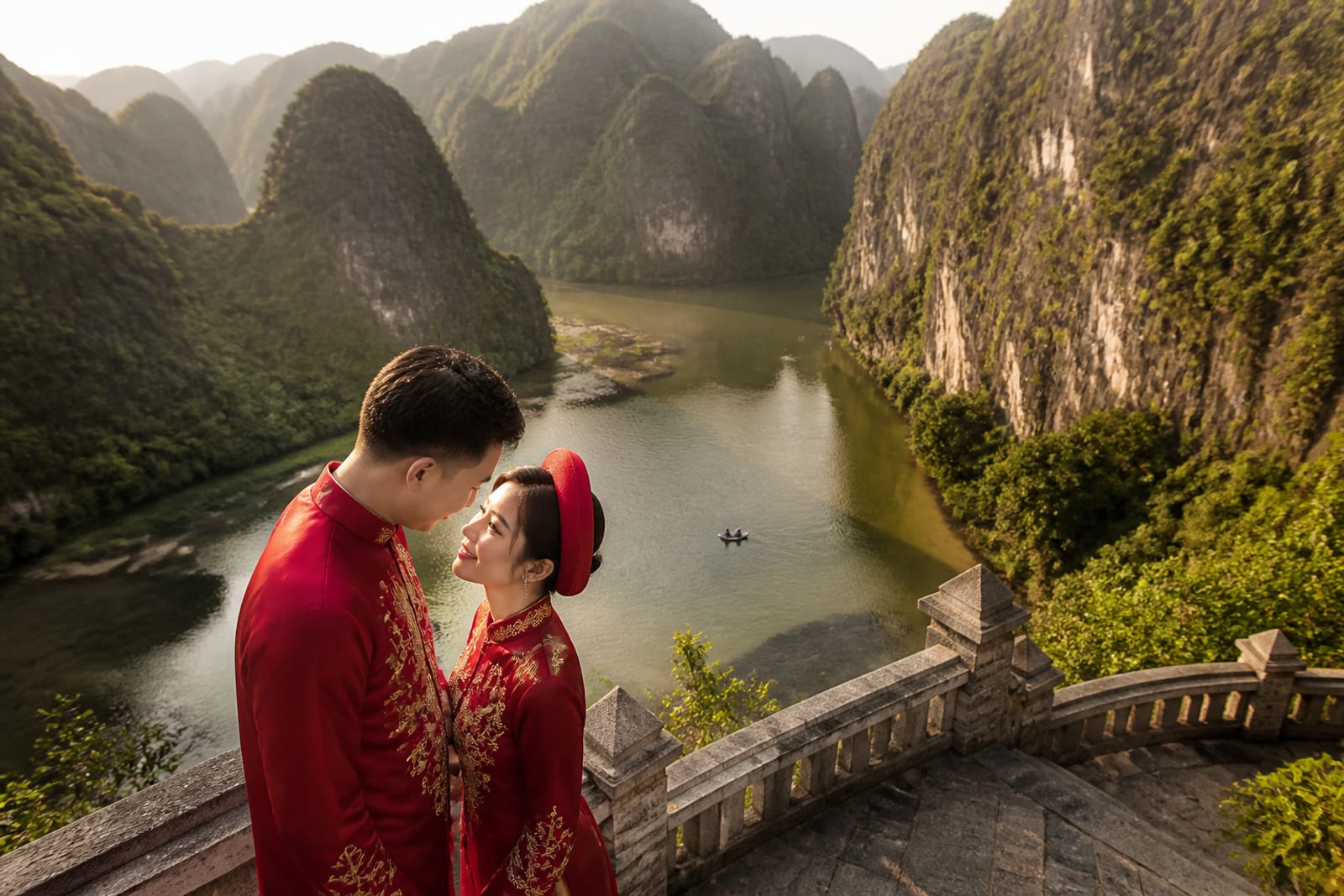
What's the best season and time of day for light?
Ninh Binh's climate splits sharply: December to February is cool and grey (suited to overcast, even light but muted tones); March to May and September to November offer warm, clear skies with the strongest directional light; June to August is hot and humid with afternoon thunderstorms. Early morning (6–8 a.m.) yields soft, diffused gold on the stone steps and window arches; late afternoon (4–6 p.m., depending on season) gives dramatic sidelighting on the pagoda's upper terraces. Midday (10 a.m.–3 p.m.) is harsh and flattens detail. Most elopement photographers book morning slots to avoid crowds and capitalize on best light. If you're traveling in June–August, plan indoors or shaded colonnades. Many couples time their Bai Dinh elopement for March–April or October–November when the temperature is stable, light is natural, and the site isn't choked by tour groups.
How do outfit and footwear choices affect the shoot?
The pagoda demands covered shoulders and knees—this isn't negotiable. If you're wearing an ao dai, ensure it's long enough to flow over stairs without snagging; many modern versions are designed for this. Western wedding dresses work if you plan to climb; bring flat shoes or grip-soled flats for the 500-step ascent to Hang Mua viewpoint (many couples split their elopement between lower pagoda grounds and viewpoint shots). Avoid heels unless your ceremony is ground-level only. Humidity in warm months can wilt delicate fabrics and affect makeup longevity; ask your photographer's makeup recommendation or book makeup & hair at your hotel the morning of the shoot for touch-ups during the session. Layers help—a shawl or light wrap covers shoulders indoors and adds texture in photos without overheating you outdoors.
What's the real difference between morning and afternoon shoots?
| Timing | Best for | Light character | Crowds | Footwear demands |
|---|---|---|---|---|
| 6–8 a.m. | Intimate ceremonies, soft portraiture | Golden, diffused, flattering | Minimal (monks & staff only) | Comfortable flats; stone steps dry |
| 4–6 p.m. | Drama, sidelighting, viewpoint shots | Warm, directional, long shadows | Moderate (late-day tour groups clearing) | Steady grip; later light fades fast |
| 10 a.m.–3 p.m. | Avoid | Harsh, blown-out on stone, no dimension | Peak crowds, tour buses | Heat stress |
Early shoots mean waking before dawn, but you'll have the site nearly to yourselves. Afternoon offers luxury light but requires racing against sunset—your photographer must know the exact minute light dies at Hang Mua and pack up accordingly. If your elopement includes a formal ceremony with a monk or officiant, morning availability matters; many monks keep specific hours.
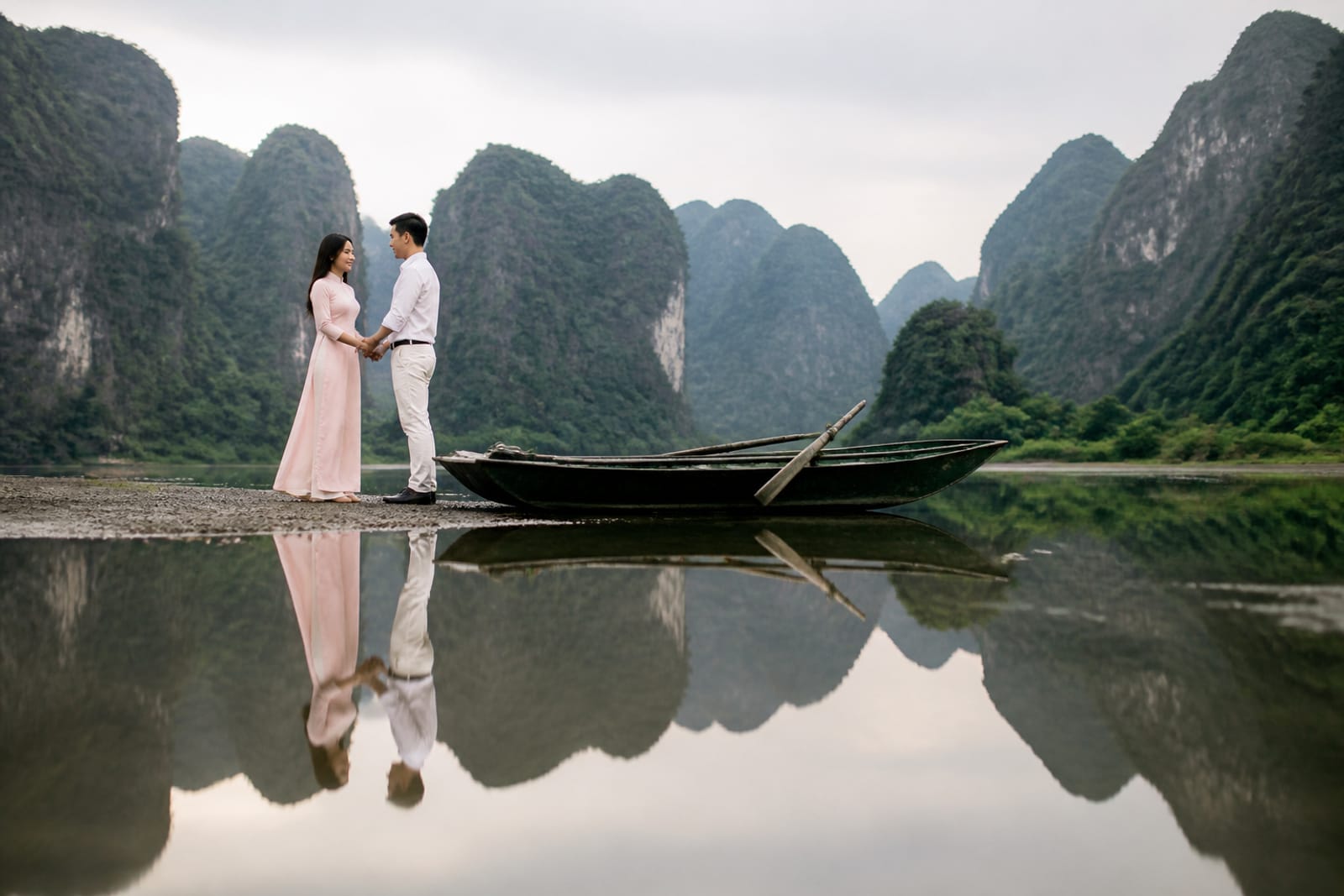
How do you find and vet a local Ninh Binh photographer?
Cáo Studio – Makeup & Photoshoot does not operate in Ninh Binh; you'll need a local photographer familiar with the region. Start by asking your accommodation (hotels, homestays, guesthouses in Ninh Binh) for referrals—they work with photographers regularly and can vouch for reliability. Search for "Ninh Binh photographer" on Instagram and look for portfolios with Bai Dinh, Hang Mua, Trang An, or Tam Coc shots; consistency across multiple locations matters more than polished branding. Before booking, ask the candidate:
- Have you shot a ceremony or formal elopement at Bai Dinh before? (Not just tourist photos.)
- How do you coordinate with temple staff for access and timing?
- Do you know the climbing routes and safe spots for high-angle shots?
- How do you manage light transitions from ground pagoda to upper viewpoint in one session?
- What's your backup plan if monks close a section during your shoot?
Request a portfolio review call (many photographers now offer WhatsApp video chat). A real practitioner will show you before/afters from the exact spot where you want your elopement, not generic Ninh Binh landscapes. Confirm they understand the pre-wedding & elopement style—intimate, posed ceremony moments, and candid reactions—not just scenic overlooks.
What logistical mistakes derail Bai Dinh elopement shoots?
Arriving without prior temple approval. Showing up with a photographer and hoping to negotiate on-site wastes 1–2 hours and may result in denial. Contact the temple office days ahead.
Underestimating the climb. The 500 steps to Hang Mua are steep and uneven. If your elopement includes couple portraits at the top, your photographer must scout the route beforehand and your footwear (and stamina) must match.
Ignoring monsoon weather. October–November brings typhoon-season rain. June–August is humid with sudden storms. Book a backup indoor location (lower colonnades, inner halls) with your photographer.
Misaligning outfit with sacred space. Even casual modern elopements respect covered shoulders and knees. Rushing to dress on-site often results in wrinkled, ill-fitting clothes in photos.
Not accounting for tour-group flux. Mid-morning to early afternoon, Bai Dinh hosts hundreds of domestic and international visitors. Early morning and late afternoon are quieter but require strict timing.
Forgetting makeup durability. Stone dust, humidity, and climbing sweat can wreck makeup applied hours earlier. Many couples hire a makeup artist for a quick touch-up mid-session.
What should you check before booking?
- Temple permissions. Call or visit Bai Dinh's office. Ask whether your elopement is a ceremony or a photoshoot, and whether each requires different approval. Get written confirmation if possible.
- Photographer's track record. Request at least three references from couples who eloped at Bai Dinh in the past 12 months. Not impressions—real feedback.
- Outfit fit and movement. If wearing an ao dai, try it on while walking stairs or kneeling (if part of your ceremony). If wearing a dress, have a seamstress confirm hem length for climbing.
- Backup plan. Ask your photographer what happens if weather blocks viewpoint access on your shoot date. Are reshoot dates offered? Is there a partial refund?
- Light-walk schedule. Request a detailed timeline: arrival, ceremony, portrait locations, ascent to Hang Mua, light-fade buffer, departure. A real photographer will give you this before you pay.
- Makeup & hair durability. If booking a local makeup artist (separate from the photographer), confirm they use long-wear formulas and bring a touch-up kit for your entire session.
- Deliverables timeline. Ask how long before edited photos arrive, how many edited images you'll receive, and whether you get RAW files. Get this in writing.
For couples planning a shoot elsewhere in Vietnam, Cáo Studio – Makeup & Photoshoot offers pre-wedding & elopement photoshoots in Hanoi, Ho Chi Minh City, and Hoi An; ask on WhatsApp about Hoi An availability. If Bai Dinh is your dream backdrop, a skilled local photographer is your best choice.
📸 Book on WhatsApp — ao dai photoshoot | 💄 Makeup & hair at your hotel | 🌸 See the lookbook
---
FAQ
Do I need a permit to elope at Bai Dinh Pagoda?
Yes. Contact Bai Dinh's temple office directly to request approval for your ceremony or photoshoot. They typically respond within 2–3 days. Written confirmation prevents delays on shoot day and shows monks your intent is respectful.
What's the Hang Mua climb like with a wedding dress?
The 500 stone steps are steep, uneven, and take 15–20 minutes to ascend. Wear flat, gripped shoes with good ankle support. A full-length dress risks snagging; shorter hems or an ao dai work better. Scout the route with your photographer beforehand.
Can I schedule a ceremony with a monk on my elopement day?
Yes, but arrange it weeks ahead through the temple office. Monks keep set schedules and may not be available on short notice. A local photographer familiar with Bai Dinh can often coordinate this when they book your temple approval.
What's the ideal group size for an elopement shoot at Bai Dinh?
2–6 people works best. Beyond that, logistics (escort through sacred halls, fit in photos, managing sightlines) become complex. Many photographers offer smaller-group rates; confirm this when you inquire.
How many hours should I book for an elopement at Bai Dinh?
2–4 hours is typical: 30 minutes ceremony, 1.5–2 hours portraits and location transitions, 30 minutes ascent to Hang Mua if included. Discuss your itinerary with your photographer; they'll advise duration based on outfit count and light timing.
What happens if it rains on my elopement day?
October–November typhoon rains can block the viewpoint. Ask your photographer for a backup indoor location (pagoda colonnades, inner prayer halls) and a reschedule or partial refund clause. Confirm this in your booking agreement.
Should I hire a makeup artist separate from the photographer?
If you're climbing 500 steps and shooting 3+ hours, yes. Local makeup artists in Ninh Binh can touch up mid-session. Ask your photographer for referrals, or book through your hotel. Confirm they use sweat-resistant formulas.
FAQ
Do I need a permit to elope at Bai Dinh Pagoda?
Yes. Contact Bai Dinh's temple office directly to request approval for your ceremony or photoshoot. They typically respond within 2–3 days. Written confirmation prevents delays on shoot day and shows monks your intent is respectful.
What's the Hang Mua climb like with a wedding dress?
The 500 stone steps are steep, uneven, and take 15–20 minutes to ascend. Wear flat, gripped shoes with good ankle support. A full-length dress risks snagging; shorter hems or an ao dai work better. Scout the route with your photographer beforehand.
Can I schedule a ceremony with a monk on my elopement day?
Yes, but arrange it weeks ahead through the temple office. Monks keep set schedules and may not be available on short notice. A local photographer familiar with Bai Dinh can often coordinate this when they book your temple approval.
What's the ideal group size for an elopement shoot at Bai Dinh?
2–6 people works best. Beyond that, logistics (escort through sacred halls, fit in photos, managing sightlines) become complex. Many photographers offer smaller-group rates; confirm this when you inquire.
How many hours should I book for an elopement at Bai Dinh?
2–4 hours is typical: 30 minutes ceremony, 1.5–2 hours portraits and location transitions, 30 minutes ascent to Hang Mua if included. Discuss your itinerary with your photographer; they'll advise duration based on outfit count and light timing.
What happens if it rains on my elopement day?
October–November typhoon rains can block the viewpoint. Ask your photographer for a backup indoor location (pagoda colonnades, inner prayer halls) and a reschedule or partial refund clause. Confirm this in your booking agreement.
Should I hire a makeup artist separate from the photographer?
If you're climbing 500 steps and shooting 3+ hours, yes. Local makeup artists in Ninh Binh can touch up mid-session. Ask your photographer for referrals, or book through your hotel. Confirm they use sweat-resistant formulas.
Ao dai, makeup, hair and a local photographer in Hanoi or Saigon — one WhatsApp message.