/pre-wedding-photoshoot
Elopement photos at Can Gio mangrove forest: tide times, poses & booki
Can Gio mangrove forest is a working tidal ecosystem south of Saigon where couples shoot elopement portraits in saltwater channels framed by gnarled root systems. Sessions work best Feb–Aug when morning tides are predictable and water levels allow wading without guides; golden hour (05:30–07:00, 17:00–18:30) lights the trees' grey-green canopy from the side, creating rim-lit silhouettes against water. A typical shoot at Cáo Studio – Makeup & Photoshoot runs 2–3 hours (arrival + muddy-ground setup + outfit changes in mangrove huts + travel back), and you'll need waterproof footwear, lightweight linen layers to stay cool, and a second outfit that contrasts the landscape (light fabrics photograph better against dark water). Avoid midday (11:00–15:00)—light is flat and heat exhausts subjects—and the Sep–Dec typhoon/flood season, when access roads are unreliable and water levels make wading unsafe. ---
How do tides shape Can Gio elopement timing?
Can Gio is tidal estuary water, not a still lake. High tide fills channels and submerges muddy banks; low tide reveals sandbars and dry walking paths—each offers a different visual. High tide (deeper water, reflections, floating frames) works if you're comfortable posing in shallow brackish water, and it peaks around 06:00–08:00 and 17:30–19:30 in the dry season. Low tide (exposed roots, cracked earth, contrast-rich foregrounds) suits couples who want grounded, earthiness without water contact. Check tide tables on local weather sites for Saigon—Can Gio's timing mirrors nearby coastal forecasts. Plan arrival 30–45 minutes before your chosen time window to account for travel delays and on-site positioning.
What light & season combination matters most for Can Gio?
| Season | Best for | Light character | Why it works or doesn't |
|---|---|---|---|
| Feb–Apr | Clean water, visibility | Crisp early-morning rays, low humidity | Dry season; morning air is clearest; water reflects sky well |
| May–Aug | Lush canopy, warm tones | Golden hour (late afternoon) rim-lights foliage | Still dry enough; afternoon light softer than midday; evening cooler |
| Sep–Dec | Avoid | Overcast, unreliable tides, flooded paths | Typhoon season; roads muddy; forecasts change hourly; risk of cancellation |
Midday light is harsh everywhere in Vietnam. At Can Gio, direct sun bleaches mangrove bark and casts harsh shadows on faces. Shoot early morning (05:30–08:00) or late afternoon (16:30–18:30) to catch the sun low, skimming water and tree edges. Winter (Dec–Feb) offers the coolest mornings; summer (Jun–Aug) has the deepest golden hour and most dramatic cloud formations, but you'll need constant hydration and frequent shade breaks.
📸 Book on WhatsApp — pre-wedding & elopement
Which outfit styles read best in mangrove frames?
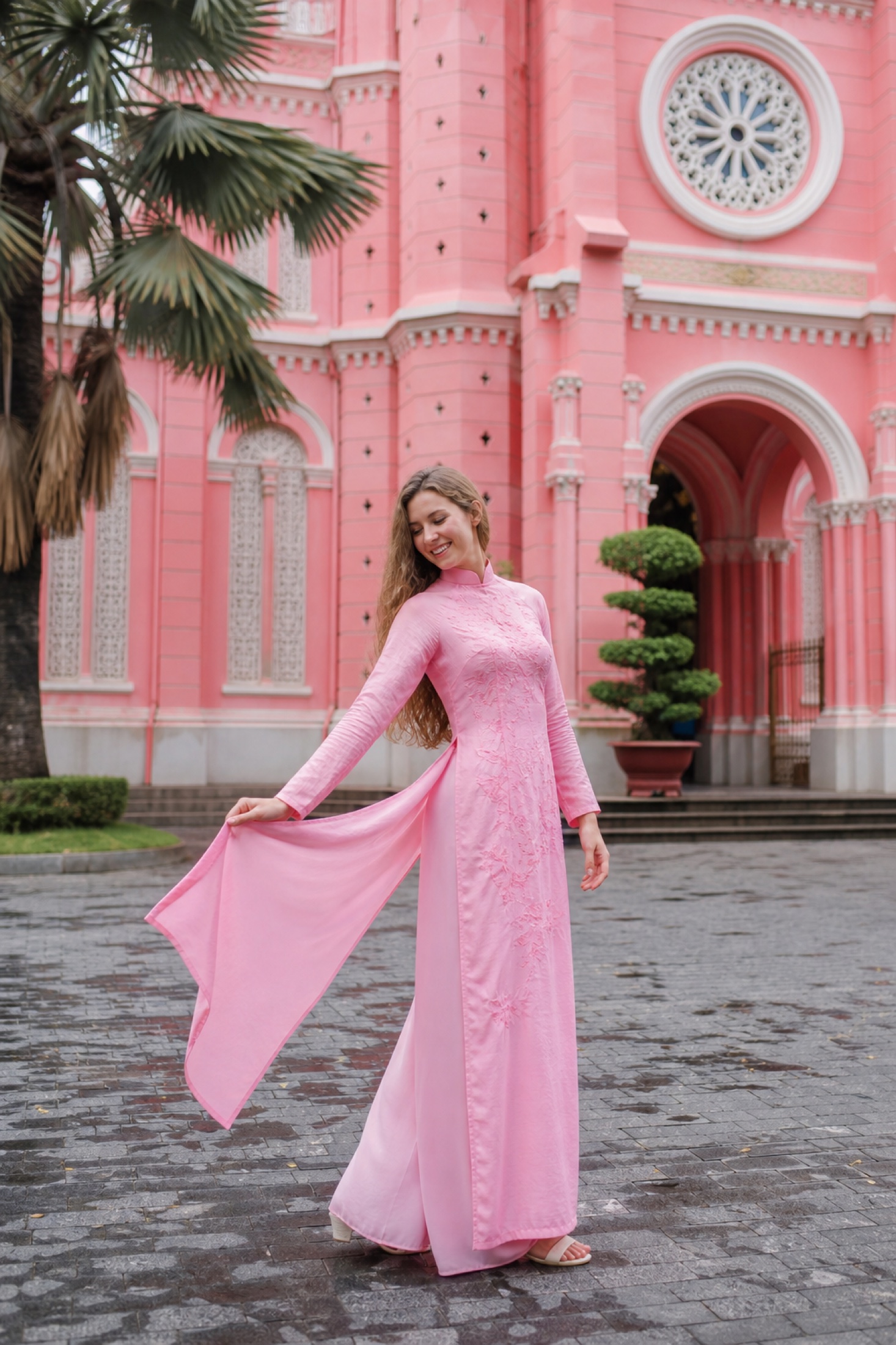
Can Gio's visual palette is muted: grey water, khaki mud, olive-green foliage, weathered grey root systems. Light, high-contrast clothing (cream, ivory, pastel linen, white silk) photograph well because they separate from the environment; dark suits read as silhouettes against water. For women, unstructured linen dresses, slip skirts, or lightweight ao dai (traditional Vietnamese dress—rent through our ao dai rental service) work better than heavy fabrics because the mud is sticky and water-wading needs mobility. For men, rolled linen trousers, open shirts, or a light suit jacket over simple wear suit the humidity and mud. Avoid long hemlines unless you're wearing waterproof footwear—the creek seeps into standard wedding shoes. Bring a second outfit (casual, contrast-colored, or ao dai) to change into mid-session for variety; the 45-minute wardrobe switch gives a natural break and fresh visual story.
How do real elopement sessions differ from standard couple shoots?
Couple photoshoots at Cáo Studio typically run 2–3 hours in controlled, accessible venues (temples, gardens, urban streets). Elopement sessions at Can Gio demand different logistics: a smaller team (photographer + makeup artist + one assistant), earlier arrival to scout tidal conditions, portable makeup & hair supplies applied on-site or in a waterproof shelter, and built-in contingency time if tides or weather shift. You wade, crouch, and potentially get muddy—outfits are shot to move, not preserved pristine. Sessions prioritize raw intimacy (close framing, candid reactions, genuine movement) over formal posed sequences. Editing emphasizes moody, cinematic tones (desaturated greens, warm shadows, high-contrast water) rather than bright, clean aesthetics. Expect fewer total shots but higher emotional depth per frame. If Can Gio's conditions are borderline (rain warning, unexpected flood), professional teams pivot to an alternate indoor or urban backup location in Saigon—ask your photographer about contingency options before booking.
What logistical checks prevent Can Gio shoot disasters?
- Road access & parking: Google Maps shows the main highway (National Route 2) to Can Gio, but the final approach to shooting spots is unpaved. Confirm vehicle access the day before with your photographer team; during rainy season, clay roads are impassable for standard cars.
- Tide tables: Download a tide forecast app or ask your photographer to provide the Saigon estuary tide window 48 hours before the shoot. A 15-minute misjudgement shifts your entire light window.
- Mosquito & sun protection: Bring insect repellent (mangrove marshes attract biting insects in afternoon), sunscreen, and a hat. The canopy provides patchy shade; exposed skin burns fast.
- Footwear: Waterproof boots or neoprene wading shoes are non-negotiable; standard wedding shoes sink, slip, and damage. Pack a dry pair in the car.
- Communication with your team: Confirm arrival time, escort instructions, parking location, and emergency contact the evening before. Can Gio has no reception in many spots; agree on a meetup if signal drops.
- Backup outfit or towel: Even if you're not wading, mud splashes. A lightweight wrap or second outfit eliminates stress.
Is Can Gio better than other Saigon elopement locations?
Can Gio suits couples who want drama, isolation, and a distinctive Vietnamese landscape. Alternatives include: urban backdrops (colonial Saigon streets, riverside cafés—bright, accessible, crowded); botanical gardens (controlled light, groomed frames, mid-range remoteness); Mekong Delta villages (water + traditional architecture, but hotter and more humid). Can Gio's mangroves are visually uncommon—few Western tourists recognize the ecosystem—so your images feel authentic to Vietnam rather than generic. The tradeoff is logistics: you need reliable transport, flexibility with tides and weather, and comfort with muddy, humid conditions. If you prefer smooth, climate-controlled shoots with hair/makeup touch-ups, a garden or hotel venue pairs better with makeup & hair services. If you want a story that looks risky, real, and locally rooted, Can Gio delivers.
For couples based in Hanoi or choosing alternate destinations, Cáo Studio also shoots elopements and pre-wedding sessions in Hanoi, Saigon, and by appointment in Hoi An. Each location has distinct light and seasonal demands—ask on WhatsApp for recommendations based on your dates and vision.
---
What to check before you book a Can Gio elopement shoot
- Confirm your photographer has Can Gio experience: ask for portfolio images from the location and weather patterns they've managed there.
- Check tide & weather forecasts together: the day before shooting, review tidal times and a 7-day forecast with your team.
- Clarify contingency plans: if weather or tides are unsafe, what's the backup location and rescheduling policy?
- Verify transport & parking: confirm who arranges the ride, whether parking is included, and if guides are needed.
- Agree on outfit & footwear details: discuss with your photographer which styles read well in mangrove light and confirm waterproof shoes are in the plan.
- Ask about makeup & hair scope: is touch-up makeup applied on-site or does humidity require full reapplication partway through?
---
FAQ
What's the best month for Can Gio elopement photos?
February–April and June–August. Feb–Apr offers the coolest mornings and clearest visibility; Jun–Aug has the deepest golden-hour light and fewest tidal surprises. Avoid Sep–Dec (typhoon/flood season, unpredictable tides, muddy roads). Ask Cáo Studio on WhatsApp for specific tide windows during your chosen dates.
Do I need to wade in water, or can I stay dry?
No. Posing in shallow water is optional—many couples shoot on muddy banks, standing on roots, or in huts framing the water behind them. Waterproof footwear is essential because the ground is mud and seepage, even if you avoid wading. Discuss comfort level with your photographer beforehand.
How long does a Can Gio elopement session take?
Typically 2–3 hours total: 30 minutes travel, 30 minutes on-site setup and scouting, 60–90 minutes shooting (including outfit changes and water breaks), 30 minutes travel back. The tight timeline rewards arriving early and having outfits prepped in the car. Confirm exact duration when booking.
What happens if weather turns bad on shoot day?
Rain, high winds, or unexpected flooding can cancel or delay the session. Professional photographers have a backup location (usually indoor Saigon, a covered garden, or a rescheduled date). Confirm the studio's cancellation and contingency policy before booking; ask whether you're charged if weather forces a pivot.
Can I hire makeup & hair for Can Gio?
Yes. Makeup and hair are usually applied in Saigon before travel, or in a waterproof shelter on-site. Humidity and water exposure may require mid-session touch-ups. Ask Cáo Studio whether makeup/hair is included in your package or quoted separately—exact inclusions are confirmed on WhatsApp.
How do I get to Can Gio from central Ho Chi Minh City?
Drive south on National Route 2 toward Can Gio town (roughly 30–45 minutes depending on traffic). The final approach to mangrove shooting spots is via unpaved roads; a reliable local driver is essential. Your photographer will typically coordinate transport or advise you on meeting points.
What's the difference between Can Gio elopement and a standard couple photoshoot?
Standard couple shoots are 2–3 hours in accessible, curated venues with controlled light. Can Gio elopements prioritize raw, intimate moments in a working natural ecosystem—fewer poses, higher emotional depth, and built-in logistical flexibility around tides and weather. Sessions feel more adventurous and less formal.
Do I need a permit or guide to shoot at Can Gio?
Can Gio is a biosphere reserve, but freelance photography for personal elopement use typically doesn't require a special permit. Commercial video or large crews may. Confirm with your photographer whether they've coordinated access; some spots require a local guide or small access fee (check locally for current requirements).
FAQ
What's the best month for Can Gio elopement photos?
February–April and June–August. Feb–Apr offers the coolest mornings and clearest visibility; Jun–Aug has the deepest golden-hour light and fewest tidal surprises. Avoid Sep–Dec (typhoon/flood season, unpredictable tides, muddy roads). Ask Cáo Studio on WhatsApp for specific tide windows during your chosen dates.
Do I need to wade in water, or can I stay dry?
No. Posing in shallow water is optional—many couples shoot on muddy banks, standing on roots, or in huts framing the water behind them. Waterproof footwear is essential because the ground is mud and seepage, even if you avoid wading. Discuss comfort level with your photographer beforehand.
How long does a Can Gio elopement session take?
Typically 2–3 hours total: 30 minutes travel, 30 minutes on-site setup and scouting, 60–90 minutes shooting (including outfit changes and water breaks), 30 minutes travel back. The tight timeline rewards arriving early and having outfits prepped in the car. Confirm exact duration when booking.
What happens if weather turns bad on shoot day?
Rain, high winds, or unexpected flooding can cancel or delay the session. Professional photographers have a backup location (usually indoor Saigon, a covered garden, or a rescheduled date). Confirm the studio's cancellation and contingency policy before booking; ask whether you're charged if weather forces a pivot.
Can I hire [makeup & hair](/makeup-and-hair) for Can Gio?
Yes. Makeup and hair are usually applied in Saigon before travel, or in a waterproof shelter on-site. Humidity and water exposure may require mid-session touch-ups. Ask Cáo Studio whether makeup/hair is included in your package or quoted separately—exact inclusions are confirmed on WhatsApp.
How do I get to Can Gio from central Ho Chi Minh City?
Drive south on National Route 2 toward Can Gio town (roughly 30–45 minutes depending on traffic). The final approach to mangrove shooting spots is via unpaved roads; a reliable local driver is essential. Your photographer will typically coordinate transport or advise you on meeting points.
What's the difference between Can Gio elopement and a standard [couple photoshoot](/couple-photoshoot)?
Standard couple shoots are 2–3 hours in accessible, curated venues with controlled light. Can Gio elopements prioritize raw, intimate moments in a working natural ecosystem—fewer poses, higher emotional depth, and built-in logistical flexibility around tides and weather. Sessions feel more adventurous and less formal.
Do I need a permit or guide to shoot at Can Gio?
Can Gio is a biosphere reserve, but freelance photography for personal elopement use typically doesn't require a special permit. Commercial video or large crews may. Confirm with your photographer whether they've coordinated access; some spots require a local guide or small access fee (check locally for current requirements).
Ao dai, makeup, hair and a local photographer in Hanoi or Saigon — one WhatsApp message.