/pre-wedding-photoshoot
Elopement photos at Cao Bang: countryside light and timing guide
Elopement photography in Cao Bang countryside centers on Ban Gioc waterfall, the karst valleys around Thac Cao Bang, and limestone forest roads where soft morning or late-afternoon light sculpts the landscape. Sessions run 3–4 hours and require either a local photographer based in Cao Bang or advance coordination with a Hanoi team willing to travel; Cáo Studio operates from Hanoi, Ho Chi Minh City and Hoi An and does not maintain a Cao Bang base, so contact us on WhatsApp to discuss feasibility. Best light appears between 6–8 am (before crowds at Ban Gioc, side-lit limestone) or 4–6 pm (soft backlight on water). Rainy season (July–September) fills the waterfall dramatically but brings fog and unpredictable downpours; dry season (October–April) offers clearer skies and safer road access. Wear layers—limestone valleys hold morning chill—and choose lightweight outfits (ao dai, linen, cotton) that move easily on uneven terrain. Avoid midday (11 am–3 pm); harsh overhead light flattens texture and the crowds peak then.
Why does Cao Bang suit elopement shoots when couples want to avoid crowds?
Cao Bang's karst landscape lies 240 km northeast of Hanoi, remote enough that tourist crowds concentrate only at Ban Gioc waterfall and Trang An Mua (the limestone peak). Most visitors follow the highway loop; couples who hike into the valleys or shoot at dawn access the same light with no strangers in frame. The terrain feels epic without false drama—real water, real stone, real distance. A smaller footprint (two people, one or two crew) moves faster than a wedding party, letting you chase light as it shifts across the limestone faces. One caveat: remoteness means weather delays and road conditions matter; a shoot here demands a photographer who knows the valley access points and can pivot when light changes mid-session.
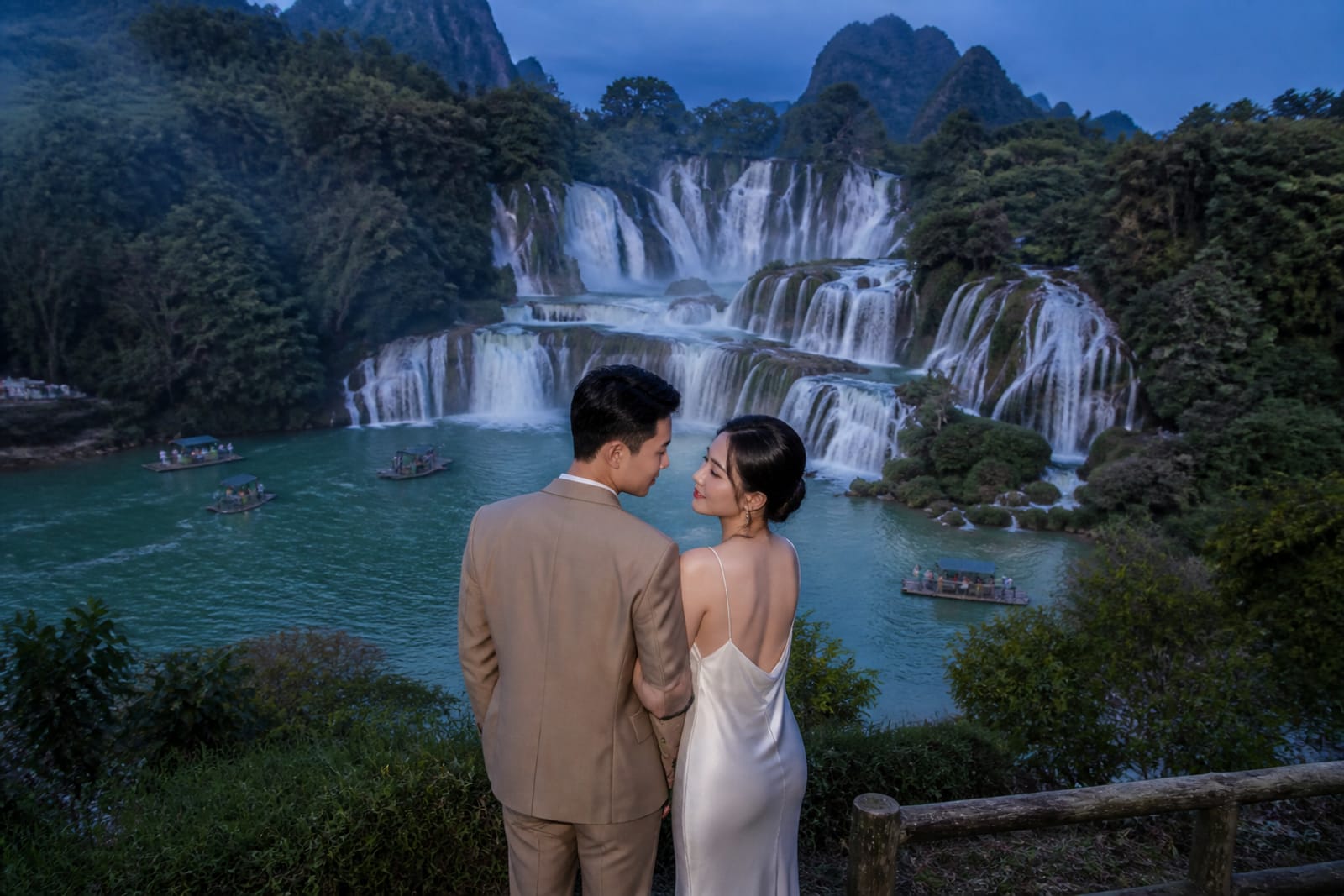
What season delivers the best light for elopement frames at Ban Gioc?
October to February offers the clearest skies and safest conditions. The waterfall is most powerful July–September (rainy season), but fog often blankets the gorge until 9 am, and afternoon downpours can trap you on-site. Winter (December–February) brings cool, dry mornings with sharp side light across the limestone cliffs—ideal for texture and depth. Spring (March–April) sits between: the falls begin to thin, but skies clear and wildflowers appear on the surrounding slopes. Avoid September–October if heavy rain is forecast; local news and WhatsApp weather checks (ask your crew) help you pivot dates. The trade-off: dry season crowds peak in November–December, so dawn shoots (before 8 am) are essential to avoid tour groups.
How do timing and light windows change between morning and late-afternoon shoots?
| Timing | Light quality | Waterfall state | Crowds | Outfit challenge |
|---|---|---|---|---|
| 6–8 am (winter/spring) | Soft side light, cool tones, limestone texture sharp | Fuller in wet season, thin in dry | Minimal; few hikers yet | Cool air; layers needed under ao dai |
| 9 am–12 pm | Harsh overhead, flat shadows, glare on water | Gradually warming | Growing; tour groups arrive | Sun glare, overheating in synthetic fabrics |
| 12–3 pm | Overhead and unflattering | Peak glare on waterfall | Peak crowds; unusable | Heat exhaustion risk; ao dai clings |
| 4–6 pm (year-round) | Warm backlight, golden tones, landscape glows | Less powerful visually | Moderate; late hikers, tour groups leaving | Magical for silhouettes; easier wardrobe |
| After 6 pm | Rapid color shift, blue hour if clear | Dimmer; requires higher ISO | Few remaining | Cooler; ao dai drapes well; wind picks up |
Early morning dominates because Cao Bang's valleys are narrow—limestone walls block direct sun until late morning, then shadows move fast. Late afternoon (4–6 pm) competes equally in winter, when the sun stays low longer. A 3–4 hour session typically splits dawn-to-mid-morning or late afternoon-to-dusk; hybrid morning–afternoon shoots waste transit time and risk catching midday flat light.
What outfit and undergarment choices work for elopement shoots on rough terrain?
An ao dai is iconic but demands planning. Wear lightweight cotton or linen under the tunic; synthetic blends trap heat and chafe when hiking limestone trails. Bring a second set of undergarments in case the first gets damp from morning mist or a stream crossing. Flat shoes with grip (lightweight hiking sandals, not heels or slip-ons) are non-negotiable—Ban Gioc's approach involves wet rocks and uneven stone steps. If you're in Western dress, choose soft fabrics (cotton, linen, silk blends) that move without rustling in wind, and tailor the hem to clear your ankles so you can walk naturally without lifting or bunching. Layers matter: a thin cardigan or scarf can be draped and removed for different frames without a wardrobe change on-site. Avoid heavy jewelry (noise, weight, glare) and tight waistbands that restrict movement. A photographer who also coordinates hair and makeup can adjust for humidity and wind—Cáo Studio's team handles outfit, hair, makeup and camera in one booking, which simplifies logistics on remote shoots.
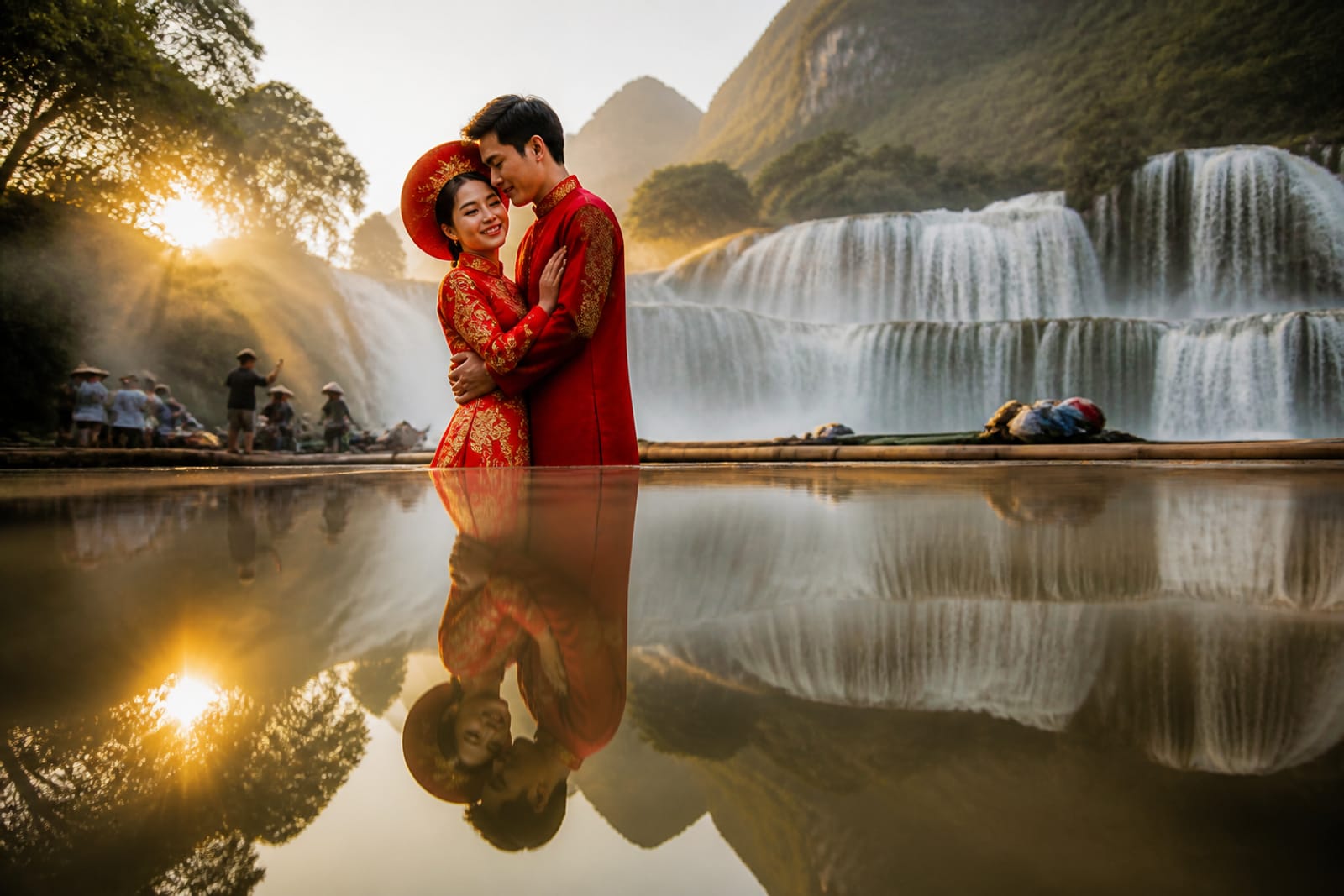
How do you plan transportation and backup timing for a Cao Bang elopement session?
The journey from Hanoi to Ban Gioc is 4–5 hours by car. If you hire a crew that travels from Hanoi (such as through Cáo Studio's coordination), that crew arrives the evening before or departs by 5 am to reach the valley by sunrise. Budget fuel, road tolls, and driver rest if the photographer needs a dedicated car. Backup dates are essential—weather in the mountains shifts quickly, and a downpour can cancel a morning shoot with 6 hours' notice. Confirm with your photographer what happens if light fails (re-shoot included? partial refund? new date priority?). Mobile signal in the valleys is weak; arrange check-ins via WhatsApp before you leave the hotel and confirm a meeting point the evening before. If traveling with Cáo Studio, ask about pre-wedding and elopement logistics on WhatsApp—the team can advise on road conditions, best entry points and whether a specific week is feasible. Hire a local driver who knows the terrain if the photographer doesn't live in Cao Bang.
Why hire a local Cao Bang photographer versus traveling a crew from Hanoi?
Local photographers know access roads, seasonal water levels, permit checkpoints and guard stations (the falls border China). They move faster between spots and navigate crowd patterns. Finding a vetted local requires research—ask your hotel for referrals and request a portfolio specific to elopement or couple sessions (not just tour-group snapshots). Traveling crews (such as from Hanoi) bring consistency in framing, editing and creative direction across multiple locations; if you've seen their work in Hanoi or Hoi An and trust their style, continuity matters. They coordinate hair, makeup and outfit as one message, reducing vendor miscommunication. The trade-off: a Hanoi crew's travel time adds planning complexity and cost factors (fuel, early departure, overnight stays). Cáo Studio does not operate a Cao Bang base; if you're considering the studio for other sessions (an ao dai shoot in Hanoi beforehand, or a post-wedding album session), ask on WhatsApp whether a Cao Bang elopement shoot is feasible and what that coordination looks like.
---
What to check before you book an elopement shoot in Cao Bang
- Photographer's Cao Bang portfolio: ask for frames from at least two prior elopement or couple sessions at Ban Gioc or karst valleys, not tour-group photos.
- Season and weather: confirm the photographer's policy if rain or fog cancels a session (full re-shoot? partial credit? date lock-in?).
- Transport and crew: clarify who arranges the car, where the photographer meets you, and whether they've shot this terrain before.
- Light scouting: ask if the photographer recommends a pre-dawn start or late-afternoon timing based on your chosen date and week.
- Outfit and hair/makeup: if the photographer does not offer coordination, confirm you've hired a separate artist and allow extra time for outfit changes in the valleys.
- Editing timeline: elopement couples often need frames quickly—ask how many edited photos you'll receive and by when.
- Backup date policy: confirm the exact terms if weather postpones your shoot.
---
📸 Book an elopement pre-wedding shoot | 💄 Makeup & hair coordination | 🌸 See Cao Bang elopement examples in the lookbook
---
FAQ
Can Cáo Studio shoot an elopement at Ban Gioc waterfall?
Cáo Studio operates from Hanoi, Ho Chi Minh City and Hoi An. Cao Bang is not a regular location, but inquire on WhatsApp +84 338 762 340—the team may coordinate a shoot if dates and logistics align. A local Cao Bang photographer or a Hanoi crew willing to travel are alternatives.
What's the best time of year for elopement light at Cao Bang?
October–February offers the clearest skies and sharpest morning light. Rainy season (July–September) fills the waterfall dramatically but brings fog and downpours. Early morning (6–8 am) is essential year-round; the narrow valleys block direct sun until late morning.
Do I need a permit to shoot at Ban Gioc waterfall?
Ban Gioc borders China and sits within a national boundary zone. Check current permit rules with your photographer or hotel; rules change and local guidance is essential. A photographer familiar with Cao Bang navigates this faster.
What should I wear under an ao dai for a hiking elopement shoot?
Wear lightweight cotton or linen undergarments, not synthetics—they trap sweat and chafe on rough terrain. Bring a second set in case of morning mist or stream crossings. Flat, grip-sole shoes (hiking sandals, not heels) are non-negotiable.
How long does a Cao Bang elopement session take, and how many edited photos do I get?
Sessions typically run 3–4 hours (dawn-to-mid-morning or late afternoon-to-dusk). The exact number of edited photos and delivery timeline depend on your photographer's package. Ask on WhatsApp if you're booking with Cáo Studio, or confirm with a local photographer before paying.
If rain cancels my shoot, what happens to my booking?
Policies vary. Before booking, ask whether your photographer offers a full re-shoot, partial refund, date priority or credit toward a future session. Get the policy in writing and confirm it covers weather postponements.
Should I hire a Hanoi crew or a local Cao Bang photographer?
Local photographers know access roads and permits faster; Hanoi crews bring consistent style and outfit/hair/makeup coordination. Weigh whether you value creative continuity (Hanoi) or logistical speed (local). Request portfolios from both before deciding.
FAQ
Can Cáo Studio shoot an elopement at Ban Gioc waterfall?
Cáo Studio operates from Hanoi, Ho Chi Minh City and Hoi An. Cao Bang is not a regular location, but inquire on WhatsApp +84 338 762 340—the team may coordinate a shoot if dates and logistics align. A local Cao Bang photographer or a Hanoi crew willing to travel are alternatives.
What's the best time of year for elopement light at Cao Bang?
October–February offers the clearest skies and sharpest morning light. Rainy season (July–September) fills the waterfall dramatically but brings fog and downpours. Early morning (6–8 am) is essential year-round; the narrow valleys block direct sun until late morning.
Do I need a permit to shoot at Ban Gioc waterfall?
Ban Gioc borders China and sits within a national boundary zone. Check current permit rules with your photographer or hotel; rules change and local guidance is essential. A photographer familiar with Cao Bang navigates this faster.
What should I wear under an ao dai for a hiking elopement shoot?
Wear lightweight cotton or linen undergarments, not synthetics—they trap sweat and chafe on rough terrain. Bring a second set in case of morning mist or stream crossings. Flat, grip-sole shoes (hiking sandals, not heels) are non-negotiable.
How long does a Cao Bang elopement session take, and how many edited photos do I get?
Sessions typically run 3–4 hours (dawn-to-mid-morning or late afternoon-to-dusk). The exact number of edited photos and delivery timeline depend on your photographer's package. Ask on WhatsApp if you're booking with Cáo Studio, or confirm with a local photographer before paying.
If rain cancels my shoot, what happens to my booking?
Policies vary. Before booking, ask whether your photographer offers a full re-shoot, partial refund, date priority or credit toward a future session. Get the policy in writing and confirm it covers weather postponements.
Should I hire a Hanoi crew or a local Cao Bang photographer?
Local photographers know access roads and permits faster; Hanoi crews bring consistent style and outfit/hair/makeup coordination. Weigh whether you value creative continuity (Hanoi) or logistical speed (local). Request portfolios from both before deciding.
Ao dai, makeup, hair and a local photographer in Hanoi or Saigon — one WhatsApp message.