/pre-wedding-photoshoot
Elopement photos at Cat Cat village: Sapa location guide
Cat Cat village (about 2 km south of Sapa town center) is an H'mong settlement framed by rice terraces and mist-wrapped peaks — a natural elopement backdrop. Sessions run 3–4 hours, starting early (6–7 am) to catch the light before crowds and heat. You'll walk the narrow terrace paths in your chosen outfit (ao dai, Western dress, or both), guided by a photographer who directs you to move, look at each other, and pause where the light is strongest. Cáo Studio does not operate in Sapa, but a skilled local photographer familiar with Cat Cat's microclimates and foot traffic patterns will frame you against the terraces and valley without forcing stiff poses. Avoid mid-day heat (11 am–3 pm), rainy months (May–Aug in Sapa), and the week before/after Tet when the village fills with domestic tourists. Book a scout visit with your photographer to lock timing and routes. ---
How does light work at Cat Cat for morning and late-afternoon shoots?
Morning (6–7 am to 9 am): soft, golden side light rakes across the terrace ridges, creating shadows that frame the hillside. Mist often clings to the lower valley, diffusing light evenly — no harsh squint. You'll see yourself clearly in wide shots, medium frames, and close details. Late afternoon (4–5 pm onward) brings warm amber tones but shorter windows before cloud and cold set in; mist rises again around 6 pm, softening everything but stealing definition. Morning light is more predictable and flatters skin and fabric equally.
📸 Book on WhatsApp — pre-wedding photoshoot
What should an elopement couple wear to Cat Cat village?
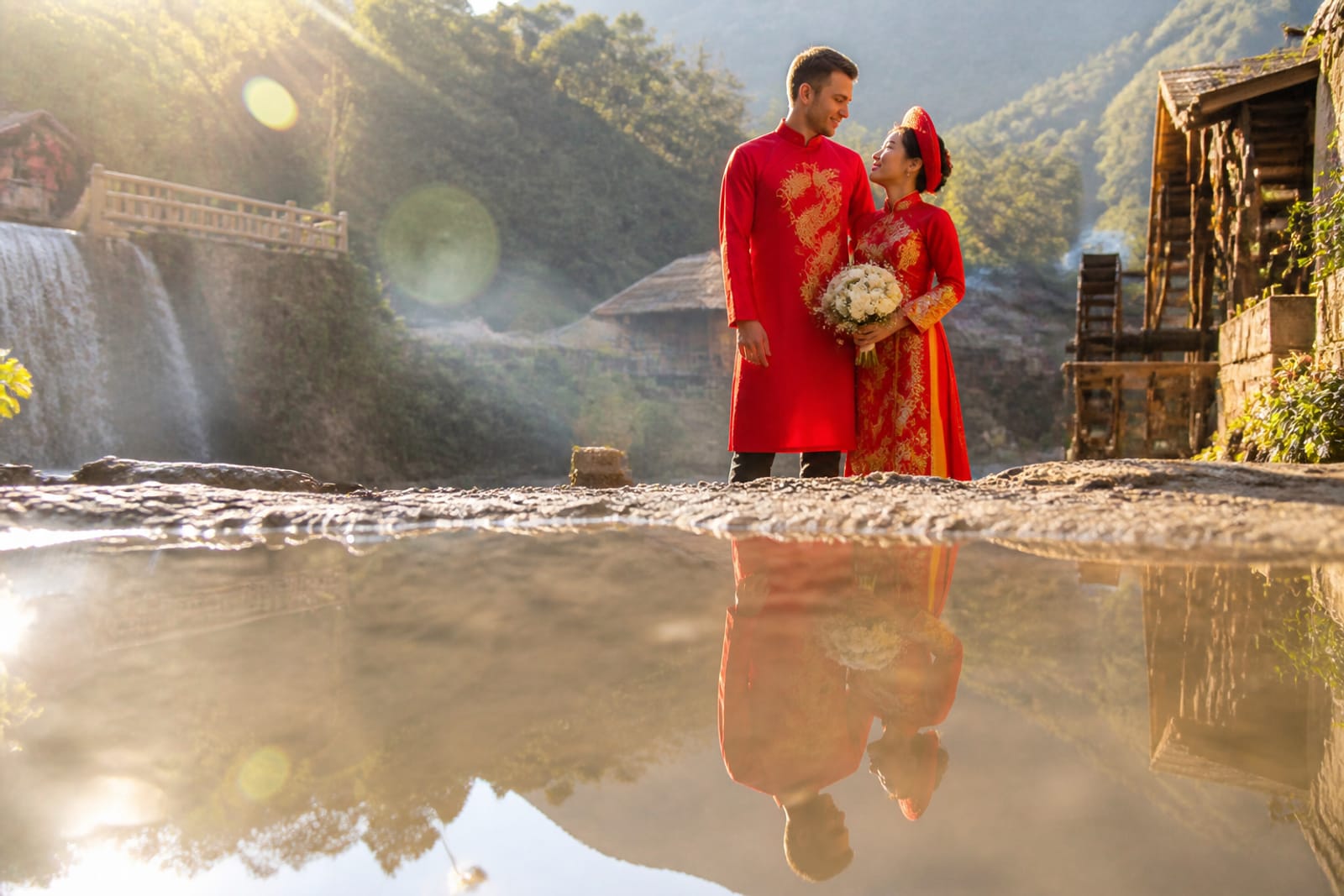
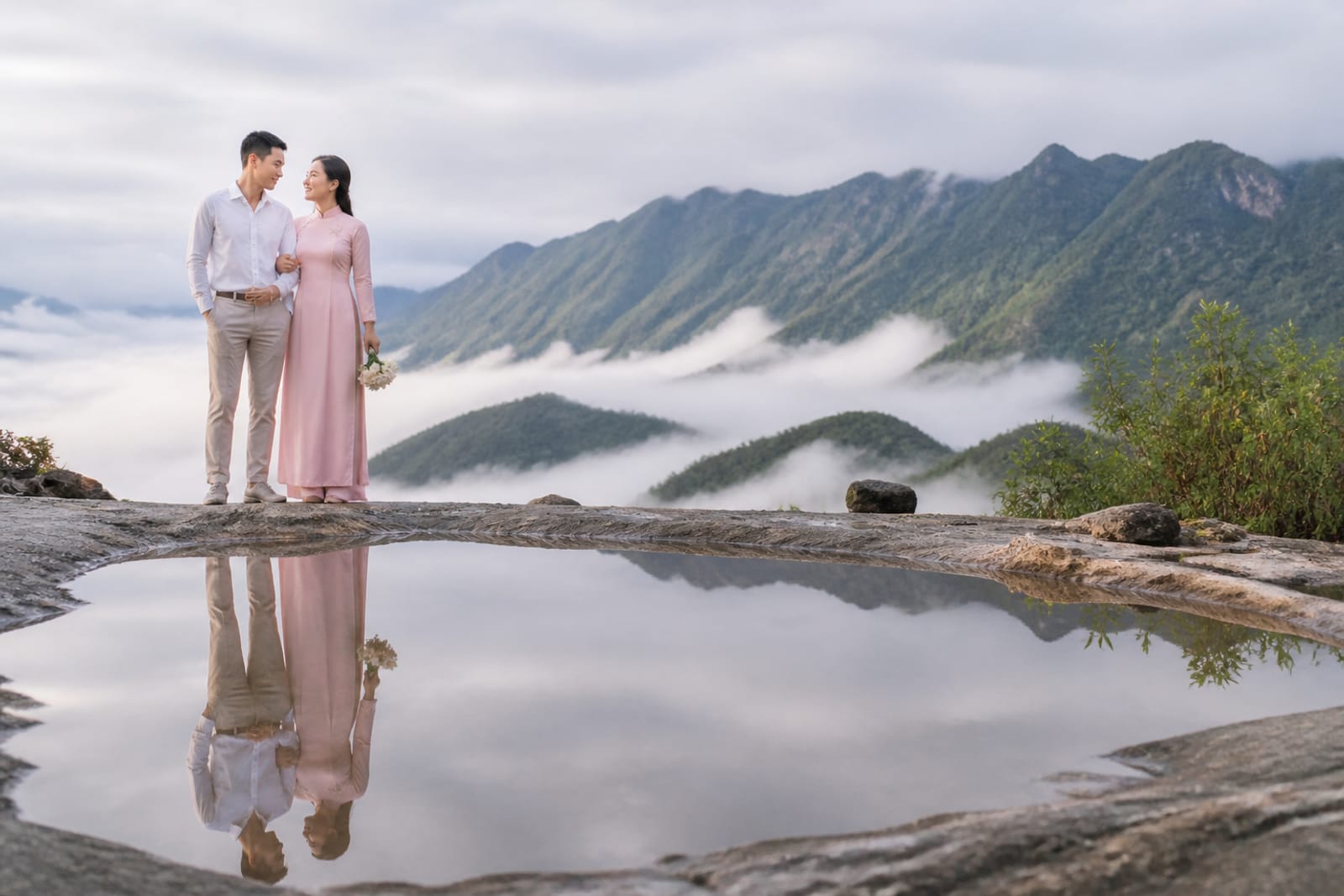
An ao dai (the traditional Vietnamese tunic) is the most photogenic choice — its flowing fabric moves beautifully on the hillside paths, and the color sings against green terraces and mist. If you prefer Western dress, a simple gown or suit in solid tones (cream, blush, navy, grey) photographs cleanly without competing with the landscape. Avoid white, which glares in morning sun; avoid busy patterns that fragment the frame. Wear comfortable, non-slip shoes — the terrace steps are uneven, muddy after rain, and you'll be walking for several hours. A shawl or light jacket layers warmth; Sapa can be cool even in summer, and wind picks up by afternoon. If you want both outfits, plan outfit-change time into your session schedule — it costs time and energy on steep paths.
| Outfit choice | Best for | Sapa season fit | Why it works |
|---|---|---|---|
| Ao dai (solid jewel or pastel) | romantic, cultural narrative | Sep–Nov, Mar–May (cool, clear) | moves with walking; color pops against green and mist |
| Western wedding gown | modern elegance | Dec–Feb (rare clear cold days) | simple lines frame the landscape; shows your style |
| Groom suit + bride ao dai | both traditions | Sep–Nov (clearest light) | creates visual story; ao dai reads in wide shots |
| Casual chic (linen, neutral) | intimate, understated | Oct–Nov, Apr–May (ideal temp) | practical for walking; authenticity resonates in frames |
Why hire a local Sapa photographer instead of traveling from Hanoi?
A local knows Cat Cat's micro-seasons: where mist lingers longest, which paths offer the best light at a given hour, when H'mong farmers work (avoid peak morning harvesting), and which terrace edges are safe after rain. A Hanoi-based studio must travel 5+ hours uphill, adding cost and fatigue — your photographer arrives less sharp, and contingency time evaporates. A photographer rooted in Sapa scouts the village weekly, reads the weather pattern intuitively, and can pivot instantly if a cloud bank rolls in or a family group unexpectedly occupies your planned frame. Cáo Studio operates in Hanoi, Ho Chi Minh City and Hoi An, but for Sapa elopement shoots, ask on WhatsApp for local photographer referrals — we'll connect you with a vetted collaborator who delivers the same directed approach.
What is the best season for Cat Cat elopement photos?
September–November (post-monsoon): terraces are flooded and emerald, skies clear after rains, and cool air keeps you fresh during a 3–4 hour walk. Light is steady and warm without harsh glare. December–February is coldest (bring layers), occasionally foggy but clear-skied on good days — fewer tourists. March–May brings greening and cool mornings, but afternoon clouds thicken by late May. June–August (peak rainy season): morning mist is thick, afternoon downpours shut down shoots, and humidity is high. Late January–mid-February (Tet): the village empties of visitors, but many local services close, and you'll lose a week to family closures. Plan 6–8 weeks ahead and check the local 10-day weather forecast before confirming a date — Sapa's weather shifts fast.
How do you scout, plan and book a Cat Cat elopement session?
First, decide your outfit and preferred light window (sunrise, golden hour). Second, contact a local Sapa photographer — ask for their portfolio (focus on candid walking shots and wide framing, not static poses). Third, request a scout visit: you and your partner, the photographer, and ideally a makeup artist walk the village at your chosen time to lock three things: the opening wide shot (far terrace ridge, valley backdrop), the medium walking frames (narrow path, soft side light), and the detail close-ups (hands, faces, fabric). This takes 1–2 hours and clarifies what's safe, timing, and where to position yourself. Fourth, confirm the final date and book makeup and hair (either at your Sapa hotel or with the photographer's recommendation). Fifth, discuss outfit logistics — transport, change location, drying time if paths are wet. Aim to shoot early (6:30–10 am) to avoid crowds and heat; plan a coffee stop mid-session to reset and transition between locations.
---
What to check before booking an elopement session at Cat Cat
- Photographer portfolio: does it show walking, real light, and couples who look at each other — not posed pyramid groups or stiff monument backdrops?
- Weather contingency: can you reschedule if rain or thick mist hits? Are there backup dates?
- Outfit transport: who carries your dress or gown? Is there a secure change room (hotel, guide's home)?
- Makeup & hair timing: confirm the artist can work at 5:30 am if you want early light, or will meet you on location.
- Guides and permits: ask if local guides are required (some villages request a courtesy contact); does the photographer have village relationships?
- Edited timeline: when will you see proofs and final frames? (Cáo Studio delivers edited photos within 48 hours; ask your local photographer the same.)
- File formats and usage: will you own the digital files? Can you print and share them freely?
- Backup outfit or props: bring a shawl, a flower, or a second color in case one outfit doesn't read well in the light.
---
Elopement at Cat Cat works best when you pair a clear-eyed understanding of the location's light and season with a photographer who directs movement instead of posing. Whether you work with a pre-wedding specialist based locally or a Hanoi team willing to travel, commit 6–8 weeks to planning, scout at least once, and choose your date around the calendar (not just a weekend). The frames you keep will be the ones where you're walking toward the light, and your photographer caught you mid-step.
For elopement shoots in Hanoi, Ho Chi Minh City, or Hoi An, Cáo Studio directs one team (photographer, makeup artist, stylist) to handle your outfit, hair, light and narrative in one booking. For Sapa, ask us on WhatsApp +84 338 762 340 for local photographer connections — we'll match you with someone who knows Cat Cat's weather and paths as well as we know Hanoi's river light.
📸 Book on WhatsApp — couple photoshoot
---
FAQ
Can Cáo Studio shoot my elopement at Cat Cat village?
No — Cáo Studio operates in Hanoi, Ho Chi Minh City, and Hoi An. For Sapa elopement shoots, contact us on WhatsApp and we'll refer you to a local photographer we trust who directs movement and light the same way we do.
What time should we start a Cat Cat session to catch the best light?
Start at 6:30–7 am for soft golden side light across the terraces. Morning mist diffuses harshness, and you'll finish before midday heat (11 am–3 pm) stiffens energy and creates harsh shadows.
Do we need a guide or permit to shoot elopement photos at Cat Cat village?
No permit is required, but it's courteous to hire a local guide (H'mong or Sapa-based) who knows the paths, foot traffic, and family boundaries. Ask your photographer — they'll have relationships and can arrange this.
Is an ao dai the only outfit choice for Cat Cat elopement frames?
No. A Western gown or suit in solid jewel or neutral tones photographs cleanly against the landscape. An ao dai is visually strongest because its fabric moves and the silhouette complements wide framing, but your choice of outfit depends on the story you want to tell.
How does rain or thick mist affect a Cat Cat elopement shoot?
Rain stops shoots immediately (wet paths are unsafe and light dies). Thick mist softens the landscape but removes terrace definition — your frames will be moody and intimate, not crisp. Check the 10-day forecast 2 weeks before and plan 1–2 backup dates. Ask your photographer about a rain reschedule policy.
When should we avoid shooting at Cat Cat village?
Avoid June–August (monsoon, afternoon downpours, humidity). Avoid late January–mid-February (Tet — services close and crowds peak just before). Cold, clear December–February is beautiful but requires warm layers. September–November and March–May are ideal for light, crowds, and comfort.
FAQ
Can Cáo Studio shoot my elopement at Cat Cat village?
No — Cáo Studio operates in Hanoi, Ho Chi Minh City, and Hoi An. For Sapa elopement shoots, contact us on WhatsApp and we'll refer you to a local photographer we trust who directs movement and light the same way we do.
What time should we start a Cat Cat session to catch the best light?
Start at 6:30–7 am for soft golden side light across the terraces. Morning mist diffuses harshness, and you'll finish before midday heat (11 am–3 pm) stiffens energy and creates harsh shadows.
Do we need a guide or permit to shoot elopement photos at Cat Cat village?
No permit is required, but it's courteous to hire a local guide (H'mong or Sapa-based) who knows the paths, foot traffic, and family boundaries. Ask your photographer — they'll have relationships and can arrange this.
Is an ao dai the only outfit choice for Cat Cat elopement frames?
No. A Western gown or suit in solid jewel or neutral tones photographs cleanly against the landscape. An ao dai is visually strongest because its fabric moves and the silhouette complements wide framing, but your choice of outfit depends on the story you want to tell.
How does rain or thick mist affect a Cat Cat elopement shoot?
Rain stops shoots immediately (wet paths are unsafe and light dies). Thick mist softens the landscape but removes terrace definition — your frames will be moody and intimate, not crisp. Check the 10-day forecast 2 weeks before and plan 1–2 backup dates. Ask your photographer about a rain reschedule policy.
When should we avoid shooting at Cat Cat village?
Avoid June–August (monsoon, afternoon downpours, humidity). Avoid late January–mid-February (Tet — services close and crowds peak just before). Cold, clear December–February is beautiful but requires warm layers. September–November and March–May are ideal for light, crowds, and comfort.
Ao dai, makeup, hair and a local photographer in Hanoi or Saigon — one WhatsApp message.