/pre-wedding-photoshoot
Elopement photos at Cua Dai Beach: guide to sunrise shoots
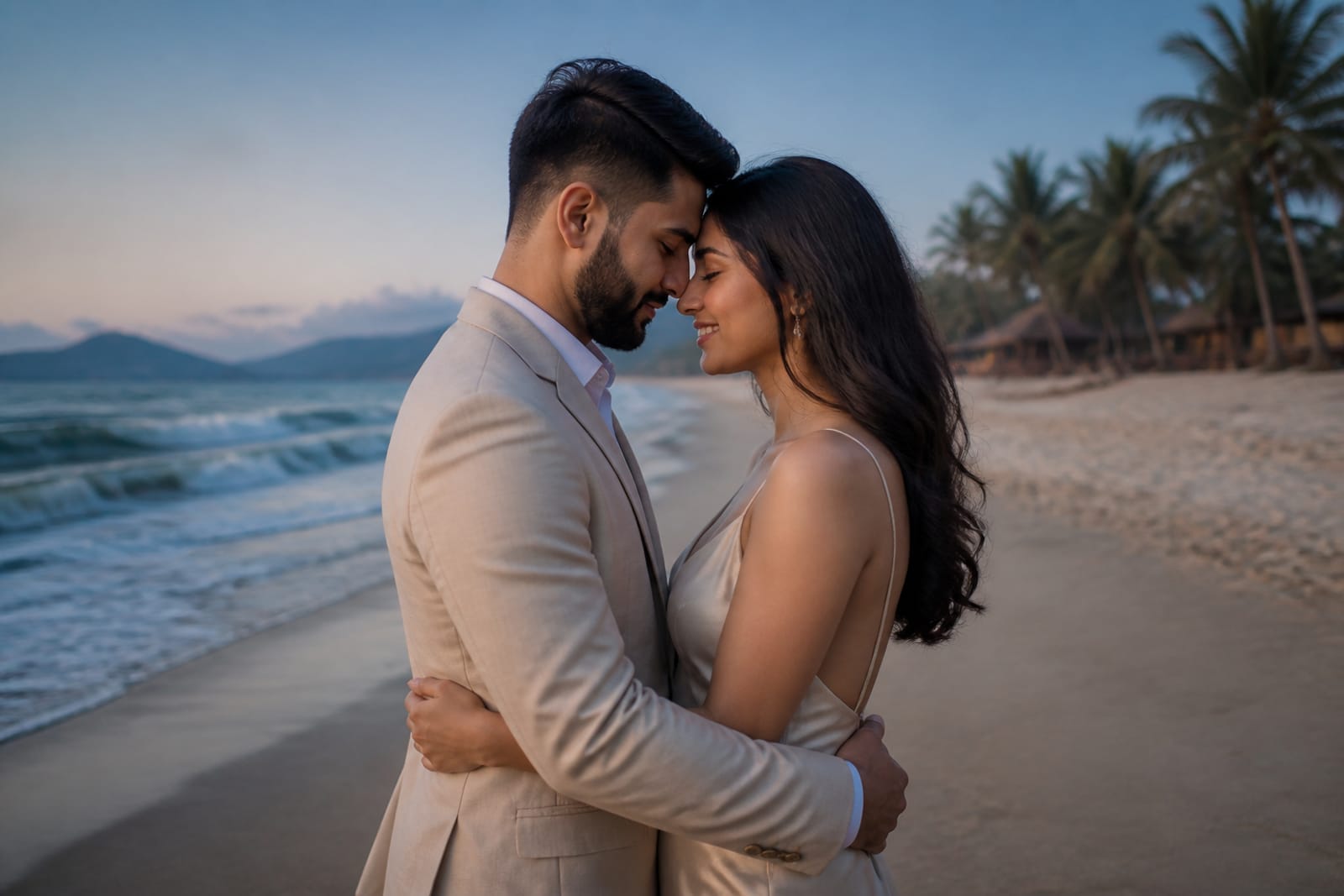
Cua Dai Beach is a 4 km walk or taxi ride from Hoi An's Ancient Town—a long, sandy, often-empty beach perfect for elopement couples seeking intimate frames without crowds. Sunrise (approximately 5:30–6:30 depending on season) is quietest and delivers soft, directional light ideal for portraits and movement shots. Shoots typically run 1.5–3 hours; Cáo Studio – Makeup & Photoshoot can book you a photographer and coordinate hair and makeup beforehand at your hotel, or at the beach itself. Key factors: Feb–Apr is driest and warmest (15–25°C mornings); May–Aug is hot (35°C+) but dry, so start before sunrise; Sep–Dec brings rain and typhoons (worst Oct–Nov, when the beach floods). Avoid midday (harsh light, heat, crowds). Check tide timing locally—low tide offers flat sand and reflections; high tide narrows the beach. Book 2–4 weeks ahead to confirm the photographer's availability and any hotel makeup slot. ---
How does Cua Dai Beach compare to other Hoi An elopement spots?
Cua Dai Beach works best if you want solitude and wide-angle frames. Compare your options:
| Location | Best for | Light & season | Trade-off |
|---|---|---|---|
| Cua Dai Beach | Sunrise, long sand, minimal crowds | Feb–Apr (mild); May–Aug (hot but dry, shoot early) | 4 km walk; windy mid-morning |
| Ancient Town streets (dawn) | ao dai, lanterns, narrow framing | Feb–Apr, Dec–Jan (cool, grey mornings softer) | Crowded by 7 a.m.; entrance ticket required |
| Rice fields (Tra Que or Marble Mountains road) | Lush, golden-hour backdrop | Feb–Apr (green fields) | Muddy in rainy season; locals' workspace |
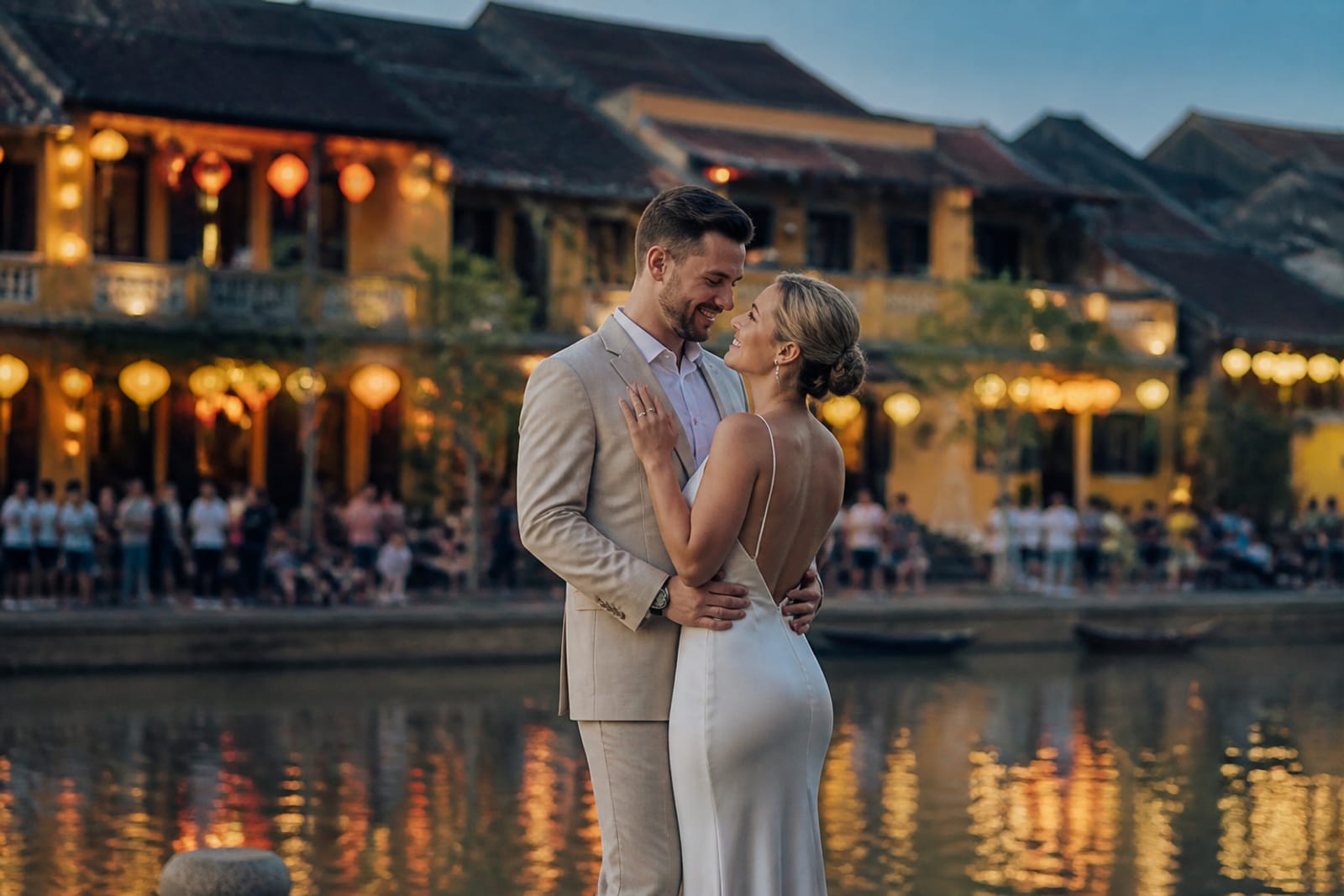
| Hoi An riverside at dusk | Lantern reflections, intimate space | Feb–Apr, Dec–Jan | Small area; peak times crowded; lanterns lit ~6:30 p.m. |
Conclusion: Beach elopements suit couples prioritizing space and natural light; Ancient Town suits those wanting cultural symbolism and ao dai detail.
---
What's the best time of year to elope at Cua Dai?
Dry, mild weather and calm water make Feb–Apr and early Dec ideal—high-pressure systems bring clear skies and low wind. Feb–Apr sees green rice in nearby fields and cooler 5 a.m. light (soft, directional); early Dec mirrors this. May–Aug is dry but brutal: start at 5:30 a.m., finish by 8 a.m., or reschedule. Sep–Dec is rainy; Oct–Nov brings typhoons and coastal flooding—the beach becomes unsafe and scenes unusable. Tet (late Jan–early Feb) closes many services and crowds beaches just before. Book around Feb–Apr or early Dec for the most consistent sunrise light and comfortable shooting pace.
---
Should you hire makeup & hair at the beach or at your hotel first?
Hotel makeup (offered by Cáo Studio – Makeup & Photoshoot at your Hoi An accommodation) keeps you fresh in air conditioning and allows a relaxed start; the team travels with you to the beach afterward. Beach makeup risks wind damage, sand, and salt spray before the first frame. Light and timing differ too: hotel prep means you arrive ready to shoot at first light; beach makeup starts later, losing the softest window. If you want to change outfits (e.g., dress and casual separates), hotel prep is cleaner—makeup survives the transition. Beach makeup suits short, single-outfit shoots where time on-site matters more than freshness. Ask on WhatsApp for logistics and pricing of each approach.
---
What should you wear under an ao dai on the beach?
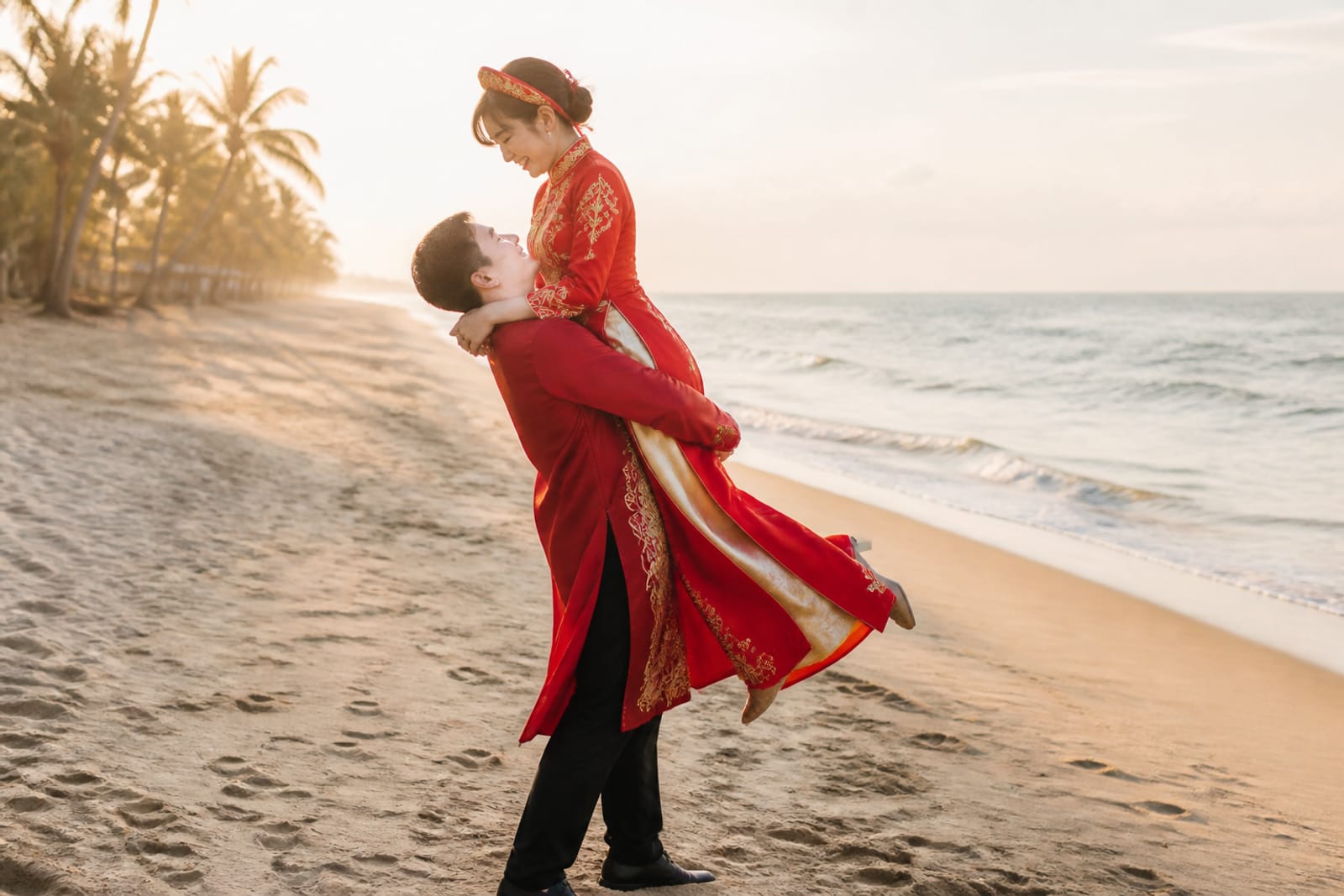
Ao dai fabric is lightweight linen or silk; under it, wear a thin cotton or mesh slip to prevent transparency when wet sand or spray darkens the hem. Opt for a neutral slip (white or nude) that won't show through pale ao dai. Bring a second slip in case the first absorbs spray. Avoid heavy undergarments—they restrict movement and bundle visibly at the waist. If wind is strong (common mid-morning), an ao dai can lift; a slip keeps dignity and frames clean. After sunset, when salt spray cools and dampens the hem, a slip also prevents chafing. Pair the ao dai with minimal jewelry (wind tangles chains; salt corrodes metal quickly) and secure sandals or go barefoot on sand.
For non-ao dai outfits, choose breathable fabrics and long sleeves or sarongs to protect from sun and salt spray. Avoid heavy makeup in eye areas—sweat and salt cause running.
---
How do you plan an elopement timeline at sunrise?
Arrive on-site 30 minutes early to scout light, tide, and wind direction. This buffer absorbs delays in taxi arrival or makeup touch-ups. Sunrise occurs 5:30–6:30 a.m. depending on the month (earliest in summer, latest in winter). Golden light lasts 45–60 minutes; use the first 30 for portraits and slow movement, the next 20–30 for walking shots and detail frames. By 7:30 a.m., light hardens and crowds (locals, vendors) begin. High tide narrows the beach; low tide (check timing locally) gives flat sand and reflections but occurs at different hours each day. Book your photographer to start at first light and plan 1.5–3 hours of shooting; this covers 2–3 outfit changes and meal breaks if needed. Coordinate with your hotel's makeup team the night before—confirm pickup time and any last-minute wardrobe changes.
📸 Book on WhatsApp — pre-wedding photoshoot
---
What unexpected challenges happen at Cua Dai and how do you avoid them?
Wind: Unrelenting 8–12 a.m. tangles hair, distorts ao dai silhouette, and blurs motion frames. Start before 7 a.m.; bring bobby pins and a light silk scarf. Reschedule if gusts exceed 15 km/h (feel the force with your hand—your photographer will call it).
Salt spray: Sand on the lens and salt on skin cause corrosion and skin irritation. The photographer should bring lens cloths and a camera rain cover; you bring a light sweater and sunscreen reapplied hourly.
Tides: High tide (6 hours on, 6 hours off) can shrink usable sand to a narrow strip or block access to certain zones. Check local tide charts 2 days before; low tide gives the most space.
Crowds at dawn: Fishermen and early morning exercisers appear after 6:30 a.m. Shooting 5:30–6:30 a.m. keeps them away. Book your photographer to stay on-site past 7 a.m. only if you want candid local-life frames.
Sun exposure: A 2–3 hour dawn shoot feels cool; by 7:30 a.m. the sun burns exposed skin. Reapply SPF 50 sunscreen every 45 minutes and wear UV-blocking sleeves if not in ao dai.
---
What should you check before booking an elopement photographer for Cua Dai?
Verification checklist:
- Availability: Confirm the photographer's 2–4 week booking window and your exact date and start time (5:30 a.m. or later).
- Experience at Cua Dai: Ask if they've shot there and know tide timing, wind patterns, and best framing angles. Google Maps photos and local guides (e.g., Wander in Vietnam) show typical conditions.
- Backup plan: What happens if weather is unsafe (typhoon, heavy rain) or tide is impassable? Reschedule clause or refund terms should be clear before you pay.
- Makeup & hair coordination: If using Cáo Studio – Makeup & Photoshoot's team, confirm the hotel pickup time, arrival at beach, and whether touch-ups happen on-site.
- Outfit changes: Agree on how many outfits, where you'll change (private area, nearest facility), and time allocated per outfit.
- Photo delivery: Confirm the number of edited files, delivery timeline, and format (digital, prints, album). Ask on WhatsApp for the exact inclusions.
- Cost factors: Price depends on session length (1.5 vs. 3 hours), number of outfits, makeup & hair add-ons, and travel time from your hotel. Confirm what's included before agreeing.
- Insurance & cancellation: Verify the photographer's cancellation policy and whether weather-related reschedules incur fees.
---
How does an elopement at Cua Dai fit with other Hoi An shoots?
Many couples combine beach elopement photos with a separate ao dai photoshoot in the Ancient Town (best at dawn, before crowds). This pairs beach intimacy with cultural backdrop. Some book a pre-wedding photoshoot across Hoi An (rice fields, river, streets) and add the beach as a bonus sunrise session. If you're traveling with family, a family photoshoot can happen at the beach post-elopement, with younger members joining for group frames. A proposal & anniversary package also works at Cua Dai if you're renewing vows or marking a milestone—light and privacy are ideal. Coordinate all shoots with Cáo Studio – Makeup & Photoshoot on WhatsApp to lock dates, makeup timing, and any outfit rentals (ao dai rental, suit & groom outfit rental) you need.
---
Real considerations: Why elopement at Cua Dai matters
Elopement photography at Cua Dai Beach is not about scale or expense—it's about capturing genuine connection with optimal light and zero distractions. The beach's width and emptiness at sunrise mean your photographer can move freely, experiment with angles, and frame you without strangers in the background. A 1.5-hour session yields 150–300 usable frames; a 3-hour session with outfit changes and walking shots yields 400+ frames. Sunrise is non-negotiable: light is soft, directional, and flatters skin tone and fabric texture. Feb–Apr and early Dec give the most reliable weather; May–Aug requires early starts; Sep–Dec is risky and often impossible. Hotel-based makeup ensures you arrive camera-ready and don't lose the first 30 minutes of golden light to last-minute touch-ups. Coordinate with Cáo Studio – Makeup & Photoshoot at least 2–4 weeks ahead; they'll confirm availability, outline the timeline, and discuss outfit choices, backup plans, and delivery expectations. Ask on WhatsApp for a tailored quote and timeline.
📸 Book on WhatsApp — pre-wedding photoshoot
---
FAQ
Can Cáo Studio – Makeup & Photoshoot shoot at Cua Dai Beach?
Yes. Cáo Studio shoots elopement and pre-wedding photos in Hoi An, including at Cua Dai Beach. Confirm your date and start time on WhatsApp at least 2–4 weeks ahead. The team can also coordinate makeup & hair at your hotel before the beach shoot.
What is the ideal start time for a Cua Dai Beach elopement shoot?
Start at 5:30–6:00 a.m. to catch the softest light and fewest people. Sunrise lasts 45–60 minutes; by 7:30 a.m. light hardens and crowds increase. Wind also peaks mid-to-late morning, so earlier is better.
Is Cua Dai Beach always accessible, or does tide or weather close it?
Tides open and close the beach daily; check local tide charts. Sep–Dec brings rain and typhoons (worst Oct–Nov); heavy rain or storm warnings make shooting unsafe or impossible. Confirm weather 2 days before and ask your photographer about a reschedule clause.
Do I need a permit or ticket to shoot at Cua Dai Beach?
No entry ticket is required for the beach itself. However, check local regulations with your hotel or the photographer—occasional local restrictions may apply. Nearby Hoi An Ancient Town requires a separate ticket if you plan additional shots there.
How much does an elopement shoot at Cua Dai cost?
Price depends on session length (1.5–3 hours), number of outfits, makeup & hair add-ons, and travel from your hotel. Ask Cáo Studio on WhatsApp for a personalized quote and exact inclusions.
Can I wear an ao dai on the beach without it getting damaged?
Yes, with care. Wear a thin slip underneath to prevent transparency. Avoid heavy jewelry (salt corrodes metal; wind tangles chains). After the shoot, rinse the ao dai gently in fresh water to remove salt, then air-dry flat. Bring a light sweater for wind and sun protection between outfit changes.
FAQ
Can Cáo Studio – Makeup & Photoshoot shoot at Cua Dai Beach?
Yes. Cáo Studio shoots elopement and pre-wedding photos in Hoi An, including at Cua Dai Beach. Confirm your date and start time on WhatsApp at least 2–4 weeks ahead. The team can also coordinate makeup & hair at your hotel before the beach shoot.
What is the ideal start time for a Cua Dai Beach elopement shoot?
Start at 5:30–6:00 a.m. to catch the softest light and fewest people. Sunrise lasts 45–60 minutes; by 7:30 a.m. light hardens and crowds increase. Wind also peaks mid-to-late morning, so earlier is better.
Is Cua Dai Beach always accessible, or does tide or weather close it?
Tides open and close the beach daily; check local tide charts. Sep–Dec brings rain and typhoons (worst Oct–Nov); heavy rain or storm warnings make shooting unsafe or impossible. Confirm weather 2 days before and ask your photographer about a reschedule clause.
Do I need a permit or ticket to shoot at Cua Dai Beach?
No entry ticket is required for the beach itself. However, check local regulations with your hotel or the photographer—occasional local restrictions may apply. Nearby Hoi An Ancient Town requires a separate ticket if you plan additional shots there.
How much does an elopement shoot at Cua Dai cost?
Price depends on session length (1.5–3 hours), number of outfits, makeup & hair add-ons, and travel from your hotel. Ask Cáo Studio on WhatsApp for a personalized quote and exact inclusions.
Can I wear an ao dai on the beach without it getting damaged?
Yes, with care. Wear a thin slip underneath to prevent transparency. Avoid heavy jewelry (salt corrodes metal; wind tangles chains). After the shoot, rinse the ao dai gently in fresh water to remove salt, then air-dry flat. Bring a light sweater for wind and sun protection between outfit changes.
Ao dai, makeup, hair and a local photographer in Hanoi or Saigon — one WhatsApp message.