/pre-wedding-photoshoot
Elopement photos at Da Lat wild sunflower roads: season, spots, timing
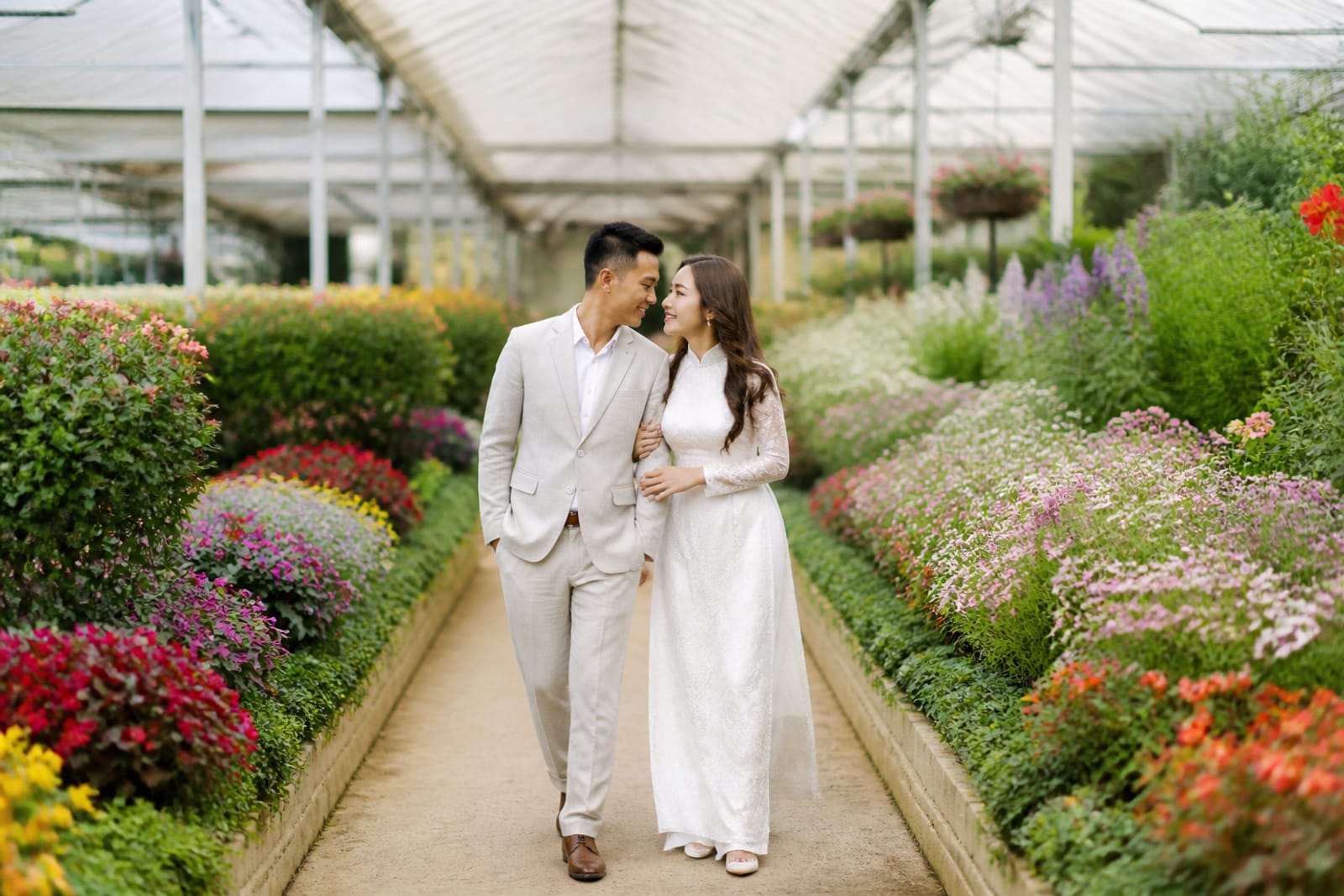
Wild sunflower elopement shoots on Da Lat's rural roads work best November–December when blooms peak and morning mist rises over the highlands. Sunrise (06:30–07:30) and golden hour (16:30–17:30) offer warm backlighting that flatters skin and ignites the flowers; midday sun flattens the scene and wilts the blooms in heat. Plan 4–5 hours on location, bring layers (highland air cools fast), and confirm road access with your photographer weeks ahead—some sites become muddy or inaccessible after rain. Cáo Studio – Makeup & Photoshoot does not operate in Da Lat, so work with a vetted local photographer who has shot this route in recent seasons and can adapt if weather shifts. Elopement sessions here cost more than studio shoots because of travel, early starts, and weather contingency; factor in transport time from central Da Lat (30–45 minutes by car) and a backup date clause. ---
Where exactly do Da Lat sunflower roads lie, and how long is the drive?
The main wild sunflower clusters bloom along rural roads northeast and east of Da Lat city center, typically in the valleys between Thung Lung Tinh Yeu (Love Valley), Langbiang Mountain foothills, and the road toward Tuyen Lam Lake. Access points shift yearly as farmers rotate crops; a current local guide or photographer is essential. Driving from central Da Lat hotels takes 30–45 minutes depending on which access road your photographer chooses. Petrol stations cluster in town, so fill up beforehand. The roads themselves are narrow, unpaved or lightly sealed, and muddy after rain—a 4WD or high-clearance vehicle is safer, especially if you shoot after wet weather. Confirm route and vehicle type with your photographer at least two weeks before.
Why does November–December work best, and what happens in other months?
Da Lat's cool highland climate (roughly 15–25°C year-round) shifts the sunflower bloom window to November–December, when day length and cooler nights trigger flowering; this aligns with the dry season (Dec–Apr is driest), meaning clearer light and lower rain risk. October sees occasional typhoon spillover and wet mornings; September–October blooms are sparse and plants are leggy. January–February still work if early frosts haven't hit, but flowers fade by late February as heat rises. March–October: blooms are scarce or absent, morning dew is heavy, afternoon downpours are common, and the highland mist thickens unpredictably, killing backlight. Booking a November–December slot costs the same as other seasons, but you trade weather predictability for flower abundance.
| Season | Bloom density | Morning light | Rain risk | Mist at sunrise | Best for elopement? |
|---|---|---|---|---|---|
| Nov–Dec | Peak (thick fields) | Golden, warm | Low | Common (atmospheric) | Yes—top choice |
| Jan–Feb | Declining (thinning) | Still warm | Very low | Frequent, dense | Yes—if early |
| Sep–Oct | Sparse | Hazy | High (typhoon) | Heavy, unpredictable | No—unreliable |
| Mar–Aug | None to minimal | Filtered | High (afternoon) | Variable | No—flowers gone |
How do sunrise vs. golden-hour light differ, and which suits an elopement look?
Sunrise (06:30–07:30) offers soft, directional backlighting that haloes the flowers and creates mood; it's cooler (fewer insects, comfortable for posed shots in full outfits), and mist often lingers, adding mystery and depth. Midtones stay cool; skin looks fresh and less sweaty. Golden hour (16:30–17:30 or later in Dec) delivers warmer, raking sidelighting that flattens the depth but intensifies colors; the sun is lower and redder, so any haze or clouds turn golden. Elopement couples often prefer sunrise for intimacy and cool tones, but golden hour feels more celebratory and forgiving if clouds roll in. Neither works alone: the 2–3 hours between sunrise and 10:00 AM are your window before harsh overhead light flattens everything. Afternoon, even with golden hour at the end, wastes the soft morning window. Book sessions spanning sunrise into mid-morning or afternoon into golden hour—never just golden hour.
What outfit and preparation choices prevent discomfort and ruin?
Highland mornings are cold (often 10–15°C with wind chill) and damp; a heavy ao dai works beautifully in sunrise mist but holds dew weight and clings uncomfortably once you sweat. Consider a lighter summer ao dai or a western elopement dress with a shawl or linen overjacket for the pre-dawn start; shed layers as sun climbs and temperature rises. Shoes matter: dirt roads and wet grass wreck heels; flats, sandals, or boots you don't mind muddying are smarter. Makeup needs redo space (bring a kit) after dew and touch-ups after 2–3 hours outdoors. Bring a large umbrella or lightweight tent for shade and rain backup during setup. Hair in a updo or braid stays cleaner than loose curls in mist and wind. Confirm with your photographer if they've shot couples in ao dai on this route in rain or mist—some photographers avoid wet-weather shoots entirely, which limits your backup options.
📸 Book on WhatsApp — ao dai photoshoot
How do you find and vet a local Da Lat photographer for an elopement, and what questions matter most?
Start with Instagram location tags for "Da Lat sunflower" or "da quy Da Lat" and filter by recent posts (last 6 months). Check whether the photographer shoots couples, shows at least 3–5 recent elopement or couple sessions, and has outdoor portfolio work in both clear and misty light. Vet by asking:
- Have you shot this exact sunflower road in the last two seasons? Can you share recent client images from Nov–Dec?
- Do you have a 4WD and a backup site if the main road is muddy or access is blocked?
- What's your bad-weather protocol—rain refund, reschedule, or shoot anyway?
- Do you edit for warm sunrise tones or cool mist, and can you show examples?
- Are you comfortable with ao dai, western dress, and mixed cultural elements in one shoot?
- How many hours on location, and are touch-up breaks included?
A photographer who can name specific access roads, recent bloom dates, and light angles they've witnessed is more credible than one repeating generic Da Lat advice. Confirm deposit (ask via WhatsApp; Cáo Studio does not shoot Da Lat but can advise on what to prioritize), cancellation terms, and a signed backup-date clause.
What should you check before you book a Da Lat elopement sunflower shoot?
- Photographer portfolio: Verify at least 3 recent (Nov–Dec, last 18 months) elopement or couple shoots on the sunflower roads, not just generic Da Lat city photos.
- Vehicle and backup access: Confirm 4WD, another access route, and willingness to reschedule if muddy or flooded.
- Cancellation & refund: Insist on a backup date (not cash refund) if weather blocks the primary date. Some photographers refuse rainy-day shoots; know their policy upfront.
- Outfit prep meeting: Discuss ao dai fit, heel suitability, and whether the photographer has lit ao dai successfully in mist or backlighting.
- Makeup & hair plans: If you hire a separate artist, confirm they'll travel and meet you at a central Da Lat point (hotel, cafe) before driving to the road.
- Editing timeline: Ask for previews within a week and full edits within 3–4 weeks.
- Location access letter: In rare cases, private roads require a note from the farmer or local guide; a professional photographer should handle this.
---
Comparing elopement options near Da Lat
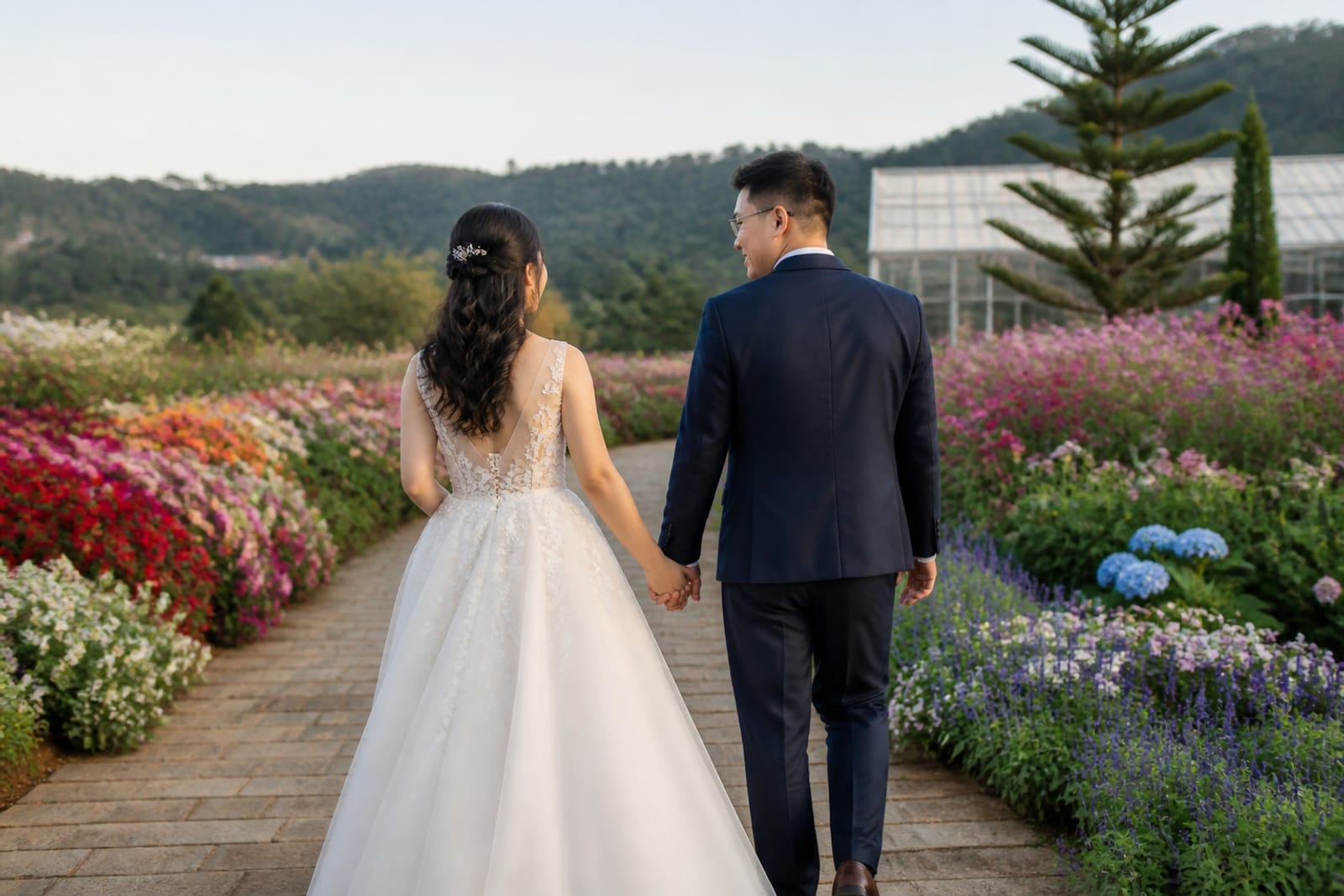
If a sunflower-road elopement feels too weather-dependent or the season has passed, Da Lat offers alternatives. Thung Lung Tinh Yeu (Love Valley) is a manicured garden with easier access and predictable light, though less intimate. Langbiang Mountain summit shoots offer cooler tones and vast backdrops but haze and altitude. Tuyen Lam Lake can feel romantic at sunrise but foreground and water reflections need experienced framing. Pine-forest walks near the city work year-round but feel less distinctive. For couples seeking guaranteed low-light control and full-service coordination (makeup, ao dai, outfit changes, album design), elopement and pre-wedding shoots at Cáo Studio's Hanoi or Ho Chi Minh City locations offer studio fallback and consistent editing, though they lack Da Lat's highland character. Sunflower roads are worth the weather risk if timing aligns (Nov–Dec) and your photographer has proven local experience.
---
Why timing matters: the month-by-month breakdown
| Month | Sunflower state | Light quality | Rain/mist | Temp (°C) | Recommendation |
|---|---|---|---|---|---|
| November | Peak bloom (thick fields) | Golden, soft | Low | 15–20 | Book here—ideal |
| December | Still full (early fade possible) | Warm, clear | Very low | 13–18 | Excellent, book early |
| January | Thinning (late-month sparse) | Warm, haze increasing | Rare | 12–17 | Okay if booked by mid-month |
| February | Nearly gone | Warm but washed | Rare | 13–19 | Skip—sparse, not worth |
| March–May | None (crop rotates to vegetables) | Harsh midday | Rising | 18–25 | No sunflowers |
| June–September | None (rainy season, mud) | Overcast, heavy | Frequent | 18–23 | No flowers, access risky |
| October | Sporadic (post-typhoon) | Hazy | Spillover | 17–22 | Unreliable—skip |
---
Planning a Da Lat elopement: step-by-step checklist
8–10 weeks before:
- Confirm your elopement date (mid-Nov to mid-Dec preferred).
- Research and message 4–5 local photographers; ask for Nov–Dec portfolio samples.
- Collect references (previous elopement couples, reviews on travel forums or photography sites).
6 weeks before:
- Book your photographer; sign a contract with a weather-reschedule clause.
- Reserve a Da Lat hotel (book central location; 30–45 min from sunflower roads).
- Plan outfits (ao dai, western dress, or mix); confirm fit and weather layers.
4 weeks before:
- If booking separate hair and makeup, confirm they'll travel to your hotel and meet before the shoot.
- Review your photographer's recent edits and confirm their style matches your vision.
- Plan transport (hotel to sunflower road; confirm vehicle type with photographer).
2 weeks before:
- Final check: photograph's backup site, rain protocol, edit timeline, and delivery format.
- Confirm hotel checkout if early morning (sunrise shoots often start 06:00–06:30).
- Pack umbrella, layers, flats/boots, makeup touchup kit, and a lightweight changing area.
1 week before:
- Check Da Lat weather forecast (seasonal average, not day-specific).
- Confirm vehicle arrival time and pickup from hotel.
- Share a detailed contact list (your phone, photographer's, hotel's) with a trusted person.
Shoot day:
- Wear warm, easy-to-remove layers to the car.
- Arrive 20–30 minutes early for setup and light scouting.
- Bring water, snacks, and a thermos (highland mornings feel longer).
- Trust your photographer's light calls—they read the mist and cloud movement better than you will.
---
Post-shoot: albums, prints, and keepsakes
After the shoot, discuss final-photo delivery and whether you want a wedding photo album, prints or frames, or digital files. Da Lat elopement shoots often feel intimate and timeless, so many couples order a linen or leather-bound album to revisit the mist and flowers. If you're based in Hanoi or Ho Chi Minh City, Cáo Studio – Makeup & Photoshoot can guide you on album design and printing options after your Da Lat shoot; contact via WhatsApp for keepsake recommendations that complement your final images.
---
If you're shooting an ao dai elopement elsewhere
For couples considering ao dai photoshoots or pre-wedding elopement sessions in Hanoi, Ho Chi Minh City, or Hoi An, Cáo Studio – Makeup & Photoshoot offers full coordination: styling, makeup, hair, multiple outfits, and indoor/outdoor location options with guaranteed editing and timelines. Da Lat sunflower roads remain a DIY-local-photographer adventure, but if weather or timing doesn't align, studio elopement sessions provide the certainty that adventurous couples sometimes need.
🌸 See the lookbook
---
FAQ
Is it safe to drive to sunflower roads alone, or should I hire a local guide?
A local photographer or guide is safer and smarter. They know current road conditions, access permissions, and alternative routes if main roads flood. Renting a car and navigating via GPS risks getting stuck or trespassing. Book your photographer weeks ahead and ask if they include a guide or scout the route beforehand.
Can I shoot sunflower elopement photos in January or February instead of November–December?
Yes, but expect thinning blooms and denser morning mist in January; by late February, flowers are sparse and fields are plowed. January works if you book a photographer who shoots in cold, misty conditions well. Winter light is still warm, but flower density won't match Nov–Dec. Confirm recent portfolio images from January–February shoots before booking.
What if it rains on my shoot day—do I lose my booking fee?
It depends on your photographer's contract. Some offer a free reschedule (backup date); others require rain-shoot or refund your fee but keep a smaller deposit. Always ask about bad-weather policy and insist on a written backup-date clause. A professional photographer should have a covered waiting area and a secondary site plan.
Do I need to hire a separate makeup and hair artist, or can I do it myself?
You can do it yourself if you're skilled and pack waterproof, long-lasting products suitable for cool highland weather and mist. Hiring a local Da Lat makeup artist is safer (they understand local humidity, dew, and how to set makeup for outdoor shoots), but confirm they'll travel to your hotel or meet at a central point. If you're from out of town, book an artist 4+ weeks ahead.
How many edited photos will I receive, and what format?
This varies by photographer. Ask upfront: how many full edits (not selects), digital-file resolution, and timeline (often 3–4 weeks). Confirm whether you get all-day files or a curated gallery. Some photographers deliver via WeChat or email; clarify the method and request a backup USB or cloud link.
Can I wear a western wedding dress instead of ao dai, or mix both?
Yes. Western dresses work beautifully in sunflower fields, especially with a shawl or light jacket for warmth. Some couples change outfits during the shoot (ao dai for one location, dress for another). Discuss outfit changes with your photographer beforehand—changing in a car or makeshift tent takes time, so factor it into your 4–5 hour on-location window.
What's the best time of day to avoid crowds on the sunflower roads?
Sunrise (06:30–07:30) and early morning (until ~09:00 AM) are quietest. Tour groups and casual visitors arrive mid-morning onward. If you prefer golden hour (late afternoon), shoot before 16:00 to beat the rush, or book a weekday instead of weekend. Ask your photographer about typical foot traffic on your chosen date.
Ao dai, makeup, hair and a local photographer in Hanoi or Saigon — one WhatsApp message.