/pre-wedding-photoshoot
Elopement photos at Hoi An rice paddies: book a local photographer
Elopement photos at Hoi An rice paddies are intimate sessions shot in the flat, emerald rice fields surrounding the Ancient Town, best booked Feb–Aug (dry season, green or golden crops). Sessions typically run sunrise (5:30–6:30 a.m., quietest light, fewest crowds) or late afternoon (3–5 p.m., warm golden tones), lasting 2–4 hours depending on outfit changes and walking distance. Cáo Studio – Makeup & Photoshoot sends a photographer and makeup artist to meet you on location; the team carries a vehicle to transport outfits and navigate muddy field paths. Avoid Oct–Nov (typhoons, flooding in fields and town) and peak midday heat (May–Aug after 10 a.m. can reach 35°C+). Book via WhatsApp to confirm dates, discuss outfit count and field access, and finalize a shot list so the photographer knows which temples, homestays or field edges matter most to you. --- Elopement photos at Hoi An rice paddies are an intimate alternative to crowded town sessions, capturing the quiet romance of rural Vietnam. The rice paddies form a soft, living backdrop—emerald in spring (Feb–May), golden at harvest (Aug–Sep)—and the light shifts hourly, giving you multiple moods in a single session. Most couples book Cáo Studio – Makeup & Photoshoot because the local team knows field access, weather patterns, and how to move safely between paddies without damaging crops or getting stuck in mud.
Why do sunrise and late-afternoon light matter most for rice paddy elopement photos?
Sunrise (5:30–6:30 a.m.) offers soft, diffused light with cool blue tones and zero crowds; the paddies are silent and mist may still linger. Late afternoon (3–5 p.m.) delivers warm golden tones that flatter skin and make the rice glow, with the sun lower and less harsh than midday. Midday (11 a.m.–2 p.m.) is bright but flat—shadows are harsh, your faces squint, and the light drains color from the fields. Sunrise suits couples who love moody, intimate shots; afternoon suits warm, romantic portraits. Book your session time when booking on WhatsApp so the photographer plans light angles and poses around that window.
📸 Book on WhatsApp — pre-wedding & elopement
What season shows the most photogenic rice and the best weather?
February through April is ideal: fields are green and full, the air is cool (18–25°C), and rain is rare. May through August is dry but hot (often 30–35°C by midday), so sunrise shoots are essential; rice begins to yellow and dry as harvest nears. September is the wettest month; October and November bring typhoons, flooding in paddies and the Ancient Town, and cancelled sessions. December through January is cool but often drizzly, so moisture and overcast skies soften the light. The best choice depends on your preference: lush green fields (Feb–May) or golden, harvest-ready rice (Aug–early Sep), balanced against heat and rainfall. Check the forecast on WhatsApp before confirming your dates.
How do you move through rice paddies safely without damaging crops or getting stuck?
Rice paddies are flooded or muddy depending on season and growth stage. February–April fields are often flooded to thigh-depth for transplanting; walk only on ridges (narrow paths between paddies) or wear waterproof boots. May–August fields are drier but uneven; wear flat, rubber-soled shoes with grip. Never step directly into standing rice—it damages the crop and your session gets cut short. Cáo Studio's team carries the outfits in a vehicle and walks the field edges first to scout solid ground; the photographer knows which local farmer paths are walkable and which paddies are off-limits. Discuss field conditions and outfit changes on WhatsApp before the session so the team brings the right gear (boots, towels, dry shoes).
| Factor | Sunrise session | Late-afternoon session | Midday session |
|---|---|---|---|
| Light quality | Soft, diffused, cool tones | Warm, golden, flattering | Harsh, flat, squinty |
| Crowd level | Empty (5–6 a.m.) | Quieter (after 3 p.m.) | Rising (tourists in fields) |
| Heat (Feb–Aug) | Coolest, most comfortable | Warm but tolerable | Hottest, risk of heatstroke |
| Best for | Moody, intimate portraits | Romantic, warm couple shots | Not recommended |
| Field conditions | Often muddy or wet | Firmer ground (afternoon drying) | Unpredictable |
Which outfit choices work best in rice paddies and how do you avoid mud damage?
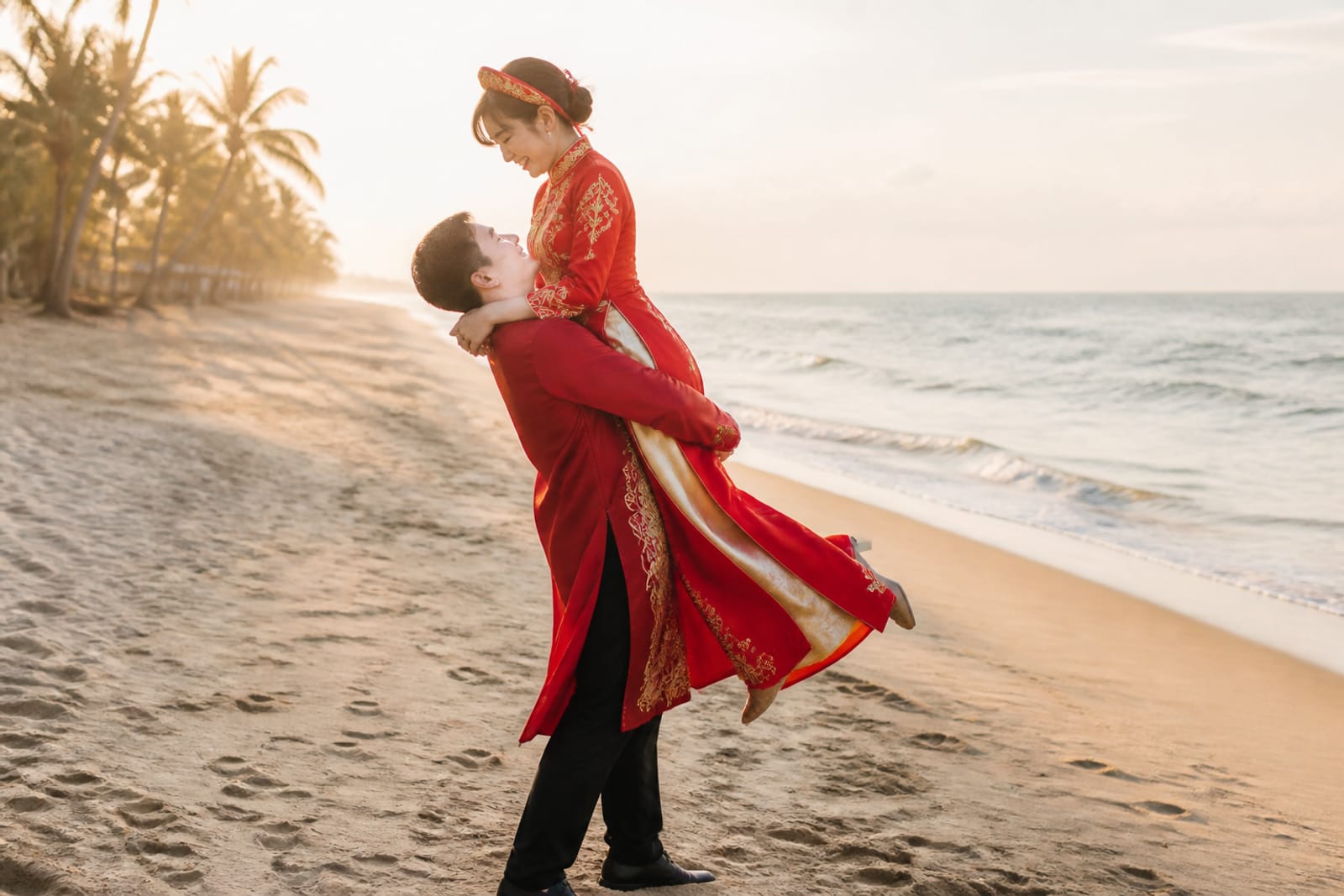
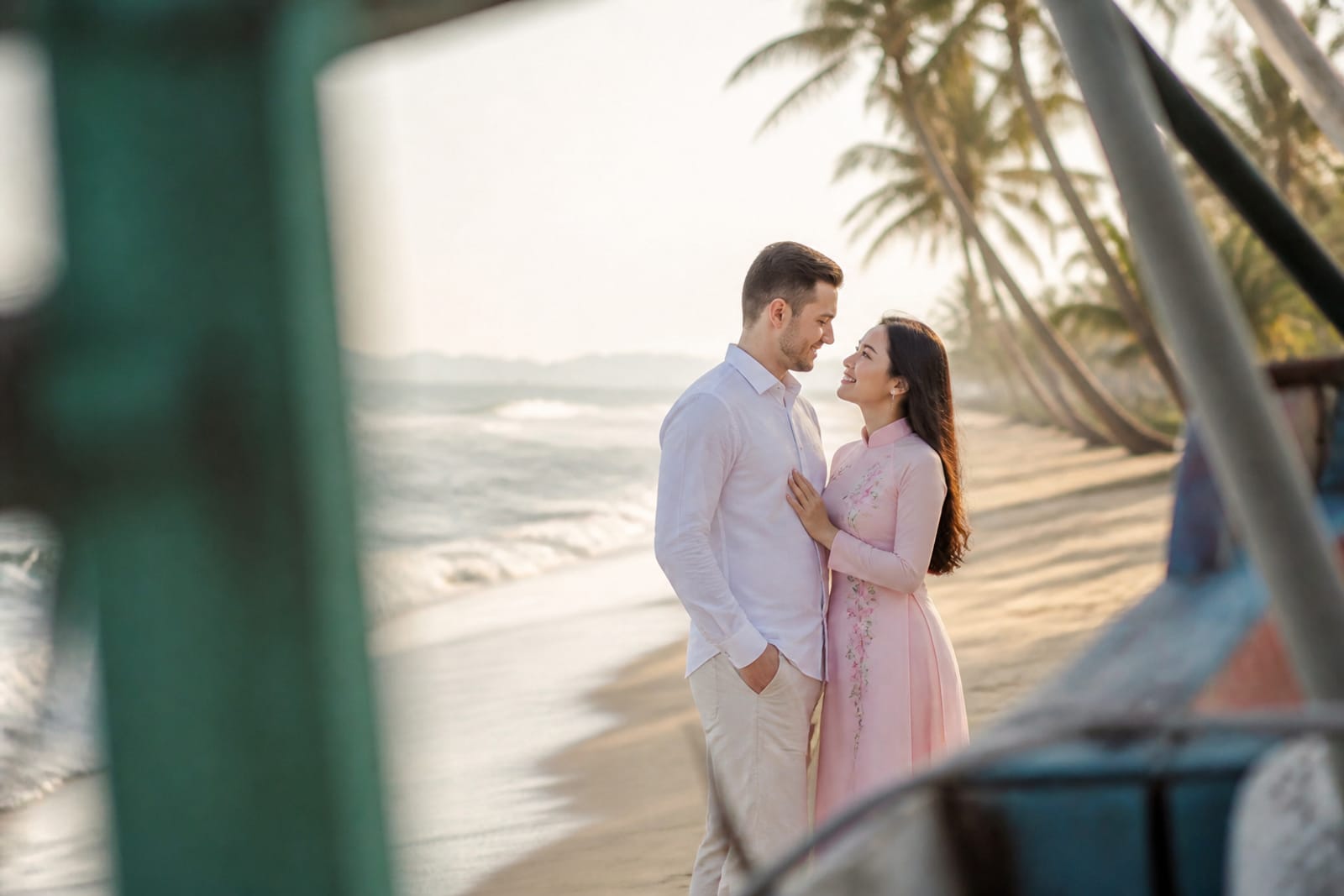
Ao dai (traditional Vietnamese tunic) is the most popular elopement choice—the flowing silk photographs beautifully against green or golden rice, and the color pops in soft light. Wear a waterproof slip or leggings underneath; the ao dai drags, so hem height and underwear visibility matter when you're moving through flooded fields. Western wedding dresses or white gowns photograph stunning in sunrise light but mud-stain easily and require careful walking. Grooms in suits or traditional áo groom look sharp but risk sweat and wrinkles in afternoon heat; shorts and linen shirts work for casual elopements if the couple prefers. Book outfit rentals (ao dai, dress, suit) on the ao dai rental or suit rental pages, or confirm what the photographer recommends when you WhatsApp. Plan 1–2 outfit changes maximum—each change means drying off, reapplying makeup, and burning 20–30 minutes, so the team will manage timing carefully.
How much does a rice paddy elopement session cost and what factors affect the price?
Cáo Studio quotes are sent on WhatsApp (no two sessions are identical). Cost factors include: session length (2, 3 or 4+ hours), number of outfit changes (each adds makeup and time), travel distance from Hanoi or Saigon to Hoi An (the team travels—ask on WhatsApp for Hoi An dates and availability), makeup & hair services on the day, and whether you book prints, albums or video as add-ons. Sunrise sessions may cost more due to early wake-up and travel prep; afternoon sessions let the team reuse morning light-scouting time. Rental outfits (ao dai, dress, suit) are quoted separately on the rental pages. Field access or guide fees (if a local farmer requests payment for crop safety) are discussed before the shoot. WhatsApp gives you a transparent quote broken by service, so you know exactly what you're paying for and can decide whether prints, video or extra hours fit your budget.
Should you hire Cáo Studio or a local Hoi An photographer, and what's the difference?
Cáo Studio – Makeup & Photoshoot (based in Hanoi and Saigon) travels to Hoi An by appointment; you get a professional photographer experienced with ao dai, Western couples, and pre-wedding shoots, plus on-site makeup & hair touch-ups. The team speaks English, carries backup gear, and knows the safest field routes. A local Hoi An photographer often works solo, may not include makeup, and communicates via translation apps—but can offer lower rates and deeper ties to farmers and homestays. If you want stress-free logistics, English communication, and professional makeup, book Cáo Studio on WhatsApp. If you prefer to hire locally and manage details yourself, ask your hotel for photographer referrals, confirm their English level and field experience, and visit their lookbook (ask for links to rice paddy shots, not just Ancient Town portraits).
---
What to check before you book
- Dates & availability: Message on WhatsApp to confirm the photographer is free and can travel to Hoi An (team availability varies by season).
- Field access: Discuss which paddies or areas you want; the photographer will confirm if they're walkable and accessible that time of year.
- Outfit plan: Agree on number of outfits, rental vs. bring-your-own, and whether makeup is included.
- Sunrise vs. afternoon: Confirm your preferred time and commit—early wake-up is non-negotiable for sunrise.
- Weather contingency: Ask what happens if heavy rain or typhoon warnings cancel the session (refund, reschedule, or insurance).
- Prints & albums: Decide upfront if you want prints or a photo album; prices depend on quantity and format.
---
For an intimate elopement, the rice paddies offer unbeatable romance—lush, quiet, and photogenic year-round if you pick the right season. Plan Feb–Apr for green fields, or Aug–early Sep for harvest gold. Book your photographer 4–6 weeks ahead to secure Tet or peak season dates. Contact Cáo Studio – Makeup & Photoshoot on WhatsApp to discuss your vision, confirm field access, and finalize a shot list that honors the landscape and your love story.
📸 Book on WhatsApp — pre-wedding & elopement
---
FAQ
What's the best time of year to shoot elopement photos in Hoi An rice paddies?
February–August is ideal; Feb–Apr offers lush green fields and cool weather; Aug–early Sep shows golden harvest rice. Avoid Oct–Nov (typhoons, flooding). Book confirmed dates on WhatsApp and check the forecast before your session.
Do I need to wear an ao dai or can I wear a Western wedding dress?
Both work beautifully. Ao dai photographs elegantly in paddy fields and suits sunrise light; Western dresses are romantic but mud-stain easily. Discuss your choice when you WhatsApp—the photographer will advise on fabric, hem height, and underlayers for field walking.
How long does a rice paddy elopement session typically last?
Most sessions run 2–4 hours depending on outfit changes and walking distance. Sunrise sessions often start at 5:30 a.m. and finish by 8 a.m.; afternoon sessions run 3–5 p.m. Confirm your preferred duration when you book on WhatsApp.
Can Cáo Studio travel to Hoi An for elopement photos, and do they include makeup?
Yes, Cáo Studio travels to Hoi An by appointment. The team includes a makeup artist for on-site touch-ups. Ask on WhatsApp for available dates, travel logistics, and what's included in your session quote.
What should I wear under an ao dai in muddy rice paddies to stay dry?
Wear a waterproof slip, leggings, or bike shorts; the ao dai drags, so underlayers keep you dry and prevent transparency. Avoid light colors that show mud stains. Confirm your underlayer plan with the makeup artist on the day of your shoot.
Is it safe to walk through rice paddies during a photo session?
Yes, if you follow local guidance. Stick to field ridges and marked paths; never step into standing rice. Cáo Studio's photographer scouts the field first and knows safe routes. Wear flat, rubber-soled shoes and discuss field conditions on WhatsApp before booking.
What happens to my elopement photos if bad weather cancels the session?
Confirm your studio's cancellation and rescheduling policy on WhatsApp before you book. Most studios offer reschedule dates or partial refunds; some have weather insurance. Discuss this upfront so there are no surprises.
FAQ
What's the best time of year to shoot elopement photos in Hoi An rice paddies?
February–August is ideal; Feb–Apr offers lush green fields and cool weather; Aug–early Sep shows golden harvest rice. Avoid Oct–Nov (typhoons, flooding). Book confirmed dates on WhatsApp and check the forecast before your session.
Do I need to wear an ao dai or can I wear a Western wedding dress?
Both work beautifully. Ao dai photographs elegantly in paddy fields and suits sunrise light; Western dresses are romantic but mud-stain easily. Discuss your choice when you WhatsApp—the photographer will advise on fabric, hem height, and underlayers for field walking.
How long does a rice paddy elopement session typically last?
Most sessions run 2–4 hours depending on outfit changes and walking distance. Sunrise sessions often start at 5:30 a.m. and finish by 8 a.m.; afternoon sessions run 3–5 p.m. Confirm your preferred duration when you book on WhatsApp.
Can Cáo Studio travel to Hoi An for elopement photos, and do they include makeup?
Yes, Cáo Studio travels to Hoi An by appointment. The team includes a makeup artist for on-site touch-ups. Ask on WhatsApp for available dates, travel logistics, and what's included in your session quote.
What should I wear under an ao dai in muddy rice paddies to stay dry?
Wear a waterproof slip, leggings, or bike shorts; the ao dai drags, so underlayers keep you dry and prevent transparency. Avoid light colors that show mud stains. Confirm your underlayer plan with the makeup artist on the day of your shoot.
Is it safe to walk through rice paddies during a photo session?
Yes, if you follow local guidance. Stick to field ridges and marked paths; never step into standing rice. Cáo Studio's photographer scouts the field first and knows safe routes. Wear flat, rubber-soled shoes and discuss field conditions on WhatsApp before booking.
What happens to my elopement photos if bad weather cancels the session?
Confirm your studio's cancellation and rescheduling policy on WhatsApp before you book. Most studios offer reschedule dates or partial refunds; some have weather insurance. Discuss this upfront so there are no surprises.
Ao dai, makeup, hair and a local photographer in Hanoi or Saigon — one WhatsApp message.