/pre-wedding-photoshoot
Elopement Photos at Kim Bong: Hanoi Studio Guide
Kim Bong, a 16th-century carpentry village near Hoi An, frames intimate elopement sessions in wooden house interiors, riverside paths and artisan workshops—ideal for couples seeking heritage and natural candlelight rather than crowded landmarks. Sessions run 3–4 hours, beginning before sunrise (around 5:30–6:30 a.m.) to capture soft, directional light on wooden surfaces and avoid day-trippers. Cáo Studio – Makeup & Photoshoot arranges all logistics: makeup on-site, outfit changes in quiet studios, and photography timed to shifting light across timber and shadow. The dry season (Feb–Apr) offers cool, crisp mornings; May–Aug is very hot (35°C+), so early starts are essential; Sep–Dec brings rain and flooding, making evening shoots safer. Avoid Tet (late Jan–mid Feb) when the village closes. Cost depends on travel time from Hanoi, number of outfits and whether makeup is included on-site; ask for a tailored quote on WhatsApp.
Kim Bong carpentry village sits on the banks of the Thu Bon river, 12 km northeast of Hoi An Ancient Town. The settlement has preserved 16th-century timber-frame houses, open-air workshops and narrow lanes lined with wood shavings and hand-carved details. Unlike the crowded lantern streets of the Ancient Town, Kim Bong remains quiet and residential—ideal for intimate couple portraits and elopement sessions where light, silence and authenticity matter more than backdrop volume.
Why choose Kim Bong over Hoi An Ancient Town for elopement portraits?
Kim Bong offers aged wood, soft architectural shadow and genuine craft activity without entrance fees, crowds or time pressure. The Ancient Town requires a ticket, enforces a daily visitor cap and fills with tour groups from 10 a.m. onward; it shuts down during Oct–Nov flooding. Kim Bong's open access, free exploration and handmade aesthetic suit couples wanting slow, natural-light storytelling rather than postcard poses. Artisans working at lathes and hand-finishing details create living-heritage backdrops that photographs reward with texture and warmth.
📸 Book on WhatsApp — pre-wedding photoshoot
What time of day gives the best light for carpentry-village portraits?
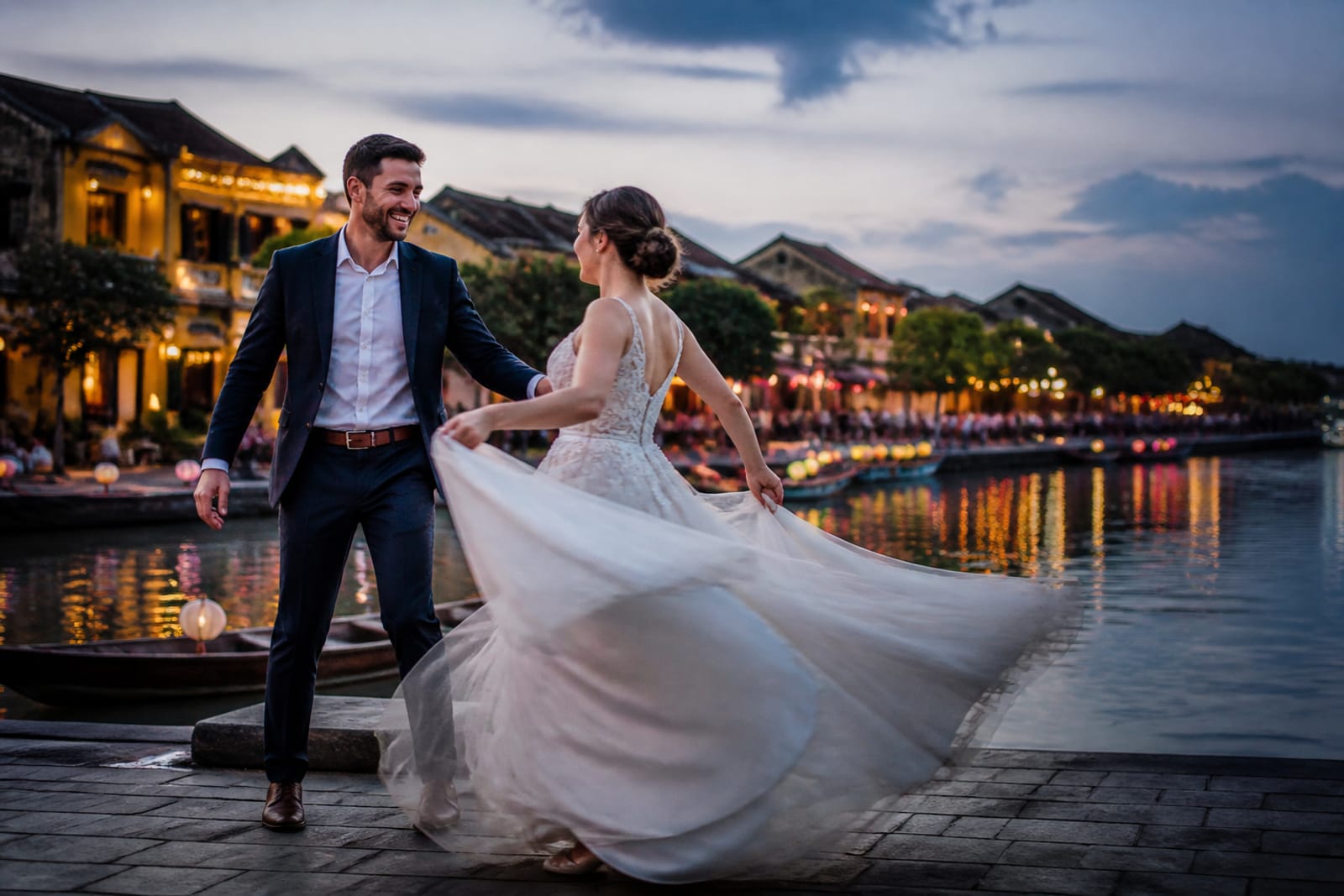
Sunrise to mid-morning (5:30–8:30 a.m.) delivers side-lit, low-angle light that rakes across timber grain, tool marks and hand-planed surfaces. By 9 a.m., direct sun hardens the narrow lanes and creates harsh shadows inside workshops. Late afternoon (4–5 p.m.) offers a second golden window, but artisans finish work early and the village quiets. Start before 6 a.m. to secure silence, avoid crowds and use natural window light inside timber houses for intimate close-ups.
Which months suit Kim Bong elopement shoots best?
Season comparison (light, temperature, logistics)
| Season | Best for | Light & weather | Avoid if… |
|---|---|---|---|
| Feb–Apr (Dry) | Preferred choice | Cool, crisp mornings; clear light; 18–25°C | You dislike cool temperatures |
| May–Aug (Hot) | Early sunrise only | Extreme heat (35°C+); harsh midday light; very humid | You cannot start before 5:30 a.m. |
| Sep–Dec (Typhoon/Flood) | Evening only | Heavy rain & flooding worst Oct–Nov; river swells; wet paths | You want reliability or daytime access |
| Late Jan–mid Feb (Tet) | Not recommended | Shops, studios closed; team unavailable; holiday crowds | You need full team availability |
Dry season (Feb–Apr) is ideal: cool mornings feel comfortable for makeup and outfit changes; light is soft and directional; paths are dry. May–Aug demands discipline—an early sunrise start (5:00 a.m.) avoids the 35°C+ heat, but fatigue sets in fast. Oct–Nov flooding closes riverside paths and seeps into ground floors; afternoon evening shoots work if rain pauses. Book on WhatsApp to confirm dates and weather windows.
How does a Kim Bong elopement session actually run on the day?
Cáo Studio arranges pre-dawn arrival (5:00–5:30 a.m.) at an agreed house or studio. Makeup and hair happen on-site in natural window light (or with a portable setup). The couple changes into a first outfit (often ao dai or wedding dress) while the photographer scouts light paths and frames. The session moves through 3–4 anchor locations (timber house interior, riverside, workshop detail, artisan's hands at work) over 3–4 hours. Each outfit change takes 15–20 minutes; the team works quietly to preserve the village rhythm. You finish by 9 a.m., before heat and foot traffic peak. If you want a second outfit or longer coverage, add time and discuss logistics on WhatsApp before booking.
What should you wear under an ao dai or wedding dress at sunrise?
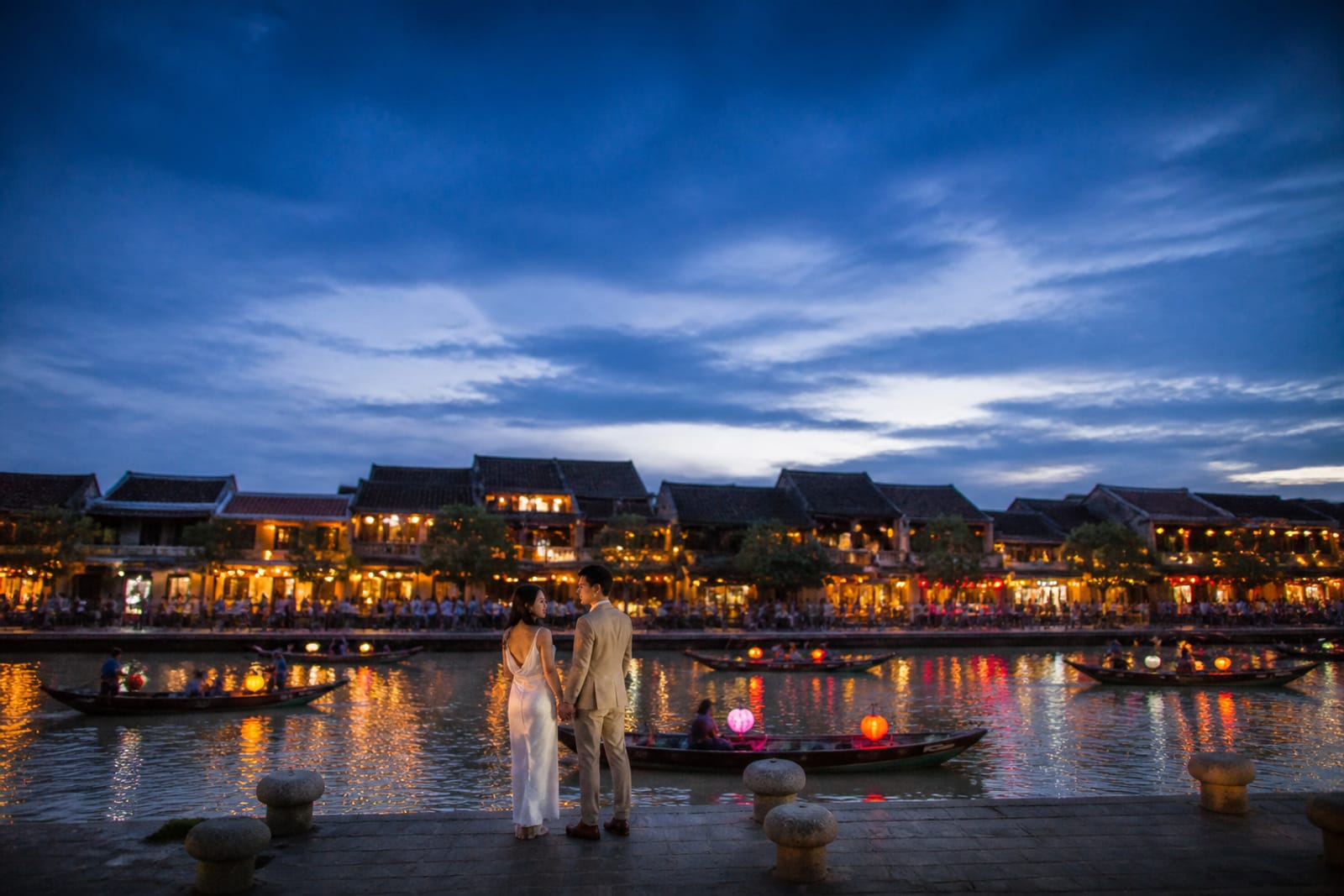
Ao dai worn over loose silk trousers allows fast outfit changes and layers for warmth during pre-dawn shoots. Wedding dresses need a strapless or invisible undergarment; avoid heavy shapewear that restricts breathing in humid 5 a.m. air. Bring a cardigan or shawl for the 18–22°C chill in Feb–Apr mornings. Do not wear shoes on wooden floors inside artisan houses—go barefoot or bring soft slippers for portraits inside. Nail polish and jewelry should complement timber tones (gold, bronze, natural metals photograph better than silver against wood). Confirm all outfit details with Cáo Studio on WhatsApp at least one week before; the team can advise fabric weight, color harmony and makeup style for early light.
What to check before booking a Kim Bong elopement shoot
Before you confirm:
- Dates & weather: Ask Cáo Studio which dates have clear forecasts and full team availability (Mar–Apr and late Feb are busiest).
- Makeup on-site or off-site: Confirm whether the team applies makeup in the village (requires water/power access) or you arrive pre-done; this affects timing and cost factors.
- How many outfits: Decide if you want one outfit (ao dai or dress), two, or outfit changes mid-session; each adds 15–20 minutes and affects light windows.
- Sunrise or alternative time: If dawn feels too early, confirm whether an early morning (6:30–7:30 a.m.) or evening (4–5 p.m.) session works instead.
- Riverside access in your season: In Oct–Nov, flooding may block riverside paths; ask the team to confirm safe access before booking.
- Photo delivery: Clarify how many edited images, delivery timeline, and whether you want prints or a digital album; exact inclusions confirm on WhatsApp.
- Travel from Hanoi or Saigon: If you are based in Hanoi, note that Hoi An is a 20+ hour drive; Cáo Studio can advise on combining a Kim Bong shoot with other Hoi An or Hue locations. Saigon clients are 1.5 hours closer to Hoi An.
The pre-wedding photoshoot pillar covers broader elopement options; compare Kim Bong against couple photoshoots in urban Hanoi or Ho Chi Minh City for faster logistics and comfort.
How does cost break down for a Kim Bong elopement session?
Cost depends on: team travel time (from Hanoi or Saigon to Hoi An), makeup & hair services on-site, number of outfits and duration, and photo delivery format (digital files, prints, album). Early-morning shoots cost more than afternoon due to early crew arrival. Makeup at the village adds time and complexity compared to pre-done makeup. A second outfit and extended coverage multiply the session fee. Contact Cáo Studio on WhatsApp for a personalized quote; all inclusions (hours, edited image count, delivery files, makeup coverage) are confirmed in writing before payment.
Couples often pair a Kim Bong elopement session with ao dai rental or wedding dress rental to reduce luggage and simplify outfit logistics. Some add makeup & hair at your hotel the night before, saving on-site time.
FAQ
Is Kim Bong accessible year-round, or do seasons close it?
Kim Bong remains open year-round; no official closure. However, Oct–Nov flooding can block riverside paths and saturate ground floors. Feb–Apr and May–Aug are fully reliable. Tet (late Jan–mid Feb) may reduce artisan activity and team availability. Confirm seasonal access on WhatsApp before booking.
Can we shoot inside artisan workshops while craftspeople work?
Yes, if you arrive before 6:30 a.m. and arrange permission on WhatsApp in advance. Cáo Studio coordinates with local guides to ensure respectful access. Mid-morning onward, workshops fill with tool noise and tourists; early light is quieter and more intimate.
Do we need to hire a local guide or pay village fees?
No formal entrance ticket or guide fee applies to Kim Bong village. Cáo Studio handles logistics and builds in time for respectful photography. Small donations or purchases from artisans are customary and appreciated—clarify expectations with the team before the shoot.
Can we combine a Kim Bong shoot with other Hoi An locations on the same day?
Yes. A sunrise Kim Bong session (5:30–9 a.m.) leaves your afternoon free for Hoi An Ancient Town, riverside walks or studio sessions. Discuss multi-location itineraries with Cáo Studio on WhatsApp; timing depends on travel between sites and outfit changes.
What if it rains on the morning of our booked Kim Bong elopement?
Light rain is manageable (soft, diffused light); the team shoots under narrow eaves or inside timber houses. Heavy rain or flooding may require rescheduling. Always confirm Cáo Studio's bad-weather policy and reshoot terms in the booking agreement before paying a deposit.
Should we rent ao dai or bring our own wedding dress?
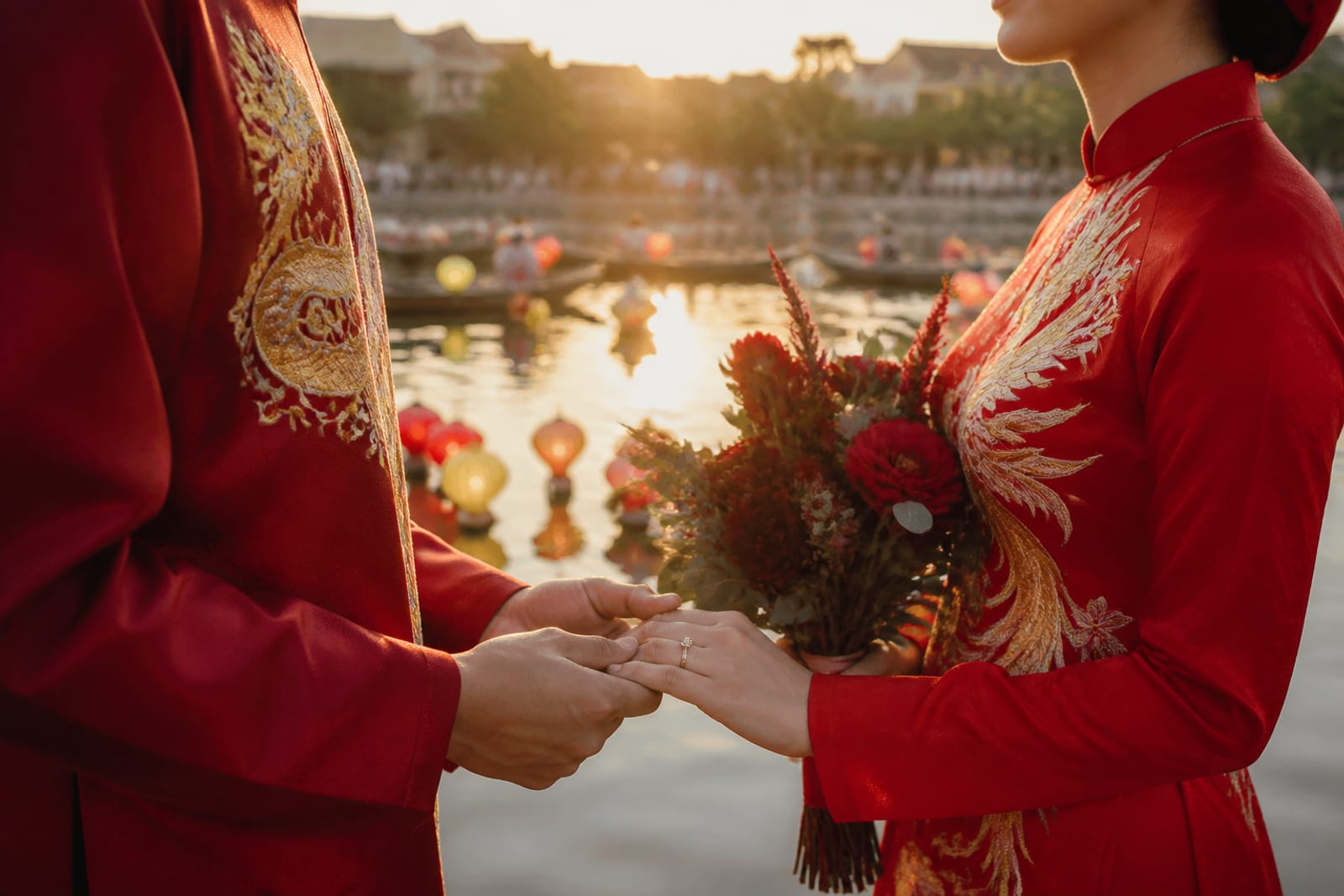
Ao dai rental (ao dai rental) simplifies travel and offers tailored fit without luggage; ideal for first-time wearers. Wedding dresses work if you have a trusted carrier and iron access on-site (arrange on WhatsApp). Discuss fabric weight, layering and comfort for a 5 a.m. start with the team when booking.
FAQ
Is Kim Bong accessible year-round, or do seasons close it?
Kim Bong remains open year-round; no official closure. However, Oct–Nov flooding can block riverside paths and saturate ground floors. Feb–Apr and May–Aug are fully reliable. Tet (late Jan–mid Feb) may reduce artisan activity and team availability. Confirm seasonal access on WhatsApp before booking.
Can we shoot inside artisan workshops while craftspeople work?
Yes, if you arrive before 6:30 a.m. and arrange permission on WhatsApp in advance. Cáo Studio coordinates with local guides to ensure respectful access. Mid-morning onward, workshops fill with tool noise and tourists; early light is quieter and more intimate.
Do we need to hire a local guide or pay village fees?
No formal entrance ticket or guide fee applies to Kim Bong village. Cáo Studio handles logistics and builds in time for respectful photography. Small donations or purchases from artisans are customary and appreciated—clarify expectations with the team before the shoot.
Can we combine a Kim Bong shoot with other Hoi An locations on the same day?
Yes. A sunrise Kim Bong session (5:30–9 a.m.) leaves your afternoon free for Hoi An Ancient Town, riverside walks or studio sessions. Discuss multi-location itineraries with Cáo Studio on WhatsApp; timing depends on travel between sites and outfit changes.
What if it rains on the morning of our booked Kim Bong elopement?
Light rain is manageable (soft, diffused light); the team shoots under narrow eaves or inside timber houses. Heavy rain or flooding may require rescheduling. Always confirm Cáo Studio's bad-weather policy and reshoot terms in the booking agreement before paying a deposit.
Should we rent ao dai or bring our own wedding dress?
Ao dai rental ([ao dai rental](/ao-dai-rental)) simplifies travel and offers tailored fit without luggage; ideal for first-time wearers. Wedding dresses work if you have a trusted carrier and iron access on-site (arrange on WhatsApp). Discuss fabric weight, layering and comfort for a 5 a.m. start with the team when booking.
Ao dai, makeup, hair and a local photographer in Hanoi or Saigon — one WhatsApp message.