/pre-wedding-photoshoot
Elopement Photos at Langbiang Mountain: Light, Season & Booking
Elopement photos at Langbiang Mountain mean a half-day or full-day intimate shoot at Da Lat's highest peak, where cool highland air, dense pine forest and layered mist create romantic backdrops for two. The mountain sits at roughly 2,000m elevation; sunrise light here is soft and diffused (Dec–Apr is clearest; May–Nov brings morning mist that works beautifully if you embrace it). You'll climb the peak on foot (or cable car for knees) and move between open summit rocks, forest paths and forested valleys—pack layers and shoes with grip. Cáo Studio – Makeup & Photoshoot does not operate in Da Lat; you'll need to hire a local Da Lat or Saigon-based photographer who can reach Langbiang, confirm their experience with elopement couples, weather-backup plans, and logistics (transport, permits, timing). Book at least 4–6 weeks ahead, especially in Dec–Feb when Da Lat's dry season draws couples. --- An elopement at Langbiang is not a full wedding shoot—it's an intimate half-day or full-day moment captured by a photographer who knows the mountain's moods. Unlike a destination wedding in Hoi An or Ho Chi Minh City, where Cáo Studio manages the entire day, a Langbiang elopement requires a local partner who understands Da Lat's weather swings, cable-car queues and forest permits. Here's how to plan, choose wisely, and avoid common mistakes.
What makes Langbiang special for elopement couples?
Langbiang Mountain delivers four distinct zones in one location: rocky summit with 360° valley views, wind-sculpted pine forest edges, misty ravines (especially dawn), and sheltered forest paths. No other Da Lat spot offers this range without a full day of car hops. The 2,000m elevation means cooler light and thinner crowds than lowland beaches. Sunrise light here is laterally soft—not flat, not harsh—and mist acts as a giant diffuser, so overcast mornings often yield the most flattering skin tones. Sunset comes early (around 5pm in winter), making an early-morning start essential for elopement couples who want both sunrise AND midday forest shots. The mountain's steep slopes mean your photographer can shoot you against valley layers rather than flat backdrops, adding depth that studio backdrops cannot match.
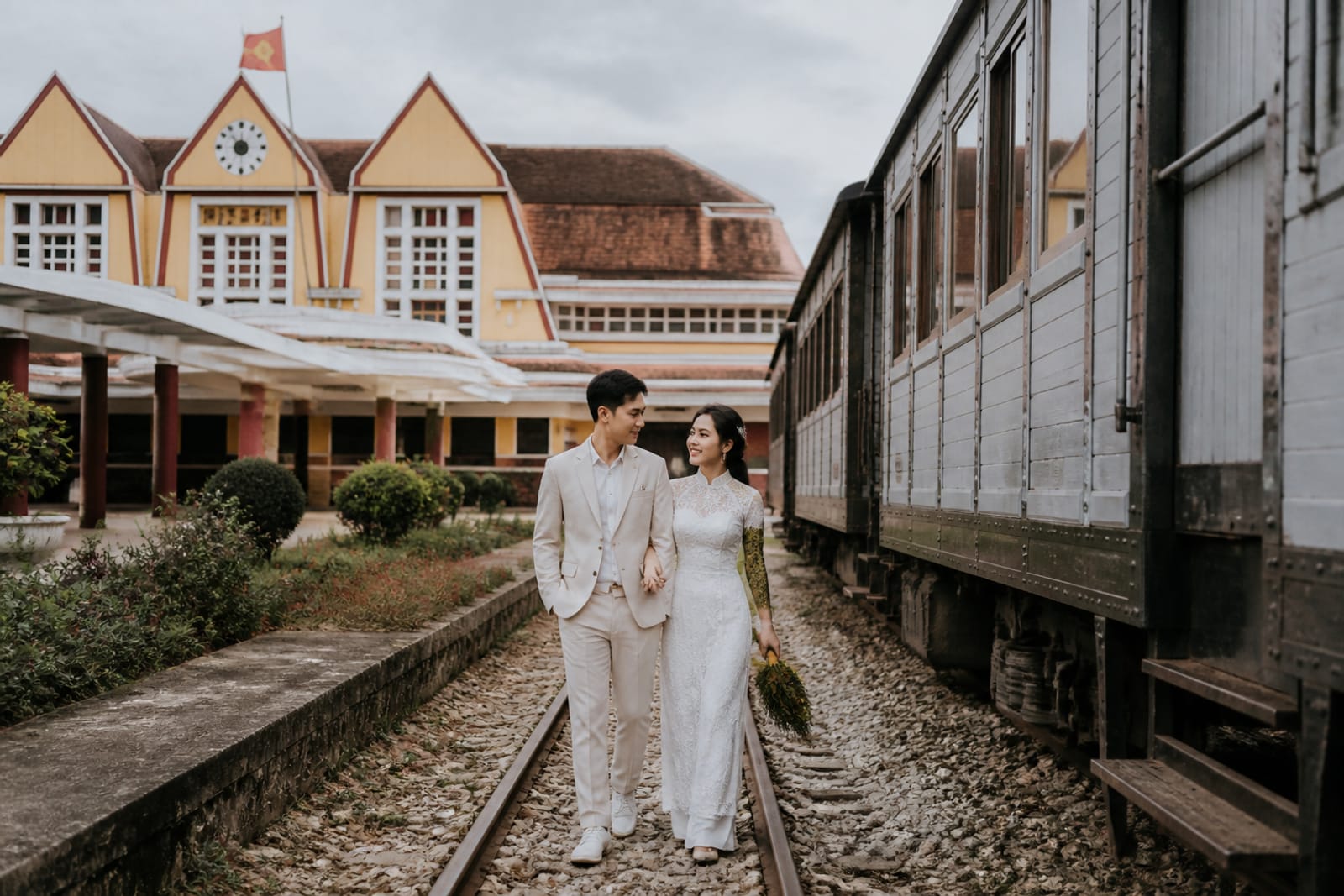
When should you shoot: season and light timing?
| Season | Light quality | Crowd level | Outfit fit | Why pick it |
|---|---|---|---|---|
| Dec–Feb (dry, cool) | Crisp mornings, mist clears by 9am, long shadows at dawn | Moderate; Tet week is busiest | Layers work; ao dai breathes; light jacket flatters | Best for foreground sharpness, valley detail, zero afternoon rain |
| Mar–Apr (late dry, warming) | Softer by 8am, humidity rises mid-morning | Light | Layers still smart; ao dai floats in breeze | Extended golden window; risk of afternoon haze |
| May–Nov (rainy, misty) | Morning mist often stays until 10am; dense diffusion | Light | Waterproof jacket essential; ao dai hems stay dry if calf-length | Moody, intimate; mist hides crowds; afternoon showers expected |
Best time to shoot: December to February offers the clearest conditions and longest clear-light window (sunrise to 11am). If you love moody, wrapped-in-mist vibes, a May–Aug morning shoot (arrive by 6am, done by 9am) beats any filtered version. Avoid mid-Oct to mid-Nov (typhoon tail winds make summit dangerous and misty).
How to choose between a full-day and half-day elopement shoot?
A half-day (4–5 hours, usually sunrise to 9–10am) is ideal if you're combining Langbiang with other Da Lat sites (a flower garden, central market, waterfall) or flying in the same afternoon. You'll capture sunrise on summit, forest walk and one or two outfit changes. Light is flattest and easiest to work with. Your photographer arrives early (4:30–5am) and uses the calm, cool dawn before tour groups arrive.
A full-day (8–10 hours) means breakfast at the guesthouse, sunrise shoot, a break for lunch in town, and afternoon forest portraits after 2pm when afternoon light warms and thins. You'll exhaust multiple locations, outfit changes, and the luxury of waiting for perfect light rather than chasing it. This suits couples who want a narrative (getting-ready, morning intimacy, afternoon exploration) rather than just portraits. The tradeoff: you're committing to back-to-back shooting and may hit tired light in mid-afternoon (2–3pm is often the weakest hour).
Decision:
- Pick half-day if Da Lat is a side trip or you want minimal time commitment.
- Pick full-day if you're staying 2+ nights and can pace yourself with breaks.
What to wear under, over and how to move?
Langbiang's highland cool (roughly 15–25°C even in Apr–May) means an ao dai alone will not keep you warm at 6am. Here's what works:
- Under the ao dai: wear a long-sleeved, form-fitting base layer (thermal or cotton spandex) in black or white—invisible under silk but crucial for warmth and wind. Avoid thick knits that bunch.
- Over the ao dai: a lightweight linen or lace overlay jacket, or a sheer cashmere wrap that photograph beautifully in mist and doesn't hide the ao dai's silhouette.
- Shoes: trainers or hiking boots (not heels—you'll slip on wet pine needles and rock). Change into heels for summit poses if the rocks are dry.
- Pants/skirt option: if ao dai feels impractical at altitude, ask your photographer about a complementary outfit (a tailored suit, linen trousers, or traditional trousers with an áo bà ba). Elopement couples often mix tradition with comfort.
Movement: Langbiang paths are steep, muddy after rain, and dotted with exposed roots. A photographer experienced with mountain shoots will plan routes that look dramatic but avoid scrambling—no heroic climbs. Expect 2–3km of walking total over 4–8 hours, with frequent stops for light and poses.
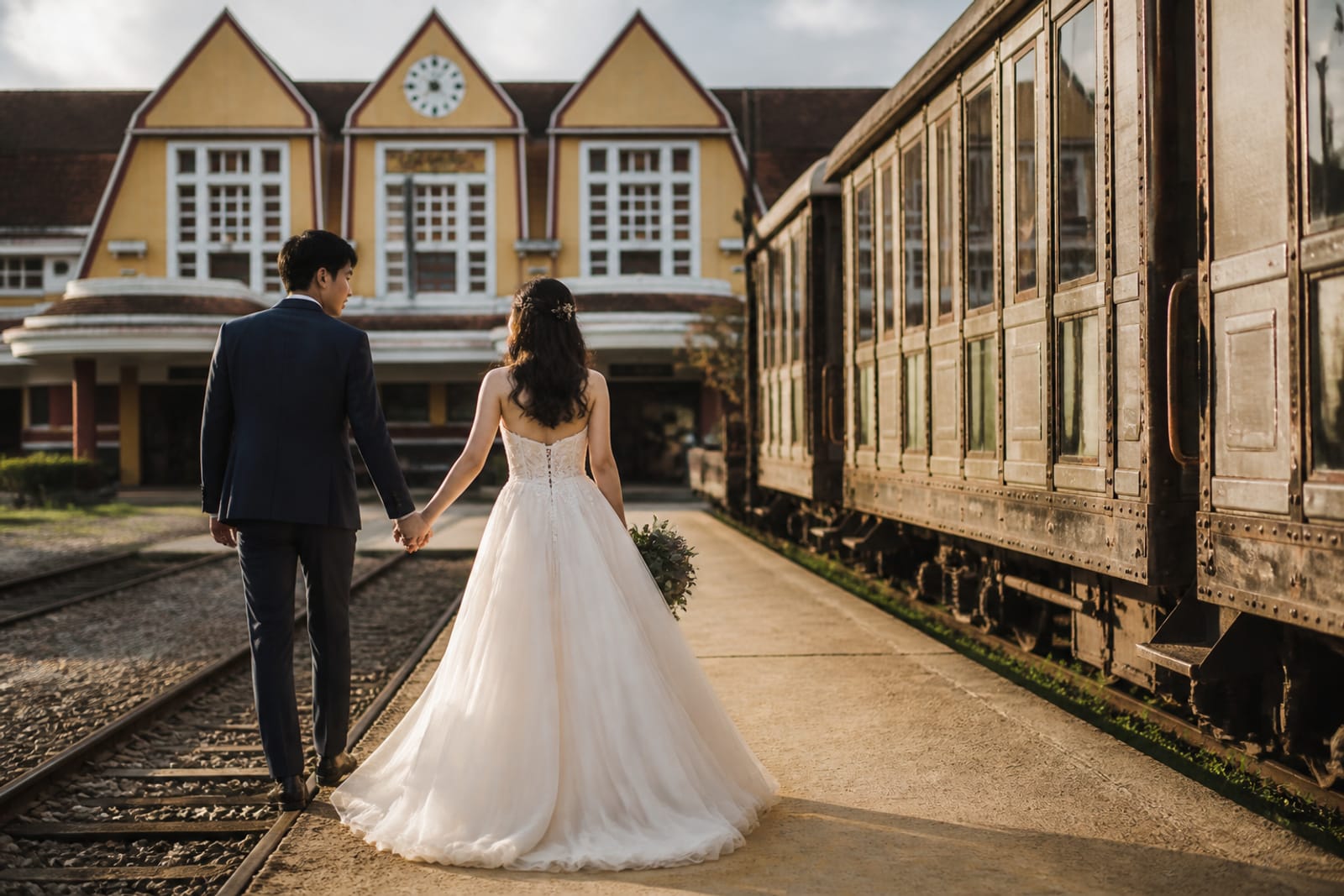
How to book a Da Lat photographer and avoid common traps?
Cáo Studio – Makeup & Photoshoot operates in Hanoi, Ho Chi Minh City, and Hoi An; Da Lat is not our service area. Here's how to vet a local partner:
- Ask for mountain portfolio. Scroll their Instagram for Langbiang or similar highland shoots. Look for consistent light (they know when to shoot), natural poses (not over-directed), and at least 3–5 couples' work. If they show mostly studio or beach photos, ask directly about mountain experience.
- Confirm their weather backup. A professional will explain their plan if it rains or mist refuses to lift (e.g., reshoot the next morning, shift to a lower garden, offer a full refund). If they say "weather won't be an issue," they're inexperienced. Mountain shoots always have weather risk.
- Check their mountain permits. Langbiang has no formal wedding permit system, but some guides or guesthouses require notification. Your photographer should know the local ranger or guide system and budget time for any check-in.
- Ask about post-processing. Mountain mist often looks grey in raw files—does your photographer enhance it to luminous (crushed blacks, lifted whites) or leave it natural? Ask for sample edits. A good post-processing approach means you're not paying extra for "mist rescue" later.
- Negotiate the timeline. A 6am start means your photographer is at your guesthouse by 5:30am. Is the transport included or separate? Are they staying overnight or driving 2+ hours from Saigon? This affects their availability and focus. Local, Da Lat-based photographers often deliver faster and better work on Langbiang because they know the light patterns.
- Get a written agreement. How many edited photos, when do you receive them, what format (digital, album, prints), and cancellation terms if weather is severe? WhatsApp agreements are informal and lead to disputes.
Comparing Langbiang to other Da Lat and destination options
Langbiang Mountain elopement is best for couples who want altitude, mist and forest intimacy without leaving Da Lat. It's also best for those on a half-day or single-day constraint—one location, maximum range. Shooting time is tight (6am–11am golden window), so you'll need a photographer who shoots fast and knows the mountain.
If you want a multi-location Da Lat day (flower gardens, waterfall, central town), consider a morning Langbiang sunrise (45 mins) plus afternoon shoots elsewhere. This requires more driving and multiple outfits but spreads risk if Langbiang mist is dense.
If you're open to moving beyond Da Lat, Hoi An elopement shoots with Cáo Studio offer coastal light, ancient-town architecture and a team that manages the entire day with backup locations—no weather-dependent mountain climbing required. Hoi An's dry season (Feb–Aug) mirrors Langbiang's, but light is warmer and less mist-dependent.
For couples choosing an ao dai photoshoot, Langbiang is exceptional because the mountain's scale makes any ao dai silhouette dramatic—no heavy styling required. For those open to modern outfit mixing, a Langbiang full-day can blend ao dai, suit and casual wear across zones.
📸 Book on WhatsApp — couple photoshoot | 🌸 See the lookbook
What to check before you book a Langbiang elopement
- Photographer's mountain portfolio: at least 3–5 Langbiang or highland wedding shoots (not just day-trippers' snapshots).
- Weather backup plan: written clause explaining rescheduling or refund if weather is unsuitable (typhoon-season rain, zero visibility).
- Transport & permits: who arranges cable car, parking, ranger check-in? Are these included in the quote or separate?
- Timeline: exactly when does the photographer arrive at your guesthouse, when do you leave the mountain, when do you receive edits? (Often 2–4 weeks for elopement galleries.)
- Outfit logistics: can your photographer advise on ao dai fit at altitude, layers, shoe grip? Or are they advising you to wear something they've never shot on a mountain?
- Post-processing style: ask for 3–5 sample edits of mountain mist. Does the photographer enhance mood or go minimal? Your taste matters.
- Cancellation & deposit: how much do you pay upfront, when is it non-refundable, what triggers a full refund if illness or extreme weather strikes?
💄 Makeup & hair at your hotel — if you're based in Da Lat and want pre-shoot styling without travel to Hanoi or Saigon.
For couples who want a stress-free elopement with guaranteed backup locations, team coordination and post-production, Cáo Studio's pre-wedding & elopement service in Hoi An or Ho Chi Minh City removes weather risk and logistics. Langbiang is rewarding for adventurous couples who embrace the mountain's unpredictability; Cáo Studio's team approach is for those who want certainty.
📸 Book on WhatsApp — pre-wedding photoshoot | 🌸 See the lookbook
---
FAQ
Can we shoot an elopement at Langbiang in the rain?
Rain is common May–Nov; experienced photographers use mist as an asset, but zero-visibility rain stops shoots. Agree on a weather backup (next-day reshoot or alternative location) before booking. Check the forecast 3–5 days before; if typhoon warnings appear, postpone.
Do we need a permit to photograph a wedding or elopement at Langbiang?
Langbiang has no formal wedding permit system, but you should notify the local ranger station or your guesthouse guide. A Da Lat photographer will handle this. National park rules (no drones, stay on marked paths) apply.
How much time do we need for a half-day Langbiang elopement shoot?
Plan 4–5 hours: photographer arrival by 5:30am, sunrise shoot (30–45 mins), forest walk and outfit change (1.5–2 hours), summit group poses (1 hour), breakdown by 10am. You'll capture one main location change and 1–2 outfit swaps.
What happens if we can't afford a full-day shoot?
A half-day sunrise-to-9am shoot is efficient and common. You'll miss afternoon light, but Dec–Feb mornings are the best light anyway. If budget is tight, book a reputable local photographer (often cheaper than Saigon teams) and a single outfit to minimize complexity.
Can Cáo Studio photograph our Langbiang elopement?
Cáo Studio operates in Hanoi, Ho Chi Minh City and Hoi An—not Da Lat. For a Langbiang shoot, hire a local Da Lat or Saigon photographer experienced in mountain shoots. Alternatively, consider a pre-wedding photoshoot with Cáo Studio in Hoi An or Ho Chi Minh City, where we manage the full day and handle weather logistics.
Should we hire a guide in addition to the photographer?
A mountain guide is optional but useful if neither you nor the photographer knows Langbiang's paths well. They'll navigate routes safely and handle ranger interactions. Budget extra for this; many Da Lat guesthouses arrange guides for a small fee.
FAQ
Can we shoot an elopement at Langbiang in the rain?
Rain is common May–Nov; experienced photographers use mist as an asset, but zero-visibility rain stops shoots. Agree on a weather backup (next-day reshoot or alternative location) before booking. Check the forecast 3–5 days before; if typhoon warnings appear, postpone.
Do we need a permit to photograph a wedding or elopement at Langbiang?
Langbiang has no formal wedding permit system, but you should notify the local ranger station or your guesthouse guide. A Da Lat photographer will handle this. National park rules (no drones, stay on marked paths) apply.
How much time do we need for a half-day Langbiang elopement shoot?
Plan 4–5 hours: photographer arrival by 5:30am, sunrise shoot (30–45 mins), forest walk and outfit change (1.5–2 hours), summit group poses (1 hour), breakdown by 10am. You'll capture one main location change and 1–2 outfit swaps.
What happens if we can't afford a full-day shoot?
A half-day sunrise-to-9am shoot is efficient and common. You'll miss afternoon light, but Dec–Feb mornings are the best light anyway. If budget is tight, book a reputable local photographer (often cheaper than Saigon teams) and a single outfit to minimize complexity.
Can Cáo Studio photograph our Langbiang elopement?
Cáo Studio operates in Hanoi, Ho Chi Minh City and Hoi An—not Da Lat. For a Langbiang shoot, hire a local Da Lat or Saigon photographer experienced in mountain shoots. Alternatively, consider a [pre-wedding photoshoot with Cáo Studio in Hoi An](/hoi-an) or [Ho Chi Minh City](/saigon), where we manage the full day and handle weather logistics.
Should we hire a guide in addition to the photographer?
A mountain guide is optional but useful if neither you nor the photographer knows Langbiang's paths well. They'll navigate routes safely and handle ranger interactions. Budget extra for this; many Da Lat guesthouses arrange guides for a small fee.
Ao dai, makeup, hair and a local photographer in Hanoi or Saigon — one WhatsApp message.