/pre-wedding-photoshoot
Elopement photos at Long Bien Bridge: plan your Hanoi shoot
Long Bien Bridge elopement shoots in Hanoi work best between 5:30 a.m. and 8 a.m., when the bridge is quietest, light is soft and directional, and crowds have not yet arrived. Cáo Studio – Makeup & Photoshoot coordinates pre-dawn sessions on the bridge's pedestrian pathways and surrounding Old Quarter streets to capture the steel structure and Red River without competing with commuters or tour groups. Sessions typically run 2–3 hours, including hair and makeup done on-site or at your hotel beforehand. You'll need to move quickly—local authorities monitor the bridge intermittently, so a photographer familiar with current access patterns is essential. Wear clothes that complement the industrial aesthetic: neutral tones, vintage textures, or a traditional ao dai for cultural contrast. Expect to climb stairs, navigate uneven surfaces, and shoot in variable light as the sun rises. Avoid peak hours (8 a.m.–6 p.m.) and Tet (late January–mid-February), when access is often restricted. --- Long Bien Bridge is a steel cantilever icon—Hanoi's connection to its riverside past and a globally recognized marriage proposal and elopement backdrop. But shooting here as an intimate couple or elopement party demands logistics that casual Instagram planning misses.
Why does early morning matter most for Long Bien Bridge elopement photos?
Golden hour at sunrise (approximately 5:30–7:30 a.m. in most seasons) casts warm, directional light across the bridge's steel trusses and the Red River below. The bridge is quietest and most photogenic before commuter cyclists, motorbikes and tour groups arrive around 8 a.m. Early sessions also mean softer shadows on faces and that cinematic quality couples expect. Shoot any later, and you're competing with crowds, harsh overhead sun, and security patrols that tighten monitoring through midday.
What do you need to know about access and permits at Long Bien Bridge?
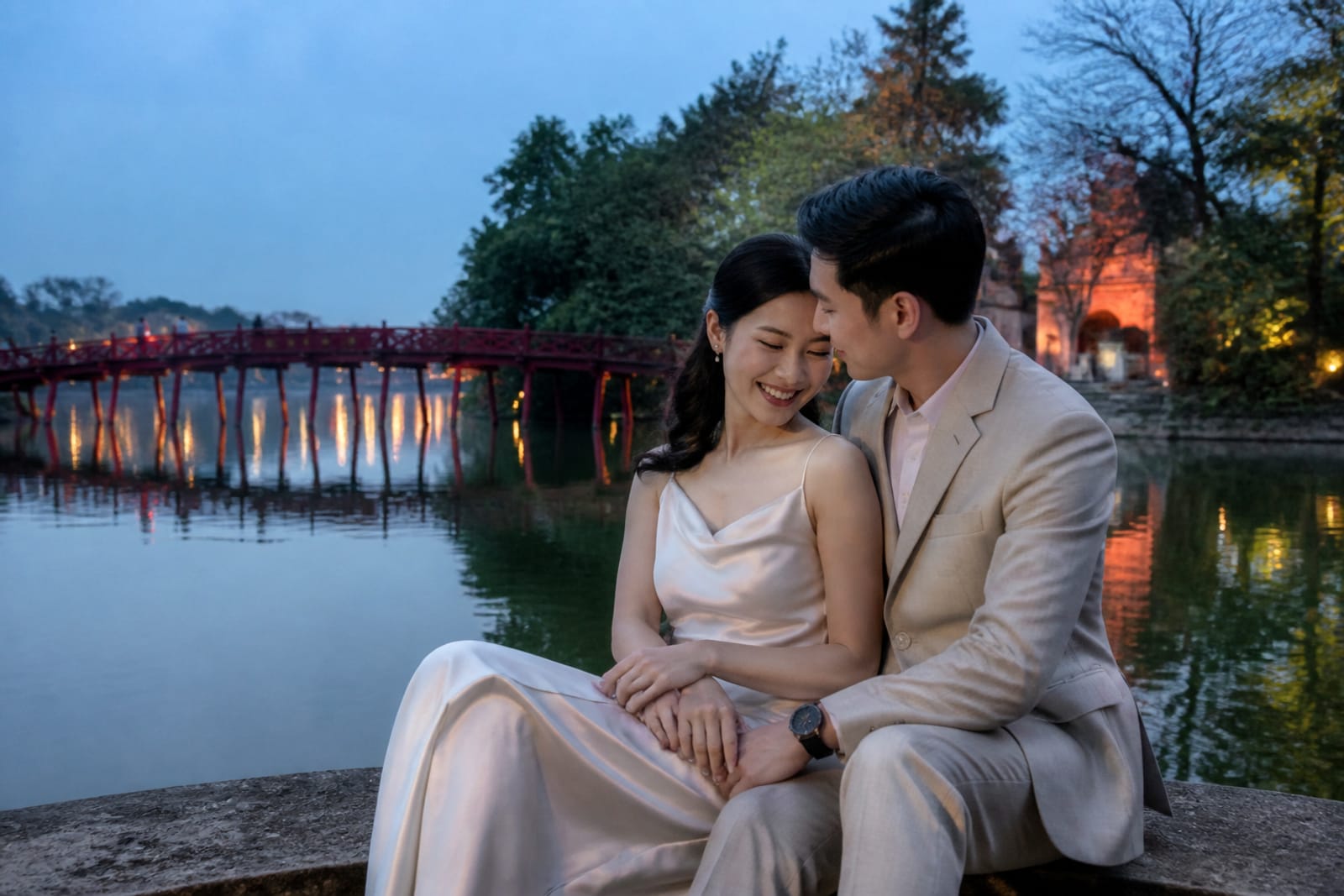
Local authorities periodically restrict access to the bridge's pedestrian lanes—particularly after incidents or during peak tourism seasons. Cáo Studio works within current access guidelines and knows which areas remain open for photography. Technically, the bridge is public, but you cannot block traffic, set up tripods for extended periods, or congregate in groups of more than a handful without informal coordination with local police or street vendors who monitor the space. A professional photographer who shoots there regularly knows when to move, where to stand, and how to work quickly—and whether a given day's access is open or restricted. Check on WhatsApp with the studio before booking to confirm current permit status and access conditions for your shoot date.
📸 Book on WhatsApp — couple photoshoot
What's the best outfit choice: ao dai, wedding dress, or casual wear?
| Outfit type | Best for | Light & season fit | Why it works |
|---|---|---|---|
| Ao dai | Cultural contrast, artistic shots | All seasons (heavier silk in cool months) | The bridge's industrial steel frames traditional Vietnamese elegance; photographs richly in morning light. |
| Wedding dress (light, moveable) | Formal elopement, editorial look | Oct–Nov (cool), Dec–Feb (avoid wet fabric in drizzle) | Flows dramatically in the open air; early light flattens the bridge's texture and makes white fabric glow. |
| Neutral tailoring or vintage | Intimate, editorial tone | Feb–Apr, Oct–Nov (mild, dry) | Complements the bridge's monochrome aesthetic; less weather-dependent than silk or heavy fabric. |
| Casual/secondhand pieces | Documentary, authentic feel | Any season; plan weather backup | Allows movement and climbing; suits early-morning, low-key vibe; easier to rewear. |
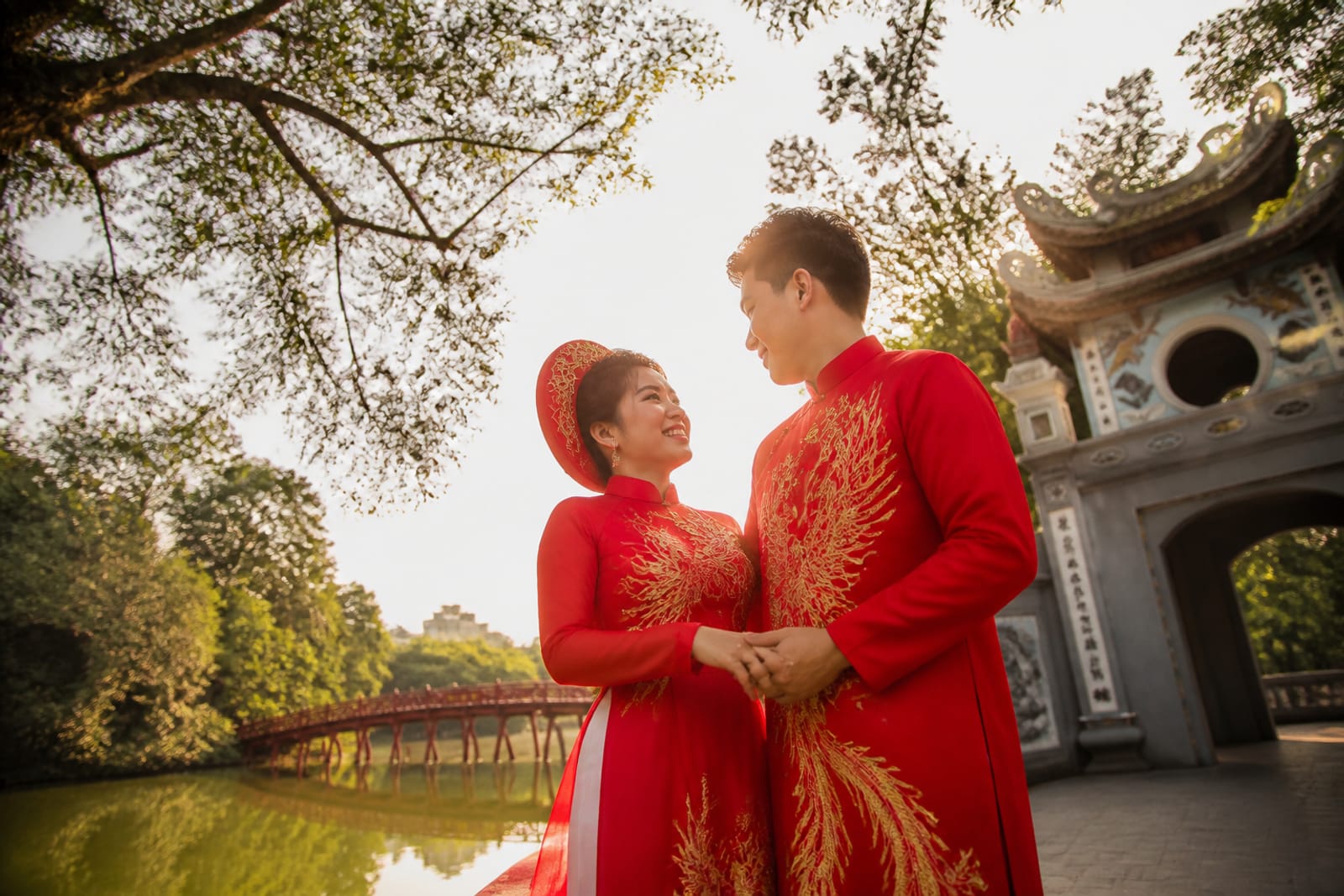
Ao dai is the most Hanoi-specific choice—the bridge's steel framework echoes the garment's structured elegance. If you wear a formal dress, choose one you can move in; you'll be climbing stairs and navigating uneven walkways. Cáo Studio can coordinate rental of ao dai or suit through sister services and arrange on-site hair and makeup to save time and avoid weather damage before the shoot.
How does weather affect shooting windows across the year?
Hanoi's climate splits into two rough seasons for Long Bien Bridge shoots:
- October–November (autumn): Dry, mild (20–25°C), soft haze that diffuses light beautifully. Most shoots happen here; book 4–8 weeks ahead.
- December–February (winter): Cool (10–20°C), often grey and drizzly. Light is flat; waterproofing needed. Tet (late January–mid-February) restricts access.
- March–April (spring): Mild but humid, frequent haze and drizzle. Light less predictable.
- May–September (summer): Hot (often 35°C+), very humid, heavy afternoon downpours. Early-morning shoots possible; expect sweat and makeup touch-ups; weather backup essential.
For a spring 2026 Long Bien Bridge elopement, aim for October–November or book a summer dawn session with a contingency date a week later.
What's the step-by-step workflow for an elopement shoot at Long Bien Bridge?
1. Contact Cáo Studio on WhatsApp — confirm access status and your preferred date 4–6 weeks ahead. 2. Choose your outfit and book rental (ao dai, suit, or dress) if needed; coordinate timing with makeup. 3. Schedule pre-shoot hair and makeup — either at your hotel (/makeup-and-hair) or on-site if permitted. 4. Arrive 5 a.m. or earlier — earlier sessions mean fewer bystanders and faster lighting changes. 5. Shoot the bridge and surrounding Old Quarter lanes (typically 2–3 hours; photographer will guide positioning and movement). 6. Move if police or congestion appears — photographer knows alternate vantage points. 7. Backup location nearby — if access is suddenly restricted, the team pivots to Old Quarter streets, lakeside, or temple entrances. 8. Confirm photo delivery timing and format — exact inclusions are confirmed on WhatsApp.
How does Long Bien Bridge compare to other Hanoi elopement backdrops?
| Location | Best for | Light/access | Why choose it or skip it |
|---|---|---|---|
| Long Bien Bridge | Industrial romance, iconic landmark, architectural shots | Early morning only; occasional access restrictions | Instantly recognizable globally; steel trusses photograph dramatically; requires careful timing. |
| Hoan Kiem Lake (weekday dawn) | Intimate, reflective, traditional Vietnamese | Softer, more forgiving light; pedestrian-only weekends; busier weekdays | Accessible, predictable, romantic; less dramatic than the bridge; sometimes crowds. |
| Old Quarter colonial streets | Street photography, authenticity, movement | Morning light bounces off narrow facades; all seasons; no restrictions | Flexible, walkable, cultural; less iconic as a single backdrop. |
| Temple entrances (e.g., Tran Temple, Hang Trong) | Spiritual, traditional, couple's ritual | Golden hour through gatehouse; etiquette required; some weekday restrictions | Culturally rich; smaller groups; requires respectful behavior and modest dress. |
| Ninh Binh (Trang An, Mua Cave) | Nature, limestone drama, full-day adventure | Variable by season; May–Sep can be rainy; Oct–Nov is ideal | Requires travel from Hanoi (90+ minutes); weather-dependent; best for pre-wedding or honeymoon shoots. |
Long Bien Bridge is unmatched for its industrial-romantic symbolism and instant recognizability; choose it if the landmark itself is central to your story. If you want flexibility and lower weather risk, lakeside or temple options work better. Cáo Studio shoots all these locations—discuss your priorities on WhatsApp to find the best fit.
---
What to check before you book a Long Bien Bridge elopement shoot
- Access status: Confirm via WhatsApp that the bridge's pedestrian paths are open on your shoot date; if restricted, finalize a backup location in advance.
- Sunrise time: Verify the exact sunrise time for your date (varies 5:30–6:30 a.m. across the year) and arrive 15–30 minutes earlier.
- Weather forecast: Monitor 5–7 days before; if heavy rain or typhoon is predicted, discuss rescheduling or an indoor/covered alternative.
- Outfit fit and movement: Try your ao dai, dress or suit; make sure you can climb stairs and move freely. Test makeup and hair in the outfit beforehand.
- Permit/photography ID: Ask Cáo Studio whether you or the photographer should carry any documentation; most early-morning couples don't, but locals or police may ask.
- Backup time and location: Confirm with the photographer where you'll move if the bridge is suddenly closed; Old Quarter streets, Hang Trong Temple, or lakeside should be pre-scouted.
- Photo delivery: Clarify exact inclusions (edited files, albums, prints, timelines) on WhatsApp before paying a deposit.
---
For an elopement or intimate couple shoot elsewhere in Hanoi, explore our ao dai photoshoot and couple & family photoshoot pages. If you're planning a full pre-wedding series, include Long Bien Bridge as one of multiple sessions across different seasons and locations. For makeup and hair coordination the morning of your shoot, book hotel makeup & hair services. See how other Hanoi couples have used iconic backdrops in our lookbook, or contact Cáo Studio on WhatsApp to discuss timing, outfit, and logistics for your specific vision.
📸 Book on WhatsApp — pre-wedding photoshoot
FAQ
Can we shoot Long Bien Bridge on a weekday afternoon instead of dawn?
Afternoons (12 p.m.–5 p.m.) are extremely crowded with commuters, tour groups, and heavy motorbike traffic; light is also harsh and shadows unflattering. Early morning is essential; ask Cáo Studio on WhatsApp if your schedule allows 5:30–8 a.m. shoots.
Do we need a permit to photograph on Long Bien Bridge?
The bridge is public, but local authorities intermittently restrict pedestrian access. Cáo Studio works within current guidelines and knows when the bridge is open. Confirm access status on WhatsApp before booking; no formal permit is typically required for a small couple or elopement group.
What if it rains the morning of our shoot?
Light drizzle is manageable; waterproofing makeup and using a compact umbrella are options. Heavy rain often signals access closures. Discuss a backup date or alternate location (Old Quarter, temples, lakeside) when you book; confirm weather-contingency terms on WhatsApp.
Can we include Long Bien Bridge in a longer pre-wedding session?
Yes. Many couples shoot the bridge at dawn, then move to other Hanoi locations (Old Quarter, temples, lakes) later the same day or across multiple sessions. Exact itinerary and inclusions are confirmed on WhatsApp.
Should we rent an ao dai for a Long Bien Bridge elopement?
Ao dai is the most culturally resonant choice and photographs beautifully against the bridge's steel. Cáo Studio can coordinate rental; discuss outfit preferences and logistics when you book. Lighter fabrics and shorter lengths work best for movement on the bridge's stairs and uneven walkways.
How long does a Long Bien Bridge elopement shoot typically take?
Sessions usually run 2–3 hours, including hair/makeup coordination and movement between the bridge and nearby Old Quarter streets. Exact duration and photo delivery are confirmed on WhatsApp.
FAQ
Can we shoot Long Bien Bridge on a weekday afternoon instead of dawn?
Afternoons (12 p.m.–5 p.m.) are extremely crowded with commuters, tour groups, and heavy motorbike traffic; light is also harsh and shadows unflattering. Early morning is essential; ask Cáo Studio on WhatsApp if your schedule allows 5:30–8 a.m. shoots.
Do we need a permit to photograph on Long Bien Bridge?
The bridge is public, but local authorities intermittently restrict pedestrian access. Cáo Studio works within current guidelines and knows when the bridge is open. Confirm access status on WhatsApp before booking; no formal permit is typically required for a small couple or elopement group.
What if it rains the morning of our shoot?
Light drizzle is manageable; waterproofing makeup and using a compact umbrella are options. Heavy rain often signals access closures. Discuss a backup date or alternate location (Old Quarter, temples, lakeside) when you book; confirm weather-contingency terms on WhatsApp.
Can we include Long Bien Bridge in a longer pre-wedding session?
Yes. Many couples shoot the bridge at dawn, then move to other Hanoi locations (Old Quarter, temples, lakes) later the same day or across multiple sessions. Exact itinerary and inclusions are confirmed on WhatsApp.
Should we rent an ao dai for a Long Bien Bridge elopement?
Ao dai is the most culturally resonant choice and photographs beautifully against the bridge's steel. Cáo Studio can coordinate rental; discuss outfit preferences and logistics when you book. Lighter fabrics and shorter lengths work best for movement on the bridge's stairs and uneven walkways.
How long does a Long Bien Bridge elopement shoot typically take?
Sessions usually run 2–3 hours, including hair/makeup coordination and movement between the bridge and nearby Old Quarter streets. Exact duration and photo delivery are confirmed on WhatsApp.
Ao dai, makeup, hair and a local photographer in Hanoi or Saigon — one WhatsApp message.