/pre-wedding-photoshoot
Elopement photos at Mui Ne white sand dunes: light, timing & local log
Elopement photos at Mui Ne white sand dunes work best November through March, when dry season light is clearest and wind is calmest. Sunrise—roughly 6:00–6:45 am—is the only slot: soft side and backlight, empty dunes, and temperatures cool enough to move without heat stress. The session runs 90 minutes to two hours on foot across sand; you wear an áo dài, lightweight dress or suit over breathable layers (no padding, no heavy silk). Cáo Studio coordinates shoots in Ho Chi Minh City and Hoi An by appointment; for a Mui Ne elopement, we can guide you to a vetted local photographer or travel from Saigon if the booking is large enough. Avoid mid-day glare, typhoon season (September–November, especially October), and booking without a weather buffer—Mui Ne wind can shift fast. The dunes demand real logistics: no roads into the shoot zone, soft sand tires you quickly, and the light window closes by 7:30 am.
Mui Ne is one of Vietnam's oldest photoshoot destinations—wind-sculpted dunes, salt ponds glinting at dusk, and red cliffs at golden hour. For elopement couples, the white dunes near Fairy Stream offer an otherworldly backdrop with minimal crowds if you time it right. But Mui Ne is not a "beautiful backdrop" destination; it's a logistics puzzle where sunrise, season, footwear and outfit weight determine whether you walk away with ten keepers or forty frames you edit out.
Why is sunrise the only shooting window at Mui Ne dunes?
Sunrise at Mui Ne (roughly 6:00–6:45 am in winter, 5:30–6:15 am in spring) delivers soft, directional light from the east that wraps around the dunes and backlit your silhouettes. By 8:00 am, the sun is high enough to flatten the dune contours and create harsh shadows across faces. The sand also heats rapidly: by mid-morning, the dunes' surface becomes uncomfortable to walk on barefoot. Wind intensity peaks mid-day and afternoon, which scatters loose sand and forces squinting. A sunrise shoot means you finish by 8:00–8:30 am, eat breakfast in town, and the couple has the rest of the day free. Expect the light window to be 60–90 minutes of actual shooting.
What season and weather lets you shoot safely at the dunes?
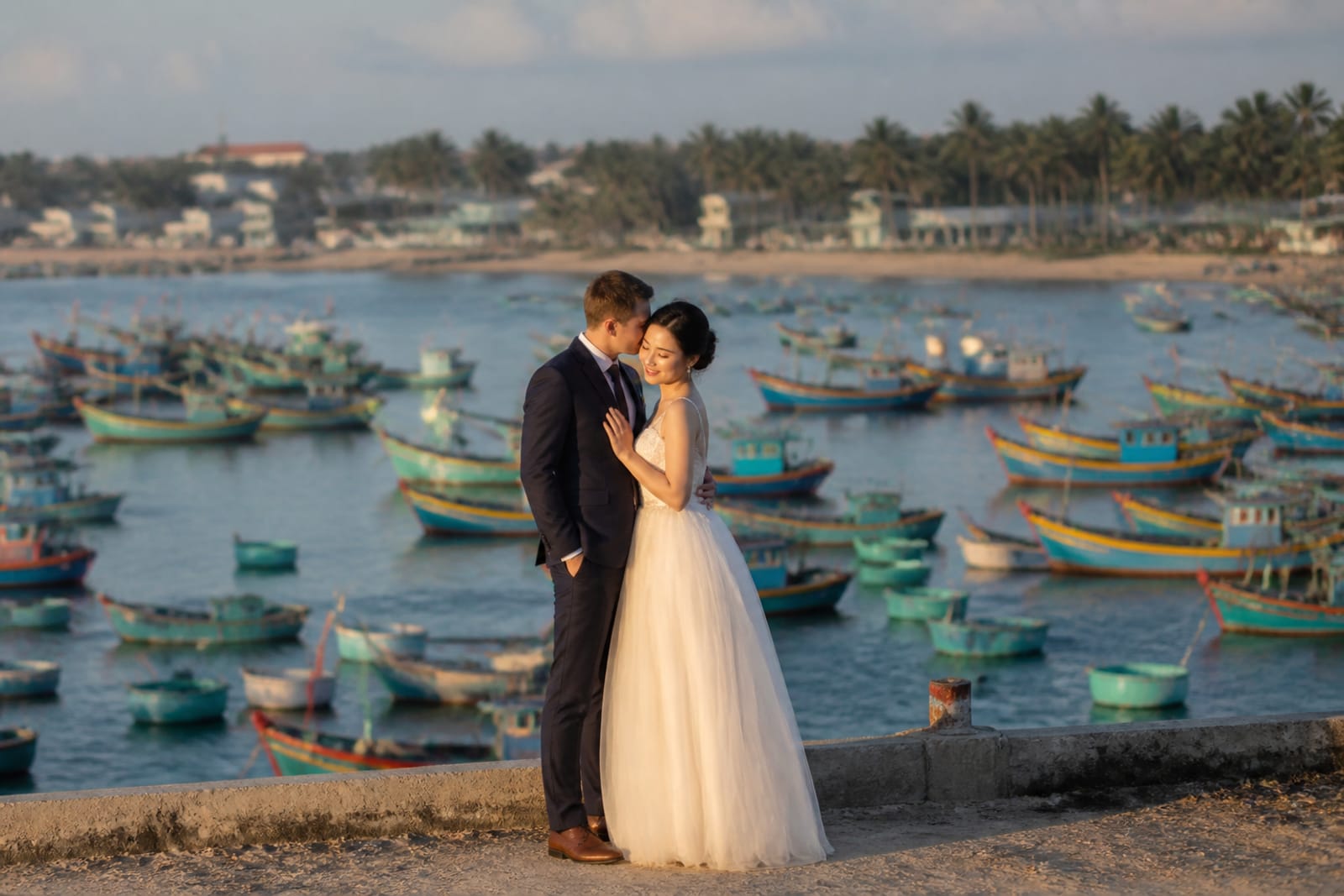
Mui Ne is one of Vietnam's driest areas. The dry season runs November through April; within that, November through March combines low wind, clear skies and mild morning temperatures. April's light is still good, but afternoon heat and occasional pre-monsoon storms make it less reliable. June through October is monsoon season; September through November carries typhoon risk and afternoon downpours. October and November are the worst months—sudden storms can cancel shoots or arrive mid-morning with no warning. December through February is ideal: temperatures around 20–24°C at sunrise, humidity manageable, and wind relatively steady (strong but predictable). Book with a two-day weather buffer and communicate with your photographer the evening before to confirm timing.
How do you dress for elopement photos without overheating on the dunes?
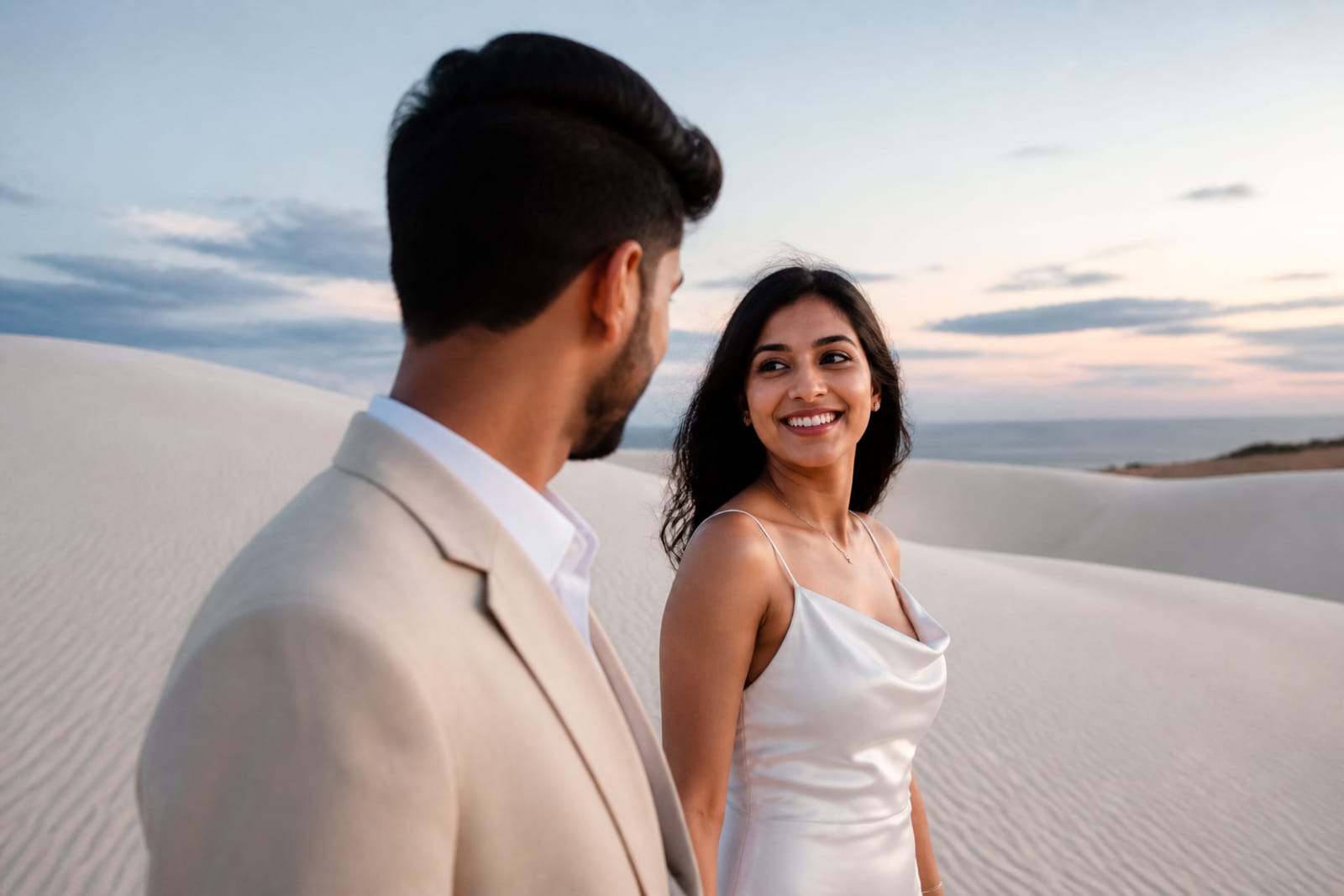
Many couples assume an áo dài, wedding dress or formal suit is heavy and impractical on sand. It's not—if you layer smartly. An áo dài is made from silk or cotton, designed for tropical heat, and the long sleeves and trousers offer UV protection. Underneath, wear a thin, moisture-wicking undershirt (no cotton, which holds sweat). For a Western dress, choose breathable linen or cotton over satin; avoid tulle, heavy lace or multiple layers. Grooms in suits should opt for linen or a lightweight cotton-blend jacket; skip the vest and heavy dress shoes—carry sandals or go barefoot (sand is softer than you expect at sunrise). The key is one outfit, one message: the dunes are meant to frame you, not compete with detail. Skip jewelry that catches light unpredictably and avoid white or very light colors if you shoot into the sun (you'll be backlit and underexposed unless the photographer adjusts). Bring a light shawl or cover-up for in-between moments and wind gusts. Hat? No—it hides your face and the wind tosses it anyway.
| Option | Best for | Season | Why it works |
|---|---|---|---|
| Áo dài + trousers | Traditional, elegant, cultural connection | Dec–Mar | Designed for heat; long sleeves protect skin; fabric catches backlight beautifully |
| Linen dress + minimal accessories | Soft, romantic, Western aesthetic | Dec–Mar | Breathes; drapes well on sand; simple enough not to distract |
| Linen suit jacket + lightweight trousers | Groom or formal elopement | Dec–Mar | Lightweight options exist; layer with thin undershirt; skip the tie |
| Casual linen shirt + trousers | Intimate, documentary feel | Nov–Apr | Practical; moves easily; works for pre-dawn movement and conversation |
What are the logistics of shooting on sand versus booking a studio or urban location?
A studio offers controlled light, zero weather risk, and easy wardrobe changes. An urban location (Hanoi street, Hoi An ancient town, Saigon riverside) offers human scale and architecture. The dunes offer neither—they offer isolation and drama at the cost of complexity. You're walking in soft sand for 60–90 minutes; this tires legs and sandals quickly fill with sand (go barefoot or wear minimal sandals). No bathrooms, no shelter, no shade. If the couple is older, has mobility issues, or prefers controlled environments, elopement on dunes is not ideal. If you want frames of genuine movement—walking, looking at each other, turning into backlight, silhouettes—the dunes work. There's nowhere to hide and nothing to distract, so the photographer must direct real moments, not pose you in front of scenery. Cáo Studio does not operate a Mui Ne base; we work from Ho Chi Minh City and Hoi An. For a Mui Ne elopement, ask us on WhatsApp whether we can travel for your dates, or we'll connect you to a vetted local photographer who knows the dunes and tide times (sand moisture changes the texture and color throughout the morning).
💄 Makeup & hair at your hotel | 👰 Pre-wedding elopement sessions | 🌸 See the lookbook
How do you compare a dune elopement to other Mui Ne photoshoot options?
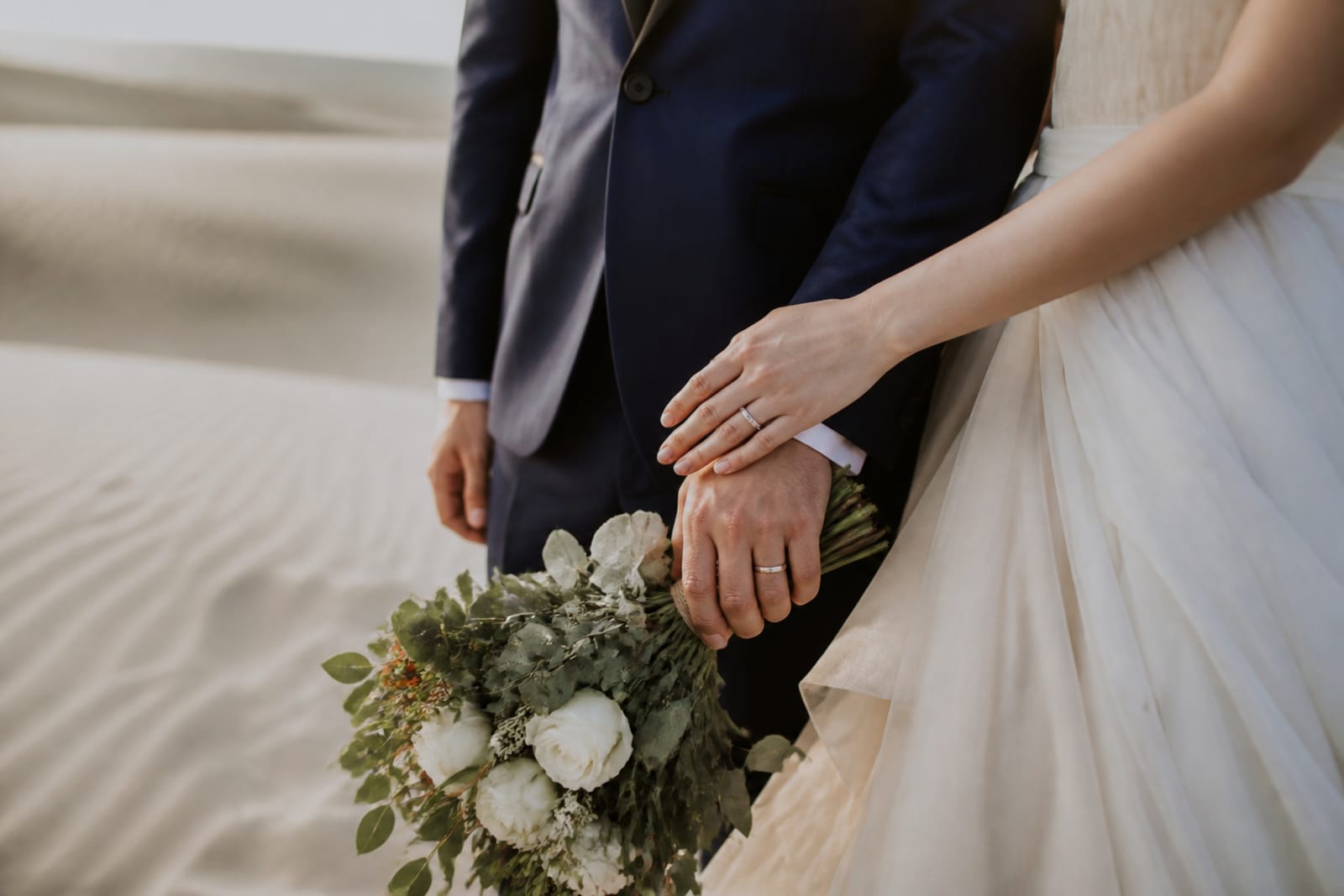
Mui Ne has three main shoot zones: (1) white sand dunes near Fairy Stream, (2) red cliffs and colored canyon at sunset, (3) salt ponds at dusk. A dune elopement is a sunrise-only commitment; you cannot move to red cliffs the same morning because the light and location are separate. If you want variety, book two sessions on different days. Red cliffs work 4:00–5:30 pm (warm, directional, less footwear strain). Salt ponds work 4:30–6:00 pm (geometric patterns, reflections). A single-location session is faster, cheaper and more focused; variety requires double the time and cost factors like travel, makeup touch-ups and outfit changes. For most elopement couples, one location with strong light and mood is better than three mediocre backdrops.
📸 Book on WhatsApp — pre-wedding photoshoot | 🏨 Hotel makeup & hair service
What to check before you book an elopement shoot at Mui Ne dunes
- Season lock: Confirm your dates fall November–March; if you're outside that window, ask your photographer whether they'll still commit or if cancellation is likely due to weather.
- Light timing: Ask the photographer to specify sunrise time for your exact date (it shifts by a few minutes week to week) and confirm the shoot window is 60–90 minutes, not longer.
- Transport and meeting point: Where do you meet? Hanoi and Saigon photographers often need to travel from the city (3–4 hours from Saigon, 6+ from Hanoi), so include travel time in your booking and confirm pickup location.
- Outfit logistics: If you rent an áo dài locally, confirm the rental arrives the day before and fits comfortably without layers that will overheat you. If you bring your own dress or suit, pack it with sand in mind—you will walk in it.
- Backup date: Typhoon season overlap (September–November) makes Mui Ne risky; book with a flexible reschedule clause and check weather 48 hours before.
- Photographer's local knowledge: Ask whether they've shot the dunes before, whether they know tide times (wet sand is firmer and more photogenic early morning), and whether they have a second shooter for backup if light is challenging.
- Deliverables and edit time: Confirm how many edited photos, when you receive them, and whether video is included. See our FAQ for typical delivery timelines.
---
Do you shoot elopement photos at Mui Ne?
Cáo Studio is based in Hanoi and Ho Chi Minh City. Mui Ne is outside our regular service area. We can connect you with vetted local photographers or assess whether a team travel from Saigon is feasible for your dates. Ask us on WhatsApp for Mui Ne options.
💄 Makeup & hair | 👰 Elopement & pre-wedding sessions | 🌸 Book a shoot
---
FAQ
What time is sunrise at Mui Ne in December and January?
Sunrise is approximately 6:30–6:45 am in December and January. Confirm the exact time with your photographer; it shifts by a few minutes week to week. Plan to be on the dunes by 6:00 am to scout framing before the light peaks.
Can we do an elopement shoot at the dunes in April or May?
April light and dunes are still good, but afternoon wind and occasional pre-monsoon storms make it less reliable. May through October is monsoon season; shoot quality drops sharply. Stick to November–March for the most consistent conditions.
Do we need special permits or tickets to shoot at Mui Ne dunes?
Mui Ne dunes are public land. No permit or entry ticket is required. Confirm current local regulations with your photographer; rules may shift. Arrive early to avoid other visitors and farm traffic.
How long does an elopement dune shoot take, and how many outfit changes can we do?
A single-session sunrise shoot is 90 minutes to two hours. One outfit is typical; the dunes are soft and walking in multiple outfits is fatiguing. If you want two looks, book two separate sessions on different days (dune sunrise, then red cliffs at sunset).
We're older and worried about walking in sand. Is a dune elopement realistic for us?
Soft sand is tiring and can be uncomfortable for mobility issues. Consider an urban location—Hanoi's Old Quarter, Hoi An ancient town, or Saigon riverside—where you can move at your pace on solid ground. Explore pre-wedding sessions in Hanoi or Ho Chi Minh City as alternatives.
Can we book a local Mui Ne photographer through Cáo Studio?
Yes. Contact us on WhatsApp and describe your dates and vision. We'll connect you with a vetted local or assess whether a Saigon-based team travel is feasible. Coordination depends on availability and booking scope.
What happens if weather cancels the shoot the morning of?
Confirm with your photographer whether they offer a free reschedule. Most reputable photographers allow one free date shift if weather is unsafe (typhoon, heavy rain, zero visibility). Confirm cancellation and reschedule terms before booking.
FAQ
What time is sunrise at Mui Ne in December and January?
Sunrise is approximately 6:30–6:45 am in December and January. Confirm the exact time with your photographer; it shifts by a few minutes week to week. Plan to be on the dunes by 6:00 am to scout framing before the light peaks.
Can we do an elopement shoot at the dunes in April or May?
April light and dunes are still good, but afternoon wind and occasional pre-monsoon storms make it less reliable. May through October is monsoon season; shoot quality drops sharply. Stick to November–March for the most consistent conditions.
Do we need special permits or tickets to shoot at Mui Ne dunes?
Mui Ne dunes are public land. No permit or entry ticket is required. Confirm current local regulations with your photographer; rules may shift. Arrive early to avoid other visitors and farm traffic.
How long does an elopement dune shoot take, and how many outfit changes can we do?
A single-session sunrise shoot is 90 minutes to two hours. One outfit is typical; the dunes are soft and walking in multiple outfits is fatiguing. If you want two looks, book two separate sessions on different days (dune sunrise, then red cliffs at sunset).
We're older and worried about walking in sand. Is a dune elopement realistic for us?
Soft sand is tiring and can be uncomfortable for mobility issues. Consider an urban location—Hanoi's Old Quarter, Hoi An ancient town, or Saigon riverside—where you can move at your pace on solid ground. [Explore pre-wedding sessions in Hanoi](/hanoi) or [Ho Chi Minh City](/saigon) as alternatives.
Can we book a local Mui Ne photographer through Cáo Studio?
Yes. Contact us on WhatsApp and describe your dates and vision. We'll connect you with a vetted local or assess whether a Saigon-based team travel is feasible. Coordination depends on availability and booking scope.
What happens if weather cancels the shoot the morning of?
Confirm with your photographer whether they offer a free reschedule. Most reputable photographers allow one free date shift if weather is unsafe (typhoon, heavy rain, zero visibility). Confirm cancellation and reschedule terms before booking.
Ao dai, makeup, hair and a local photographer in Hanoi or Saigon — one WhatsApp message.