/pre-wedding-photoshoot
Elopement Photos at Phuc Kien Assembly Hall: What to Expect
Elopement photos at Phuc Kien Assembly Hall mean shooting inside and around this 1690s Chinese-Vietnamese temple in Hoi An's Ancient Town. You'll arrive at sunrise (roughly 5:30–6:30 a.m.) to avoid crowds and capture soft, directional light on gilded altars and wooden lattice. The session typically runs 2–3 hours, covering the main prayer hall, interior shrines, and temple grounds before the town wakes. Cáo Studio – Makeup & Photoshoot coordinates hair and makeup on-site (hotel or temple courtyard), manages respect for active worshippers, and works with the temple's quiet zones — lanterns stay unlit at dawn, so rely on natural window light and carved architectural detail. Key steps: book the Ancient Town entrance ticket in advance, wear modest clothing that flows for movement (ao dai is traditional; Western wedding dress works if sleeveless arms are covered), and plan for cool, sometimes drizzly mornings Feb–Apr. Avoid Oct–Nov (typhoon season brings flooding that blocks pathways). ---
Why shoot elopement photos at Phuc Kien instead of other Hoi An temples?
Phuc Kien stands apart for its layered composition: gilded, carved interior shrines photograph with warmth and depth that smaller temples lack, and the main hall's central axis creates natural framing for couple shots. The temple sits on a quieter alley than Cao Dai Temple (busier with tourists), and its age-worn wood and brass have authentic color contrasts. Most competitors photograph only exterior lantern-lit shots at dusk—we capture the intimate, unlit interior at dawn when light threads through high windows onto altar gold and fabric. That golden-hour geometry is unique to morning shoots here. If you prefer crowded, vibrant lantern-lit energy, Hoi An full-moon celebrations work better; Phuc Kien at dawn suits couples seeking contemplative, classical frames.
What time of day and season give the best light and fewest crowds?
Sunrise (5:30–6:45 a.m.) is non-negotiable: the temple is often empty, and east-facing windows send a narrow band of soft gold across the prayer hall. By 7 a.m., worshippers arrive; by 8 a.m., tourist groups queue at the entrance gate. Feb–Apr combines cool, stable light with dry mornings and green rice fields in surrounding shots. May–Aug is dry but shoots require extra early starts—interior temps climb fast, makeup sets differently, and midday heat reflects off temple walls with harsh contrast. Sep–Dec is rainy and typhoon-prone; Oct–Nov flooding closes pathways inside the Ancient Town, making entry unreliable. Book sunrise sessions Feb–Apr to maximize light quality and comfort. Winter (Dec–Jan) is mild but often drizzly, softening contrast; it still works, but Feb–Mar light is crisper.
| Season | Best for | Light character | Crowd pressure | What to expect |
|---|---|---|---|---|
| Feb–Apr | Couples prioritizing light and solitude | Soft, golden, directional window glow | Minimal before 7 a.m. | Mild air, ideal makeup hold, rice fields green |
| May–Aug | Those committed to pre-dawn timing | Bright, contrasty; requires positioning | Very sparse at 5:30 a.m. | Hot, humid; makeup touch-ups needed; harsh midday reflection |
| Sep–Dec | Budget-conscious (fewer bookings) | Soft, diffused; muted gold tones | Low, but rain risks interruptions | Typhoon risk Oct–Nov; flooding possible; Dec–Jan drizzly but stable |
📸 Book on WhatsApp — pre-wedding photoshoot
What should you wear to feel confident and photograph well?
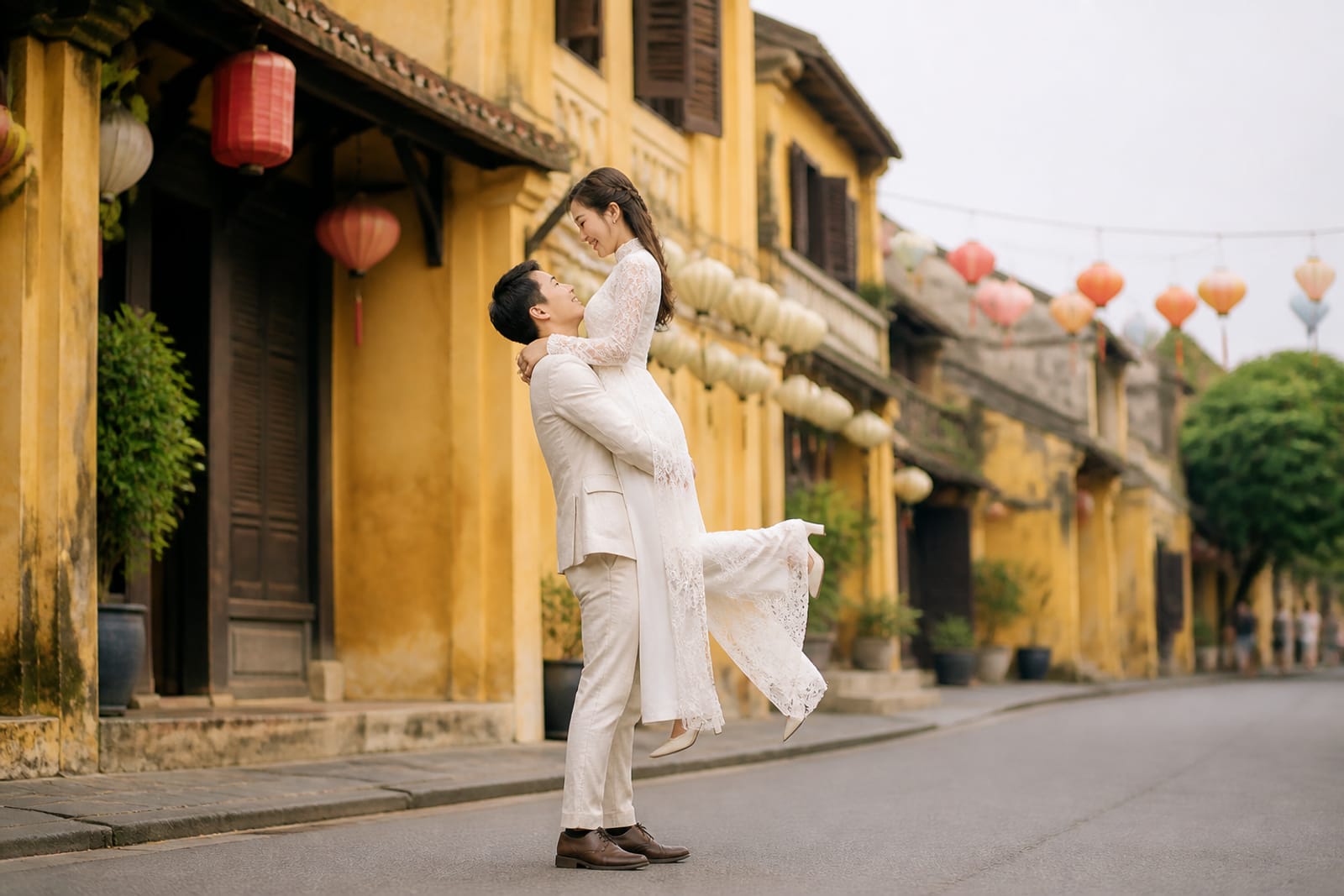
Ao dai is the cultural choice and photographs dramatically—the silk drapes on temple steps and its long lines suit the hall's vertical carved panels. If you wear a Western wedding dress, ensure sleeves or a shawl cover shoulders (temple etiquette requires covered arms and legs; show respect). Trousers suit couples wanting mobility for temple stairs. Avoid bright white fabric indoors—it overexposes against golden altars; cream, ivory, or soft gold harmonizes with the temple's palette. Shoes matter: temple floors are uneven stone and wood; wear flat or low-heel options you can slip off inside (shoes stay at the main hall entrance). Groom suits photograph richly against carved wood; deep navy or black reads better than light grey in dim interior light. Test your outfit's movement before the shoot—crouch, sit on temple benches, walk backward for framing. Makeup should be waterproof; cool morning humidity and emotional moments require durability.
For more on ao dai styling and fit, see our ao dai photoshoot guide and ao dai rental options.
How does the photoshoot actually flow, and what are the logistics?
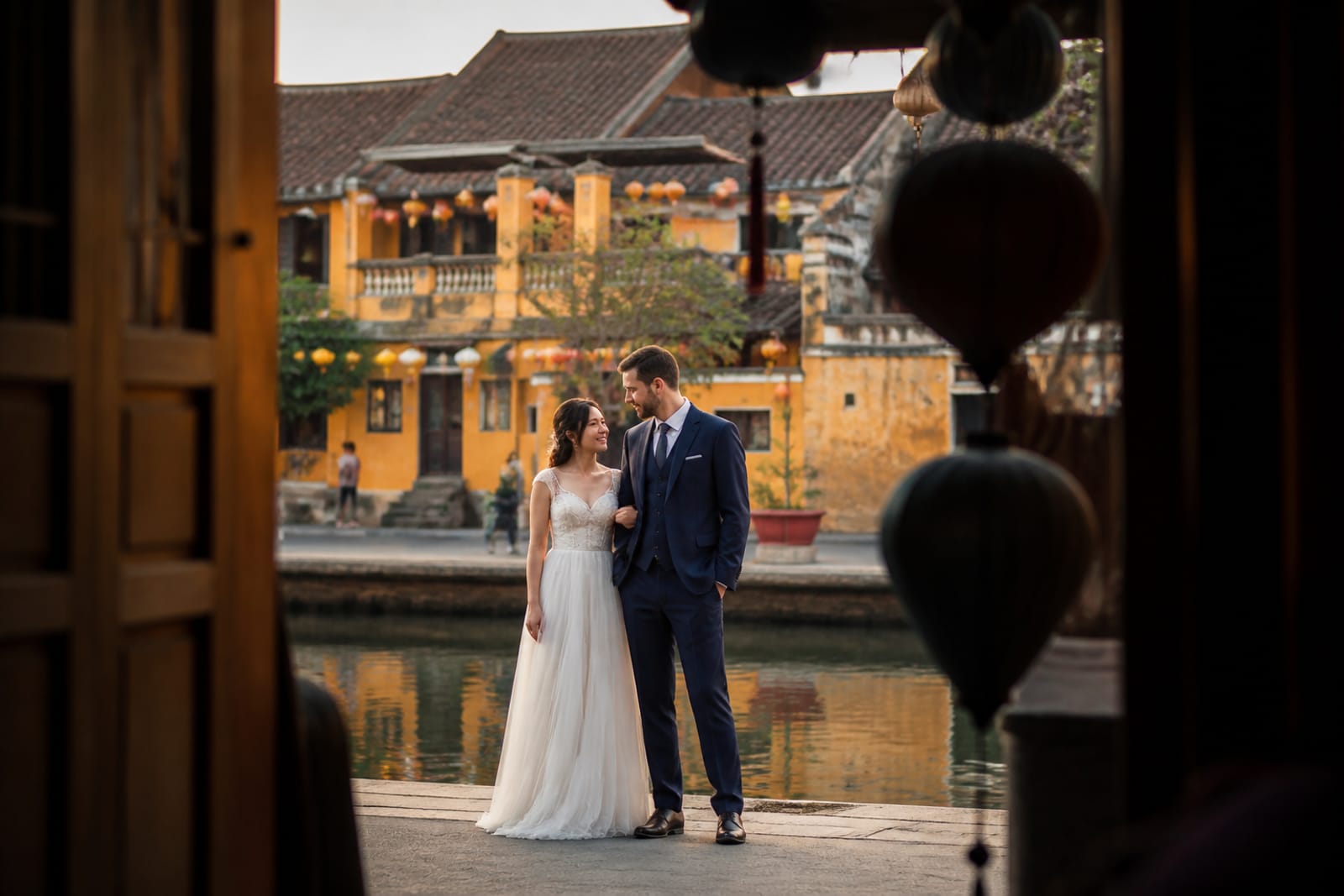
The session starts at your hotel (5:00 a.m. pickup) for makeup and hair; our team arrives with portable mirrors and lighting, allowing you to relax while we prep. By 5:45 a.m., you're ready. We walk or drive to Phuc Kien—the Ancient Town entrance is a 5-minute walk—and enter via the side lane before the ticket booth opens (we handle entry coordination). The temple is yours in semi-silence: we shoot the main prayer hall, side shrines, the courtyard with its weathered tiles, and surrounding alley lanterns. By 7:00 a.m., light shifts as worshippers arrive; we pivot to couple portraits outside, capturing the street's stone and lantern detail. By 7:30 a.m., the Ancient Town wakes fully—shops open, tour groups cluster—so we wrap or move to quieter nearby temples (Quan Cong, Tran Family House) based on remaining light and your energy. Edited images arrive per your package agreement; finalists come first, so you see keepsake-quality frames by week two.
What are the real challenges, and how do we solve them?
Lighting shifts fast indoors. The golden-hour window is 20–30 minutes before full daylight erases shadows. We scout angles the day before and position you proactively—no wasted time hunting light.
Worshippers may be present even at dawn. We work around them respectfully, never positioning you between altars and praying elders. If the main hall is too busy, we use side shrines or wait 10 minutes for a gap.
Temple floors are slippery and uneven. We guide you on safe stepping, especially in flowing ao dai; we avoid rushed movement that risks trips on stairs.
Humidity fogs windows. We shoot the carved wooden details and altars earlier, when glass is clearest, leaving exterior shots for later.
Couples get emotional inside temples—it's normal. We step back, let the moment settle, then resume. Waterproof makeup is non-negotiable.
Ancient Town entrance tickets require advance check-in. We confirm current pricing and hours directly with the site; you don't queue like a tourist group.
What should you confirm before booking an elopement session here?
Checklist:
- [ ] Confirm your ideal date (Feb–Apr is fastest-booked; book 4–6 weeks ahead).
- [ ] Verify with the temple directly if your proposed shoot time aligns with their morning schedule (we handle this, but it's good to know).
- [ ] Discuss ao dai rental vs. bringing your dress; our team can advise fit and movement.
- [ ] Ask about makeup waterproofing and touch-up supplies (included in our hotel makeup service).
- [ ] Clarify final image count and delivery timeline on WhatsApp—details vary by package.
- [ ] Check weather forecast 5 days before; drizzle is fine, but heavy rain requires rescheduling.
- [ ] Plan your after-shoot breakfast or sunrise walk—the alley vendors open around 6:30 a.m.
- [ ] Bring a light cardigan (5 a.m. is cool even in Apr; temples are unheated).
For more on our pre-wedding services, visit our pre-wedding photoshoot hub or explore our Hoi An offerings.
---
FAQ
Do we need permission from the temple to shoot elopement photos inside Phuc Kien?
Phuc Kien is an active temple open to visitors. We coordinate entry timing with you and manage respect for worshippers; formal permits aren't required, but arriving at dawn and stepping aside for prayers is essential. We handle the logistics so you focus on each other.
Can we shoot elopement photos at Phuc Kien in the evening with lanterns lit?
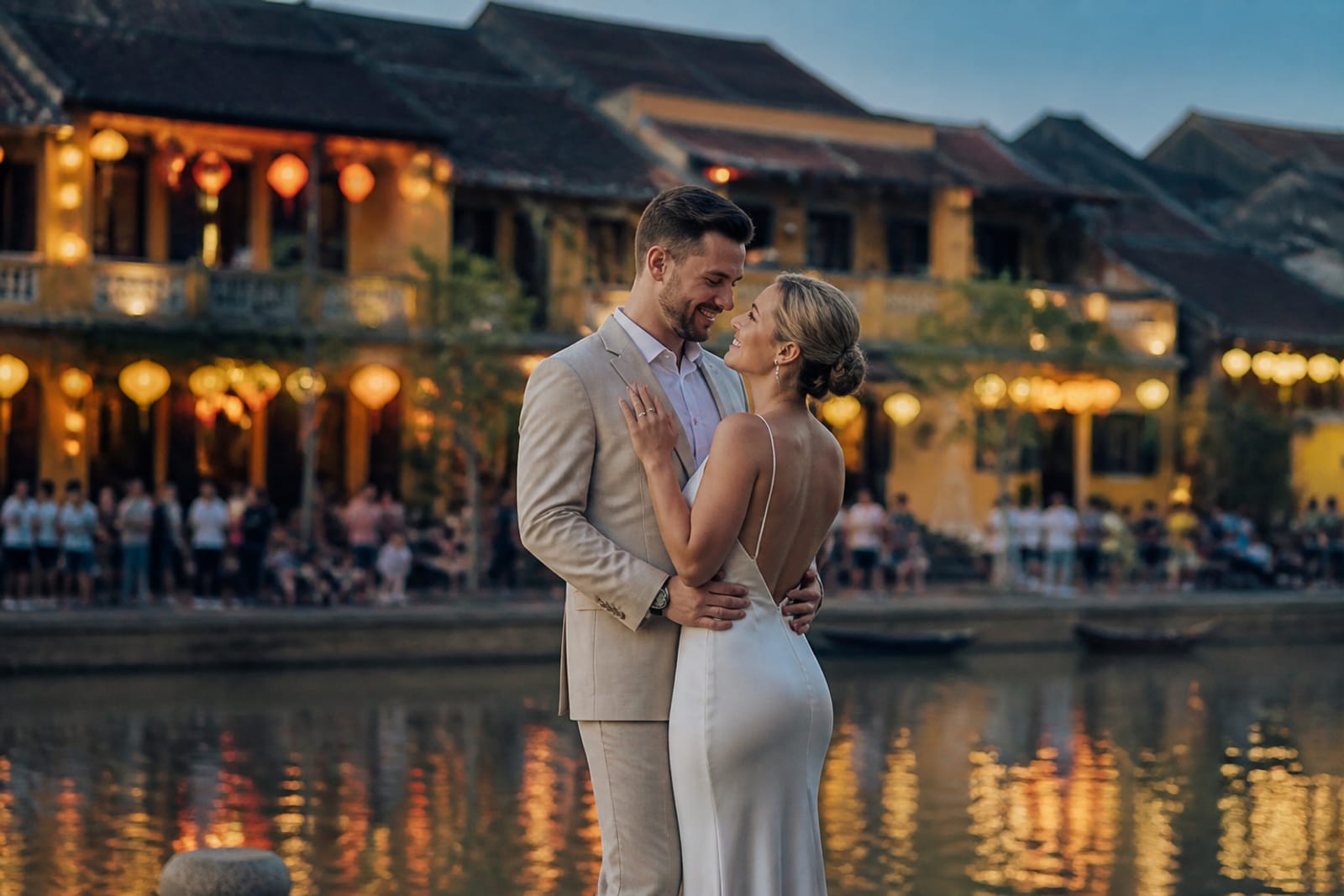
Lanterns light at dusk, but evening interiors rely on lantern glow and harsh outdoor neon from nearby shops—light quality is uneven. Dusk exterior shots work beautifully, but the temple closes to visitors by 9 p.m., limiting time. We recommend sunrise for interior intimacy and a sunset return for exterior lantern frames if schedule permits.
What's the difference between shooting here and at a full-service wedding venue in Hoi An?
Phuc Kien is an intimate heritage space—no catering, no guest capacity, no styled tables. It suits 2–4 people (couple + parents or one witness). Full venues offer ceremony, reception, and rental setup; elopement at temples means you curate the experience and keep it personal. Both work; it depends on your vision.
Is an ao dai required, or can we wear wedding attire?
Ao dai is traditional and visually stunning against carved wood; Western wedding dress works if you cover shoulders and legs with a shawl or overlay. Trousers and formal shirts photograph richly too. Wear what feels like you—the temple's architecture flatters all modest styles. Check our ao dai rental page for options.
How much does an elopement photoshoot at Phuc Kien cost, and what's included?
Pricing depends on session length, location add-ons (other temples, rice fields, streets), and image delivery options. We send custom quotes on WhatsApp based on your needs—no hidden fees. See our pricing page for package frameworks and contact us for your specific scenario.
FAQ
Do we need permission from the temple to shoot elopement photos inside Phuc Kien?
Phuc Kien is an active temple open to visitors. We coordinate entry timing with you and manage respect for worshippers; formal permits aren't required, but arriving at dawn and stepping aside for prayers is essential. We handle the logistics so you focus on each other.
Can we shoot elopement photos at Phuc Kien in the evening with lanterns lit?
Lanterns light at dusk, but evening interiors rely on lantern glow and harsh outdoor neon from nearby shops—light quality is uneven. Dusk exterior shots work beautifully, but the temple closes to visitors by 9 p.m., limiting time. We recommend sunrise for interior intimacy and a sunset return for exterior lantern frames if schedule permits.
What's the difference between shooting here and at a full-service wedding venue in Hoi An?
Phuc Kien is an intimate heritage space—no catering, no guest capacity, no styled tables. It suits 2–4 people (couple + parents or one witness). Full venues offer ceremony, reception, and rental setup; elopement at temples means you curate the experience and keep it personal. Both work; it depends on your vision.
Is an ao dai required, or can we wear wedding attire?
Ao dai is traditional and visually stunning against carved wood; Western wedding dress works if you cover shoulders and legs with a shawl or overlay. Trousers and formal shirts photograph richly too. Wear what feels like you—the temple's architecture flatters all modest styles. Check our [ao dai rental page](/ao-dai-rental) for options.
How much does an elopement photoshoot at Phuc Kien cost, and what's included?
Pricing depends on session length, location add-ons (other temples, rice fields, streets), and image delivery options. We send custom quotes on WhatsApp based on your needs—no hidden fees. See our [pricing page](/pricing) for package frameworks and contact us for your specific scenario.
Ao dai, makeup, hair and a local photographer in Hanoi or Saigon — one WhatsApp message.