/pre-wedding-photoshoot
Elopement Photos at Son Tra Peninsula and Linh Ung Pagoda
Son Tra Peninsula and Linh Ung Pagoda sit on Da Nang's central coast, 20 km north of the city. Linh Ung Pagoda (on the peninsula's ridge) delivers white-washed walls, ocean backdrop, and early-morning soft light ideal for couples; Son Tra itself offers granite cliffs, pine forest, and beach access. Sessions run 2–4 hours, shot in the first or last three hours of daylight when side light defines faces and fabric. Da Nang's best photo months are February through August (cool, dry, consistent light); September to December brings typhoons, afternoon downpours, and grey skies that kill framing. Elopement shoots here need a photographer who knows the peninsula's access (permit requirements vary; Linh Ung has temple etiquette), tides for beach timing, and how to move quickly between zones. Cáo Studio operates in Hanoi, Ho Chi Minh City, and Hoi An—not Da Nang—so this guide helps you plan independently or with a local team.
Why do elopement couples choose Son Tra Peninsula?
Son Tra is Da Nang's quietest coastal zone: granite outcrops, wind-shaped pines, and minimal crowds at dawn. The peninsula's ridge offers a prayer-flag temple (Linh Ung) with uncluttered ocean views—no resort shadows or tour groups during golden hour. Couples value this because a true elopement (just two people, one photographer, no audience) needs location silence and clean light. The trade-off is access: the pagoda sits ~12 km up a winding coastal road; beach zones require walking 500 m+ over uneven terrain. Best light windows are 5:30–7:00 am (sunrise, soft side light on faces) and 5:00–6:30 pm (sunset, warm glow if skies clear). Linh Ung's morning light is softer and steadier because sea breezes push cloud cover inland by then.
How does Da Nang's season and weather affect your shoot dates?
Da Nang sits on Vietnam's central coast, with the same dry-season window as Hoi An: February through August offers consistent morning light, minimal rain, and predictable 6+ hour shooting slots. May–August are hot (30–33°C) and humid, which strains makeup and demands frequent touch-ups; February–April are cooler (22–26°C) and most reliable for light continuity. September to December is typhoon and flood season—not a hard no, but risky: October–November see 3–5 rainy days per week, grey mornings lasting past 10 am, and afternoon downpours that cancel shoots with zero notice. Winter (Dec–Feb) is coolest and driest, but seas are choppy (affecting beach framing) and morning mist lingers until 7:30+ am on the peninsula. Plan around a clear-sky forecast, not just a calendar month, because Da Nang's central-coast weather shifts week to week.
| Shoot Window | Best For | Light Quality | Why It Works |
|---|---|---|---|
| Feb–Apr (Cool, Dry) | Elopement, ao dai | Consistent side light 6–7 am; warm 5–6 pm | No rain risk, makeup stable 4+ hours, faces read clean |
| May–Aug (Hot, Humid) | Beach-focused, shorter slots | Strong, contrasty side light 5:30–6:30 am only | Heat demands 2-hour max sessions; light fades fast after 7:00 am |
| Sep–Dec (Wet, Typhoon) | Avoid | Grey 70% of mornings; afternoon downpours | Rain cancels shoot same-day, fog obscures pagoda backdrop |
What should you wear and how do you move on location?
Elopement outfits at Son Tra need to balance fabric weight, wind exposure, and temple etiquette. A traditional ao dai reads beautifully in wind (silk catches light and moves, framing the body in side-light shots), but the peninsula's ridge has 15–20 km/h gusts that tangle hair and flip hems—bring clips or tie the áo dài skirt loosely so wind looks natural, not chaotic. For beach or granite-outcrop shots, a flowing linen dress or silk slip works; temple visits require covered shoulders and knees (ao dai solves this; Western dresses need a scarf or jacket layered underneath). Shoes: the pagoda has stone steps and uneven courtyard; beach access requires walking shoes you can slip off for photos (no heels or delicate sandals). Movement matters more than posing: couples who walk toward each other, look at the ocean, sit on rocks, or climb steps together generate frames that feel real. A photographer who directs ("walk from the pagoda entrance toward the coast, don't look at the camera until you reach the viewpoint") captures story better than one asking you to stand still for a composed shot.
📸 Book on WhatsApp — ao dai photoshoot | 🌸 See the lookbook
Should you hire a local Da Nang photographer or coordinate from your home country?
Choosing between a local-based photographer and coordinating remotely is a practical decision based on budget, communication, and risk tolerance. A local photographer (based in Da Nang or nearby Hoi An) knows Linh Ung's access rules, temple fees, tide times, and which police checkpoints require ID; they can recce the morning light weeks before your shoot and confirm via WhatsApp that conditions are shootable. They charge less than flying a Western photographer in. The trade-off: you rely on their portfolio and reputation (check Instagram tags for Linh Ung, read captions for specifics on light/framing, not just "beautiful views"); communication is often slower or through an agent. Remote coordination (booking a photographer in Singapore, Thailand, or your home city to travel to Da Nang) gives you the security of a known style and direct contact, but costs more (flights, accommodation, local permits) and means your photographer has zero recce time—they arrive the day before and shoot blind. A hybrid option: hire a Cáo Studio team from Hoi An (25 km south; ask on WhatsApp for Da Nang coverage) or work with a Hoi An-based local who knows the central-coast light and can travel to Son Tra. Cáo Studio operates in Hanoi, Ho Chi Minh City, and Hoi An—reach out to see if Son Tra fits your dates.
What permits, timing, and logistics do you need to confirm before booking?
Linh Ung Pagoda allows photography 5:00 am–6:00 pm; a small fee is typically requested (confirm the current amount with the temple directly or your photographer). There is no formal permit for beach access on Son Tra, but the peninsula is part of Son Tra Natural Reserve—check with local authorities if you plan a large crew (anything beyond a couple + 1 photographer + 1 makeup artist may trigger questions). Timing logistics: from Da Nang city center, allow 45 minutes driving to the pagoda gate, then 15–20 minutes walking to the ridge platform where light is best. A 5:30 am start means a 4:45 am hotel pickup (aim for first light around 6:15 am). Beach and outcrop shots below the pagoda add another 1–2 hours if you descend. Makeup and hair should be done at your hotel before the drive—no electricity or reliable running water on the peninsula. Ask your photographer: (1) Do they include hair/makeup, or do you hire separately? Cáo Studio's makeup & hair service can be added to sessions in Hoi An and adjacent areas; (2) Do they scout the morning before, or shoot based on a visit months ago? (3) What is their backup plan if morning skies are grey—shoot anyway, reschedule, or a partial refund? (4) Who handles temple fees and permits, and are they built into the quote?
💄 Makeup & hair at your hotel | 🌸 See the lookbook
How do you compare Linh Ung Pagoda against other Da Nang elopement spots?
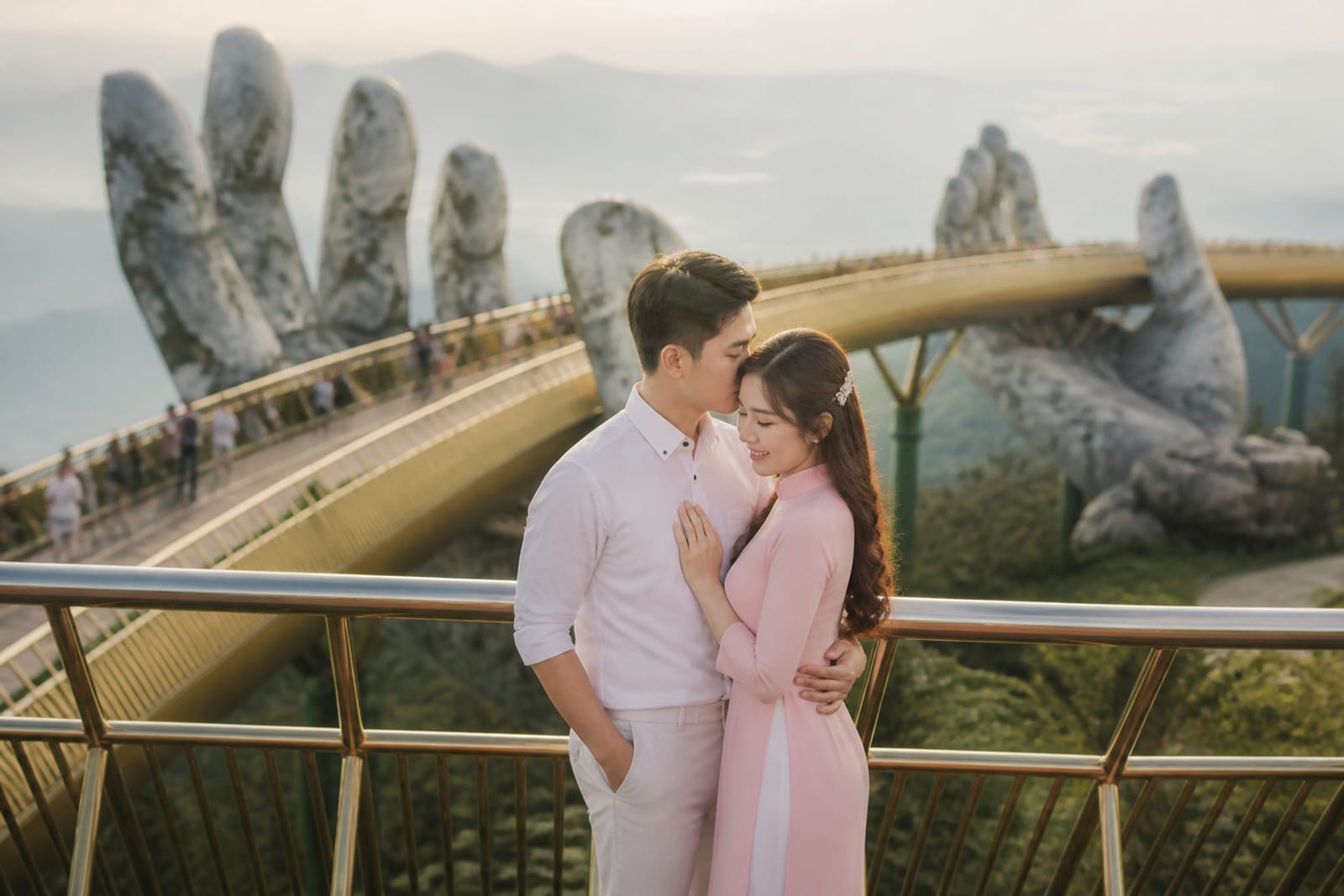
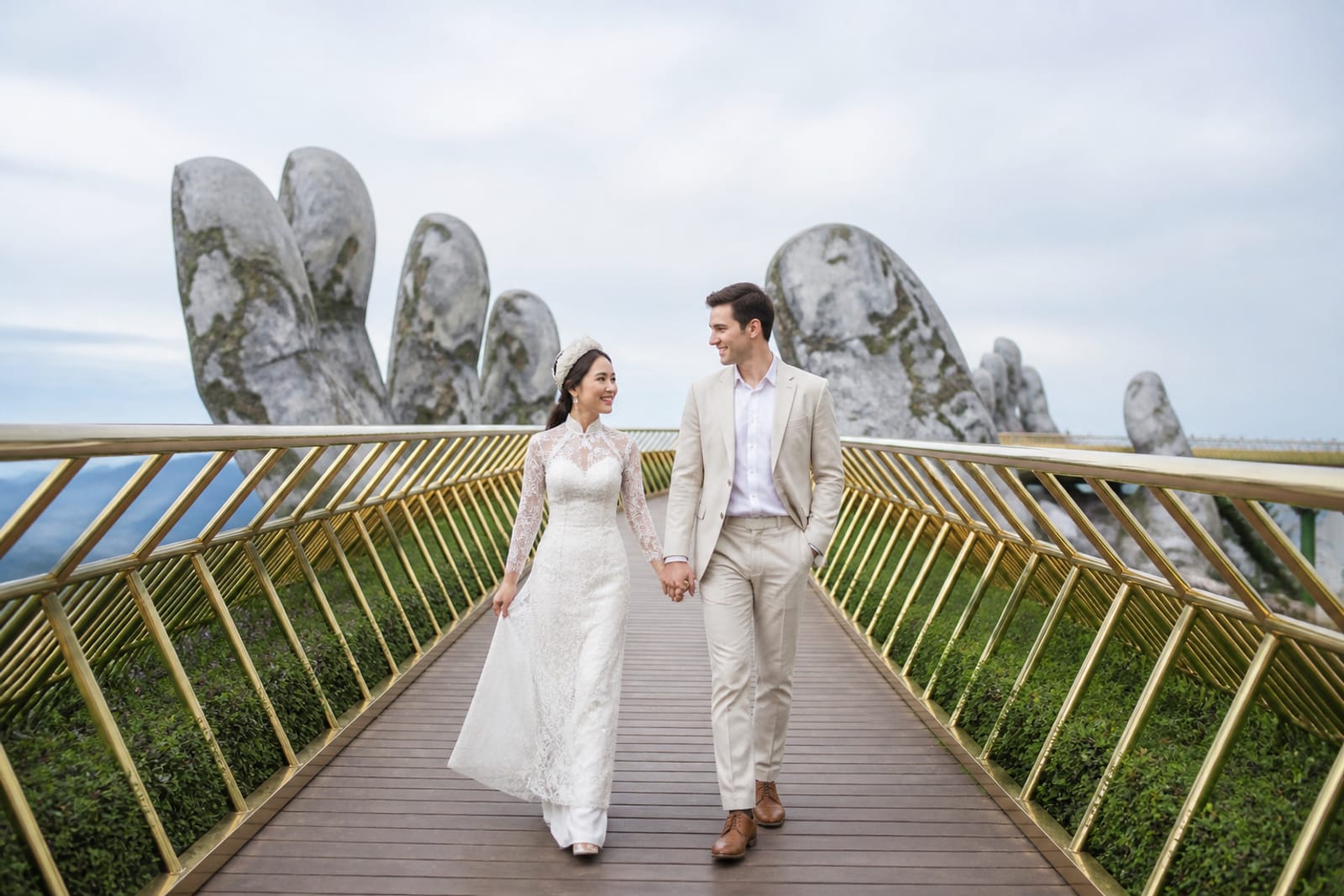
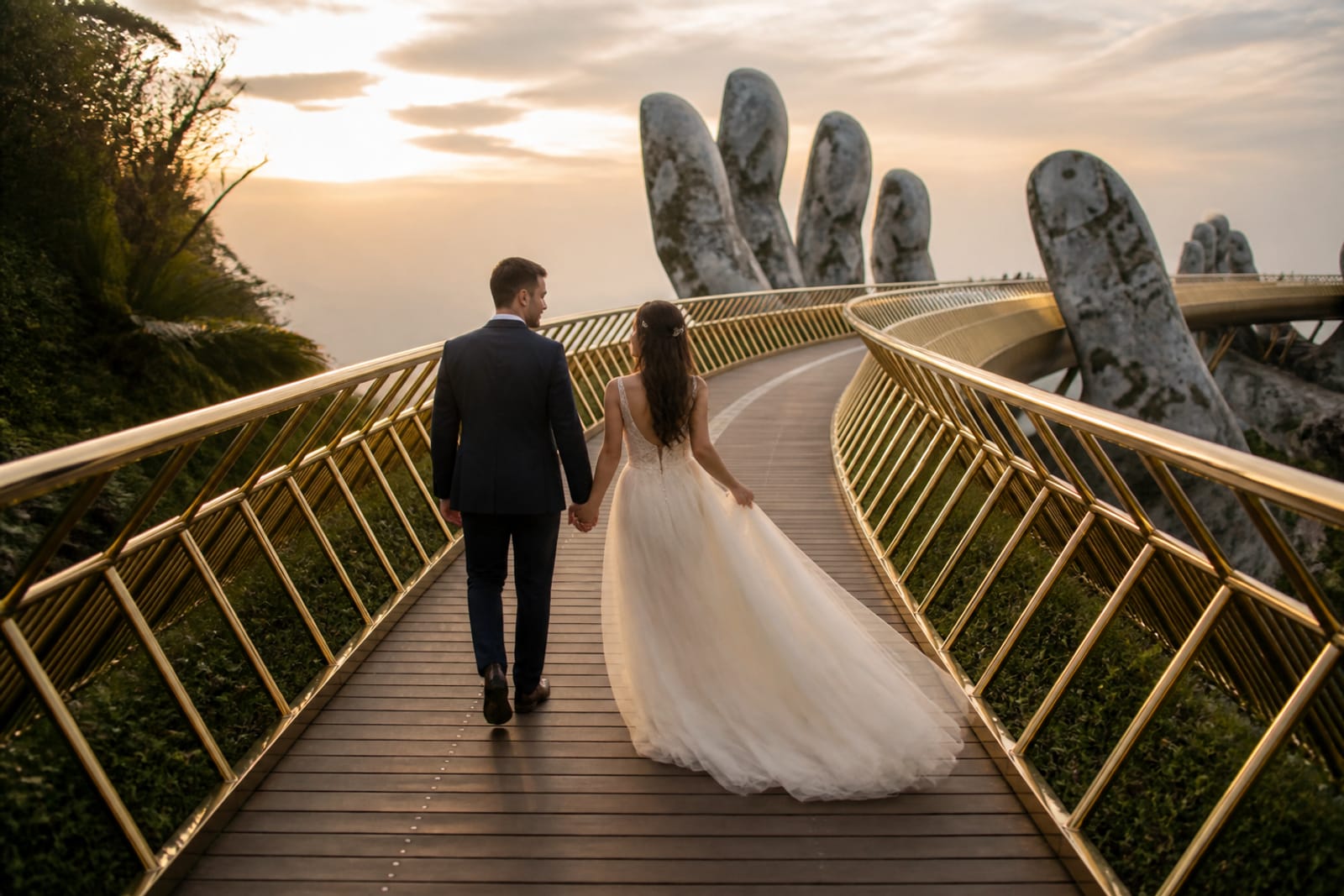
Linh Ung Pagoda and Son Tra Peninsula are often mentioned together, but they serve different moods. Linh Ung (the pagoda itself—white walls, prayer flags, ocean vista) is best for formal or spiritual-leaning elopements; the backdrop is iconic and instantly reads as "Da Nang," which appeals to couples wanting a recognizable location. The pagoda courtyard is small and narrow, so framing is tight (wide shots feel cramped, detail shots of hands/rings work beautifully). Son Tra's broader beaches, cliffs, and forest allow for wider compositions and more movement—ideal for couples who want cinematic, story-driven frames rather than iconic landmark shots. My Khe Beach (Da Nang's main strand, 2 km from the city) is easier to access and has softer sand, but it's crowded by 7:00 am and lacks privacy for an elopement (vendors, joggers, families). Ba Na Hills (1,400 m elevation, 40 km west) offers cooler temps and the famous Golden Bridge, but it's extremely crowded from mid-morning, misty most days, and the bridge is a selfie mob by 8:00 am—not ideal for intimate shoots. A couple photoshoot can span multiple sites (e.g., pagoda at sunrise, beach midday for lighter outfit, forest for detail work), which spreads the narrative across locations. Decide based on mood: Linh Ung for spiritual/iconic, Son Tra for cinematic/story, My Khe for ease (accept crowds), Ba Na for scale (but accept crowds and mist). Most elopement photographers in Da Nang recommend Linh Ung + Son Tra as a two-site session to get both intimacy and landscape drama.
📸 Book on WhatsApp — pre-wedding photoshoot | 🌸 See the lookbook
---
What to check before you book a Da Nang elopement shoot
Photographer experience: Request 3–5 elopement galleries shot at Linh Ung or Son Tra in the past 12 months. Ask specifically for full-day or 4-hour edited galleries, not just highlights. Check if their captions mention light timing ("5:45 am, soft side light on the pagoda steps") or just vague mood words.
Season and weather backup: Confirm their rescheduling policy if morning skies are grey. A transparent option: you shoot as-is (less ideal light, but frames still usable), or you reschedule once free (protects you from paying twice, but gives the photographer a safety net if weather is poor).
Outfit logistics: Ask if makeup and hair are included or booked separately. If separate, use Cáo Studio's makeup & hair service or arrange a local artist who works from your hotel and is ready by 4:00 am.
Permit and access fees: Who pays for Linh Ung temple fees? Are they included in the quote or added on the day? Who communicates with the temple about access times?
Delivery timeline: How long until edited photos and any video are ready? (Typical is 2–4 weeks.) Ask for a specific date, not "within a month."
---
Next steps: book a pre-wedding photoshoot or coordinate your Da Nang shoot
Cáo Studio specializes in pre-wedding and elopement shoots across Hanoi, Ho Chi Minh City, and Hoi An. If your elopement falls in Hoi An or you're open to combining a Hoi An session with a separate Da Nang day, ask us on WhatsApp—we can discuss whether a Cáo Studio team travels to Son Tra or if coordinating with a trusted local partner makes sense for your timeline. If you're committing to Da Nang alone, use this guide to vet photographers by experience (Linh Ung galleries, light-specific captions), season (Feb–Aug preferred, avoid Sep–Dec), and logistics (makeup on-site, permit handling, weather backup). Either way, book 8–12 weeks ahead to secure morning time slots and allow your photographer recce time.
FAQ
What is the best time of year to shoot an elopement at Son Tra Peninsula?
February through August; dry, consistent light, and stable morning temperatures. Avoid September–December (typhoon season, grey skies, rain risk). Book 8–12 weeks in advance to secure early-morning slots and permit access.
Do I need a permit to shoot at Linh Ung Pagoda?
Linh Ung allows photography during visiting hours (5:00 am–6:00 pm) with a small temple fee; confirm the current amount with the pagoda or your photographer. No formal photography permit is required, but temple etiquette rules apply (covered shoulders/knees, quiet movement).
Can I get married or legally elope at Linh Ung Pagoda?
Linh Ung is a Buddhist temple, not a civil registry office. You cannot legally marry there, but you can hold an elopement photoshoot and blessing ceremony if arranged with the monks in advance. Contact the temple directly or ask a local photographer to coordinate.
How do I choose between Linh Ung Pagoda and Son Tra's beaches for my elopement shoot?
Linh Ung offers iconic, tight framing and spiritual mood; Son Tra's beaches and cliffs allow cinematic, wide compositions and more movement. Many couples shoot both in one 4–6 hour session: pagoda at sunrise, then descend to beach or outcrop for warmer-light frames.
Should I hire a local Da Nang photographer or one from my home country?
Local photographers cost less and know access/permits/light timing; ask for Linh Ung/Son Tra galleries shot in the past year. Flying a photographer in costs more but gives you a known style and direct contact—book 12+ weeks ahead for scout time.
What should I wear for an elopement shoot at Son Tra Peninsula?
Ao dai or flowing linen dress (wind reads beautifully); avoid heels (uneven stone steps and sand). Layer a scarf or jacket under Western dresses for temple access. Bring clips for wind; plan hair/makeup at your hotel before the 45-minute drive to the pagoda.
Can Cáo Studio shoot an elopement at Son Tra or Da Nang?
Cáo Studio operates in Hanoi, Ho Chi Minh City, and Hoi An. Hoi An is 25 km south of Da Nang—ask on WhatsApp if a Cáo Studio team can coordinate a Son Tra shoot or if a local partner is recommended.
FAQ
What is the best time of year to shoot an elopement at Son Tra Peninsula?
February through August; dry, consistent light, and stable morning temperatures. Avoid September–December (typhoon season, grey skies, rain risk). Book 8–12 weeks in advance to secure early-morning slots and permit access.
Do I need a permit to shoot at Linh Ung Pagoda?
Linh Ung allows photography during visiting hours (5:00 am–6:00 pm) with a small temple fee; confirm the current amount with the pagoda or your photographer. No formal photography permit is required, but temple etiquette rules apply (covered shoulders/knees, quiet movement).
Can I get married or legally elope at Linh Ung Pagoda?
Linh Ung is a Buddhist temple, not a civil registry office. You cannot legally marry there, but you can hold an elopement photoshoot and blessing ceremony if arranged with the monks in advance. Contact the temple directly or ask a local photographer to coordinate.
How do I choose between Linh Ung Pagoda and Son Tra's beaches for my elopement shoot?
Linh Ung offers iconic, tight framing and spiritual mood; Son Tra's beaches and cliffs allow cinematic, wide compositions and more movement. Many couples shoot both in one 4–6 hour session: pagoda at sunrise, then descend to beach or outcrop for warmer-light frames.
Should I hire a local Da Nang photographer or one from my home country?
Local photographers cost less and know access/permits/light timing; ask for Linh Ung/Son Tra galleries shot in the past year. Flying a photographer in costs more but gives you a known style and direct contact—book 12+ weeks ahead for scout time.
What should I wear for an elopement shoot at Son Tra Peninsula?
Ao dai or flowing linen dress (wind reads beautifully); avoid heels (uneven stone steps and sand). Layer a scarf or jacket under Western dresses for temple access. Bring clips for wind; plan hair/makeup at your hotel before the 45-minute drive to the pagoda.
Can Cáo Studio shoot an elopement at Son Tra or Da Nang?
Cáo Studio operates in Hanoi, Ho Chi Minh City, and Hoi An. Hoi An is 25 km south of Da Nang—ask on WhatsApp if a Cáo Studio team can coordinate a Son Tra shoot or if a local partner is recommended.
Ao dai, makeup, hair and a local photographer in Hanoi or Saigon — one WhatsApp message.