/pre-wedding-photoshoot
Elopement photos at Ta Van village: guide & booking
Ta Van is a Black Hmong village in Sapa's valley, 9 km from town center, where rice terraces and homestays create intimate backdrops for elopement shoots. A one-team session (photographer, makeup artist, stylist) shoots for 2–3 hours, typically at sunrise (6–7 am) when side light hits the paddies and foot traffic is low. Couples bring or rent an ao dai or Western dress; the team directs walking, looking, sitting—never stiff poses—and delivers edited photos in 48 hours. Logistics: Sapa is a 5-hour drive from Hanoi; Ta Van itself has no paved road (muddy or dusty depending on season) and limited power/water. Costs factor in travel time, makeup/hair, outfit rental, and seasonal weather (best Mar–May, Sep–Nov). Cáo Studio does not operate in Sapa; hire a vetted local photographer familiar with Hmong etiquette and early light. Before booking, confirm the photographer's experience with elopement timing, terrain difficulty, and delivery speed. ---
Why Ta Van works for elopement light and mood
Ta Van's valley slopes face east and south; morning sun grazes the terraces from the side, casting long shadows and depth—ideal for storytelling frames. At 6–7 am, mist often lingers in the low paddies, softening harsh sun. By 9 am, light becomes direct and flat. No crowds before 8 am; villagers are in fields or homes. Fog can disappear by late May or return by early October, so weather predictability matters for timing. Shoot early or reschedule; midday sun on bare terraces is flat and unflattering. The homestay grounds (stone walls, wooden doors, heirloom textiles) work as secondary frames in overcast spells. Conclusion: Ta Van's morning light suits intimate, directed elopement storytelling better than Sapa town's tourist crowds.
📸 Book on WhatsApp — pre-wedding & elopement
How to dress for Ta Van's terrain and culture
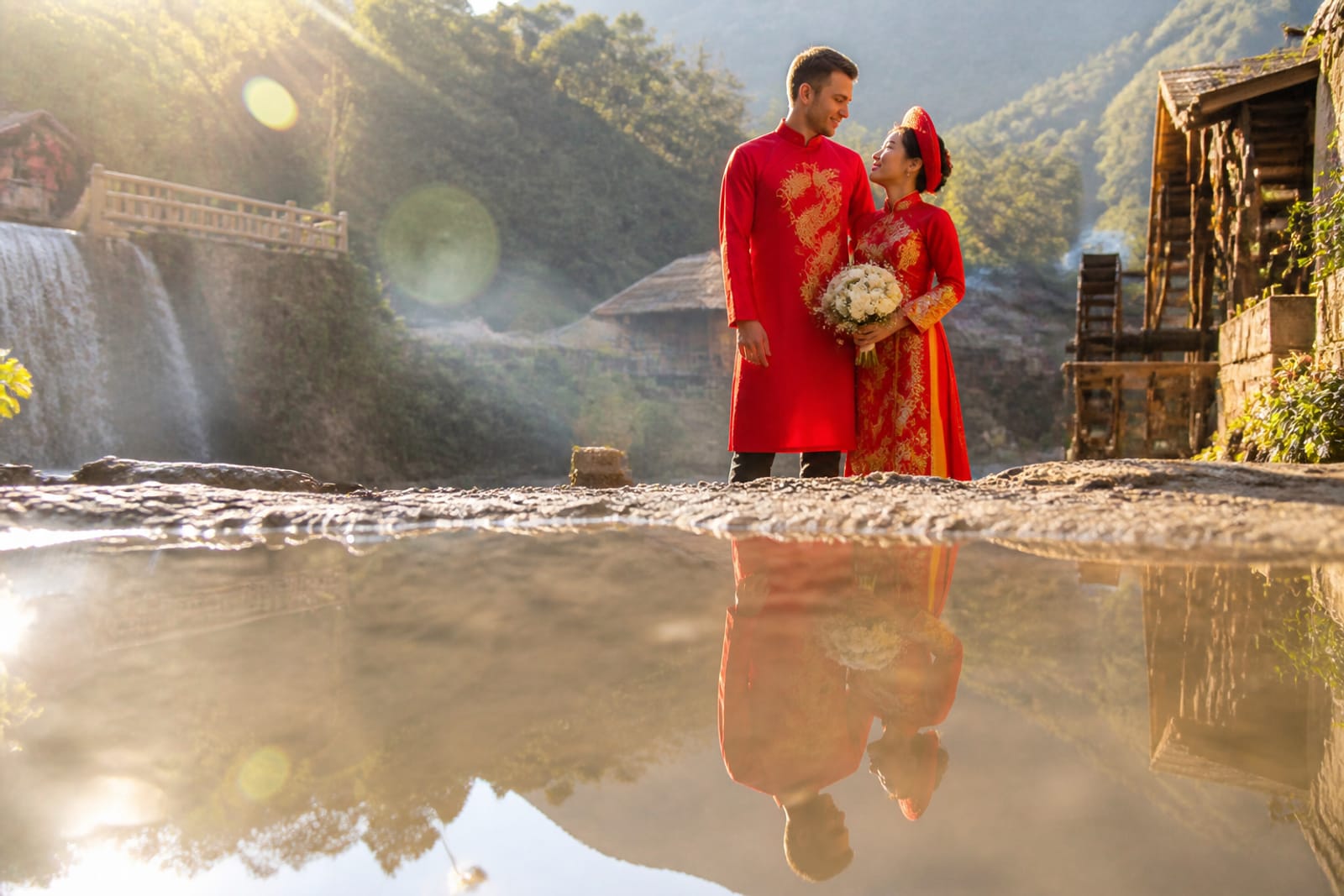
Wearing an ao dai on a muddy or rocky village path demands practical choices. Rent or bring a mid-length ao dai (knee-length splits) rather than floor-length; ankle-height silk shows off footwork and lets you walk safely on uneven stone. Layers underneath matter: thick leggings or slip shorts prevent chafing and ease of movement on hillsides. Grooms in ao gam (traditional silk trousers and tunic) or Western suits face the same terrain challenge—check cuff length and shoe grip before dawn. Bare feet on wet stone are unsafe; wear soft leather flats or hiking-grade sandals off-frame, change for close-ups. Hmong villagers appreciate modest dress; exposed shoulders or very short hems can feel disrespectful, especially at dawn when elders are present. Ask your photographer to time a costume change (ao dai to casual, or vice versa) for mid-shoot, when light shifts and energy resets. Conclusion: practical, layered, ankle-appropriate dress lets you move authentically without slipping or offending.
| Outfit choice | Best for | Ta Van fit | Why it works |
|---|---|---|---|
| Ao dai (knee-length, split to waist) | Couples seeking cultural frames | Excellent | Flows on slopes; shows footwork; rents locally |
| Western wedding dress (mid-calf or midi) | Non-Vietnamese tradition | Good | Easier terrain wear; less cultural weight; pair with local shawl |
| Ao gam + tunic (groom) | Male cultural anchor | Excellent | Built for village life; sits well on stone; dignified |
| Smart casual + local scarf | Intimate, low-key vibe | Good | Blends in; moves freely; lighter luggage |
What to expect during an elopement shoot in Ta Van
A 2–3 hour morning session starts with makeup and hair (45–60 min) at your homestay or a quiet side room, then shooting begins at first light. The photographer directs: "Walk toward that terraced edge, look at each other, keep moving"—not "smile at the camera." First, wide frames show you in the landscape; then medium shots capture expressions and motion; close details (hands, rings, tears) follow. You'll visit 2–4 locations (terrace paths, a homestay doorway, a stream or tree line, perhaps a neighbor's field with permission). Walking takes time; expect 15–20 minutes between frames. A break halfway through hydrates you and lets light shift. The photographer shoots raw, culls to final edits within 48 hours, and sends a digital gallery (edited JPEGs and a short vertical video). Physical prints or albums are optional add-ons. Conclusion: elopement shoots are active, low-pressure, and paced by natural light—not a formal event.
Season, weather and rescheduling: what to plan for
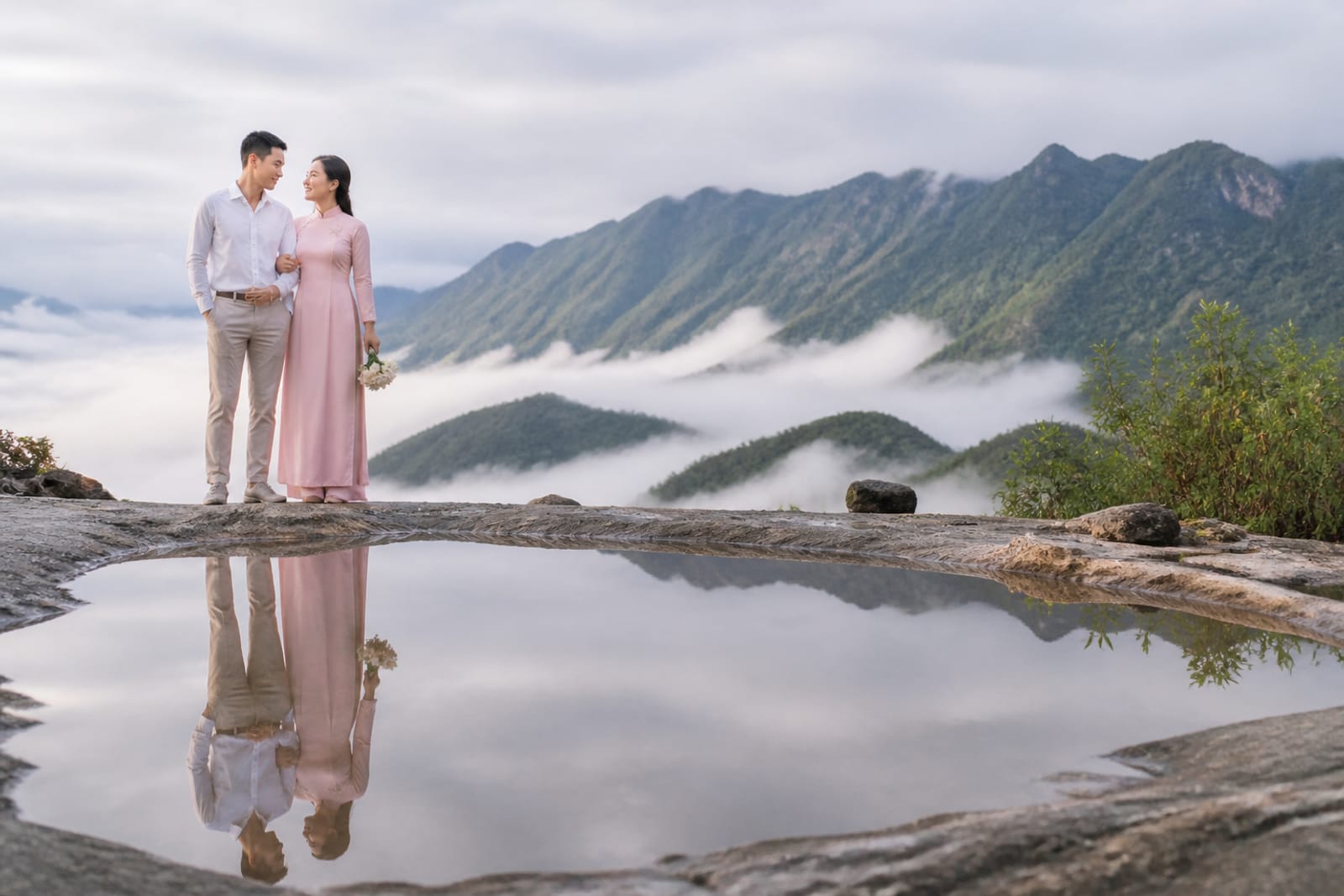
Sapa has distinct seasons; Ta Van's photo conditions vary sharply by month. March to May brings mild temps (10–20°C), clear mornings, green terraces, but occasional late-winter rain; sunrise mist is predictable and photogenic. June to August is warm and wet (frequent afternoon downpours, less predictable morning light); rice is tallest, lush, but paddies can flood and paths slick. September to November is harvest time (golden terraces, crisp air, 15–18°C), often the clearest light window; early October can still see typhoon spillover from coastal areas. December to February is cold (near 0°C), foggy, and grey; frost or rare snow adds drama but requires cold-hardy logistics. Tet (late Jan–mid Feb) disrupts village routines and homestay availability. Best windows: mid-March to late May, late September to early November. Rain can delay or eliminate a shoot; confirm your photographer's rescheduling policy before booking. Conclusion: March–May and September–November offer the most reliable light; plan flexibility for weather delays.
Hiring a local elopement photographer: vetting checklist
Cáo Studio does not operate in Sapa, so you'll need a vetted local photographer. Ask potential hires for a portfolio specific to Ta Van or similar Hmong villages (not Sapa town portraits). Confirm they've shot elopements (sunrise timing, emotion-focused direction, not posed monuments). Request their editing turnaround (48–72 hours is standard); check a sample gallery for color grading you like. Verify they carry backup gear (second camera, extra batteries, memory cards) for remote locations with no power. Ask about their relationship with Ta Van homestay owners and permission protocols (some homestays charge a small fee for filming; some villages have informal etiquette rules—your photographer should know these). Confirm they have transport to Ta Van (a 4WD or jeep for muddy roads) and can arrive by 5:45 am for a 6 am shoot. Check their liability insurance and emergency contact. Request a written confirmation of the session date, time, locations, outfit(s), number of edited files, and delivery format. Conclusion: vet for portfolio, timing reliability, local knowledge, and communication—not price alone.
Comparing Ta Van elopement to other Sapa options
| Location | Best for | Light quality | Access & effort | Cultural feel |
|---|---|---|---|---|
| Ta Van village terraces | Intimate, storytelling light | Soft morning gradients; mist; depth | Muddy path; 45 min drive; early start | Authentic Hmong life |
| Fansipan summit | Dramatic altitude & views | Clear, but often windy; harsh noon sun | Cable car + hike; crowds; altitude sickness risk | Tourist viewpoint |
| Silver Waterfall | Romantic cascade backdrop | Shaded, moody; good overcast days | Paved parking + 10 min walk; moderate crowds | Scenic but generic |
| Sapa town center | Convenient, central | Uneven urban light; tourist crowds | Walking distance; busy mornings | Commercialized |
Ta Van wins for narrative light and privacy; Fansipan suits dramatic altitude seekers (but light is harsh and crowds are heavy). Silver Waterfall is a backup if Ta Van is rained out. Sapa town is fastest logistics but lowest light quality for storytelling elopements.
---
What to check before you book an elopement shoot in Ta Van
Photographer's village experience: Ask if they've shot Ta Van before and can speak to current access (muddy vs. dusty roads, homestay availability). A first-timer can miss light windows and etiquette cues.
Rescheduling policy: Confirm what happens if weather forces a postponement—do they offer a free re-shoot within X days, or a refund? Early morning shoots depend on weather luck.
Outfit logistics: If renting ao dai or groom suit locally, check size availability and backup options. Confirm whether the photographer's stylist sources these or if you arrange independently.
Travel cost factors: Ask whether the photographer charges a separate fee for the drive from Hanoi or Sapa town. Timing (very early start) and distance (9 km uphill) increase crew costs; confirm this is transparent in your quote.
Edited file count and format: How many final images? Are raw files included, or only JPEGs? When does a short video (if promised) arrive? Check the delivery format suits your needs (cloud link, USB, prints).
Homestay permission: Confirm the photographer can secure permission from your homestay to shoot on-site, and whether any fees or gifts apply.
---
For elopement shoots in Hanoi or Ho Chi Minh City, Cáo Studio handles all logistics as one team—makeup, hair, styling, and photography in a single booking, with no travel delays or vendor gaps. If you're planning a broader pre-wedding photoshoot across Vietnam or considering an ao dai photoshoot elsewhere, our Hanoi and Saigon teams are ready to direct. For Ta Van, hire locally and use this guide to vet wisely.
📸 Book on WhatsApp — pre-wedding & elopement
---
FAQ
Is Ta Van accessible in rainy season?
Muddy paths are harder to navigate and light becomes unpredictable in Jun–Aug and Sep–Dec (depending on typhoons). Mar–May and Sep–Nov are more reliable; always confirm current road conditions with your photographer a week before.
Do I need a permit to shoot in Ta Van village?
No formal national permit is required, but homestays and some community areas expect courtesy notice. Your photographer should coordinate with homestay owners and village liaisons to avoid conflicts or unexpected fees.
Can I wear a Western wedding dress in Ta Van?
Yes, but choose a midi or knee-length cut for muddy terrain. Pair it with a local scarf or shawl to show cultural respect. Avoid heavy beading or long trains that snag on stone paths.
What time should we arrive in Ta Van for an elopement shoot?
Arrive the evening before or by 5:30 am if driving from Sapa town. A 6 am shoot start requires makeup by 5 am. Factor 45 min from Sapa town center, longer if roads are wet.
How many final edited photos do I get from a 2–3 hour elopement session?
This varies by photographer; typical elopement deliverables range from 50–150 edited images. Always confirm the exact count, file format (JPEG, RAW), and delivery timeline (48–72 hours) before booking.
Will I see a video as well as photos?
Many photographers offer a short vertical video (1–3 min) as part of elopement packages, but this is not guaranteed. Ask explicitly whether a video, highlight reel, or teaser clip is included.
Should we hire a videographer separately or ask the photographer to shoot both?
One person balancing both roles often compromises video quality. If video matters, hire a dedicated videographer or confirm your photographer has equal skill and gear for both mediums.
FAQ
Is Ta Van accessible in rainy season?
Muddy paths are harder to navigate and light becomes unpredictable in Jun–Aug and Sep–Dec (depending on typhoons). Mar–May and Sep–Nov are more reliable; always confirm current road conditions with your photographer a week before.
Do I need a permit to shoot in Ta Van village?
No formal national permit is required, but homestays and some community areas expect courtesy notice. Your photographer should coordinate with homestay owners and village liaisons to avoid conflicts or unexpected fees.
Can I wear a Western wedding dress in Ta Van?
Yes, but choose a midi or knee-length cut for muddy terrain. Pair it with a local scarf or shawl to show cultural respect. Avoid heavy beading or long trains that snag on stone paths.
What time should we arrive in Ta Van for an elopement shoot?
Arrive the evening before or by 5:30 am if driving from Sapa town. A 6 am shoot start requires makeup by 5 am. Factor 45 min from Sapa town center, longer if roads are wet.
How many final edited photos do I get from a 2–3 hour elopement session?
This varies by photographer; typical elopement deliverables range from 50–150 edited images. Always confirm the exact count, file format (JPEG, RAW), and delivery timeline (48–72 hours) before booking.
Will I see a video as well as photos?
Many photographers offer a short vertical video (1–3 min) as part of elopement packages, but this is not guaranteed. Ask explicitly whether a video, highlight reel, or teaser clip is included.
Should we hire a videographer separately or ask the photographer to shoot both?
One person balancing both roles often compromises video quality. If video matters, hire a dedicated videographer or confirm your photographer has equal skill and gear for both mediums.
Ao dai, makeup, hair and a local photographer in Hanoi or Saigon — one WhatsApp message.