/pre-wedding-photoshoot
Elopement Photos at Thanh Ha Pottery Village: Guides & Booking
An elopement photoshoot at Thanh Ha pottery village is an intimate session, typically 2–4 hours, in a working craft village where terracotta artisans have operated for centuries. The soft clay walls, kiln smoke, and narrow lanes create layered, natural frames without crowds. Sessions run best Feb–Aug (dry season in central Vietnam); avoid Oct–Nov (rainy and flooded). You can shoot in your own clothes, rent an áo dài for authenticity, or mix both. Cáo Studio – Makeup & Photoshoot (Hoi An by appointment) arranges location access, timing around artisans' schedules, and light scouting; confirm exact inclusions on WhatsApp before booking. Most couples choose sunrise (quieter, softer light, artisans not yet working) or late afternoon (golden hour, some activity visible). Skip midday (harsh shadows, intense heat, full foot traffic). ---
Why Thanh Ha pottery village works for elopement photos
Thanh Ha is a functional village, not a museum or theme park—artisans still hand-throw pots and fire kilns daily. This means light, texture, and human activity shift throughout your shoot window. The clay-colored buildings reflect and diffuse sun naturally; brick pathways and stacked pottery create depth without needing set dressing. Crowds thin before 7 a.m. and after 5 p.m., so your intimate moment stays intimate. The village sits about 3 km inland from Hoi An Ancient Town, accessible by scooter or car in minutes, but feels worlds away from tour groups. For couples wanting "real Vietnam" over polished backdrops, Thanh Ha's working rhythm is unbeatable.
What time of day gives the best elopement light?
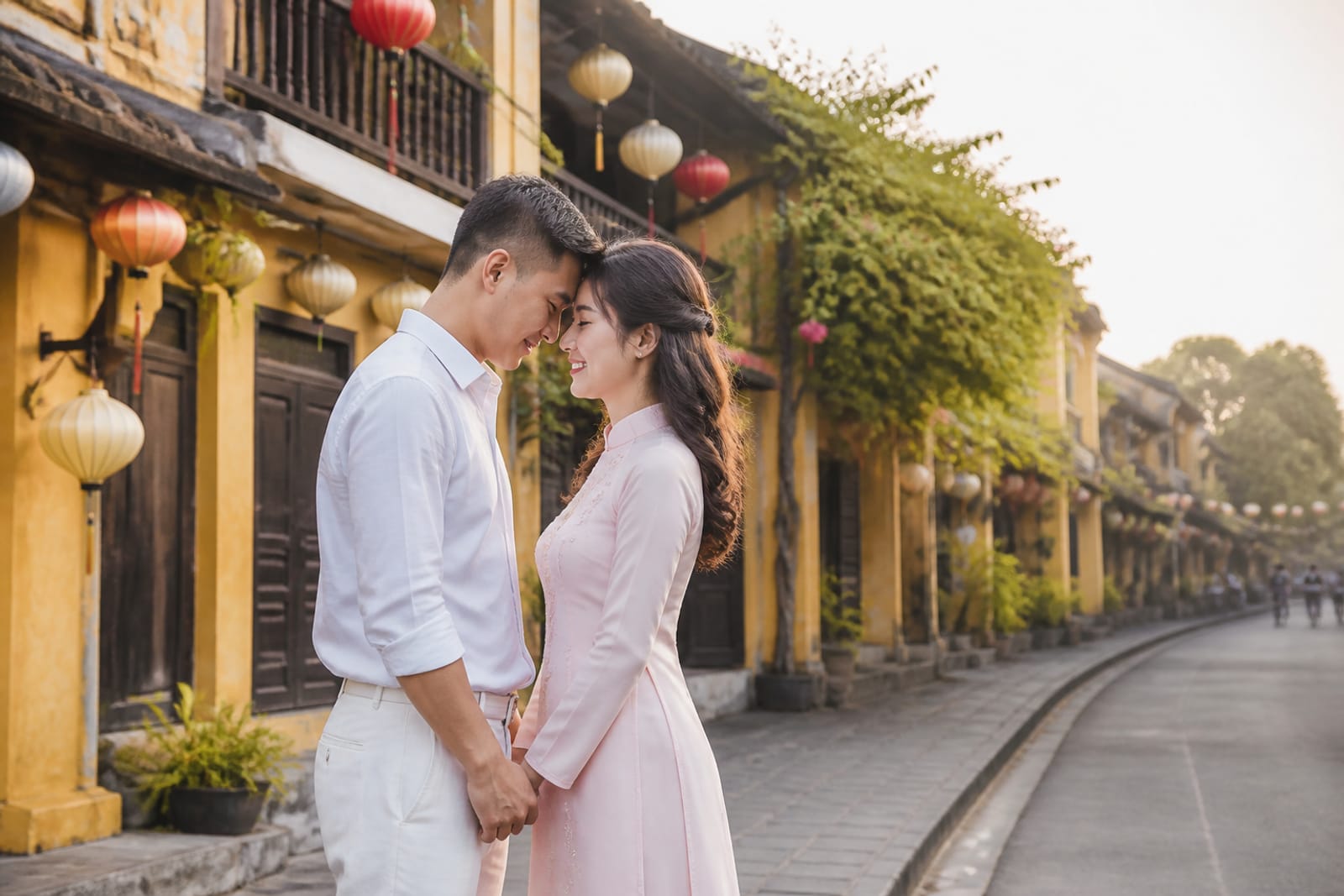
Sunrise (5:30–6:30 a.m.) is the quietest and softest: warm amber light, few visitors, kiln fires still glowing, morning mist lingering between buildings. Shadows are long but directional—ideal for intimate portraits and detail shots (hands, rings, fabric). Artisans haven't arrived yet, so you move freely; smoke from overnight kiln fires adds atmospheric depth. Downsides: you must start very early, and light changes fast (30–45 minutes of premium quality).
Late afternoon (4:00–5:30 p.m.) offers golden hour without the rush. Light is warm and low-angled, suitable for full-body frames and movement shots. A few artisans are still working, adding natural context; you may capture potters at their wheels, which tells a story beyond a couple pose. Light lasts longer (90+ minutes) than sunrise. Downside: casual visitors are present but thinning, so framing requires care to avoid strangers.
Midday (10 a.m.–3 p.m.) is generally poor—direct, harsh shadows on clay walls, intense heat, peak foot traffic, and flat light that dulls the artisanal texture. Avoid this window.
| Time | Best for | Light quality | Crowds | Artisan activity |
|---|---|---|---|---|
| Sunrise (5:30–6:30) | Intimate, moody portraits | Warm, diffused, directional | Near-empty | Kilns still hot; no workers |
| Late afternoon (4–5:30) | Movement, storytelling, full frames | Golden, warm, long-lasting | Light thinning | Some potters still present |
| Midday (10–3) | Not recommended | Harsh, flat, blown highlights | Busy with tours | Full village activity |
📸 Book on WhatsApp — ao dai photoshoot
Should you wear áo dài, casual clothes, or both?
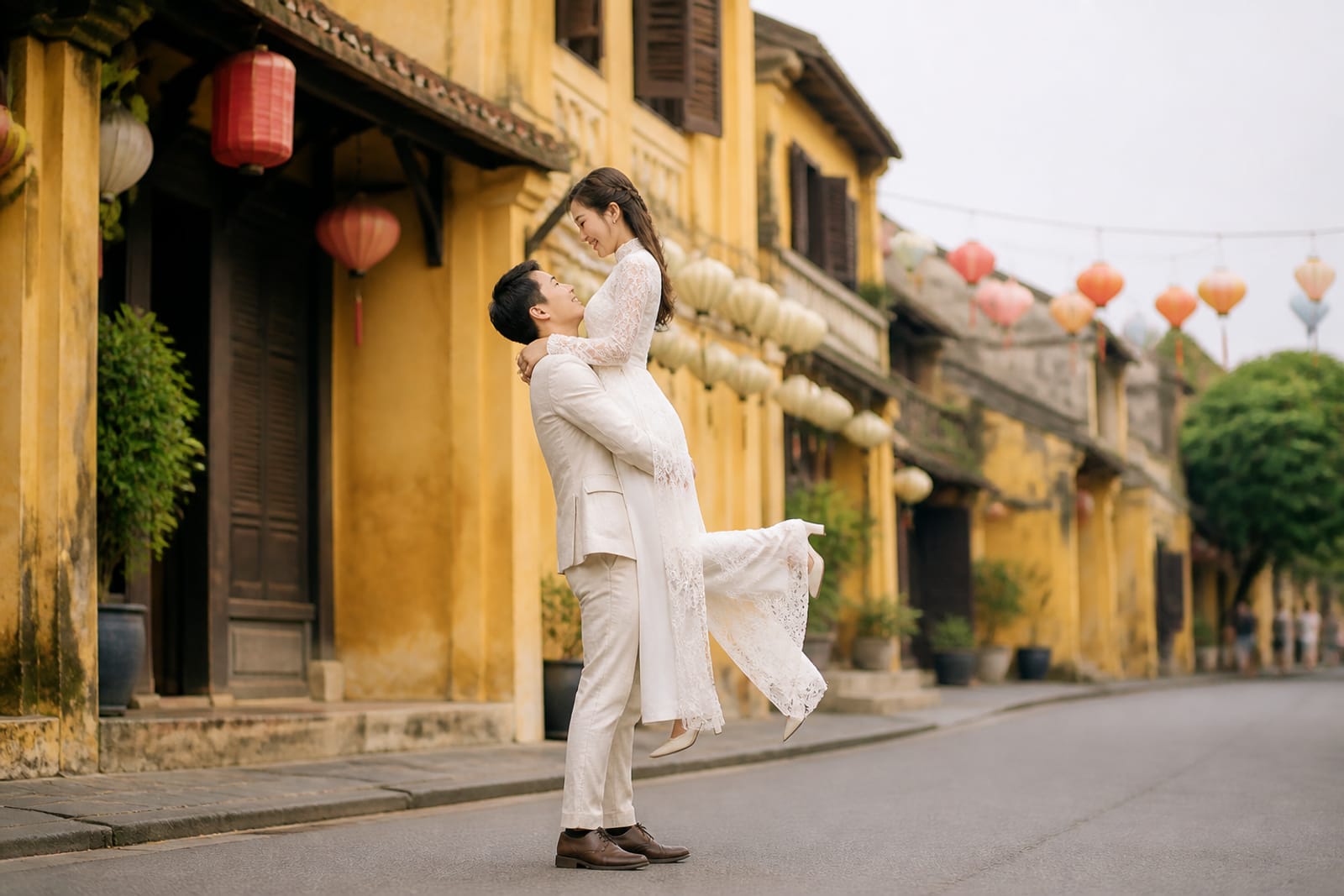
Áo dài rented locally is the traditional choice and photographs beautifully against clay. The tunic's flowing sleeves and high neckline frame pottery and kiln doorways; the silk catches early and late light. Rental options exist in Hoi An (ask us on WhatsApp for links), and many couples rent a set for their partner too. Áo dài requires careful movement on uneven paths and can pick up kiln dust, so plan for cleanup afterward.
Your own clothes give a personal, everyday feel—jeans, linen, a simple shirt. Neutral, muted tones work best (cream, taupe, grey) to echo the clay palette; bright colors compete with the backdrop. Casual wear suits couples who want to focus on connection rather than costume, and it's practical for sitting on clay pots or perching on walls.
Both options (bring two outfits) lets you move from formal áo dài in early light to comfort clothes for later shots. This works if your session runs 3+ hours and you want range in the final set.
| Option | Best for | Light + location pairing | Practical note |
|---|---|---|---|
| Áo dài (rented) | Traditional, formal, editorial look | Sunrise (silk catches soft light), any narrow lane | Dust risk; needs careful stepping |
| Your own clothes | Intimate, personal, candid feel | Late afternoon golden (earth tones blend); sitting shots | Neutral tones anchor, bright colors compete |
| Two outfits | Variety, longer session storytelling | Áo dài sunrise, casual clothes golden hour | Requires 3+ hour booking and changing space |
How do you book a photographer who knows Thanh Ha?
Not all photographers in Hoi An are familiar with Thanh Ha's access points, light patterns, or artisan schedules. A photographer who knows the village will scout beforehand (or have scouted), understand where to stand for both privacy and uncluttered frames, and negotiate quiet entry if needed (some artisans prefer not to be photographed without asking).
What to ask before booking:
- Have you shot at Thanh Ha before? Ask for examples—check for authentic light, unforced poses, and real artisan context.
- Do you have a preferred time window and why? A good answer connects to light, crowds, and the couple's energy level.
- Do you arrange access or timing with artisan shops? Some lanes require courtesies; a photographer who knows this prevents awkward moments.
- How many photos do you deliver, and in what format? (Exact inclusions confirmed on WhatsApp.)
- Do you know a safe spot to change outfits? Thanh Ha has limited facilities; a prepared photographer suggests a guest house or nearby café.
Cáo Studio – Makeup & Photoshoot offers elopement and pre-wedding sessions in Hoi An by appointment—the team travels to Thanh Ha with scouting experience and local relationships. Confirm dates and logistics on WhatsApp.
What season and weather will shape your session?
Feb–Apr (dry, mild) is ideal. Daytime temps hover around 25–28°C; mornings are cool, afternoons warm but not oppressive. Clay is dry and textured; light is even. Rice fields around the village are green or harvested (both beautiful). Rainfall is rare. This is high season, so book early and expect more visitors mid-morning.
May–Aug (dry, hot) is your second option if you shoot sunrise or very late afternoon. Midday temps exceed 35°C, and direct sun is intense; early light and golden hour are excellent, but the middle hours are hostile. No rain risk; clay is dusty. Fewer crowds.
Sep–Dec (rainy, typhoon season) is risky. Oct–Nov brings heavy rainfall, flooding in low-lying areas around Hoi An, and typhoon winds. The pottery village itself is elevated, but access roads may flood. Dec–Jan is drier but often drizzly and overcast; light is flat. Skip this window for elopement shoots unless you want moody, atmospheric shots and accept weather delays.
The dry season (Feb–Aug) is non-negotiable; Feb–Apr is the sweet spot. Book 2–3 months ahead if you're targeting Feb–Apr.
What should you check before you book?
- Photographer's Thanh Ha portfolio. Ask for at least 3 recent full galleries from the village—not just hero shots, but the honest range of light and framing they deliver.
- Session inclusions. Confirm on WhatsApp: session length, number of edited photos, file format (digital only, or prints?), delivery timeline, makeup/hair service (if you want it), outfit changes, location scouting.
- Backup plan for weather. If rain or poor light occurs, can you reschedule, or is your booking non-refundable? Confirm before signing on.
- Outfits and logistics. If renting áo dài, confirm rental shop, fitting appointment, and hand-off location. If you're changing clothes, ask the photographer where and how.
- Artisan courtesy. Confirm the photographer will ask permission before photographing artisans at work—respect their livelihoods and privacy.
- Travel + timing. Verify parking or scooter drop-off, how early the photographer arrives (do they scout at your session time, or beforehand?), and how long you're realistically on-site.
Ask these on WhatsApp with your initial inquiry—a professional will have clear answers.
📸 Book on WhatsApp — ao dai photoshoot
---
If you're considering an elopement beyond Thanh Ha, explore options in Hoi An's Ancient Town, Hanoi's heritage lanes, or Saigon's urban textures. For a wider editorial session, áo dài photoshoots and couple sessions can mix multiple locations and styles. Check the pricing page for session types, and review the FAQ for common booking questions.
FAQ
Can we shoot at Thanh Ha on the same day as our Hoi An Ancient Town session?
Yes—both are within 3 km of each other. A typical workflow is sunrise at Thanh Ha (finished by 7–8 a.m.), then a break for breakfast and outfit change, then mid-morning or late afternoon at the Ancient Town. Confirm timing and logistics on WhatsApp so the photographer plans transitions.
Do we need a permit to photograph at Thanh Ha pottery village?
No formal permit is required, but it's courteous to greet artisans and ask before photographing them at work. A photographer familiar with the village will handle this naturally.
What should we pack or wear under an áo dài for Thanh Ha?
Wear comfortable, light underwear (áo dài have thin silk); the tunic covers everything but can cling in humid heat. Bring a lightweight cardigan or shawl if you're self-conscious, though áo dài are designed to be modest. Wear flat shoes or sandals—pottery village paths are uneven; avoid heels.
Will kiln smoke or dust ruin our photos?
Smoke can add atmospheric depth, especially in early morning; it's rarely a downside. Dust is minimal in Feb–Aug; in other seasons, claypaths can be muddy or chalky. Wear muted, washable fabrics if you're concerned. The photographer will position you to avoid active kiln air.
How many photos can we expect from a Thanh Ha elopement session?
Exact numbers depend on your package—confirm on WhatsApp. Typically, elopement sessions yield 80–150 edited digital images; the photographer will discuss delivery timeline and file formats.
Is Thanh Ha suitable for a larger wedding party (family, bridesmaids)?
Thanh Ha works best for intimate 2–4 person groups. If your party is larger, consider a family photoshoot or couple session that pairs Thanh Ha with a second, more spacious location. Discuss your group size on WhatsApp.
FAQ
Can we shoot at Thanh Ha on the same day as our Hoi An Ancient Town session?
Yes—both are within 3 km of each other. A typical workflow is sunrise at Thanh Ha (finished by 7–8 a.m.), then a break for breakfast and outfit change, then mid-morning or late afternoon at the Ancient Town. Confirm timing and logistics on WhatsApp so the photographer plans transitions.
Do we need a permit to photograph at Thanh Ha pottery village?
No formal permit is required, but it's courteous to greet artisans and ask before photographing them at work. A photographer familiar with the village will handle this naturally.
What should we pack or wear under an áo dài for Thanh Ha?
Wear comfortable, light underwear (áo dài have thin silk); the tunic covers everything but can cling in humid heat. Bring a lightweight cardigan or shawl if you're self-conscious, though áo dài are designed to be modest. Wear flat shoes or sandals—pottery village paths are uneven; avoid heels.
Will kiln smoke or dust ruin our photos?
Smoke can add atmospheric depth, especially in early morning; it's rarely a downside. Dust is minimal in Feb–Aug; in other seasons, claypaths can be muddy or chalky. Wear muted, washable fabrics if you're concerned. The photographer will position you to avoid active kiln air.
How many photos can we expect from a Thanh Ha elopement session?
Exact numbers depend on your package—confirm on WhatsApp. Typically, elopement sessions yield 80–150 edited digital images; the photographer will discuss delivery timeline and file formats.
Is Thanh Ha suitable for a larger wedding party (family, bridesmaids)?
Thanh Ha works best for intimate 2–4 person groups. If your party is larger, consider a [family photoshoot](/family-photoshoot) or [couple session](/couple-photoshoot) that pairs Thanh Ha with a second, more spacious location. Discuss your group size on WhatsApp.
Ao dai, makeup, hair and a local photographer in Hanoi or Saigon — one WhatsApp message.