/pre-wedding-photoshoot
Elopement photos at Thien Mu Pagoda: planning, light & booking
Elopement photos at Thien Mu Pagoda mean shooting before or after a small private ceremony at Vietnam's oldest pagoda (built 1601), located on the Perfume River's north bank in Hue. Sessions typically run 2–4 hours and mix couple portraits on the grounds, inside the tower (if permitted), and beside riverside steps. You'll need entry tickets, modest dress respecting a working temple, and a photographer familiar with the site's narrow stairwells and sacred spaces. Avoid Oct–Nov (heavy rain and floods damage access paths) and book a local or traveling photographer experienced in temple etiquette — Cáo Studio – Makeup & Photoshoot coordinates elopement shoots in Hanoi, Ho Chi Minh City and Hoi An, so you'll need to hire a local Hue-based team or ask us on WhatsApp if we can refer a trusted partner. --- Thien Mu Pagoda draws couples because the seven-tier tower (Phuoc Duyen Tower) photographs beautifully in natural light, and the sacred setting adds emotional weight to elopement storytelling. But this is a working Buddhist temple with daily worship — not a backdrop rental. Success depends on understanding light timing, respecting the monk community, and choosing the right season and photographer.
What light and season work best for elopement photos here?
Early morning (6–8 a.m., before tourist crowds) and late afternoon (4–6 p.m.) deliver soft, raking light on the pagoda's eastern facade and the river. Winter (Feb–Apr) offers the most reliable dry days and clear skies; summer (May–Aug) is hot and hazy; avoid Sep–Dec entirely — the rainy, typhoon and flood season brings water damage, path closures and dangerous river conditions. Morning shoots catch mist rising from the river; evening sessions light the tower in gold and cast dramatic shadows on courtyards. Overcast days (common in shoulder months) reduce harsh shadows and feel intimate. Hue's central-coast climate means Feb–Apr is driest, May–Aug is very hot, and Sep–Dec is the heavy rain and flood season (worst Oct–Nov).
How do you plan elopement logistics and temple etiquette?
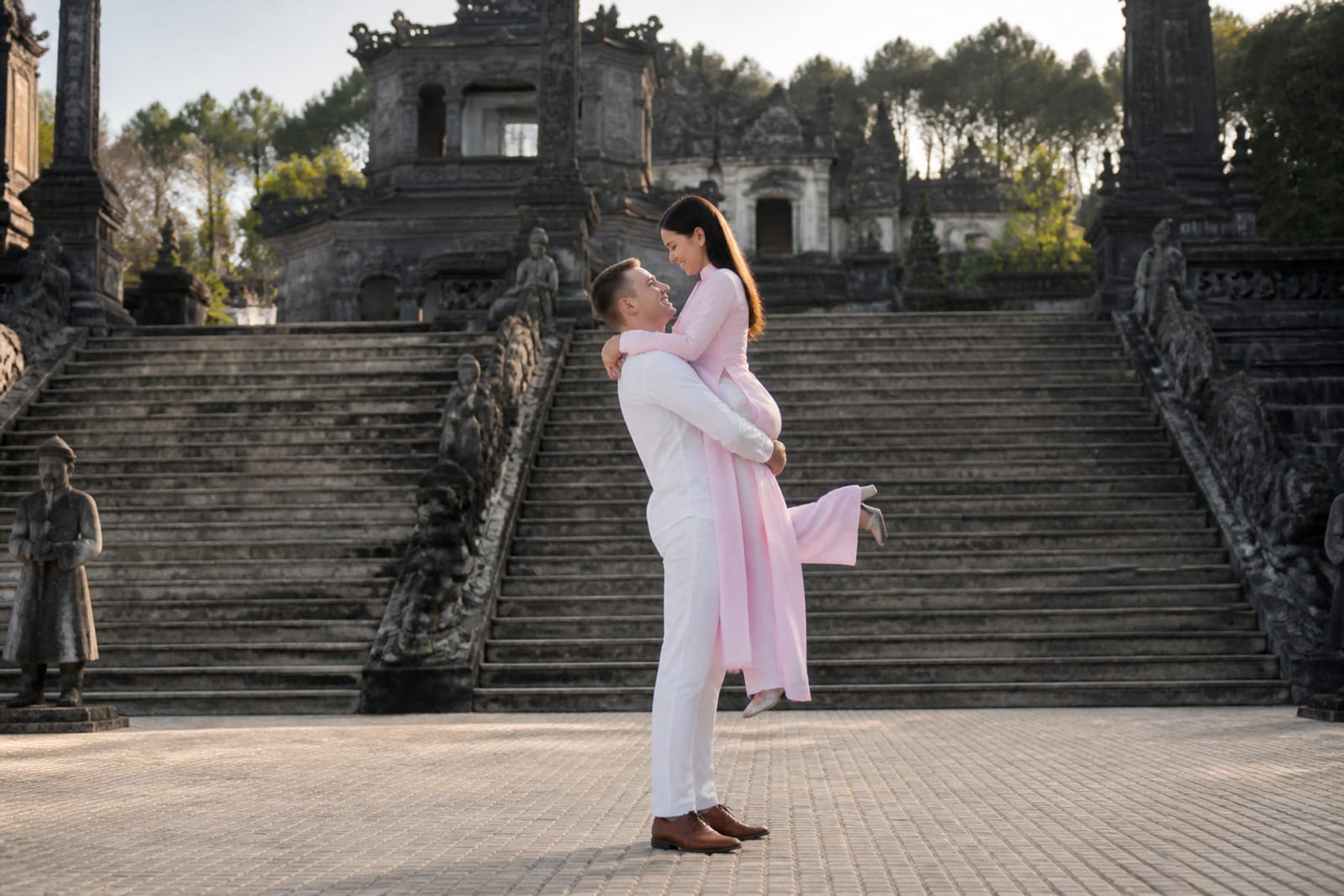
Call the pagoda office ahead — not all areas allow tripods or professional equipment, and some inner chambers restrict photography. Most couples do a small family or officiant ceremony in the morning, then a photoshoot walk around grounds and stairs. Avoid noon and 11 a.m.–1 p.m. (midday prayers and tourist peak). Dress modestly: women in áo dài (traditional tunic) or long dresses covering shoulders and knees; men in suits, long-sleeve shirts or áo groom (formal Vietnamese tunic). If you're wearing Western wedding dress, check fabric weight — Hue's heat (May–Aug) makes heavy gowns impractical, and temple caretakers may request a shawl or wrap. Bring water and sun protection; stone steps get hot and slippery if damp. Hire a photographer who has shot here before — they know where to position you, which stairwells are stable, and how monks move through the space. Local Hue photographers often have standing permission; an external team should confirm access in writing.
| Elopement shoot option | Best for | Light & season | Etiquette load | Why it works |
|---|---|---|---|---|
| Morning ceremony + photo walk | Intimate, small group | 6–8 a.m., Feb–Apr | Moderate — coordinate with office | Soft light, fewer tourists, river mist |
| Sunset couple portrait | Romance, dramatic sky | 4–6 p.m., Feb–Apr | Low — staff less active | Golden hour on tower face, emotional tone |
| Full-day elopement (ceremony + brunch + sunset shoot) | Complete narrative | Feb–Apr only | High — requires early booking | Tells whole-day story, multiple light phases |
| Makeup & photos at hotel, then pagoda walk | No on-site hair/makeup chaos | 7 a.m. start, Feb–Apr | Low — arrive camera-ready | Avoids temple dressing-room hassle, clean appearance |
Should you wear áo dài or a Western wedding dress?
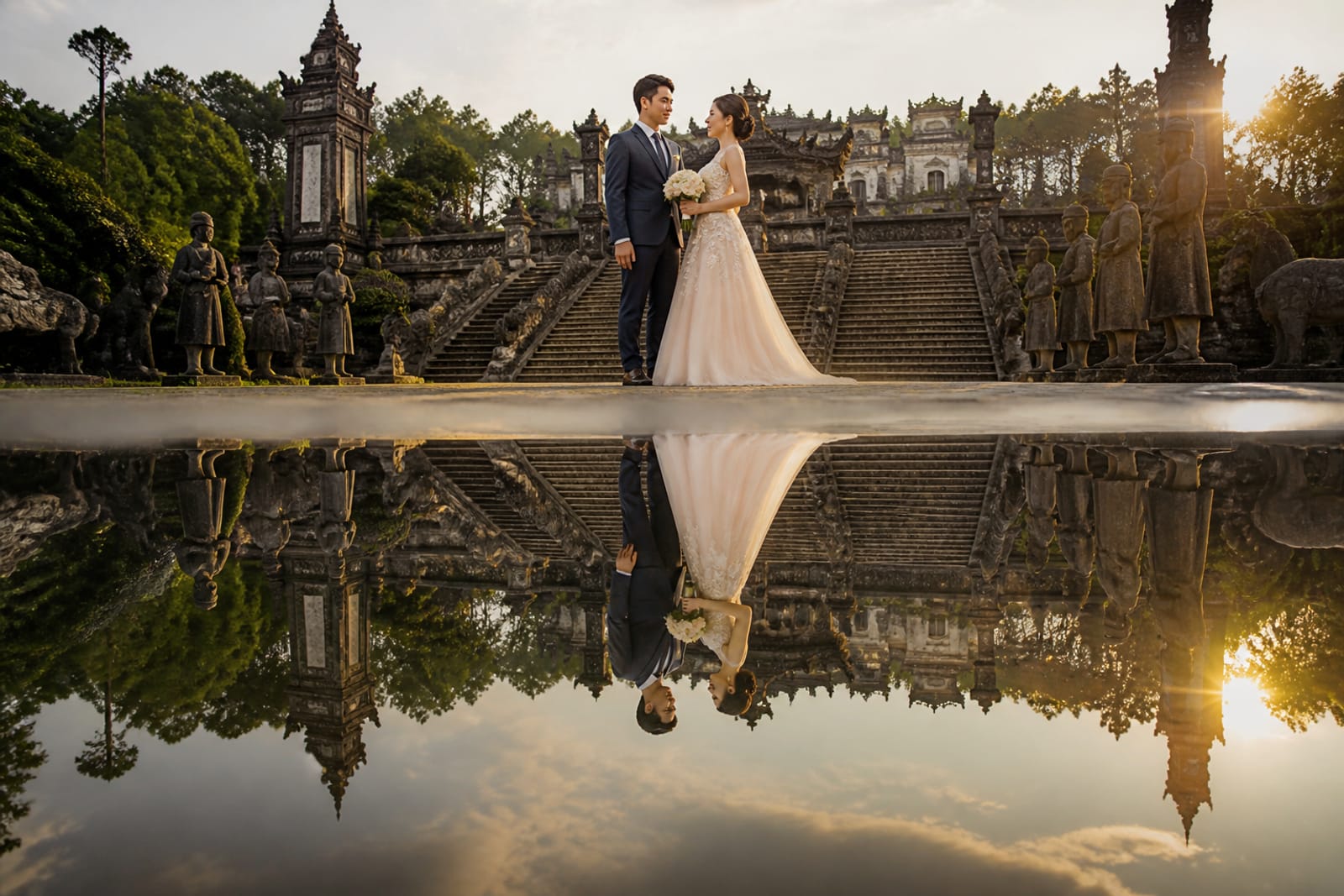
Áo dài photographs authentically at a Vietnamese pagoda and respects the space; monks and caretakers see it as culturally appropriate. The tunic's flowing silhouette works beautifully on stone steps and beside water. Western wedding dresses read as formal and romantic but feel culturally incongruent in a Buddhist temple — caretakers may quietly request modest coverage. If you choose a Western dress, consider a lightweight fabric (silk, organza, not heavy satin or beading) for Hue's heat, and bring a neutral wrap or shawl. Renting locally saves luggage and ensures Hue-friendly tailoring; ask your photographer for seamstress referrals. Grooms look sharp in a suit (opt for linen for heat), but áo groom (Vietnamese formal tunic) photographs more distinctively and signals respect. Many couples do a áo dài photoshoot separately — either at the pagoda or another heritage site — to build variety into their elopement album.
🌸 See the lookbook | 💄 Makeup & hair at your hotel
How do you find and vet a Hue elopement photographer?
Ask for a portfolio that includes at least three Thien Mu Pagoda shoots — this shows they know the light, access, and temple protocols. Check whether they offer makeup & hair on-site or recommend a partner (on-site makeup in a temple can be awkward; hotel prep is cleaner). Confirm they provide a pre-shoot walkthrough (scouting the light path and stairwell layout) and understand how to frame the tower, not just close-up couple shots. Get written confirmation that they know the pagoda's photography restrictions and have or can secure access. If Cáo Studio – Makeup & Photoshoot is your existing photographer (for a Hanoi, Ho Chi Minh City or Hoi An shoot), we don't operate in Hue, but we can refer trusted local partners on WhatsApp — ask us.
What should you check before booking?
Site access: Call the pagoda and confirm which areas allow photography, whether tripod placement is permitted, and peak-hour closures. Written permission saves disputes mid-shoot.
Weather & dates: Book Feb–Apr only. Avoid Tet (late Jan–mid Feb, temple closures) and Sep–Dec (flooding, rain, landslide risk on access roads).
Photographer experience: Ask for Thien Mu Pagoda portfolio shots, not generic temple work. Request a site visit or a call with the photographer to discuss lighting and positioning.
Backup plan: If rain or floods close the pagoda on shoot day, does your photographer offer an alternate Hue location (Hue Citadel, Tomb of Tu Duc) or reschedule? Confirm this in the contract.
Makeup & hair: Decide whether to do this at your hotel (recommended) or on-site. Hotel makeup leaves you camera-ready and avoids temple facilities. Cáo Studio offers makeup & hair at your hotel in Hanoi and Ho Chi Minh City; Hue teams can recommend partners.
Permits & fees: Entry tickets are required — check the current price on the official site. Your photographer should confirm whether professional-shoot permits are extra and who pays.
📸 Book on WhatsApp — pre-wedding photoshoot | 🌸 See the lookbook
Elopement at Thien Mu vs. other Hue sites — which suits you?
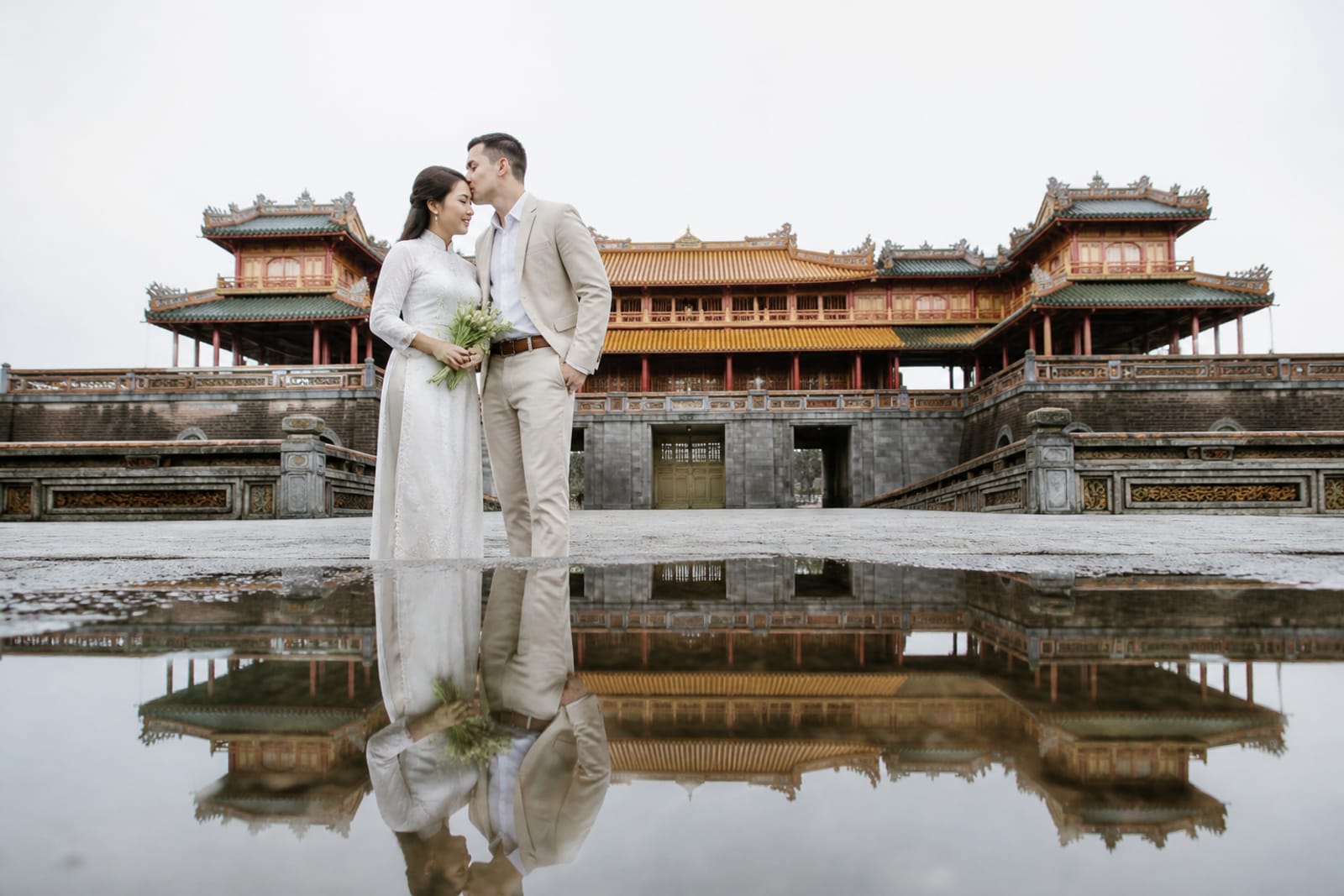
If you want iconic architecture and spiritual meaning, Thien Mu Pagoda is unbeatable — the seven-tier tower and river setting are instantly recognizable. If you prefer secular romance with architectural drama, Hue Citadel offers moats, gates and royal grounds; light is harsher and crowds larger. Royal tombs (Tu Duc, Khai Dinh, Minh Mang) provide formal, private atmospheres and less tourist foot traffic but are more somber and restrictive with photography. Many couples shoot Thien Mu for elopement drama, then book a separate ao dai photoshoot session at a quieter location (Perfume River boat, rice fields, village lanes) to separate sacred space from fashion/fun content.
---
What to check before you book: Confirm the photographer has Thien Mu Pagoda experience (ask for portfolio), has secured or can secure temple access permission, understands Sep–Dec weather risks (don't book then), offers makeup & hair logistics, and has a weather backup plan in writing.
💄 Makeup & hair at your hotel | 📸 Book on WhatsApp
For a pre-wedding photoshoot in Hanoi, Ho Chi Minh City or Hoi An, Cáo Studio coordinates the full experience. For Hue, contact a local photographer and ask on WhatsApp if we can refer a trusted partner.
---
FAQ
Can we do an elopement ceremony and photoshoot on the same day at Thien Mu Pagoda?
Yes. Coordinate with the pagoda office to confirm ceremony space and photography access. Most couples do a morning ceremony, then a 2–3 hour photo walk. Afternoon logistics work if you have hair/makeup done at your hotel before arrival.
Do we need a permit to shoot professional photos at the pagoda?
Entry tickets are required — check the current price on the official site. Ask the pagoda office whether professional-shoot permits are extra and who arranges them (usually your photographer). Confirm in writing before booking.
Is Tet (Lunar New Year) a good time to elope here?
No. The pagoda closes for several days during Tet, and access roads may flood. Book Feb–Apr instead; those months have dry weather and open facilities.
Should we hire a Hue photographer or bring our own team?
A Hue-based photographer has standing access, knows temple protocols, and understands local weather risks. If you use an external team, confirm they've secured pagoda permission and have backup weather plans.
Can we wear a Western wedding dress, or should we choose áo dài?
Both are possible; áo dài photographs more authentically at a Buddhist temple and respects the space. Western dresses work if lightweight (silk, not heavy beading) and modest. If Western dress, bring a wrap and expect caretakers may request coverage.
FAQ
Can we do an elopement ceremony and photoshoot on the same day at Thien Mu Pagoda?
Yes. Coordinate with the pagoda office to confirm ceremony space and photography access. Most couples do a morning ceremony, then a 2–3 hour photo walk. Afternoon logistics work if you have hair/makeup done at your hotel before arrival.
Do we need a permit to shoot professional photos at the pagoda?
Entry tickets are required — check the current price on the official site. Ask the pagoda office whether professional-shoot permits are extra and who arranges them (usually your photographer). Confirm in writing before booking.
Is Tet (Lunar New Year) a good time to elope here?
No. The pagoda closes for several days during Tet, and access roads may flood. Book Feb–Apr instead; those months have dry weather and open facilities.
Should we hire a Hue photographer or bring our own team?
A Hue-based photographer has standing access, knows temple protocols, and understands local weather risks. If you use an external team, confirm they've secured pagoda permission and have backup weather plans.
Can we wear a Western wedding dress, or should we choose áo dài?
Both are possible; áo dài photographs more authentically at a Buddhist temple and respects the space. Western dresses work if lightweight (silk, not heavy beading) and modest. If Western dress, bring a wrap and expect caretakers may request coverage.
Ao dai, makeup, hair and a local photographer in Hanoi or Saigon — one WhatsApp message.